Vietnam Travel and Food Guides
This Vietnam hub connects our firsthand guides to Hanoi, Hoi An, Da Nang, Ho Chi Minh City and the coast with the route, timing and regional food advice needed for a journey from north to south.
Vietnam is long enough for the weather, food and travel experience to change several times during the same journey. Hanoi can be cool and misty while Ho Chi Minh City is hot and dry. Central Vietnam may be dealing with heavy rain while the north has clear trekking weather.
This geography is the key to planning the country well. Vietnam is more than 1,600 kilometres long, and the distances between its most popular destinations are larger than they appear on a map. Hanoi, Hoi An and Ho Chi Minh City belong to three distinct regions. Connecting them usually requires domestic flights, overnight trains or long bus journeys.
We spent several weeks travelling through Vietnam and still had to make choices. A complete north-to-south route needs at least two weeks, with three weeks providing a much better pace. Ten days are more enjoyable when concentrated on two regions.
The country becomes easier once you stop trying to fit every famous place into the itinerary. Hanoi, Ninh Binh and Lan Ha Bay can fill an entire northern journey. Da Nang, Hue and Hoi An form a strong central route. Ho Chi Minh City, the Mekong Delta and a southern island can easily occupy another week.
Regions of Vietnam
Vietnam can be divided into northern, central and southern regions. The Central Highlands and the mountain areas of the far north add further routes for travellers with more time.
| Region | Main destinations | Best for | Suggested time |
|---|---|---|---|
| Northern Vietnam | Hanoi, Ninh Binh, Ha Long Bay, Cat Ba, Sapa and Ha Giang | Cities, mountains, rice landscapes and northern food | 6–10 days |
| Central Vietnam | Hue, Da Nang, Hoi An, Phong Nha and the Hai Van Pass | Imperial history, beaches, caves and regional cuisine | 5–8 days |
| Central Highlands | Da Lat, Buon Ma Thuot and Kon Tum | Coffee, cooler weather and rural travel | 4–7 days |
| Southern Vietnam | Ho Chi Minh City, Mekong Delta, Phu Quoc and Con Dao | Modern history, markets, river life and islands | 6–10 days |
The detailed comparison of the best places to visit in Vietnam helps narrow the route according to your time, interests and preferred pace.
Northern Vietnam
Hanoi is the natural beginning of a north-to-south journey. It needs at least three days, preferably four if food and neighbourhood life are important.
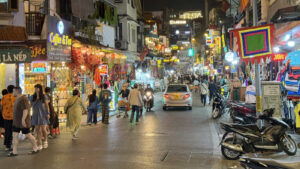
The Old Quarter is intense on arrival. Pavements are used for cooking, parking and selling, which pushes pedestrians into the street. Scooters arrive from every direction, and crossing a road requires a different kind of attention. Walk steadily, remain visible and allow drivers to move around you. Sudden changes of direction create more risk than a slow, predictable crossing.
Hanoi becomes easier once you move beyond the busiest streets around Hoan Kiem Lake. The French Quarter, Truc Bach, West Lake and smaller residential areas provide a calmer view of the city. Early morning is especially good for markets, lakeside exercise and breakfast stalls.
Our three-day Hanoi itinerary covers the city through history, cafés, food and manageable daily routes.
Ninh Binh is around two hours south of Hanoi and deserves one or two nights. The area is spread across Tam Coc, Trang An, Hoa Lu and the surrounding countryside. Staying overnight allows you to take a boat trip early and explore by bicycle after day visitors have returned to Hanoi.
Ha Long Bay is visually spectacular and heavily visited. The busiest cruise routes can feel industrial, with many boats following similar schedules. Lan Ha Bay and Cat Ba provide comparable limestone scenery with more room to adjust the trip. An overnight cruise or a stay on Cat Ba makes more sense than spending most of a day travelling from Hanoi for a short boat ride.
Sapa and Ha Giang require additional time. Sapa is easier to reach and has more developed tourism infrastructure. Ha Giang involves longer travel and is centred around the mountain loop. Both are affected by fog, rain and seasonal rice cycles, so the photographs associated with them cannot be expected throughout the year.
Central Vietnam
Central Vietnam is often rushed because Hoi An, Da Nang and Hue appear close together. The distances are manageable, but each place serves a different purpose.
Hue is the historical stop. The Imperial City, royal tombs and pagodas need at least two days. It is also one of Vietnam’s most important food cities, with dishes connected to the former imperial court and a large tradition of small savoury cakes.
Da Nang is the practical base. It has an international airport, a long urban beach, good local food and straightforward connections to Hue and Hoi An. We arrived without strong expectations and found a modern, lived-in city that was much easier to settle into than the more famous places around it.
The Da Nang guide covers My Khe Beach, the Marble Mountains, Son Tra Peninsula, markets and the Hai Van Pass.
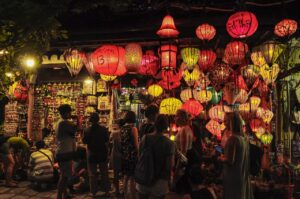
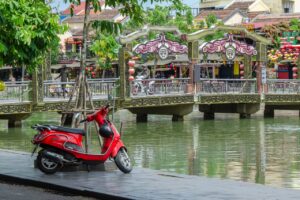
Hoi An is beautiful early in the morning, before tour groups, shopping visitors and lantern crowds fill the old town. The architecture and history are genuine, but tourism has changed how the centre functions. Tailors, souvenir shops and ticketed attractions now occupy much of the historic district.
We would keep Hoi An relatively short. One full day and an evening provide enough time to see the old town, eat cao lau and visit the quieter streets. The honest guide to Hoi An explains why we left with mixed feelings despite understanding its appeal.
Phong Nha lies further north and needs a separate journey. Its cave systems and rural landscape deserve two or three nights. Adding it to a short Hue, Da Nang and Hoi An route creates too much backtracking.
The Central Highlands
The Central Highlands receive fewer international visitors than the coast. Da Lat is the easiest entry point, with a cooler climate, coffee farms, waterfalls and a busy domestic tourism scene.
Buon Ma Thuot is closely connected to Vietnam’s coffee production. The city itself is less immediately attractive than Hoi An or Da Lat, but the surrounding farms and agricultural landscape explain an industry that appears in every Vietnamese city.
The highlands work best as their own route. Roads can be slow, and public transport is less convenient than along the main coast. Four days are enough for one base, while a week allows a more substantial overland journey.
Southern Vietnam
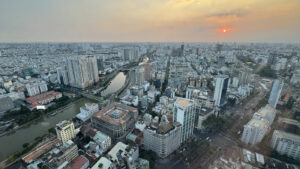
Ho Chi Minh City is larger, more modern and more spread out than Hanoi. Three full days cover its central history, markets and food. Four days allow a day trip or time in neighbourhoods beyond District 1.
The city’s history needs context. The War Remnants Museum, Independence Palace and Cholon help explain different parts of the twentieth century and the development of modern Saigon. At the same time, cafés, apartment buildings, markets and restaurants show a city focused firmly on the present.
Our four-day Ho Chi Minh City itinerary brings food and history into the same route instead of treating them as separate experiences.
The Mekong Delta is frequently sold as a day trip. That format provides a quick sequence of boats, workshops and organised stops, but the long drive leaves little time for the delta itself. One night in Can Tho creates a better journey, particularly when visiting the river early in the morning.
The comparison of day trips from Ho Chi Minh City includes the Mekong Delta, Cu Chi Tunnels, Can Gio, Tay Ninh and Vung Tau with realistic travel times.
Phu Quoc is the most developed southern island and the easiest to reach by air. Resort construction has changed parts of it rapidly. Con Dao is quieter and carries a different historical weight because of its former prison complex. Vietnam’s coastline is extensive, and our overview of the best beaches in Vietnam compares island and mainland options.
Planning a Trip to Vietnam
A strong Vietnam itinerary follows one direction. Flying into Hanoi and out of Ho Chi Minh City, or the reverse, removes the need to retrace the entire country.
Choose the Number of Regions First
Five days belong in one region. Ten days can cover two. A journey through all three regions needs at least 14 days.
Trying to include Hanoi, Ha Long Bay, Hue, Hoi An, Ho Chi Minh City, the Mekong Delta and Phu Quoc in 10 days creates a trip dominated by departures. Each overnight train, airport journey and hotel change reduces the time available on the ground.
The collection of five-day Vietnam itineraries provides regional routes that can be used independently or connected into a longer journey.
Our 10-day Vietnam itinerary shows how the main stops connect. For a more relaxed version, use it as a menu and remove one region or island rather than following every stop.
Plan Transport as Part of the Route
Domestic flights are the practical way to connect Hanoi, central Vietnam and Ho Chi Minh City. Da Nang is the main airport for Hoi An and a useful entry point for Hue.
Vietnam’s reunification railway runs between Hanoi and Ho Chi Minh City, stopping at major central destinations. Overnight trains save a hotel night, although sleep quality varies. The section between Hue and Da Nang crosses the Hai Van Pass and is worth taking during daylight for the coastal views.
Long-distance buses and sleeper buses reach almost everywhere. They are inexpensive but can be uncomfortable, and arrival times are not always ideal. A night bus that arrives at 4:00 in the morning rarely saves as much useful time as expected.
Ride-hailing apps work well in Hanoi, Da Nang and Ho Chi Minh City. They remove most fare negotiation and make it easier to enter an exact destination. In smaller towns, hotels can arrange taxis, drivers or scooter rentals.
Keep Time Around Flights and Ferries
Domestic flights are short, but airport transfers and delays can consume much of a day. Tan Son Nhat Airport in Ho Chi Minh City is close to the centre in distance and often slow to reach because of traffic.
Avoid placing an international departure immediately after a domestic flight from Phu Quoc or another regional airport. Weather and operational delays can break a tight connection.
Cruises and island boats also require buffer time. Ha Long and Lan Ha Bay trips involve road transfers from Hanoi, check-in and fixed departure windows. Treat an overnight cruise as two days of the itinerary.
Check Entry Requirements Before Departure
Visa and entry rules depend on nationality and length of stay. Use the official Vietnamese immigration and e-visa systems, and check that the passport details on the approval match the document exactly.
Some booking and immigration forms still ask for accommodation addresses, flight information and the intended entry point. Keep these details accessible offline.
Tet, the Vietnamese Lunar New Year, has a major effect on transport and business opening hours. Trains and flights fill as people travel home, while family-run restaurants and shops may close. Book well ahead if the trip overlaps with the holiday.
Prepare for Money, Data and Everyday Travel
The Vietnamese dong uses large numbers, and banknotes can look similar. Check the number of zeros before paying, particularly when using 20,000 and 500,000 dong notes in low light.
Cash remains important for markets, street food and small businesses. Hotels, modern restaurants and larger shops generally accept cards. ATMs have different withdrawal limits and fees, so compare machines before making repeated small withdrawals.
A local SIM or eSIM is inexpensive and useful for Grab, maps, translation and communicating with accommodation. Save important tickets and addresses offline.
Tap water should not be drunk. Use filtered or bottled water, and be cautious with raw vegetables, ice and food that has been sitting in the heat. Busy stalls with fast turnover are usually a better choice than an empty restaurant with a large menu.
The first-timer’s backpacking guide to Vietnam covers accommodation, transport, safety and the practical reality of moving through the country independently.
Best Vietnam Itinerary
Sixteen days provide a realistic introduction to northern, central and southern Vietnam. The route moves in one direction and keeps the number of bases under control.
| Days | Destination | Main focus |
|---|---|---|
| 1–3 | Hanoi | History, neighbourhoods, markets and food |
| 4–5 | Ninh Binh | Boat routes, countryside and cycling |
| 6–7 | Lan Ha Bay or Cat Ba | Limestone scenery and an overnight on or near the water |
| 8 | Travel to Da Nang | Return to Hanoi and fly south |
| 9–11 | Da Nang, Hoi An and Hue | Central food, coast and history |
| 12 | Fly to Ho Chi Minh City | Settle into the southern capital |
| 13–14 | Ho Chi Minh City | Museums, Cholon, markets and local food |
| 15 | Mekong Delta | Stay overnight in Can Tho |
| 16 | Return or departure | Travel back to Ho Chi Minh City |
Da Nang works well as the central base when you want to minimise hotel changes. Hoi An is around 30 kilometres away, while Hue can be reached across the Hai Van Pass. Staying in Hue for one night is worthwhile when the imperial sites are a priority.
This route leaves out Sapa, Ha Giang, Phong Nha and Phu Quoc. Adding any of them requires at least three more days. Ha Giang needs four or five days once the journey from Hanoi is included.
For a 10-day trip, choose Hanoi, Ninh Binh and central Vietnam, or combine Da Nang, Hoi An, Ho Chi Minh City and the Mekong Delta. Crossing the entire country in 10 days is possible, but the route will be fast.
For a longer Southeast Asia journey, the three-week Vietnam and Cambodia itinerary continues from Ho Chi Minh City towards Phnom Penh and Siem Reap.
Driving and Renting a Motorbike in Vietnam
Motorbikes are part of daily life in Vietnam, but the traffic requires experience and concentration. Hanoi and Ho Chi Minh City are poor places to learn.
A rental shop may provide a scooter without asking many questions. That does not confirm that you are legally licensed or insured. Check the licence requirements for your nationality, carry the correct International Driving Permit where applicable and read the motorbike exclusions in your insurance policy.
Helmets should fit properly and fasten securely. Photograph the bike before leaving, test the brakes and lights, and avoid handing over your original passport as a deposit when another arrangement is possible.
Traffic behaves differently from many Western countries. Drivers rely heavily on horns to signal their position, and vehicles can enter from side roads with little warning. Maintain a steady line, watch mirrors and avoid sudden movements.
The Hai Van Pass between Hue and Da Nang is one of the most scenic rides in Vietnam. Travellers with proper motorbike experience can ride it independently. Everyone else can hire a driver or join a small tour and still enjoy the coast, viewpoints and old fortifications.
Rural roads and mountain routes introduce landslides, fog, animals and rapidly changing surfaces. Avoid riding after dark, particularly in unfamiliar areas.
When to Visit Vietnam
February to April is the best general compromise for a journey across several regions. Northern temperatures are usually comfortable, central Vietnam is moving into its drier period and southern Vietnam remains within its dry season.
There is no month that guarantees ideal weather everywhere.
| Region | Best general period | Main weather issue |
|---|---|---|
| Northern Vietnam | October–December and March–April | Cold winters, hot wet summers and mountain fog |
| Central Vietnam | February–May | Storms and flooding from roughly September to November |
| Southern Vietnam | December–April | Heavy showers during the May–November rainy season |
| Northern mountains | September–November and March–May | Winter cold, fog and summer landslides |
| Southern islands | December–March | Rain and rougher sea outside the dry season |
Hanoi can feel cold and damp in January and February. Hotels and homes are not always heated to the standard visitors expect, so light layers are useful.
Central Vietnam has the most difficult weather window to predict. Hoi An and Hue can experience flooding during autumn storms. Check conditions before travelling rather than relying on a national forecast.
Rainy season in Ho Chi Minh City often means a heavy afternoon downpour followed by clearer weather. It affects street travel and day trips, though it does not automatically ruin an entire visit.
The complete guide to the best time to visit Vietnam breaks the weather down by region and month.
How Many Days Do You Need in Vietnam?
Two weeks are the minimum for a journey across northern, central and southern Vietnam. Three weeks provide enough time to add mountains, caves or an island.
| Available time | Realistic route |
|---|---|
| 5 days | Hanoi and Ninh Binh, central Vietnam, or Ho Chi Minh City and the Mekong |
| 7 days | One region with one substantial side trip |
| 10 days | Two regions connected by a domestic flight |
| 14–16 days | North-to-south route through all three regions |
| 3 weeks | Full route plus Ha Giang, Phong Nha or Phu Quoc |
| One month | Slower overland journey with mountains and rural areas |
Three days are enough for Hanoi’s main areas, but four provide a better introduction. Ho Chi Minh City needs three or four days. Da Nang, Hoi An and Hue need at least four days together.
Ninh Binh deserves two nights. A Ha Long or Lan Ha Bay cruise uses two days. The Mekong Delta becomes far more worthwhile with one night away from Ho Chi Minh City.
Vietnam Travel Budget
Vietnam remains affordable for food, accommodation and local transport. Cruises, domestic flights and private tours create the largest increases.
A practical daily estimate per person, excluding international flights, is:
| Travel style | Approximate daily budget |
|---|---|
| Budget | 700,000–1,200,000 VND |
| Mid-range | 1,800,000–3,500,000 VND |
| Comfortable | 4,500,000 VND and above |
Budget travel includes hostels or simple guesthouses, street food, buses and local trains. A mid-range budget allows well-positioned hotels, domestic flights and a mixture of informal and restaurant meals.
Ha Long and Lan Ha Bay cruises vary considerably in quality and price. Check the exact boat, cabin, route and group size. Promotional photographs may represent a company’s best vessel rather than the one attached to the rate.
Domestic flights can be inexpensive, but baggage, seat selection and airport transfers need to be added before comparing them with a train.
Street food and specialist local restaurants provide excellent value. Tourist restaurants in Hoi An, central District 1 in Ho Chi Minh City and island resorts charge far more for versions of the same dishes.
Food in Vietnam
Vietnamese food changes from north to south. Ingredients, sweetness, chilli, herbs and portion styles vary enough that the same dish can feel completely different in Hanoi and Ho Chi Minh City.
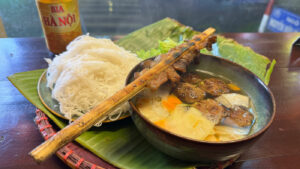
Northern cooking is often more restrained. Pho broth tends to be clear and carefully balanced, while bun cha, cha ca and bun thang rely on distinct ingredients rather than heavy seasoning. Hanoi is also the home of egg coffee.
The Hanoi food guide covers pho, bun cha, cha ca, cafés and the meal times that determine when the best stalls are still serving.
Central Vietnamese food is more intense. Hue has a tradition of small dishes, chilli, fermented flavours and careful presentation. Mi quang belongs to Quang Nam and Da Nang, while cao lau is specific to Hoi An. Banh xeo changes size and style across the country.
Southern cooking generally uses more sweetness, fresh herbs and coconut. Ho Chi Minh City is especially good for com tam, hu tieu, banh xeo, snails and grilled seafood. Chinese-Vietnamese food is concentrated around Cholon.
The Ho Chi Minh City food guide covers the southern dishes and neighbourhoods worth seeking out.
Across the country, some of the most useful food habits are simple:
- Eat breakfast early. Pho, rice dishes and noodle stalls may sell out before lunch.
- Choose busy stalls with fast turnover.
- Watch how ingredients are stored and cooked.
- Carry small notes for street vendors.
- Use the condiments already on the table before asking for extra seasoning.
- Confirm ingredients carefully when managing allergies.
- Drink filtered or bottled water.
- Give street food its own time instead of treating it as a snack between attractions.
Our overview of the Vietnamese dishes worth trying connects each dish to the region where it makes the most sense.
Vietnamese coffee deserves its own place in the itinerary. Strong robusta coffee is brewed through a metal phin filter and commonly served with condensed milk. Hanoi’s egg coffee, southern iced coffee and the café culture of both major cities are different experiences.
Some of our strongest memories of Vietnam came from meals served on small plastic stools, with no menu and no long explanation. The important clues were the hour, the crowd and the single pot or grill producing the same dish repeatedly.