Travel and Food Tips
Tips is The Foodellers’ advice library for questions that apply across destinations, from planning road trips to eating safely and understanding local dining cultures.
The Foodellers publishes two connected types of travel content. Our Trips section is organised geographically, leading from continents to countries, cities and individual destinations. Tips is organised around the practical questions travellers face wherever they are going.
Here you will find advice on planning journeys, finding good food, understanding unfamiliar dining habits, travelling with dietary requirements and making sense of the cultural systems behind everyday meals.
Travel planning and road trips
This section covers the practical decisions involved in building an itinerary, including travel times, transport, packing, seasonal conditions and the pace of a longer journey.
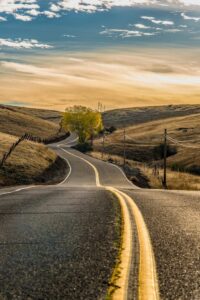
Road trips need particular preparation. Distances, fuel stops, accommodation, weather and the amount of daily driving can all change how much time remains for the destination itself. Our summer road trip tips explain how to prepare the vehicle, organise each stage and avoid turning the journey into a sequence of exhausting driving days.
Destination-specific itineraries and driving advice remain within the relevant country section under Trips. The articles here address planning principles that can be applied in different parts of the world.
Eating while travelling
Food is one of the main ways we understand a place, but eating well in an unfamiliar destination requires more than collecting restaurant names.
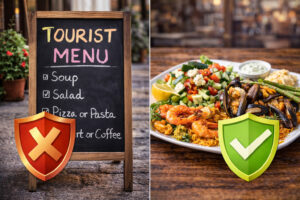
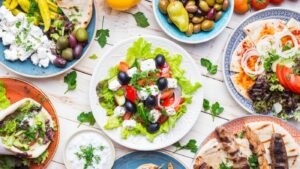
Our advice covers how to assess restaurants, read menus, recognise local eating patterns and decide where your food budget is best spent. The article on finding good restaurants while travelling explains how location, menu structure, opening hours and local behaviour can provide more useful information than a generic ranking.
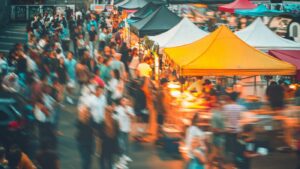
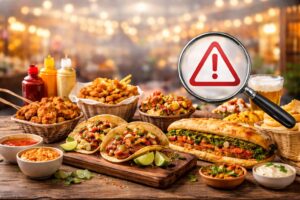
Street food raises a different set of questions. Safety depends on preparation, heat, turnover and the way a stall operates throughout the day. Our article on street food safety while travelling explains which signals matter when deciding where to eat.
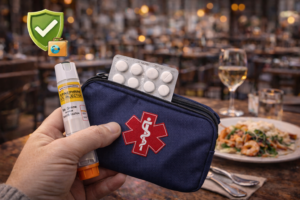
Travellers with allergies or dietary restrictions need to understand ingredients as well as preparation systems. The guide to eating abroad with food allergies looks at communication, cross-contamination and the reasons some food cultures find customisation easier than others.
Food culture and dining etiquette
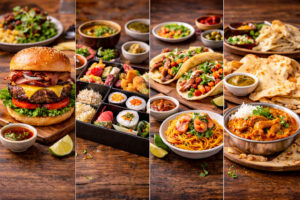
Food culture includes the social and economic rules surrounding a meal, including when people eat, how dishes are shared, how service works and who is expected to leave a tip.
These rules can feel invisible until you enter a country where they work differently. Breakfast may be small, lunch may be the main meal, dinner may begin much later, or restaurants may follow a service style unfamiliar to visitors.
Tipping is one of the clearest examples. It functions as expected income in some countries, an optional acknowledgement in others and an unusual gesture elsewhere. Our explanation of why tipping works differently around the world looks at the wage systems and social expectations behind those differences.
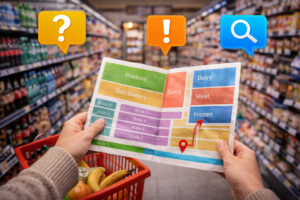
Everyday shops can also explain how a culture eats. The size of food packages, the amount of prepared food, the prominence of fresh produce and the organisation of a supermarket all reflect local routines. Our article on what grocery stores tell us about food culture examines those signals.
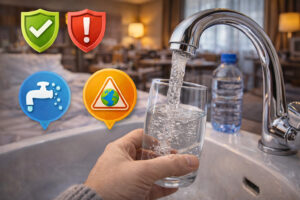
This section also addresses reservations, solo dining, tourist menus, drinking water, language barriers and the idea of a “normal” meal across different cultures.
Food and wine travel
Some trips begin with a place. Others begin with a dish, a harvest, a restaurant or a wine region.
Our food trip planning advice explains how to research regional specialities, markets, restaurant schedules and seasonal products before building the wider itinerary.
Wine travel requires similar preparation. Vineyards are often outside major cities, tastings may need reservations and driving creates practical limitations. Our overview of wine regions around the world provides a starting point for choosing a destination according to landscape, grape varieties and local wine culture.
Country-specific foods, restaurant recommendations and regional cuisines are connected to their destination pages under Trips. This section provides the broader knowledge needed to plan and understand food-led travel.
How The Foodellers develops its travel advice
The Foodellers is an independent food and travel magazine created by Veruska Anconitano and Giuseppe Milo.
Veruska is an award-winning food and travel journalist, multilingual SEO and globalisation professional, and trained sommelier. Giuseppe is an internationally published photographer and programmer who documents the destinations, landscapes and food featured throughout the website.
Our advice comes from travelling, researching food cultures and dealing with the practical realities behind each journey. We explain the systems behind travel and eating so readers can make informed decisions in destinations with different habits, rules and expectations.