

The best carbonara in Rome is served in neighbourhood trattorias, not on piazzas with picture menus. As a Roman, I have eaten carbonara all my life, at home and in more restaurants than I can count. The seven places below are the ones I go back to and the ones I send friends to. Three are in the historic centre, near the Pantheon, Campo de’ Fiori, and Via del Corso. The other four need a tram, a metro ride, or a walk to Testaccio, and they are worth it. Below, you’ll find each restaurant, what its carbonara is like, and how to get a table. You’ll also learn what goes into a real carbonara and how to spot a bad one before you order.
Best Carbonara in Rome at a Glance
| Restaurant | Neighbourhood | Best for | Price | Booking |
|---|---|---|---|---|
| Da Cesare al Casaletto | Monteverde | The best all-round trattoria meal | €€ | Book a few days ahead |
| Tanto pè Magnà | Garbatella | Big portions on a budget | € | Recommended for dinner |
| Roscioli | Campo de’ Fiori | Premium ingredients in the centre | €€€ | Weeks ahead |
| Checchino dal 1887 | Testaccio | A classic, formal Roman dining room | €€€ | Recommended |
| Armando al Pantheon | Pantheon | Carbonara next to a major monument | €€ | Weeks ahead |
| Flavio al Velavevodetto | Testaccio | The creamiest carbonara, with a group | €€ | Book a few days ahead |
| Matricianella | Via del Corso | A proper lunch after shopping | €€ | Recommended |
The 7 Best Places for Carbonara in Rome
1. Da Cesare al Casaletto, Monteverde
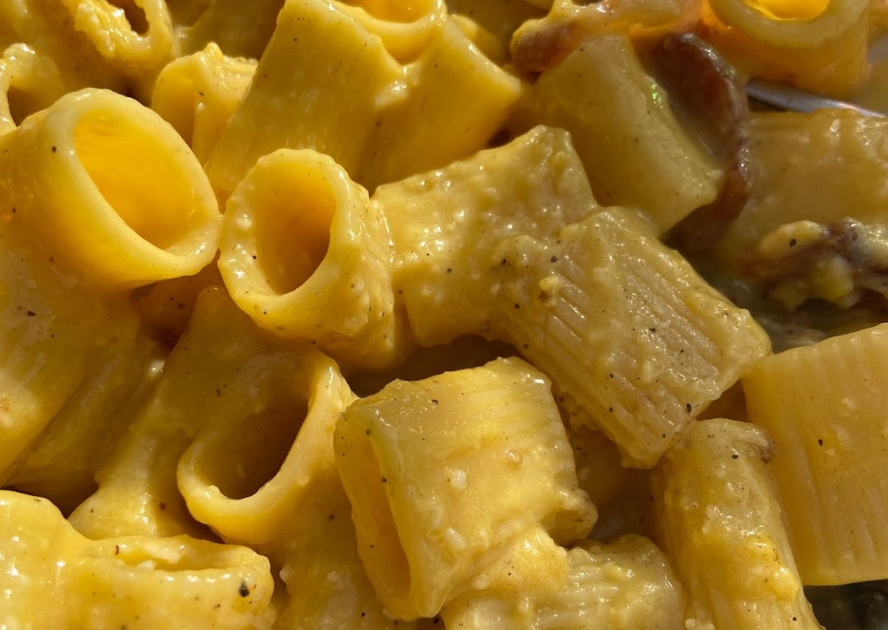
If I could eat only one carbonara in Rome, I would eat it at Da Cesare al Casaletto. It sits at the last stop of tram 8, in the residential Monteverde Nuovo district. Leonardo Vignoli and Maria Pia Cicconi have run it since 2009.
The carbonara is classic, rich, and properly peppered. Start with the fritti, especially the fried gnocchi with cacio e pepe. Leonardo is almost always in the dining room, and he is happy to talk you through the wine list. The bill is fair for the quality. That’s why Romans fill the room every night.
How to get there: Take tram 8 from Largo Argentina or Trastevere to the end of the line, Casaletto. Good to know: Da Cesare closes on Wednesdays. If you can’t leave the centre, the same owners run Cesare al Pellegrino near Campo de’ Fiori.
Da Cesare al Casaletto: Via del Casaletto, 45, Rome
2. Tanto pè Magnà, Garbatella
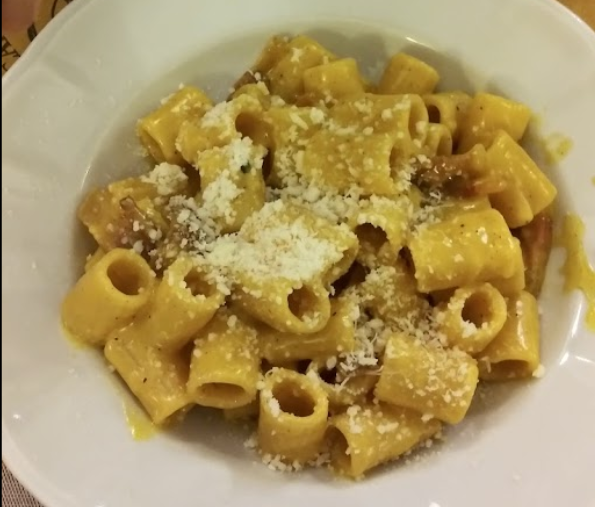
Tanto pè Magnà is my pick for a cheap, generous carbonara far from the tourist crowds. It is a trattoria in Garbatella, a working-class neighbourhood built in the 1920s around courtyards and garden blocks. Expect red-and-white checked tablecloths, big portions, and honest prices.
The carbonara is hearty and straightforward. It comes with plenty of black pepper and no frills. Romans also come here for the cacio e pepe, so order both and share.
How to get there: Take metro line B to Garbatella, then walk up into the old part of the neighbourhood. Wander the courtyards before dinner. Few visitors ever see this side of Rome.
Tanto pè Magnà: Via Giustino de Jacobis, 9, Rome
3. Roscioli, Campo de’ Fiori

Roscioli is the most touristy address on this list, and it still earns its place. It is a deli with a kitchen on Via dei Giubbonari, a few steps from Campo de’ Fiori. Hams hang from the ceiling, the tables are tight, and the room is loud.
The carbonara is rich and generous. It is built on top-quality ingredients chosen by a family that has run bakeries and delis in Rome since the 1970s. It is also one of the most expensive plates of carbonara in the city. You are paying for the guanciale, the eggs, and the cheese, and you can taste it.
Good to know: Book online weeks in advance. Walk-ins rarely get a table at dinner.
Roscioli: Via dei Giubbonari, 21, Rome
4. Checchino dal 1887, Testaccio
Checchino dal 1887 is a piece of Roman history that still cooks. The Mariani family runs it at the foot of Monte Testaccio, a hill made of broken ancient Roman amphorae. The wine cellar is dug into that hill. The old city slaughterhouse stood nearby, which is why Checchino is famous for quinto quarto, the offal dishes of Roman cooking.
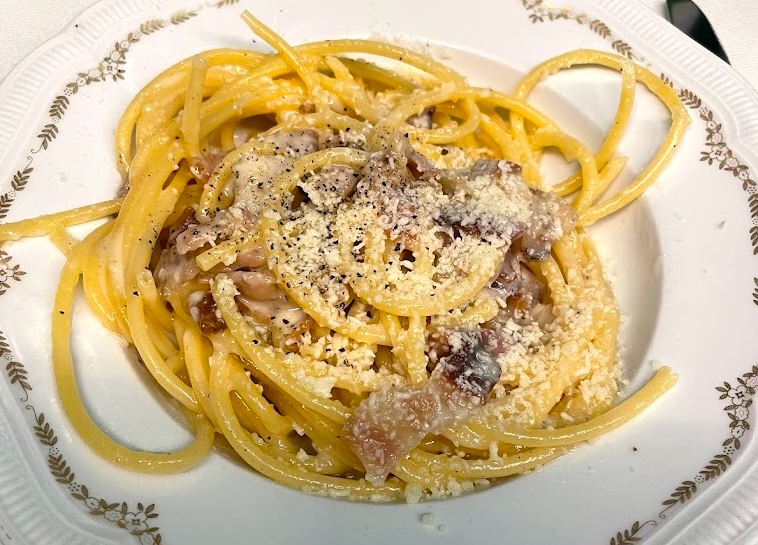
The carbonara follows the traditional recipe with no twists. It arrives on white vintage plates with gold rims. The sauce is glossy and loose, with a generous hit of black pepper. That wet, silky texture is exactly how carbonara should be.
Good to know: This is the most formal room on the list, and the prices match. Checchino closes on Mondays, so check the opening days before you go.
Checchino dal 1887: Via di Monte Testaccio, 30, Rome
5. Armando al Pantheon, Centro Storico
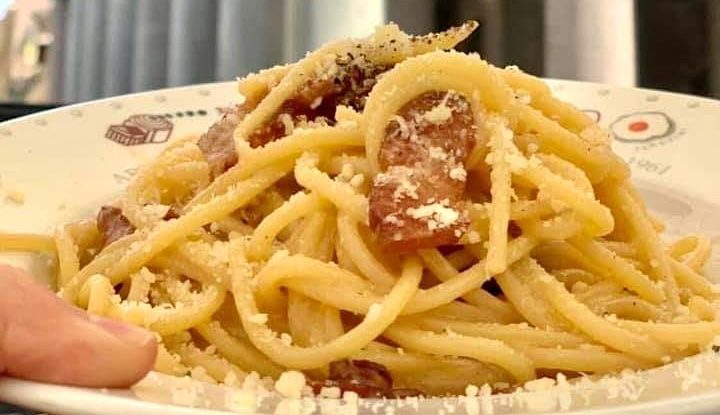
Armando al Pantheon serves the best carbonara you can eat within sight of a major monument. The Gargioli family has run it since 1961, and Claudio Gargioli still leads the kitchen. The room is small, with fewer than 40 seats. It fills with tourists and Roman regulars in equal measure.
The carbonara is juicy, heavy on Pecorino and pepper, and consistent year after year. Order the gricia too. It’s carbonara without the egg, and Armando makes one of the best versions in Rome.
Good to know: Armando closes on Sundays and books out weeks ahead. Reserve as soon as your travel dates are fixed.
Armando al Pantheon: Salita de’ Crescenzi, 31, Rome
6. Flavio al Velavevodetto, Testaccio
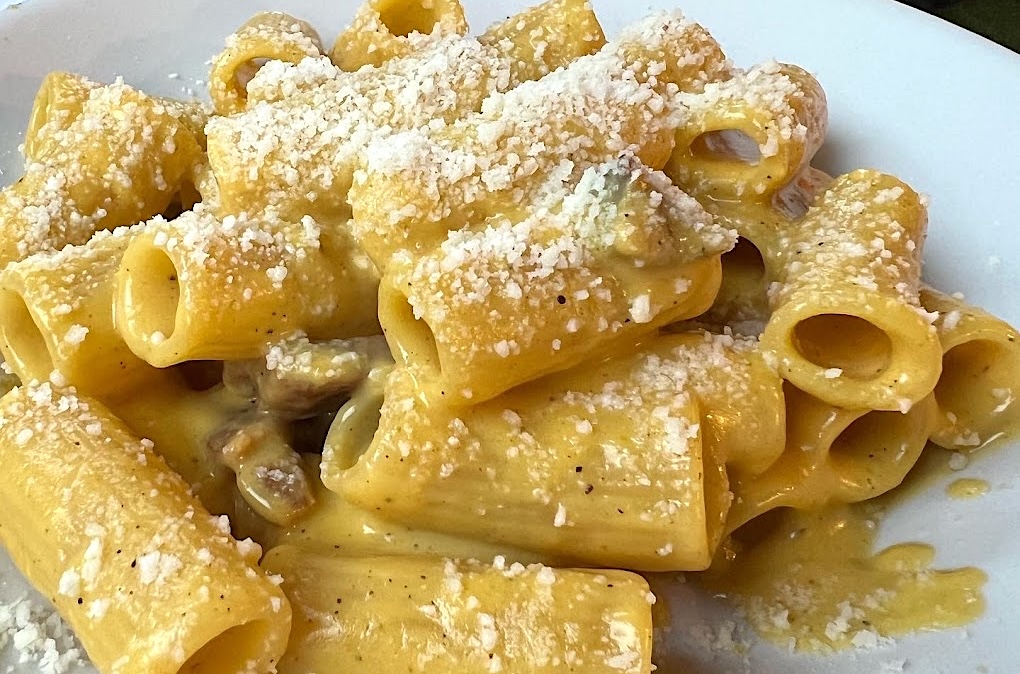
Flavio al Velavevodetto is where I go for carbonara and a long Roman meal with friends. Chef Flavio De Maio grew up in Garbatella and has led the kitchen since 2009. The dining room is cut into Monte Testaccio, and a glass wall shows the ancient pottery shards inside the hill.
This is the creamiest carbonara on the list. It is so velvety it almost melts in your mouth, with crisp guanciale and plenty of pepper. It usually comes with rigatoni rather than spaghetti.
Good to know: Checchino is on the same street, so Testaccio gives you two of the best carbonaras in Rome a few minutes apart. In good weather, ask for a table on the terrace.
Flavio al Velavevodetto: Via di Monte Testaccio, 97, Rome
7. Matricianella, near Via del Corso
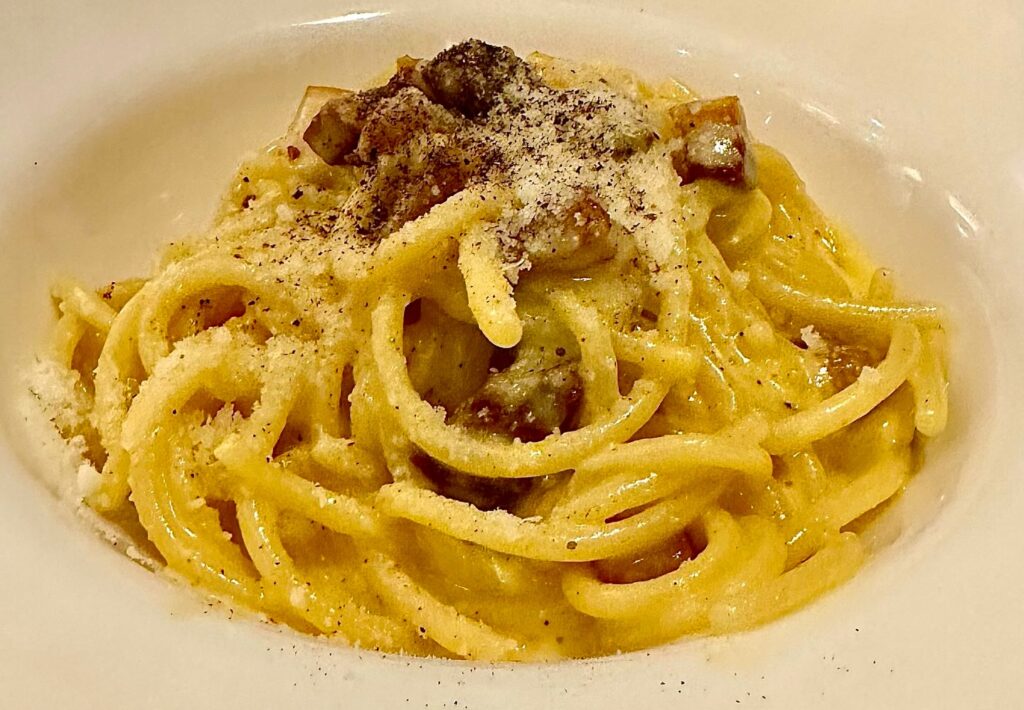
Matricianella has served traditional Roman food since 1957. It is on Via del Leone, a side street off Piazza San Lorenzo in Lucina. It is a short walk from Via del Corso, which makes it the easiest proper carbonara after a day of shopping.
The carbonara is classic: crisp guanciale, plenty of Pecorino, and a balanced, peppery sauce. The fried starters are another good reason to come.
Good to know: Matricianella closes on Sundays. On a sunny day, the outdoor tables are the best seats.
Matricianella: Via del Leone, 4, Rome
What Goes Into a Real Roman Carbonara
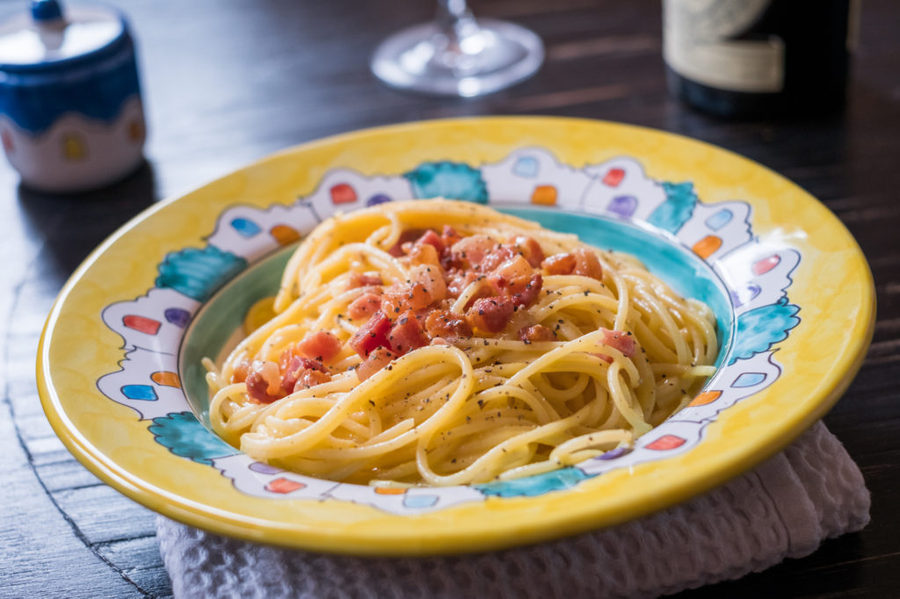
A real Roman carbonara has five ingredients: pasta, guanciale, eggs, Pecorino Romano, and black pepper. That’s all.
- Guanciale is cured pork cheek. It renders more fat than pancetta and gives carbonara its depth.
- Pecorino Romano is a salty sheep’s milk cheese. Some cooks blend in Parmigiano, but Pecorino always leads.
- Eggs make the sauce. Romans argue about yolks only versus whole eggs, and you’ll find both in good trattorias.
- Black pepper should be freshly cracked and generous.
- Pasta can be spaghetti, rigatoni, or mezze maniche. Many Roman trattorias prefer short pasta because it holds more sauce.
I am strict on one point. There is no place for cream, chicken, parsley, mushrooms, peas, or onion in carbonara. The creaminess comes from egg and cheese whisked with starchy pasta water. Nothing else.
Nobody knows exactly where carbonara was born. One story links it to charcoal burners in the Apennines. Another ties it to the eggs and bacon American soldiers brought to Rome in 1944. The first printed recipes appeared in the early 1950s. What is certain is that Rome made it its own.
How to Spot a Bad Carbonara in Rome
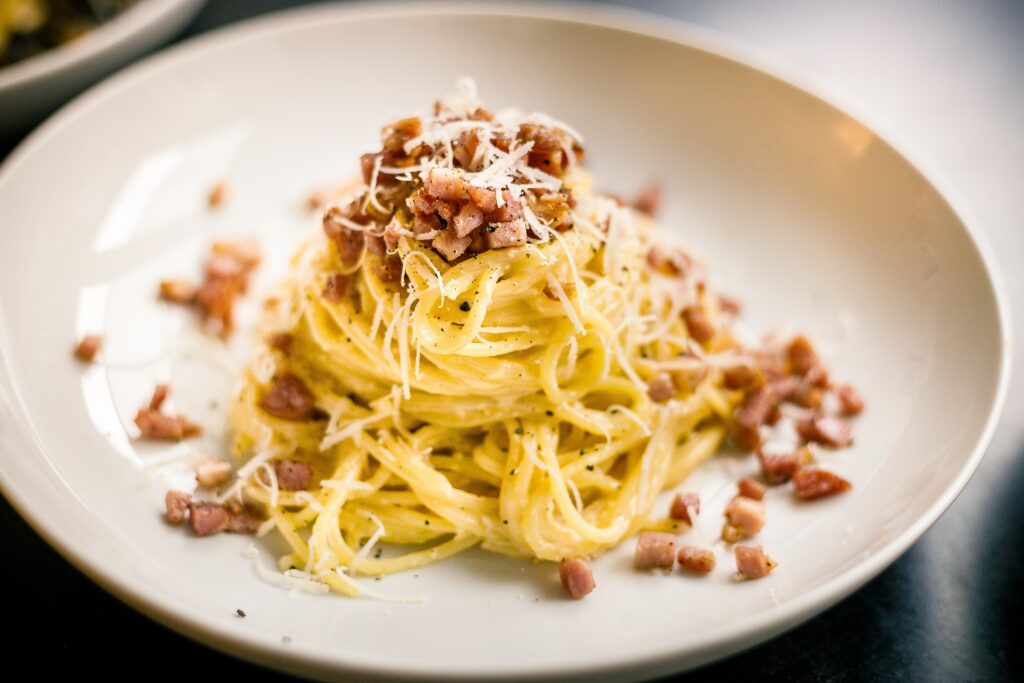
Rome is full of bad carbonara. Most of it is served within a few steps of the big monuments. Here are the warning signs I look for.
- Photo menus in five languages. A waiter outside inviting you in is another red flag.
- Bacon on the menu. In Rome, guanciale is the standard. If the menu doesn’t name it, ask.
- A white, thick sauce. Real carbonara is yellow from the egg and glossy. Pale and heavy usually means cream.
- Lumps of scrambled egg. The sauce overheated, and the kitchen didn’t care enough to start again.
- Add-ons. If the menu offers carbonara with chicken, mushrooms, or peas, order something else.
How Romans Eat Carbonara
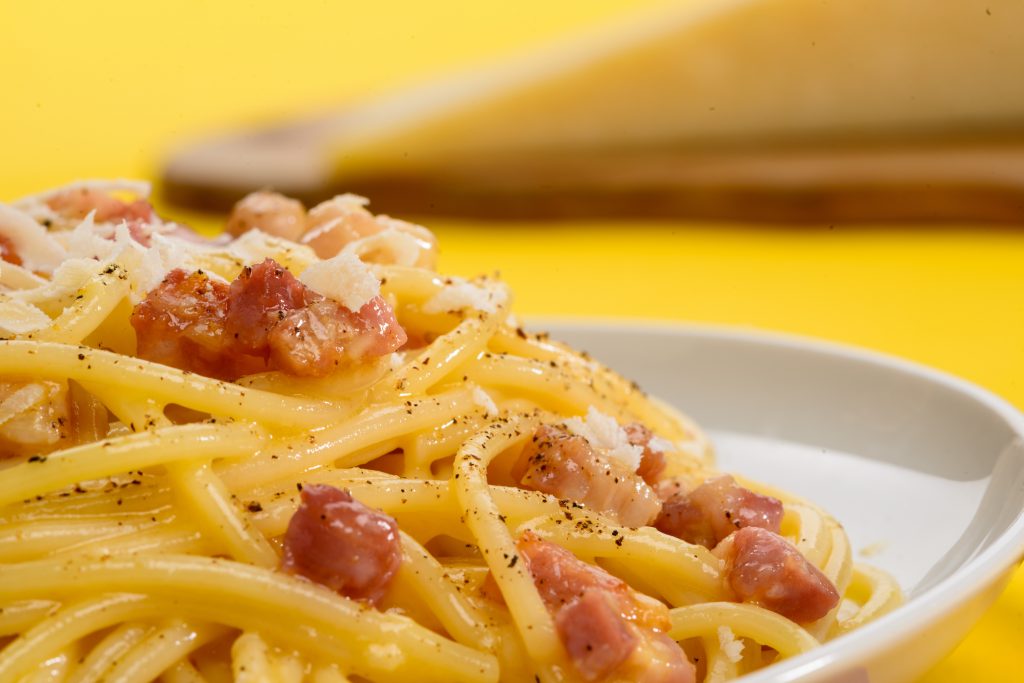
Carbonara is a primo, the pasta course. Romans eat it at lunch as often as at dinner. Plenty of locals order it as their only course, so don’t feel obliged to add a main.
Eat it with a fork only. No spoon, no knife. Don’t ask for Parmesan on top, since the sauce is already full of Pecorino. And eat it straight away. Carbonara thickens within minutes, and a cold plate loses everything that makes it good.
Romans also take their time at the table. Nobody will rush you, and nobody will bring the bill until you ask for it. Want the rest of the rules? Read our 22 rules for eating in Italy before your trip.
Leave the Centre for Your Carbonara in rome
If you have time for only one carbonara, take tram 8 to Da Cesare or metro line B to Piramide for Testaccio. Twenty minutes out of the centre buys you a better plate, a fairer bill, and a room full of Romans. Book ahead, order the carbonara, and leave the cream at home.