North America Travel Guide
North America is where distances catch people out. New York and Los Angeles belong to the same country, but they sit almost 4,000 kilometres apart. California alone can fill two weeks. Canada covers six time zones, while Mexico changes dramatically between its cities, coastlines and interior.
The first decision is what kind of trip you want. A week in New York has little in common with a California road trip, a journey through the Canadian Rockies or a beach holiday in Mexico. Trying to combine several of these experiences usually creates an expensive itinerary filled with airports and very little time on the ground.
Our detailed North America coverage currently concentrates on the United States, particularly California and the food of major American cities. We have used that first-hand experience throughout this guide while providing a wider framework for planning trips through Canada, Mexico, Central America and the Caribbean.
A large North American city needs at least four days. A regional road trip deserves ten days or longer. Travelling between distant parts of the continent is often best treated as two separate trips.
Regions of North America
North America stretches from the Arctic to the Caribbean. Climate, distance and transport change so much across the continent that regional planning is far more useful than starting with a list of countries.
| Region | Best for | What affects the trip most |
|---|---|---|
| Northeast USA and Eastern Canada | Cities, history and food | Accommodation prices and travel between large cities |
| West Coast | Coastal cities, road trips and national parks | Driving distances, traffic and route planning |
| Southern USA and Florida | Food, music, beaches and warm-weather travel | Heat, humidity and storm season |
| Midwest and Great Lakes | Architecture, cities, lakes and regional food | Long distances outside the main urban areas |
| Mountain West | National parks, hiking, skiing and open landscapes | Altitude, weather and limited transport |
| Canada and Alaska | Wilderness, mountains, wildlife and scenic roads | Scale, season and access to remote areas |
| Mexico and Central America | Food, archaeology, cities and coastlines | Regional weather and overland transport |
| Caribbean | Beaches, diving and island culture | Flights, ferries, weather and resort costs |
Northeast USA and Eastern Canada
The northeast contains some of the easiest North American cities to visit without a car. New York, Boston, Philadelphia, Washington and several cities in eastern Canada can be reached by train or direct flights.
New York needs at least four or five days because the city is too large to explore as one centre. Manhattan, Brooklyn, Queens and the Bronx each contain enough neighbourhoods, food and cultural life to change the character of the day. Choosing one or two areas at a time works much better than crossing the city repeatedly.
Eastern Canada can be organised around Toronto, Montreal and Quebec City, with rail connections between the main cities. Travelling beyond them takes more preparation, especially when parks or rural areas are part of the route.
West Coast
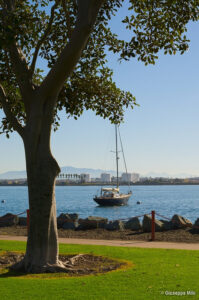
The West Coast is where many first-time visitors underestimate distance. San Francisco, Los Angeles and San Diego look like a simple north-to-south route, but driving between them already takes several days once stops are included.
California works best when you choose between a city trip and a road trip. San Francisco needs no car for day-to-day sightseeing. Los Angeles is spread across a much larger area, and having a car can make some neighbourhoods and coastal destinations easier to reach. San Diego is more relaxed, but it still covers a wide stretch of coast.
The practical decisions around distances, rental cars, cities and national parks are central to planning a California trip. Two weeks is a much better starting point than trying to see the entire state in seven days.
The Pacific Northwest, including Oregon, Washington and British Columbia, lends itself to a separate journey through cities, forests, mountains and coastline. It should not be added casually to a California itinerary because another dot on the map happens to sit north of San Francisco.
Southern USA and Florida
The American South covers far more than warm weather. Food, music and history change between Louisiana, Texas, Tennessee, Georgia, the Carolinas and Florida.
Florida is its own planning problem. Miami, the Keys, Orlando and the Gulf Coast are separated by substantial driving distances. A short trip should focus on one part of the state.
Miami is most interesting when you move beyond the beach and spend time with its Latin American and Caribbean food, neighbourhoods and nightlife. It also works well as the beginning or end of a wider Florida trip rather than a rushed stop between unrelated destinations.
Midwest and Great Lakes
The Midwest is often overlooked by international visitors, yet it contains major cities, enormous lakes and food traditions that differ sharply from either coast.
Chicago is the strongest urban base. Architecture, museums, neighbourhoods and the lakefront can fill four or five days. The city is famous for deep-dish pizza, but reducing its food to one dish misses the influence of Polish, Mexican, Italian, Chinese and many other communities.
Outside Chicago and the main cities, distances grow quickly and public transport becomes more limited. A Great Lakes journey generally needs a car and more time than the map suggests.
Mountain West
The Mountain West includes Utah, Colorado, Wyoming, Montana, Idaho, Nevada and parts of Arizona and New Mexico. This is the North America of national parks, open roads, ski towns and landscapes that appear to continue indefinitely.
Trips here are built around season. Mountain roads and hiking areas can remain snowy well into the year, while deserts become dangerously hot in summer.
Park City is known primarily as a winter destination, but we found a completely different town in late spring and early summer. Hiking, mountain biking and fly-fishing replace skiing, and accommodation can be more affordable. Our experience of Park City in summer covers the activities, restaurants and practicalities of visiting outside ski season.
Canada and Alaska
Canada and Alaska require firm choices because the distances are enormous. A trip through the Rockies, a journey around Atlantic Canada and a visit to Vancouver belong to separate itineraries.
The Canadian Rockies usually centre on Calgary, Banff, Lake Louise and Jasper. Vancouver and Vancouver Island fit more naturally into a Pacific Northwest route. Toronto, Montreal and Quebec City belong to eastern Canada.
Alaska also needs to be treated as a destination in its own right. Roads reach only part of the state, and many experiences depend on internal flights, ferries, cruises or organised excursions.
Mexico and Central America
Mexico contains enough variety for many separate trips. Mexico City, Oaxaca, Yucatán, Baja California and the Pacific coast differ in climate, food and travel style.
A first visit does not need to include both a city route and a distant beach resort. Mexico City and Oaxaca can form a strong cultural and food journey, while Yucatán works around archaeological sites, colonial cities, cenotes and the Caribbean coast.
Central America should also be planned country by country. Guatemala, Belize, Costa Rica and Panama may share borders, but transport between them can be slow. Border crossings and long bus journeys need to be included honestly when building a multi-country route.
Caribbean
The Caribbean is often treated as a single beach destination, but the islands have different languages, histories, landscapes and transport systems.
Island hopping is only practical where reliable flights or ferries exist. Two islands that look close may require an indirect flight. A one-island trip is often the better use of a week, especially if you want to explore beyond the resort.
Planning your trip to North America
Start by choosing a region rather than trying to connect distant landmarks. The main question is whether the trip will be urban, road-based, focused on nature or built around the coast.
| Type of trip | Transport that usually works best | Common planning mistake |
|---|---|---|
| Large city | Walking and public transport | Booking accommodation far from the areas you will visit |
| Regional road trip | Rental car | Planning distances without accounting for stops |
| National parks | Rental car or organised tour | Treating parks as quick roadside attractions |
| Cross-continent journey | Domestic flights | Losing several days to airports |
| Islands | Direct flight and local transport | Assuming ferries connect neighbouring islands |
| Multi-country Central America | Bus, shuttle and regional flights | Underestimating border and travel time |
Entry requirements differ between the United States, Canada, Mexico, Central America and the Caribbean. They also depend on nationality and transit route. Visas, travel authorisations and passport validity should always be checked through official government sources.
The United States and Canada also require some adjustment around prices. Sales tax is often added at payment, and tipping is expected in many service situations. Hotel charges, parking and resort fees can increase the final amount beyond the advertised price.
Travel insurance matters, particularly in the United States, where medical treatment can be extremely expensive. Rental-car insurance also deserves attention because coverage from credit cards or policies may include exclusions.
California is a good example of why the route should come before the attraction list. A journey including San Francisco, Los Angeles, San Diego, Yosemite and Death Valley crosses very different environments and adds long driving days. The choices involved in organising a California trip should be made before booking hotels.
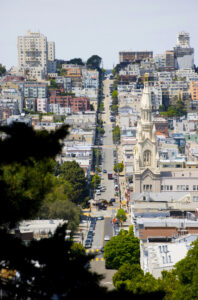
Within San Francisco, a car becomes a liability. Parking is expensive, and most neighbourhoods can be reached on foot, by public transport or by taxi. Choosing accommodation and understanding the hills, weather and transport are covered in our San Francisco travel advice.
Best North America itinerary
A good North America itinerary stays within one region. Crossing the continent only makes sense when the flight itself separates two distinct parts of the trip.
| Time available | A realistic plan |
|---|---|
| 4 to 5 days | One major city |
| 7 days | One city and its surrounding area |
| 10 days | A focused regional route |
| 14 days | A state, province or multi-stop road trip |
| 3 weeks | A longer road trip or two connected regions |
Five days works well for New York, Chicago, Miami or San Francisco. It gives enough time to move beyond the most familiar attractions and spend full days in different neighbourhoods.
San Francisco is frequently reduced to one or two nights at the beginning of a California road trip. We found that five days made much more sense. A five-day San Francisco itinerary allows time for North Beach, Chinatown, the Mission, Golden Gate Park and the city’s different food communities.
Ten to fourteen days is a better length for California. A focused coastal route might connect San Francisco, Los Angeles and San Diego. Adding national parks requires more time or fewer cities.
For Canada, ten days works for one region, such as the Rockies or the cities of Quebec and Ontario. Mexico also needs a regional approach. Mexico City and Oaxaca can share ten days, while Yucatán works as a separate journey.
Driving in North America
A car is essential for many North American journeys and unnecessary in several of its largest cities.
New York, San Francisco, Chicago, Toronto, Montreal and Washington are easier without a car. Los Angeles, national parks, mountain regions and most long-distance routes give drivers much more freedom.
Driving days should be calculated around road conditions, traffic, stops and daylight. A distance that appears manageable can become exhausting when it includes a city exit, mountain roads or several viewpoints.
Rental agreements need to be checked for one-way fees, mileage restrictions, insurance and permission to cross borders. Taking a car between the United States, Canada and Mexico can involve additional conditions even when the border itself is open to the traveller.
In California, pick up the car when you are ready to leave the city rather than paying to park it for several days. San Francisco is especially expensive and inconvenient for drivers, while a vehicle becomes far more useful once the route moves along the coast or inland.
Fuel stations can be far apart in remote parts of the United States and Canada. National parks also need more time than their distance from the nearest city suggests. Arriving at the entrance is only the beginning of the day.
When to visit North America
There is no single best time to visit North America. Latitude, altitude, storm seasons and desert heat create completely different conditions across the continent.
| Region | Generally useful period | Main consideration |
|---|---|---|
| Northeast USA and Eastern Canada | April to June and September to October | Hot summers and cold winters |
| California coast | April to June and September to October | San Francisco can remain cool and foggy |
| Florida and the Caribbean | December to April | Heat, humidity and tropical storms later in the year |
| Midwest and Great Lakes | May to June and September to October | Cold winters and humid summers |
| Mountain West | June to September | Snow can remain at higher elevations |
| Canada and Alaska | June to September | Long distances and short seasonal access |
| Mexico | November to April | Conditions vary between coast, mountains and cities |
| Central America | December to April in many areas | Rainy seasons differ by country and coast |
Spring and autumn work particularly well for American city trips. Temperatures are usually more comfortable for walking, and accommodation may cost less outside major events.
California needs regional packing. San Francisco can feel cold and windy during months that are hot elsewhere in the state. Southern California is generally warmer, while mountain and desert areas require completely different preparation.
Park City is a useful example of seasonal pricing. Winter brings skiing and high demand, while late spring and summer bring hiking, biking and lower accommodation costs. We visited during the warmer period and found that summer suited Park City far beyond its reputation as a ski town.
How many days do you need in North America?
Four to five days is the minimum for a major North American city. A regional route needs ten days, while a road trip through a large state or province works better with two weeks.
| Type of trip | Recommended time |
|---|---|
| Major city | 4 to 5 days |
| City and nearby area | 7 days |
| Regional route | 10 days |
| State or province road trip | 10 to 14 days |
| Multi-region journey | 2 to 3 weeks |
| Cross-continent trip | 3 weeks or several separate trips |
New York, Chicago and San Francisco can each occupy five days. California needs at least ten to fourteen days if several cities are included. The Canadian Rockies, eastern Canada, Yucatán and central Mexico also deserve separate trips of around ten days.
Adding more days only helps when they are not immediately filled with more destinations. North America needs space for long journeys, weather changes and places that turn out to deserve an extra night.
Budget for travelling in North America
The United States and Canada can be expensive, particularly in major cities, national parks and remote areas. Mexico and much of Central America generally allow a lower daily budget, although beach resorts and popular islands can cost as much as destinations farther north.
| Cost level | Destinations | Main expense |
|---|---|---|
| Moderate | Mexico and much of Central America | Domestic transport and popular coastal areas |
| Moderate to high | Smaller US cities and inland regions | Rental cars and accommodation |
| High | New York, California, Miami and major Canadian cities | Hotels, restaurants, parking and taxes |
| High and seasonal | National parks, ski towns, Alaska and Caribbean resorts | Limited accommodation and transport |
Accommodation is often the largest cost. Parking can add a substantial daily charge in American cities, while rental cars become expensive once insurance, fuel and one-way fees are included.
Food prices also need tax and tips added. A menu price in the United States may be noticeably lower than the amount eventually paid.
Fast itineraries cost more. Domestic flights, airport transfers, rental-car changes and short hotel stays can turn a rushed route into a much more expensive trip.
Food in North America
North American food is best understood city by city and region by region. Migration, geography and local history matter far more than a single idea of “American food.”
New York has an overwhelming number of choices, which makes eating badly surprisingly easy. We organise food days around neighbourhoods rather than travelling across the city for every famous address. Our New York food recommendations include delis, pizza, bagels, diners, bakeries and restaurants we return to.
Los Angeles has no single food centre. Mexican cooking, Korean barbecue, farmers’ market produce, seafood and restaurants built around specific communities are spread across an enormous city. The easiest way to approach eating in Los Angeles is by food type and neighbourhood.
San Diego’s food makes more sense once you consider its proximity to Mexico, coastal location and relaxed dining culture. Mexican restaurants, seafood and contemporary Californian cooking all appear in our selection of San Diego restaurants.
Miami belongs to a different food world. Cuban, Caribbean and wider Latin American influences are part of everyday eating, alongside seafood and restaurants built around the city’s nightlife. This is the context behind our Miami food choices.
Chicago deserves more than a quick deep-dish pizza stop. Italian beef, hot dogs, tavern-style pizza and dishes brought by immigrant communities make the city one of the most interesting places to eat in the country. Our introduction to what to eat in Chicago focuses on the foods that belong specifically to the city.