

A first-hand guide to Vietnam’s coastline: the beaches we loved, the ones that surprised us, and the places that show the country’s real character.
Vietnam may not always come up first when people think of beach destinations in Asia, but it should. With more than 3,000 kilometers of coastline, the country offers a surprisingly rich mix of places to swim, walk, or simply sit and watch life unfold along the water. Some beaches are calm and untouched, others sit right next to busy cities — and most still manage to keep a sense of authenticity that’s becoming rare elsewhere in Southeast Asia.
We’ve visited several of these places during our trips across the country. Some impressed us for their natural beauty, others for the people or the food you can find nearby. A few didn’t quite meet expectations, but that’s also part of traveling Vietnam: discovering what feels right for you.
An Bang
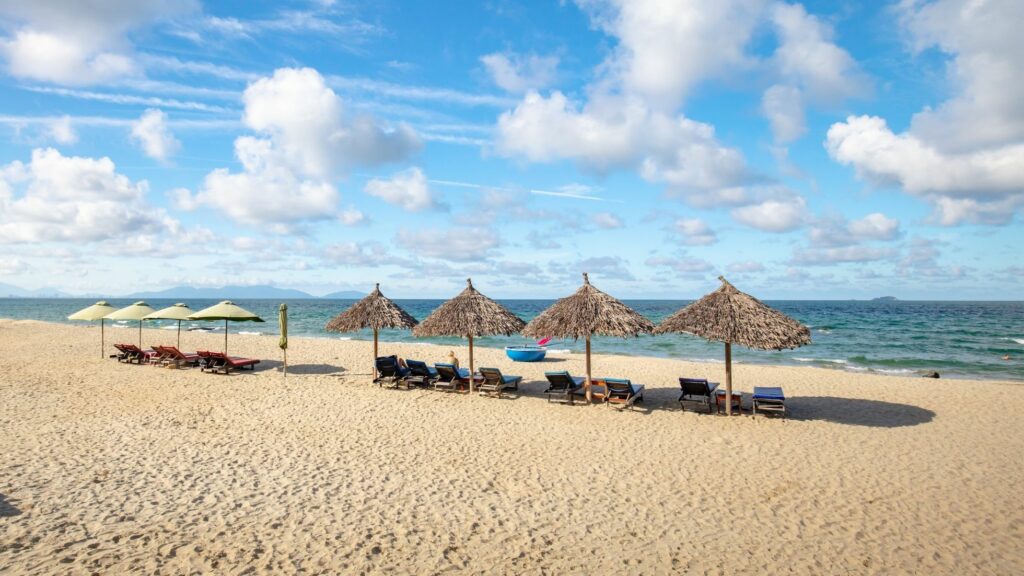
Close to Hoi An, An Bang is the beach that balances things well: wide, clean, and lively without being chaotic. It’s an easy escape if you want to stay near Hoi An’s historical center but still enjoy real sea air. The sand here is fine and pale, and the Cham Islands appear faintly on the horizon on clear days.
Many travelers now stay directly by the beach, using Hoi An more as a day trip than a base. Cafés serve strong Vietnamese coffee in the morning and seafood at sunset, and the rhythm feels slow enough to actually relax. It’s one of those places where a few unplanned days turn into a small routine of swimming, eating, and watching the sea change color through the afternoon.
Phu Quoc

Phu Quoc has changed a lot in the last decade, once quiet, now full of resorts, but it still delivers that tropical island feel many people come to Vietnam looking for. The coastline is long and varied; if you venture away from the main resorts, there are still quiet corners where palm trees lean over the sand and you can hear nothing but the water.
Sao Beach is the one everyone talks about, and for good reason: white sand, clear water, and that postcard-perfect light you can’t fake. It’s also the most crowded, so mornings and weekdays are best. The cable car from An Thoi to Hon Thom island is touristy but fun, giving a good sense of how green and wild the island still is inland.
Nha Trang
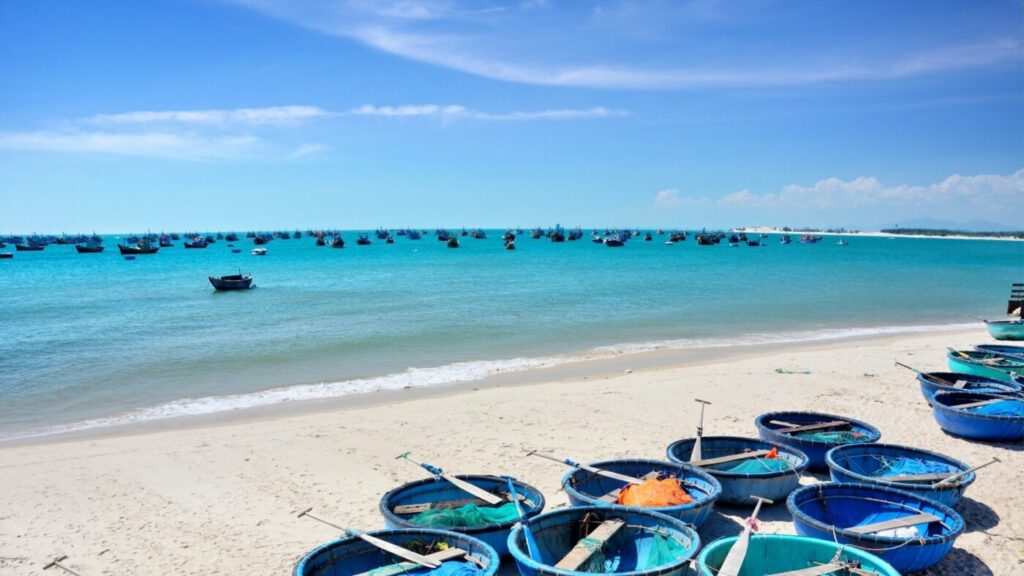
Nha Trang is unapologetically a city beach: busy, organized, and social. The sand forms a perfect curve along the bay, and there’s always something happening, from early-morning swimmers to late-night food stalls.
If you want quiet, head a little south or take a short boat ride to Ninh Van Bay; the sea there is calm, and the beaches are lined with rocks instead of hotels. For everyone else, Nha Trang is easy and comfortable, the kind of place where you can swim before breakfast and find a bowl of seafood noodles two minutes later.
Con Son

Con Son feels like the Vietnam that still keeps its distance from mass tourism. Once a place of exile and prisons, it’s now peaceful and covered in dense forest that reaches down to the sea. The beaches are simple and beautiful: wide stretches of sand with barely anyone on them and the water is among the clearest in the country.
Reaching Con Son is easy enough with a short flight from Ho Chi Minh City, but once you’re there, things slow down completely. You’ll find a few small hotels and eco-resorts, diving schools, and not much else. That’s exactly the point.
Mui Ne

We first went to Mui Ne when it was still talked about as Vietnam’s number one beach resort. It has changed, mostly because of erosion and too much construction, but parts of it still hold up. The sand dunes glow orange at sunrise, the wind picks up in the afternoon, and the town fills with kites from the dozens of surfers who come here for the perfect conditions.
If you’re into kitesurfing or just like watching the action from a café, Mui Ne still works. If you’re after quiet swimming and long walks, it’s harder to find now but with the new highway from Ho Chi Minh City, it makes an easy weekend break.
Doc Let
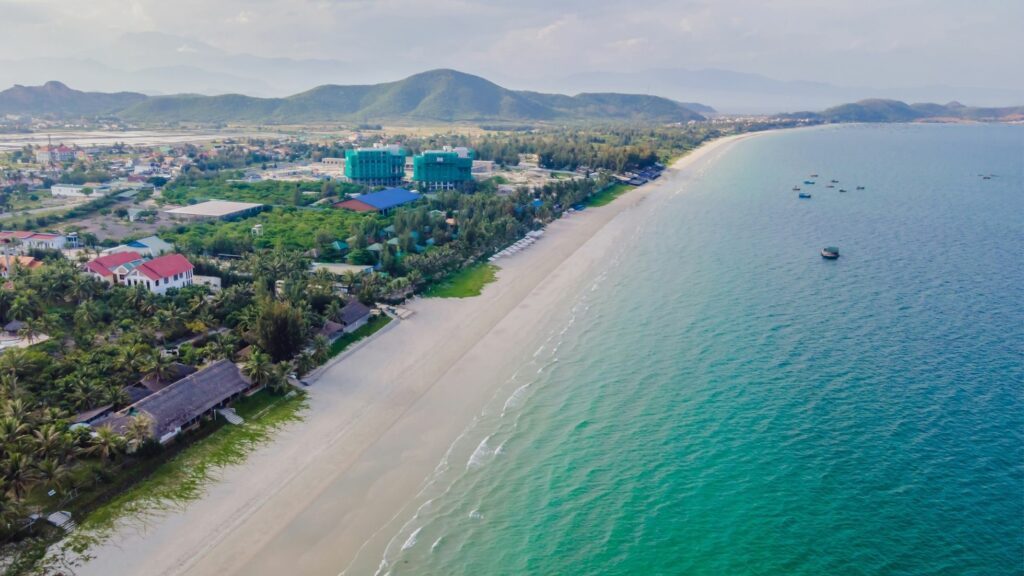
Doc Let sits north of Nha Trang and stretches for what feels like forever — 18 kilometers of white sand and shallow turquoise water. Development is arriving, but slowly enough that you can still find long, empty sections with just a few fishing boats in view.
It’s a good place for travelers who like space and quiet rather than nightlife. Families tend to like it too because the sea stays shallow for a long way out. Go early in the morning before the heat builds, when the light is soft and the fishermen are pulling in their nets.
Ho Coc
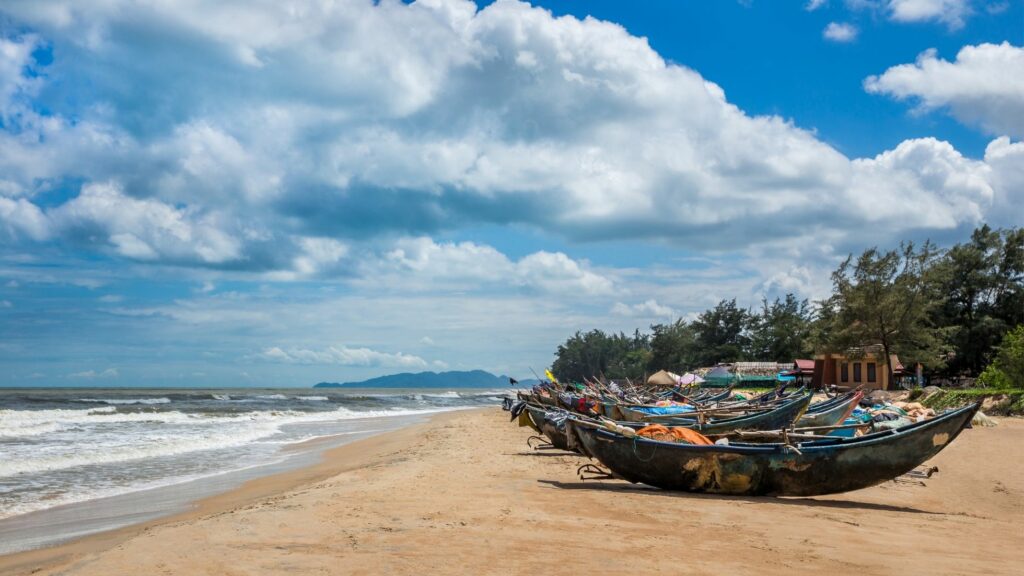
Ho Coc is the beach most Saigon locals escape to when they need a break. It’s only a couple of hours away and still manages to feel wild, with yellow sand, clear water, and forest behind it. Weekends can get busy, but during the week it’s calm and quiet.
It’s not luxurious, but it’s easy: simple resorts, small seafood places right by the beach, and long stretches where you can just walk and think. The wind here smells like salt and pine, a combination that makes the place oddly memorable.
My Khe (Danang)

My Khe has become part of Da Nang’s identity. In the early morning, locals gather for t’ai chi or to swim before work. Later in the day, the beach fills with visitors, but it rarely feels cramped.
The sand is clean, the facilities well-organized, and the sunsets are among the best in central Vietnam. We’ve seen fishermen mending their nets beside beachgoers taking selfies: a strange mix that somehow works. If you’re staying in Da Nang, you’ll probably end up here every day without planning to.
Cat Ba

Part of Ha Long Bay, Cat Ba manages to keep a balance between dramatic scenery and real life. The three small beaches known as Cat Co 1, 2, and 3 are simple — soft sand framed by cliffs — and within walking distance of town.
Cat Ba can get crowded in high season, but go between March and May or in early autumn and it’s far more enjoyable. It’s also the best base for exploring Lan Ha Bay, where the water is cleaner and kayaking feels peaceful rather than touristic.
My Khe Beach (Quảng Ngãi)
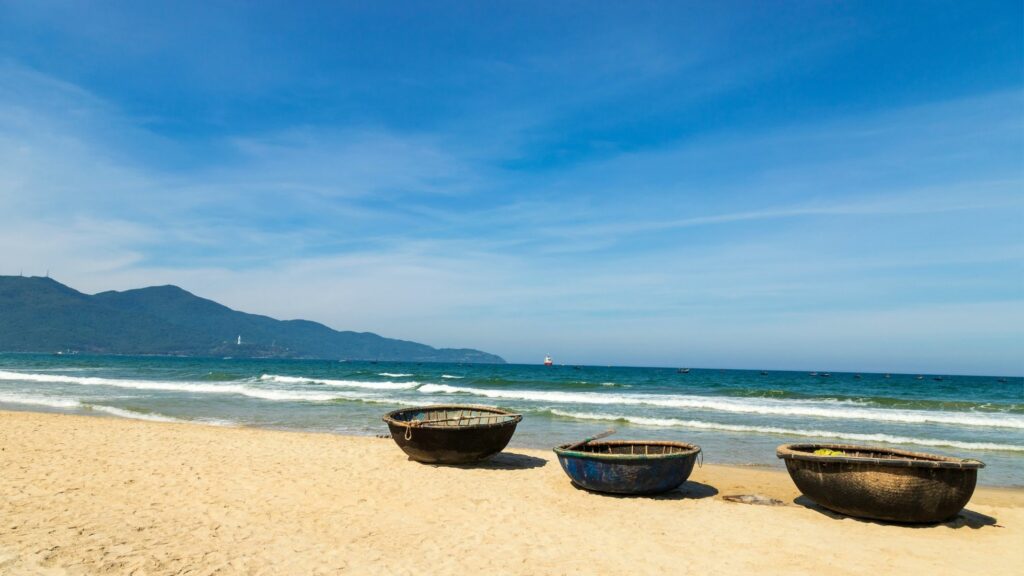
Further south, this lesser-known My Khe has the same beauty as its famous namesake in Da Nang but far fewer people. The sand is fine, the sea calm, and local life continues much as it always has.
If you’re traveling through central Vietnam by train or car, it’s worth stopping for a night. There’s little infrastructure, which is exactly what makes it special: just a few food stalls, a quiet promenade, and endless open beach.
Swimming in Ha Long Bay
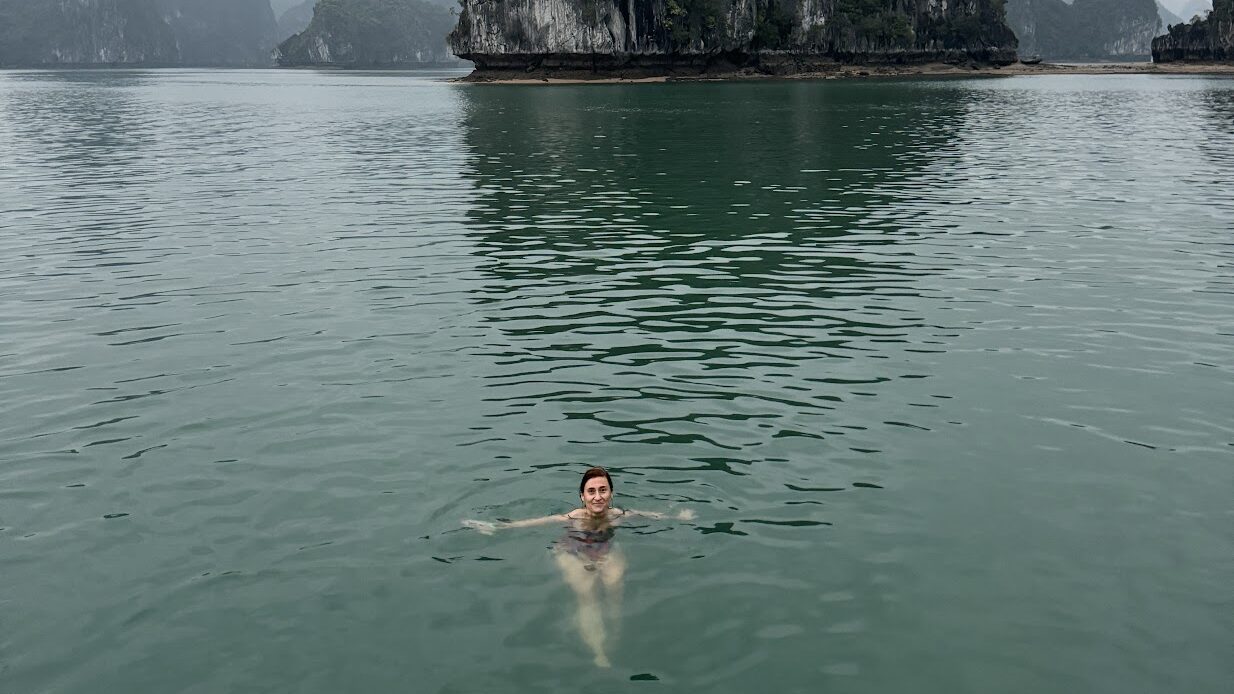
Ha Long Bay looks stunning in photos, and the scenery really is unique, but it’s not ideal for swimming. We’ve done it, both in Ha Long and in nearby Cat Ba Ba, and the water wasn’t as clean as we expected. Plastic debris, the occasional dead fish, and murky visibility made it more of a lesson than a pleasure.
The bay is still worth visiting for the landscapes and kayaking, but if swimming is what you want, stick to Cat Ba’s small beaches or head south to Da Nang or Phu Quoc.
When to Go
Because Vietnam covers so much ground north to south, weather changes fast along the coast.
- North (Ha Long, Cat Ba): Best from May to August — hot, bright, and perfect for short swims.
- Central (Da Nang, Hoi An, Nha Trang): Best from January to August, avoiding the autumn rains.
- South (Phu Quoc, Mui Ne, Ho Coc): Best from November to April — the dry season, with warm, clear days.
For diving or snorkeling, February to May brings calm seas and good visibility; for surfing, Mui Ne works best between October and April. Check our article on the best time to visit Vietnam.
Why Vietnam’s Beaches Are Worth It
Vietnam’s beaches aren’t always perfect, and that’s part of their charm. Some are still half wild, others sit right next to busy towns, and each has its rhythm. You might come for the sand and stay for the food, the early-morning fishermen, or the feeling of being somewhere that’s changing but still unmistakably itself.
For us, that mix of imperfection and beauty is exactly what makes Vietnam’s coastline memorable. It’s not the easiest to define, but once you’ve seen it, you understand why people keep coming back.