

Hoi An is one of Vietnam’s most famous destinations, known for its lantern-lit streets, historic trading houses, and well-preserved architecture. On paper, it’s everything a traveler could want: history, food, beaches, and atmosphere.
But if we’re honest, Hoi An didn’t win us over. It’s undeniably beautiful, yet also carefully curated for visitors, with parts of the old town feeling more like a set than a living city. After spending time in other parts of Vietnam, we found Hoi An a little too polished, a little too staged.
That said, there are still reasons to visit, if only briefly. The town’s history is remarkable, its architecture fascinating, and its markets and surroundings worth exploring once. So, here’s our honest guide to Hoi An: what’s still worth seeing, what to skip if you’re short on time, and how to experience it without getting lost in the crowds.
Even if Hoi An felt overly polished, we still found a few experiences that are worth your time. Here’s what we’d actually recommend seeing.
Walk Through the Old Town

Hoi An’s Old Town is the city’s main draw. The yellow façades and tiled roofs are beautiful, but the area can feel more like a theme park than a neighborhood. Go early in the morning or late at night, when most tour groups are gone, and it’s easier to appreciate the charm without the selfie sticks.
Buy the city ticket: it covers landmarks like the Japanese Covered Bridge, Quan Cong Temple, and a few traditional houses. It’s worth seeing once, but it’s not somewhere we’d linger for days.
Cross the Japanese Covered Bridge
Built in the 17th century to connect the Japanese and Chinese quarters, the bridge is one of Hoi An’s most photographed spots. It’s small, crowded, and hard to enjoy during the day, but early mornings are quiet enough to see the details that make it special: the carvings, the small shrine, and the view over the canal.
Visit the Hoi An Night Market

The Night Market on Nguyen Hoang Street is bright, loud, and very much designed for tourists. The lanterns are lovely, but the crowds can be overwhelming. Still, it’s an easy place to grab a quick snack or pick up a small souvenir if you’re passing by. For a calmer experience, walk along the riverfront instead and enjoy the reflections from a distance.
Step Inside the Fujian Assembly Hall
One of the few genuinely atmospheric spots left in the old quarter. The Fujian Assembly Hall, with its incense coils, dragon fountains, and intricate details, is worth a quiet visit. Despite the crowds outside, it retains a sense of peace and tradition.
Take a Break at An Bang Beach

If the old town feels too busy, head ten minutes north to An Bang Beach. It’s popular but still more relaxed than the center. You’ll find basic cafés and deckchairs, local families swimming at sunset, and a stretch of coastline that reminds you why central Vietnam is so loved.
Visit the Cantonese Assembly Hall
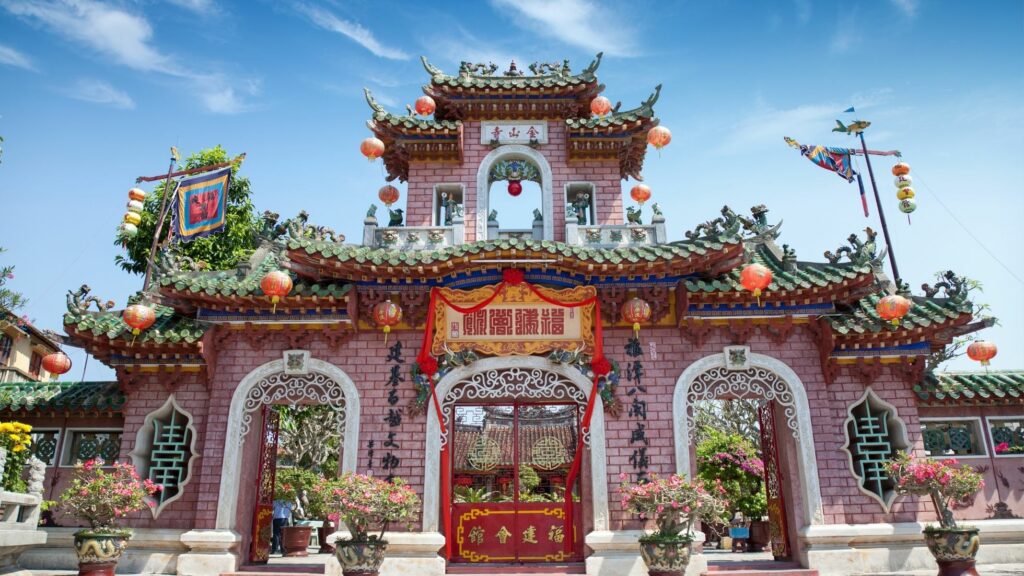
Another reminder of Hoi An’s trading history, this hall is ornate and well kept, though it now feels more like a stop on a sightseeing route than a community space. If you’ve already seen the Fujian Hall, you can skip it: they share similar styles and rituals.
See the Old Houses
Hoi An’s merchant houses, like Tan Ky and Phun Hung, are among the most interesting parts of the town. Some are still lived in by the descendants of the original owners, and the short tours show how people adapted to the yearly floods. It’s one of the few experiences that feels both educational and genuine.
Stop by the Central Market
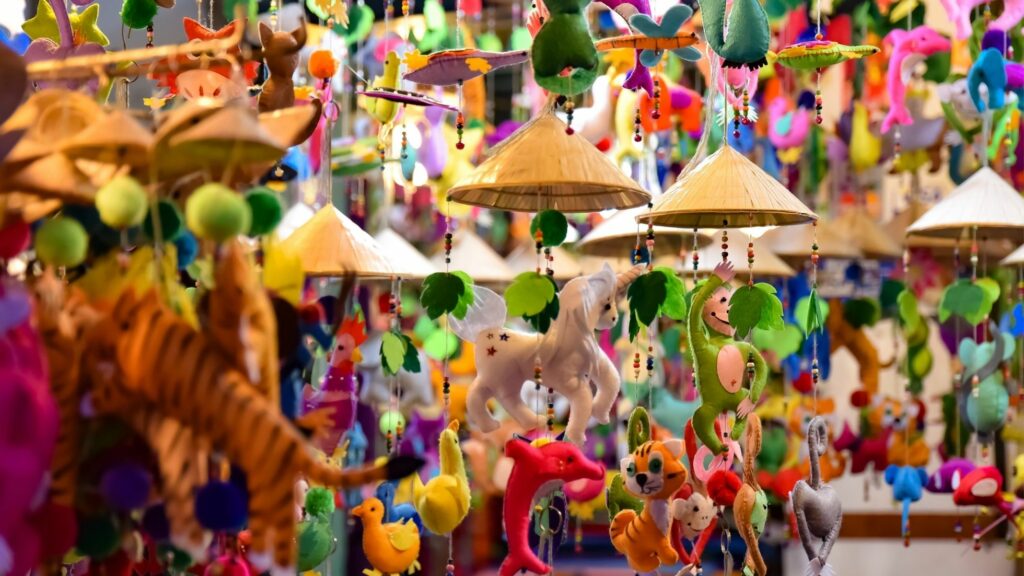
The Central Market is chaotic, crowded, and a bit messy. And that’s why we liked it. Away from the polished façades of the Old Town, this is where you get a glimpse of everyday Hoi An. Order a bowl of cao lầu or banh xèo, sit shoulder to shoulder with locals, and let the city feel real again.
Old House of Phun Hung
If you only visit one of the old houses, make it Phun Hung. Built in the 18th century, it’s still lived in by the eighth generation of the same family, who guide visitors through themselves. The mix of Chinese and Japanese influences shows in the structure: carved beams, trap doors, and dark wood interiors. It’s one of the few moments in Hoi An where history feels personal rather than curated.
Quan Cong Temple
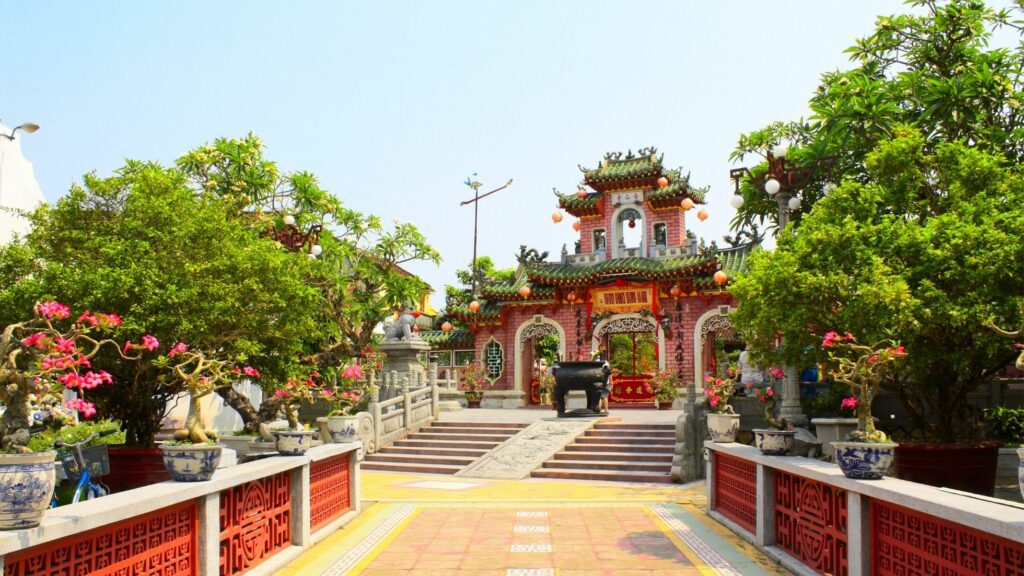
Dedicated to the general Quan Van Truong, celebrated for his loyalty and integrity, this temple sits quietly in the center of the old town. The colors are vivid, the carvings delicate, and it still serves as a working place of worship. Visit early or in the late afternoon when it’s less busy; it’s a good place to pause and breathe amid the sightseeing circuit.
Try a Cooking Class (With Caution)
For reasons that we didn’t get, Hoi An is full of cooking schools, some excellent, others purely staged for tourists. Choose carefully: smaller, family-run classes like Gioan or Red Bridge are the best. The market visits are fun, and you’ll actually cook, not just pose for photos. It’s still touristy, but it’s one of the few ways to connect with Vietnamese food culture in an authentic way here.
Make a Day Trip to the Cham Islands

If you have time, leave Hoi An altogether the Cham Islands are ideal if you need a break from tourism overload. The beaches are clean, the snorkeling good, and the pace slow; exactly what Hoi An isn’t.
Take a Bike Ride Beyond Town
Cycling is one of the best ways to escape Hoi An’s crowds. Ride through rice fields, small villages, and narrow paths along the river. Once you’re out of the center, the air changes and so does the mood: this is the Hoi An we liked best. Quiet, green, and full of small encounters that feel real.
Visit Thanh Ha Pottery Village

A short ride from the city, Thanh Ha Pottery Village is calm, creative, and still connected to its roots. You can watch artisans shape clay with traditional techniques or try the wheel yourself. Compared to the bustle of the Old Town, it’s a refreshing pause.
Get a Tailor-Made Suit (If You Have Time and Patience)
Hoi An is famous for its tailors, and while the tradition has real roots in the city’s history as a silk trading hub, the modern scene is mostly geared toward tourists. You’ll find hundreds of shops promising custom suits or dresses within 24 hours: some are excellent, many are not.
If you decide to order something, choose carefully. Ask locals or other travelers for recent recommendations and avoid places that feel pushy. The best tailors, will take proper measurements and do at least one fitting. Expect good craftsmanship, but don’t rush it: if you only have a day or two, it’s probably not worth the stress.
Take a Trip to Mỹ Sơn Sanctuary

About an hour from Hoi An, Mỹ Sơn Sanctuary is one of Vietnam’s most important archaeological sites and a rare glimpse into the lost Champa Kingdom. The temple ruins, surrounded by thick jungle, date back as far as the 4th century and still carry a quiet sense of mystery.
It’s often compared to Angkor Wat, but on a much smaller scale. Go early in the morning before the heat and tour buses arrive. Even with the damage from past wars, the carvings and moss-covered towers are powerful reminders of Vietnam’s layered history and one of the few day trips from Hoi An that truly feels worth it.
When to Visit Hoi An
The dry months between February and May are the most comfortable, with mild heat and clear skies. June to August is sunnier but hot, while September to January brings rain and occasional floods.
| Month | Climate | Recommended Activities |
|---|---|---|
| February – May | Dry, Warm | Sightseeing, Outdoor Activities, Cultural Festivals |
| June – August | Hot | Beach Visits, Evening Markets (Note: Higher Temperatures) |
| September – January | Wet Season | Indoor Activities, Museum Visits (Note: Possible Rainfall) |
A Final Word on Hoi An
Hoi An is undeniably photogenic, but we left with mixed feelings. It’s one of those places where the balance between authenticity and tourism has tipped too far. The history is real, the food excellent, but the old town feels like it’s performing for visitors more than living its own story. If you come, treat it as a short stop: one day is enough. Walk early, eat well, and then head somewhere quieter to find the Vietnam that still moves at its own pace.
If you’re heading north, don’t miss our guide to Da Nang: a city that surprised us for all the right reasons.