Japan Travel and Food Guides
This Japan travel hub brings together what we have learned over years of returning to the country, connecting our destination and food guides with the practical decisions needed to build a trip that works.
Japan is easy to move around, yet surprisingly easy to plan badly. The trains are efficient, cities are safe and daily life is highly organised. The difficulty comes from the amount of choice. A first itinerary can quickly become a list of cities, temples, neighbourhoods and day trips with no room left to experience any of them properly.
We have travelled to Japan repeatedly and speak the language, but every visit still changes our understanding of the country. Tokyo alone can fill an entire trip. Kyoto needs more patience than its compact map suggests. Osaka works best when there is time to eat, talk and stay out after the daytime visitors have left. Mountain towns and rural areas introduce a quieter Japan, though they require more careful transport planning.
For a first visit, 10 days is the shortest period we would recommend for travelling beyond Tokyo. Fourteen days give you a much better balance between cities, day trips and unplanned time. With three weeks, it becomes possible to include the Japanese Alps, Hiroshima or a smaller region without turning every other day into a transfer.
Regions of Japan
Japan is divided into eight main geographical regions, extending from Hokkaido in the north to Okinawa in the south. Most first journeys concentrate on Kanto, Kansai and part of Chubu or Chugoku because these regions contain Tokyo, Kyoto, Osaka, the Japanese Alps and Hiroshima.
Thinking in regions helps more than building a list of unrelated cities. It keeps travel times under control and makes day trips easier to organise.
| Region | Main destinations | Why include it | Time to allow |
|---|---|---|---|
| Kanto | Tokyo, Hakone, Kamakura, Nikko | Big-city life, neighbourhoods, museums and day trips | 5–7 days |
| Kansai | Kyoto, Osaka, Nara, Kobe | Temples, traditional culture and regional food | 5–7 days |
| Chubu | Kanazawa, Takayama, Shirakawa-go, Matsumoto | Mountains, historic towns and rural Japan | 4–6 days |
| Chugoku | Hiroshima and Miyajima | Modern history, island scenery and local food | 2–3 days |
| Hokkaido | Sapporo and northern landscapes | Snow, nature, skiing and seafood | 5–7 days |
| Kyushu | Fukuoka, Nagasaki, Beppu and Kagoshima | Onsen, volcanic landscapes and food | 5–7 days |
| Shikoku | Matsuyama, pilgrimage routes and Iya Valley | Walking, temples and slower travel | 4–7 days |
| Okinawa | Naha and the southern islands | Beaches, subtropical nature and Ryukyuan culture | 4–7 days |
Kanto: Tokyo and Its Surroundings
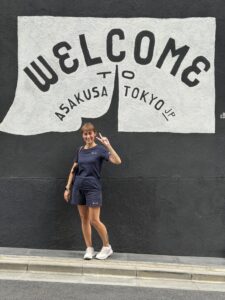
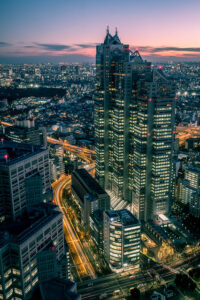
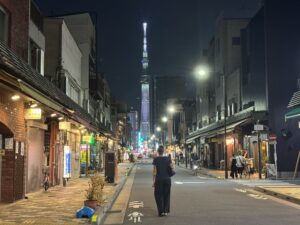
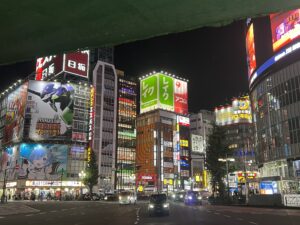
Tokyo needs at least four full days on a first visit, and five or six are easy to fill. Its size is part of the problem. A map makes Shibuya, Shinjuku, Asakusa and Ueno look like attractions within one city. Each is a substantial district with its own stations, side streets, restaurants and daily rhythm.
Our Tokyo travel and food hub is the best starting point for exploring the city because it connects the neighbourhood guides with practical advice, culture and food. Visitors arriving for the first time should group days geographically. Shibuya and Harajuku work together. Ueno can be followed by Yanaka and Nezu. Asakusa deserves a morning, an evening or even a hotel stay rather than a hurried stop at Sensō-ji.
The slow change between Ueno Park and the smaller streets of Yanaka is one of our favourite ways to understand Tokyo. The city becomes lower, quieter and more residential within a short walk. Our route through Ueno and Yanaka follows that transition on foot.
Tokyo also makes a practical base for Hakone, Mount Mitake, Kamakura and Nikko. Some work as day trips, although staying overnight in Hakone gives you time for an onsen and removes the pressure of returning to the city at a fixed hour.
Kansai: Kyoto, Osaka and Nara
Kyoto and Osaka are close enough to be connected by ordinary trains, but their personalities are completely different.
Kyoto’s main sights are spread across several parts of the city. Fushimi Inari is in the south, Arashiyama is in the west, and many of the best-known temples are in the east and north. Crossing Kyoto several times in one day wastes time and becomes exhausting, particularly when buses are crowded. Divide the city into areas and give each one several hours.
Early mornings matter in Kyoto. Fushimi Inari, Kiyomizu-dera and Arashiyama feel very different before the larger groups arrive. Once the main sites become busy, move into residential streets, gardens or smaller temples instead of spending the day fighting the same crowds.
Osaka is more immediate. Food, nightlife and conversation are central to the experience, particularly around Namba, Dōtonbori, Tenma and Shinsekai. Two nights are enough for an introduction, although three provide time for a day trip to Nara, Kobe or Himeji.
Nara can be visited from either Kyoto or Osaka. The deer receive most of the attention, but Tōdai-ji and its immense bronze Buddha are the real reason to go. Arrive early, continue beyond the busiest section of Nara Park and allow time for the temple grounds.
Chubu and the Japanese Alps
Chubu is where a journey starts to move away from the standard Tokyo, Kyoto and Osaka route. Kanazawa, Shirakawa-go, Takayama and Matsumoto can be joined into a rewarding mountain itinerary, but the connections require more attention.
Kanazawa is accessible by train and works as the entrance to the region. Shirakawa-go and Takayama rely more heavily on buses, some of which should be reserved in advance during busy periods. Matsumoto reconnects the route with the rail network and provides an easy return towards Tokyo.
This part of Japan deserves at least four days. Adding a mountain town as a single overnight stop usually creates more luggage handling than useful time. Two nights in Kanazawa or Takayama allow you to see the streets after tour groups have left and eat the regional food without watching the clock.
The Nakasendō route is another way to experience central Japan. Walking between former post towns introduces a landscape of forests, villages and old roads that feels far removed from the large cities. It works particularly well for travellers returning to Japan who have already covered the classic route.
Chugoku: Hiroshima and Miyajima
Hiroshima and Miyajima can technically be visited as a long day trip from Kyoto or Osaka. Staying overnight is more respectful of the distance and gives each place the time it needs.
Hiroshima Peace Memorial Museum and Peace Memorial Park are emotionally demanding. Scheduling Miyajima immediately afterwards can make the entire day feel rushed. With two days, you can spend the first in Hiroshima and travel to Miyajima the following morning.
Miyajima changes with the tides. The torii gate can appear to float at high tide and becomes accessible on foot when the water recedes. Staying until evening also means experiencing the island after many day visitors have returned to the mainland.
Planning a Trip to Japan
The practical side of Japan becomes much easier when a few decisions are made before arrival. You do not need to schedule every meal or train, but accommodation, long-distance transport and limited-entry attractions deserve early attention.
Build the Route Before Booking Hotels
Start with the direction of travel. Flying into Tokyo and out of Osaka, or the reverse, can remove an unnecessary return journey. This is particularly useful on a 10-day trip, where travelling back to the starting city can consume half of the final day.
Once the route is clear, check the actual travel time between hotels. Shinkansen journey times rarely include local trains, walking through large stations, finding the correct exit or reaching the next accommodation. A two-hour train can still create a four-hour transition.
Calculate Train Fares Before Buying a Rail Pass
The national Japan Rail Pass is no longer an automatic saving for every multi-city itinerary. Price the major journeys individually and compare the total with the pass that covers the same period.
A Tokyo, Kyoto and Osaka route may cost less with individual tickets, especially when long-distance journeys are spread across more than seven days. Regional passes can be more useful when the itinerary concentrates on one area.
For local travel, an IC card such as Suica, Pasmo or ICOCA removes the need to buy separate tickets for most trains, metros and buses. We keep an IC card on our phones and also use it in convenience stores, vending machines and some lockers.
Choose Accommodation Around the Journey
Being near a useful station matters more than being near a famous attraction. In Tokyo, a hotel five minutes from a station on a convenient line can save hours over the course of the trip. Station size matters too. A hotel described as being near Shinjuku Station may still be a long walk from the line or exit you need.
Japanese hotel rooms are often compact. We travel light, which makes trains and small rooms easier to manage. Travellers with larger luggage can use forwarding services between hotels, though bags normally need to be sent ahead rather than expected immediately on arrival.
Ryokan stays require a different approach. Dinner and breakfast may be included, arrival times can be strict, and meals are prepared for a specific number of guests. Tell the property about dietary restrictions before arriving.
Prepare for Everyday Travel
Mobile data is essential for maps, train information and translation. Arrange an eSIM, SIM card or portable Wi-Fi before leaving the airport.
Cards are increasingly accepted, but cash remains useful in temples, small restaurants, countryside buses and older shops. Carrying some yen prevents a simple purchase from becoming a search for an ATM.
English signs are common on major transport routes. Communication becomes less predictable in small restaurants and rural areas, though pointing, photographs and translation apps solve most situations. Learning a few Japanese phrases is appreciated and usually makes interactions warmer.
Public behaviour is quiet and orderly. Queue where others queue, keep phone calls off trains and pay attention to local signs. Many etiquette rules become obvious once you stop and watch what the people around you are doing.
Tokyo has its own layer of practical challenges because of its scale. Our advice for visiting Tokyo covers accommodation, transport, payments and everyday expectations. The more detailed collection of things to know before visiting Tokyo is useful once the main bookings are in place.
Best Japan Itinerary
For a first visit, 14 days allow Tokyo, Hakone, Kyoto, Osaka, Nara and Hiroshima to fit into one route without reducing every city to its most photographed attraction.
| Days | Destination | How to use the time |
|---|---|---|
| 1–4 | Tokyo | Explore two connected areas each day |
| 5 | Hakone | Onsen, volcanic scenery and a ryokan stay |
| 6–9 | Kyoto | Divide the city into eastern, western and southern areas |
| 10 | Nara | Visit from Kyoto, then continue to Osaka |
| 11–12 | Osaka | Food, neighbourhoods and evening life |
| 13–14 | Hiroshima and Miyajima | History, the island and an overnight stay |
This route works best with an arrival in Tokyo and departure from Osaka or a return flight from Hiroshima where available. If the international journey must begin and end in Tokyo, leave enough time for the return rather than attaching it to the departure morning.
Hakone can be removed when the weather forecast is poor or when changing hotels for one night feels excessive. Those days can go to Tokyo or Kyoto. Hiroshima can also be replaced by Kanazawa if traditional neighbourhoods, crafts and gardens are a higher priority than modern history.
Ten days require a firmer choice. Tokyo, Kyoto and Osaka fit comfortably enough, with Nara added as a day trip. Trying to include Hakone, Hiroshima and several smaller towns in the same 10 days creates a trip dominated by check-outs and station platforms. Our 10-day Japan itineraries include several versions of the route, including a classic first visit and an alternative through Kanazawa, Shirakawa-go and Takayama.
In Tokyo, one of the most useful decisions is accepting that the city cannot be completed. Our Tokyo guide for first-time visitors is built around choosing what matters and leaving enough space to understand each neighbourhood.
When to Visit Japan
Late October through November is the most dependable period for a first trip covering Tokyo, Kyoto and Osaka. Temperatures are comfortable, humidity has dropped and autumn colours arrive gradually across the country.
Spring is equally beautiful, but cherry blossom travel requires flexibility. Full bloom lasts for a short period, forecasts change with the weather, and wind or rain can remove blossoms quickly. Hotels in Tokyo and Kyoto also become expensive and fill early. Our experience of hanami has included both beautiful evenings under illuminated trees and parks so crowded that the atmosphere was difficult to enjoy. The practical details are covered in our guide to cherry blossom season in Japan.
| Season | Conditions | Best for | Main difficulty |
|---|---|---|---|
| Spring | Mild with changeable weather | Cherry blossoms, gardens and walking | High prices and unpredictable bloom dates |
| Summer | Hot, humid and rainy in many areas | Festivals, fireworks and mountain travel | Heat can make city sightseeing tiring |
| Autumn | Comfortable with colourful foliage | First trips, hiking and city travel | Popular foliage areas become busy |
| Winter | Cold and generally drier in central Japan | Snow, skiing, onsen and clearer city days | Shorter daylight and regional transport disruption |
May, after the Golden Week holiday period, is one of the easiest times to travel. The weather is usually pleasant, gardens are green and the largest spring crowds have eased.
June brings the rainy season to much of the country. Rain is rarely constant all day, but humidity rises and outdoor plans need flexibility. July and August are intensely hot in Tokyo, Kyoto and Osaka. Summer makes more sense when festivals, Hokkaido or mountain walking are central to the journey.
Winter is often underestimated. Tokyo can have bright, clear days, Kyoto is quieter, and snowy regions are at their best. The trade-off is the shorter day and the need to plan around weather in mountain areas.
The busiest domestic travel periods include New Year, Golden Week in late April and early May, and Obon in August. Trains and accommodation should be booked early if the dates cannot be avoided.
How Many Days Do You Need in Japan?
Ten days are enough for Tokyo, Kyoto and Osaka. Fourteen days provide a better first trip, while three weeks allow a second region to be included properly.
| Available time | A realistic Japan route |
|---|---|
| 5–7 days | Tokyo with one or two day trips |
| 10 days | Tokyo, Kyoto, Osaka and Nara |
| 14 days | Tokyo, Hakone, Kyoto, Osaka, Nara and Hiroshima |
| 18–21 days | Classic route plus the Japanese Alps, Kyushu or Hokkaido |
| One month | Several regions with slower stays and rural travel |
A full week in Tokyo is not excessive. Four days cover the main areas, while the remaining time can be used for neighbourhoods, museums and day trips. Trying to divide seven days between Tokyo, Kyoto and Osaka leaves very little time once the transfers are counted.
Kyoto needs at least three full days. Two days are enough for Osaka if the focus is food and central neighbourhoods, although a third allows a slower pace or a day trip. Hiroshima and Miyajima deserve two days together.
On a return trip, choose one region instead of repeating the same national route. Kyushu, Hokkaido, Shikoku or the Japanese Alps can each fill a week or longer.
Japan Travel Budget
Japan can be expensive when the itinerary involves frequent Shinkansen journeys, high-season hotels and several one-night stays. Daily food and local transport are often more reasonable than visitors expect.
Budget in yen because exchange rates move. As a working estimate, excluding international flights and long-distance rail, allow:
| Travel style | Daily budget per person | What it generally covers |
|---|---|---|
| Budget | ¥10,000–¥16,000 | Hostel or shared business hotel, casual meals and local transport |
| Mid-range | ¥18,000–¥30,000 | Well-located hotel, varied meals and paid attractions |
| Comfortable | ¥35,000 and above | Better hotels, taxis, special meals and cultural experiences |
Accommodation creates the largest variation. A simple business hotel may be excellent value outside peak periods, while the same room can rise sharply during cherry blossom season, autumn foliage or major holidays. A ryokan may appear expensive, but the rate often includes dinner and breakfast.
Eating well does not require a large budget. A bowl of ramen, curry or a teishoku set meal can provide a substantial lunch for a modest price. Department-store food halls and supermarkets discount prepared food later in the evening. Convenience stores are useful for breakfast, snacks and travel days, although relying on them for every meal means missing much of Japan’s food culture.
Transport should be calculated separately. Add the prices of the Shinkansen journeys, airport transfers and regional buses before deciding whether a rail pass makes sense. Constantly changing hotels also increases spending through luggage storage, local transfers and hurried meals.
The budget section in our 10-day itinerary includes more detailed estimates for different travel styles, but live accommodation and transport prices should always be checked against your exact dates.
Food in Japan
Japanese food is intensely regional. Sushi and ramen are part of the picture, but travelling through Japan introduces local broths, noodle styles, seafood, pickles, sweets and cooking methods that rarely appear on international menus.
Tokyo has almost every Japanese cuisine, though its greatest strength is the number of specialist restaurants. A small restaurant may serve only soba, tonkatsu, eel or one style of ramen. This makes choosing meals easier. Decide what you want to eat, then look for a place that concentrates on that dish.
Kyoto is associated with kaiseki, tofu, yuba, vegetables and traditional sweets. Osaka is known for casual, direct food such as takoyaki, okonomiyaki and kushikatsu. Hiroshima has its own layered version of okonomiyaki. Kanazawa is strong for seafood, while Takayama is known for Hida beef. Regional station bentos are also worth trying on longer train journeys.
Our introduction to what to eat in Japan explains the dishes most travellers will encounter and the cultural context around them. In Tokyo, the choice becomes much more specific. Our guide to eating in Tokyo covers the main dishes, while the neighbourhood breakdown explains what to eat in different parts of Tokyo.
A few habits make eating in Japan easier:
- Many restaurants specialise in one dish. A short menu is often a good sign.
- Lunch sets are usually better value than ordering the same food at dinner.
- Popular restaurants may use ticket machines, numbered queues or reservation systems.
- Small restaurants can have limited seating, so avoid arriving with large luggage.
- Cash is still useful, especially in older establishments.
- Tipping is unnecessary.
- Vegetarian dishes may contain fish-based dashi even when no fish is visible.
- Eating while walking is uncommon outside festivals and designated market areas.
- On long-distance trains, eating a bento is normal. On local commuter trains, it generally is not.
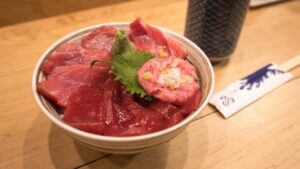
Some of our most memorable meals in Japan have been simple ones: a bowl of noodles at a station, a teishoku lunch surrounded by office workers or fresh seafood eaten at a market counter. Expensive reservations can be excellent, but everyday food explains the country just as clearly.