

There is a version of Tokyo that still moves slowly. A Tokyo made of narrow streets, family-run shops, wooden houses, cats sunbathing on rooftops, and parks where people sit with no rush. You find this version in Ueno and Yanaka, two districts that sit next to each other but feel surprisingly different.
We return here every time we are in the city, partly for the temples and parks, partly for the cafés and snacks, but mostly for the atmosphere. This area shows you a Tokyo that remembers itself, even as the rest of the city accelerates.
If you’re searching for what to see in Ueno, what to do in Yanaka, or simply want to explore a quieter, older Tokyo, this guide takes you through everything we’ve learned after many visits: the beautiful, the unexpected, the small details, and the honest impressions.
What to see in Ueno: museums, shrines, and a lake that changes with the seasons
Ueno is one of the largest green areas in central Tokyo, and that alone makes it worth visiting. But Ueno is not only peaceful. On weekends, it can feel overwhelming: the museums draw crowds, groups arrive in waves, and the entrances of the park can feel chaotic.
Yet, even on the busiest days, there are places in Ueno where you can breathe.
Shinobazu Pond
We always start here. The walk around Shinobazu Pond is simple, but it has depth: the way the skyline reflects in the water, the movement of the ducks, the changing colour of the lotus leaves depending on the season.
In summer the pond becomes a field of green, in winter the water looks almost metallic, and in autumn the light becomes softer. It’s one of the few places in Tokyo where you can stand still and take in the landscape without distraction.
Ueno Toshogu Shrine
Tucked behind rows of ancient stone lanterns, Ueno Toshogu is a quiet pause in the middle of an active district.
We always walk through the smaller side paths because they hold a charm that most visitors walk past.
Even during weekends, the shrine remains peaceful: a contrast to the movement outside the gates.
The Tokyo National Museum
If you want to understand Japan beyond what you see in temples and shrines, block time for this museum. The collection is extensive and beautifully curated, and even people who “don’t like museums” usually end up appreciating it. If you are lucky, you may be able to attend a special exhibition (we went there were they were celebrating Hello Kitty’s anniversary and the whole place felt like it was out of a manga)
Inside, the world softens: silence, air conditioning, and exhibitions that give context to the rest of your trip.
Where to eat in Ueno: simple food that fuels your walk
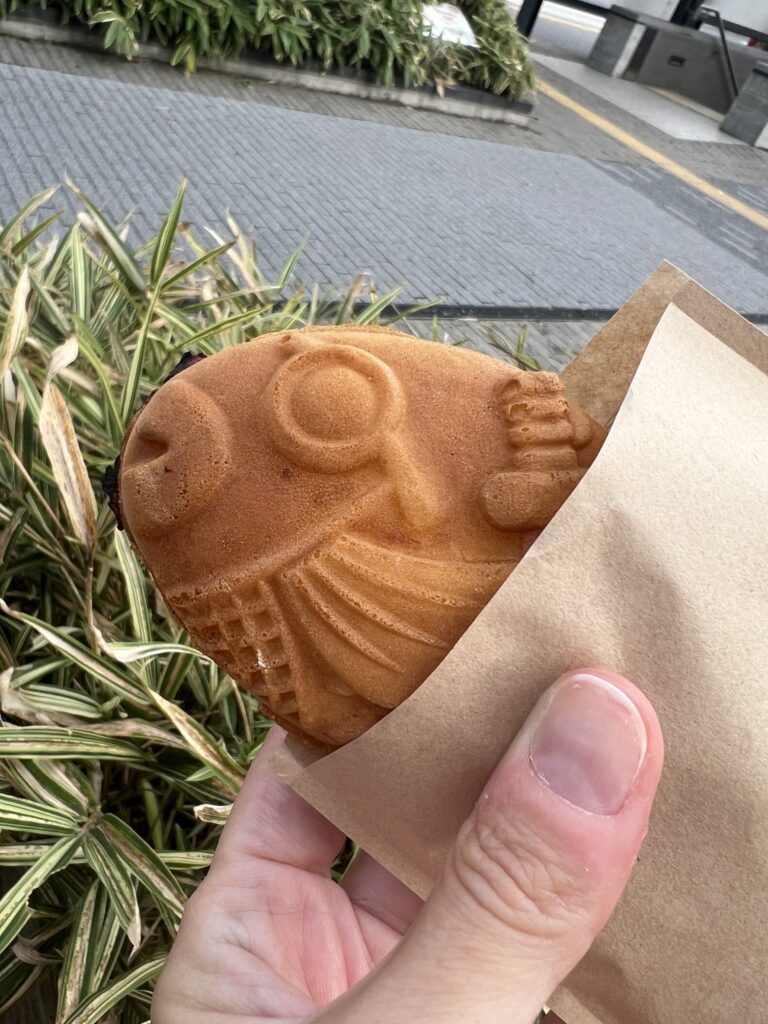
Ueno is not the place for long, elegant meals. It’s a district where you grab something small and keep going, and that’s part of its charm.
Ameyoko market
Between Ueno and Okachimachi, Ameyoko is loud, colourful, and slightly chaotic. The smells alone pull you in: grilled seafood, soy sauce, roasted nuts, freshly made takoyaki.
We usually stop for:
- takoyaki, crisp on the outside and soft inside
- taiyaki filled with custard or red bean
- yakitori, if we want something savoury
- seasonal fruit on sticks, refreshing in warm weather
It’s not refined, but it’s delicious street food that fits the neighbourhood’s energy.
Walking from Ueno to Yanaka: one of the most interesting transitions in Tokyo
The transition between Ueno and Yanaka is subtle but meaningful. You leave behind the crowds, the museums, the movement and the city shifts.
Buildings become shorter. Shops become smaller. Everything slows down.
This fifteen-minute walk is one of the simplest ways to feel how layered Tokyo can be. No subway needed. No planning. Just walking and watching the pace change.
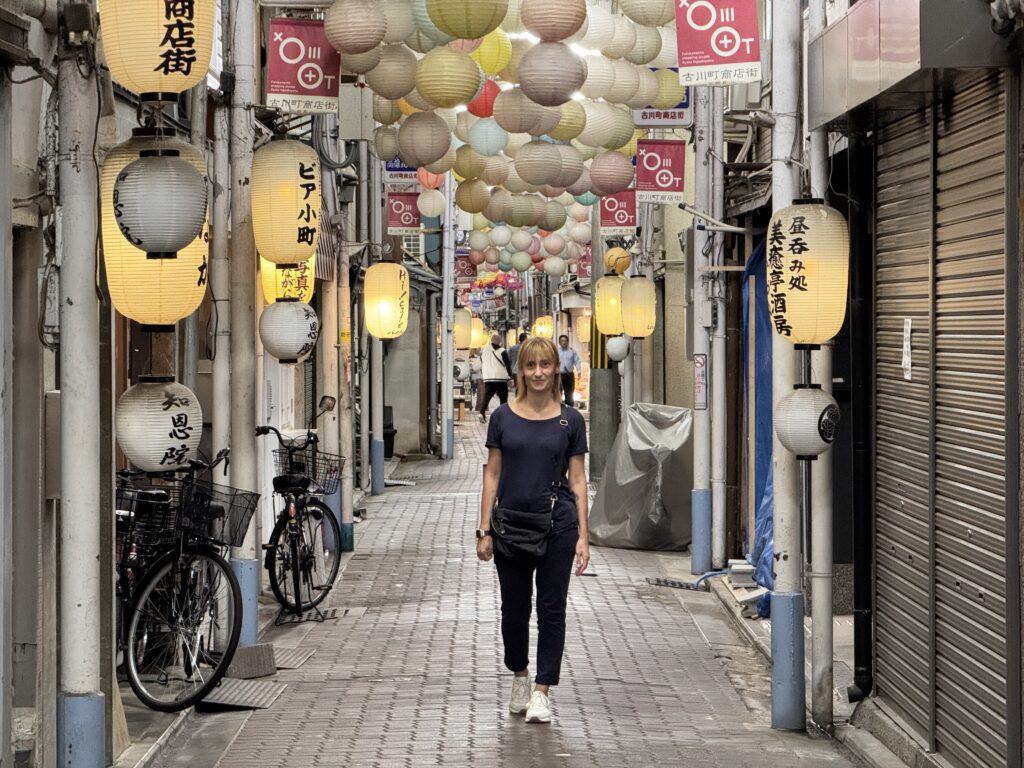
What to see in Yanaka: old Tokyo, changing Tokyo, and the Tokyo that remains
Yanaka is often described as “one of Tokyo’s last old neighbourhoods”, and while that’s true, it needs nuance.
Yanaka has changed and it’s important to acknowledge it
Yanaka Ginza, the famous main street, is increasingly shaped by tourism. Shops that once felt unique now look similar to those in other “retro” districts. The nostalgic aesthetic is still pretty, but it’s not the whole story.
The real Yanaka begins when you step away from the main street and enter the narrow residential lanes. This is where the neighbourhood keeps its soul.
Yanaka Cemetery
This cemetery feels more like a park than a place of mourning. Wide paths, tall trees, cats sleeping on warm stones: it’s one of the calmest spaces in northern Tokyo. We walk here not because it’s an “attraction”, but because it’s a beautiful part of daily life in Yanaka. In cherry blossom season, the paths turn into tunnels of soft colour; in autumn, the leaves make everything look golden.
Side streets behind Yanaka Ginza
This is the Yanaka we return to:
- Wooden houses that have survived decades.
- Small family shops selling vegetables in crates.
- Pottery studios with doors half-open.
- People greeting each other outside their homes.
These streets are intimate and human. If you want to understand Yanaka, this is where you walk.
Where to eat in Yanaka: local, warm, and genuinely good places
Ko Hi Ko Jo, café and garden
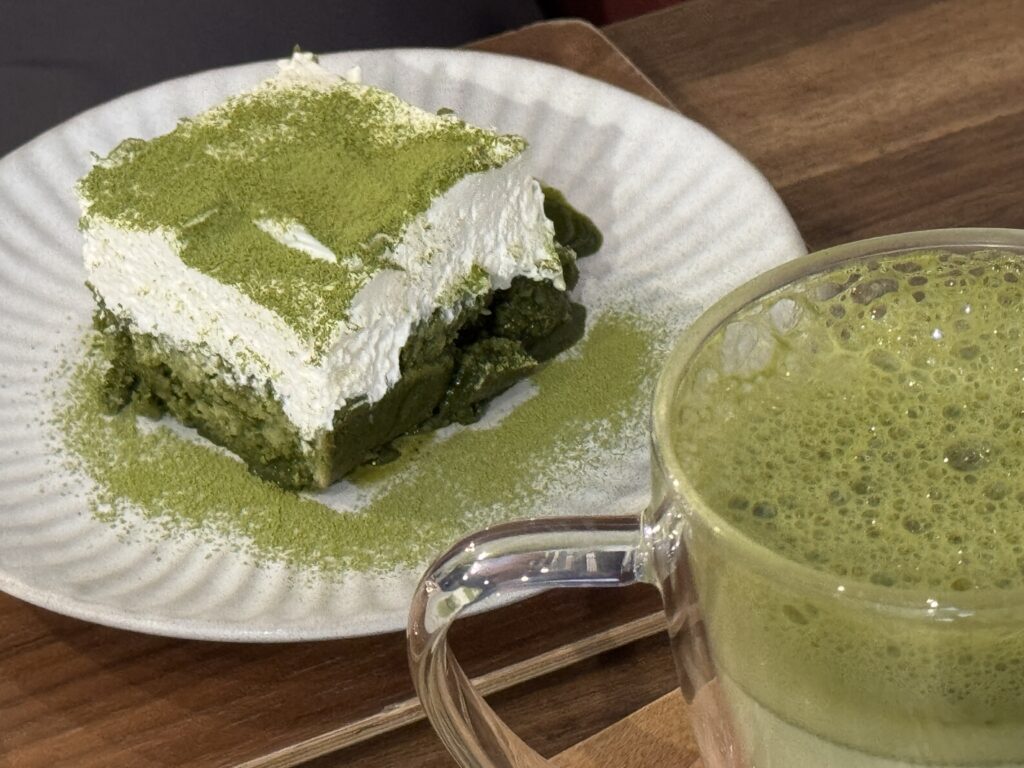
This is the place that captures the Yanaka we fell in love with. A small café hidden just enough to avoid the tourist rush. Warm staff, a quiet garden, and a feeling of being inside someone’s home rather than a business.
Their matcha tiramisu–style deserve its own mention: soft, and full of flavour without being overly sweet. Some of the best desserts we’ve had in Japan, and definitely worth making time for.
Senbei shops
You’ll smell them before you see them: warm, smoky rice crackers being grilled. We always stop for at least one. The flavour changes depending on the sauce and the grill, which means no two visits are exactly the same.
Small bakeries
Yanaka has a surprising number of small, excellent bakeries. Most are family-run, sell out early, and have no intention of modernising, which is exactly why they’re wonderful.
Nezu Shrine: a final quiet moment
Just a short walk from Yanaka, Nezu Shrine feels timeless. A pond, torii gates forming a red path, and a garden that changes colour beautifully through the year. It’s a calm end to a day that already moves at a gentle pace.
A suggested route through Ueno and Yanaka
If you want to experience the area without rushing, this route works well:
- Start at Ueno Station
- Walk through Ueno Park
- Circle Shinobazu Pond
- Stop at Ueno Toshogu Shrine
- Visit the Tokyo National Museum (optional but recommended)
- Eat a small snack in Ameyoko
- Walk toward Yanaka
- Explore Yanaka Cemetery
- Wander the side streets around Yanaka Ginza
- Pause at Ko Hi Ko Jo for matcha waffles
- End at Nezu Shrine
It’s a slow, balanced itinerary: a mix of culture, food, nature, and local life.
When Ueno and Yanaka feel at their best
- Morning: the quietest moment, especially in Yanaka
- Late afternoon: soft light over the wooden houses
- Weekdays: much calmer than weekends
- Spring & autumn: the most atmospheric seasons
And a note worth repeating:
Ueno on weekends can feel overwhelming, especially near the park entrances and museum area. If possible, schedule your visit early in the day.
Before you walk these streets
Ueno and Yanaka are not neighbourhoods that try to impress you. They don’t offer big attractions or dramatic surprises like Shibuya or Shinjuku. Instead, they offer moments — small, quiet, deeply human moments — that stay with you long after you leave, just like Asakusa.
We keep coming back because this area feels real. It shows a Tokyo that is changing, but not erasing itself. A Tokyo that moves slowly if you let it.