

If you love food as much as you love travel, Japan will spoil you. Its cuisine isn’t just famous. It’s part of everyday life, full of stories, textures, and rituals that stay with you long after you’ve left. Over the years, our love for Japan has led us to taste everything from humble street food to kaiseki dinners that feel like theatre.
That’s why we’ve put together this guide: to help you discover the dishes that truly define Japan. Not just the ones every guide lists, but the ones that say something about the country, its people, and its rhythm.
Japanese food is about balance: color, season, presentation, and taste. Every detail matters, because food here isn’t only something you eat. It’s how you pause, connect, and celebrate what’s in front of you.
So, whether you’re planning a trip or just dreaming of one, here’s where to start: the dishes that tell Japan’s story one bite at a time.
Essential Japanese dishes and how they are eaten
The table below outlines some of the essential Japanese dishes and how they are typically eaten, before explaining each one.
| Dish | Food category | Typical way it is eaten | Common in |
|---|---|---|---|
| Sushi | Rice and seafood dish | Vinegared rice combined with raw or cooked fish | Nationwide, especially Tokyo |
| Sashimi | Raw seafood dish | Thinly sliced raw fish eaten with soy sauce and wasabi | Nationwide |
| Ramen | Noodle dish | Wheat noodles served in meat or fish-based broth | Nationwide, regional styles |
| Tempura | Fried dish | Lightly battered seafood or vegetables fried in oil | Nationwide |
| Tonkatsu | Fried meat dish | Breaded pork cutlet served with rice and cabbage | Nationwide |
| Okonomiyaki | Savory pancake | Grilled batter with cabbage and mixed fillings | Osaka, Hiroshima |
| Takoyaki | Street food | Batter balls filled with octopus, eaten hot | Osaka, festivals |
| Miso soup | Soup | Miso paste mixed with dashi, served with meals | Nationwide |
| Yakitori | Grilled skewers | Chicken pieces grilled on skewers | Izakayas nationwide |
| Onigiri | Rice dish | Hand-shaped rice balls, often filled and wrapped in seaweed | Nationwide |
| Sukiyaki | Hot pot | Beef and vegetables simmered in sweet soy-based broth | Nationwide |
| Shabu-shabu | Hot pot | Thin meat and vegetables briefly cooked in boiling broth | Nationwide |
Sushi

Sushi has changed shape many times before becoming what we eat today. Its story begins with narezushi, an old method of preserving fish by fermenting it in rice — a practice that reached Japan centuries ago, probably from Southeast Asia. People would eat the fish and throw away the rice.
In the Edo period, everything shifted. Fermentation gave way to rice seasoned with vinegar, and Tokyo’s street vendors began serving Edomae-zushi: slices of fresh fish pressed by hand onto small portions of rice. Fast, simple, and perfectly suited to the city’s pace.
Over time, each region made sushi its own. In Tokyo, nigiri — a hand-shaped piece with a slice of fish on top — became the reference point. In Osaka, it turned into oshi-zushi, neatly pressed into wooden molds. There’s also chirashi-zushi, where rice and toppings are served in a bowl, and temaki, seaweed cones filled with rice and fish, eaten with your hands.
Seasonality still defines good sushi. The fish changes with the calendar, from rich, oily cuts in winter to delicate white fish in spring. Wherever you eat it in Japan — a train station counter, a family-run shop, or a Michelin-star restaurant — the essence is the same: precision, freshness, and balance in one quiet bite.
Sashimi

Sashimi is the cleanest expression of Japanese cooking — fish, a knife, and the respect that connects them. The focus is on freshness, texture, and the quiet confidence that comes from simplicity.
Everything starts long before the plate. Fish chosen for sashimi are handled with care from the moment they’re caught, often through the ikejime method, which preserves quality and keeps the flesh firm. The way it’s sliced matters just as much: each movement of the knife follows the grain, clean and deliberate, so that the texture stays intact.
On the plate, sashimi feels almost like a composition. Thin slices of tuna or snapper are arranged alongside shiso leaves, daikon threads, and small touches of color — edible flowers, wasabi, or ginger. Nothing is decorative; every element balances something else.
You eat it slowly, dipping the fish lightly in soy sauce, maybe adding a trace of wasabi or a bit of gari (pickled ginger) between bites. The experience is calm, precise, and incredibly satisfying — a way to taste the sea without anything getting in the way.
Ramen
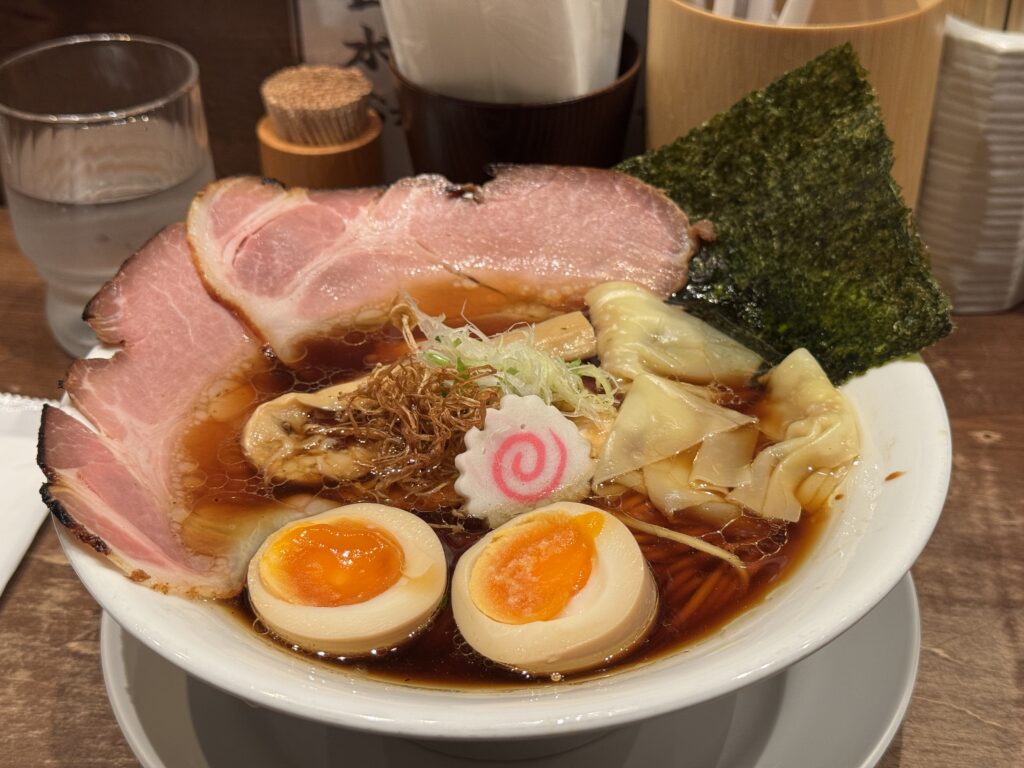
Ramen arrived in Japan from China in the 19th century and grew into one of the country’s most recognizable dishes. It became part of everyday life after the war, when imported wheat made noodles affordable and filling. What began as street food turned into a national obsession, shaped by local ingredients and imagination.
Each region developed its own version:
- Shoyu ramen has a clear soy-based broth, savory with a touch of sweetness.
- Miso ramen, from Hokkaido, is richer and heavier, flavored with fermented soybean paste and often topped with corn and butter.
- Tonkotsu ramen, from Kyushu, is made by simmering pork bones for hours until the broth turns creamy and deep.
- Shio ramen is lighter and saltier, built on chicken or seafood stock, and shows off the flavor of the noodles themselves.
The balance between broth, noodles, and toppings is what defines a good bowl. Every shop has its own take, and each one insists theirs is the right one. Today ramen belongs to the world, but nowhere does it taste as grounded and personal as it does in Japan.
Tempura

Tempura came to Japan from Portugal in the 16th century and quickly became its own thing. The name comes from ad tempora quadragesimae, the period of Lent when Catholics ate fried vegetables and fish. The technique stayed, evolved, and turned into one of Japan’s most loved dishes.
The batter is simple: wheat flour, cold water, sometimes a touch of egg. The trick is temperature. Cold batter meeting hot oil creates the thin, crisp shell that defines good tempura. Too much mixing and it turns heavy.
Shrimp, sweet potato, mushrooms, and shiso leaves are the classics. Each is dipped in batter and fried for just a few seconds, long enough to keep the inside tender. It’s eaten with tentsuyu, a dipping sauce made from dashi, soy sauce, and mirin, often with grated daikon or ginger.
You’ll find tempura everywhere, from quick lunches to high-end restaurants where the chef fries each piece in front of you. The flavor isn’t about richness but lightness: a quiet crunch, a clean aftertaste, and the feeling that something fried can still taste pure.
Tonkatsu

Tonkatsu appeared in Japan in the late 19th century, when Western food started to influence local cooking. The name combines ton (pork) and katsu, short for katsuretsu, the Japanese take on the English word “cutlet.”
Originally made with beef, it soon shifted to pork, which suited Japanese tastes and was easier to find. The meat is coated in flour, dipped in egg, then covered in panko breadcrumbs and fried until golden. The crust stays light and crisp, the inside soft and juicy.
Two main cuts are used: hirekatsu, made with tenderloin, lean and delicate, and rosukatsu, made with loin, richer and more flavorful. It’s usually served with finely shredded cabbage, rice, and a thick, sweet-salty sauce that ties everything together.
Tonkatsu has inspired other dishes too: katsudon, where the cutlet is cooked with egg and onions over rice, and katsu curry, paired with Japanese curry sauce. What began as a Western import is now one of Japan’s most familiar comfort foods — simple, filling, and loved everywhere.
Okonomiyaki

Okonomiyaki is one of Japan’s most flexible dishes. The name means “grilled as you like it,” and that’s exactly what it is: a savory pancake made from batter, cabbage, and whatever ingredients you want to add.
Two cities claim it as their own. In Osaka, everything goes into the same mix — batter, cabbage, meat, seafood, or cheese — and it’s cooked together like a thick omelet. In Hiroshima, the ingredients are layered: a thin crepe on the bottom, then cabbage, noodles, and an egg on top.
Once cooked, the pancake is brushed with a dark, sweet sauce, topped with mayonnaise, aonori (seaweed powder), and katsuobushi (bonito flakes) that move slightly in the heat. It’s eaten straight from the grill, usually cut into squares and shared.
Okonomiyaki isn’t fancy. It’s filling, social, and endlessly adaptable — food that reflects the mood of the moment and the taste of whoever’s cooking.
Takoyaki
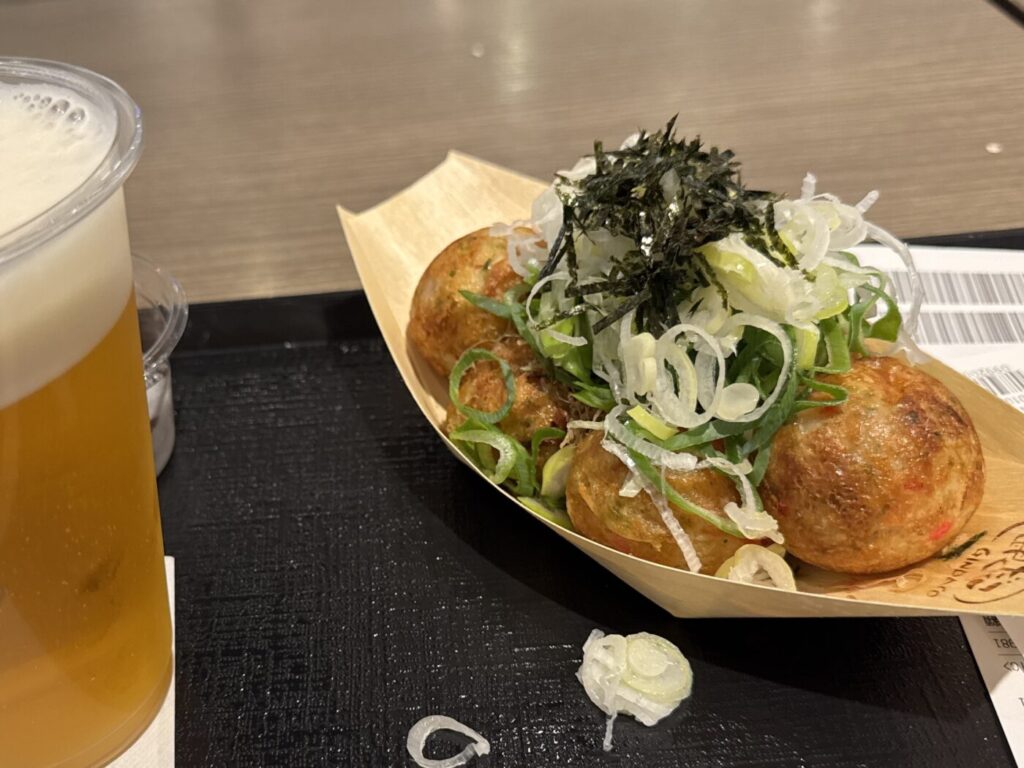
Takoyaki began in Osaka in the 1930s and quickly became one of Japan’s favorite street foods. The name means “grilled octopus,” and that’s exactly what it is: small, round balls made from a light batter with a piece of octopus at the center.
The batter is poured into a special iron plate with half-sphere molds. As it cooks, the vendor turns each ball with a pick until it’s golden and evenly round. The outside crisps while the inside stays soft and steaming.
Takoyaki is served hot, covered with a sweet, thick sauce, mayonnaise, seaweed flakes, and katsuobushi. The mix of textures — crisp shell, soft center, chewy octopus — is what makes it irresistible.
You’ll find it at night markets, festivals, and food stalls across the country, but Osaka still does it best. Freshly cooked, it’s comfort food in its purest form: warm, quick, and gone in two bites.
Miso Shiru (Miso soup)

Miso soup is part of everyday life in Japan. It’s served at breakfast, lunch, and dinner, and no meal feels quite complete without it.
The base is miso, a fermented soybean paste that can be light and sweet or dark and strong, depending on the region. Mixed into dashi — a broth made from kombu seaweed and bonito flakes — it becomes something simple and deeply comforting.
The classic version includes tofu cubes and wakame seaweed, but every home and region has its own take. In the north, you might find richer soups with potatoes or pumpkin; in the south, lighter versions with fresh herbs and vegetables.
Miso isn’t just flavor. It brings warmth, balance, and a quiet kind of nourishment that fits perfectly with the rhythm of Japanese cooking: modest ingredients, prepared with care, eaten slowly.
Yakitori

Yakitori are grilled chicken skewers, cooked over charcoal and served everywhere from small roadside stalls to busy Tokyo bars. They’re simple, smoky, and best eaten with friends and a cold beer.
The name means “grilled bird,” and every part of the chicken can be used: thigh (momo), skin (kawa), liver (reba), heart (hāto), even cartilage (nankotsu). Each piece is cut, skewered, and grilled to order.
There are two main styles. Shio yakitori is seasoned only with salt; tare yakitori is brushed with a sweet, savory glaze made from soy sauce, mirin, sake, and sugar. The trick is control — high heat, short time, just enough caramelization without drying the meat.
Yakitori isn’t only about flavor. It’s a social ritual, part of Japan’s after-work culture, eaten shoulder to shoulder in narrow bars and outdoor stalls. The smell of smoke and sauce in the air is enough to make you stop and order a few more skewers before heading home.
Onigiri

Onigiri are rice balls, simple and portable, part of everyday life in Japan. You’ll find them in convenience stores, lunch boxes, and train stations — food for travelers, workers, and anyone on the go.
Their history goes back to the Heian period, when rice balls were an easy way to carry food during long journeys or battles. The shape has changed, but the idea hasn’t: rice seasoned, shaped, and sometimes filled with something salty to keep it fresh.
Common fillings include umeboshi (pickled plum), salted salmon, or tuna mixed with mayonnaise. Some are plain, wrapped in nori seaweed for grip and flavor; others are grilled with soy sauce until they form a golden crust (yaki onigiri).
Every region and shop has its own version. Some are soft and warm, made by hand; others are perfectly wrapped and ready to grab at a konbini. However you eat them, onigiri always taste familiar — a small, quiet kind of comfort.
Sukiyaki

Sukiyaki is a dish made to be shared. A shallow cast-iron pot sits at the center of the table, filled with a sweet and salty broth made from soy sauce, sugar, and mirin. Thin slices of beef cook in the simmering liquid along with tofu, onions, mushrooms, and leafy greens.
Everyone gathers around, picking ingredients from the pot as they cook. The meat is usually dipped in a small bowl of raw egg before eating, which softens the flavor and gives it a silky texture.
Sukiyaki became popular during the Meiji period, when Japan began to embrace meat after centuries of mostly vegetarian cooking. It quickly turned into a symbol of celebration and togetherness — something cooked slowly, shared, and eaten with conversation.
Even today, it’s a winter favorite. Warm, rich, and social, sukiyaki turns an ordinary meal into an evening that lasts.
Shabu-shabu
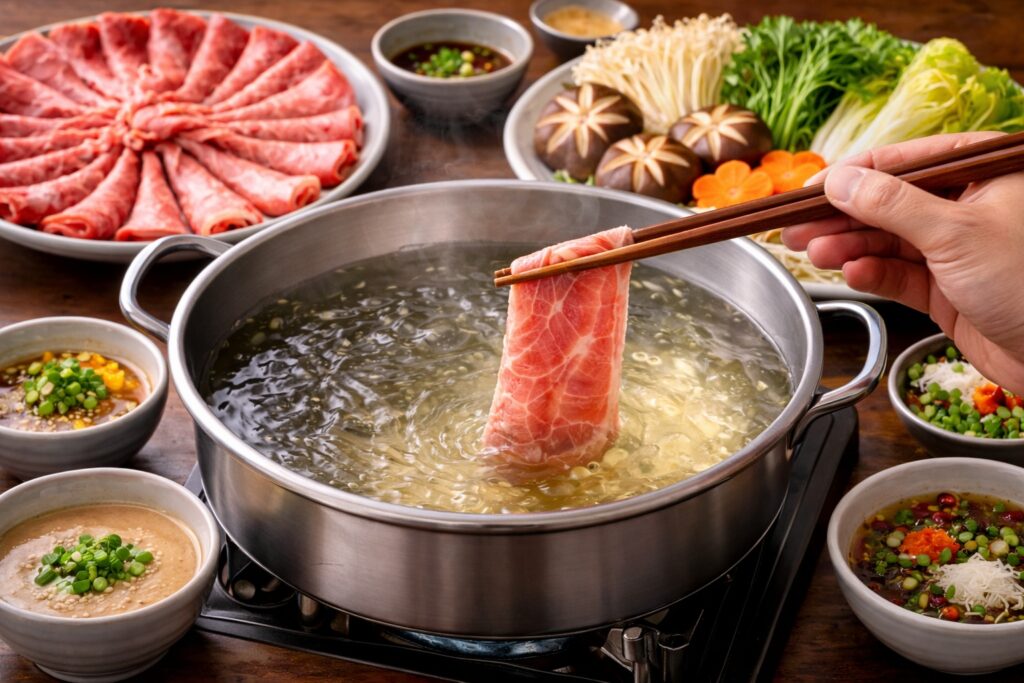
Shabu-shabu is all about interaction. A pot of steaming broth sits in the middle of the table, and everyone cooks their food as they eat. Thin slices of beef or pork, tofu, mushrooms, and vegetables are dipped into the boiling broth for just a few seconds — long enough to cook, not enough to lose their flavor.
The name comes from the sound the ingredients make as they move through the water: shabu shabu. Once cooked, each piece is dipped into sauce, usually ponzu, a citrus soy mix, or a rich sesame blend.
What makes shabu-shabu special is its rhythm. People cook, talk, eat, and repeat. There’s no rush, no fixed order — just the quiet pleasure of cooking together.
It’s a simple meal, but it captures a lot about Japan: balance, precision, and the idea that food tastes better when shared.
The Different Styles of Japanese Cuisine
Japanese food isn’t a single style but a world of traditions that shift with the seasons and the regions. What ties it all together is freshness, balance, and a deep respect for ingredients at their best.
Each season brings its own flavors and celebrations. Spring vegetables, summer fish, autumn mushrooms, and winter roots define what appears on the table. This awareness — known as shun — is what makes Japanese food feel alive. Cooks, both at home and in restaurants, follow it instinctively.
Here are some of the main styles of Japanese cuisine you’ll come across:
Kaiseki (懐石料理)
Kaiseki is Japan’s most refined form of dining. It’s a multi-course meal built around the seasons, where each small dish is prepared and presented with precision. The sequence reflects nature’s rhythm — light to rich, warm to cool — and the beauty lies as much in the presentation as in the taste.
Shōjin Ryōri (精進料理)
The vegetarian cooking of Buddhist temples. It follows the principle of non-violence, using no meat or fish, only grains, tofu, vegetables, and seaweed. Despite its simplicity, shōjin ryōri is deeply flavorful and layered, showing how pure ingredients can stand on their own without excess.
Izakaya (居酒屋)
An izakaya is the Japanese version of a tavern — casual, lively, and built around sharing. Dishes are small and often salty or fried to go with beer or sake. You’ll find yakitori, edamame, tofu, fried foods, and local specialties served in an atmosphere that feels easy and familiar.
Ryōtei (料亭)
Ryōtei are traditional high-end restaurants that offer private dining in quiet, tatami-lined rooms. The experience often includes kaiseki-style meals, impeccable hospitality, and the kind of slow elegance that feels like stepping into another time.
Teishoku (定食)
A teishoku is a fixed meal — balanced, affordable, and comforting. It usually includes rice, miso soup, a main dish of fish or meat, and a few small sides. You’ll find it in homes, canteens, and casual restaurants across Japan.
Obanzai (おばんざい)
The home-style cooking of Kyoto. Obanzai focuses on seasonal vegetables and simple preparations, guided by the idea of mottainai — no waste. Each dish is modest, but together they form a meal that feels wholesome and complete.
Yōshoku (洋食)
Western-inspired Japanese cooking that took shape during the Meiji era. Think tonkatsu (pork cutlet) and omurice (rice omelet). The flavors are familiar but always adapted with a Japanese sensibility — softer textures, milder sauces, and careful balance.
Chūka (中華)
Chinese dishes adapted for Japanese tastes. Ramen, gyoza, and fried rice are the most common examples. Over time, chūka has become so integrated into Japanese food culture that it feels local rather than foreign.
Ekiben (駅弁)
Beautifully packed bento boxes sold in train stations for travelers. Each region’s ekiben highlights its local specialties — crab in Hokkaido, beef in Sendai, eel in Shizuoka. They’re as much a part of the journey as the train ride itself.
Bento (弁当)
A single-serving meal packed for work, school, or travel. A typical bento has rice, fish or meat, and a mix of vegetables or pickles. Some are simple; others are crafted with care and creativity. Either way, they show how Japan turns even a quick meal into something thoughtful and balanced.
Experiencing Japanese Food in Japan
Tasting Japanese food in Japan is more than eating — it’s stepping into a rhythm that balances precision, patience, and joy. You’ll find incredible meals everywhere, from a family-run ramen-ya tucked under a train line to elegant kaiseki restaurants that serve dishes like small works of art.
If you want to eat like locals do, skip the touristy spots and follow the sounds and smells instead. Train stations, markets, and side streets are full of small restaurants serving honest food at fair prices. Izakaya (casual taverns) are perfect for ordering many small plates and chatting with whoever’s next to you.
A few gestures go a long way: say itadakimasu before eating and gochisousama deshita when you finish, remove your shoes when you see tatami mats, and do not to stick chopsticks upright in rice (it’s a funeral gesture). Most importantly, enjoy at your own pace. Meals in Japan are not rushed; they’re moments to slow down and appreciate.
Regional japanese Food Trails
Japanese cuisine changes completely as you move across the country. Each region has its own specialties, shaped by local ingredients and weather.
- Hokkaido: Known for rich seafood, dairy, and miso-based dishes like Sapporo ramen.
- Tohoku: Comforting soups and rice dishes that warm cold winters.
- Kanto (Tokyo region): Quick, vibrant food culture — sushi, tempura, soba, and izakaya fare.
- Kansai (Osaka, Kyoto): Osaka’s street food culture gave us okonomiyaki and takoyaki; Kyoto focuses on elegant vegetable dishes and temple cooking.
- Chugoku & Shikoku: Famous for Hiroshima-style okonomiyaki and Sanuki udon noodles.
- Kyushu: Tonkotsu ramen and a deep love of pork-based dishes and shochu.
- Okinawa: Distinct from mainland Japan — tropical flavors, goya (bitter melon), and pork stews influenced by Southeast Asia.
The Culture of Eating in japan
Japanese dining is grounded in balance and mindfulness. Meals often follow the ichiju-sansai rule — one soup, three dishes — designed to balance flavor, color, and nutrition.
Food presentation matters as much as taste. Plates, bowls, and even garnishes are chosen to reflect the season. Eating is seen as a way to connect with nature, the cook, and others at the table.
The Japanese word umami describes the deep savoriness that ties everything together — found in dashi, miso, soy, mushrooms, and seaweed. But behind umami is something subtler: restraint. A respect for letting the ingredient speak without adding too much.
Eating Is Understanding Japan
Japanese food tells the story of a country that moves carefully between old and new. Every dish, from a bowl of ramen eaten in a crowded station to a quiet kaiseki meal served in a tatami room, reflects patience, respect, and detail.
You don’t need to understand every ingredient or follow every custom to enjoy it. The best way to experience Japanese cuisine is to stay open: try what’s in season, listen to the chef’s suggestions, and notice the small things — the color of the plates, the sound of cooking, the calm that fills the room.
More than anything, let food guide you through Japan. It’s one of the most honest ways to connect with the country’s rhythm: slow, deliberate, and full of flavor.
Japanese food: your FAQS answered
First-time visitors to Japan should try sushi, ramen, tempura, okonomiyaki, tonkatsu, and onigiri. These dishes cover Japan’s core flavors and cooking techniques and are easy to find in most cities, from casual eateries to specialized restaurants.
There is no single official national dish in Japan, but rice-based meals form the foundation of Japanese cuisine. Ramen, sushi, and curry rice are often considered modern staples eaten across the country.
Japan offers many cooked dishes such as ramen, tempura, yakitori, tonkatsu, curry rice, udon, soba, and okonomiyaki. Raw fish is not required to enjoy Japanese food.
No. Japanese cuisine includes regional stews, grilled meats, noodles, fermented foods, pickles, rice bowls, street food, and seasonal home-style cooking. Sushi and ramen are only a small part of what people eat daily.
A traditional Japanese breakfast may include rice, grilled fish, miso soup, pickles, and a small side dish. Modern breakfasts can also include toast, eggs, yogurt, or convenience store food.
Popular street foods include takoyaki, okonomiyaki, yakitori, taiyaki, korokke, and dango. These are especially common at festivals, markets, and food streets.
Comfort foods in Japan include curry rice, ramen, gyudon, katsudon, nikujaga, and omurice. These are everyday meals eaten at home or in casual restaurants.
Vegetarian food is available but not always obvious. Dishes like vegetable tempura, tofu meals, rice, noodles, and Buddhist shojin ryori are good options. It is important to check for fish-based broths.
Popular Japanese sweets include mochi, daifuku, dorayaki, matcha desserts, taiyaki, and anmitsu. Convenience stores also offer high-quality seasonal desserts.
Japanese convenience stores sell onigiri, bento boxes, fried chicken, egg sandwiches, desserts, and hot snacks. Many travelers consider convenience store food surprisingly good and reliable.
Food in Japan can be very affordable. Casual meals often cost 700 to 1,200 yen, while higher-end restaurants cost more. Quality food is available at all price levels.
Yes, you can eat well in Japan with food allergies. Make sure you state your allergies when ordering, using allergy cards or an app if you don’t speak the language and you won’t have any issue.