

Shinjuku is chaos and calm, lights and silence. This Shinjuku guide takes you beyond the neon to explore how locals live, eat, and unwind in Tokyo’s most complex district.
There’s no single way to describe Shinjuku. It’s the Tokyo that never stops — trains, neon, steam, and sound — and yet, inside that chaos, you can find silence, routine, and grace.
We’ve been back to Shinjuku more times than we can count. At first, it felt like overload a city within a city. But with each visit, the noise started to separate into stories.
This guide is about stories: the small moments, the habits, and the human soul behind the lights.
First time in Tokyo? Our guide is a great starting point, paired with our Tokyo food guide.
What to see and experience in Shinjuku at a glance
| Place or area | What it offers | Why it matters | Best time to go |
|---|---|---|---|
| Shinjuku Station | World’s busiest transport hub | Shows Tokyo’s organized chaos and daily rhythm | Morning or early evening |
| Omoide Yokocho | Narrow alley of yakitori counters | Human-scale Shinjuku and after-work culture | Evening |
| Golden Gai | Tiny bars packed into six alleys | Local nightlife and personal conversations | Night |
| Shinjuku Gyoen National Garden | Large park and landscaped gardens | Silence and space among skyscrapers | Morning or late afternoon |
| Hanazono Shrine | Small urban Shinto shrine | Everyday spirituality in the city center | Anytime |
| Cross Shinjuku Vision | Giant 3D cat screen | Modern Tokyo pop culture landmark | Night |
| LUMINE and LUMINE EST | Fashion malls connected to the station | Daily Tokyo style and routines | Late morning to afternoon |
| Isetan depachika | Underground food hall | How locals shop and eat after work | Late afternoon |
| Kabukicho Tower | Vertical entertainment complex | New face of Shinjuku nightlife | Evening |
| Samurai Museum | Compact history museum | Cultural pause amid neon streets | Daytime |
| Tokyo Metropolitan Government Building | Free observation decks | City views and geographic perspective | Sunset |
| Don Quijote (Shinjuku) | Discount megastore | Tokyo’s playful consumer chaos | Late night |
| Yodobashi Camera (West Exit) | Massive electronics store | Tokyo’s tech culture at scale | Afternoon |
| Shinjuku Batting Center | Open-air batting cages | How locals unwind after work | Evening |
| Rooftop gardens (NEWoMan, Takashimaya) | Elevated green spaces | Slower views of the city | Afternoon |
| Ramen shops (Fuunji, Menya Musashi) | Local noodle culture | Everyday food rituals | Dinner |
| Jazz bars (Pit Inn, Jazz Spot Intro) | Live music venues | Quiet listening culture at night | Late night |
The First Impression: Controlled Chaos
Arriving at Shinjuku Station feels like stepping into an ant colony. Over three million people pass through it every day making it the busiest transport hub on Earth.
The first few minutes can be disorienting. Exits lead in every direction, signs blur together, and your map app keeps spinning. Then you notice: everyone moves calmly. No pushing. No panic. It’s chaos, but somehow choreographed.
The secret? Color-coded exits and muscle memory. Locals know their path by instinct. Follow one group, maybe office workers heading toward the West Exit, and you’ll find yourself in a quieter Tokyo of glass towers and broad sidewalks. Follow the students and you’ll end up among arcades and curry houses.
Shinjuku teaches you Tokyo’s rhythm from the start: fast, but never frantic.
The Human Scale: Where the City Shrinks Again
A few streets from the skyscrapers, the city shrinks. This is where Shinjuku becomes human again.
Turn into Omoide Yokocho, “Memory Lane” or “Piss Lane”. Lanterns hang low, smoke curls from yakitori grills, and the air smells of soy and charcoal. Each counter fits six, maybe eight people. You’ll sit elbow to elbow with salarymen finishing their day, couples on first dates, and cooks who’ve stood behind the same grill for decades.
Across the tracks lies Golden Gai, six narrow alleys crammed with tiny bars, each with its own mood. Some play jazz, others punk or 80s ballads. Many welcome visitors: owners will greet you in English, sometimes shyly, sometimes proudly.
Important: most bars charge a fee just for entering and this happens mostly for two reasons. The spaces are limited and tourists take seats from regulars and soloand because tourists may enter, consume very little and leave.
Since Golden Gai is now a big tourist attraction,
You can spend entire nights here talking with people who want to practice English or share travel stories. You don’t need perfect Japanese. Just curiosity, respect, and time to listen. The best conversations in Shinjuku happen two stools away from a stranger.
The Pause: Silence Among Skyscrapers
When the lights start to blur, walk toward Shinjuku Gyoen National Garden. The contrast feels unreal: from noise to near silence in five minutes.
In early morning, gardeners sweep paths under blooming cherry trees. Around lunch, office workers sit on benches with bento boxes. Before closing, couples stroll quietly, the hum of the city fading behind the walls.
You don’t go to Shinjuku Gyoen for “views.” You go to feel space again. It’s one of those rare places that lets you hear your own thoughts in Tokyo.
If you have time, stop by Hanazono Shrine, tucked between tall buildings. Red gates, incense, a few locals bowing before returning to work — this is Tokyo’s idea of balance, not escape.
What to See and Do in Shinjuku (Beyond the Obvious)
Shinjuku is more than its lights — it’s a district made of details. You can walk the same streets ten times and still find something new. Here’s what we always come back to — places that show different sides of the neighborhood.
1. The Giant 3D Cat and Cross Shinjuku Vision
At the east exit of Shinjuku Station, look up. The curved screen known as Cross Shinjuku Vision is home to the giant 3D cat that stretches and meows above the crowd. It’s playful, strange, and very Tokyo — technology woven into everyday routine. Go at night for the full glow.
2. LUMINE and LUMINE EST — Tokyo’s Everyday Fashion Pulse
Connected directly to Shinjuku Station, LUMINE and LUMINE EST are snapshots of urban style. Local brands, small cafés, minimalist design, and young professionals on their lunch breaks. Even if you’re not shopping, it’s worth walking through to feel the city’s pace up close.
3. Isetan Department Store — A Food Paradise Below Ground
Underneath Isetan, one of Japan’s most beloved department stores, lies an extraordinary depachika food hall. Sushi boxes, wagashi sweets, seasonal fruits, tea — all presented with quiet precision. Locals buy dinner here after work; visitors come to watch perfection at scale.
4. Kabukicho Tower — The New Face of Nightlife
The newly opened Kabukicho Tower represents modern Shinjuku — bright, vertical, full of entertainment. Inside are restaurants, live stages, and even capsule hotels. Step outside, though, and you’re back in the narrow alleys of old Kabukicho. That tension between sleek and gritty is what makes Shinjuku real.
5. Samurai Museum — A Compact Dive into History
Hidden behind Kabukicho’s signs, the Samurai Museum is small but carefully curated. You’ll find armor, swords, and demonstrations that explain the evolution of Japan’s warrior culture. It’s a quiet pause between ramen shops and neon.
6. Tokyo Metropolitan Government Building — For the View (and Perspective)
Still one of the best free views in Tokyo. Ride to the 45th floor and watch the city stretch endlessly — Shibuya, Ikebukuro, even Mount Fuji on clear days. At sunset, the light turns the skyline gold, and for a moment, Tokyo looks soft.
7. Don Quijote and Yodobashi Camera — The Joy of Overload
If you want to understand Tokyo’s consumer side, step into Don Quijote or Yodobashi Camera near the west exit. Donki is chaos made fun — snacks, toys, cosmetics, gadgets. Yodobashi is pure tech heaven. Both are reminders that Tokyo thrives on abundance and order at once.
8. The Hidden Calm: Batting Center and Rooftop Gardens
For something unexpected, head to the Shinjuku Batting Center — an open-air baseball cage where locals unwind after work. Then look up. Rooftop gardens like those above NEWoMan or Takashimaya Times Square offer views, calm, and the chance to see the city from a slower angle.
Daily Life at Street Level
Most travelers see Shinjuku’s extremes: either the office towers or the nightlife. But its heart beats between those two worlds, in the daily routines that locals repeat without noticing.
At lunch hour, crowds pour into underground food halls, depachika, beneath Isetan or Takashimaya. These aren’t tourist attractions; they’re part of the city’s daily hunger. Counters overflow with tempura, sushi, pickles, and perfectly packed bentos. Watching how efficiently everything moves is its own quiet show.
In the evenings, ramen shops like Fuunji or Menya Musashi fill with steam and the smell of broth. People eat quickly, thank the chef, and leave. It’s simple, respectful, satisfying.
That’s Shinjuku culture at its core: order without coldness, repetition without boredom. Each act, from paying to bowing, has meaning. You learn more from ten minutes in a ramen line than from a whole day of sightseeing.
After Dark: The Night Shift
Shinjuku doesn’t sleep; it changes jobs.
After eleven, the office lights go out, and the alleys glow. Neon signs hum, music drifts through open doors, and taxis wait at every corner. Locals aren’t here for wild parties — they’re here to decompress. A beer, a chat, a laugh before catching the last train.
The nightlife is layered. There’s the energy of Kabukicho, where everything from karaoke to tiny theaters coexists; and where you can seriously experience the wild side of Tokyo. But there’s also the intimacy of a standing sake bar — a small counter, a pour of dry nihonshu, quiet talk.
What always surprises us is how safe it feels. Shinjuku after dark is loud but polite. Even the busiest alley runs on quiet respect.
If you want to see its softer side, head to a live jazz bar like Pit Inn or Jazz Spot Intro. The crowd listens, really listens — no phones, no chatter. You start to understand: even in the city that never sleeps, people still crave silence.
The View from Above
Sometimes the only way to make sense of Shinjuku is to rise above it.
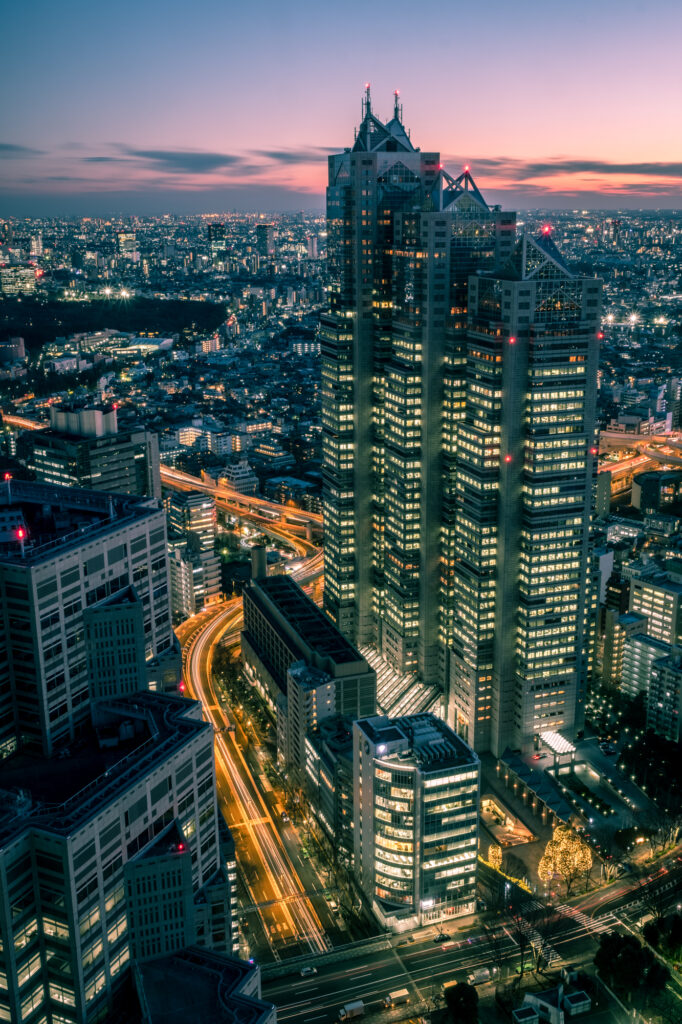
The Tokyo Metropolitan Government Building offers free observation decks — one of the best views in the city, open until late. From up there, the density becomes beautiful. The lights stretch endlessly, but the order underneath is visible.
You can also see Mount Fuji on clear days, reminding you how small even Tokyo feels next to nature.
Or, if you want something more atmospheric, end the day with a drink at the New York Bar on the 52nd floor of the Park Hyatt. The city glows beneath you, and for a moment, Shinjuku feels quiet again.
Is Shinjuku Worth Visiting?
If you are asking if Shinjuku is worth visiting, our answer is yes, Shinjuku is worth visiting but for reasons most people don’t expect.
Shinjuku isn’t a single attraction; it’s a full portrait of Tokyo in one district. You’ll see the city’s contradictions here more clearly than anywhere else: order and chaos, tradition and neon, silence and music.
If you’re curious about how Tokyo really works, you have to experience Shinjuku. Spend a day watching its routine: commuters, shopkeepers, gardeners, night-shift cooks. Then stay out late, when the signs glow and the streets hum with stories.
We used to rush through it. Now we slow down. We walk aimlessly, eat at the same shop twice, talk to the same bartender again. That’s when Shinjuku opens up. We have a double relationship with Shinjuku; a love and hate relationship due to the structural change of this area in the past few years. But what we know for sure is if Tokyo has a mirror, it’s here: bright, busy, human, and endlessly layered.
It’s not always beautiful. It’s not always easy. But that’s exactly why it stays with you.
FAQs About Visiting Shinjuku
Yes. Shinjuku is generally safe at night, even late. Japan has one of the lowest crime rates in the world, and violent crime is rare. Areas like Kabukicho are busy and loud, but staying alert and avoiding scams is usually enough to stay safe.
Shinjuku is known for its contrasts. It combines the world’s busiest train station, neon nightlife in Kabukicho, tiny bars in Golden Gai, and quiet green spaces like Shinjuku Gyoen, all within the same district.
Half a day is enough to understand Shinjuku’s rhythm, but a full day is better. Spend the morning in Shinjuku Gyoen, the afternoon exploring side streets, and the evening eating or drinking. Staying overnight lets you experience how different Shinjuku feels after dark.
Shibuya is centered on youth culture and fashion, while Shinjuku is more complex and layered. Shibuya feels fast and trend-driven; Shinjuku mixes business districts, nightlife, residential areas, and quiet traditions in one place.