

If you’re planning a trip to Tokyo and trying to decide where to stay, the shortlist usually looks the same: Shibuya, Shinjuku, or Ginza.
Few travellers consider Asakusa, the riverside district of temples, lanterns, and Edo-era craft shops because most only visit for a few hours.
But Asakusa isn’t just worth a stop. It’s one of the best areas to stay for your whole Tokyo trip: quieter, better connected, and far more authentic than you might expect.
Yes, Asakusa is a very good place to stay in Tokyo particularly if you value traditional neighbourhoods, quieter evenings, good-value hotels and easy access to eastern Tokyo. We would choose somewhere else if nightlife, shopping and spending most of your time around Shibuya and Shinjuku are your priorities.
We stayed in Asakusa long enough to see what day-trippers miss. Yes, it’s home to Senso-ji, Tokyo’s oldest temple, but the real story begins after sunset, when the crowds disappear, incense drifts through empty streets, and the neighbourhood feels unmistakably local.
This guide to Asakusa draws from that experience: practical, not poetic. If you’re wondering whether Asakusa is a good area to stay, what to do once you’re here, or how easy it is to reach the rest of Tokyo, here’s everything you need to know.
Asakusa at a Glance
| Our take | |
| Best for | Culture, quieter evenings, local atmosphere, good-value hotels |
| Less suited to | Nightlife, luxury shopping, travellers spending most of their time in western Tokyo |
| Atmosphere | Traditional, relaxed, walkable |
| Hotel value | Generally better than Shibuya/Shinjuku |
| Nightlife | Limited |
| Transport | Very good, but less convenient for western Tokyo |
| From Narita Airport | ~60 min |
| From Haneda Airport | ~35 min direct |
| Would we stay again? | Yes |
Why Stay in Asakusa
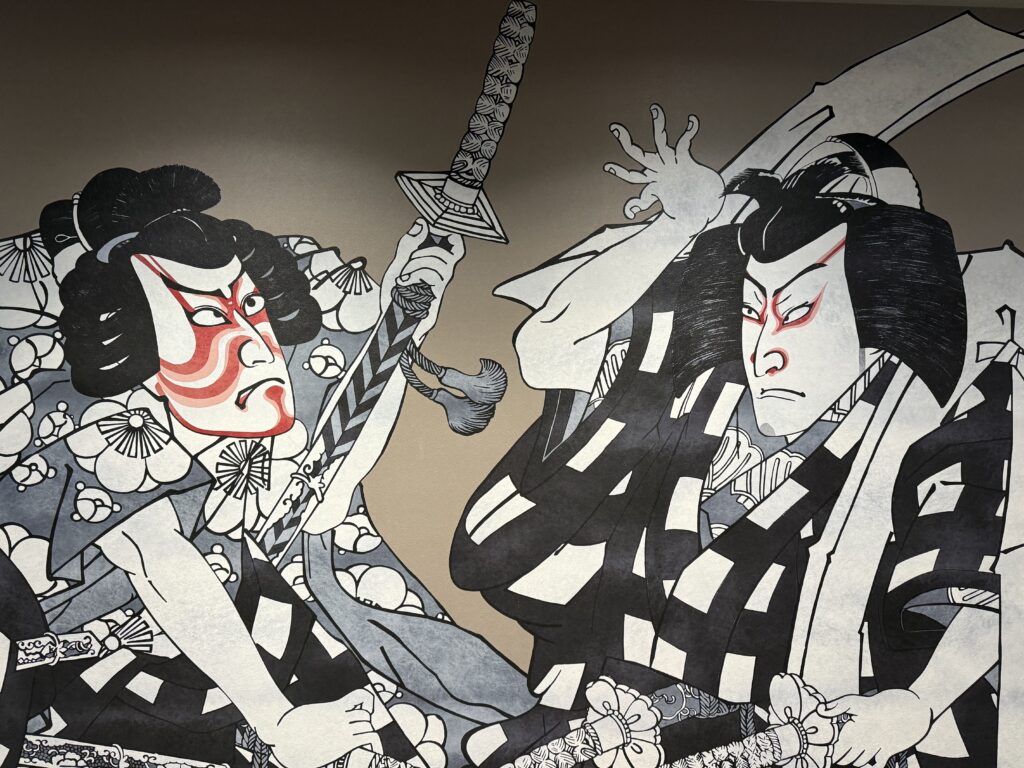
Most travellers come for half a day; few realise Asakusa works perfectly as a base. It’s compact, walkable, and better connected than it looks on the map. You can reach Ueno in minutes, Shibuya in half an hour, and still return to quiet streets at night.
Compared with Shinjuku or Shibuya, hotels here cost less, restaurants close earlier, and the rhythm is slower. It suits travellers who want culture and character rather than nightlife and crowds. Because everything connects easily from here, Asakusa works just as well for a week-long stay as it does for a single night. You can spend days exploring Tokyo’s major districts and still come back to streets that feel local.
We stayed at Asakusa View Hotel Annex Rokku, a modern hotel that looks toward Senso-ji and sits just minutes from the backstreets. We absolutely loved our non-smoking, Japanese-style room! It was fantastic: really clean, spacious, and super comfortable, plus they stocked it with premium skincare and beauty products, a lovely touch. And you have to check out the free traditional snack bar on the 10th floor in the afternoon. Grabbing some sweets and enjoying the great view around sunset was the perfect little add-on. They also host these cool traditional evenings for guests, where you can learn about Asakusa traditions and ceremonies. If you’re new to Tokyo or just want a deeper dive into Japanese culture, definitely don’t miss that: it’s a great experience!
Is Asakusa a Good Place to Stay for You?
Asakusa suits travellers who prefer depth over speed: people who’d rather understand one neighbourhood than rush through five.
Stay here if you:
- Prefer calm, culture, and daily rhythm to nightlife.
- Enjoy walking to major landmarks.
- Appreciate traditional shops and local food.
- Value smaller hotels and fair prices.
- Like seeing familiar faces each morning.
Choose another area if you:
- Want shopping until late.
- Want large nightclubs, late-night shopping, or the dense bar culture of Golden Gai.
- Need to be near business districts.
- Need constant English service. While major temples, touristy places and hotels are fine, many of the smaller, authentic izakaya and neighborhood spots primarily use Japanese.
For couples, solo travellers, or repeat visitors, Asakusa makes a comfortable, connected, and character-rich base for the entire Tokyo stay.
Asakusa vs Shibuya vs Shinjuku: Where Should You Stay?
Asakusa, Shibuya, and Shinjuku all work well as bases in Tokyo, but they suit very different trips.
Choose Asakusa if you want a quieter, more traditional neighbourhood, better-value accommodation, and easy access to eastern Tokyo. Choose Shibuya if shopping, nightlife, fashion, and being in the middle of contemporary Tokyo matter most. Choose Shinjuku if transport convenience, nightlife, and having almost everything within reach are your priorities.
That distinction is important because there is no single “best” area to stay in Tokyo. The best choice depends on how you want your days — and especially your evenings — to feel.
Official tourism guidance reflects those differences: Asakusa is centred around Senso-ji, traditional shopping streets and old-Tokyo character; Shibuya around shopping, youth culture and nightlife; and Shinjuku around a huge transport hub, shopping, restaurants and late-night entertainment.
| Asakusa | Shibuya | Shinjuku | |
|---|---|---|---|
| Best for | Traditional Tokyo, quieter stays, culture | Shopping, nightlife, contemporary Tokyo | Transport, nightlife, convenience |
| Atmosphere | Relaxed, historic, local | Energetic, young, busy | Intense, urban, constantly active |
| Nightlife | Low-key bars and izakaya | Excellent | Excellent |
| Shopping | Traditional shops, kitchenware, souvenirs | Fashion and major retail | Department stores, electronics, huge variety |
| Traditional Tokyo feel | Excellent | Limited | Limited |
| Access to western Tokyo | Less convenient | Excellent | Excellent |
| Access to eastern Tokyo | Excellent | Less convenient | Good |
| Best if you like quiet evenings | Yes | No | Usually no |
| Best if you want to stay out late | Not really | Yes | Yes |
| Our choice for a slower Tokyo stay | Asakusa | — | — |
Asakusa vs Shibuya
The biggest difference between Asakusa and Shibuya is not transport or attractions. It is how the two neighbourhoods feel when you return to your hotel at the end of the day.
Shibuya is one of the centres of contemporary Tokyo: busy streets, huge shopping complexes, restaurants, bars and nightlife around the station. It is an excellent choice if you want to walk outside your hotel and immediately be surrounded by activity, or if much of your itinerary is around Shibuya, Harajuku, Omotesando and western Tokyo. Japan’s national tourism organisation describes Shibuya as a centre of cutting-edge culture, nightlife and shopping, which is exactly the appeal of staying there. Japan Travel
Asakusa gives you almost the opposite experience. During the day, the area around Senso-ji can be extremely busy, but the neighbourhood becomes much quieter once most visitors leave. Traditional shops, small restaurants, izakaya and older streets replace Shibuya’s giant screens, fashion stores and late-night crowds. That contrast is one of the main reasons we enjoyed actually staying in Asakusa rather than simply visiting it for a few hours. Your existing article already makes this distinction particularly well, describing the slower rhythm and quieter nights compared with Shibuya. Pasted text
Choose Asakusa over Shibuya if you want traditional Tokyo, quieter evenings, a more neighbourhood-like base, or expect to spend plenty of time around Ueno, Akihabara, Ginza and eastern Tokyo.
Choose Shibuya over Asakusa if nightlife, fashion, shopping and easy access to Harajuku and Tokyo’s western districts are central to your trip.
Asakusa vs Shibuya in one sentence: Asakusa is better for a quieter, more traditional Tokyo stay; Shibuya is better for nightlife, shopping and being in the centre of Tokyo’s modern energy.
Asakusa vs Shinjuku
If Asakusa is about atmosphere, Shinjuku is about convenience and scale.
Shinjuku Station is one of Tokyo’s major transport hubs, served by numerous rail and subway lines, and the surrounding area combines department stores, restaurants, entertainment, business districts and some of Tokyo’s best-known nightlife. For travellers planning many journeys around western Tokyo or day trips departing from Shinjuku, that location can be extremely practical. Japan Travel
The downside is that Shinjuku can also feel relentless. The station itself is enormous, the surrounding streets are busy, and areas such as Kabukicho stay active late into the night.
Asakusa is easier to understand on foot and far calmer once the daytime crowds disappear. You trade some of Shinjuku’s transport convenience for a stronger neighbourhood feel and much more visible traditional Tokyo.
That trade-off is already implicit in your existing article: you describe Asakusa as compact, walkable and slower than Shinjuku while still being well connected enough to use as a base for a longer stay. Pasted text
Choose Asakusa over Shinjuku if you value atmosphere, traditional streets, quieter nights and being able to walk out of your hotel into an area that feels manageable rather than overwhelming.
Choose Shinjuku over Asakusa if maximizing transport connections, nightlife, shopping and western-Tokyo access is more important than having a quieter base.
Asakusa vs Shinjuku in one sentence: Asakusa offers a calmer and more traditional stay; Shinjuku offers better transport connectivity and much more nightlife.
What to Do in Asakusa
One advantage of staying in Asakusa is that some of the neighbourhood’s best experiences are right outside your hotel, and many are better early in the morning or after the day-trippers have left.
Visit Senso-ji Before the Crowds
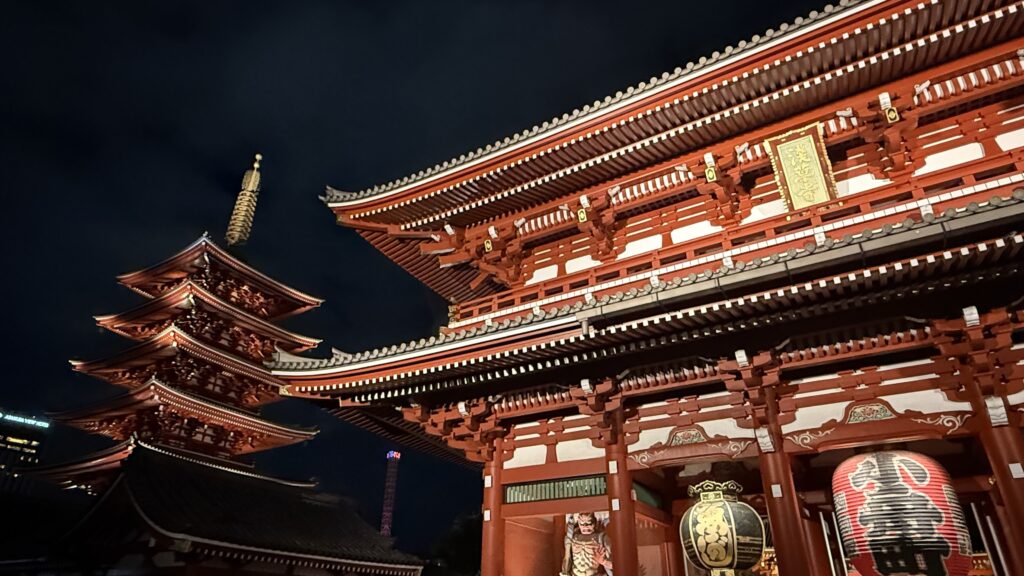
Senso-ji is Tokyo’s oldest temple and Asakusa’s main landmark. If you’re staying nearby, take advantage of being able to visit before 9 a.m. or return after dark, when the temple is illuminated and the crowds have largely disappeared.
For us, this was one of the biggest benefits of staying in Asakusa rather than visiting it for a few hours during the day.
Walk the Backstreets
Move beyond Nakamise Street and explore the smaller streets around the temple. Denpoin-dori, Shin-Nakamise and the lanes around Hoppy Street give you a much better sense of Asakusa as a neighbourhood rather than simply a sightseeing stop.
Walk to the Sumida River and Tokyo Skytree
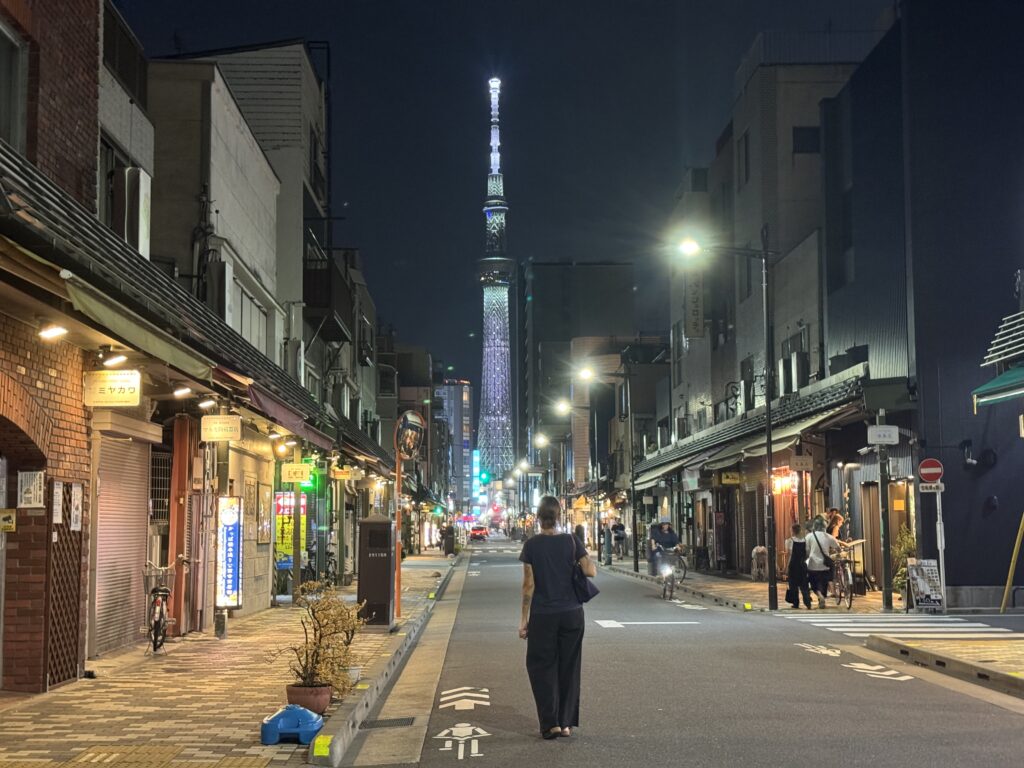
The Sumida River is around a ten-minute walk from Senso-ji, and Tokyo Skytree rises just across the river. It is an easy area to explore on foot, especially around sunset. You can also take the Tokyo Water Bus from Asakusa Pier if you want a slower, more scenic way to reach other parts of Tokyo.
Shop on Kappabashi Street
Kappabashi Dori, about a 15-minute walk from Senso-ji, is one of our favourite places around Asakusa. The street specialises in kitchenware, knives, ceramics, chopsticks and the realistic plastic food models displayed outside Japanese restaurants.
It is a much more useful place to shop for souvenirs than many of the stalls around Nakamise Street.
Look Out for Local Festivals
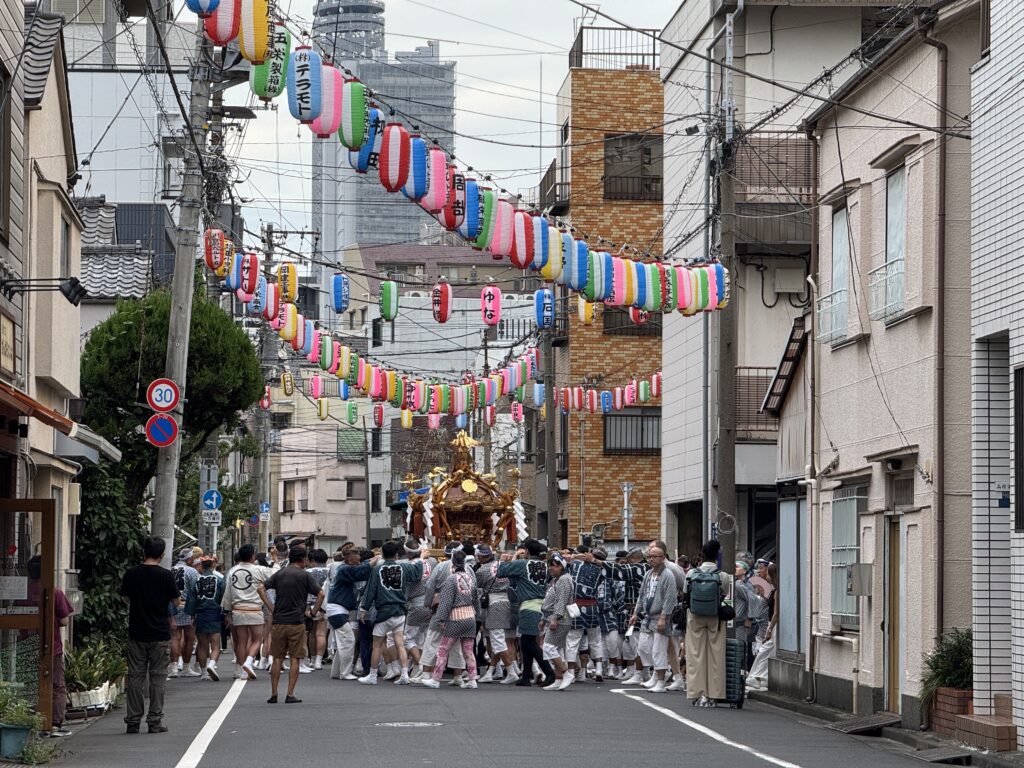
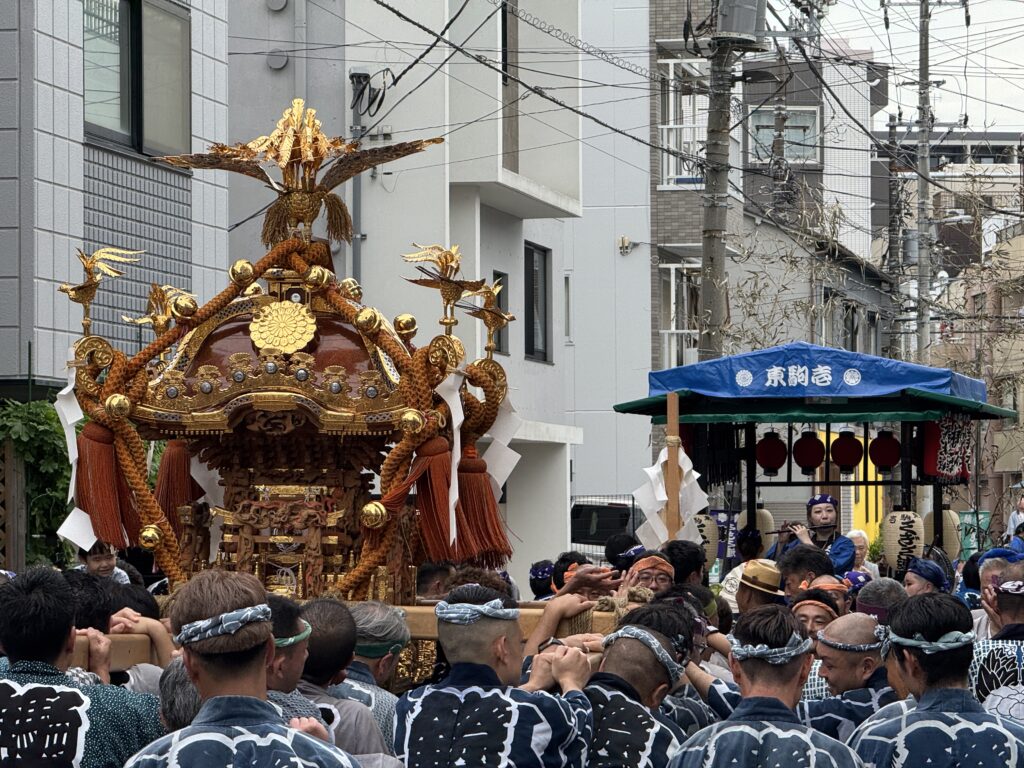
Asakusa hosts major events such as Sanja Matsuri in May, the Hozuki Market in July and Tori-no-Ichi in November, but smaller neighbourhood festivals and events happen throughout the year too.
If you’re staying locally, ask your hotel what is happening during your visit. We happened to be in Asakusa during a smaller matsuri in September, and experiencing it alongside local residents was one of the highlights of our stay.
What Is Asakusa Like at Night?
Asakusa at night feels very different from Shibuya or Shinjuku.
Once the day-trippers leave, the area around Senso-ji becomes much quieter. The temple gates stay illuminated, the crowds thin out, and the streets feel calmer and more local. If you enjoy being able to return to your hotel somewhere peaceful after a full day exploring Tokyo, this is one of Asakusa’s biggest advantages.
That also means Asakusa is not the best choice if you want major nightlife on your doorstep. You won’t find large clubs or streets packed with bars open until the early hours. Instead, evenings tend to revolve around small izakaya, traditional bars, casual places to eat, and walking through the neighbourhood after dark.
Hoppy Street is one of the livelier areas, with open-front izakaya serving drinks and grilled food into the evening. Kamiya Bar, near the Sumida River, offers a more historic drinking experience and is known for Denki Bran, its signature cocktail.
But one of the best things to do at night in Asakusa costs nothing: go back to Senso-ji after the daytime crowds have gone. Seeing the temple illuminated with only a handful of people around was one of our favourite parts of staying in the neighbourhood.
Is Asakusa safe at night?
Asakusa generally feels calm at night, particularly around the main streets, Senso-ji and the hotel areas. As anywhere in a large city, normal awareness still applies, but we never found the neighbourhood uncomfortable to walk around after dark.
The bigger question is not safety but atmosphere: Asakusa is quiet at night rather than lively.
If that sounds appealing, it is one of the strongest reasons to stay here. If you want bars, clubs, late-night shopping and busy streets until the early hours, Shibuya or Shinjuku will probably suit you better.
Is Asakusa a Good Area for Food?
Yes. Asakusa is a particularly good area to stay if you enjoy traditional Tokyo food, casual restaurants and older neighbourhood establishments rather than fashionable dining and late-night restaurant scenes.
You will find plenty of places for ramen, soba, tempura, izakaya food and traditional sweets within walking distance of the main hotel areas.
What to Eat in Asakusa
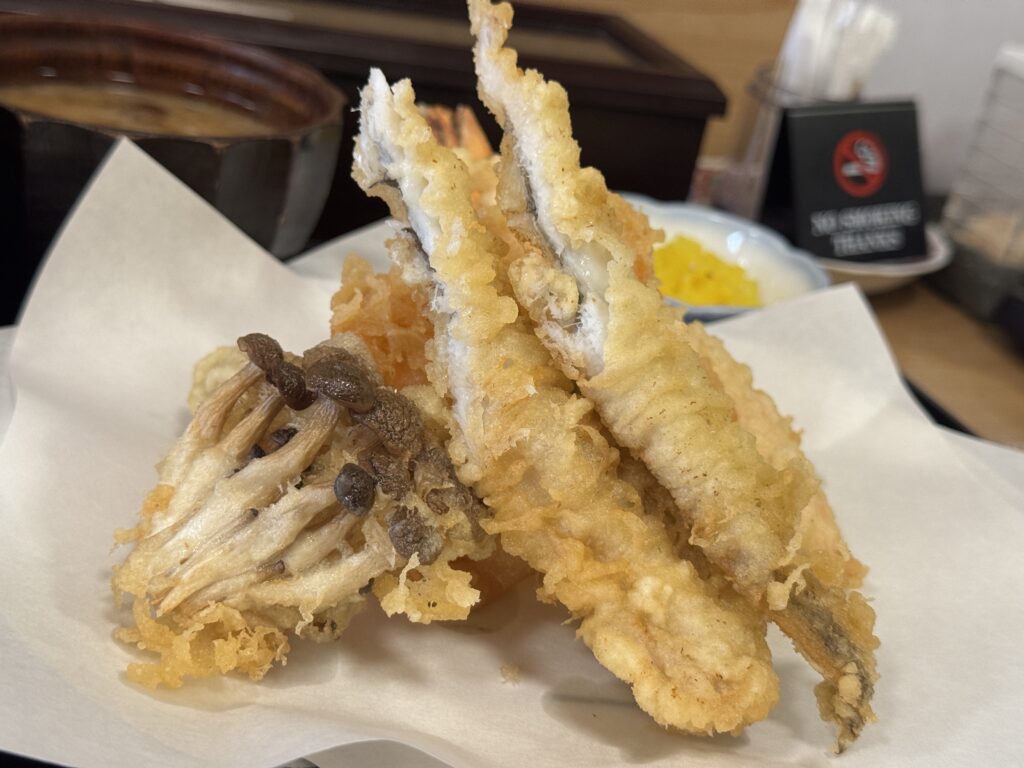
Some of the foods worth looking for include:
- Tempura and tendon: Asakusa has a long association with Edo-style tempura, and Daikokuya Tempura is one of the area’s historic specialists.
- Soba: Namiki Yabusoba is a long-running option close to the main Asakusa area.
- Tokyo-style ramen: Asakusa Ramen Yoroiya serves soy sauce-based ramen, often with a touch of yuzu.
- Monjayaki: A thin savoury pancake cooked at the table and associated with Tokyo’s traditional downtown areas.
- Izakaya food: Hoppy Street is the obvious place for casual drinking and dishes such as yakiton.
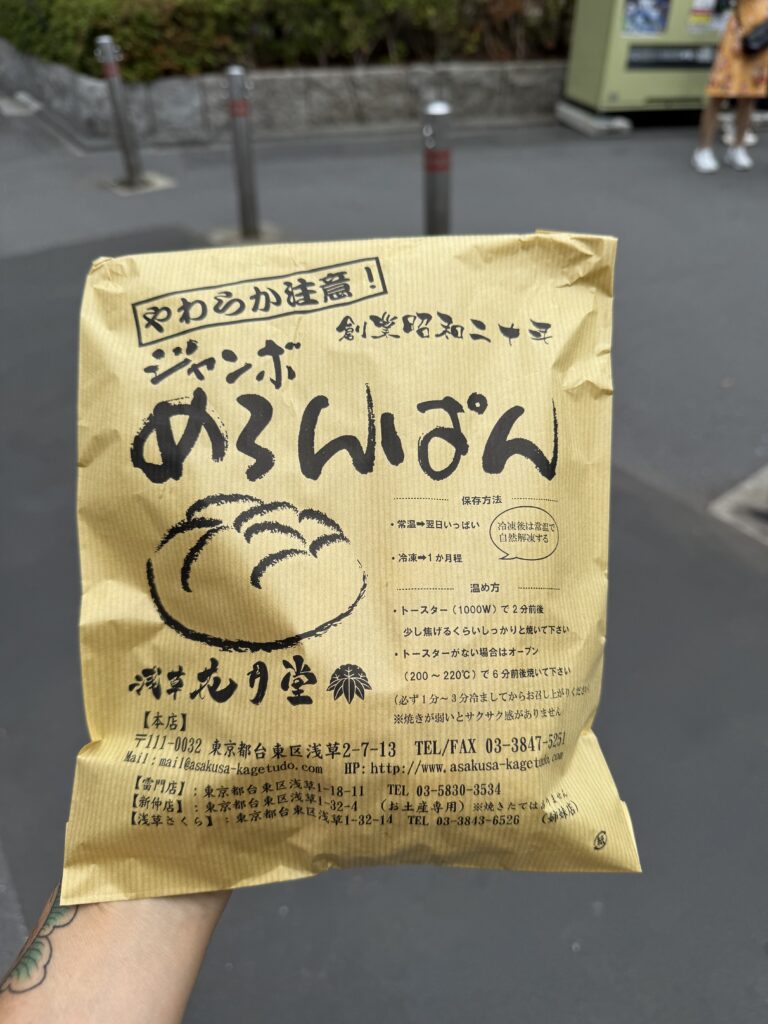
- Traditional sweets: Around Senso-ji you’ll find ningyo-yaki, taiyaki, melonpan and agemanjū.
Asakusa also works particularly well for breakfast and early dinners. Old-style kissaten serve coffee and toast in the morning, while many neighbourhood restaurants and izakaya become busy earlier in the evening and close sooner than their equivalents in Shibuya or Shinjuku.
That earlier rhythm is worth keeping in mind when deciding whether to stay here. If you want restaurants, bars and nightlife running late into the night, other parts of Tokyo are more convenient. If you prefer being able to walk to traditional restaurants and return to a quieter neighbourhood afterwards, Asakusa works extremely well.
Food in Asakusa isn’t trendy but habitual. Asakusa’s restaurants serve the dishes that built Tokyo’s identity: quick lunches for workers, quiet dinners for locals, and traditional sweets for temple visitors. Don’t look for hidden gems; instead, look for the routines that give Asakusa its texture.
Is Asakusa Too Far from the Rest of Tokyo?
Asakusa may look far from central Tokyo, but it’s one of the best-connected districts for exploring in every direction. Asakusa isn’t inconvenient. The trade-off is specifically western Tokyo. Asakusa isn’t inconvenient. The trade-off is specifically western Tokyo.
If your itinerary revolves around Shibuya, Harajuku and Shinjuku every day, staying there may make more sense.
Metro and Train Lines
- Ginza Line (G19) – To Ueno (5 min), Ginza (20 min), Shibuya (27 min).
- Asakusa Line (A18) – To Nihonbashi, Shinagawa, and Haneda Airport (~35 min).
- Tsukuba Express – Two stops to Akihabara (5 min).
- Tobu Skytree Line – To Skytree (3 min) and onwards to Nikko.
Use a Suica or Pasmo card for fast, contactless travel.
Other Transport
- Tokyo Water Bus: Scenic rides from Asakusa Pier to Odaiba or Hamarikyu Gardens.
- Local Buses: Short hops to Ueno Park or Ryogoku.
- Cycling: Flat streets and riverside paths make Asakusa ideal for bikes.
You can reach most major sights in under 30 minutes, then come back each evening to a district that feels like home.
Our guide on how to organize a trip to Tokyo is the perfect way to plan.
So, Is Asakusa a Good Place to Stay in Tokyo?
Yes, for the right kind of trip, Asakusa is one of the best areas to stay in Tokyo.
We would choose it again for the quieter evenings, traditional atmosphere, good local food, walkability, and the feeling of returning to a real neighbourhood after spending the day exploring the city. It is especially well suited to travellers who care more about culture and character than nightlife, and who do not need to be based in Shibuya or Shinjuku every day.
The main trade-off is location. Asakusa is very convenient for Ueno, Akihabara, Ginza and eastern Tokyo, but less practical if most of your plans are concentrated around Shibuya, Harajuku or Shinjuku. If nightlife, late-night shopping and constant activity are a big part of your Tokyo trip, you will probably be happier staying elsewhere.
For us, that trade-off was worth it.
After the daytime crowds disappeared, Asakusa became one of our favourite parts of Tokyo. Senso-ji was quiet again, the streets slowed down, and the illuminated Skytree appeared above the low rooftops as we walked back to our hotel.
That is the side of Asakusa most visitors never see.
Staying here gives you something different from simply visiting for a few hours: the chance to experience the neighbourhood early in the morning, late in the evening, and during the ordinary moments in between.
If that sounds like the Tokyo you want to experience, Asakusa is an excellent place to stay.