Thailand Travel Guides
This Thailand travel hub brings together our firsthand guides to Bangkok, the north and both island coasts, with the route, timing and food advice needed to choose the right version of the country for your trip.
Thailand is often presented as an easy country where every itinerary works. The transport network is extensive, accommodation exists at every price and English is widely understood in places visited by international travellers. The difficult part is choosing where to spend your time.
Bangkok can fill four or five days. Chiang Mai becomes far more interesting once the temple checklist is finished. The southern islands belong to two different seas with different rainy seasons. Phuket, Krabi, Koh Phi Phi and Koh Lanta are frequently treated as interchangeable beach destinations, although the experience in each is completely different.
Many disappointing Thailand trips begin with an itinerary that moves every two nights. A domestic flight might take little more than an hour, but reaching the airport, checking in, flying, collecting luggage and finding the next hotel can use most of the day. Ferries add weather, schedules and pier transfers to the calculation.
Seven days should concentrate on Bangkok and one region. Ten days can include Bangkok, Chiang Mai and one southern base if the flights line up well. Fourteen days give enough room for the classic combination of city, north and coast.
Regions of Thailand
Thailand is usually divided into central, northern, northeastern and southern regions. For travel planning, the south must then be separated into the Andaman coast and the Gulf of Thailand because their seasons, transport routes and island choices differ.
| Region | Main destinations | Best for | Time to allow |
|---|---|---|---|
| Central Thailand | Bangkok, Ayutthaya and Kanchanaburi | Food, temples, markets and history | 4–6 days |
| Northern Thailand | Chiang Mai, Chiang Rai, Pai and Mae Hong Son | Lanna culture, mountains and regional food | 5–8 days |
| Northeastern Thailand | Isaan, Khao Yai and Mekong towns | Archaeology, rural travel and food | 5–8 days |
| Andaman coast | Phuket, Krabi, Koh Lanta, Phi Phi and Koh Lipe | Limestone scenery, beaches and diving | 5–10 days |
| Gulf of Thailand | Koh Samui, Koh Phangan and Koh Tao | Resorts, diving and summer island travel | 5–10 days |
Bangkok and Central Thailand
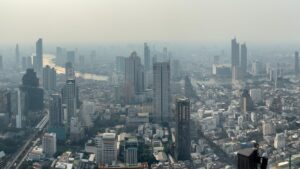
Bangkok deserves more than a stop between the airport and the islands. It takes at least a day to become comfortable with the heat, traffic, river and scale of the city. Once that first adjustment has happened, its neighbourhoods and food become easier to understand.
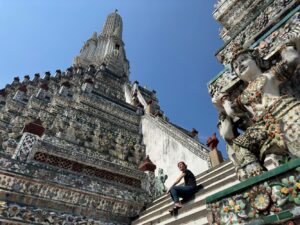
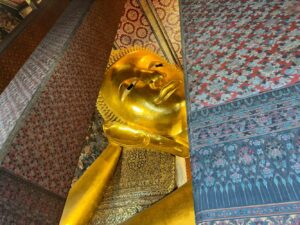
Four days give you time for the Grand Palace, Wat Pho and Wat Arun, followed by Chinatown, Talad Noi, markets, contemporary Bangkok and an evening on the river. Group the historic temples together and use the Chao Phraya boats when possible. Travelling across the city by road during the busiest hours can absorb a large part of the day.
Where you stay changes the experience. The historic centre is useful for temples but poorly connected to the BTS Skytrain. Sukhumvit is convenient for transport and nightlife but can feel detached from older Bangkok. Silom gives access to the river, food, parks and both BTS and MRT lines. Riverside hotels provide atmosphere, though they can require more planning for journeys elsewhere.
Our Bangkok guide for first-time visitors explains how to choose a neighbourhood, group the main sights and move around without losing hours in traffic.
Ayutthaya is the most natural day trip from Bangkok. The former capital contains temples and ruins spread across a wide area, so a bicycle, tuk-tuk or local driver is useful. Kanchanaburi needs a longer day and works better as an overnight when the Death Railway, museums and Erawan Falls are all part of the plan.
Bangkok also deserves a second stay at the end of a longer journey. Returning for one final night is less stressful than connecting directly from an island ferry to an international flight.
Northern Thailand
Northern Thailand has its own history, food and pace. Chiang Mai is the main base, while Chiang Rai, Doi Inthanon and the Mae Hong Son region need additional time.
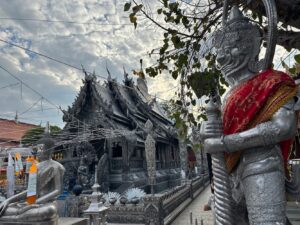
Chiang Mai requires at least four days. The Old City can be crossed quickly, but rushing from temple to temple misses the reason people stay. Early walks around the moat, morning markets, coffee shops, cooking classes and smaller neighbourhoods provide a better understanding of the city.
The city is surrounded by mountains, which makes day trips easy. Doi Suthep can be visited in half a day. Doi Inthanon needs a full day. The summit is cool enough during winter to require a layer, even when Chiang Mai itself is warm.
Chiang Rai is 200 kilometres away and should not be reduced to a rushed return trip. Staying for two nights gives you time for the White Temple, Blue Temple and Black House, followed by Mae Salong or the Golden Triangle. The Chiang Mai and Chiang Rai guide explains why the north improves when the itinerary slows down.
March and April require special attention because agricultural burning can produce severe haze across the region. Air quality changes from year to year, but it should be checked before booking a northern itinerary during this period.
Northeastern Thailand
Isaan covers a large part of Thailand and receives a small fraction of its international visitors. It is a region of Khmer ruins, Mekong towns, national parks and a food culture that has influenced the entire country.
Som tam, larb, grilled chicken and sticky rice originated or became closely associated with Isaan. These dishes are available throughout Bangkok and the south, though the flavours are often adjusted for visitors.
Khao Yai National Park is one of the easiest introductions to the region from Bangkok. Wildlife sightings are never guaranteed, but gibbons, hornbills and wild elephants live within the park. A responsible visit keeps animals at a distance and uses local guides who understand their movement.
Isaan is better for a second journey or for travellers with at least three weeks. Public transport connects the main cities, while smaller archaeological sites and rural areas become easier with a car and driver.
The Andaman Coast
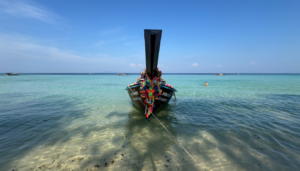
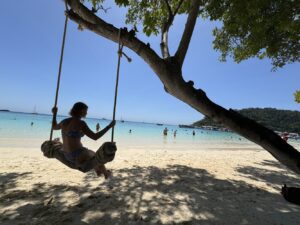
The Andaman coast contains the Thailand seen in postcards: limestone cliffs, pale beaches and clear water around Phuket, Krabi, Phi Phi and Koh Lanta. Its dry season generally runs from November to April.
These destinations should not be placed in the itinerary simply because they are close to one another. Each serves a different type of trip.
Phuket has the easiest airport access and the most developed tourism infrastructure. Choosing the correct area matters more than choosing the most impressive hotel. Kata and Kata Noi work well for first-time visitors who want good beaches without the intensity of Patong. Nai Harn is quieter and feels more residential. Phuket Town has architecture, markets and local food, but no beach.
Krabi is the stronger choice for limestone scenery, Railay, rock climbing and island day trips. Ao Nang is convenient and heavily commercial. Klong Muang and Tup Kaek are calmer. Krabi Town has the most local atmosphere, although it cannot be used as a swimming base.
Koh Lanta is our choice for a longer island stay. Its beaches are spacious, the food is strong and the Old Town gives the island a life beyond tourism. Four or five nights allow enough time for the beach, a trip around the island and a day on the water.
Koh Phi Phi has exceptional marine scenery and some of the largest crowds in the region. One night is enough for most travellers. Staying near Tonsai means noise and constant movement, while Loh Ba Kao or Long Beach produce a calmer experience. The underwater landscape is a better reason to visit than Maya Bay.
The wider comparison of the best islands in Thailand helps match each island to a particular trip instead of treating the most famous name as the automatic choice.
The Gulf of Thailand
Koh Samui, Koh Phangan and Koh Tao sit in the Gulf of Thailand. Their weather pattern differs from the Andaman coast, making them useful for trips during parts of the European summer.
Koh Samui has an airport, large resorts and the broadest range of services. Chaweng is highly developed and focused on nightlife. Maenam and the quieter northern beaches work better for travellers interested in a resort stay without the busiest commercial strip.
Koh Phangan extends well beyond the Full Moon Party. The party takes place around Haad Rin, while the northern and eastern sections contain small bays, yoga retreats and quieter accommodation. Booking without checking the moon calendar can leave you paying peak prices during an event you never intended to attend.
Koh Tao is the diving island. Courses are relatively affordable, operators are numerous and dive sites are close enough to allow several sessions without long boat journeys. Three to five nights work well for diving and snorkelling.
The Gulf is often the better coastal choice from July to September. October to December can bring its heaviest rain, especially around Koh Samui. Exact conditions vary, so sea forecasts and ferry operations still need checking.
Planning a Trip to Thailand
Start with the month, then choose the coast, then build the route. Reversing that order is how travellers end up committed to an island during its roughest season.
Choose the Route Before Booking Flights
Bangkok has two major airports. Suvarnabhumi handles most long-haul flights, while Don Mueang is used by many domestic low-cost carriers. A connection that requires changing airports needs several hours, especially when Bangkok traffic is involved.
Domestic flights connect Bangkok with Chiang Mai, Chiang Rai, Phuket, Krabi, Surat Thani and Koh Samui. Flying is usually the sensible choice when combining north and south in a short trip.
The overnight train between Bangkok and Chiang Mai is slower but turns transport into part of the journey. Book a second-class sleeper in advance, particularly during holidays and peak season. The overnight buses are usually the least comfortable way to save money.
Ferries should be treated as weather-dependent transport. Leave a buffer before an international flight, and avoid planning a separate island connection on the final morning.
Keep the Number of Bases Under Control
Three nights should be the minimum for most major stops. Every new destination adds packing, check-out, transport, orientation and another accommodation decision.
For a 14-day trip, four bases are enough:
- Bangkok
- Chiang Mai
- Krabi or Phuket
- Koh Lanta or another island
Adding Chiang Rai, Phi Phi and several additional islands turns the trip into a sequence of piers and hotel receptions.
Our Thailand itineraries for 7, 10 and 14 days compare routes for travellers interested in the north, the south or a combination of both.
Prepare for Money, Data and Local Transport
Cash is still widely used in markets, street-food stalls, small shops and rural areas. Thai ATMs usually charge foreign cards a fixed withdrawal fee, so making fewer, larger withdrawals is generally more efficient than taking out small amounts repeatedly.
Cards are common in hotels, larger restaurants and shopping centres. Dynamic currency conversion should be declined when an ATM or card terminal asks whether to charge in your home currency.
Local SIM cards and eSIMs are inexpensive and mobile coverage is strong in cities and established island areas. Data is especially useful for Grab, maps, ferry information and translating addresses.
Grab works well in Bangkok and Chiang Mai. Availability can be less dependable in parts of Phuket and on smaller islands. Bangkok’s BTS, MRT and river boats are often faster than road transport.
Check Entry Rules and Insurance
Entry rules depend on nationality and can change. Check the official Thai immigration information for your passport before departure, including permitted stay length and any arrival form or onward-travel requirements.
Travel insurance should cover medical treatment, evacuation and the activities you plan to do. Standard policies may exclude motorbikes, scuba diving or driving without the correct licence.
Thailand has laws that visitors sometimes misunderstand. Vaping, drug possession, criticism of the monarchy and certain behaviour around religious sites can carry serious consequences. The practical overview of laws travellers should know in Thailand covers the areas where assumptions made at home can cause problems.
Choose Excursions Carefully
Thailand’s tourism industry includes excellent guides and activities alongside animal attractions, staged village visits and crowded tours built around photographs.
Avoid elephant riding, tiger encounters, animal shows and any activity based on touching or posing with wildlife. An ethical wildlife experience observes animals in natural environments and does not depend on direct contact.
For boat trips, look at group size, departure time and itinerary. Several companies may advertise an “exclusive” early departure while reaching the same bay at the same hour.
Our assessment of excursions in Thailand compares the activities worth making time for with those we would avoid.
The broader collection of Thailand travel tips covers ATM fees, transport traps, food, beach safety, motorbike rentals, heat and the details that usually become clear only after arrival.
Best Thailand Itinerary
Fourteen days provide enough time for Bangkok, Chiang Mai and the Andaman coast without moving every other night.
| Days | Destination | How to use the time |
|---|---|---|
| 1–4 | Bangkok | Temples, river, Chinatown, markets and neighbourhoods |
| 5 | Travel to Chiang Mai | Fly or take the previous night’s sleeper train |
| 6–8 | Chiang Mai | Old City, food, Doi Suthep and one full-day activity |
| 9 | Fly south | Travel to Krabi or Phuket and settle into the coastal base |
| 10–11 | Krabi or Phuket | Beach, local area and one carefully selected excursion |
| 12–14 | Koh Lanta or another island | Slower beach stay, diving or island exploration |
This itinerary works particularly well from November to February, when Bangkok and Chiang Mai are cooler and the Andaman Sea is generally calm.
Choose Krabi for Railay, cliffs, kayaking and island trips. Choose Phuket for direct flights, resort infrastructure and a larger choice of accommodation. Koh Lanta makes a better final stop when quiet beaches and a slower pace matter.
During July or August, replace the Andaman section with Koh Samui, Koh Phangan or Koh Tao. Flying from Chiang Mai to Samui usually requires a connection and can be expensive, so compare routes through Bangkok or Surat Thani.
Chiang Rai requires at least two additional days. If it is important, remove one southern stop rather than compressing the north. A route with Bangkok, Chiang Mai, Chiang Rai, Phuket, Phi Phi and Koh Lanta in 14 days contains too many transitions.
Driving and Renting a Motorbike in Thailand
A car is unnecessary in Bangkok and central Chiang Mai. It becomes useful for national parks, mountain routes and places with limited public transport.
Thailand drives on the left. An International Driving Permit matching the vehicle category may be required alongside your home licence. Insurance can refuse a claim when the rider lacks the correct licence, even if the rental shop was happy to hand over the keys.
Motorbike rental is common on islands and in the north, but availability should never be mistaken for safety. Many travellers rent scooters with no previous experience and begin on steep roads, in heavy rain or around unpredictable traffic.
Before accepting a motorbike:
- Photograph every existing scratch and dent.
- Test the brakes, tyres, lights and indicators.
- Use a helmet that fits correctly.
- Keep your original passport and provide another accepted deposit.
- Confirm that your travel insurance covers the engine size.
- Avoid riding after drinking.
- Respect beach and mountain roads after dark.
Koh Lanta is much easier to explore with a motorbike, but the roads south of Kantiang Bay become dark and winding at night. Phuket has heavier traffic and longer distances than its resort map suggests.
The Mae Hong Son Loop is a serious mountain route with hundreds of bends. It is appropriate for experienced riders with the correct licence and protective equipment. A private driver or rental car is the better option for anyone uncertain about their ability.
When to Visit Thailand
There is no single best month for every part of Thailand. November to February is the easiest period for a first journey through Bangkok, the north and the Andaman coast, but it is also peak season.
| Region | Best general period | Main weather issue |
|---|---|---|
| Bangkok and central Thailand | November–February | Very hot from March onward |
| Chiang Mai and the north | November–February | Burning season can affect March and April |
| Andaman coast | November–April | Rougher seas and reduced ferries from May to October |
| Gulf islands | January–September | Heavier rain often falls from October to December |
| Isaan | November–February | Hot dry months followed by monsoon rain |
January and February provide the easiest combination of weather across the classic route. Prices and visitor numbers are also at their highest, particularly on Phuket, Phi Phi and the most popular Krabi beaches.
November and March can be better compromises. November marks the beginning of the Andaman dry season, though occasional rain remains possible. March is hotter, but island prices and crowds begin to drop.
April is extremely hot across much of the country. Songkran, the Thai New Year, turns towns and cities into large water celebrations. It can be joyful or exhausting depending on what you expect. Transport and accommodation should be booked early.
The rainy season does not always mean continuous rain. Heavy showers may arrive for part of the day, followed by clear periods. The larger problem on the islands is the sea: rough water can cancel ferries, close national parks and make boat trips unpleasant even when it is not raining on land.
How Many Days Do You Need in Thailand?
Ten days are enough for two regions. Fourteen days allow a first visit to include Bangkok, the north and one coastal area. Three weeks provide the time needed for Chiang Rai or several islands.
| Available time | Realistic route |
|---|---|
| 5–7 days | Bangkok and Chiang Mai, or Bangkok and one southern base |
| 10 days | Bangkok, Chiang Mai and one beach destination |
| 14 days | Bangkok, Chiang Mai, Krabi or Phuket, and one island |
| 18–21 days | Classic route plus Chiang Rai, Khao Sok or a second island |
| One month | Several regions with slower stays and overland travel |
With seven days, choose between north and south. Bangkok, Chiang Mai and multiple islands will fit on paper, but almost half the trip will be spent moving.
A full week in Bangkok is reasonable when markets, food and day trips matter. Chiang Mai can also fill a week once Doi Inthanon, a cooking class and Chiang Rai are included.
For the islands, three nights is the minimum once ferry days are counted. Koh Lanta works best with four or five nights. Phi Phi needs one or two. Phuket and Koh Samui can each fill five days when used as bases for wider excursions.
Thailand Travel Budget
Thailand still provides good value, but the cost varies sharply between Bangkok, the north and the major islands. Phuket, Koh Samui and Phi Phi can cost considerably more than Chiang Mai or mainland cities.
A working daily budget per person, excluding international flights, is:
| Travel style | Approximate daily budget |
|---|---|
| Budget | ฿1,500–2,500 |
| Mid-range | ฿3,500–6,000 |
| Comfortable | ฿7,000 and above |
Budget travellers can stay in hostels or simple guesthouses, eat at markets and use public transport. Island ferries, national-park fees and organised boat trips still need to be added.
A mid-range budget covers well-located hotels, domestic transport, a mixture of street food and restaurants, and several paid activities. Prices rise during Christmas, New Year, Chinese New Year and major island events.
Food can remain inexpensive. A market meal or specialist shophouse dish may cost less than a coffee in a resort. Hotel restaurants, beachfront venues and international food carry the largest markups.
Domestic flights are often inexpensive when booked early, but baggage and airport transfers can double the advertised fare. Koh Samui flights tend to cost more than routes to Phuket, Krabi or Surat Thani.
Boat trips are another major expense. A cheap high-capacity tour can provide poor value when most of the day is spent waiting for a large group. Smaller tours cost more but may use better departure times and reach less crowded locations.
Food in Thailand
Thai food changes significantly between regions. Eating the same five familiar dishes in Bangkok, Chiang Mai and Phuket misses much of the country’s culinary geography.
Central Thai cooking includes dishes such as boat noodles, tom yum, khao man gai and pad see ew. Bangkok gathers food from across the country, but its strongest everyday meals are often found in markets and dedicated shophouses serving one dish.
Northern food uses herbs, pork, sticky rice and flavours linked to Lanna, Shan and neighbouring cuisines. Khao soi is the best-known dish, followed by sai ua sausage, nam prik noom, nam prik ong and northern-style larb.
Isaan cooking is sharp, spicy and built around shared plates. Som tam, larb, grilled chicken and sticky rice belong together rather than being ordered as unrelated dishes. Fermented fish sauce is common and gives proper Isaan food its distinct depth.
Southern Thai food can be hotter and more intense. Turmeric, seafood, coconut, dried spices and Muslim influences appear throughout the region. Massaman curry and roti are particularly good around Krabi and Koh Lanta, where Muslim communities are part of local life.
Our Thailand food guide explains the dishes worth seeking out, where they belong and how tourist restaurants can change their flavours.
Where you eat matters:
| Place | What it is best for |
|---|---|
| Morning market | Breakfast dishes, fruit and food made for local workers |
| Specialist shophouse | One dish prepared repeatedly and consistently |
| Night market | Variety, snacks and informal shared eating |
| Local restaurant | Curries and dishes intended for groups |
| Resort restaurant | Convenience, dietary communication and milder flavours |
Morning markets are usually more interesting than night markets. They serve people buying breakfast before work and vendors shopping for ingredients, while some night markets are designed heavily around visitors.
Look for stalls with a short menu and a queue of Thai customers. Ordering what another table is eating often works better than choosing from a translated menu.
Thai restaurants may reduce the chilli level automatically for foreign visitors. Be realistic before requesting “Thai spicy.” Proper som tam or southern curry can be far hotter than international versions.
Food allergies require careful explanation because fish sauce, shrimp paste, oyster sauce and stock may not be visible. Vegetarian dishes can still contain fish sauce or shrimp paste. Carry a translated allergy card when the reaction is serious.
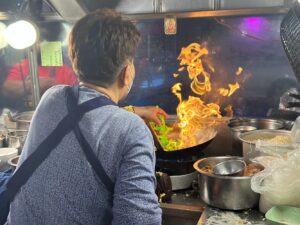
Some of our best meals in Thailand have cost very little and come from places with no decoration, no English menu and one large pan doing the same job all morning. The country’s food becomes more interesting when meals are planned around markets and regional dishes instead of restaurant rankings.