

Bangkok overwhelms before it impresses. The traffic, the heat, the size, the noise — first-time visitors often spend a day adjusting before they start to see the city for what it actually is: one of the best food destinations in Asia, a place where a ฿60 bowl of noodles and a Michelin-starred restaurant are equally worth your time.
Four to five days is the minimum to do it properly. That’s enough to cover the main temples without rushing them, eat your way through three different markets, find the neighbourhood that suits you, and get out on a day trip to the ruins at Ayutthaya or the canals of Amphawa.
What hit us first was the contrast. Bangkok felt beautifully messy from the start, a city where gold-covered temples rise behind tangled wires, luxury malls sit minutes away from street stalls, and quiet canal-side corners exist not far from roads that seem to move in permanent chaos. That tension is what makes it so compelling. It can feel disorienting at first, but once you settle into its rhythm, the city starts to make sense. And then there is the food, which is everywhere and never feels secondary. Some of our strongest first impressions of Bangkok came from that too: the constant smell of grilling meat, the late-night markets, the street corners crowded around a single pan or pot, and the feeling that some of the best meals in the city are the least formal. And these are also the reasons why we keep coming back to the city.
This guide covers everything in the order you’ll actually need it: where to base yourself, what to see and eat, how to move around without losing an hour in traffic, and what most guides get subtly wrong.
Bangkok at a Glance
Key facts before you plan:
| Country | Thailand |
| Currency | Thai Baht (฿). ฿35 ≈ $1 USD / ฿40 ≈ €1 (check current rates) |
| Language | Thai. English is widely spoken in tourist areas, hotels, and restaurants. |
| Time zone | ICT (UTC+7). No daylight saving. |
| Getting there | Suvarnabhumi Airport (BKK) is the main international hub. Don Mueang (DMK) handles low-cost carriers including AirAsia. |
| Airport to city | Airport Rail Link from Suvarnabhumi to central Bangkok: 30 min, ฿45. Taxi: 45–75 min, ฿250–400 (plus expressway tolls). |
| Best time to visit | November–February (cool season, 25–30°C). March–May is very hot (35–40°C). June–October is rainy season. |
| Minimum stay | 4 days for a solid first visit; 7 days with a day trip |
| Tap water | Not safe to drink. Bottled water is ฿7–15 at any 7-Eleven. |
| Dress code | Temples require covered shoulders and covered knees. Carry a sarong or scarf. |
Where to Stay in Bangkok: A Neighbourhood Guide
Bangkok is enormous — 1,500 square kilometres — and where you stay determines how much time you spend in traffic vs. actually doing things. Most first-time visitors end up in Sukhumvit, which is fine but not the only option.
| Neighbourhood | Vibe | Best for | Transport |
| Rattanakosin / Old City | Historic, atmospheric, low-rise, riverside | Temple access; Grand Palace; first-timers who want to walk to everything | Boat (Tha Chang pier) + taxis. No BTS/MRT direct. |
| Sukhumvit (Asok / Nana / Phrom Phong) | Expat hub, malls, street food, nightlife, international restaurants | First-timers who want everything accessible and familiar | BTS Sukhumvit Line + MRT interchange at Asok |
| Silom / Sathorn | Financial district by day, vibrant nightlife at night; Lumpini Park nearby | Business travellers; good central base; less tourist-heavy than Sukhumvit | BTS Silom Line; MRT Silom |
| Thonglor / Ekkamai | Bangkok’s most fashionable area; best restaurant and bar scene in the city | Foodies and those who want Bangkok’s best dining without tourist markup | BTS Thong Lo (E7) and Ekkamai (E8) |
| Ari | Residential, leafy, indie cafés, street food, local life | Longer stays; lower prices; Bangkok as residents actually live it | BTS Ari (N5); 10 min from central |
For a first visit: Sukhumvit (around Asok, BTS/MRT interchange) gives you the best transport connectivity and access to food and nightlife without committing to one corner of the city. Rattanakosin is more atmospheric but logistically harder: save it for a second visit or if temples are your primary reason for coming. During our first time, we split our time between the Old Town and the new part of the city, just to experience both sides of the same city: both were equally impressive but bear in mind that Bangkok is going through an extensive renovation so sleeping close to the Old Town may be chaotic because of the many roadworks.
The Temples: What to See and How to Do It Without Wasting a Morning
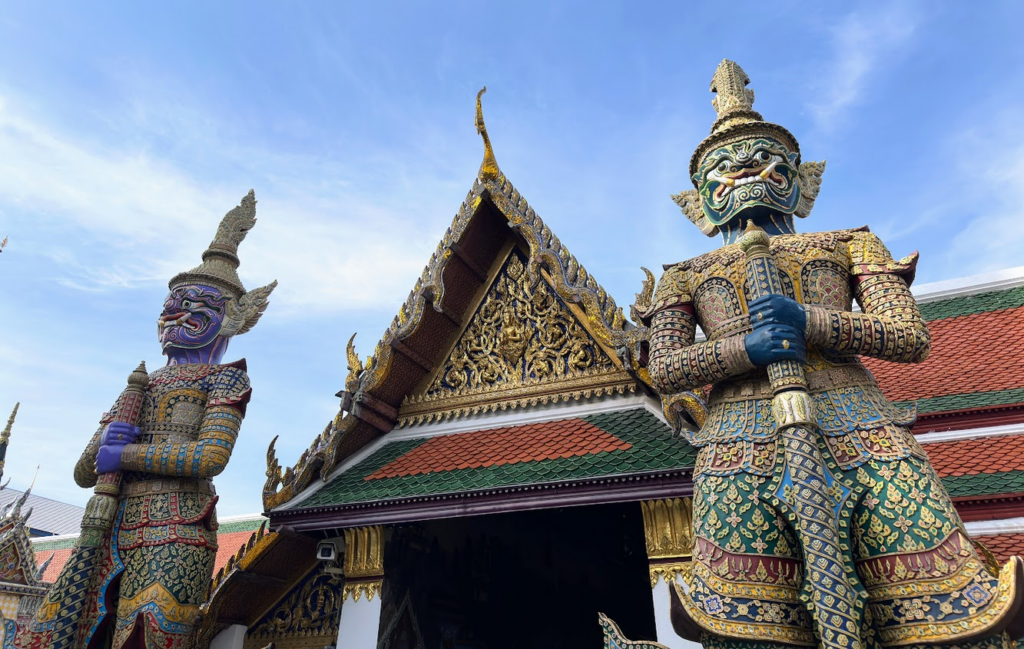
Bangkok has more than 400 temples. You don’t need to see most of them. Focus on three: the Grand Palace and Wat Phra Kaew together, Wat Pho, and Wat Arun. That’s a full half-day if you’re efficient — or a full day if you add the ferry crossings, a long lunch, and a slower pace.
Dress code for women is non-negotiable: covered shoulders (no sleeveless tops), covered knees (no shorts or short skirts), and shoes you can remove easily. All major temples have cloth rentals at the gate if you’re caught without, but it’s easier to just bring two scarves with you to cover shoulders and ankles when needed! Read also our travel tips on what to do and what not to do in Bangkok.
Grand Palace + Wat Phra Kaew
The Grand Palace is the single most visited site in Bangkok and the most important. Entry is ฿500 (foreigners), which covers the palace complex, Wat Phra Kaew (the Temple of the Emerald Buddha), and the Queen Sirikit Museum of Textiles. Opening hours are 8:30am to 4:30pm; ticket sales end at 3:30pm.
Arrive early. The site gets busy by 10am. An 8:30am arrival gives you 45–60 minutes of relative quiet in the main courtyard before tour groups pile in.
The touts scam: On the way to the Grand Palace, tuk-tuk drivers and smartly dressed strangers will tell you it’s ‘closed for a special ceremony today’ or ‘only open to monks until noon’ and offer to take you to a gem shop or tailor instead. The palace is almost never unexpectedly closed to tourists. Ignore all of them. Walk directly to the Tha Chang pier approach or Na Phra Lan Road entrance and buy tickets yourself.
Allow 1.5–2.5 hours for the Grand Palace and Wat Phra Kaew combined. The complex is large and detailed: rushing it is a waste.
Wat Pho
Wat Pho is 700 metres south of the Grand Palace and easily combined in the same morning. Entry is ฿200. The centrepiece is the Reclining Buddha — a 46-metre-long, gold-plated statue that fills a hall almost entirely. It’s larger than photographs suggest.
Wat Pho is also considered the birthplace of traditional Thai massage. There is a massage school on-site with 30-minute sessions from ฿260 — legitimate, good value, and a natural end to a temple morning.
Wat Arun
Wat Arun (Temple of Dawn) is across the river from Wat Pho — a ฿5 ferry from Tha Tien pier. Entry is ฿100. The tower is 70 metres tall and covered in coloured porcelain tiles and seashell mosaics. It reads differently at different times of day: striking in the late afternoon light, dramatic at sunset, and its best from across the river at night when it’s illuminated.
You can climb part of the central tower on steep narrow stairs. It’s worth doing at least once for the view back across the river to Wat Pho.
| Temple | Entry (foreigners) | Hours | Time needed | Best time to visit |
| Grand Palace + Wat Phra Kaew | ฿500 | 8:30am–4:30pm (tickets until 3:30pm) | 1.5–2.5 hrs | 8:30am opening |
| Wat Pho | ฿200 | 8:00am–6:30pm | 45–90 min | After Grand Palace (same morning) |
| Wat Arun | ฿100 | 8:00am–6:00pm | 45–60 min | Late afternoon / sunset |
| Wat Saket (Golden Mount) | ฿50 | 7:30am–5:30pm | 30–45 min | Early morning; panoramic views |
Bangkok Food: What to Eat and Where to Find It
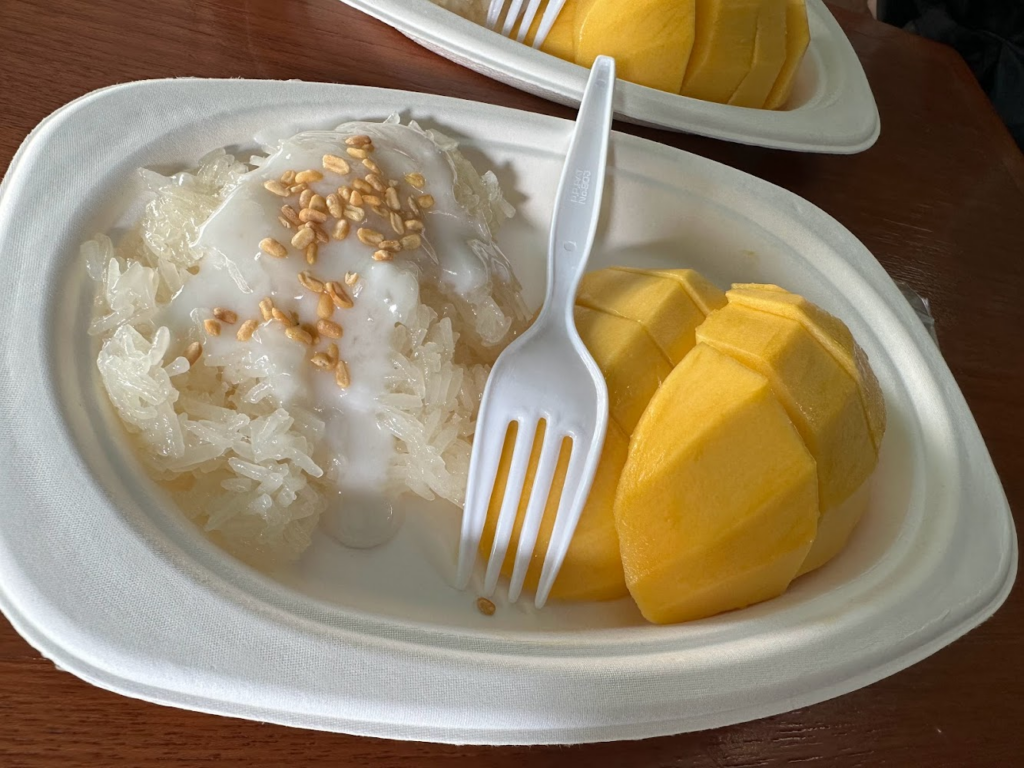
Bangkok now has more Michelin-starred restaurants than any other city in Southeast Asia. The same city has ฿50 bowls of noodles from street carts that are, objectively, as good or better. Both things are true. You should eat across the entire range.
The mistake most first-time visitors make is eating in tourist-facing restaurants near the temples or on Khao San Road. That food is fine. But the real reason to eat in Bangkok is because the city’s street food, market food, and neighbourhood restaurants are among the best in the world — and they’re inexpensive in ways that stop making sense once you leave.
If it is your first time in Bangkok, do not feel like you need to tick off Jay Fai. It may be the city’s most famous restaurant, but Bangkok rewards curiosity far more than checklist dining, and the long wait is not the best use of your time. A better first food memory is often much simpler: a strong pad thai, a proper Thai curry, and a crowded local restaurant where everything is moving fast. In a city like this, some of the best meals are not the most famous ones, just the ones that are full, local, and delicious.
| Dish | What it is | Where to find it | Price |
| Pad kra pao | Stir-fried holy basil with minced pork or chicken, fried egg, rice. The unofficial national dish. | Any street restaurant. Ask for it ‘phet mak’ (very spicy) for the right version. | ฿60–100 |
| Khao man gai | Poached chicken on rice, served with broth and a sharp ginger-chilli sauce. Deceptively simple. | Soi Polo Fried Chicken (Wireless Rd) for the benchmark version; any wet market for everyday. | ฿50–80 |
| Boat noodles | Small bowls of dark, rich pork or beef broth with noodles. Served in tiny portions — order several. | Victory Monument area; Wang Lang market pier-side. | ฿25–40 per bowl |
| Som tam | Green papaya salad with chilli, lime, fish sauce, and peanuts. The spice level varies wildly — ask before ordering. | Northeast Thai (Isan) restaurants citywide; any market food court. | ฿50–80 |
| Mango sticky rice | Coconut milk-soaked glutinous rice with fresh mango slices. Seasonal peak April–June. | Or Tor Kor market for the best quality; street carts everywhere. | ฿80–120 |
| Oyster omelette | Thick, custardy omelette filled with oysters or mussels, served with Sriracha. A Chinatown speciality. | Yaowarat (Chinatown) — evening only, after 6:30pm. | ฿150–250 |
| Pad Thai | Stir-fried rice noodles with egg, tamarind, bean sprouts, and your choice of protein. | Thip Samai on Mahachai Rd for the serious version. Every street corner for everyday. | ฿60–120 |
The Three Markets and When to Visit Each
- Or Tor Kor Market (opposite Chatuchak, open daily) is Bangkok’s premium fresh produce market. Go for mango sticky rice made with high-grade fruit, pre-made curries, and fresh-pressed coconut milk you won’t find this quality anywhere else in the city. Best in the morning. Clean, organised, no haggling.
- Yaowarat (Chinatown) is the most concentrated street food experience in Bangkok. Come in the evening — stalls set up fully after 6:30pm and the streets stay open until midnight or later. The specialities are seafood, roast meats, oyster omelettes, and an entire section of traditional Chinese-Thai desserts. Arrive on foot from the MRT Wat Mangkon station.
- Chatuchak Weekend Market (Saturday and Sunday only, 8am–6pm) is one of the largest markets in the world with more than 8,000 stalls. It is both a shopping market and a serious food market. The internal food section covers everything from pad see ew to fresh coconut ice cream. Navigate by the numbered section signs near the main entrances. BTS Mo Chit or MRT Chatuchak Park.
Getting Around Bangkok
Bangkok’s traffic is some of the worst in Asia. During rush hours (7–9am and 5–8pm), a 5km taxi journey can take 45 minutes. The single most important rule: do not rely on road transport during peak hours.
| Transport | Best for | Cost | Practical notes |
| BTS Skytrain | Central Bangkok; Sukhumvit corridor; Silom; shopping malls | ฿17–59 per journey | Get a Rabbit Card (฿100 deposit). Runs 6am–midnight. Above road traffic. |
| MRT Subway | Sukhumvit–Silom crossover; Chatuchak; Chinatown (Wat Mangkon) | ฿17–42 per journey | Connects to BTS at Asok/Sukhumvit and Sala Daeng/Silom stations. |
| Chao Phraya River Boat | Temples; Grand Palace area; Chinatown; Riverside | ฿15–40 (orange-flag boats) | Orange-flag boats run all day; tourist blue-flag boats ฿60 flat. Beats traffic entirely. |
| Airport Rail Link | Suvarnabhumi Airport to Phaya Thai (BTS connection) | ฿45 (City Line) | 30 minutes. Far faster than a taxi except late at night. |
| Grab (car) | Point-to-point; late night; short trips outside BTS coverage | ฿100–300+ | Download app and set up payment before arriving in Thailand. |
| Grab (motorbike) | Quick hops; weaving through congestion | ฿40–100 | Helmet provided. Fastest option in traffic jams for short distances. |
| Metered taxi | Long distances; when Grab surges; late night | ฿35 flag fall + meter | Always insist on the meter. ‘Meter, please’ before you get in. |
| Tuk-tuk | Short tourist experience; not efficient transport | ฿150–300 (negotiate first) | Fun once. Never accept unsolicited tour detours from tuk-tuk drivers. |
The river boat is the most underused option. The orange-flag Chao Phraya Express Boat stops at Tha Chang (Grand Palace), Tha Tien (Wat Pho / Wat Arun ferry), Rachawong (Chinatown), and Sathorn (BTS Saphan Taksin interchange). It runs every 10–15 minutes and costs ฿15–40. It’s faster than any road option in the tourist corridor and gives you a different perspective on the city entirely.
Avoid booking any transport recommended by strangers near the Grand Palace, Chatuchak, or Khao San Road. The gem shop and tailor tour scams are still operating daily and almost always begin with a transport offer.
How Many Days in Bangkok?
Bangkok rewards time. The more days you have, the more layers you find. Here’s how to think about it:
- 2 days: Grand Palace + Wat Pho, Chinatown evening, one market. A reasonable stopover but not enough to understand the city.
- 4–5 days: The right minimum. All main temples, multiple neighbourhoods, two or three different food experiences, one day trip.
- 7 days: A comfortable first visit. Time to get lost, revisit something, and make a second trip to the market that impressed you most.
- 10+ days: Only makes sense if you’re using Bangkok as a base for multiple day trips or are combining with the islands.
Day Trips from Bangkok
Bangkok sits at the centre of a network of easy day trips. Ayutthaya is the priority for anyone interested in history. The Amphawa floating market is the priority for anyone who wants a more authentic market experience than Damnoen Saduak.
| Destination | Distance | Travel time | What to see | Best for |
| Ayutthaya | 80km north | 1.5–2 hrs by train (from Hua Lamphong, ฿15–60) | Ancient temple ruins; UNESCO World Heritage; the famous Buddha head in tree roots at Wat Mahathat | History; photography; easy independent travel by bicycle on arrival |
| Amphawa Floating Market | 100km SW | 1.5–2 hrs by minivan from Victory Monument (฿80–100) | Weekend evening canal market; firefly boat trips after dark; quieter and more local than Damnoen Saduak | Authentic floating market without the tourist circus |
| Kanchanaburi | 130km west | 2–3 hrs by train (from Thonburi, ฿100) or minivan | Bridge on the River Kwai; WWII Death Railway; river scenery; Allied war cemeteries | WWII history; riverside scenery; slightly longer day |
| Maeklong Railway Market | 75km SW | 2 hrs by minivan + songthaew | A fresh food market built directly on active train tracks. Vendors fold their awnings when a train passes, then reset immediately. | Pure spectacle; combine with Amphawa |
| Koh Kred Island | 20km north | 1–1.5 hrs by boat from Nonthaburi | Car-free river island; Mon community pottery; traditional wooden houses; local food | Quiet half-day; Bangkok without Bangkok |
Amphawa over Damnoen Saduak: Every Bangkok guide mentions both floating markets. Damnoen Saduak is larger and better known, but it has been heavily commercialised — the stalls primarily sell to tour groups and the experience is staged. Amphawa is a weekend evening market on a working canal. Local vendors sell from boats. The firefly cruise afterwards on small wooden boats is genuinely atmospheric. If you can only do one, do Amphawa.
Ayutthaya by train: The train from Hua Lamphong is the right way to do Ayutthaya independently. The journey is scenic, the fares are minimal, and Ayutthaya station is in the centre of the ruins area. Rent a bicycle on arrival (฿50–100/day) — the temples are spread out over several square kilometres and a bicycle is faster than tuk-tuks and free of negotiation.
Bangkok Practical Tips
SIM card: Buy at the airport on arrival. AIS, DTAC, and TRUE all have counters in both Suvarnabhumi and Don Mueang. A 30-day data SIM costs ฿300–600 and includes unlimited data. No need to sort this before you leave.
- Cash and payment: Bangkok uses cash for most street food, markets, and small restaurants. ATMs are everywhere but charge a ฿200–250 foreign transaction fee per withdrawal — take out larger amounts less frequently. Major malls and mid-range restaurants accept cards. Grab accepts cards. Street vendors do not.
- Heat management: From March to May, Bangkok reaches 35–40°C and the humidity makes it worse. Schedule outdoor temple visits for early morning (before 11am) and use malls, air-conditioned markets, and river transport strategically in the middle of the day. A midday retreat is not laziness — it’s sensible.
- Temple etiquette: Remove shoes before entering any temple building. Never point your feet at a Buddha image (considered deeply disrespectful). Dress codes are enforced at the Grand Palace and Wat Pho. Monks should not be touched — women especially should avoid physical contact or passing objects directly to monks.
- Tap water: Never drink it. Bottled water is ฿7–15 at any 7-Eleven, which are on virtually every block in Bangkok. A refillable bottle and frequent 7-Eleven stops is the sensible approach.
- Royal family: Thailand’s lese-majesté laws are strict and actively enforced. Never make any negative comment about the monarchy — not in jest, not in writing, not publicly. This is not a nuanced situation.
Best Time to Visit Bangkok
November to February is cool season: the best time to visit by some margin. Temperatures sit between 25–30°C, humidity drops, and the city is at its most navigable. It’s also peak tourist season, which means accommodation prices are higher and the Grand Palace is busier.
March to May is hot season. Temperatures regularly hit 35–40°C with high humidity. Songkran (Thai New Year, April 13–15) is an extraordinary event — a city-wide water fight that shuts Bangkok down for three days. If you’re there for it, embrace it. If you’re not, avoid those dates.
June to October is rainy season. Afternoon downpours are intense but typically short (30–60 minutes). The rest of the day is fine. Prices drop significantly, crowds thin, and the city has a different quality. A perfectly acceptable time to visit if you can handle the heat and occasional flooding.
Bangkok: More Than a Stopover
Bangkok is the kind of city that gets harder to leave the longer you stay. Four days turns into six. The food keeps pulling you back to one more market, one more neighbourhood you haven’t tried. That’s not an accident — it’s one of the best eating cities in the world at a price point that almost nowhere else matches.
If Bangkok is the start of a wider Thailand trip, the islands are a natural next step. Krabi and Koh Lanta for a quieter, more scenic version of the south; Koh Phi Phi if you want to decide whether the hype is earned. More on both in the Thailand travel hub.
bangkok Frequently Asked Questions
Four to five days is the practical minimum for a first visit. That gives you time for the main temples (Grand Palace, Wat Pho, Wat Arun), multiple food experiences across different markets and neighbourhoods, and one day trip. Seven days is comfortable and allows a slower pace.
Bangkok is generally safe for tourists. The main risks are petty theft in crowded areas, traffic accidents, and the ‘closed palace’ tuk-tuk scam near the Grand Palace. Violent crime targeting tourists is rare. Stay aware in Khao San Road area at night and always use metered taxis or Grab rather than flagging unmarked vehicles.
Sukhumvit (around BTS Asok or Nana) offers the best combination of transport connections, food options, and proximity to both tourist areas and local life. Rattanakosin is the most atmospheric but lacks BTS/MRT access. Silom is a solid alternative with good connections and a slightly lower price point than Sukhumvit.
No advance booking is required for Wat Pho, Wat Arun, or most other temples. The Grand Palace sells tickets on the day. However, the Grand Palace sells out of last-entry tickets by mid-afternoon during peak season — arrive by 10am to be safe. Tickets cannot be purchased online.
Thai Baht (฿). Cards are accepted at hotels, malls, mid-range and upscale restaurants, and Grab. Street food, markets, tuk-tuks, taxis, and small local restaurants are cash only. ATMs charge a ฿200–250 foreign transaction fee per withdrawal — take larger amounts less often.