

At a Glance
Chiang Mai is one of those cities that reveals itself slowly. Arrive expecting to power through a list of temples and tick off a cooking class, and you will leave having seen Chiang Mai without having experienced it. But spend a week moving at the pace the city actually operates — walking the moat at dawn, sitting in coffee shops for two hours, eating at the market stalls that have been serving the same dishes for thirty years — and it becomes one of the most genuinely enjoyable urban experiences in Southeast Asia.
The Old City is small enough to cover by bicycle in a morning. The best meals are found by wandering rather than by navigating. The temples worth visiting are the ones you wander into, not the ones on a tour itinerary. Chiang Mai is not a city that rewards schedules.
We loved Chiang Mai. Once we stopped trying to see everything, it became much easier to appreciate what makes the city special: its quietness, its small alleys, its people, and food that is genuinely unforgettable. There is a unique atmosphere here, calmer and more intimate than elsewhere in Thailand, and it is exactly that slower pace that makes it so easy to fall for. The Old City is small enough to cover by bicycle in a morning. The best meals are found by wandering rather than by navigating. The temples worth visiting are the ones you wander into, not the ones on a tour itinerary. Chiang Mai is not a city that rewards schedules.
| Location | Northern Thailand, 700km north of Bangkok. Surrounded by mountains, jungle and hill tribe territory. |
| Getting there | Fly: Chiang Mai Airport (CNX) — 1h15 from Bangkok (Don Mueang or Suvarnabhumi). Train: overnight sleeper from Bangkok (~13 hrs) — genuinely good for the experience. Bus: 9–10 hrs, not recommended. |
| Best season | November to February — cool, dry, clear. Avoid March–April (burning/haze season). May–October is wet but green and cheap. |
| Minimum stay | 4 days minimum to begin absorbing it. 7–10 days is the right length. Chiang Mai rewards those who don’t rush. |
| Best areas | Old City (temples, guesthouses, character); Nimman (cafes, co-working, nightlife); Riverside (restaurants, calm); Santitham (local neighbourhood, zero tourists) |
| Chiang Rai | 200km north — do it as 2 days minimum, not a day trip. White Temple + Blue Temple + Mae Salong or Golden Triangle. |
| The one dish | Khao soi — coconut curry noodle soup, unique to the north. Eat it multiple times. Every bowl will be slightly different. |
| Local secret | Huay Tung Tao Lake — where Chiang Mai residents actually spend their weekends. Almost no foreign tourists. |
chiang mai Neighbourhoods: Where to Base Yourself
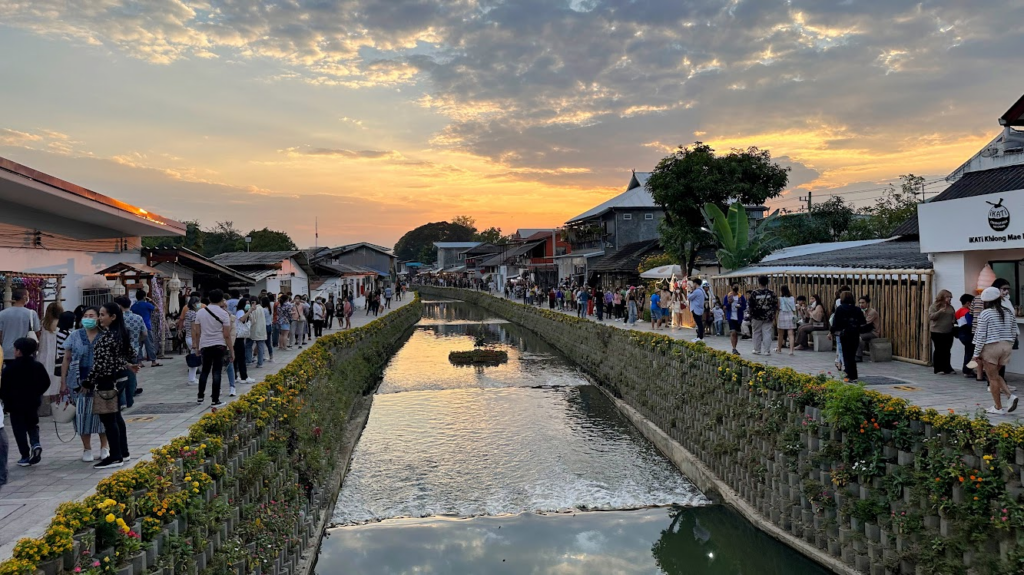
The Old City — The Heart of It All
The Old City is a roughly square grid enclosed by a moat and remnants of the original wall, dating from the founding of the Lanna Kingdom in 1296. Inside the moat: more than 30 temples, guesthouses at every price point, the best restaurant density on the island, and the specific atmosphere of a place that has been a centre of Buddhist culture for seven hundred years while simultaneously absorbing modern travel infrastructure without entirely losing its character.
The Old City is the right base for first-time visitors. Everything walkable. Temples around every corner. The Saturday Night Market (on Wualai Road, just south of the moat) and Sunday Walking Street (Wualai again, different configuration) both end at the moat. The morning market at the Warorot side of the city — Kad Luang — is a ten-minute bicycle ride.
Rent a bicycle on your first day and cycle the full perimeter of the moat. The circuit takes about 40 minutes at a relaxed pace and gives you an immediate sense of the city’s scale, the rhythm of the moat road in the morning, and the location of the gates. Do it before 8am when the road is quiet.
Nimman (Nimmanhaemin Road) — Cafes, Co-Working, and Chiang Mai’s Creative Class
Nimman is west of the Old City, around the main road of Nimmanhaemin and its network of numbered sois. This is where Chiang Mai’s design community, digital nomads, and younger Thai urbanites have concentrated. The result is an area with genuinely excellent cafes (Chiang Mai has one of the best independent coffee cultures in Asia), boutique shopping, co-working spaces, and restaurants that split their attention between Chiang Mai’s food traditions and international cooking.
It is less atmospheric than the Old City but more convenient for certain things — the Maya Mall nearby has a good supermarket, a cinema, and the Rimping grocery store where you can find ingredients for things you cannot find elsewhere. Nimman feels like a liveable urban neighbourhood rather than a tourist district, which is partly why the expat community has settled here.
The Riverside — Calm, Leafy, Slightly Removed
The Ping River runs along the eastern edge of the Old City, and the riverside area on both banks has developed a concentration of restaurants, bars, and guesthouses with genuine character. The pace here is slower than Nimman and less temple-dense than the Old City interior. Good for evenings — the cluster of bars and restaurants near the Iron Bridge (Nawarat Bridge) and the Saturday night market just south of the bridge make for a good evening circuit.
Several of Chiang Mai’s best hotels sit along the river. The Ping River cruise option (longtail or traditional wooden boat) is worth doing once — it shows you a different slice of the city’s geography from the water.
Santitham — Where Chiang Mai Actually Lives
Santitham is the neighbourhood immediately north of the Old City, and almost no tourist guides mention it. It is a residential neighbourhood — markets, local coffee shops, motorcycle repair shops, Thai school children, ordinary life. The Muang Mai market on the Ping River here is the city’s main wholesale produce market, operating from 3am and winding down by 8am: an extraordinary sensory experience if you can manage the alarm.
Staying in Santitham rather than the Old City costs less, feels more genuine, and is a 10-minute bicycle ride from the moat. For travellers who have visited Chiang Mai before and want to see past the tourist layer, it is the right choice.
Temples in chiang mai: Which Ones Are Worth Your Time
Chiang Mai has over 300 temples. Visiting them all is not the point. Visiting three or four slowly and with attention is. The following are the ones that reward time spent rather than a quick walk-through.
Wat Phra Singh — The Most Revered in Chiang Mai
The principal temple of the Old City, built in 1345 and housing the Phra Singh Buddha image — a revered icon that draws Thai pilgrims from across the north. The main viharn (prayer hall) is open and active: monks chanting, offerings being made, incense smoke. The surrounding compound includes a library, a smaller chapel with the finest Lanna murals remaining in Chiang Mai (the Lai Kham Viharn), and monks in residence.
Go at 8–9am or in the late afternoon. The light in the main courtyard at those hours is warm and the monk traffic is higher — the temple feels like a functioning religious space rather than a tourist stop. Dress code applies.
Wat Chedi Luang — Ruins, Scale, and Monk Chat
The massive ruined chedi (stupa) at Wat Chedi Luang was built in 1391 and partially collapsed in an earthquake in 1545. It has not been fully restored — the upper third is missing and the remaining structure is worn by six centuries of weather. The scale is astonishing: 60 metres tall even in its current state, with naga staircases and elephant buttresses at the base.
The Monk Chat programme runs here on Monday, Wednesday, and Friday evenings from 5–7pm — young monks practicing English in conversation with foreign visitors. It is free, informal, and one of the most valuable 45 minutes available in Chiang Mai. You leave with a more substantive understanding of Thai Buddhism than any temple walk provides.
Doi Suthep — The Mountain Temple Above the City
Wat Phra That Doi Suthep sits at 1,073 metres on the mountain that rises directly behind the city, reached by a road that climbs through national park forest. The temple is one of the most sacred in Thailand — the chedi houses a relic of the Buddha — and on clear days the view over Chiang Mai and the surrounding plain from the terrace is extraordinary. The climb to the temple from the car park involves 309 naga-flanked steps, or a funicular for those who prefer it.
The problem is the timing. Tour buses disgorge from 9am onwards and the temple is genuinely crowded by 10am through to 3pm. Go at 7am — it opens at dawn — or at 4:30pm when the late light hits the golden chedi directly and the tour buses have largely left. Either window is a completely different experience from the midday version.
Rent a motorbike and ride to Doi Suthep yourself rather than taking a songthaew. The road passes through Baan Kang Wat artists’ village, the Chiang Mai University arboretum, and the forest — the ascent is part of the experience if you are on a motorbike rather than in a shared pickup.
Wat Suan Dok — The One Most Visitors Skip
Wat Suan Dok sits just west of the moat and is less architecturally dramatic than the temples above. What makes it worth visiting is the compound of white chedis behind the main temple — the royal crypt of the Chiang Mai royal family, a forest of gleaming stupas in different sizes. In the late afternoon, with the sun hitting them from the west, it is one of the most photogenic and least crowded spaces in the Old City area.
The Monk Chat here runs Monday, Wednesday, and Friday evenings — the same programme as Wat Chedi Luang but a different group of monks and a different setting.
| Temple | Why Go | Best Time | Crowd Level |
| Wat Phra Singh | Most revered, active worship, finest Lanna murals | 8–9am or 4–5pm | Moderate |
| Wat Chedi Luang | Ruins on a massive scale, Monk Chat evenings | Early morning or evening | Moderate–high |
| Doi Suthep | Sacred relic, mountain views over the city | 7am or 4:30pm | Very high at midday |
| Wat Suan Dok | Royal crypt compound, white chedis, quiet | Late afternoon | Low |
| Wat Umong | Forest temple with tunnel system, ancient frescoes | Any time — small | Low |
| Wat Chiang Man | Oldest temple in the city (1296), crystal Buddha | Morning | Low |
Eating in Chiang Mai: The Best Food City in Northern Thailand
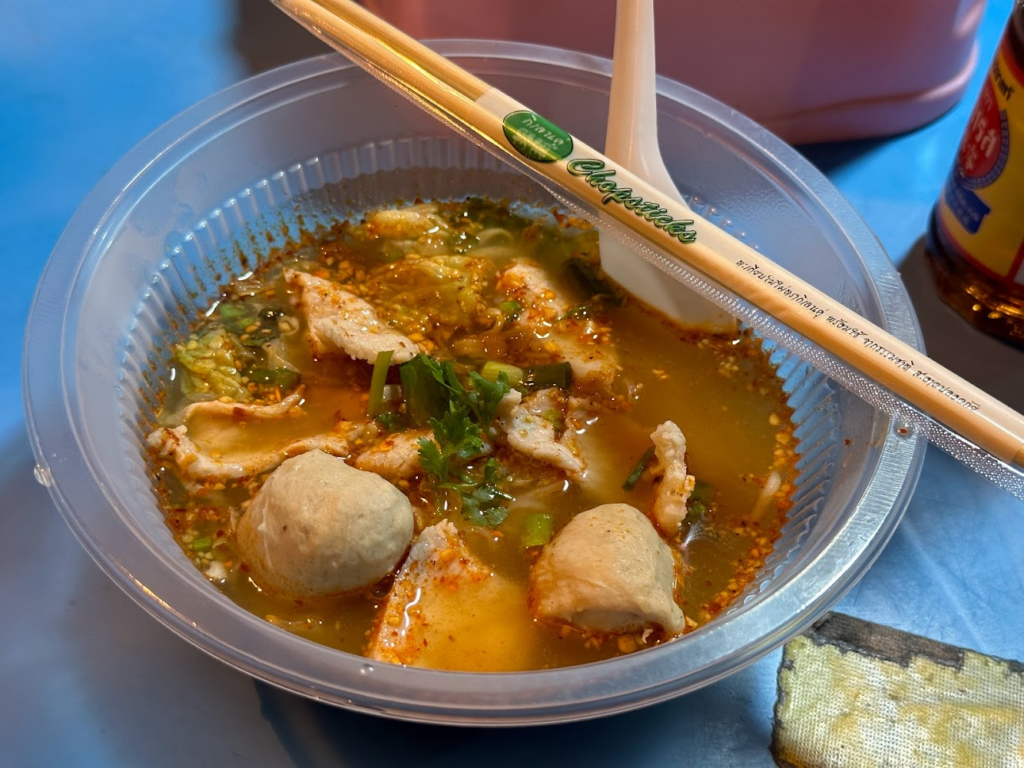
Northern Thai cuisine is not a regional variation of central Thai cooking — it is a distinct food culture with its own set of ingredients, techniques, and flavours. Chiang Mai is the best place in the country to eat it, and eating it well is one of the most compelling reasons to visit.
Khao Soi — Eat It Every Day
Khao soi is the defining dish of Chiang Mai: egg noodles in a rich coconut-curry broth, topped with crispy fried noodles, served with pickled mustard greens, shallots, lime, and chilli paste on the side. Every shop makes it slightly differently — the broth varies from clear and delicate to deeply rich, the noodle texture varies, the protein options include chicken, beef, and pork. Eating it at three or four different places across a week is not excess; it is research.
The spots that come up consistently among people who know the city well: Khao Soi Khun Yai (Faham area, just east of the Old City — a small shophouse that has been serving the same recipe for decades), Khao Soi Lam Duan (Faham Road, a few doors down, similar pedigree), and Khao Soi Islam (near Charoen Prathet Road, uses chicken and no pork — a Muslim-owned shop with a slightly different spice balance that some people prefer).
Eat khao soi before noon. Chiang Mai’s best khao soi shops often sell out by 1–2pm and close for the day. Going at 11am is the sweet spot — queues are shorter than at opening but the broth has had time to develop.
Northern Specialities Beyond Khao Soi
Sai ua, the northern pork sausage seasoned with lemongrass, galangal, shallots, and dried chilli, is grilled over charcoal and eaten with sticky rice. It appears at every market and many restaurant menus — the best versions have a deeply fragrant, herby quality that the tourist-area versions often flatten out. Warorot Market and the Saturday Night Market have reliable sai ua vendors.
Nam prik noom (roasted green chilli dip) and nam prik ong (a slow-cooked tomato and pork paste dip) are served with raw vegetables, blanched cabbage, and pork rinds — the northern equivalent of a sharing platter. Order both. Larb moo in the northern style uses toasted rice powder and dried spices, producing a different balance from the central Thai version. Kanom jeen, rice noodles served cold with several curry sauces poured over, is a northern breakfast staple that most tourists never encounter because they are eating eggs at their guesthouse.
Where to Eat: Market vs Restaurant
The best food in Chiang Mai is not in the restaurants. It is at the markets, the night market stalls, and the shophouse spots that do one thing and do it very well. The Warorot Market (Kad Luang) on the eastern edge of the Old City is the city’s main covered market and the best food shopping in the north — two floors of fresh produce, dried goods, northern specialities, and a food court in the basement that serves proper northern Thai breakfast from 6am.
The Saturday Night Market on Wualai Road is primarily a crafts market but the food vendors that set up alongside it are worth the trip independently. The Sunday Walking Street on the same road (different configuration, extends further) has a stronger food focus. The key rule in both markets: follow the Thai customers, not the English-language signage.
Coffee Culture: Chiang Mai Is Serious About This
Northern Thailand grows some of the best coffee in the country — Arabica farms on the mountain slopes around Doi Inthanon and Doi Chang produce beans that have found an international market. Chiang Mai has absorbed this into a coffee culture that rivals Bangkok and outperforms almost every other Thai city. The independent cafes on the Nimman sois and inside the Old City walls are not the coffee-as-backdrop variety — they are places where the sourcing, roasting, and brewing are taken seriously.
RISTR8TO on Nimman Road is the most famous name among specialty coffee people — consistent quality, good space. Ponganes Coffee (multiple locations) roasts its own. Graph Table (Old City, near Wat Phra Singh) is a beautiful space inside a traditional shophouse that has been serving excellent coffee and simple food since before Chiang Mai’s cafe scene became a thing. Arriving at any of these before 9am is a different experience from the midday rush.
What to Do in chiang mai Beyond the Standard Itinerary
The Moat Walk at Dawn
Set an alarm for 6am, put on shoes, walk out to the moat. This is the most direct way to understand what Chiang Mai actually is. Joggers, monks collecting alms in orange robes, market vendors setting up on the corners, dogs sleeping on the walls, temple bells, traffic just beginning to build. The moat road at this hour is a documentary of the city at its most unconstructed. It takes about 40 minutes to walk the full perimeter. Do it before you do anything else.
Baan Kang Wat Artists’ Village
A community of artisan studios and creative spaces on the road leading up towards Doi Suthep, about 10 minutes by motorbike from Nimman. Small, gated, quiet. Ceramics, illustration, handmade clothing, specialty coffee, a small gallery. The Sunday market here (small, runs 2–6pm) is a local alternative to the main walking streets — crafts that are actually made by the people selling them, no mass-produced import goods.
Baan Kang Wat is genuinely nice on a quiet weekday morning — the studios are open and the artists are working. The contrast with the Sunday Walking Street crowd is dramatic.
Huay Tung Tao Lake — Chiang Mai’s Weekend Secret
A reservoir in the foothills below Doi Suthep, about 10km from the Old City. Chiang Mai families come here every weekend: rent a bamboo platform over the water, order food and drinks from the floating restaurants, swim in the reservoir (clean, calm, safe), watch the mountains. There are almost no foreign tourists here because it appears in almost no English-language travel coverage. The lake is inside the Doi Suthep-Pui National Park and charges a 100 THB entry fee.
Go on a Sunday afternoon — the atmosphere is electric with locals in a way that the Old City’s tourist infrastructure cannot replicate. Rent a platform, order a roasted fish from the kitchen, buy cold Singha from the cooler. Stay until the sun hits the mountain behind the lake.
Huay Tung Tao is almost entirely absent from tourist guides, which is exactly why it is worth going. If you have a motorbike, the route up through the forest edge is beautiful.
Cooking Class — Do the One with the Market
A cooking class is not optional in Chiang Mai. Nowhere else in Thailand offers the same quality and concentration of cooking schools, and the focus on northern Thai cuisine here is specific and transferable. The key differentiator between classes is whether they include a market visit — specifically, whether you go to a real market (Warorot or the Muang Mai wholesale market) rather than a supplier pre-selected by the school.
Classes that start at the market teach you to identify ingredients, understand what fresh versus dried galangal looks and smells like, and navigate a Thai market kitchen mindset. That component is worth more than the cooking itself. Choose a class with a group no larger than eight, focused on northern Thai dishes (khao soi, larb, sai ua, nam prik), and starting before 9am to catch the market at its best.
The Saturday Night Market on Wualai Road
Not the Night Bazaar on Chang Khlan Road — that one is primarily for tourists, selling machine-made goods at inflated prices with tuk-tuk access from every hotel. The Saturday Night Market on Wualai Road (the street of silversmiths, just south of the moat) is different: it is a walking street that fills with local vendors, genuine crafts, food stalls, and live music. It runs from 4pm to midnight and attracts a mix of Thais, expats, and travellers who have done their research.
Arrive at 4–5pm when the stalls are setting up and you can browse without the full crowd. By 7pm it is busy. By 9pm it is packed. The food stalls along the edges are worth the trip even if you are not shopping.
Doi Inthanon National Park — Full Day
Thailand’s highest peak (2,565 metres), 70km southwest of Chiang Mai. A full day here — arriving early, climbing to the summit cloud forest, visiting the twin royal chedis, stopping at the Wachirathan waterfall on the way back — is one of the best single-day experiences available from any Thai city. The temperature at the summit in December through February drops to 5–10°C. Bring a layer you would not expect to need in Thailand.
The drive itself is worth noting: the mountain road passes through Karen villages, highland flower farms, and forest that shifts from tropical to temperate as you gain altitude. Renting a motorbike and driving it yourself takes slightly longer than a tour but gives you the ability to stop at the viewpoints and the farm stalls that guided tours pass without stopping.
Muang Mai Wholesale Market — 5am
This is an advanced move. Muang Mai is the main wholesale produce market for northern Thailand, operating on the eastern bank of the Ping River from around 3am until 8am. By 5am it is at full pitch: mountains of tropical fruit, vegetables hauled in from hill tribe farms, fish from the valley rivers, flowers by the truckload. It is not a tourist market and it does not operate on tourist time — everything about it is functional, fast, and scale-oriented.
Go alone, by bicycle or motorbike, with no specific plan. Walk the main lanes. Eat breakfast at one of the vendor stalls inside the market (jok — rice congee — or fresh khao tom). The sensory density at 5am, with trucks still arriving and vendors calling prices, is unlike anything in the tourist version of Chiang Mai.
Chiang Rai: Do It in 2 Days, Not as a Day Trip
Every guesthouse in Chiang Mai will offer you a Chiang Rai day trip. Do not take it.
The driving distance is 200km each way — that is four hours of road time in a day, which means you arrive in Chiang Rai with three or four hours, rush the White Temple, eat lunch, and leave. You will have seen Chiang Rai’s most famous building at midday in a crowd and missed everything that makes the city and surrounding region worth the journey.
Two days allows you to see the temples at the right time, get to Mae Salong or the Golden Triangle, eat properly, and understand what Chiang Rai actually is: a smaller, quieter, less tourist-saturated northern city with significant art, history, and mountain access of its own.
Day One in Chiang Rai: The Temples
Arrive in Chiang Rai by mid-morning (the bus from Chiang Mai takes 3.5 hours; there are also flights, ~45 minutes). Drop your bags and go directly to the White Temple (Wat Rong Khun).
Wat Rong Khun is the ongoing creation of Thai artist Chalermchai Kositpipat — a temple commissioned, designed, funded, and built by a single living artist, covered in white render and mirror mosaic that produces a dazzling effect in sunlight. It is unlike any other Buddhist structure in the country, because it is not a historical temple but an active artwork: unfinished, evolving, and strange in the most compelling way. The bridge you cross to enter is flanked by arms reaching from the ground — representing temptation and desire. The main hall is full of contemporary murals including images of Keanu Reeves, Superman, and the Twin Towers, alongside traditional Buddhist imagery. It sounds chaotic. In person it holds together.
Arrive at opening (7am if you stayed overnight in Chiang Rai, or as early as possible if driving from Chiang Mai). By 10am tour buses are stacking up. The difference between the 8am and 11am experience is measured in hundreds of people.
Afternoon: Wat Rong Suea Ten (the Blue Temple) is 3km from the city centre and receives a fraction of the White Temple’s traffic despite being, to many visitors, more beautiful inside. The interior is deep indigo with gold Buddhist imagery — the colour contrast produces something genuinely striking. Late afternoon light through the windows is worth timing for. Then Baan Dam (the Black House), the life’s work of National Artist Thawan Duchanee — a compound of dark wooden buildings filled with animal skulls, bones, and sculpture. Dense, unusual, unsettling in the right way. Allow an hour.
Evening: Chiang Rai’s Night Bazaar (smaller and more manageable than Chiang Mai’s) and the hilltribe market near the clock tower. Eat at the night market food court — northern Thai dishes at market prices.
Day Two in Chiang Rai: Mae Salong or the Golden Triangle
Two options for day two, depending on your interest:
Mae Salong (Santikhiri) is a mountain village 80km northwest of Chiang Rai, sitting at 1,300 metres on the border ridge. It was settled by Kuomintang soldiers and their families who fled China after 1949 and for decades had no formal connection to Thailand — a stateless mountain community surviving on opium production until the Thai government initiated crop-substitution programmes in the 1980s. Today it produces oolong tea on terraced hillsides and has a Chinese-Thai-Burmese culture found nowhere else in Thailand. The village has Chinese temples, Yunnan-style food (the best in the north, eaten nowhere else in Thailand at this quality), tea tasting rooms, and views over the mountain valleys that justify the drive.
The Golden Triangle — the point where Thailand, Laos, and Myanmar meet at the Mekong River — is 60km north of Chiang Rai. The physical location is a tourist attraction now (there are casinos, a large Buddha image, longtail boat rides on the Mekong), but the surrounding area — Chiang Saen (an ancient walled city on the river), the views over the Mekong into Laos, the Opium Museum at Baan Tham — adds substance to what would otherwise be a photo stop.
Mae Salong requires a vehicle (motorbike or car rental from Chiang Rai). The road is paved and the mountain drive takes about 1.5 hours from Chiang Rai. It is genuinely worth the effort — eat a Yunnan noodle lunch, do a tea tasting, walk the ridge — but you need to commit to the drive.
| Chiang Rai Stop | Why It’s Worth It | Best Time to Go | How Long |
| Wat Rong Khun (White Temple) | Unique living artwork unlike any Thai temple | 7–9am before tour buses | 1.5 hrs |
| Wat Rong Suea Ten (Blue Temple) | Stunning interior, far fewer crowds than White Temple | Afternoon | 45 min |
| Baan Dam (Black House) | Extraordinary, dark, polarising — completely original | Any time | 1 hr |
| Mae Salong | KMT history, Yunnan food, oolong tea, mountain views | Full morning departure | Full day |
| Golden Triangle + Chiang Saen | Mekong views, ancient walled city, Opium Museum | Morning | Half day |
| Chiang Rai Night Market | Local food, hilltribe market, manageable scale | From 5pm | 2 hrs |
What to Avoid in Chiang Mai
The Night Bazaar on Chang Khlan Road
This is not the Saturday Night Market. The Night Bazaar is a permanent tourist market on Chang Khlan Road, running nightly, selling primarily mass-produced goods — elephant-print trousers, wooden elephants, cheap silverware, knock-off branded goods — at prices aimed at people who have not yet learned to bargain and do not know what things are worth. It is not a cultural experience; it is a mall without a roof. Skip it in favour of the Saturday Night Market on Wualai Road or the Sunday Walking Street.
Tiger Kingdom Chiang Mai
Tiger Kingdom operates near Mae Rim, north of the city. The welfare concerns are identical to those at the Phuket location. Tigers made docile enough for tourist handling have been conditioned through methods incompatible with their wellbeing. Do not visit, regardless of how it is marketed.
Elephant Riding
Chiang Mai province has a concentration of elephant camps operating under various names — trek camps, ethical sanctuaries, rescue centres. The distinction between marketing language and actual welfare practice requires research. A working guide: any facility where riding is offered is not operating to welfare standards. Any facility where elephants perform (painting, football, dancing) is not a sanctuary. Any facility where you can have extended close physical contact with adult elephants outside a natural context has trained those animals to accept that contact through methods that involve stress and pain.
If you want to see elephants in Chiang Mai, the Elephant Nature Park (founded by Lek Chailert) is the most respected facility in the region — no riding, no shows, rescue elephants. Even then, visit as an observer, not a participant. The bar for ‘ethical’ in elephant tourism is much higher than the industry presents it.
Rushing the Old City
This is the most common mistake. Chiang Mai’s Old City has more than 30 temples. Visiting all of them in a day is possible. It is also the worst use of a day in Chiang Mai. Pick three temples, sit in the courtyards, watch what is actually happening. Eat lunch at the market. Get lost on a bicycle. The city does not reward efficiency.
Coming in March or April Without Checking the Air Quality
The burning season in Northern Thailand runs roughly from February through April, peaking in March. Farmers across northern Thailand and across the border in Myanmar burn their fields and forests, producing smoke that settles into the Chiang Mai valley and cannot escape because of the surrounding mountains. On bad days — and there are many — the AQI (Air Quality Index) reaches levels classified as hazardous to health. The mountains disappear. The sky turns white. Your eyes sting.
If you have any respiratory condition — asthma, allergies — do not visit Chiang Mai in March or April. Even without a pre-existing condition, spending two weeks in the city during a bad burning season is unpleasant. Check real-time AQI on IQAir before finalising March or April travel to Northern Thailand.
Best Time to Visit Chiang Mai
| Period | Weather | Crowds | Notes |
| November | Cool, dry, clear. Mountain views excellent. | Medium — growing | Yi Peng Lantern Festival usually falls here (lunar calendar — check exact date). One of the most beautiful events in Asia. Plan around it if possible. |
| December–February | Cool to cold (10°C at dawn in Jan). Dry, sunny, stunning. | High–Peak | Best weather. Dec–Jan peak: book accommodation early. February is the sweet spot — slightly past Christmas crowds, cold mornings, clear days. |
| March–April | Hot. Haze and smoke from burning season. AQI often poor. | Medium | Avoid if respiratory health is a concern. Some visitors don’t notice; others find it genuinely difficult. Check air quality forecasts for the specific dates. |
| May–June | Rainy season begins. Warm, humid, some daily rain. | Low | City is green and lush. Prices drop significantly. Fewer tourists. Good if you like the city without its tourist layer and can handle afternoon showers. |
| July–October | Wet season. Regular heavy rain, occasional flooding. | Low | The surrounding mountains and national parks are extraordinary in green season. Waterfalls at full flow. Chiang Mai city manages the rain well. |
| Yi Peng Festival | November (2nd full moon of Lanna calendar) | Very high that weekend | Sky lanterns (khom loi) released en masse across the city. The organized mass-release events are very crowded — the neighbourhood releases near local temples are more genuine. Research exact dates in advance. |
The Yi Peng Lantern Festival is one of the most extraordinary events in Southeast Asia — thousands of paper lanterns released into the night sky simultaneously. The date changes each year (lunar calendar). If your travel dates have any flexibility, building your Chiang Mai visit around Yi Peng is worth doing. Book accommodation 3–4 months ahead for that weekend.
Practical Information about chiang mai
| Detail | What You Need to Know |
| Getting around | Bicycle for the Old City — the best option, rentable from guesthouses for 60–100 THB/day. Motorbike for Doi Suthep, Nimman, and day trips — 200–300 THB/day. Grab app works well for longer distances. Songthaews (red shared trucks) run fixed routes for 25–30 THB. |
| Getting to Chiang Rai | Bus from Arcade Bus Terminal: 3.5–4 hrs, ~150–180 THB. Minivan slightly faster. Fly: ~45 min, but expensive and airport transfers add time. Bus is the right choice for 2-day trip. |
| Money | ATMs everywhere in Old City and Nimman. Same 220 THB foreign fee as all Thai ATMs. SuperRich currency exchange has a branch on Nimman Road with better rates than ATMs. |
| SIM card | Buy at the airport or any AIS/DTAC shop. AIS has the best signal in the mountains north of the city (relevant for Doi Inthanon and Chiang Rai). |
| Temple dress | Covered shoulders and knees for all temple visits. A light sarong in your day bag solves this permanently. Most temples have loaners at the gate but the quality varies. |
| Altitude note | Doi Inthanon summit in winter can drop to 5°C. Bring a layer if you are going. Pack is the same for Doi Suthep dawn. |
| Safety | Chiang Mai is very safe. The main considerations: motorbike traffic (drive with attention, road quality outside the city can be rough), and food stall hygiene (eat where Thais eat, not where the English-language signs point). |
| How many days | Minimum 4 days for Chiang Mai city. Add 2 days for Chiang Rai. A 7–10 day visit is not too long — the city has depth that rewards slow exploration. |
Frequently Asked Questions about Chiang mai
A minimum of four days to cover the essential temples, eat the key dishes multiple times, and begin to feel the city’s rhythm. Seven to ten days is better — it allows a full Chiang Rai excursion (two days), a day at Doi Inthanon, a cooking class, and the kind of unscheduled wandering that makes Chiang Mai actually good. More than ten days and you are essentially living there, which some people do for months.
Completely different city. Bangkok is dense, vertical, and metropolitan. Chiang Mai is compact, walkable, and Lanna — a distinct northern Thai culture with its own food, architecture, and history. The temples, the food, the pace, the mountain access, and the coffee culture are all things Bangkok does not offer. Visiting both is not redundant.
Yi Peng is a Lanna festival coinciding with the full moon of the second lunar month (usually November). The most visible tradition is the mass release of khom loi — sky lanterns — creating rivers of light rising above the city. If the dates align with your trip, building your visit around Yi Peng is strongly recommended. The organized release events (ticketed, very crowded) are secondary to the neighbourhood releases that happen around local temples on the same evening — quieter, less formal, more genuine.
Excellent. The city is easy to navigate alone, the food culture rewards solo eating (market stalls, small shophouses), the co-working and cafe infrastructure means there are always places to sit and be around people without effort, and the walking and cycling scale of the Old City means you can cover a lot of ground independently. The Monk Chat programmes at Wat Chedi Luang and Wat Suan Dok are particularly good for solo travellers who want substantive conversation.
Chiang Mai is a city of 130,000 people (larger with the wider metro), a major university town, and the cultural and commercial capital of the north. Chiang Rai is smaller (around 70,000), quieter, and less developed for tourism — which is partly why it is refreshing after Chiang Mai. Chiang Rai’s main draws are the contemporary art temples, the hill tribe proximity, and the mountain access to Mae Salong and the Golden Triangle. The two are complementary, not redundant.