

Most Thailand travel tips articles tell you to remove your shoes before entering temples, carry small change for street food, and buy travel insurance. All of that is true and none of it is what you need to know before you go.
The tips below are the ones that come from actually being in Thailand: understanding the specific mechanics of the scams, knowing why the obvious transport option is the wrong one, reading the food situation in a way that lets you eat at the best places rather than the nearest ones. None of these are dramatic revelations. They are the kind of things that would have been useful to know on arrival and that become obvious only after they have already caught you out.
Things Most Thailand Guides Get Wrong or Skip
| ATM fees | All Thai ATMs charge a flat 220 THB foreign fee per transaction. Always withdraw the maximum (20,000 THB). Never withdraw small amounts. |
| Spice calibration | Restaurants automatically tone down spice for foreigners. To get actual Thai spice, say ‘ped Thai’ (Thai spicy) or ‘ped mak’ (very spicy). |
| Grab app | Works well in Bangkok and Chiang Mai. Unreliable in Phuket’s tourist zones — tuk-tuk drivers have effectively pressured drivers away from beach areas. |
| Minivans | Faster than buses but statistically more dangerous, especially on mountain roads (Pai route, Chiang Rai road). Take the bus or train on long routes. |
| Your passport | Never hand over the original to a motorbike rental shop. A colour photocopy is legally sufficient for ID deposit. If they refuse, walk away. |
| Beach flags | Red flag = no swimming, and that is not a suggestion. Tourists drown every year in Phuket and Samui ignoring red flags. It is not about caution — it is about survival. |
| Fake monks | Monks do not approach tourists to ask for donations or sell amulets. A person in orange robes soliciting money in a tourist area is not a monk. |
| Burning season | Chiang Mai in March–April is often blanketed in agricultural smoke. AQI regularly hits ‘hazardous’ levels. Check IQAir before booking north Thailand for March. |
Scams in Thailand: How They Actually Work
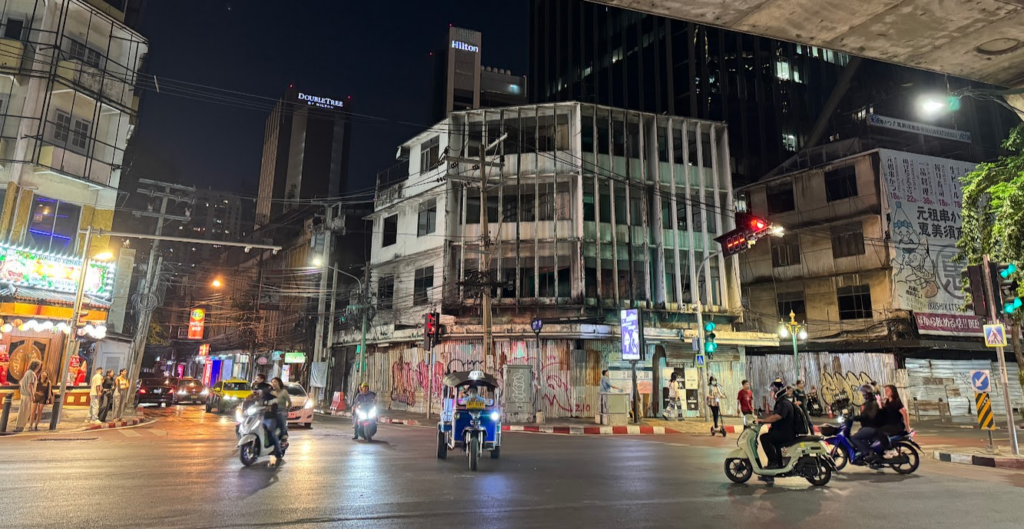
Thailand’s most common scams are not sophisticated. They succeed because they feel plausible in the moment and because the people operating them are practiced at it. Understanding the mechanics removes the plausibility entirely.
The ‘Closed Today’ Tuk-Tuk Scam (Bangkok)
You are walking towards the Grand Palace or Wat Pho. A well-dressed local approaches, friendly and unprompted, and tells you the temple is closed today — national holiday, royal ceremony, monks-only day. He is sympathetic. He knows of an alternative temple, just as beautiful, not far. His tuk-tuk driver friend can take you for almost nothing, 20 or 30 baht, amazing deal.
The temple is not closed. The ‘alternative’ tour takes you to one or more shops — usually a gem shop, a tailor, or a ‘government export sale’ — where the tuk-tuk driver earns a commission for every minute you spend inside, whether you buy or not. The itinerary is designed to fill your day and exhaust your patience until you make a purchase.
The Grand Palace closes for Royal events but never without prior notice on its website and at the main gates. If a stranger tells you it is closed today, ignore them and walk to the gates yourself to verify. The scam has been running for over forty years and is still effective because the people operating it are genuinely convincing.
The Gem Scam (Bangkok)
A variation of the same principle. A friendly local — often near the Grand Palace, sometimes near a tourist temple — tells you about an extraordinary sale on rubies, sapphires, or other gems, happening today only, limited to people in the know. The gems are real but vastly overpriced, or they are low-quality stones sold as premium-grade. The receipts look legitimate. The certificates look official.
Thai gems have genuine prestige — the country is a major global gem-trading centre. The scam uses that legitimacy as cover. The price you pay for a ‘premium ruby’ in a shop recommended by a tuk-tuk driver will be 5–20 times what it would cost through a reputable dealer, and its resale value will confirm this the moment you try to sell it at home.
No legitimate gem sale requires a stranger to tell you about it on the street. There is no ‘government special export sale’ happening today that only locals know about. This scam operates specifically on tourists’ awareness that Thai gems are genuinely valuable.
The Jet Ski Damage Scam (Phuket — Patong Beach)
The sequence: you rent a jet ski on Patong Beach. You return it. The operator examines it with great concern and discovers damage — scratches, a dent, a cracked panel — that you are responsible for. The damage was pre-existing and pre-photographed so they know its location precisely. The demand is for cash, typically 10,000–30,000 THB. There are sometimes associates nearby who create a low-level atmosphere of pressure.
The police response in tourist areas of Patong has historically been unsympathetic to foreign complaints about this — in some documented cases, police have sided with operators. The rental ‘insurance’ you may have been offered does not cover this type of damage, or it was not a real insurance product.
Do not rent jet skis in Patong. If you rent one anywhere in Phuket, photograph every part of the vehicle in detail — including undersides and hidden panels — in the operator’s presence before you leave. Show them you are photographing. If they object, this tells you something important. Get a signed receipt that lists the vehicle’s pre-existing condition.
The Bracelet / Lucky Charm Tie-On (Bangkok, Tourist Temples)
Someone approaches you — sometimes dressed in traditional clothing, sometimes not — ties a string bracelet or places a garland on you in a gesture that seems ceremonial or friendly. You are then told what it means and what you owe for it. The conversation moves quickly to money. Refusing to pay after the item is already on your wrist creates social pressure that the operator understands how to exploit.
The response is to decline firmly before anything is placed on you. If something is tied on before you can prevent it, you are entitled to remove it and leave without paying. No traditional Thai ceremony involves unsolicited payment from tourists.
Fake Monks Soliciting Donations
Buddhist monks in Thailand are prohibited by monastic rules from soliciting money. A monk does not approach tourists in a tourist area, offer amulets for sale, or ask for donations. Any person in orange robes doing any of these things is not operating within the Thai Buddhist monastic tradition. This includes the ‘monk blessing’ offered at airports, shopping malls, and tourist sites that is followed by a request for a ‘donation envelope.’
Genuine monks are approachable if you approach them — at a temple, respectfully, with questions. The relationship is initiated by the visitor, not the monk.
The Taxi Meter Refusal at Suvarnabhumi Airport (Bangkok)
Metered taxis from Bangkok’s Suvarnabhumi Airport are legally required to use the meter. On arrival, take the official metered taxi queue in the arrivals hall (not the touts in the terminal). Some drivers at the official queue will quote a flat rate instead of turning on the meter. The correct response is to ask again for the meter, and if they refuse, decline the cab and take the next one. Flat-rate airport taxis from this queue are almost always significantly more expensive than metered fares. A metered fare to central Bangkok runs approximately 200–350 THB plus 50 THB airport surcharge plus expressway tolls (~50–75 THB). A ‘flat rate’ from a driver who refused the meter is typically 500–800 THB for the same journey.
The Suvarnabhumi Airport Rail Link (ARL) reaches Phaya Thai station (central Bangkok) in 30 minutes for 45 THB. For solo or couple travel without heavy luggage, it is faster than a taxi in traffic and more reliable than any airport cab negotiation.
This is a quick reference of the most important scams you can encounter in Thailand:
| Scam | Location | How It Starts | How to Avoid It |
| Closed temple / tuk-tuk tour | Bangkok (Grand Palace area) | Friendly local tells you attraction is closed today | Walk to the gates yourself. Never follow unsolicited advice about closures. |
| Gem shop redirect | Bangkok tourist areas | ‘Government sale today only’ from a street stranger | There is no such sale. Walk away without engaging. |
| Jet ski damage claim | Patong Beach, Phuket | You return the jet ski; they find ‘damage’ | Photograph every panel before departing. Better: don’t rent. |
| Bracelet / garland tie-on | Tourist temples, Bangkok | Item placed on you before you can decline | Say no clearly before anything is placed. Step back. |
| Fake monk donation | Airports, malls, tourist sites | Monk approaches with amulet or blessing, then requests money | Monks do not approach tourists for money. Decline and walk. |
| Taxi meter refusal | Suvarnabhumi Airport Bangkok | Driver quotes flat rate instead of running meter | Insist on meter. Take next cab if refused. Or take the train. |
| ATM card skimming | Standalone ATMs in tourist areas | Card reader and pinhole camera installed on machine | Use ATMs inside bank branches or inside 7-Eleven. Shield your PIN. |
| Hotel ‘tour desk’ overpricing | All tourist areas | Hotel recommends tours at ‘special price’ | Compare with street-level booking desks. Hotel desks add 30–100% markup. |
Money in thailand: The Traps Most Guides Don’t Explain Fully
The ATM Fee Is Fixed — So Withdraw the Maximum Every Time
Every Thai ATM operated by a Thai bank charges foreign cardholders a flat fee of 220 THB per transaction, regardless of how much you withdraw. This fee is the same whether you take out 500 THB or 20,000 THB. If you withdraw 1,000 THB at a time, you are paying a 22% fee. If you withdraw 20,000 THB, the same fee is 1.1%. The instruction is simple: always withdraw the maximum the machine allows, which is typically 20,000 THB at most Thai ATMs.
Additionally, your home bank may charge its own foreign transaction fee on top of the Thai bank fee. Check your card’s terms before you travel. Wise (formerly TransferWise) and Revolut cards significantly reduce or eliminate the home bank fee, leaving only the 220 THB Thai ATM fee.
SuperRich Is the Best Currency Exchange — and It’s Not at the Airport
SuperRich Thailand (the orange-logo chain, not to be confused with the green-logo imitator) consistently offers among the best foreign exchange rates in the country. There are branches in Bangkok (near BTS Chitlom station, near Siam, and others), in Chiang Mai on Nimman Road, and in a few other cities. The airport exchange counters — both Suvarnabhumi and Don Mueang — charge rates 3–7% worse than SuperRich. If you need to exchange on arrival, take out just enough from an ATM to reach the city, then exchange larger amounts at SuperRich.
The SuperRich branch on the ground floor of the BTS Chitlom exit in Bangkok is one of the most accessible. Google ‘SuperRich Thailand’ before arrival to locate the nearest branch to your accommodation.
Credit Cards Are More Complicated Than They Seem
Many Thai merchants offer a choice at payment: charge in Thai baht, or charge in your home currency. Always choose Thai baht. The ‘home currency’ option (called Dynamic Currency Conversion, or DCC) uses an exchange rate set by the merchant’s payment processor, which is almost always significantly worse than your card’s own conversion rate. The merchant and their bank take a cut on the conversion. It appears to be a convenience; it is a fee in disguise.
When a card terminal or merchant asks ‘would you like to pay in USD / GBP / EUR or Thai baht?’ — always choose Thai baht. Always. Choosing your home currency triggers DCC and will cost you 3–7% more.
Bargaining: Where It Applies and Where It Absolutely Does Not
Bargaining in Thailand is appropriate at: night markets and walking streets, street stalls selling goods (not food), tuk-tuk and non-metered transport, tour operators at street-level desks, and souvenir shops without fixed price tags.
Bargaining is not appropriate and is considered rude at: restaurants, food stalls, 7-Elevens and convenience stores, supermarkets, mall shops, and medical facilities. The distinction matters because misapplying it creates an awkward interaction for the seller and marks you as someone who does not understand how things work.
On bargaining technique: the opening offer from a vendor at a tourist night market is typically 2–3x the expected final price. A counter of 40–50% of the asking price is not offensive and is the normal starting point for negotiation. Walking away is the most effective bargaining tool. A final price that is 50–70% of the original ask is usually achievable and reasonable for both parties.
Transport in thailand: What the Booking Sites Don’t Tell You
Minivans Are Fast and Statistically More Dangerous Than Buses
Minivans (shared 10–12 seat vehicles) are the default recommendation for medium-distance journeys — Bangkok to Kanchanaburi, Chiang Mai to Pai, Chiang Rai to Chiang Mai. They are faster than buses and cheaper than trains. They are also driven at higher speeds on mountain roads, have a worse accident record than government buses, and in an accident provide less protection than a full-sized coach.
On mountain routes in particular — the road from Chiang Mai to Pai involves 762 curves in 135km — the speed differential between a cautious driver and an aggressive one is significant. There have been fatal minivan accidents on this road. The bus takes longer and is meaningfully safer.
If you take the minivan from Chiang Mai to Pai, the road is genuinely winding and nausea is common. Sit near the front, take motion sickness medication 30 minutes before departure if you are susceptible, and consider whether the overnight bus or the 30-minute flight from Chiang Mai is worth the extra cost.
The Overnight Train to Chiang Mai Is One of the Best Experiences in Thailand
The State Railway of Thailand’s overnight sleeper from Bangkok Hua Lamphong to Chiang Mai runs nightly and takes 12–14 hours, arriving early morning. Second-class sleepers cost around 700–900 THB for a lower berth — private curtained bunk, clean linen, restaurant car. You sleep through the journey, arrive in Chiang Mai rested, and save a night’s accommodation cost.
The upper berth is slightly cheaper and has the advantage of converting from a seat later than the lower berth (lower berths are converted from seats where strangers sit opposite you during the day section of the journey, which some people find awkward). Book through the Thai Railways website or at any major train station. Booking 1–2 weeks ahead secures a berth in peak season.
Grab Works Differently in Different Cities
Grab (Southeast Asia’s equivalent of Uber) operates across Thailand but with significant variation by city. In Bangkok it works reliably and is the single most useful app for getting around — metered, no negotiation, driver accountability, air conditioning. In Chiang Mai it works well in the central areas. In Phuket and Krabi’s tourist zones, it is unreliable: tuk-tuk and songthaew drivers in beach areas have actively discouraged Grab drivers from operating their routes, and coverage drops sharply near Patong and Ao Nang.
In Phuket, agree a price with a tuk-tuk before getting in. The acceptable rate from Patong to Kata is around 200–300 THB; from Ao Nang to Railay pier is a 100 THB longtail boat (no negotiation — it is a fixed shared boat fare).
The Songthaew (Red Truck) in Chiang Mai Has Fixed Routes
Chiang Mai’s red songthaews (converted pickup trucks with benches in the back) run on loosely fixed routes for a fixed price of around 30 THB per person. They are not taxis — you hail one going roughly in your direction and share the ride with whoever else is going that way. The driver may pick up others along the route.
If you approach a songthaew and ask ‘how much to [destination]?’ without knowing the route price, the driver will often quote a private taxi price (150–300 THB). The correct approach is to tell the driver where you are going and ask if it is on the route (ไปด้วยได้ไหม — ‘bpai duay dai mai?’). If it is, you pay the shared fare. If he wants to negotiate, he is operating private-hire mode and the price should reflect that.
Island Boat Last Departure Times Are Not Flexible
The last longtail boat from Railay back to Ao Nang typically runs around 6pm in peak season. The last ferry from Koh Phi Phi to Phuket or Krabi typically runs at 3–4pm. Missing the last boat on an island with limited accommodation often means either sleeping there unexpectedly or hiring a private longtail at nighttime prices (500–1,000 THB for a 15-minute trip).
Check the exact last departure time on the day, not from a website or guidebook — schedules shift seasonally and with weather. Ask your accommodation or the pier itself. Add 30 minutes of personal buffer.
Food in thailand: The Non-Obvious Things
Restaurants Automatically Reduce Spice for Foreigners — Here’s How to Fix That
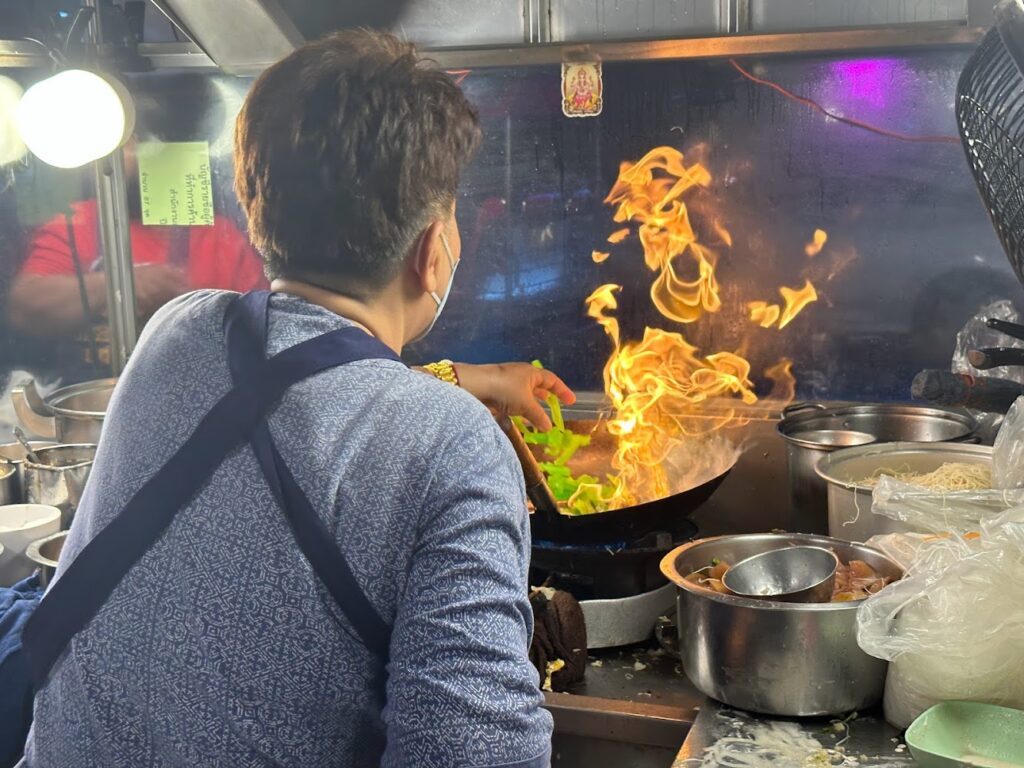
Thai cooks have calibrated ‘tourist spice’ and ‘Thai spice’ as separate settings, applied by default based on who is ordering. If you look like a tourist, your pad thai and green curry will arrive at a fraction of their actual heat. This is not condescension — it is damage control after years of tourists sending food back or complaining.
To override this: say ‘ped Thai’ (Thai spicy) when ordering. Or ‘ped mak’ (very spicy). Or simply ‘ped jak pet yang Thai’ — spicy like you’d make it for a Thai person. The cook’s face will often register mild surprise, followed by respect. The food that comes out will be different from the tourist version in a way that matters.
At market stalls and street food vendors, this calibration is slightly less automatic than at sit-down restaurants. Order confidently, skip the ‘not too spicy’ qualifier, and let the cook make the call. At these places, the default is closer to actual Thai spice anyway.
The Ice Is Almost Certainly Safe — Here Is Why
‘Don’t eat ice’ is probably the single most repeated and most misapplied advice in Southeast Asia travel. In Thailand, the vast majority of ice used in restaurants, coffee shops, and market stalls comes from commercial ice factories — large-scale operations producing ice from purified water under regulated conditions. You can identify commercial ice by its shape: cylindrical tubes with a hole through the centre, or clear cubic blocks. Both are factory ice.
Ice that is potentially unsafe — made from tap water in uncontrolled conditions — is the crushed ice produced from manually broken blocks at very low-end establishments. This is increasingly rare in Thai tourist areas and cities. Eating ice in a Bangkok restaurant or a Chiang Mai coffee shop carries negligible risk. The ‘no ice’ rule is a legacy from an era of more variable ice production standards.
The Real Thai Menu Is Often Not in English
In restaurants that cater to both Thai and foreign customers, there are frequently two menus or two sections of the same menu: the English-language tourist menu (higher prices, smaller portions, dishes adapted for foreign palates) and the Thai-language menu (local pricing, full range of dishes, regional specials). Asking for the Thai menu — ‘mee menu Thai mai?’ — and pointing to what other tables are eating is one of the most effective ways to immediately improve both the food quality and the price you pay.
In places with no English menu at all: walk up to the kitchen, look at what is being cooked, point. This works at market stalls, at shophouse restaurants, and at anything where there is a visible cooking station. The person cooking will understand immediately and the food that comes is what they are actually making today, not a dish reconstructed from a menu designed for foreigners.
Eat Where the Motorcycles Are Parked, Not Where the Signs Are
The fastest proxy for good street food and market stalls is the density of parked motorbikes. Thai people arrive on motorbikes, park on motorbikes, and the cluster of motorbikes outside a market stall or shophouse is a reliable signal that the food is priced and calibrated for locals, not tourists. Long lines of tuk-tuks and tour buses outside a restaurant indicate the opposite.
Some Northern Thai Dishes Come with Raw Pork — Know Before You Order
Larb moo in the northern style (larb moo dip) is sometimes served with raw or partially cooked minced pork — this is traditional and intentional, and many Thai people eat it without issue due to the acidity of the lime juice and the antimicrobial effect of the fresh herbs. For visitors, the risk of consuming raw pork (tapeworm, salmonella) is real and should be weighed. When ordering larb moo at a northern Thai restaurant, confirm whether the pork is cooked: ‘moo suk mai?’ (is the pork cooked?). Requesting ‘suk’ (cooked through) will produce a different dish but an equally valid one.
Cultural Behaviour in thailand: What Most Guides Oversimplify
The Wai: When to Return One, When Not to Initiate
The wai (the prayer-hands gesture of greeting) is one of the most misunderstood aspects of Thai social interaction for foreigners. The basic instruction — ‘wai to show respect’ — misses the relational dimension. The wai is hierarchical: the person of lower social status initiates, and the person of higher status returns it. A hotel receptionist wais a guest as a sign of respect to the customer; the guest returns it.
The complication: initiating a wai towards service staff (people in a lower social position relative to you as a customer) puts them in an awkward position — they cannot easily return it without disrupting the social dynamic. What reads to a foreigner as ‘respectful’ can read to a Thai person as slightly confusing. The practical rule: return a wai when someone wais you first. You do not need to initiate wais towards service staff, though they will not be offended if you do.
Never wai children, and never wai to shake hands simultaneously — pick one.
Never Touch Anyone’s Head or Point With Your Feet
The head is spiritually the highest part of the body in Thai Buddhist culture; the feet are the lowest. Touching a Thai person’s head — even a child’s, even affectionately — is a serious social violation. Pointing your feet at a person, at a Buddha image, or at a temple is considered deeply disrespectful. When sitting in a temple, cross-legged or with feet tucked behind you is correct. Sitting with legs outstretched pointing at the altar is not.
The feet-pointing issue extends to sleeping: in guesthouses and bungalows where you can see a Buddha image from your bed, pointing your feet toward the image while sleeping is technically disrespectful. Most Thai people will not mention it to a foreign visitor, which does not mean it has not been noticed.
The Concept of ‘Losing Face’ Has Real Practical Consequences
Causing a Thai person to lose face — to be embarrassed or humiliated in front of others — produces a social wound that is taken seriously in Thai culture in ways that can be genuinely unexpected. Raising your voice at a service worker, publicly criticising someone, arguing loudly in a restaurant, or expressing frustration in an aggressive way are all face-losing events for the person on the receiving end.
The Thai response to such a situation is often a smile, which visitors frequently misread as acceptance or agreement. It is not. The smile is a face-saving mechanism that allows the interaction to continue without escalation. The actual feeling behind it may be the opposite of what the smile suggests.
Practical application: when something goes wrong — wrong order, late service, incorrect change — a calm, smiling request to fix it produces faster and more complete results than expressed frustration. This is not just courtesy; it is operationally effective.
Monks and Women: The Rules Are Non-Negotiable
Buddhist monks in Thailand observe strict rules about contact with women — a monk must not touch a woman or accept anything directly from a woman’s hand. If you are a woman and want to give something to a monk (an offering, an alms donation), you place it on a cloth or surface and he picks it up, or you give it to a man to pass on. This is not a cultural curiosity — it is a religious rule the monk is bound by.
On public transport, some seats near the front of Bangkok buses are designated for monks and pregnant women. These are not interchangeable categories — they are separate reserved sections. Sitting in a monk-designated seat as a woman is a violation of monastic rules, not just a social faux pas.
The Royal Family: This Is Not a Joking Matter
Thailand’s lèse-majesté law (Section 112 of the Criminal Code) makes it illegal to defame, insult, or threaten the King, Queen, Heir-Apparent, or Regent. The law has been applied to foreigners and prosecutions carry sentences of 3–15 years per count. This is not theoretical — there have been foreign nationals prosecuted under this law for social media posts made while in Thailand.
Do not make jokes, post negative opinions, or engage in critical discussion about the Thai Royal Family on social media or in public spaces while in Thailand. This applies equally to conversations with strangers — you do not know who is listening or their relationship to the subject.
Health and Safety in thailand: The Non-Negotiable Ones
Travel Insurance That Covers Medical Evacuation Is Not Optional
Bangkok’s private hospitals (Bumrungrad International, Bangkok Hospital, Samitivej) are internationally accredited and provide care of a standard comparable to Western Europe. They are also expensive without insurance — an emergency admission, surgery, and 3-night stay can easily reach 200,000–500,000 THB (6,000–15,000 USD). In more remote areas (islands, mountain areas), the standard of care is lower and evacuation to Bangkok or your home country may be necessary for serious conditions.
Travel insurance that covers emergency medical treatment and medical evacuation is essential for Thailand, not optional. Check specifically that your policy covers motorbike accidents if you plan to rent — many standard policies explicitly exclude motorbike injuries above a certain engine size. Read the exclusions before you buy, not after you need it.
Motorbike Rental: The Actual Risk Picture
Renting a motorbike in Thailand is common, useful, and carries real risk. Thailand has one of the highest road traffic fatality rates in the world — the roads, driving culture, and road quality in rural and mountain areas are genuinely more dangerous than most visitors’ home countries. This is not an argument against motorbike rental; it is an argument for awareness.
The risk factors that matter most: riding without a helmet (never do this — buy your own if the rental helmet is inadequate), riding at night on poorly lit mountain roads, riding in rain on roads that become slick quickly, and riding beyond your actual skill level. An international driving licence is legally required for renting a motorbike in Thailand. Rental shops rarely check this — that is not a reason not to have one, because the police do check and an unlicensed accident voids most travel insurance policies.
If you are not an experienced motorbike rider at home, Thailand is not the place to learn. Rent a bicycle or take songthaews in the city. The ‘everyone does it’ observation is accurate and does not mean the risk has been removed — it means the hospitals in tourist areas are experienced at treating motorbike injuries.
Sun and Heat: More Serious Than Most Visitors Plan For
The UV index in Thailand, particularly in the south, regularly reaches 11–12 (extreme). Sun damage accumulates faster than it feels like it is accumulating. Sunburn is the most common health complaint among tourists. Heatstroke is the more serious risk and develops quickly when combining high temperatures, humidity, walking, and insufficient water intake.
Reef-safe sunscreen matters here for an additional reason: many Thai marine parks prohibit conventional sunscreen (oxybenzone and octinoxate damage coral). Koh Nang Yuan enforces this. Several other protected areas are moving towards enforcement. Mineral-based SPF 50 works just as well and is increasingly available in Thai pharmacies.
Dengue Fever Is Present Year-Round and Taken Seriously
Dengue is endemic in Thailand and not a rare event — cases are reported from Bangkok, Chiang Mai, and the islands, not just from rural areas. The Aedes mosquito that transmits dengue bites primarily at dawn and dusk (it is a daytime mosquito, unlike the night-biting malaria vector). It breeds in small pools of standing water — flower pots, drains, tyres — in urban as well as rural environments.
DEET-based repellent applied during the dawn and dusk windows is effective. If you develop a sudden high fever (38–40°C), headache, and pain behind the eyes 4–10 days after a mosquito bite, seek medical attention immediately. Dengue is not treatable with antibiotics — management is supportive — but early identification prevents the complications that make it serious.
The Things Nobody Tells You about thailand
Monday Is Museum Closure Day
Many Thai national museums, some temples with limited access, and several historical sites are closed on Mondays (and sometimes Tuesdays). The schedule varies by institution, but if you are planning visits to the National Museum in Bangkok, Chiang Mai’s Tribal Museum, or several Chiang Mai’s lesser-known wats, check opening days before building them into your itinerary. Grand Palace and major temples stay open seven days but can close without advance public notice for Royal events.
The Burning Season in the North Is a Travel Planning Factor, Not a Detail
Agricultural burning in Northern Thailand runs roughly February through April, peaking in March. Farmers burn fields, hillside scrub, and forest across the north — including across the border in Myanmar and Laos, where Thai air quality regulations do not apply. The smoke settles into the Chiang Mai valley (surrounded by mountains that trap air) and cannot escape.
In a bad year, Chiang Mai’s AQI reaches 400–500. The WHO’s ‘hazardous’ threshold is 300. Eyes sting. Breathing is uncomfortable. The mountains — one of the main reasons to go north — are invisible. Some visitors find it manageable; others have their trip materially affected. Check the IQAir website for Chiang Mai’s historical AQI data before booking March or April travel north.
Songkran (Thai New Year) Will Either Be Your Best or Worst Week in Thailand
Songkran is the Thai New Year water festival, running officially April 13–15 but in practice from April 11–17 in major cities. The entire country participates in sustained public water fights — water guns, buckets, hoses, pick-up trucks with water tanks patrolling the streets. Chiang Mai’s moat becomes a social epicentre for days. Bangkok’s Silom and Khao San Road areas are saturated.
If you embrace it: extraordinary. It is one of the great street festivals in the world, genuinely participatory, multigenerational, and fun in a way that manufactured tourism cannot replicate. If you did not plan for it: your transport may be cancelled, your hotels are booked out months ahead, prices triple, and you will be completely wet at all times outdoors. There is no neutral option during Songkran. You are either in or you should not be there.
If your dates coincide with Songkran, stay in Chiang Mai rather than Bangkok. The moat provides a geographic centre for the celebrations that Bangkok’s sprawl does not. Book accommodation at least 3–4 months ahead. Buy a decent water gun on arrival (50–200 THB) and keep your phone in a waterproof case.
The Grand Palace Dress Code Is Strictly Enforced But the Nearby Shops Are a Trap
The Grand Palace enforces dress code (covered shoulders, no shorts above the knee, no flip-flops) at the entrance. They have free loaners inside — a sarong and a shirt. What they do not have are the shops immediately outside the palace grounds that rent ‘appropriate clothing’ for a fee and helpfully tell arriving tourists that the free loaners inside are ‘all gone.’ This is a lie. The free loaners inside are almost always available. Do not pay for clothing outside.
Wi-Fi in Thailand Is Generally Good and SIM Cards Are Excellent Value
Thai mobile data is among the cheapest and most reliable in Southeast Asia. A tourist SIM from AIS or DTAC at any airport gives you 15–30 days of data (5–10GB of high-speed, then unlimited at reduced speed) for 299–399 THB. This is the correct decision. Buy it at the airport on arrival, before you need it, and never worry about Wi-Fi again.
AIS has the best signal in mountain areas and on islands. DTAC has historically had better rates for some data packages. True Move H is a third option. All three are reliable in cities. AIS is the call for anyone going off the main routes north.
The ‘Thai Time’ Reality and When It Matters
Thai time — a cultural ease with schedule fluidity — is real but contextual. Long-tail boats and ferries leave when they leave, and ‘approximately 10am’ can mean anywhere from 9:45 to 10:30. Tour pickups from guesthouses run similarly. Building 30-minute buffers into transport connections is not paranoid; it reflects how schedules actually operate.
Restaurants and markets, on the other hand, tend to open and close precisely when they say they will — earlier rather than later. The best street food vendors sometimes sell out before noon. Arriving at a popular stall at 2pm expecting lunch is sometimes a disappointment.
Frequently Asked Questions
Consistently one of the safest countries in Southeast Asia for solo travel. The tourist infrastructure is mature, English is widely spoken in tourist areas, and the culture is genuinely welcoming to visitors. The standard precautions — negotiate prices before services, keep your belongings secure in crowds, respect cultural norms, and do not ignore red flags in the sea or on the road — cover most of the real risk. The scams above are the main specific threat to budget, not to physical safety.
That the country is significantly more varied than the tourist circuit suggests, and that the standard tourist experience — tuk-tuk, floating market, elephant ride, Patong Beach — is a curated loop that has almost nothing to do with how Thai people actually live. The best experiences in Thailand are adjacent to the tourist infrastructure, not inside it: the market the tour groups don’t visit, the beach the longtail drivers know but don’t advertise, the temple at 7am before the tour buses.
Budget (guesthouses, street food, local transport): 800–1,500 THB (~24–45 USD) per day. Mid-range (comfortable hotel, restaurant meals, some tours): 2,500–5,000 THB (~75–150 USD) per day. Upscale (good hotels, private transport, fine dining): 8,000–20,000 THB (~240–600 USD) per day. These are per-person estimates excluding international flights and major tours (Similan liveaboards, cooking classes, etc.). Bangkok and island beach areas run slightly higher than Chiang Mai and off-tourist areas.
Not for basic navigation. English is functional in Bangkok, Chiang Mai, and the main tourist destinations. Outside these areas — rural markets, small towns, the back streets of Chiang Rai — English disappears quickly. A handful of Thai words makes a significant difference in the quality of interactions: ‘sawasdee krap/ka’ (hello, male/female), ‘khob khun krap/ka’ (thank you), ‘ped’ (spicy), ‘ped nit noi’ (a little spicy), ‘aloy’ (delicious), ‘gao lao’ (how much?) and learning to read the numbers. Google Translate’s camera function handles Thai menus reasonably well.