

Most people who visit Krabi never actually see Krabi. They fly in, take a van to Ao Nang, spend their mornings on the Four Islands boat tour, their afternoons on Railay Beach, and leave having seen a curated loop of the most tourist-facing version of the province. That version is fine. But Krabi is bigger, more varied, and more interesting than the circuit suggests.
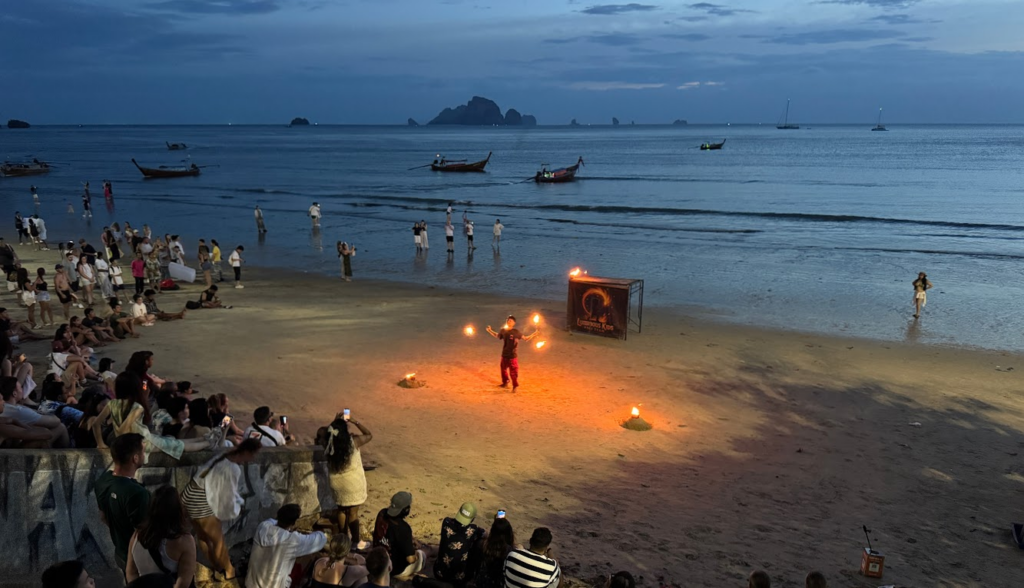
Our first impression of Krabi was that it felt fairly chaotic, and not especially pretty at first glance, particularly the beach. But it was also much livelier than we expected, with lots to do and a more obvious party atmosphere than we had imagined.
This guide covers not just the beaches and the islands, but where you base yourself (which matters enormously here), how crowded each part actually gets, and the corners of Krabi that most visitors miss entirely.
| Location | Andaman coast, southern Thailand — 180km from Phuket |
| Best season | November to April. Peak dry season Dec–Feb. Shoulder season (Nov, Mar–Apr) has fewer crowds. |
| Getting there | Fly into Krabi Airport (KBV) — direct flights from Bangkok (1h15) and major Asian hubs |
| Main base options | Ao Nang (most tourists), Railay Beach (no road access), Krabi Town (local vibe), Klong Muang (quiet) |
| Crowd level | Ao Nang and Railay: high in peak season. Klong Muang and Tup Kaek: genuinely quiet year-round |
| Known for | Limestone karst cliffs, rock climbing, island-hopping, mangrove kayaking, Railay’s beaches |
| Easy day trips | Koh Hong, Four Islands, Bamboo Island, Koh Lanta (half day), Phi Phi Islands |
| Underrated pick | Krabi Town — most visitors skip it entirely; the morning market and river front are worth your time |
Where to Base Yourself: The Decision That Shapes Your Whole Trip
Krabi province is larger than most visitors realise. Your base determines which beaches you can reach easily, how much time you spend on longtail boats, and how much noise you sleep through. The four main options operate almost as different destinations.
Ao Nang — Convenient, Commercial, Crowded
Ao Nang is the default for most visitors because it has the widest range of accommodation, restaurants, tour operators, and transport connections. The beach itself is average — the main strip is pleasant enough but unremarkable. What Ao Nang offers is infrastructure: it is the easiest launching point for day trips to Railay, Phi Phi, Hong Island, and the Four Islands.
In high season (December to February), the Ao Nang beachfront is genuinely packed. The main street runs a gauntlet of tour touts, massage shops, and restaurants with laminated menus. It functions, but it does not feel particularly Thai — it has the texture of a resort strip designed to absorb large volumes of international tourists, which is essentially what it is.
If quiet evenings and an authentic atmosphere matter to you, Ao Nang will disappoint. It is optimised for accessibility, not atmosphere.
Railay Beach — The Famous One, and Why It Gets Complicated
Railay is only reachable by longtail boat because limestone cliffs cut it off from the mainland by road. That inaccessibility used to filter the crowd. It no longer does — longtail boats run constantly from Ao Nang (15 minutes, ~100 THB) and from Krabi Town. In peak season, Railay West Beach fills up by 10am.
There are two beaches: Railay West (the main arrival point, wide and swimmable) and Railay East (mangrove-edged, muddy at low tide — not for swimming). The real draw is the scenery: the karst cliffs rising directly from the water produce something that reads almost theatrically beautiful in person. Even on a crowded day, that view does not disappoint.
Stay on Railay rather than day-tripping from Ao Nang if you want to experience it before 9am and after 4pm, when the boats reduce and the beach empties noticeably. The difference is significant.
Klong Muang — The Quiet Alternative Most Visitors Never Consider
Klong Muang sits 20km north of Ao Nang, past the airport. The beach is long, wide, and almost always uncrowded. There are no walking streets, no tour touts, and no nightlife — just resorts (several are genuinely upscale), a handful of restaurants, and a long stretch of sand backed by casuarina trees.
The trade-off is that you need a vehicle to do anything — day trips require a driver or rental. For people prioritising beach quality and calm over convenience, it is the most underrated base in Krabi province.
Tup Kaek — Even Quieter, Even Less Known
South of Klong Muang and north of Ao Nang, Tup Kaek is a slim beach with exceptional views of limestone islands offshore. Almost entirely resort accommodation, no commercial strip. The Tubkaek Sunset Beach Resort area has a following among repeat Krabi visitors who have graduated beyond the Ao Nang circuit. Very little infrastructure, which is the point.
Krabi Town — The Local Option
Krabi Town, on the Krabi River estuary 5km from Ao Nang, is where Thais actually live. The night market on Thanon Khong Kha runs from Thursday to Sunday and is a genuine local market — not performance tourism. The Chao Fa Pier area at dawn has a morning market that is worth the early alarm. There are good restaurants, a Wat on the hill, and very few other foreign tourists.
It is not a beach base — the river is not for swimming. But as a place to sleep while day-tripping to beaches, it is cheaper, more interesting, and more authentically Thai than Ao Nang.
places in Kravbi Comparison at a Glance
| Base | Beach Quality | Crowd Level | Atmosphere | Best For |
| Ao Nang | Average | High in peak season | Commercial, tourist-facing | First-timers, easy access to tours |
| Railay Beach | Excellent | High by 10am peak | Dramatic, scenic, some quiet after 4pm | Views, rock climbing, couples |
| Klong Muang | Excellent | Low year-round | Peaceful resort strip | Families, luxury stays, quiet beach days |
| Tup Kaek | Very good | Very low | Almost entirely resort | Couples, repeat visitors seeking calm |
| Krabi Town | No beach | Low tourists | Authentic Thai town | Budget travellers, local market lovers |
The Best Beaches in Krabi: What They’re Actually Like
Railay West Beach
The postcard beach of Krabi — wide, fine white sand backed by sheer limestone faces. Swimmable most of the year during dry season. The view is stunning at any tide. In peak season it fills up, but the scale of the bay means it never feels as suffocating as Phi Phi’s Tonsai area. Sunset from the western end, looking out at the karst islands, is one of the better sunsets in southern Thailand.
Phra Nang Beach
At the southern tip of the Railay peninsula, Phra Nang is frequently listed among the most beautiful beaches in the world — and unusually for that claim, it holds up. The sand is very fine, the water is clear, and the backdrop of limestone cliffs is immediately to the rear. It is reached on foot from Railay in about 10 minutes.
The significant issue: Phra Nang is accessed by most people as a day-trip stop, which concentrates a huge number of longtail boats and passengers into a small bay between roughly 10am and 2pm. The beach at those hours is busy. Early morning (before 8:30am) or late afternoon (after 4pm) are the windows when it earns its reputation.
Do not skip Phra Nang — but do not arrive at 11am expecting to have it to yourself. The window of magic is early morning or late afternoon.
Tonsai Beach (Railay’s Climbing Neighbour)
Not to be confused with Tonsai Village on Phi Phi — this Tonsai Beach is next to Railay, accessible at low tide by a 15-minute walk along the base of the cliffs, or by longtail. It is the base for Krabi’s rock-climbing community: the limestone faces directly behind the beach have bolted sport routes ranging from beginner to advanced, and there are several climbing schools here.
The vibe is relaxed, slightly alternative, and younger than Railay. Accommodation is basic bungalow-style. Not a party beach — an outdoor activity hub with a beach attached.
If you are interested in rock climbing, Tonsai is where to base yourself. The instruction quality is high and the setting — climbing overhangs with the Andaman Sea below — is remarkable.
Klong Muang Beach
One of the longest beaches in Krabi province. Calm, clean, and spacious enough that even a resort at full occupancy feels spacious. The sea here can have more chop than Railay during certain parts of dry season, but the swimming is generally good. The limestone islands visible offshore make for a good sunset framing.
Ao Nang Beach
Functional, not beautiful. The beach is pleasant for an evening walk and perfectly swimmable, but it lacks the drama of Railay or the scale of Klong Muang. Its value is purely logistical — the ferry pier is here, the restaurants are behind the beach, and everything is walkable. Treat it as a base, not a destination.
Island Day Trips from Krabi: The Honest Ranking
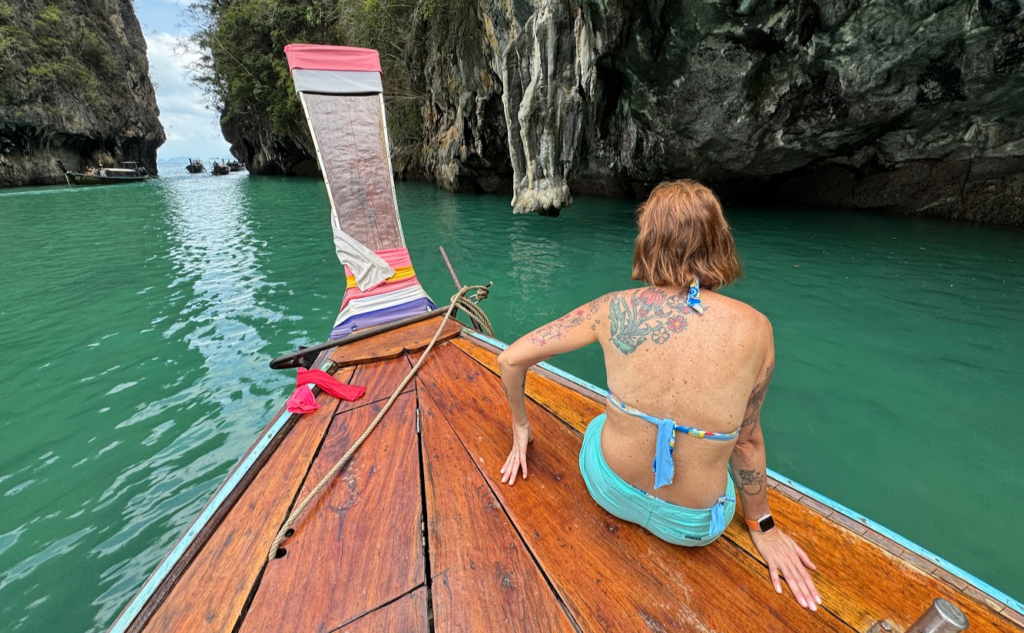
Day trips from Ao Nang are well-organised and easy to book. The quality of each experience varies considerably — here is what each actually delivers.
| Destination | Journey | Crowd Level | Highlight | Honest Verdict |
| Koh Hong | 45 min by speedboat | Medium | Emerald lagoon, limestone caves | The best day trip from Krabi. Lagoon colour is exceptional and tour groups are spread across a larger area. |
| Four Islands | 2–3 hrs by longtail | High | Variety, old-school pace | Worth it for the longtail experience. Beaches are fine but not extraordinary. Pleasant day rather than bucket-list. |
| Phi Phi Islands | 1.5 hrs by speedboat | Very high | Underwater life, scenery | Good for snorkelling. See Phi Phi guide for full honest assessment — Maya Bay is not worth anchoring the day on. |
| Bamboo Island | 45 min from Phi Phi | Medium | Shallow clear water, snorkelling | Often combined with Phi Phi. Better snorkelling than Phi Phi Don itself. |
| Koh Lanta | 2 hrs by ferry | Low–Medium | Full island, relaxed pace | Better as an overnight than a day trip. Too far to do properly in one day from Ao Nang. |
| Tiger Cave Temple | 30 min drive, not a boat | Low | 1,237 steps, panoramic views | Not an island but the best non-beach experience near Krabi. Go early morning to avoid heat. |
Koh Hong is consistently the most under-hyped day trip from Krabi. The lagoon there — reached by kayak or swimming through a cave — is a better version of what Maya Bay promises but cannot deliver. We adored it and it is also the reason why we completely skipped Maya Bay.
What to Do in Krabi Beyond the Beach
Rock Climbing
Krabi has become one of the most significant sport-climbing destinations in Southeast Asia. The limestone karsts around Railay and Tonsai have hundreds of bolted routes, and the setting — climbing on rock faces directly above the sea — is unlike almost anywhere else in the region. Beginner half-day courses are widely available at Tonsai and cost around 1,000–1,500 THB including instruction and equipment.
Mangrove Kayaking
The mangrove channels around the Krabi River estuary are among the best in southern Thailand. A half-day kayak tour leaves from Krabi Town or Ao Nang and takes you through narrow root tunnels, past long-tail mooring areas, and through lagoons that are inaccessible any other way. The combination of birdlife, scale, and silence is a significant contrast to the beach scene. Most tours include a stop at the crab cage communities along the river.
Tiger Cave Temple (Wat Tham Sua)
The temple is set into a limestone cave system, and from the cave floor a staircase of 1,237 steps climbs to the hilltop shrine. The count sounds punishing — it is genuinely steep and takes around 40–45 minutes at a moderate pace — but the 360-degree view of Krabi province from the top, looking out over a sea of karst peaks and jungle, is the best elevated view available in the region without a drone.
💡Go at 7–8am. The steps get very hot once the sun hits them and the view is clearer before the haze builds. There is a smaller cave temple at the base worth exploring even if you skip the climb.
Krabi Night Market
The weekend night market (Thursday to Sunday) along Thanon Khong Kha in Krabi Town is one of the better markets in southern Thailand — not a tourist market, but a local one. Grilled seafood, fresh fruit, som tam freshly pounded, and Thai desserts. The riverside setting adds atmosphere. Worth a half-evening trip from Ao Nang even if you are not basing yourself in town.
What to Expect in krabi by Area and Season
Krabi is a popular destination and the main sites get crowded. Here is the honest picture by location and timing.
| Location | Dec–Feb (Peak) | Nov + Mar–Apr (Shoulder) | May–Oct (Low/Monsoon) |
| Railay West Beach | Very crowded by 10am — boats run constantly from Ao Nang | Moderate — noticeably quieter on weekdays | Very few tourists; some guesthouses close; seas occasionally rough |
| Phra Nang Beach | Dense between 10am–2pm daily | Manageable — still busy at midday | Almost empty; accessibility occasionally affected by swell |
| Ao Nang Beach | Busy but walkable; beach fills in the afternoon | Comfortable — resort town rather than beach town | Quiet; many tour operators reduce schedules |
| Klong Muang Beach | Pleasantly busy — never crowded | Quiet | Very quiet; good shoulder/low season choice |
| Koh Hong (day trip) | Tours run at capacity most days; book ahead | Manageable — still recommend early departure | Some operators pause; sea state dependent |
| Krabi Town | Local traffic; very few tourists | Same | Local life continues; few tourists |
The period between Christmas and New Year (December 24 – January 2) is the busiest window in Krabi. Accommodation prices double or triple and Railay Beach is at its most congested. If you must travel then, book Klong Muang rather than Ao Nang and accept that peak-season Railay is part of the experience.
Where to Eat in Krabi
The food in Krabi rewards those who move away from the beachfront restaurant strip. The best meals consistently come from the local market end of things — morning markets in Krabi Town, the night market on the river, and the handful of restaurants around the back streets of Ao Nang where the menus are in Thai first.
Ao Nang has good seafood — the restaurants closer to the pier offer fresh catches priced by weight, which is worth doing once. For reliable Thai food at honest prices, the row of local spots on Soi 5 behind the main Ao Nang strip consistently outperforms the beachfront options.
On Railay, food options are fine but expensive by Thai standards — the no-road-access logistics push prices up. The resort restaurants are decent; the small shacks on the Railay East side tend to have better price-to-quality ratios than the Railay West beachfront.
Practical Information about krabi
| Detail | What You Need to Know |
| Getting around | Ao Nang to Railay: longtail boat ~100 THB per person. Ao Nang to Krabi Town: songthaew ~50 THB. Rental motorbike available in Ao Nang ~250 THB/day for exploring the mainland. |
| Airport | Krabi Airport (KBV) — 15km from Ao Nang. Taxi/minivan ~200–350 THB to Ao Nang, 30 minutes. |
| Money | ATMs available in Ao Nang and Krabi Town. Railay has one ATM and it frequently runs out — bring cash from Ao Nang. |
| Best season | November to April for dry weather. December–February is peak: best weather, highest prices, most crowds. March–April is the sweet spot. |
| Avoid | May–October monsoon season — seas can be rough, ferries to islands reduce, some operators close entirely. |
| Dress code | Temple visits (Tiger Cave, Krabi Town temples) require covered shoulders and knees. Pack a light scarf. |
| Book ahead | Accommodation on Railay and in Klong Muang in December–February should be booked 2–3 months in advance. |
| Hidden cost | Longtail boats add up if you are moving between areas daily. Factor this into a Railay-based budget. |
Krabi vs Phuket vs Koh Lanta: Which Should You Choose?
| Krabi | Phuket | Koh Lanta | |
| Beach quality | Excellent (Railay, Phra Nang) | Variable — Kamala, Kata good; Patong poor | Excellent and uncrowded |
| Crowd level | High at main spots in peak season | Very high year-round in tourist zones | Low to moderate |
| Atmosphere | Mix of resort and scenery-driven | Resort city with nightlife | Laid-back, local-feeling |
| Island day trips | Excellent access — Phi Phi, Koh Hong | Good access — longer boat rides | Good — Phi Phi, Four Islands from Saladan |
| Authenticity | Krabi Town is genuine; Ao Nang less so | Phuket Town is interesting; beach areas less so | Higher than both |
| Best for | First-timers wanting scenery and islands | Infrastructure, nightlife, international airports | Repeat visitors wanting calm |
Krabi Frequently Asked Questions
Four to five days allows you to do Railay properly, complete two island day trips, and have a day for Tiger Cave and Krabi Town. Three days is enough for the highlights if you are tight on time. Less than three days means you will spend most of it on a boat or in transit.
Yes, but timing matters. The beach and scenery are genuinely exceptional and hold up even on busy days. Arrive by boat before 9am, spend the morning at Phra Nang before the day-trip wave, and the experience is substantially better than the midday version. Staying overnight on Railay rather than day-tripping from Ao Nang is the most effective crowd management strategy available.
Yes, with caveats. Klong Muang is the best family base — calm beach, no nightlife noise, resort facilities. Ao Nang is manageable. Railay is fine for a day trip but the longtail boat boarding process (wading in shallow water) can be awkward with young children. Avoid Phi Phi as a family base.
Krabi refers to the province. Ao Nang is a specific beach town within that province and the main tourist hub. Krabi Town is the provincial capital — a separate place with a market, river, and local character. Most visitors who say ‘I’m going to Krabi’ mean they are staying in Ao Nang.
November is the beginning of dry season — weather is mostly good, crowds are lighter than December–February, and prices are lower. February is peak season — virtually guaranteed sun, but significantly more expensive and busier. For the best balance of weather and experience, November and March are the sweet spots.