

No matter how many photos or documentaries you’ve seen, the Great Wall feels different the moment you step on it. You expect stone and history. You don’t expect how steep it is, how long the staircases stretch, how the landscape opens around each tower, or how quiet it becomes once you move away from the tour groups.
For many first-time visitors, this is the moment the trip to China becomes real. It was for us too. After the structure and scale of Beijing, standing on a ridge surrounded by mountains gives the journey a new dimension. You suddenly understand why China is a country of contrasts and why so many people say the Wall is not something you “see,” but something you “feel.”
There are many sections of the Great Wall, each with its own personality. Badaling is the most famous and the most crowded. Jinshanling is breathtaking but remote. Mutianyu is the one we recommend to almost everyone: scenic, accessible, well restored without feeling artificial, and easier to reach than the wilder sections. It offers the best balance between beauty, challenge and freedom to walk as much as you like.
To make this visit meaningful, not just another box to tick, there are a few things you need to know.
What is the great wall of china?
The Great Wall isn’t a single, unbroken structure. It is a vast network of fortifications built and rebuilt over centuries by different dynasties. Mutianyu belongs mainly to the Ming period, when the Wall became stronger and strategically important thanks to its watchtowers, defensive features and elevated setting.
Mutianyu curves along mountain ridges that naturally shielded the capital. This is why the climbs feel steep and the terrain unforgiving. The stone beneath your feet was built for endurance, not aesthetics. When you walk here, you aren’t only seeing a monument. You’re walking along a defensive line that protected an empire.
Understanding this makes the experience richer. Each tower becomes more than a view. It becomes a reminder of how vast and complex China’s history really is.
How to visit the Great Wall of China: practical tips for Mutianyu
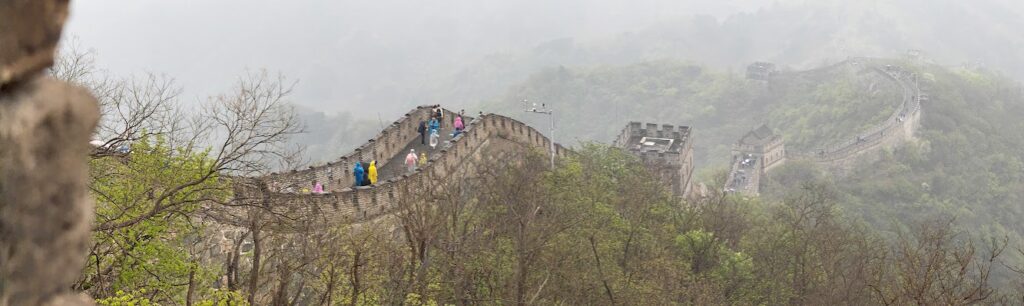
Visit early in your China trip in case the weather changes
This is the most important advice we can give.
The Great Wall is completely exposed. Fog can hide everything. Rain can cause closures. Strong winds can halt cable cars. And the weather in Mutianyu shifts fast. A clear sky can turn into solid white in minutes.
Visit the Wall early in your itinerary so you have time to return if needed. Many travellers leave it for their last day in Beijing and never see it properly.
If the forecast is remotely decent, go. If you’re unsure, still go. This is not the place to wait for perfect conditions.
Expect crowds at first, but don’t let them define your visit
Mutianyu is popular and you will see buses, groups and queues. This is normal, especially around the ticket area and the first towers.
But most visitors stop at the very beginning. Walk even 10–15 minutes further and everything changes. The crowds thin out, the noise fades, and the Wall becomes quiet and expansive. You start noticing details: the texture of the stone, the variation in steps, the rhythm of towers rising and falling along the ridges.
You don’t need complete solitude to enjoy the Wall. But you will find it if you want it.
Mutianyu is restored, but not polished
People often imagine the Wall as perfectly even and newly rebuilt. Mutianyu is restored but still rugged. Steps are uneven. Some stones dip or rise unexpectedly. Watchtowers have dark interiors, narrow windows and corners shaped by wind and time.
Restoration here focuses on stability rather than perfection. You feel safe, but you also feel the age of the structure. This balance makes Mutianyu special: accessible and authentic at the same time.
Walking here feels like meeting the past halfway. You follow the restored path, but the soul of the Wall is still visible everywhere.
Photography can be frustrating and beautiful at the same time
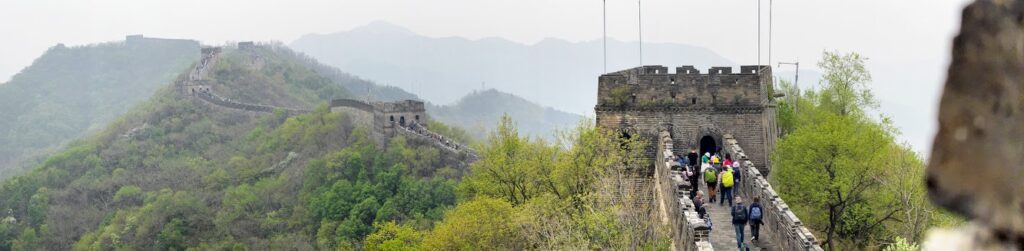
Mutianyu is stunning, but the light changes constantly. Clouds move fast across the mountains. Haze appears and disappears without warning. Rays of sun break through at unexpected angles.
Perfect photos are unpredictable. We learned that the best images often appear between towers, during transitions in weather, when the scene looks imperfect but atmospheric.
Fog creates depth. Clouds soften the mountains. Harsh light highlights the stone.
Take plenty of photos, but don’t force them. Let the scenery change naturally. Mutianyu rewards patience and flexibility more than perfect timing.
Don’t stay on the main platforms, keep walking
The first towers near the cable car are always crowded. They are designed to be convenient, not immersive.
But just a short walk away, everything changes.
The stone becomes rougher. The silence becomes deeper. The towers echo differently. The landscape widens and the Wall curves uninterrupted along the mountains.
This is where the emotional part of the visit happens. This is the Great Wall people imagine before they arrive.
Crowds don’t define Mutianyu. They only define the first few minutes.
Cafés, snacks and where to rest after your climb
After hours on the Wall, you will be hungry.
Near the exit, you’ll find:
• cafés with simple meals
• restaurants serving dumplings, noodles or stir-fries
• snack stalls for quick bites
• shaded areas to relax before returning to Beijing
It’s not gourmet food, but after a long climb everything tastes better.
How to get to Mutianyu from Beijing
Mutianyu is roughly 70–90 minutes from central Beijing. You can reach it in three main ways:
1. Group tours
Convenient but rigid. You follow a schedule, get limited time on the Wall, and often stop at restaurants chosen by the tour company.
2. Public bus
The cheapest option. You travel to Huairou and transfer to another bus that takes you near the entrance. It works but takes longer and requires more planning.
3. Private or shared transportation only (our choice)
This is the best option for most people. A driver picks you up in Beijing, brings you directly to the Mutianyu shuttle area, and waits while you explore at your own pace. No guide, no forced stops, no pressure.
It gives you:
• simple logistics
• total freedom
• more time on the Wall
• a calmer return to Beijing
Once you arrive, everything is straightforward: buy your ticket, choose your ascent, take the internal shuttle, and begin your climb. You can choose also a private car driver but it’s more expensive.
Suggested walking routes at Mutianyu
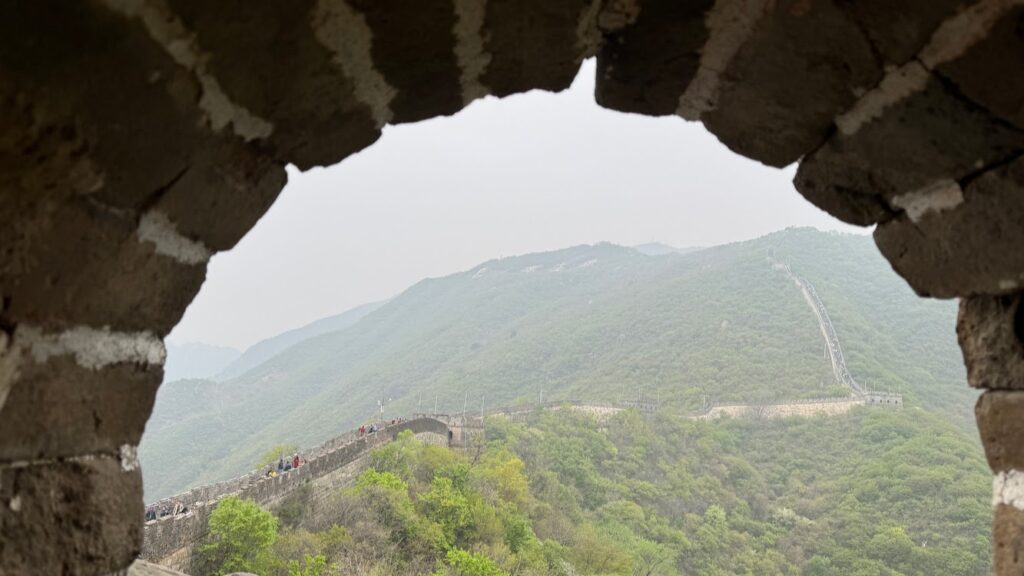
Mutianyu gives you the flexibility to choose how challenging or relaxed you want your visit to be. The Wall stretches in both directions from the main access points, and each route offers a slightly different atmosphere. These are the three most common options and what you can realistically expect from each.
Route 1: Cable car to Tower 14, walk east to Tower 20, and return
Difficulty: Moderate
Duration: 2–3 hours
This is the route most people choose on their first visit because it gives you a generous taste of Mutianyu without being overwhelming. The cable car brings you directly to Tower 14, which is the central hub of this section. From here, heading east toward Tower 20 means gradually moving into quieter stretches of the Wall. The path rolls gently at the beginning and becomes steeper as you approach Tower 19 and Tower 20. These towers offer some of the best viewpoints in Mutianyu. When the sky is clear, the ridges unfold dramatically in front of you. After Tower 20, the Wall becomes unrestored and rugged, and visitors turn around here because the route is closed. This is the perfect route if you want great views, a sense of achievement, and a manageable climb.
Route 2: Chairlift to Tower 6, walk west to Tower 14, and return with the toboggan
Difficulty: Moderate
Duration: 2–3 hours
This route starts at Tower 6, reached via the chairlift. The moment you step off, you immediately feel how open and scenic this part of the Wall is. Walking west toward Tower 14 takes you through a mix of gentle and steeper sections. The staircases come in waves, so you get moments to catch your breath between the climbs. Many travelers love this section because the views are wide and the Wall curves beautifully along the mountains. Once you reach Tower 14, you can decide how far you want to go before turning back. The return walk feels easier because you already know what to expect. This route ends with the toboggan if you want a fun descent. If not, you can simply take the chairlift back down. It is a balanced route for people who want a mix of scenery, movement and light adventure.
Route 3: Hike up to Tower 6, continue west to Tower 14, and return the same way
Difficulty: Challenging
Duration: 3–4 hours
This is the route for travelers who want to experience the Wall with their legs as much as with their eyes. Hiking up to Tower 6 is steep, long and physically demanding. The ascent gives you a real sense of the terrain and the effort it took to build and defend the Wall. When you reach Tower 6 on foot, the first view is incredibly rewarding. From there, continuing west to Tower 14 brings you into one of the most scenic stretches of Mutianyu. The climbs are real, the steps uneven, and the views dramatic. The return follows the same path, giving you a chance to notice details you may have missed on the way up.
Ending with the toboggan or the chairlift feels well-deserved after such a demanding climb. Choose this route only if you’re comfortable with steep steps and a few hours of continuous walking. It is tiring but unforgettable.
Types of tickets for Mutianyu and what you actually need
Visiting Mutianyu isn’t as simple as buying one ticket and walking straight onto the Great Wall. There are a few components to the entry system, and knowing what each one does saves time, confusion and unnecessary stress once you arrive.
1. Entrance ticket to the Mutianyu Great Wall
- This is the main ticket, the one that gives you access to the Wall itself.
- Everyone needs this.
- It covers the restored section you’ll walk along, including the watchtowers and pathways between them.
2. Shuttle bus ticket (yes, you need it)
Even if you are full of energy and ready to start climbing immediately, the shuttle bus is mandatory for most visitors. It runs between the main entrance area and the base of the Wall, where the cable car, chairlift and stair access begin.
Technically, you could skip the shuttle and hike uphill for 30–40 minutes before even starting your Great Wall ascent… but most travellers quickly realise this isn’t the best use of their time or energy. The shuttle keeps the flow organised and gets you to the actual starting point quickly.
Optional extras
These are not required, but they shape your day depending on how much you want to walk, climb or simply enjoy the views.
Cable car
- Goes up to Tower 14, one of the most central and scenic points on the Mutianyu section.
- Perfect if you want to save energy for the actual walk along the Wall rather than the approach.
- Quiet, smooth, and ideal for travellers who want great views without a brutal climb at the beginning.
Chairlift
- Takes you to Tower 6, which is on the opposite side of Mutianyu from the cable car station.
- The ride is open-air, breezy, and fun on a nice day.
- This is also where the toboggan starts, which means many people choose the chairlift up + toboggan down combo.
Toboggan
- A fast, touristy, undeniably fun way to slide down from Tower 6.
- Not essential, not traditional, not cultural but many visitors love it.
- It’s a lighthearted way to end a physically demanding visit.
- We preferred a calm descent, but if you enjoy a bit of playfulness, it’s an option.
Best time to visit the Mutianyu Great Wall
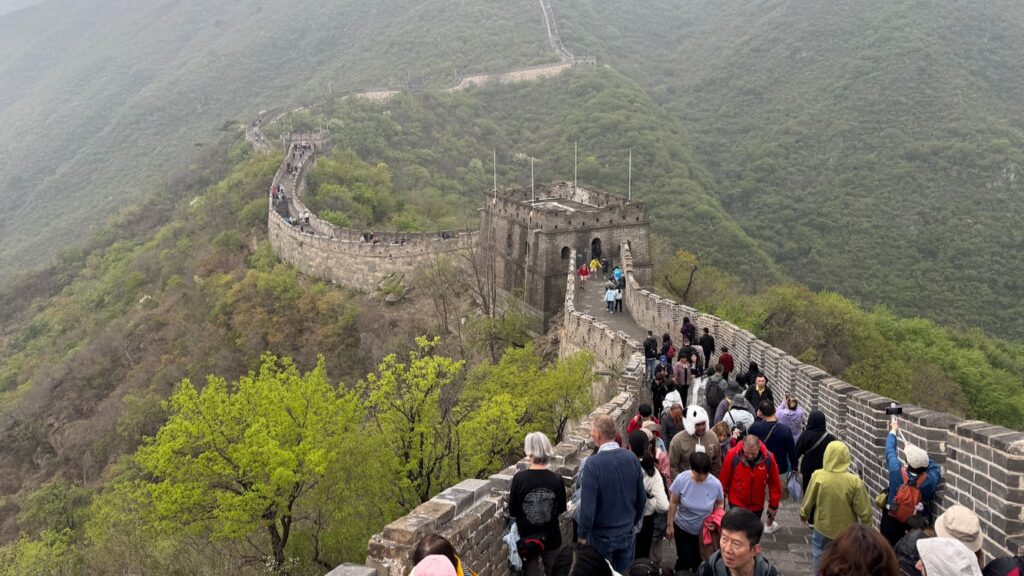
Mutianyu opens early, and taking advantage of that opening time can completely transform your experience. During peak season (March 16 to November 15), the gates open at 7:30 am. In the quieter months, they open at 8:00 am. If you want to see the Wall at its calmest, coolest and most beautiful, this is when you should aim to be there.
We arrived around 10:30 am, thinking it was still early enough. Ninety minutes later the entire atmosphere had changed. Tour buses filled the entrance, queues doubled and the peaceful rhythm of the early morning shifted into something much busier. The difference was honestly surprising. If we were to do it again, we’d arrive right when it opens. The early wake-up is absolutely worth it for the light, the quiet and the space to walk freely.
Whenever possible, avoid weekends and public holidays. Mutianyu is popular with both international visitors and locals, and the difference between a weekday morning and a weekend late-morning can be dramatic.
If photography matters to you, morning is the best time. In spring and autumn, the light is soft and flattering, shadows are gentle and the mountains take on a layered, slightly hazy look that feels almost cinematic. You also get cooler temperatures, which makes the climbs far more pleasant.
As for the season itself, the best times to visit Mutianyu are spring (April–May) and autumn (September–October). The temperatures are comfortable, the visibility is usually good and the colours make the landscape even more beautiful. Summer brings heat and crowds, while winter can be stunning but very cold.
Whenever you choose to visit, go early, take your time and let the Wall reveal itself slowly as the light changes. It’s one of the few places where skipping an extra hour of sleep genuinely pays off.
What walking the Great Wall really feels like
This is the part photos never show honestly. The Wall is not a gentle path. Some sections are wide and steady. Others become long staircases that feel almost vertical. The stones shift in pattern and texture. You climb, descend, climb again, and eventually understand why defending this line required unimaginable strength.
The reward is in the movement itself. Each tower offers a new perspective. Ridges soften and sharpen as the weather shifts. In mist, the Wall looks ethereal. In sun, it looks endless. Sometimes clouds drift so low they touch the stone. Other times the sky clears and the views stretch for miles.
If you walk beyond the first few towers, the Wall becomes quieter, older, more rugged. This is the part that stays with you.
what makes the great wall of china worth it?
Visiting the Great Wall is one of those rare travel experiences that stays with you long after you’ve left. Mutianyu isn’t the wildest section or the most remote, but it offers the perfect balance: accessible, dramatic, physically rewarding and full of quiet corners where the Wall suddenly feels timeless.
Whether you remember the steep climbs, the silence between towers, the shifting weather or the views that open unexpectedly, Mutianyu becomes one of those pages of travel you carry with you. And like most meaningful experiences, it’s best when you give it time, space and the freedom to walk at your own rhythm.
FAQs: Visiting the Great Wall of China
No, you do not need a tour guide to visit the Great Wall at Mutianyu. It is one of the easiest sections to explore independently, with clear signage, well-maintained paths, and a layout designed for visitors. A guide can add historical context or handle transportation, but most travellers enjoy Mutianyu more on their own because they can move at their own pace and choose how far to walk.
Mutianyu is about 70 km (43 miles) northeast of central Beijing. The journey usually takes 1.5 to 2 hours by car, depending on traffic. On weekends or busy days it can take closer to 2.5 hours, which is why leaving early in the morning makes a noticeable difference.
For most first-time visitors, Mutianyu is the best section of the Great Wall. It offers the best balance between accessibility, scenery, and overall experience.
Mutianyu is easier to reach from Beijing than more remote sections, and it is far less crowded than Badaling, which receives the largest number of tour groups. The Wall here is well restored without feeling artificial, and the views are impressive even if you only walk short distances. Cable cars and chairlifts make it accessible for different fitness levels, while longer walks beyond the first towers feel surprisingly peaceful.
Other sections suit more specific interests. Badaling is the easiest to reach but often overcrowded. Jinshanling and Simatai are better for hikers and photographers looking for a wilder, less restored Wall, but they require more time and planning.
In short: if this is your first visit and you want a rewarding experience without stress, Mutianyu is the best choice.
Plan to spend between 3 and 6 hours at Mutianyu. Two hours is enough only for a brief visit, but it feels rushed. Half a day allows time to walk quieter sections, rest in the towers, take photos, and enjoy the landscape without pressure.
Yes, walking the Great Wall can be physically demanding. The steps are uneven, the slopes are steeper than they appear in photos, and some sections feel like climbing a very tall staircase. Most travellers with moderate fitness can manage it comfortably if they take breaks and move slowly.
It depends on how you want to spend your energy. The cable car to Tower 14 is the most efficient option and maximises your time on the Wall. The chairlift to Tower 6 is more open and scenic and pairs well with the toboggan descent. Walking up is the most physically demanding option and best for those who want a challenge. Many travellers choose cable car up and walk down for a balanced experience.
Wear proper walking shoes with good grip. The steps are irregular and steep in places. Bring water, sunscreen, and layers, as weather can change quickly along the ridges. Snacks are useful because food options on the Wall itself are limited and the walking requires more energy than expected.
Yes. The Great Wall at Mutianyu can close due to fog, strong winds, or heavy rain, sometimes with little warning. Staff may close certain towers, stop the cable car or chairlift, or shut the section entirely for safety reasons. Visiting early in your China trip gives you flexibility to return another day if conditions are bad.
It depends on your travel style. The toboggan is fun and popular, especially for first-time visitors, but it is also very tourist-oriented. Some travellers prefer ending the visit quietly with a cable car ride or a walk down. Both options are valid; it comes down to whether you want a playful finish or a calm one.
Do I need a tour guide to visit Mutianyu?
No, you don’t need a tour guide to visit the Great Wall of China and Mytianyu. Mutianyu is one of the easiest sections of the Great Wall to explore independently. The paths are well maintained, the signage is clear, and the whole area is designed to be visitor-friendly. You don’t need local knowledge to navigate it and you won’t get lost once you’re on the Wall. A guide can be useful if you want deeper historical context or if you prefer someone else to organise transportation and timing. But for most travellers, especially those who like moving at their own rhythm, Mutianyu is perfectly manageable without a guide. You’ll have more time to walk, more freedom to choose your route and the flexibility to stop wherever the landscape feels right.
How far is Mutianyu from Beijing?
Mutianyu sits about 70 km (43 miles) northeast of central Beijing, and the journey is easier than it looks on the map. On a normal day, the drive takes around 1.5 to 2 hours, depending on where you’re staying and how busy the roads are. During peak times or weekends, it can stretch closer to 2.5 hours, especially as you leave the city. The earlier you leave, the smoother everything feels. Fewer cars, fewer tour buses, and more time on the Wall before the crowds arrive. If you can start your day before 8 am, you’ll thank yourself later.
Is Mutianyu the best section of the Great Wall for first-time visitors?
For most travellers, yes, Mutianyu is the best section of the Great Wall. Mutianyu offers the best balance between accessibility, scenery and comfort. The Wall here is beautifully restored without losing its rugged character, and the viewpoints are spectacular even if you only walk short sections. It’s easier to reach than Jinshanling, which requires more time and planning, and far less overwhelming than Badaling, which attracts the largest crowds. Once you walk beyond the first towers at Mutianyu, the experience becomes surprisingly peaceful for such a famous landmark.
How long do you need at the Great Wall?
Plan for 3 to 6 hours depending on how much you want to walk. If you’re just going up for the views, two hours might work, but it would feel rushed. To explore the quieter towers, pause for photos, enjoy the scenery and move at a comfortable pace, half a day is ideal. The climbs are steeper than they look, and most visitors underestimate how long they’ll want to stay once they’re actually on the Wall.
Is walking the Great Wall difficult?
Walking the Great Wall of China can be difficult. The steps are uneven, slopes are steeper than they appear in photos and some sections feel like climbing a staircase built for giants. Most travellers with moderate fitness can handle it, but expect your legs to work. The challenge is part of the experience. Walking the Wall is rewarding because you feel the landscape as much as you see it. If you take your time, rest in the towers and avoid rushing, it’s completely manageable.
Should I take the cable car, chairlift or walk up to the great wall?
It depends on your energy and how you want to spend your time. The cable car to Tower 14 is the most convenient option and gives you maximum time on the Wall itself. The chairlift to Tower 6 is more open and scenic, and it pairs easily with the toboggan descent. Walking up is the most demanding choice and the most rewarding if you want a physical challenge. Many travellers choose cable car up + walk down, which feels balanced and still gives you the sense of effort without exhausting you at the start.
What should I wear and bring to the great wall?
Wear proper walking shoes, this matters more than people expect. The steps are irregular and some sections are steep, so fashion sneakers won’t help. Bring water, sunscreen, and layers, because the weather changes quickly along the ridges. Snacks or light food are also useful since the climbs can take more energy than expected and the food options on the Wall itself are limited.
Can the Great Wall close because of weather?
Yes. The Great Wall can close fully, and closures can happen while you’re already there. Fog, heavy rain and strong winds often affect Mutianyu because of its position along the mountain ridges. When visibility drops or winds pick up, staff may temporarily stop access to certain towers, close the cable car or chairlift, or shut down the entire section for safety. This is exactly why visiting early in your China trip is essential. If conditions turn bad, you still have the option to return another day instead of losing the experience altogether.
We actually saw this happen. We arrived on a clear morning, enjoyed several hours on the Wall, and when we came down in the afternoon, the entrance had been closed due to sudden weather changes. People who arrived later couldn’t go up at all. It’s unpredictable, but planning ahead gives you the best chance of seeing the Wall properly.
Is the toboggan in Mutianyu worth trying?
It depends on your style. The toboggan is fun and playful, and a lot of travellers enjoy ending their visit with it. But it is undeniably touristy, and some people prefer to finish the day with a quiet walk down or a gentle cable car ride. We chose the calmer and more authentic option, but if you like a bit of thrill, the toboggan can be a memorable way to end your time at Mutianyu.