

China is one of the most misunderstood countries, and we were guilty of that too. Until we went and fell in love. Literally. We had no idea this mysterious country could be so fascinating that it would make us want to go back again (and again).
To help you avoid assumptions before your trip, we’ve put together this quick, practical guide with the top things to know before visiting China and the ones that surprised us the most (for good and for bad. Mostly for good).
Chinese people are nice and helpful
Whether or not they speak English, Chinese people are friendly and genuinely keen to help. If you look a bit lost or confused, someone will often step in to assist using translation apps, gestures, or even their phones. They may seem reserved at first, but they’re incredibly kind once you interact with them.
Expect some staring and a lot of photos
If you want to know what it feels like to be a celebrity, go to China. You may end up being the center of attention just for being a Westerner and you might appear in thousands of photos. We had some hilarious and weird experiences. Once, in the Beijing subway, a group of young people stared at us the entire ride. The moment they stepped off, they turned around and started photographing us. We were the only Westerners in that carriage.
Personal space doesn’t exist
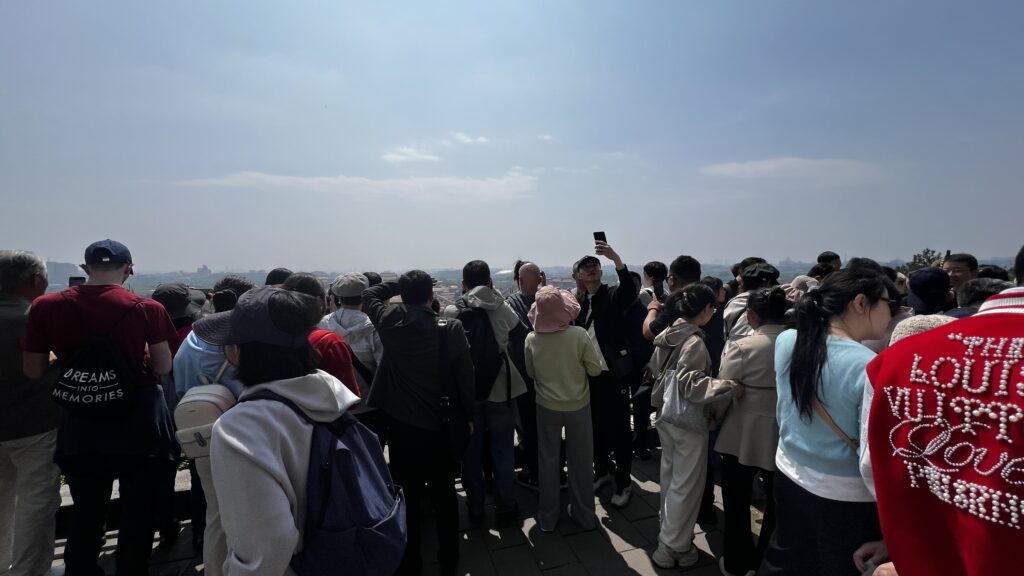
If you’re used to lots of personal space, prepare for a different reality. On a subway, a lady once leaned completely over me just to look at what I was doing on my phone. In Xi’an, while visiting the Terracotta Warriors, we were constantly pushed and nudged not only because it was overly crowded, but because that’s just how movement works in China. When millions of people share space daily, personal bubbles disappear.
Deal with public toilets
Public toilets are everywhere in China and this is a great thing, but they come with surprises. Many are squat toilets, and in some, doors are missing or half-open. For locals, using a toilet is just a normal part of life, not something to hide. For us, it took a bit of getting used to! When we needed a break from that reality, we headed to shopping malls, where toilets are cleaner and more private.
Say cheers to cameras
You may not notice them, but cameras are literally everywhere. You’re being monitored most of the time. Good or bad: it’s up to you to decide. We didn’t overthink it; it’s just part of how China operates today. And even at night, you’ll see people walking alone, families out late, and phones left on tables. Safety is one of the most striking feelings in China.
Get used to silence on the street
Because most cars and buses are electric, Chinese cities are surprisingly quiet. In Beijing, you can walk among heavy traffic and barely hear a sound. It doesn’t mean the traffic isn’t chaotic (it definitely is!) but at least it’s peaceful chaos.
What’s gross for us, it’s not gross for them (and vice versa)
Cultural habits differ. Blowing your nose in public is considered rude, while spitting or burping is totally normal. Make peace with it, it’s just how everyday life works differently here.
No need to tip
Tipping isn’t part of Chinese culture. In the past, it was even considered rude. With the tourism boom, things are slowly changing, but you still don’t need to tip: locals don’t expect it.
Be mindful of pollution
In big cities, pollution can get intense, though things are improving fast. Download an AQI (Air Quality Index) app to monitor daily levels, and bring a face mask just in case. We didn’t experience heavy pollution, and we only used our masks for trains or restrooms to block unpleasant smells!
Translations apps sometimes get it wrong
If you don’t speak Chinese, translation apps are lifesavers but not flawless. Menus can be tricky, and mistranslations are common. Once we ordered what was translated as “tea” and ended up with a pot of Coke served like tea. When the waiter asked “hot or cold,” we were lucky enough to say cold.
Tampons are hard to find but pads are excellent
Ladies, bring tampons from home; they’re rare in China. Pads, on the other hand, are incredibly good and available in endless sizes and types. You’ll find them in most convenience stores.
Prepare to rush on public transports
Getting a seat on public transport is a competitive sport. When doors open, everyone rushes in, regardless of age or gender. It’s not impolite; it’s just how things work. Be ready, stay calm, and join the flow.
Don’t drink the tap water
Tap water isn’t safe to drink anywhere in China. Bring a reusable bottle and refill it with bottled or filtered water. Hotels usually provide bottled water daily, and it’s available everywhere at convenience stores.
Food is amazing and portions are huge
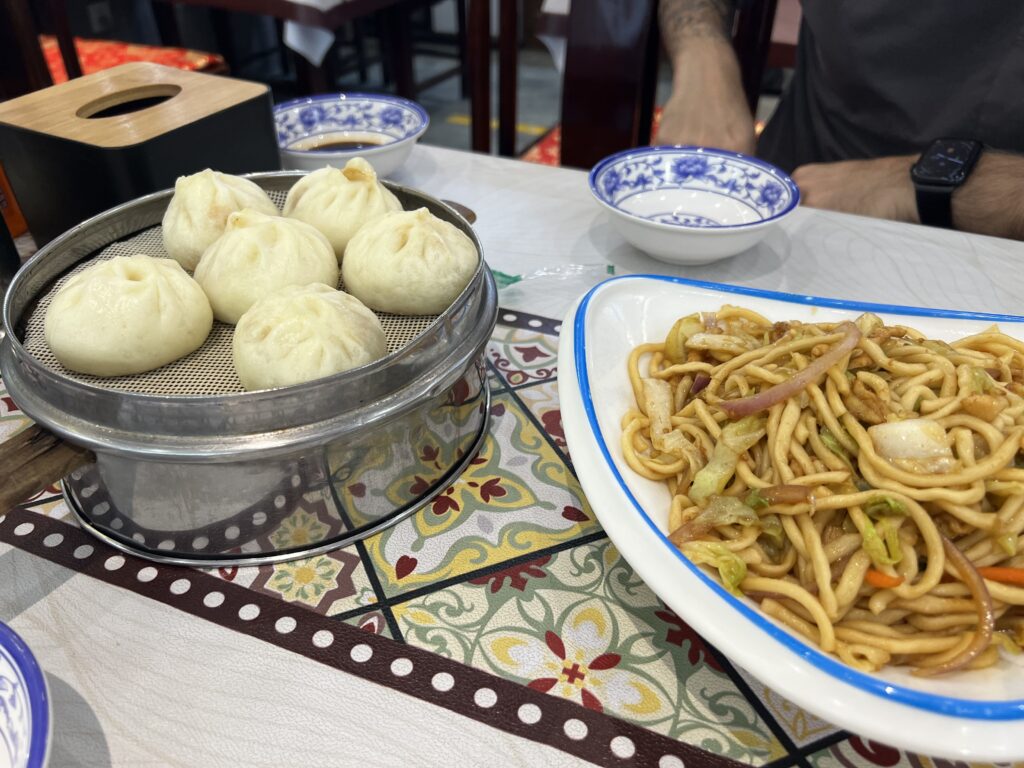
You may have already heard it, but Chinese food is nothing like the Western versions we’re used to. Each region has its own flavors, ingredients, and style. What they all have in common: gigantic portions. Order one or two dishes first, see how it goes, and then add more if you’re still hungry. We learned that the hard way on day one (and kept making the same mistake over and over).
Chinese are great merchants
At local markets, bargaining is part of the experience. You might get “upsold” mid-conversation; for instance, someone starts making you a bracelet and then adds beads or charms that raise the price. It’s not really a scam, just a different style of business. Take it lightly, it’s fun once you get used to it.
Smoking is still very common
Especially among men, smoking is still common. You’ll see people smoking in restaurants, taxis, and sometimes even hotel lobbies or rooms. It’s not considered rude but still culturally accepted. Important: even if you ask for a non-smoking room and they promise it will be sanitized, you may end up in a very smelly room; we had this experience in Xi’an and since we’re not smokers and we hate smoking, it ended being extremely annoying.
Loud doesn’t mean angry
Conversations in China can sound intense, especially in markets or on trains, but it’s just how people communicate: it’s energy, not aggression.
Everyday life happens outdoors
People dance, play cards, and do tai chi in public squares. Mornings in parks are especially lively and it’s one of the easiest ways to feel part of local life. One morning in Shanghai, we went to People’s Square and it was full of people doing their things: people playing, people exercising, people dancing.
Breakfast culture is strong
Forget pastries and espresso: mornings mean noodles, steamed buns, dumplings, and hot soy milk. Street stalls are busy from dawn and worth waking up early for.
There’s always music somewhere
From parks to public squares, someone is always dancing, singing karaoke, or doing tai chi to music. In the mornings, you’ll see retirees moving gracefully; in the evenings, groups of women dancing in sync. It’s part of daily life: joyful, social, and open.
Bikes and scooters rule the roads
You’ll see bikes and electric scooters everywhere: on sidewalks, crossings, even in shopping streets. They’re silent, fast, and appear out of nowhere, so always look both ways.
Everyone is on their phone
From teenagers to elderly people doing video calls in parks, phones are constant companions. You’ll see people paying, chatting, and streaming everywhere.
Coffee culture exists but it’s young
China has fallen in love with coffee, but it’s still new. You’ll find stylish cafés in big cities, often packed with students and remote workers. Outside urban centers, tea still reigns supreme and tea houses are a whole cultural experience.
Laundry hangs everywhere
Look up at apartment balconies and you’ll see colorful laundry drying in the open even in the middle of big cities. For us it’s nothing new coming from Italy and living in Portugal but for many it’s a small glimpse into daily life that feels both ordinary and poetic.
Skincare is a national obsession
You’ll notice an obsession with whitening creams, parasols, and UV protection. Pale skin is prized, and locals go to great lengths to avoid sun exposure. It’s the opposite of Western “tanning culture.”
Cold drinks aren’t always the default
In restaurants, water or tea is often served hot. Locals believe warm liquids are better for health, especially digestion. It’s a small habit that surprises many travelers.
Posing is serious business
You’ll see people striking perfect poses at every landmark, sometimes with props or coordinated outfits. It’s not vanity; it’s pride in documenting experiences beautifully. Everybody poses, even monkeys!

Beauty standards are different
In China, beauty ideals are the opposite of what we’re used to: pale skin, delicate features, and soft lines are considered beautiful. But people are also genuinely curious about what’s unfamiliar. Once, in a bathroom, a woman came up to me, gently touched my cheekbones, smiled and said I was beautiful probably because of my pronounced cheekbones. People often admire features they rarely see, so don’t be surprised if someone compliments your height, freckles, or nose.
Domestic tourism is massive
Most of the tourists you’ll see are Chinese, not foreigners. Locals travel constantly across their own country, and big attractions can feel like national events. It’s part of why everything is so well organized.
Make sure you read our 2-weeks itinerary to China to plan your first one!
Sometimes Staff Address Women First
We noticed something curious in several restaurants: servers often spoke to me first instead of my husband. Maybe it was coincidence, maybe politeness, or maybe they assumed the woman makes the choices: we never really figured it out. Either way, it was a sweet (and slightly funny) reminder that cultural dynamics around gender can play out differently in small, unexpected ways.
How to enjoy China?
China breaks every stereotype you might have before you go (and when you’re freaking out during your planning phase). The more open-minded you are, the more rewarding the trip becomes. Go curious, go patient and you’ll fall in love, just like we did.