

The Terracotta Warriors in China are one of the most remarkable things ever buried. Around 8,000 life-size figures — warriors, horses, chariots and officers — were placed underground more than 2,200 years ago to protect Emperor Qin Shi Huang in the afterlife. They remained unknown to the wider world until farmers discovered them in 1974.
A visit takes some planning. Tickets use a real-name reservation system, the site attracts huge numbers of visitors, and Pit 1 can become overwhelming once the main tour groups arrive.
If avoiding the worst crowds matters, timing is everything. Arriving at opening gives you the best chance of seeing Pit 1 before the busiest part of the day. We arrived early but not right at opening, and while entry was quick, the museum was already extremely crowded once we were inside.
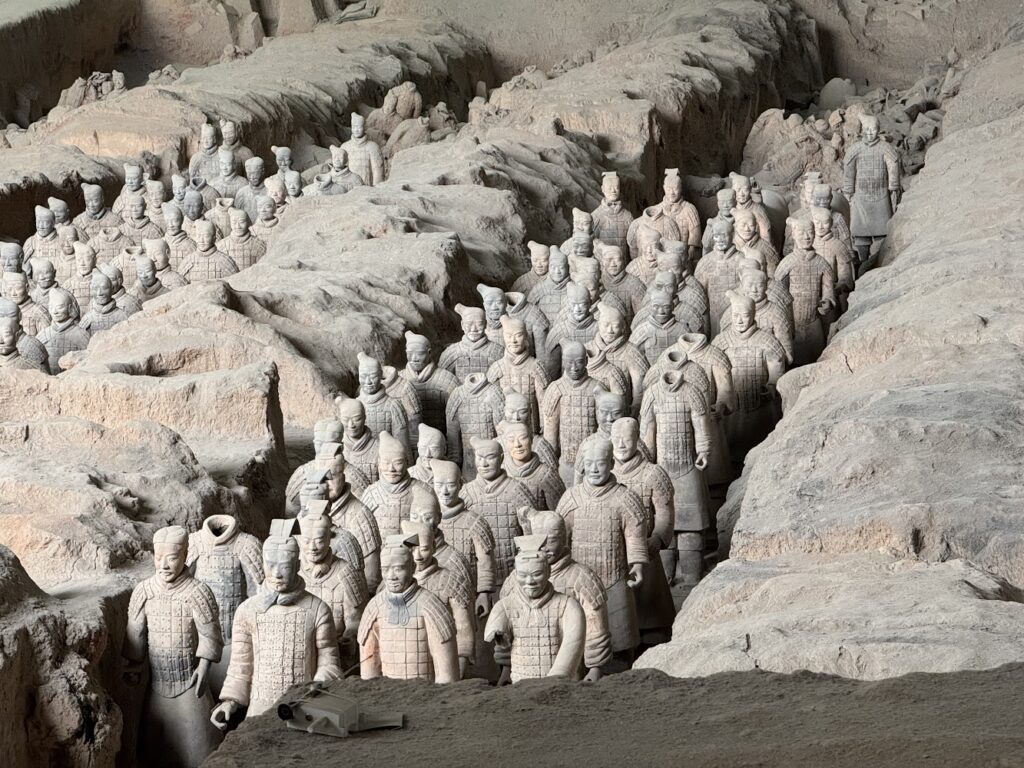
Despite the crowds, seeing the warriors in person was unforgettable. The scale of Pit 1 is difficult to understand until you are standing above thousands of figures arranged in formation.
This guide covers everything you need to plan your visit to the Terracotta Warriors from Xi’an: tickets, opening hours, transport, the best time to arrive, how long you need, what to see in each pit and how to avoid some of the crowds..
Terracotta Warriors at a Glance
| Location | Lintong District, around 35 km east of central Xi’an |
| Official name | Emperor Qinshihuang’s Mausoleum Site Museum |
| Entry price | ¥120 |
| Opening hours | 8:30am–6:30pm Mar 16–Nov 15; 8:30am–6pm Nov 16–Mar 15 |
| Booking | Real-name reservation required |
| Time needed | Around 2.5–4 hours |
| Best time to arrive | At opening, ideally on a weekday |
| Public transport | Metro Line 9 + local bus or taxi |
| Taxi / DiDi | Around 40–60 minutes from central Xi’an |
| Best for avoiding crowds | Independent visit at opening |
Current 2026 visitor information lists the museum at ¥120, with real-name booking required and a typical visit time of around 2.5–4 hours. Opening hours are 8:30am–6:30pm from March 16 to November 15 and 8:30am–6pm from November 16 to March 15, with earlier last-entry times.
Do You Need to Book the Terracotta Warriors in Advance?
Yes. The Terracotta Warriors use a real-name reservation system, so you should book before travelling to the museum.
Tickets are linked to your identification document, and foreign visitors should bring the same passport used for the reservation because it is scanned when you enter.
Reservations can generally be made up to seven days ahead, and booking in advance is particularly important during weekends, Chinese public holidays and other high-demand periods.
How to Book as a Foreign Visitor
The official museum booking channels should always be your first reference for current availability and ticket rules.
Foreign travellers can also use major third-party booking services if they prefer an English-language booking process or are having trouble with Chinese-language platforms.
Whichever option you use, make sure the name and passport number on the reservation exactly match the document you bring with you.
Do not leave booking until the morning of your visit during busy periods. Even when same-day availability exists, planning around a specific early entry time is much easier if you reserve ahead.
What Are the Terracotta Warriors Opening Hours?
The Terracotta Warriors Museum currently opens at 8:30am throughout the year.
From March 16 to November 15, the museum is open until 6:30pm.
From November 16 to March 15, it closes at 6pm.
Last admission is earlier than the official closing time, so do not plan to arrive at the end of the day expecting the full visiting window. Current visitor information lists last entry at around 5pm in the longer season and 4:30pm in winter.
If avoiding crowds is your priority, the opening time matters much more than the closing time.
How to Get to the Terracotta Warriors from Xi’an
The Terracotta Army is in Lintong District, around 35 km east of central Xi’an. You do not need to join an organised tour to get there.
There are several practical options.
| Option | Approx. time | Best for |
|---|---|---|
| Metro + local bus | Around 1–1.5 hrs | Budget travellers |
| Tourist Bus 306 | Around 1 hr | Direct public transport |
| DiDi / taxi | 40–60 min | Speed and flexibility |
| Organised tour | Varies | Travellers who want everything arranged |
Metro + Local Bus
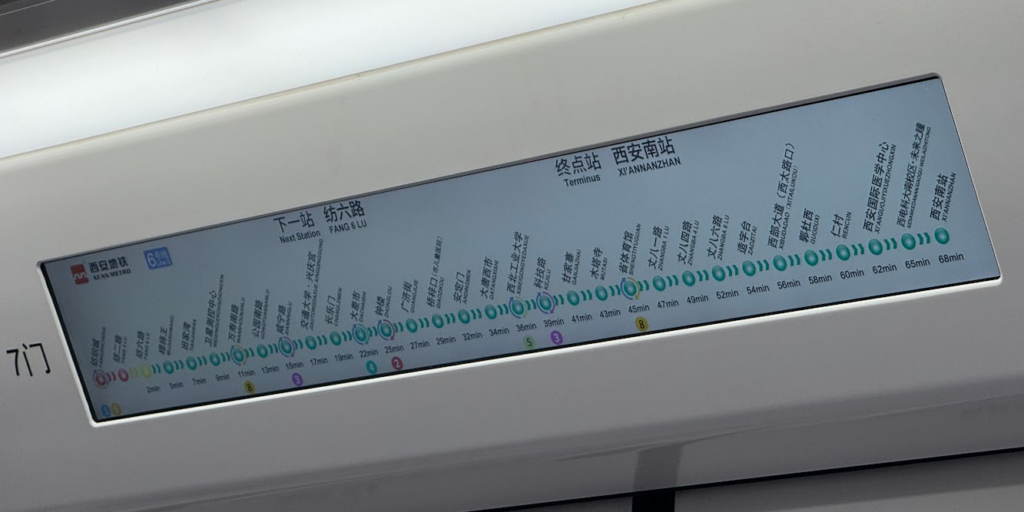
One of the easiest public transport options is to take Metro Line 9 towards Lintong.
You can get off at Huaqing Pool / Huaqingchi (华清池) and continue by local bus 602 or 613, or take a short taxi or DiDi for the final stretch.
Another option is to continue to Qinling West / Qinlingxi (秦陵西) and take bus 617 towards the museum.
Allow roughly 1–1.5 hours from central Xi’an depending on your starting point and connections.
Tourist Bus 306
Older travel guides often say Tourist Bus 306 leaves from the east side of Xi’an Railway Station, but that information is outdated.
Current 2026 transport information places the official 306 departure at Fangzhicheng Transit Hub, connected to Fangzhicheng metro station. The trip takes roughly one hour.
Because bus routes can change, check the current departure point again close to your visit rather than relying on old blog posts.
DiDi or Taxi
A DiDi or taxi is the easiest option if you want to arrive at opening without dealing with transfers.
The journey from central Xi’an usually takes around 40–60 minutes, depending on traffic.
It is more expensive than public transport but can be worth the difference if your main objective is getting to Pit 1 before the larger tour groups arrive.
Organised Tour
Tours are convenient because transport, tickets and often a guide are organised for you.
The downside is timing.
Large tours typically operate on fixed schedules, so you lose some control over when you arrive at the museum. If avoiding crowds is a major priority, going independently gives you much more flexibility.
We chose to visit independently.Tour buses are convenient but remove your most important advantage: timing. Tours load and depart on a fixed schedule, which almost always puts you at the site during peak hours. If beating the crowds matters — and it does — go independently just like we did.
What Is the Best Time of Day to Visit the Terracotta Warriors?
The best time to visit the Terracotta Warriors is at opening, around 8:30am, ideally on a weekday.
The museum gets substantially busier once organised groups start arriving, particularly around the middle of the day.
Current local visitor guidance also recommends opening time or later in the afternoon, with the busiest period generally occurring from late morning through early afternoon.
| Arrival time | Typical experience |
|---|---|
| 8:30am | Best chance of lighter crowds |
| 9:30–11am | Crowds building quickly |
| Late morning–early afternoon | Usually the busiest period |
| Around 3pm onward | Crowds may begin thinning |
| Late afternoon | Potentially quieter but less time available |
If you want the classic view over Pit 1 without fighting for space at the railing, getting there when the doors open gives you the strongest chance.
We arrived early but not exactly at opening. Entry itself was easy and we did not have to wait to enter Pit 1, but once inside it was extremely crowded.
That experience reinforced how quickly the site fills.
Weekdays vs Weekends
Choose a weekday if your itinerary allows it.
Weekends and Chinese public holidays bring substantially heavier domestic visitor numbers, while ordinary weekday mornings generally give you the best chance of a more manageable experience.
What Is the Best Time of Year to Visit?
Spring and autumn are convenient because temperatures are generally more comfortable for sightseeing.
Winter can bring much smaller crowds, although conditions are colder.
If crowd levels matter more to you than weather, visiting outside major holiday periods is more important than choosing a specific month.
The Three Pits and Bronze Chariots: What to See
Most visitors focus almost entirely on Pit 1.
That is understandable — it is the spectacular part — but the other pits explain how the army was organised and reveal details that are difficult to see in the enormous main hall.
A complete visit should include all three pits.
| Stop | What you see | Why it matters | Time |
|---|---|---|---|
| Pit 1 | Main army in battle formation | The scale of the Terracotta Army | 45–60 min |
| Pit 2 | Archers, cavalry and mixed units | Best close-up detail | 20–30 min |
| Pit 3 | Officers and command structure | Explains the military organisation | 10–15 min |
| Bronze chariots | Restored bronze chariots and horses | Exceptional craftsmanship | 15–20 min |
Pit 1: The Main Hall
Pit 1 is the moment most visitors come for.
The hall is enormous, with thousands of warriors arranged in military formation below an elevated viewing area.
What makes the site extraordinary is not simply the number of figures but the order behind them. Soldiers were positioned according to role, formation and rank rather than placed randomly.
Take time to look beyond the first panoramic view.
Different hairstyles, armour, posture and facial features distinguish the warriors from one another. Seeing those details makes the army feel much less abstract than the photographs suggest.
What I remember most is simply standing there and looking.
Despite the crowds and noise around us, seeing the figures in person still made me stop completely. The scale and strangeness of the place are hard to process all at once.
Pit 2: Where the Detail Is
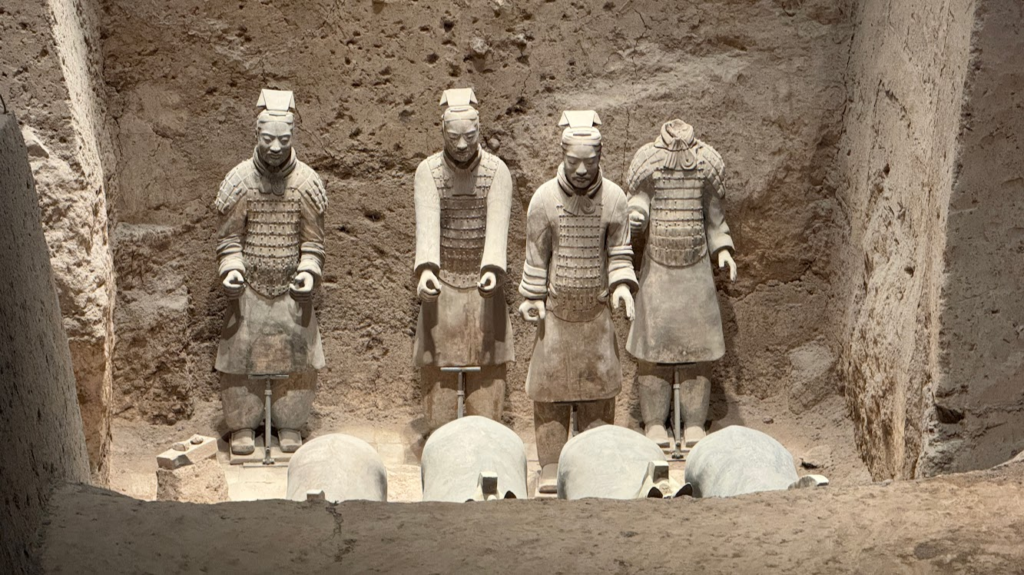
Pit 2 gives you a much better sense of the individual warriors.
Here you can see different military units, including archers and cavalry, and some figures are displayed where their armour, hairstyles, hands and facial details can be examined far more closely than in Pit 1.
Parts of the excavation also remain unfinished, letting you see figures and remains still embedded in the earth.
After the overwhelming scale of Pit 1, this is where the craftsmanship becomes easier to appreciate.
Pit 3: The Command Centre
Pit 3 is much smaller but provides essential context.
It represents the command area of the army and contains senior officers and a command chariot.
This helps explain that the Terracotta Army was organised according to a military hierarchy rather than being simply an enormous collection of statues.
It is easy to rush through Pit 3 because of its size, but it makes the other pits much easier to understand.
The Bronze Chariots
Do not finish your visit without seeing the bronze chariots.
The restored chariots, horses and detailed metal fittings demonstrate a completely different level of craftsmanship from the clay army.
They tend to receive less attention than Pit 1, which makes this part of the museum easier to appreciate without the same intensity of crowds.
How Much Time Do You Need?
Plan your visit time carefully. The combo ticket includes Lishan Garden, but it’s a separate shuttle bus ride away and adds real time to your day.
- Terracotta Army only (Pits 1, 2, 3 + Bronze Chariots): 2.5–3 hours.
- With Lishan Garden: Add 1–1.5 hours. The shuttle runs every 15–20 minutes.
- With an audio guide: Add 30–45 minutes. The guide improves Pit 2 and 3 significantly.
- Full day (everything + lunch break): 4.5–5 hours on-site total.
Audio guides are available at the museum entrance for ¥20–30 (earpiece + device). They add real context to Pit 2 and 3, where the visual information alone doesn’t fully explain what you’re looking at. Worth the rental.
Is a Guided Tour Worth It?
You do not need a guide to visit the Terracotta Warriors.
The main visual impact of Pit 1 is self-explanatory, and visiting independently gives you far more control over your arrival time and pace.
A guide becomes more useful if you want to understand:
- how the army was organised;
- the differences between military ranks;
- why the individual pits have different functions;
- the relationship between the army and Qin Shi Huang’s mausoleum.
If your priority is avoiding crowds, going independently and adding an audio guide or hiring a guide after arrival can offer more flexibility than joining a large organised tour.
We visited without a guide and still found the site extraordinary.
What Else Is Near the Terracotta Warriors?
Lishan Garden
The mausoleum area around Qin Shi Huang’s burial mound is separate from the main Terracotta Army pits.
The emperor’s actual tomb has never been opened.
You can visit the surrounding archaeological area and mausoleum park, but you cannot enter the burial chamber itself.
Add extra time if you want to include this part of the complex rather than visiting only the warriors.
Huaqing Palace
Huaqing Palace is in Lintong and is easy to combine with the Terracotta Army if you want to make a longer day of the journey east from Xi’an.
It is also conveniently located on Metro Line 9, which makes the combination relatively straightforward if you are travelling independently.
How the Terracotta Army Fits Into a Xi’an Trip
The Terracotta Warriors work best as a half-day excursion from Xi’an. If you want the best chance of lighter crowds, leave the city early enough to arrive when the museum opens at 8:30am.
After spending around three hours at the site, you can either continue exploring Lintong or return to Xi’an for the afternoon.
That leaves enough time later in the day for places such as the Muslim Quarter or the city walls without trying to squeeze too much into a single morning.
For a first visit to Xi’an, we would prioritise the Terracotta Warriors early in the trip rather than leaving them until your final day. Booking requirements and travel time make this one sight that benefits from a little planning.
See the full China travel guide for trip planning context, including how Xi’an fits into a two-week China itinerary.
Are the Terracotta Warriors Worth Visiting?
Yes. The Terracotta Warriors are one of those places whose fame can make you wonder whether the reality will live up to the photographs.
For us, it did. The crowds were intense, and the experience was much less quiet or contemplative than we had imagined. But standing above Pit 1 and seeing thousands of figures stretching across the hall was still one of the most memorable moments of our trip.
The key is to plan around the realities of the site rather than expecting an empty archaeological museum.
Book your ticket in advance, arrive as early as you can, give yourself enough time for all three pits, and do not leave after seeing only Pit 1.
The scale gets your attention first.
The smaller details are what make the Terracotta Army stay with you.