

Planning a first trip to China without joining a tour can look intimidating. The country is enormous, the distances are long and every destination feels like a world of its own. Most first-time visitors try to include as many places as possible, often squeezing five or six regions into ten days. We understand the instinct to see everything, but we chose a different rhythm for our first time in China and we loved every moment of it.
This China itinerary follows the route we used during our 16 days in China. It is a circular trip that begins and ends in Beijing and focuses on a few key destinations instead of trying to cover the entire country. We skipped Guilin and Chengdu, even though they are popular choices, because we wanted time to understand each place properly and not rush through bucket-list spots without context.
The route takes you through Beijing, Xi’an, Zhangjiajie, Tianmen Mountain and Shanghai. It combines imperial history, ancient monuments, dramatic landscapes, national parks and the contrast between traditional China and some of the most modern urban areas in Asia. The pacing lets you experience these places without feeling overwhelmed, which is especially important if this is your first journey across the country.
This guide explains exactly how we organised our itinerary, how we moved between destinations, how much time we spent in each place and the practical details that made everything easier. It also includes the small observations that changed the way we travelled, the mistakes we avoided and the things we wish we had known before leaving.
If you are planning your first independent trip to China and want to experience some of the country’s most iconic regions without rushing, this itinerary is a clear, realistic and deeply rewarding way to do it.
16-day China itinerary overview
The table below summarises the 16-day route, how long we stayed in each place, what each stop is best for, and how we moved between destinations.
| Stop | Days | What it is best for | Key experiences | How you get there |
|---|---|---|---|---|
| Beijing | 1–4 | Imperial history and city rhythm | Forbidden City, Tiananmen Square, Jingshan Park, hutongs, food and markets, Great Wall (Mutianyu) | Arrive by international flight |
| Xi’an | 5–7 | Ancient China with an easy pace | Terracotta Army, Muslim Quarter, city wall, local comfort food (roujiamo, biangbiang noodles) | High-speed train from Beijing |
| Zhangjiajie | 8–11 | Dramatic landscapes and hiking | National Forest Park (3-day pass), quiet trails, changing fog and viewpoints | Domestic flight (most practical) |
| Tianmen Mountain | Day trip within Zhangjiajie | Iconic mountain views and cable car ride | Tianmen Cave, glass walkways, 99-bend road or long cable car | Local transport from Zhangjiajie city |
| Shanghai | 12–13 | Modern China and contrasts | The Bund, Pudong skyline, Yu Garden and Old City, French Concession, Jing’an and West Nanjing Road | Domestic flight or high-speed train via major hubs |
| Beijing | 14–16 | Gentle landing and closure | Houhai morning walk, hutongs, final meals, revisit Jingshan Park at sunset | High-speed train or flight from Shanghai |
Beijing (Days 1–4)
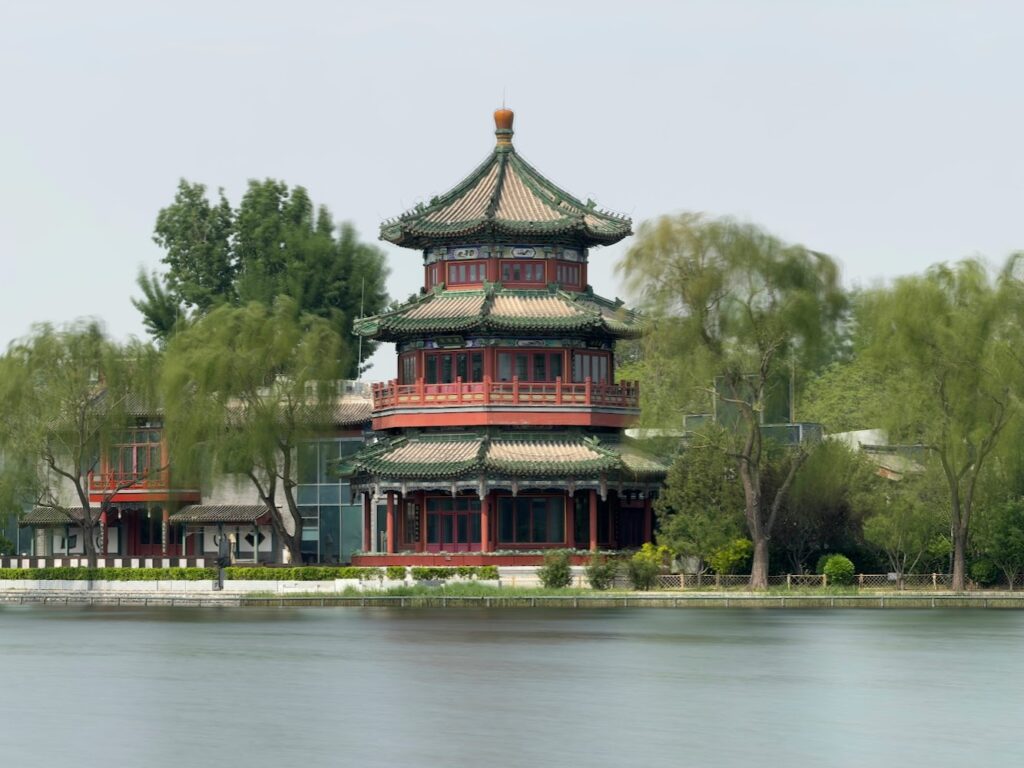
Beijing is a city that reveals itself slowly. At first it feels enormous, almost intimidating, but the more time you spend walking through its parks, hutongs and wide boulevards, the more understandable it becomes. We found that four days is the right amount of time to experience its imperial history, its neighbourhood life, its food culture and the Great Wall without feeling rushed. Beijing is large and powerful, but it also has moments of calm that appear unexpectedly. Early mornings in the parks are peaceful. People practice tai chi, grandparents walk with children and groups gather for traditional music or calligraphy. These small scenes add just as much to your understanding of the city as the major attractions. If you slow your pace, Beijing becomes easier to understand. The distances make sense. The structure of the city becomes clearer. You start recognising patterns in the streets, the architecture and the way people move.
This is why spending four days here feels right. You see the historical landmarks, the cultural spaces and the daily life that fills the city in between. Beijing becomes a place you can navigate confidently, and that feeling stays with you as you move on to the next destinations.
Imperial Beijing: Forbidden City, Tiananmen Square and Jingshan Park
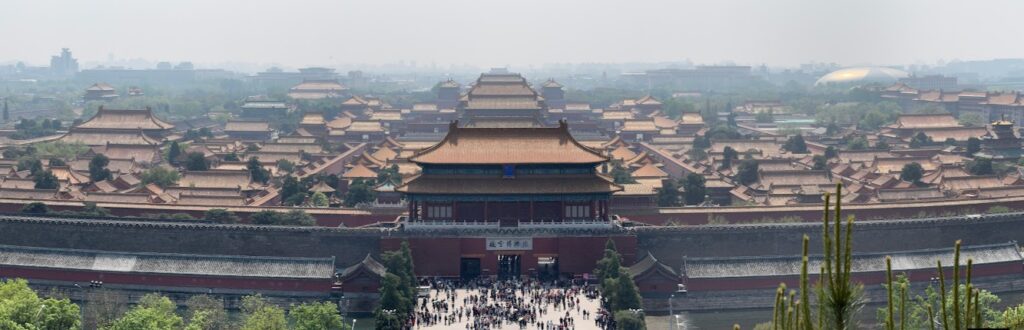
Most people begin their trip in Beijing here, and there is a reason for it. This area contains some of the most important sites in Chinese history, and touring them helps you understand how power, symbolism and architecture come together in China.
The Forbidden City is enormous. Photos do not prepare you for the distances between its courtyards or the scale of its gates. If you arrive early in the morning you gain a sense of calm before the main crowds arrive. There is so much to see that you could easily spend half a day wandering through its halls, side rooms and open spaces. Audio guides help, but slowing down and observing the layout is equally valuable. It tells you a lot about how the Chinese empire wanted to be seen.
Across from the Forbidden City is Tiananmen Square. It is a place that carries a lot of history, both celebrated and difficult. The scale alone is striking. The square feels wider than anything else in Beijing, and simply standing there gives you a sense of the weight of past events.
When you leave the Forbidden City, walk north to Jingshan Park. This is one of the most rewarding viewpoints in the entire city. A short uphill path leads to a hilltop pavilion from which you can see the rooftops of the Forbidden City stretching to the horizon. We stayed much longer than expected because it is one of those places where everything becomes clear: the size, the structure, the philosophy behind the architecture. It is also a good place to pause and recover before returning to the busy streets.
Exploring the hutongs
The hutongs are where Beijing feels human. These narrow alleyways lined with courtyard homes, small grocery shops, bicycles and locals going about their day are the heart of the city. Walking through them shows a completely different side of Beijing compared to the major sights.
We spent time in several hutongs and each one felt slightly different. Some are quiet and residential, where you hear conversations coming from inside courtyards and see families sitting outside in the early evening. Others have small cafés, tea shops and tiny restaurants that serve simple meals to locals. Nadanchang Hutong and Yandaixie Street are interesting areas to wander, but going slightly off the most popular routes gives you a more authentic experience.
Beijing changes quickly, but the hutongs still carry the city’s older rhythm. Give yourself time to explore without a strict plan. You will find small details that cannot be planned in an itinerary: the smell of steamed buns, a cat sleeping in a doorway, residents playing games under the shade, a tiny noodle shop hidden behind a corner.
Food and markets in Beijing
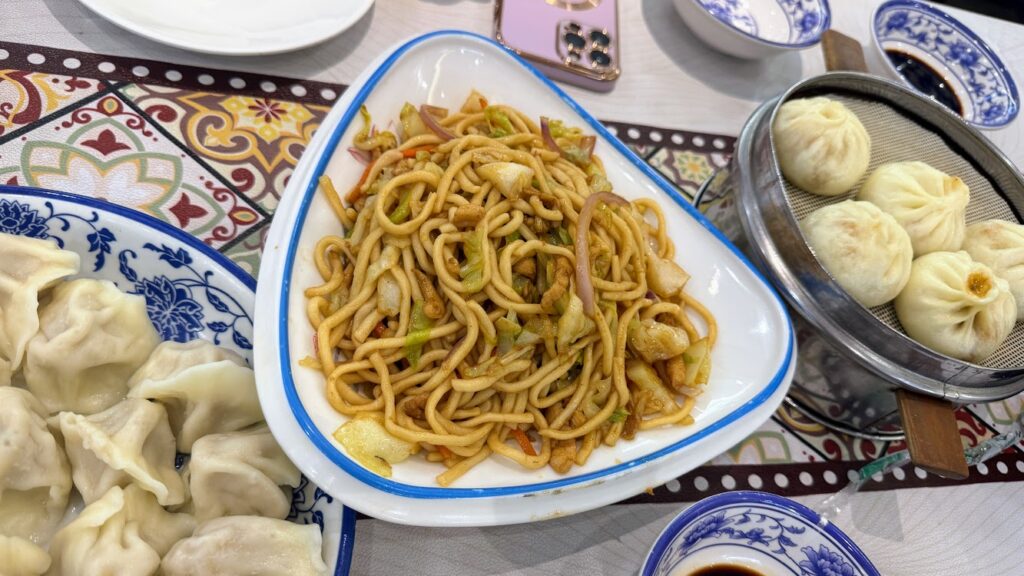
Beijing’s food scene is diverse and can be as simple or adventurous as you want. One place that many visitors try is Wangfujing Snack Street. It is lively and entertaining, although quite touristy. We recommend going with the mindset of observing rather than expecting the best meals of your trip.
For better food experiences, explore small local restaurants inside the hutongs or near residential areas. Try classic dishes such as zhajiangmian, dumplings, roast duck and hot pot. Restaurants do not always have English menus, but most staff are used to communicating with travellers and pointing at photos works surprisingly well.
Food here is part of daily culture, not something designed for tourists, which makes it much more enjoyable when you slow down and try a few places instead of only focusing on famous spots.
Beijing Neighbourhoods worth your time
Beyond the famous sights, Beijing is full of neighbourhoods that show the modern, creative side of the city. The 798 Art District is an interesting example. It mixes contemporary art, industrial architecture, coffee shops and galleries. It is a very different atmosphere from the imperial centre and helps you understand how Beijing has been reinventing itself.
Houhai is another area worth exploring. It is built around lakes, surrounded by hutongs and filled with small restaurants and bars. It is lively in the evenings and pleasant during the day for a long walk.
Sanlitun, with its shopping streets and international restaurants, shows a more global side of Beijing. It is not the most traditional area, but it is convenient, safe and always busy.
Exploring these areas balances the experience of old and new Beijing and helps you understand how the city lives today.
Visiting the Great Wall from Beijing
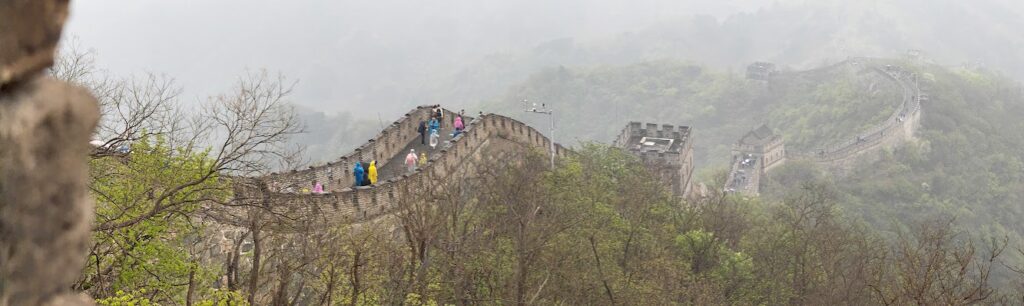
Visiting the Great Wall is one of the moments you remember long after the trip ends. It is also one of the experiences that requires the most planning, especially if this is your first time in China. We decided to visit the Wall from Beijing because it is the most practical starting point and offers access to several well-connected sections. We placed it early in our itinerary so we had the flexibility to return during the final two days in case of bad weather. This turned out to be a very good decision, because weather can change quickly around the mountains and visibility can vary dramatically.
We chose Mutianyu for our visit. It is one of the most accessible areas, with a restored structure that still feels authentic, and it offers a mix of moderate difficulty and panoramic views. Mutianyu is also less crowded than Badaling, although the entrance area still gets busy. Once you step beyond the first few towers, the crowds thin out and you finally get the sense of vastness and silence that makes the Wall so impressive.
To keep the day simple, we booked transportation from Beijing but kept the experience as autonomous as possible. This allowed us to arrive comfortably without having to follow a guided schedule. When you reach the base area you can buy your entrance tickets and choose how to go up. We took the cable car, which saves time and energy and gives you a slow, beautiful view of the mountains as you rise toward the Wall. Once at the top, the walking begins. The Wall is not flat. Some parts are steep, uneven or narrow, and the changes in slope can be challenging, especially if the weather is warm. The effort is worth it. Every tower reveals a new perspective of the mountains and the curves of the Wall in the distance.
You can descend either by cable car or by toboggan. The toboggan is popular and fun, although it can get busy. We preferred walking and using the cable car because the quiet moments on foot were some of our favourites of the entire trip. Being on the Wall, moving at your own pace, feeling the stones under your feet and stopping whenever the views demand your attention is an experience we still talk about.
Crowds are part of the Great Wall, especially at the first towers. Most visitors stay close to the entrance, take photos and return. If you continue walking even ten minutes past the busiest point, the atmosphere becomes calmer and you find stretches where you can truly appreciate the Wall without distraction. The combination of history, scenery and effort creates a feeling that is difficult to describe. It is both humbling and exhilarating.
If you plan your visit early and choose a section that matches your pace, the Great Wall becomes one of the most rewarding moments of a trip to China. Visiting from Beijing is convenient, flexible and gives you the chance to adjust for weather if needed. It is a long day, sometimes physically demanding, but completely unforgettable.
Read our complete guide on how to visit the Great Wall of China in complete autonomy
Xi’an (3 days)
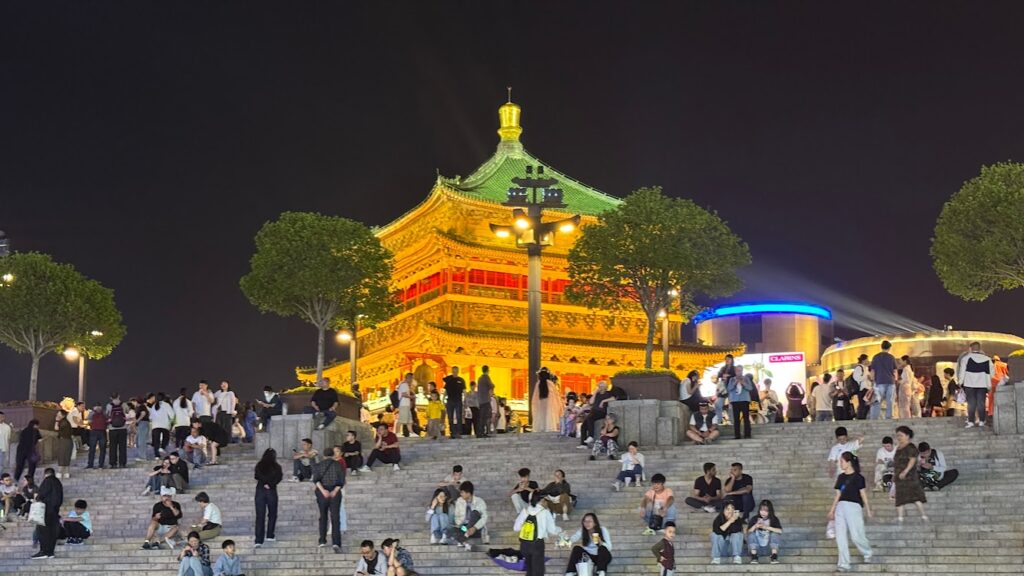
Xi’an surprised us right away. We knew it would be important historically, but we did not expect to connect with the city so easily. Xi’an has a rhythm that feels almost immediate. The streets are compact, the neighbourhoods are walkable, the food is comforting and the people have a calm, direct way of going about their day. After the size and intensity of Beijing, Xi’an feels like exhaling. It gives you space to slow down and take things in.
Three days here feel just right. You have enough time to explore the city, eat well, visit the Terracotta Army without rushing and, if you want, take a day trip to Huashan Mountain. Xi’an balances history and modern life in a way that stays with you long after you leave.
Xi’an is a city where ancient landmarks sit next to everyday life. You can walk from wide boulevards into quiet neighbourhoods within minutes. People gather in parks, chat on benches, practice group dancing in the evenings and shop for fruit from small stalls. There are fewer extremes than in Beijing. Everything feels closer, more grounded and easier to understand.
The layout is also very clear. The ancient city walls form a neat rectangle around the historic centre. Once you understand this shape, the rest of the city becomes much easier to navigate. The subway system is simple, clean and efficient. Most places you want to see are just a short ride or a medium walk away.
Xi’an comes at the perfect moment of the trip. After the size and energy of Beijing, the city feels easier and more grounded. It gives you a chance to breathe before the natural landscapes and physical intensity of Zhangjiajie and Tianmen Mountain. At the same time, it offers some of the most important cultural experiences of the entire journey.
Eating in Xi’an: simple food, amazing flavours
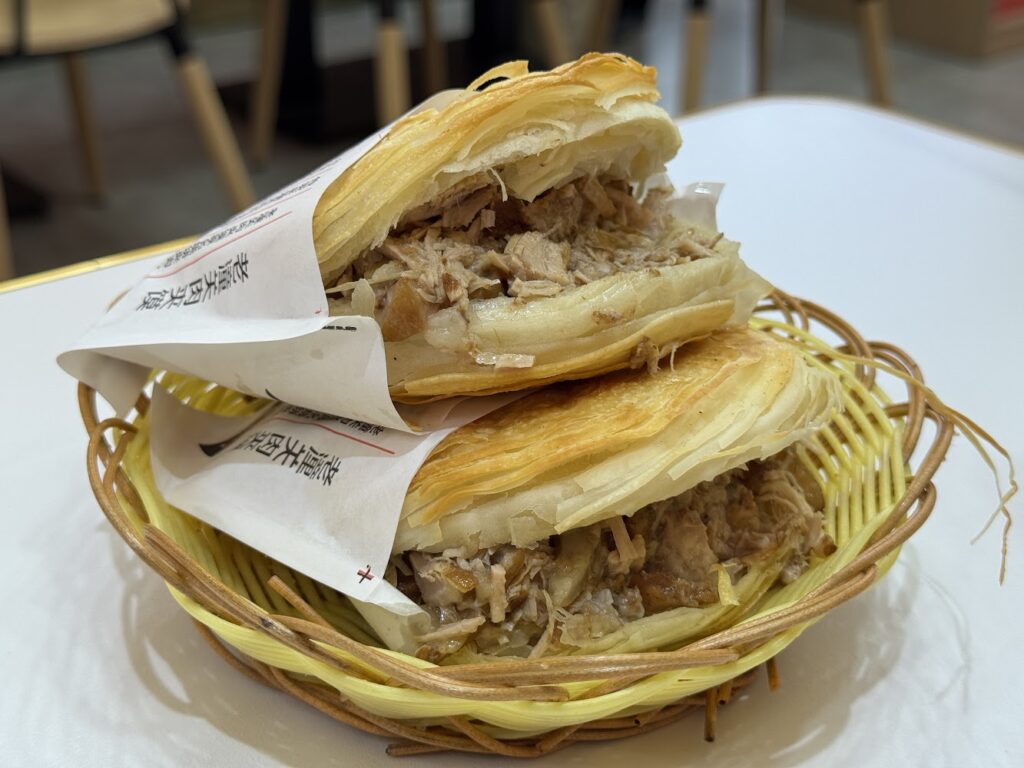
Xi’an is one of the best places in China for comfort food and street food. The city is known for its hand-pulled noodles, grilled skewers, soups and the famous roujiamo, also called the Xi’an sandwich. It is a warm, juicy, flavourful bun filled with chopped meat, and we ended up eating it more times than we planned. It is cheap, filling and always hits the spot after a day of visiting.
Biangbiang noodles are another must-try. They are long, thick noodles served in rich sauces or broths. Most small restaurants serve them with minimal decoration, just simple tables and fast service, which adds to the charm. Eating in Xi’an feels natural and unpretentious. You do not need a plan. You just follow the smells and the crowds.
Exploring the city: the Muslim Quarter and the city walls
The Muslim Quarter is the most famous part of Xi’an and it is always energetic. Food stalls line the streets, vendors shout out the names of their dishes, skewers roast over open flames and shopkeepers prepare their pastries in front of you. It is lively, sometimes chaotic, but also full of personality. If you walk past the main street into the smaller alleys, the atmosphere changes completely. It becomes quieter and you see local life unfolding: families eating together, children running around, vendors talking to neighbours.
One of the most peaceful places in Xi’an is the ancient city wall. You can walk or cycle along the top and watch the city stretch in every direction. The walk is straightforward and the views are open. We went in the late afternoon when the air was soft and the light spread evenly over the rooftops. It is a simple activity but incredibly relaxing.
The Terracotta Army: how we did it and what to expect
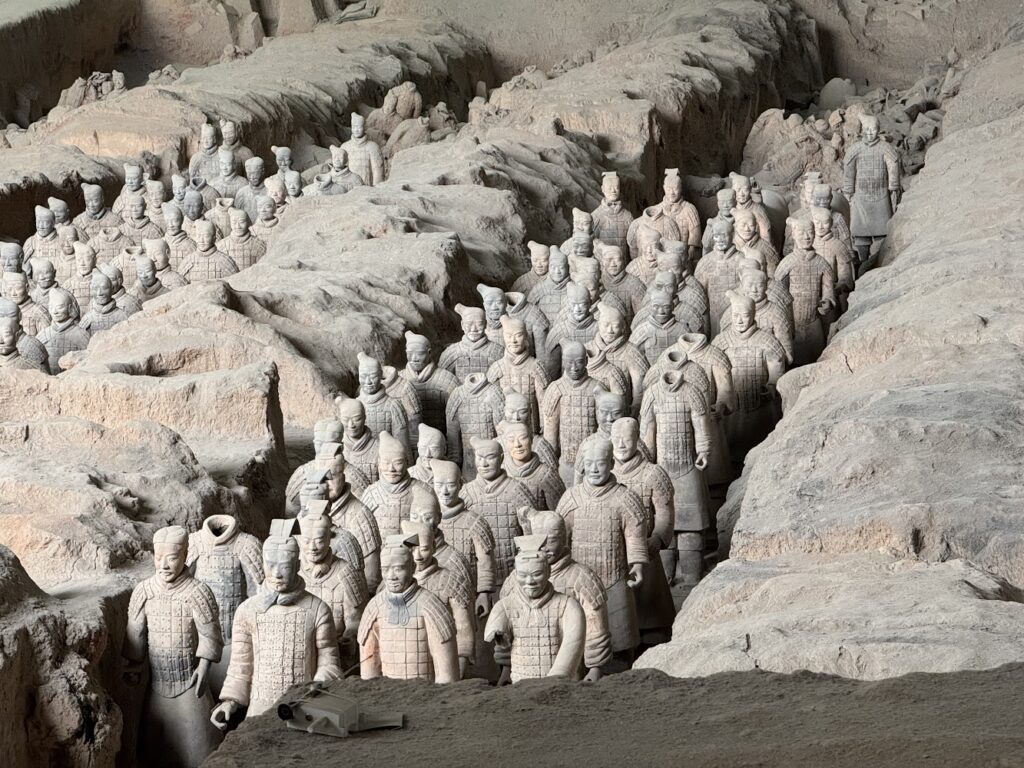
We chose not to join a group tour, even if everyone seemed to recommend it. We prefer moving at our own pace, and taking public transportation to the Terracotta Army turned out to be smooth, memorable and much easier than expected. The site is far from Xi’an, so we left the city not too early and not too late, aiming to arrive exactly when the gates were opening. This timing was perfect. It gave us a head start before the busiest wave arrived, while still avoiding the early-morning rush of tour buses.
We bought our entrance tickets in advance because they often sell out. This is one of the rare places in China where you should secure your spot early. Once you reach the site, the entrance process is straightforward but, honestly, not well organised since people start running left and right to enter the chambers.
What we did not expect was the intensity of the crowds. We knew it would be busy, but the reality was on another level. People were everywhere, pushing from every side, moving quickly, trying to reach the railings. If you are a private person or someone who dislikes being surrounded by large groups, this is where your patience will be tested. It helps to take your time, step back from the main viewpoint and wait for small openings to get closer. It is possible to find calmer angles if you do not rush to the front with everyone else.
Despite the chaos, the reward is extraordinary. The first hall is overwhelming, but it is the final chamber that stayed with us the most. Here you see archaeologists at work and new discoveries being uncovered piece by piece. The atmosphere is calmer and more reflective, and it gives you a sense of the scale of the ongoing research. It feels like witnessing history being slowly revealed.
One practical piece of advice: do not eat at the on-site restaurants. We were starving and considered stopping, but a group of locals kindly warned us that the food was not good and advised us to return to Xi’an to eat properly. They were absolutely right. Saving your appetite for the city is the better choice.
Huashan Mountain (optional day trip)
Huashan Mountain is steep, dramatic and very different from the rest of Xi’an. You can take a cable car part of the way, but the paths still require physical effort because the steps are long and the inclines are sharp. Weather can shift suddenly and fog is common, so check the conditions before going. If the day is clear, Huashan is unforgettable. The cliffs are vertical and the views are spectacular. It is a demanding day but one that many travellers consider the highlight of Xi’an.
Zhangjiajie (4 days, including Tianmen Mountain)
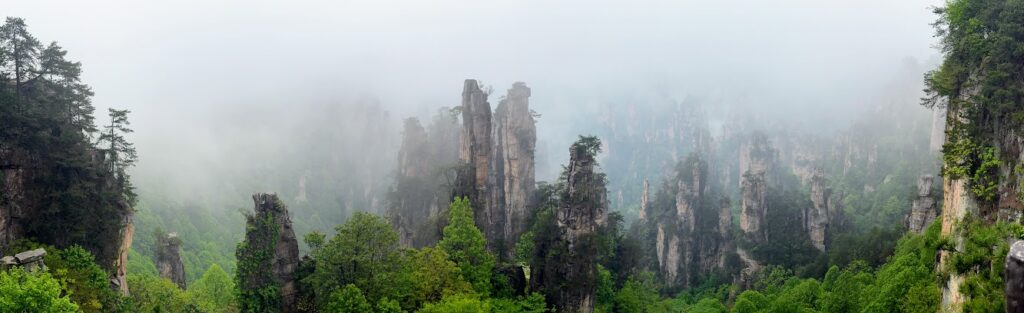
Zhangjiajie feels like stepping into another world. The mountains rise in thin vertical columns, the forests cling to impossible heights and the clouds drift so low that the landscape changes every few minutes. If Beijing shows the weight of China’s history and Xi’an shows its ancient heart, Zhangjiajie is where China reveals its dramatic natural side.
Most travellers rush through this area in a day or two, arriving early in the morning and leaving as soon as they have seen the famous viewpoints. We decided to do the opposite. We stayed four days, bought the three-day ticket for Zhangjiajie National Forest Park and gave ourselves the time to walk, rest, breathe and explore trails that most visitors never see. It was one of the best decisions of our entire trip.
Zhangjiajie is the physical heart of this itinerary. It slows you down, tests your legs, fills your days with air, movement and silence. Staying four days allowed us to experience the landscape without rushing, to see viewpoints in changing light and weather, and to enjoy the beauty of nature without the pressure of time.
By the time we left for Shanghai, we felt lighter and more grounded. Zhangjiajie stays with you because it shows a part of China that is wild, ancient and almost dreamlike.
Zhangjiajie National Forest Park: how it works and why you should take your time
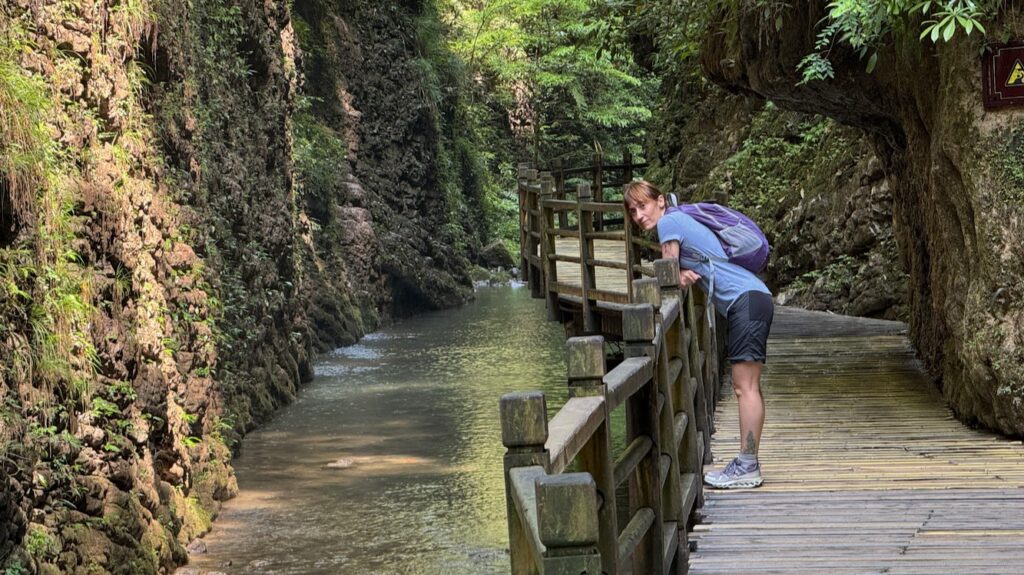
Zhangjiajie National Forest Park is vast, layered and far more complex than it looks on a map. You can buy either a 1-day ticket or a 3-day one, and choosing the 3-day ticket was one of the best decisions we made. It allowed us to move through the park slowly, to see the landscape under different weather conditions and to avoid rushing from viewpoint to viewpoint. Zhangjiajie changes constantly. A platform can be covered in fog in the morning and completely clear an hour later. Only time gives you the chance to see those changes.
Most visitors follow a fixed loop driven by the internal buses. The buses are efficient, but they create a rhythm that pushes people through the park in large waves. When a bus arrives, crowds pour out, take photos as fast as possible and then return to the next shuttle. If you stay on this path, the park can feel overwhelming and noisy.
We decided to do the opposite. We took the bus only a couple of times during the days we visited and we always looked for the side trails. We found routes where we were completely alone, sometimes for long stretches. Zhangjiajie is full of hidden paths that require a bit more effort, with uneven steps, steep climbs and narrow sections, but these areas are where the park truly reveals itself. The famous “Avatar mountains” are impressive from the main platforms, but they become unforgettable when you see them from quieter viewpoints. Standing alone above the pillars, watching the clouds move in slow layers, is a different experience entirely. The landscape feels larger, older and much more powerful when you are not surrounded by hundreds of people trying to take the same photo.
Food inside the park varies depending on where you are. Around the main platforms and transit hubs you will mostly find snacks, noodles and simple hot meals. Along quieter trails or near entrance areas there are small restaurants that serve more substantial dishes, including local soups, stir-fries and basic rice plates. Bringing water and a few snacks is still a good idea, but you do not need to worry about going hungry. Toilets are available throughout the park, although they are spaced out, so planning your stops helps.
The best way to experience Zhangjiajie is to ignore the feeling that you have to “cover everything”. The park is too large for that. What stays with you are the quiet moments far from the buses. These are the moments when the pillars rise through the mist and you feel the size of the landscape without the noise of a crowd behind you.
Tianmen Mountain: fog, glass walks and a view that changes every minute
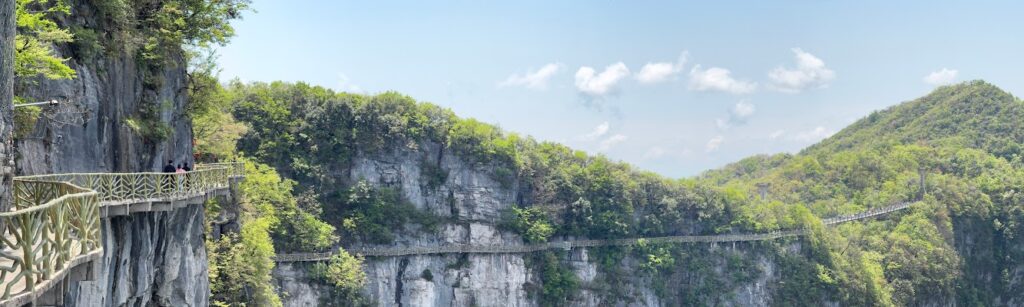
Tianmen Mountain is often treated as a separate experience, but it is just as important as the national park. The mountain stands above the city of Zhangjiajie, and the journey begins with either the long cable car that climbs directly from the city, or the bus that takes you through a road of 99 bends. Both ways are impressive.
We chose to go up the stairs first and come down using the cable car, and this was the perfect order for us. The stairs lead you toward Tianmen Cave, the giant opening in the mountain, and the climb feels rewarding because the view widens as you rise. It is physically demanding but manageable if you take your time.
When we arrived, we could not see anything. The mountain was completely covered in fog and clouds. The platforms, the cliffs, the famous walkways, everything was hidden. We waited, not knowing if it would clear. Forty minutes later, the fog began to move and the entire landscape appeared in front of us. It was one of the most surreal moments of the trip. Tianmen Mountain demands patience, and the weather can shift quickly, so never rush through it.
The glass walkways are famous, but they are more of a “to-do-thing” than a real test of courage. They are safe, stable and less scary than they look in photos. The experience is fun, but the true beauty of the mountain comes from the changing mist, the vertical cliffs and the feeling of being suspended above the city.
The cable car ride down is long and scenic. You float over forests, cliffs and open valleys, watching the city come closer. It is a peaceful way to end the day.
Zhangjiajie Glass Bridge: dramatic, impressive and worth the visit
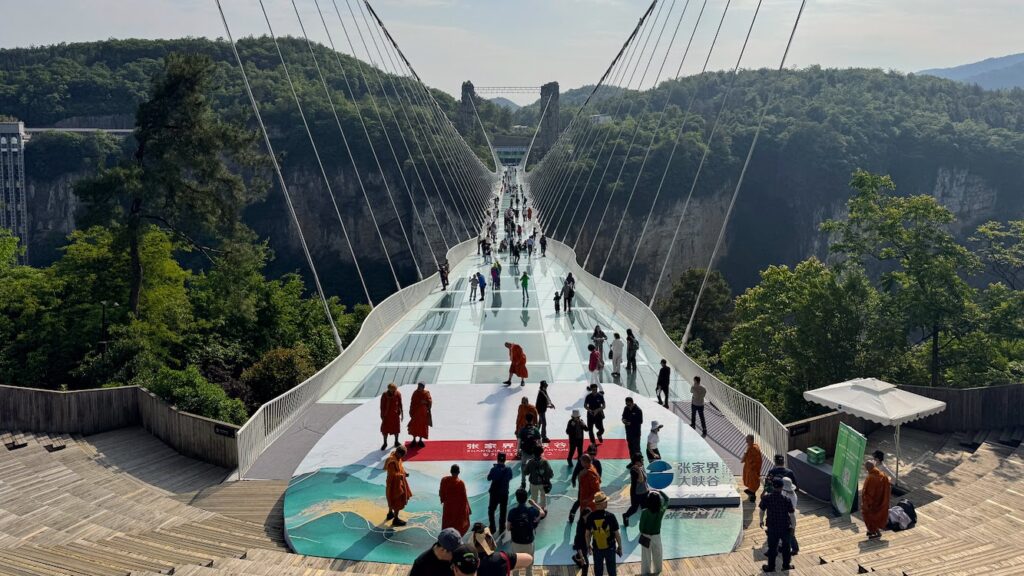
The Zhangjiajie Glass Bridge is another highlight, located in the Grand Canyon area, which is separate from the national park and Tianmen Mountain. The bridge stretches across a wide canyon and is known for being one of the longest and highest glass-bottom bridges in the world.
Standing on the glass bridge is a strange combination of thrill and calm. You look down and see the canyon beneath your feet, with dense forests, streams and stones shaped by years of water and wind. Above, the sky spreads wide and quiet. Around you, the cliffs rise with sharp edges and long vertical lines. This contrast between height and nature feels dramatic in a very harmonious way.
From the bridge you take in a sweeping view of the canyon. Below you see the thick woodlands, a peaceful brook and mist rising from the water. In the distance, a waterfall drops from a cliff and completes the scene. It is one of those landscapes that feels almost too perfect.
Most visitors only cross the bridge and leave, or take the zip line or toboggan down and skip the rest of the area. Very few continue along Route B, which is the full circuit through the bridge, the summit area and the canyon below. This route takes around three hours and is absolutely worth it. Walking through the canyon gives you a different perspective. You see the bridge from below, listen to the water, cross small paths and move through places that most people ignore.
Route B feels more complete, more immersive and more rewarding. It shows you the canyon as a real environment, not just a backdrop for a photo.
Shanghai (2 days)
Shanghai is the part of the itinerary that catches most people off guard. After days surrounded by imperial palaces, ancient neighbourhoods and dramatic mountain landscapes, arriving here feels like stepping into a completely different version of China. The city is modern, polished and confidently international in a way that often surprises travellers expecting something more traditional. Shanghai does not look or feel like the China most first-timers imagine. It is vertical, bright, sleek and closer in energy to Singapore, Hong Kong or even Seoul than to Beijing.
Because the city is so well connected to Japan and South Korea, Shanghai attracts a constant flow of short-term visitors who come for shopping trips, cafés, concerts, theme parks and weekends away. This mix gives the city a fast, stylish, cosmopolitan rhythm that feels very different from the rest of the itinerary. Prices follow the same pattern. Food, coffee, transport and shopping are noticeably more expensive, and some neighbourhoods feel almost designed for international residents and affluent travellers.
Two days in Shanghai is the right amount of time if you approach it for what it truly is: a place of contrasts, atmospheres and modern identity rather than a place of monuments. For us, two days were enough. We enjoyed the city without feeling the need to stay longer.
And yet, as a final stop, Shanghai works beautifully. It gives the journey a sense of completeness. It shows you another face of China, one that is outward-looking, design-driven and constantly reinventing itself. After the historical weight of Beijing, the warmth of Xi’an and the natural drama of Zhangjiajie, Shanghai closes the trip with a reminder that China contains many different worlds.
Many travellers arrive expecting something more traditionally Chinese and leave surprised by how Western the city feels. Others appreciate the modernity and the freedom to slow down, eat well, walk along the river and enjoy the skyline without rushing.
For us, Shanghai was a soft landing after a full itinerary. We walked, we rested, we watched ferries move across the Huangpu, we explored neighbourhoods slowly. And that rhythm was exactly what we needed before heading back to Beijing for our return flight.
The Bund: Shanghai’s most iconic view
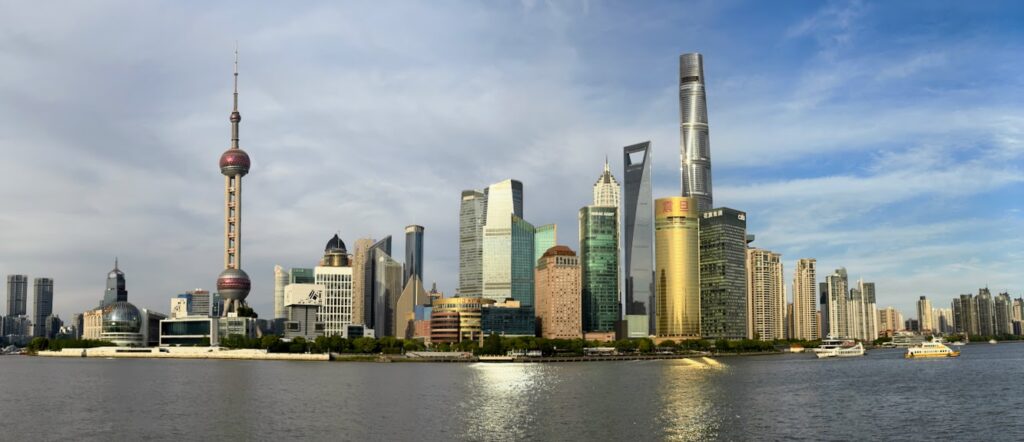
The Bund is the first place where Shanghai reveals its personality, and seeing the skyline from here is one of those wow moments that anchors the city in your memory. The contrast between the European-style buildings behind you and the futuristic towers across the river is striking. You feel as if two worlds are facing each other, separated only by the slow movement of the Huangpu River.
Early mornings are quiet. You see locals stretching, couples walking, photographers setting up their tripods and older residents using the waterfront as their daily exercise path. The light is soft, the water calm. Later in the day, the Bund becomes livelier. Ferries cross the river, crowds gather near the best viewpoints and the skyline shifts with the changing light.
Evenings are a spectacle. The towers illuminate one by one, reflecting in the water and transforming the entire area into a glowing postcard scene. The Bund is one of those places you return to more than once because each visit feels slightly different. It is not just the view. It is the rhythm, the breeze, the sound of the river and the way the city seems to breathe.
A simple tip: walk the entire length instead of stopping at the main platform. The quieter sections give you space to enjoy the moment without pushing through crowds.
Pudong: futuristic, polished and strangely calm
Pudong feels like a city built to impress, but not in an overwhelming way. The skyscrapers rise with sharp angles, mirrored surfaces and architectural shapes that look almost too perfect to be real. Even though this is the financial district, it never feels chaotic. The streets are wide, traffic flows smoothly and people move with the confidence of a place used to living in the future.
Walking among the towers gives you a sense of scale that is impossible to understand from the Bund. The Shanghai Tower, the Jin Mao Tower and the Shanghai World Financial Center each represent a different era of the city’s ambition. If you go up the Shanghai Tower, the view stretches endlessly. You see the river winding across the city, the dense clusters of neighbourhoods and the organised blocks that Shanghai is built on.
Yet some of the best moments happen at ground level. There are quiet gardens, minimalist cafés, open plazas and airy spaces that contrast completely with the older parts of the city. If you visit in the late afternoon, the sun reflects off the glass buildings in a way that turns the area gold.
One of our favourite experiences was simply taking the ferry between Pudong and the Bund. It is short, inexpensive and gives you the perfect middle-ground perspective of the skyline.
Yu Garden and the Old City
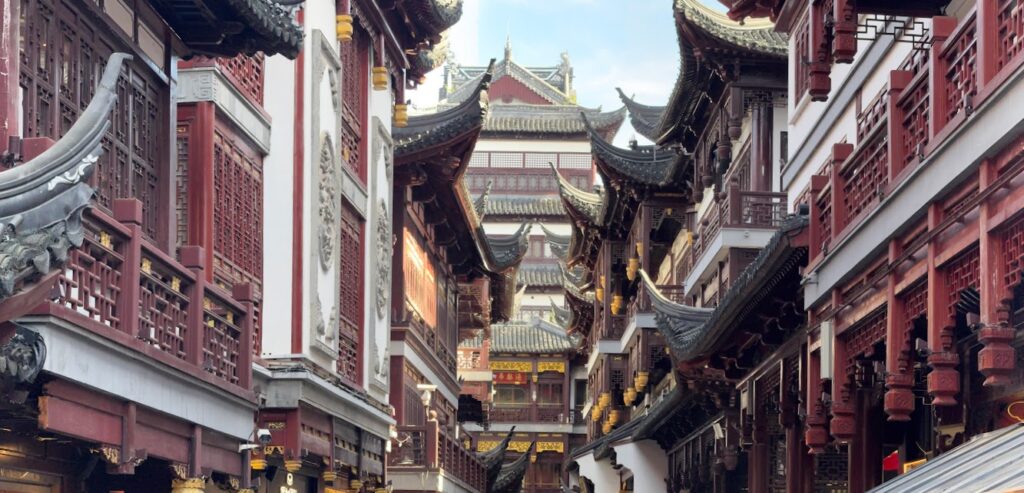
Yu Garden is one of the rare places in Shanghai where you feel the connection between the city’s past and present. The inner garden is beautifully designed, full of ponds, pavilions, elegant bridges and rock structures that create little pockets of calm. Coming early helps you appreciate its details before the day gets busy.
The area outside the garden is lively and commercial, but if you walk deeper into the Old City, everything changes. The streets become narrower, the houses older and the shops more traditional. You see people going about their daily routines, hanging laundry, cooking outside their homes and chatting at their doorways. It is here that the older rhythm of Shanghai reveals itself.
It is not as atmospheric as older towns in other regions of China, but the contrast with Pudong and the Bund makes the Old City feel important. It reminds you that Shanghai was once a network of neighbourhoods long before it became a financial centre.
A simple suggestion: after visiting Yu Garden, leave the main commercial area quickly. The quieter parts of the Old City are where the true charm is.
The French Concession: where the city slows down
The French Concession is where Shanghai feels the most livable. Tree-lined streets create a canopy that softens the light, and the air feels calmer compared to other parts of the city. Here you find cafés where people linger, bakeries with pastries that taste surprisingly European, and small shops that blend local craft with modern style.
The architecture is one of the most interesting aspects of this area. Shikumen houses, art deco buildings and old villas sit beside contemporary storefronts. You can walk for hours, taking random turns and finding small pockets of life that feel both local and international. Couples walking dogs, friends chatting outside cafés, small design studios, quiet bookshops — this is a side of Shanghai that is rarely shown in quick itineraries.
This is also one of the most expensive parts of the city, and it shows in the style and the type of businesses you see. But it is also where you feel Shanghai’s elegance most strongly. After the drama of Zhangjiajie and the history of Xi’an and Beijing, the French Concession gives you a gentle landing.
A tip: explore this area at different times of the day. Early mornings feel sleepy and slow, while evenings bring warm light and a soft buzz from the restaurants and bars.
West Nanjing Road & Jing’an: Shanghai’s chic, high-fashion side
There is a side of Shanghai that feels unapologetically polished, dressed up and international, and you feel it as soon as you reach West Nanjing Road and the Jing’an district. This is the city at its most glamorous. Luxury malls rise beside sleek office towers, cafés look like they belong in global design magazines and every major fashion house has a flagship store here.
The energy is completely different from the French Concession. Where the French Concession feels slow, leafy and residential, West Nanjing Road feels confident, bright and busy in a stylish way. People here dress well, walk with purpose and carry shopping bags from brands you find in Paris, Seoul or Tokyo. It is a district made for strolling, window shopping and people-watching.
Huaihai Road, which intersects this area, adds to the chic atmosphere with designer boutiques, modern concept stores and cafés that attract both locals and international visitors. It is one of the places where Shanghai’s cosmopolitan identity becomes very clear. If Beijing shows you history and Xi’an shows you roots, this part of Shanghai shows you aspiration and refinement.
You do not need to shop to enjoy it. Simply walking through the area gives you a sense of how global Shanghai has become. Evenings are particularly beautiful. Lights reflect on the buildings, restaurants fill up and the entire district takes on a warm, urban glow.
Eating in Shanghai
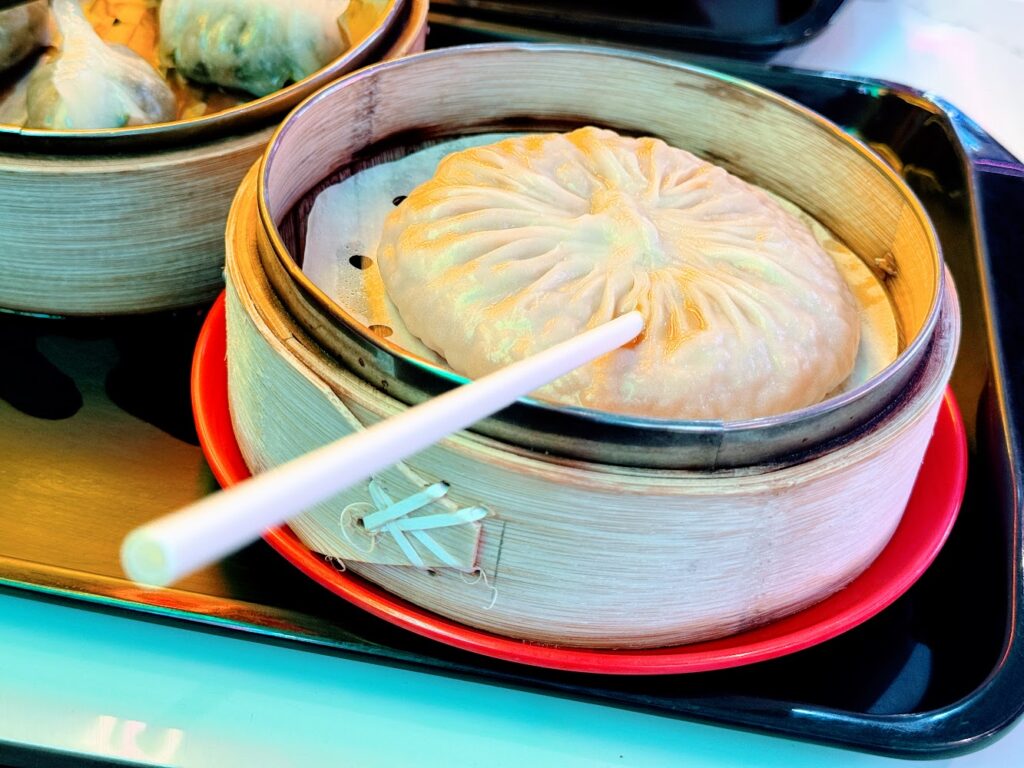
Shanghai is a city where you can eat incredibly well without planning too much, but understanding its food identity helps. The cuisine is known for subtle sweetness, delicate flavours and dishes that balance richness with freshness. Xiao long bao are essential. The soup dumplings are delicate, warm and comforting, and you can find excellent versions in both modest shops and famous restaurants.
Shengjian bao, the pan-fried cousin of xiao long bao, offer a crispy bottom and juicy filling that make them perfect for a quick bite. Noodles are everywhere, from small shops serving simple bowls to modern restaurants offering refined versions.
Because Shanghai is so international, you also find cafés, bakeries and restaurants that reflect global trends. Coffee culture is strong and pastries can be surprisingly good. Prices are higher than in Beijing or Xi’an, especially in the French Concession or near the Bund, but the overall quality makes eating in Shanghai feel effortless.
If you want a more local experience, try a neighbourhood canteen or a tiny shop where locals queue outside. The food is cheaper, the flavours are strong and you get a glimpse of everyday Shanghai that goes far beyond the polished areas.
Beijing (2 final days)
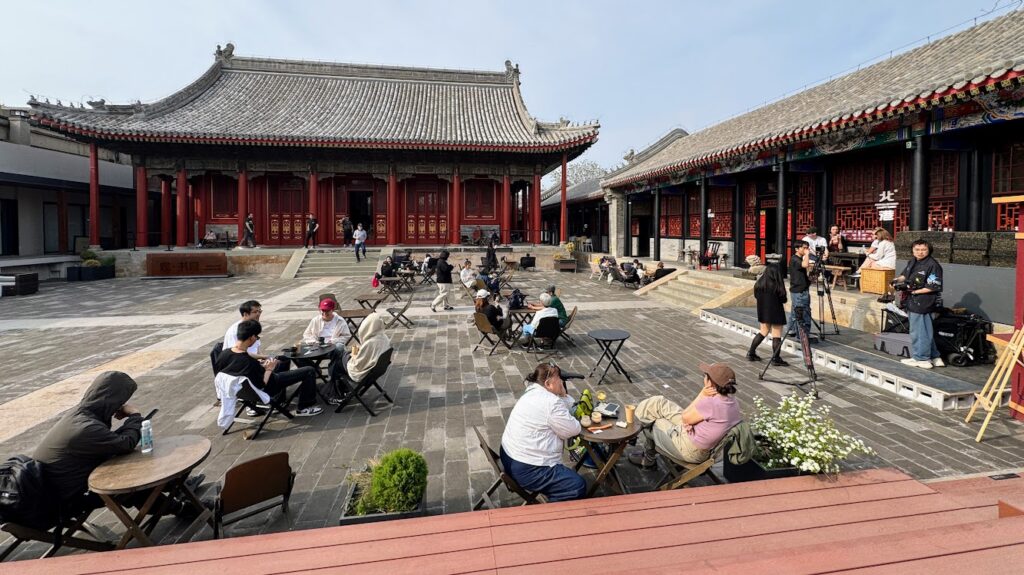
Coming back to Beijing at the end of the trip feels completely different from arriving here on the first day. The city that once felt enormous and overwhelming now feels familiar. You recognise the rhythm of the hutongs, the wide avenues, the sound of the subway, the taste of the food. These last two days are not about sightseeing anymore. They are about closing the journey gently, revisiting places that stayed with you, eating the dishes you missed, and letting everything you’ve seen in China settle in your mind.
Beijing becomes softer on your second visit. You move differently, notice more, and understand the city in a way that only comes after travelling through the rest of the country.
Houhai and familiar hutong walks
Start the morning at Houhai, one of the calmest and prettiest parts of Beijing when the day is just beginning. The lake is still, the air feels fresh, and people come out to walk, stretch and enjoy the quiet. It is the perfect way to ease into your final days, especially after the pace of Shanghai.
From Houhai, wander into the nearby hutongs. Returning here after seeing Xi’an, Zhangjiajie and Shanghai feels different. You notice the details you rushed past earlier: breakfast stalls steaming, courtyards opening for the day, bicycles weaving between narrow streets. This is the ideal time to walk without a plan.
Use this first day to eat well too. Try the dishes you did not manage earlier: noodles, dumplings, hot pot, roast duck, or a small neighbourhood restaurant you found while walking. Everything tastes better when you are not rushing between attractions.
If you want one last city view, sunset from Jingshan Park is magical. Seeing the Forbidden City again with a full journey behind you feels symbolic, as if the trip has come full circle.
gentle exploration, last meals and a soft farewell
Your last full day in China should be light and intuitive. Go back to a place where you felt comfortable: a hutong you liked, a park, or the same lake if you want another quiet walk. Beijing rewards slow movement, and this is the moment to enjoy the calmest version of the city.
This is a good time to buy tea, snacks or small gifts to bring home. Now that you have travelled across the country, you know what feels meaningful to take with you.
Have one final meal that feels right. It may be something simple like dumplings or noodles in a local shop, or something more elaborate if you want to celebrate the end of the journey. What matters is that you enjoy it slowly.
Before you leave, take one last walk in the evening. The city feels different now and you walk through the same streets with a completely different understanding of the place. And a desire to go back as soon as possible.
What surprised us most about traveling in China
China surprised us in ways we didn’t expect. We arrived with ideas shaped by photos, stories and documentaries, but the reality was much broader and more nuanced. What surprised us the most was not a single place or attraction, but the variety of rhythms, atmospheres and human details that changed from city to city.
Beijing was grand and powerful, yes, but it also had soft moments that we did not expect. Early mornings in the parks, tai chi under the trees, grandparents walking children through the hutongs. There were layers of daily life happening parallel to the historical sites — small, tender scenes that made the city feel alive instead of monumental.
Xi’an surprised us with how quickly we connected to it. We knew it was important historically, but we didn’t expect to feel so comfortable in its streets. The city walls, the neighbourhood life, the food scene and the warmth of the people made it feel almost familiar from the first day.
Zhangjiajie surprised us with its silence. We thought the national park would be dramatic, but we didn’t expect to find ourselves walking alone on narrow paths surrounded by stone pillars and drifting clouds. Giving ourselves time instead of rushing changed the entire experience.
And then Shanghai, which surprised us for opposite reasons. It didn’t feel like the “China” we imagined. It felt polished, international, stylish and closer to Seoul or Tokyo in spirit. We expected temples and tradition; instead we found cafés, design stores, luxury districts and a skyline that belongs to the future.
More than the cities themselves, what surprised us most was how differently each part of China moves, feels, tastes and sounds. Nothing was monotonous. Nothing was predictable. Every stop added a new layer to the story.
What we’d change in this first-timer China itinerary (and why the answer is nothing)
If we had to redo this itinerary exactly as first-time visitors, the honest answer is: nothing.
This trip worked because of the rhythm, because of the balance between big cities and nature, and because we allowed ourselves to experience each place at the right pace.
- Four days in Beijing were essential to understand the city without stress.
- Three days in Xi’an were exactly right to see the Terracotta Army, explore the food culture and enjoy the city without feeling rushed.
- Four days in Zhangjiajie made all the difference between “seeing” the Avatar mountains and actually experiencing the landscape.
- Two days in Shanghai were enough to appreciate its modern identity without trying to turn it into something it isn’t.
- Two final days in Beijing closed the trip beautifully, giving us time to rest, reflect and say goodbye.
Of course, China is huge and you can always add more places: Chengdu, Guilin, Suzhou, Hangzhou, Yunnan. But for a first trip, keeping the itinerary tight, balanced and well-paced was the best choice we could have made.
Sometimes the perfect itinerary is the one that doesn’t try to do everything. This was that itinerary for us.
How to get around China?
Moving around China is much easier than most travellers expect. Distances are long, but the transportation system is clean, efficient and surprisingly intuitive once you understand the basics.
| Route | Best option | Why |
|---|---|---|
| Beijing → Xi’an | High-speed train | Fast, comfortable, and simple |
| Xi’an → Zhangjiajie | Domestic flight | Long distance, flight saves time |
| Zhangjiajie → Shanghai | Domestic flight | Most efficient for this route |
| Shanghai → Beijing | High-speed train or flight | Train is smooth; flight can be faster depending on schedule |
High-speed trains
China’s high-speed rail network is one of the best in the world. The trains are clean, fast and comfortable, with orderly boarding and predictable schedules. Travelling between major cities (Beijing, Xi’an, Shanghai) feels smooth and stress-free. Security checks happen before entering the station, so give yourself a little extra time, but once inside everything runs efficiently.
If you like watching landscapes change, trains are the best way to experience the country.
Domestic flights
For longer routes or less connected areas like Zhangjiajie, flights are the easiest option. Airports are modern and well organised. Delays happen occasionally but not as often as people fear. The most important part is arriving early enough for security, which is more thorough than in many other countries.
Subways in major cities
Beijing, Xi’an and Shanghai all have excellent metro systems. They are clean, air-conditioned, clearly signposted and easy to navigate even without speaking Chinese. Buying a metro card or using QR tickets makes everything faster.
During rush hours trains can be crowded, but they remain orderly and safe.
Taxis and Didi
Taxis are inexpensive and reliable, though not every driver speaks English. Showing your destination written in Chinese helps. Didi (the local equivalent of Uber) is widely used and very convenient in Shanghai and Beijing.
Walking
Large cities like Beijing and Shanghai have wide sidewalks and well-marked street crossings, but distances can be longer than they appear on the map. Always give yourself extra time.
How much a 2-week trip to China costs (average ranges)
These are realistic average ranges for a first-timer itinerary similar to ours. Prices vary depending on the season, accommodation level and food choices, but this gives you a solid idea of what to expect.
Accommodation
- Beijing: 60–150€ per night (mid-range hotel or boutique stay)
- Xi’an: 40–100€ per night
- Zhangjiajie: 35–80€ per night (hotels near the park are more basic)
- Shanghai: 80–200€ per night (most expensive city on this itinerary)
Meals
- Local meal or noodle shop: 3–8€
- Mid-range restaurant: 12–25€ per person
- Western-style cafés or international restaurants: 15–35€
Shanghai sits noticeably on the higher end.
Transportation
- High-speed trains: 25–80€ depending on distance/class
- Domestic flights: 60–150€
- Metro rides: 0.50–1.50€
- Taxis or Didi: very affordable compared to Europe
Entrance fees
- Most city attractions: 3–20€
- Terracotta Army: around 20–25€
- Zhangjiajie National Park: ~45€ for 1 day or ~65–75€ for 3-day pass
- Tianmen Mountain: ~25–30€
Average daily budget
- Budget traveller: 40–70€
- Mid-range traveller: 80–140€
- Comfortable traveller: 140–220€
A 2-week itinerary usually ends up between 1,300€ and 2,500€ per person, depending on comfort level and flight cost.
China isn’t “cheap” or “expensive”: it depends entirely on where you are. Beijing, Xi’an and Zhangjiajie are fair and reasonable. Shanghai can be surprisingly pricey.
Cultural tips: the helpful things no one explains
Traveling in China is simple once you understand a few small details that guides rarely mention but make a big difference.
Queuing is… flexible
Lines exist, but in crowded places (like the Terracotta Army or some metro stations), people move in clusters. It is not personal. It is just the rhythm. Patience helps.
Security checks everywhere
Every metro station, major attraction and train station has security scanners. You get used to it quickly.
Cashless culture
China is extremely cashless. Foreign cards work in most places now, but mobile payments (like QR codes) are still the norm. Always carry a little cash for rural areas or small shops.
Toilets
Public toilets are frequent but not always modern. Carry tissues and hand sanitizer.
Restaurant seating is practical, not formal
You may walk into a busy restaurant and be seated next to strangers. It’s normal.
People are curious, not intrusive
Especially outside Shanghai, people may look at you with curiosity or smile. In Xi’an and Zhangjiajie, locals were warm and kind, even when language was minimal.
Be open to the unexpected
Fog, crowds, noise, silence, warmth. China is a country of contrasts, and embracing them makes the trip easier and more meaningful.
When to visit: the best time for this itinerary
We travelled between April and May, and it was one of the best choices we could have made.
Spring (March–May)
Best overall time for this itinerary.
- Beijing is mild and pleasant
- Xi’an is comfortable
- Zhangjiajie is lush and dramatic (expect fog, which can be beautiful)
- Shanghai is warm but not yet humid
Flowers bloom in many parks, and the air feels light. Crowds are manageable as long as you avoid major holidays.
Autumn (September–November)
A close second.
- Clear skies
- Perfect temperatures
- Beautiful colours in parks and mountain areas
- Ideal for Zhangjiajie hikes
Summer (June–August)
Hot, humid and crowded. Zhangjiajie can be uncomfortable because of heat and mist. But evenings in Beijing and Shanghai can be beautiful.
Winter (December–February)
Cold but quiet. If you enjoy peaceful cities and clear views, winter has its charm, especially in Beijing.
Avoid:
- Golden Week (early October)
- Lunar New Year
2-week China itinerary: FAQs
Before you plan your own trip, here are the questions travellers ask most often and the answers we wish we had on our first visit.
Two weeks is ideal for a first trip to China. It’s enough time to visit Beijing, Xi’an, Zhangjiajie, and Shanghai without rushing, and it leaves space for weather changes and recovery days.
Yes. Independent travel in China is very doable in major cities and key tourist areas because trains, metros, and domestic flights are efficient and attractions are well set up for visitors. Outside big hubs, language can be the main friction, so a translation app and planning your routes in advance help.
No. You can visit the Terracotta Army independently using public transport, and it’s often more enjoyable because you can arrive early and move at your own pace. Booking tickets in advance is still a good idea in busy periods.
Yes, the main viewpoints can be extremely crowded, especially when internal buses arrive. The experience improves a lot if you explore side trails and spend more than one day in the park.
You don’t need to be extremely fit, but you should be comfortable with long walks, stairs, and uneven paths. Cable cars reduce the effort, but some sections are still steep, so good shoes and a flexible pace matter.
Yes. Shanghai is worth visiting for its atmosphere and contrasts. Two days is enough to experience the Bund and skyline, walk neighbourhoods like the French Concession, and enjoy the city without turning it into a checklist.
Carry some cash, but expect to pay mostly by phone. Mobile payments are dominant in Chinese cities, and cash is used less than many travellers expect. If you can, set up Alipay or WeChat Pay before you arrive and keep a power bank with you.
Not widely. In Shanghai you will find more English support, and major tourist sites often have signage, but in many everyday situations, English is limited. Translation apps and having addresses saved in Chinese help a lot.
Crowds and pace at major attractions. Places like the Forbidden City, the Great Wall, and Zhangjiajie can be overwhelming at peak times, so going early and building in buffer time makes the trip much easier.
If you rely on Google services (Maps, Gmail), Instagram, WhatsApp, or other blocked apps, then yes, you will want a VPN. Install and test it before arriving, because VPN websites and setup resources may be inaccessible once you’re in China.
Often yes for popular routes and major sights, especially in peak seasons and around holidays. For day-to-day metro travel and most casual meals, you can stay flexible.