China Travel Guides
This China travel hub brings together our firsthand guides to Beijing, Xi’an, Zhangjiajie and Shanghai, with the practical information needed to connect them into one independent trip.
Before we went, China looked like one of the hardest countries to organise. Payments work differently, many familiar websites are blocked, tickets are often connected to your passport, and the distances between cities are enormous.
Once we had prepared our phones, payment apps and transport bookings, travelling around the country was remarkably straightforward. High-speed trains were punctual and comfortable, city metro systems were inexpensive, and people helped us whenever we became stuck, usually through translation apps and gestures.
The biggest mistake when planning a first trip to China is trying to cover too much. Beijing, Xi’an, Zhangjiajie and Shanghai already make a substantial journey. They cover imperial history, archaeological sites, mountains, neighbourhood life, regional food and the modern face of the country. Allowing enough time in each place makes the trip far more enjoyable than collecting cities as quickly as possible.
For most travellers, 14 to 16 days is a sensible starting point. With less time, choose two or three areas and accept that the rest of China will have to wait.
Regions in China
China is closer in scale to a continent than a single destination. Weather, food, landscapes and local culture change considerably between regions, while journeys that appear short on a map can consume most of a day.
Our first route concentrated on four areas that work well together and provide very different experiences.
| Area | Main places | Best for | Suggested time |
|---|---|---|---|
| Northern China | Beijing and Mutianyu | Imperial history, hutongs and the Great Wall | 4–5 days |
| Central China | Xi’an and Hua Shan | Archaeology, Silk Road history and food | 3–4 days |
| South-central China | Zhangjiajie | Mountains, hiking and natural scenery | 3–4 days |
| Eastern China | Shanghai | Architecture, neighbourhoods and contemporary city life | 2–3 days |
Northern China
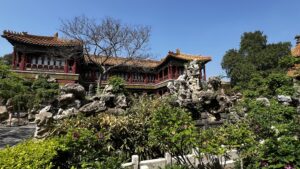
Beijing needs more time than many first itineraries give it. The Forbidden City, Temple of Heaven and Summer Palace are major sights, but the city becomes more interesting when there is time for hutongs, parks, markets and ordinary neighbourhoods. Three full days in the city plus one day at the Great Wall is a good minimum. Our practical overview of what to see, do and eat in Beijing explains how to organise those days without spending the entire visit crossing the city.
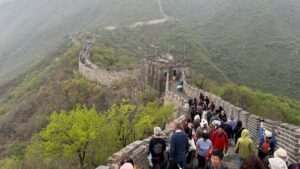
For the Great Wall, we chose Mutianyu. It involves a longer journey from central Beijing than some heavily promoted sections, but the restored path, mountain setting and manageable visitor flow made it a good choice for a first visit. The logistics, cable-car options and walking routes are covered in our account of visiting the Great Wall at Mutianyu.
Central China
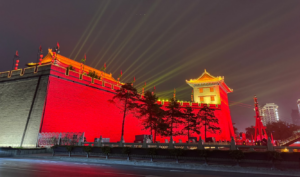
Xi’an is frequently treated as a base for seeing the Terracotta Army and little else. That misses much of the city. Its 13.7-kilometre wall, Muslim Quarter, mosques, markets and Hui food traditions give Xi’an a character that feels completely different from Beijing.
Allow three days, or four if you want to visit Hua Shan. The city centre is easy to explore on foot and by metro, and cycling the wall provides a useful sense of its scale. Our Xi’an travel guide covers the areas worth seeing and the food that deserves space in the itinerary.
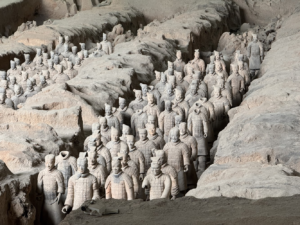
The Terracotta Army requires at least half a day once transport and security checks are included. Arriving close to the 8:30 opening time helps, as tour groups often peak between 9:00 and 11:00 and again during the afternoon. Inside, allow around two hours for the main pits. Our advice for visiting the Terracotta Warriors explains which pits to prioritise and how to avoid wasting time on arrival.
South-central China
Zhangjiajie is the landscape stop on this route. The area includes Zhangjiajie National Forest Park, Tianmen Mountain and the Glass Bridge, spread across separate sites rather than contained within one compact park.
Three full days work well. Weather matters here because fog can hide the famous sandstone pillars, sometimes for hours. A flexible plan makes it easier to move viewpoints or hikes according to visibility. Mist can also be part of the experience, particularly when the peaks appear and disappear between clouds, but it helps to avoid building the entire visit around a single viewpoint at a fixed time.
Eastern China
Shanghai needs two or three days on a first trip. The Bund and Pudong skyline provide the familiar cityscape, while the former French Concession, Old City, Jing’an and residential streets show more of how Shanghai works at ground level.
It is also the easiest place on this route to slow down. Cafés, bars and international restaurants are more common, English is more widely understood, and the metro makes the city relatively simple to navigate. Accommodation tends to cost more here than in Xi’an or Zhangjiajie, so location is worth paying attention to. Staying near a useful metro line can save both time and taxi fares.
Planning Your Trip to China
China becomes much easier when the essential setup is completed before departure. The first day is the wrong moment to discover that a payment card will not connect, an app cannot be downloaded or a ticket requires passport verification.
We travelled for almost three weeks without needing cash because WeChat Pay and Alipay were connected to international cards. Small restaurants, convenience stores, ticket machines and taxis commonly use QR payments, so having both apps ready provides a useful backup if one fails.
Internet access also needs preparation. Google services, WhatsApp, Instagram and many Western websites may be unavailable on a standard Chinese connection. Install and test any VPN before arriving, or use an international eSIM whose data is routed outside mainland China. A translation app with offline language files is useful even when mobile data works.
Passports are used more often than many visitors expect. Train stations, airports and major attractions may check them, and some tickets are issued against the passport number supplied during booking. Keep the original accessible and store digital copies separately.
These are the preparations that make the greatest difference:
| Before departure | Why it matters |
|---|---|
| Set up WeChat Pay and Alipay | QR payments are part of everyday life |
| Install an eSIM or VPN | Many familiar websites and apps are restricted |
| Download offline translation | English is limited outside tourist settings |
| Book long-distance transport | Popular trains can sell out |
| Reserve major attractions | Some tickets are passport-linked and limited |
| Check entry requirements | Visa and transit rules depend on nationality |
| Pack regular medication | Familiar brands may be difficult to find |
| Carry tissues | Public toilets do not always provide paper |
The Forbidden City, Terracotta Army and several Zhangjiajie attractions can require advance reservations. Booking procedures change, so check the official system close to your travel dates and make sure the passport number matches exactly.
Our detailed article on planning a trip to China covers payments, internet access, transport and bookings. For the smaller details that affect everyday travel, including toilets, crowds, water and translation problems, these things to know before travelling to China come directly from what we encountered.
Best China Itinerary
A strong first itinerary connects Beijing, Xi’an, Zhangjiajie and Shanghai over 14 to 16 days. The order works because it moves between very different places and uses a mixture of high-speed trains and domestic flights.
| Days | Destination | Main focus |
|---|---|---|
| 1–4 | Beijing | Imperial sites, hutongs, markets and Mutianyu |
| 5–7 | Xi’an | City wall, Muslim Quarter and Terracotta Army |
| 8–11 | Zhangjiajie | National Forest Park and Tianmen Mountain |
| 12–13 | Shanghai | The Bund, Old City and neighbourhoods |
| 14–16 | Beijing or departure city | Extra sightseeing and a calmer end to the trip |
Returning to Beijing only makes sense when international flights are considerably better from there. If you can fly into Beijing and out of Shanghai, use the final days in Shanghai or add them to Zhangjiajie.
Travelling by high-speed train works especially well between Beijing and Xi’an. Zhangjiajie is less conveniently connected to the rest of this route, so a domestic flight can save a long travel day. When comparing options, include the journey to the airport and the time required for security. A train may take longer on paper while still being simpler door to door.
Our China itinerary for two weeks was actually completed over 16 days. We deliberately left out Chengdu and Guilin because adding both would have reduced each stop to a rushed visit. We were pleased with that decision, especially in Zhangjiajie and Xi’an, where weather, queues and day trips can easily change the plan.
For a 10-day journey, combine Beijing and Xi’an with either Shanghai or Zhangjiajie. Choose Shanghai for city life, architecture and an easier route. Choose Zhangjiajie if landscapes and hiking matter more, accepting the additional transport time.
When to Visit China
April to May and September to October are the most comfortable periods for this route. Beijing and Xi’an usually have manageable temperatures, Zhangjiajie is suitable for hiking, and Shanghai avoids the worst combination of summer heat and humidity.
Spring brings greener landscapes and the atmospheric mist often associated with Zhangjiajie. Autumn generally provides clearer conditions and comfortable walking weather. Neither season guarantees perfect weather across every stop because these cities are separated by large distances.
Summer can be hot, humid and busy. It remains possible to travel, but outdoor sightseeing becomes more tiring and popular attractions fill quickly. Winter is cold in Beijing and Xi’an, although prices and visitor numbers can be lower.
Try to avoid the Lunar New Year travel period and the National Day holiday around the beginning of October. Domestic tourism is enormous, and transport, hotels and major attractions can become exceptionally crowded. During these periods, inconvenience comes from the number of people moving at the same time, rather than from any single attraction.
How Many Days Do You Need in China?
Two weeks is enough for a varied first trip, while three weeks allow slower travel or another region. Seven days can still work if the itinerary stays focused.
| Available time | Realistic route |
|---|---|
| 7 days | Beijing and Xi’an |
| 10 days | Beijing, Xi’an and Shanghai or Zhangjiajie |
| 14–16 days | Beijing, Xi’an, Zhangjiajie and Shanghai |
| 3 weeks | The full route plus Chengdu, Guilin or another region |
Within individual destinations, allow four days for Beijing, three days for Xi’an, three or four days for Zhangjiajie and two or three days for Shanghai.
Every change of city uses more time than the train or flight duration suggests. Checking out, reaching the station, passing security and finding the next hotel can take most of a day. Reducing the number of stops usually produces a better trip than squeezing in another famous name.
China Travel Budget
China can be reasonably affordable once the international flight is paid for. Local food, metro journeys and intercity trains often provide good value. Accommodation in central Shanghai and tickets for major landscape attractions are likely to be the largest daily expenses.
A realistic daily budget per person, excluding international flights, is:
| Travel style | Approximate daily cost |
|---|---|
| Budget | €40–70 |
| Mid-range | €80–140 |
| Comfortable | €140–220 |
Local noodle shops and simple restaurants often cost €3–8 per person. A mid-range meal may cost €12–25, while Western cafés and international restaurants can reach €15–35.
High-speed train tickets generally range from €25 to €80 depending on the route and class. Domestic flights often cost €60–150. City metro journeys are usually inexpensive, frequently around €0.50–1.50.
Most historical attractions cost less than the major scenic areas. Zhangjiajie National Forest Park, Tianmen Mountain and associated cable cars can add considerably to the total, particularly when several sites are visited.
For a two-week trip, approximately €1,300–2,500 per person is a practical range, depending on accommodation, internal flights and travel style. Booking transport early and eating in local restaurants keeps costs under control without making the trip feel restrictive.
Food in China
There is no single Chinese cuisine. Food changes noticeably between Beijing, Xi’an, Zhangjiajie and Shanghai, and those regional differences are one of the strongest reasons to travel across the country.
Beijing is associated with roast duck, dumplings, wheat noodles and hearty northern dishes. Xi’an’s Hui Muslim heritage brings hand-pulled noodles, grilled lamb, flatbreads and richly spiced snacks. Food in Hunan, the province surrounding Zhangjiajie, can be intensely spicy and often uses fresh chilli. Shanghai cooking tends to be sweeter, with braised dishes, dumplings and seafood appearing frequently.
Breakfast is worth taking seriously. Steamed buns, dumplings, noodles, savoury pancakes and warm soy milk are common, and morning food stalls can be more interesting than hotel buffets.
Portions are often generous. When sharing, begin with fewer dishes than you think you need and add more later. Picture menus and translation apps help, although translations can produce unexpected results. Pointing at a dish being eaten at another table is often the clearest solution.
Tap water should not be drunk unless it has been boiled or properly filtered. Hotels usually provide bottled water, and hot water or tea is widely available. Tipping is generally unnecessary.
Some of our best memories from China came from simple meals where communication was limited and the food arrived differently from what we expected. A flexible attitude helps. So does accepting that a dish you know from a Chinese restaurant at home may have little resemblance to what appears under a similar name in China.