

We arrived in Beijing expecting chaos: traffic, horns, overwhelming noise, the stereotypical capital rush. What we found instead was a city that felt surprisingly calm. The roads were busy, but electric scooters and buses made them quiet. Streets were wide, movement was organised, and everything seemed to work with an unspoken rhythm. Beijing was nothing like the frantic capital we imagined.
This is a city where new and old live side by side without fighting for attention. One morning you walk through the Forbidden City, surrounded by centuries of history, and the same afternoon you’re in a modern metro station that runs smoother than most European cities. You eat noodles cooked from a recipe older than empires, then pay with your phone in two seconds. Beijing holds tradition and progress in the same breath.
For many travellers, Beijing is the starting point of their journey through China, and it sets the tone beautifully. It is monumental but not aggressive, structured but not sterile, historical but not stuck in time. It rewards curiosity more than speed, observation more than checklists.
This guide is for people who want to experience Beijing through understanding, not rushing; where to stay, what to do, what to eat, and how to let the city show itself rather than forcing it.
Things to know about bejing
Beijing has been the capital of China for centuries, but what you walk through today isn’t one historical layer; it’s several stacked on top of each other. The city layout you see now was shaped mainly by the Ming dynasty, who designed Beijing with intention rather than expansion. They built a city that radiates from the Forbidden City like rings of a tree.
You notice this immediately when you travel:
- The closer you are to the Forbidden City, the more monumental the architecture feels
- The further you move outward, the more modern, vertical and fast Beijing becomes
Once you understand this design, the city stops feeling random or overwhelming. You’re not “lost in a huge capital” — you’re reading a structure that was engineered for power.
The hutongs tell a different story. These are not preserved for tourism the way historic districts often are in Europe. They aren’t museums or recreations. They are homes. People cook with doors open, repair scooters on the street, play cards outside in winter sun. If the Forbidden City shows imperial history, the hutongs show continuity — everyday life that kept going long after emperors disappeared.
You don’t need to memorize dynasties. You only need to notice how Beijing holds history and modernity without forcing them apart. And once you see that, everything else in this guide will make more sense: where to stay, how to move, what to eat, how to pace your days.
Where to stay in Beijing (and why location matters more than hotel stars)
Beijing is enormous, and where you sleep shapes your entire experience.
You can stay anywhere and still visit the major sights but the difference between convenient and effortless is usually one subway stop.
Best areas to stay in bejing
- If you want character, choose the hutongs.
- If you want simplicity, choose central Beijing.
- If you want comfort, choose modern districts.
| Best for | Area | Why choose it |
| Convenience & sightseeing | Wangfujing / Forbidden City | Central, walkable, metro access |
| Culture & atmosphere | Qianliang Hutong (and nearby hutongs) | Daily life, character, hidden food gems |
| Modern comfort | Chaoyang & CBD | New builds, easy transport, international food |
1) Wangfujing / Forbidden City area
Ideal for first-time visitors who want the big sights within reach. You can walk or take a short metro ride to Tiananmen, Jingshan Park and the Forbidden City. It’s busy, structured and predictable — a safe, central base if you like clarity.
2) Hutongs
This is where Beijing feels personal. Not curated. Not ornamental. Lived in. We stayed in the middle of Qianliang Hutong, and it shaped our entire perception of the city. Instead of passing through for photos, we lived inside it: waking up to street breakfast vendors, hearing neighbors sweep their courtyards, watching evenings stretch slowly with families sitting outside. It’s an experience you don’t get if you only visit a hutong for 20 minutes.
And the best part is what you discover when you’re not in a rush. Qianliang felt like a soft landing into Beijing: central, local, and full of surprises. Within a few streets we found tiny food stalls, independent cafés, quiet courtyards, and even two Michelin-level restaurants you would never spot if you only walked the main lane. This is the type of neighborhood that rewards curiosity. Staying here is full immersion.
If you want Beijing to feel human, not just monumental, the hutongs are the best base you can choose.
3) Chaoyang / Modern business districts
Efficient, modern, vertical. Close to metro lines, international restaurants, malls and tech districts. Great if you prefer convenience over charm or you’re flying in and out quickly.
What to do in Beijing
Beijing is full of big sights. Everyone knows the names, and every travel site repeats them. What matters more is how you experience them. If you approach Beijing like a race, the city feels heavy and tiring. If you treat each place as a layer that builds on the next, Beijing becomes readable, almost logical.
Below are the major places worth seeing but explained in a way that helps you move through them with purpose, not rush.
Forbidden City
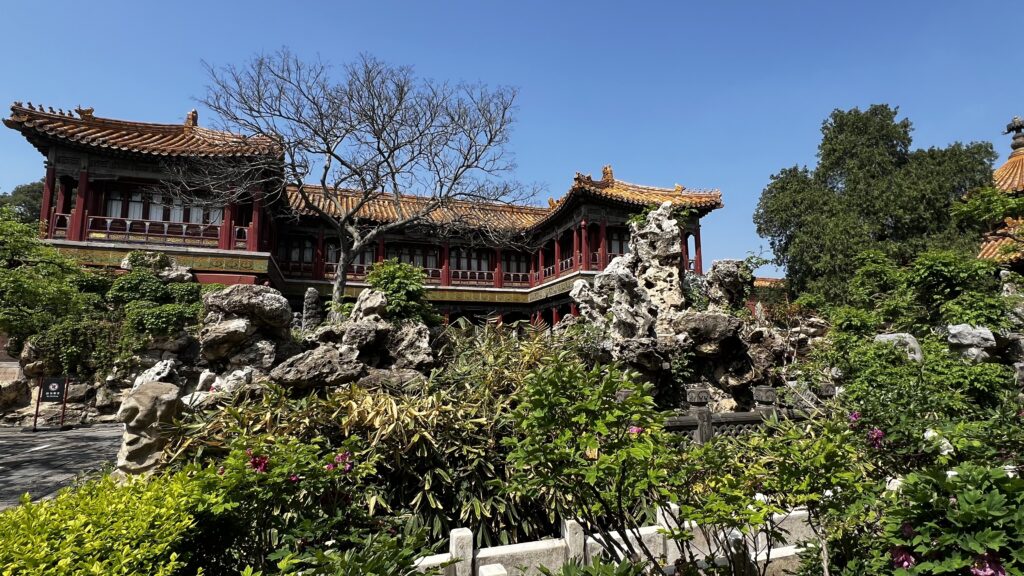
The political and symbolic heart of China
Most travelers visit the Forbidden City first and it’s a good idea. It establishes scale and history right from the start. But you need preparation:
- Tickets must be booked in advance (they sell out often)
- Plan at least 3–4 hours, more if you move slowly
- Go early to avoid peak crowds
- Save Jingshan Park for after, it completes the picture
Inside, you will walk through courtyards that repeat like a rhythm: red walls, golden roofs, stone, silence. Some people feel overwhelmed. Slow down. Choose what you notice. Don’t try to consume everything; it’s too big for one sitting anyway.
Jingshan Park
The moment Beijing suddenly makes sense
Right after exiting the Forbidden City, climb the small hill inside Jingshan Park. It takes less than 10 minutes, and from the top you understand the city in one glance:
- the Forbidden City’s perfect symmetry
- Beijing stretching outward in planned geometry
- old, low hutongs on one side
- modern glass towers on the other
It is one of the few places where you see Beijing instead of walking through it. Go at sunset if you can, when the roofs glow but the crowd can be overwhelming if you value personal space and distance.
Temple of Heaven
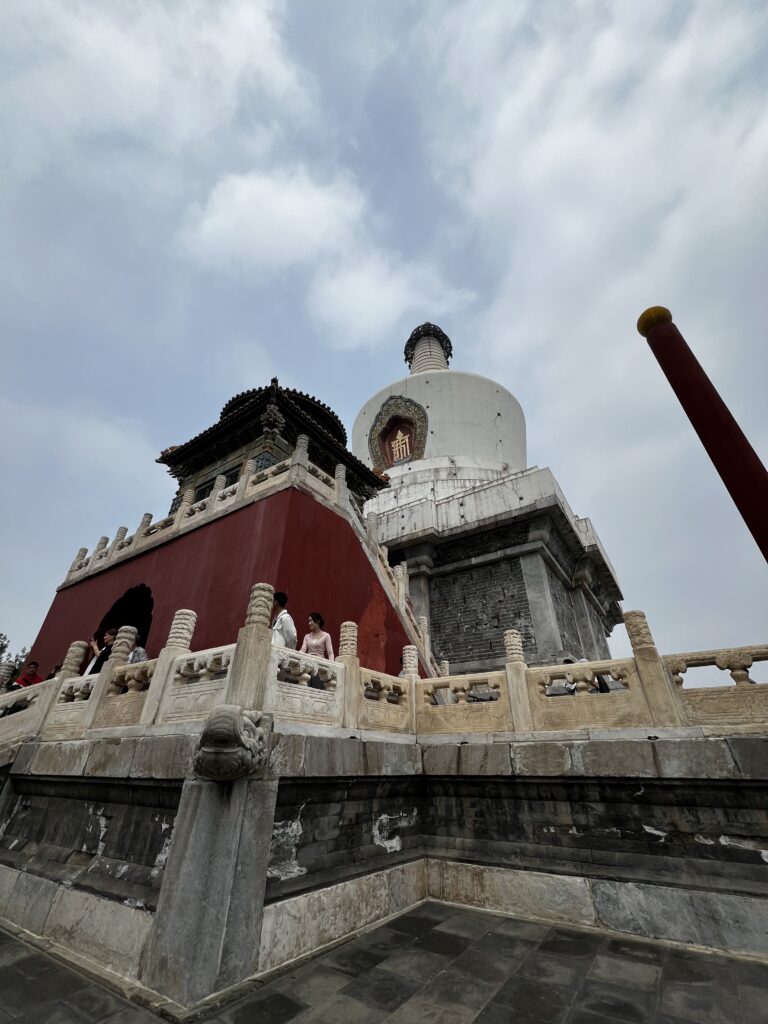
Beijing’s morning rituals + everyday life in motion
This is not just another temple. Go early, ideally before 9am, and watch the park wake up. You’ll see tai chi groups, ballroom dancers, music circles, grandparents playing cards, people drawing calligraphy on the ground with water.
The temple itself is beautiful, but the park is the real reason to visit. It shows a Beijing that isn’t performing for tourists, just living.
If you’re building a list in your head, this is the first place that teaches rhythm.
Summer Palace
Serene when you walk deeper, crowded if you don’t
The Summer Palace can feel busy near the entrance, but if you continue along the lake, cross the bridges and follow the quieter pathways, the atmosphere softens. Give yourself half a day — rushing here is the easiest way to miss its beauty.
Best way to enjoy it:
- enter early
- walk beyond the main corridor
- explore the lakeside paths
- sit and watch the city breathe
This is where Beijing feels spacious and green, not dense and monumental.
Tiananmen Square
The vast, formal front yard of Beijing’s political heart
Most visits to central Beijing start by crossing Tiananmen Square, and it’s worth treating it as more than a transit point. The scale alone is striking: a huge open space framed by key buildings: the National Museum, the Great Hall of the People, Mao’s Mausoleum, the entrance gate to the Forbidden City. It feels formal, heavy, controlled.
Security checks are strict and visible, which can feel intimidating if it’s your first time in China, but the process is organised and efficient. Once inside, take a few minutes to simply stand and look around. You understand very quickly that this is not just another square; it’s a stage for national ceremonies, symbolism and state power.
We don’t think Tiananmen is a place to linger for hours, but it is an important visual and emotional introduction to Beijing. Walking across the square and then continuing straight into the Forbidden City creates a natural progression: from modern political space into imperial history, in one continuous line.
798 Art District
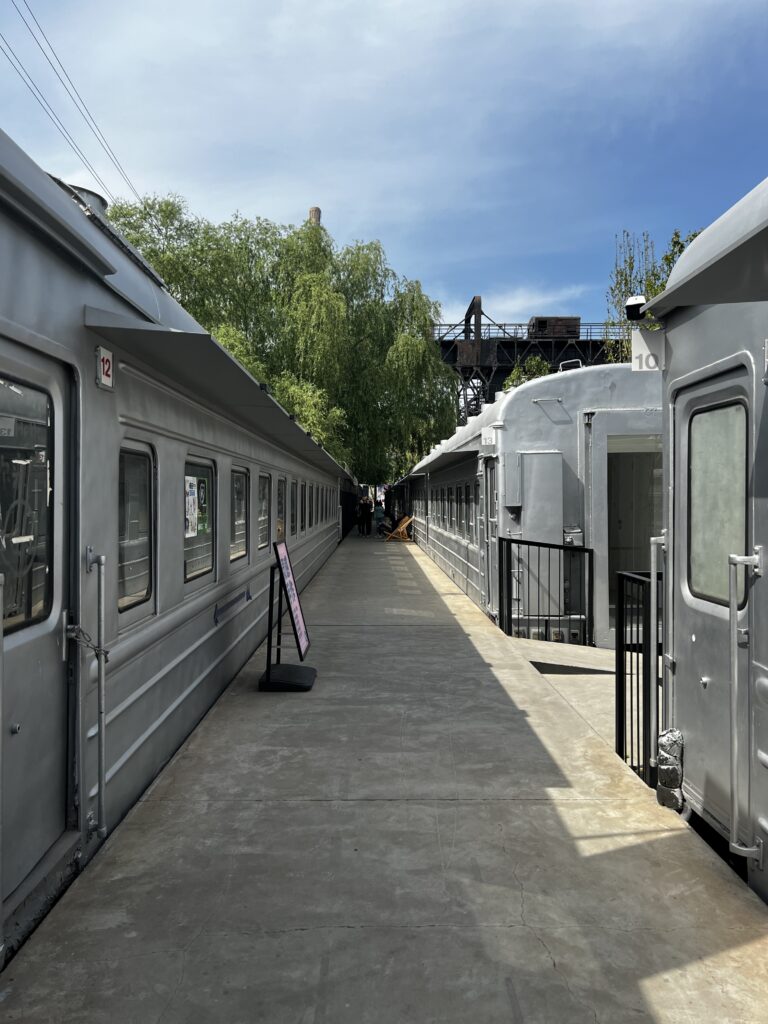
Current Beijing: experimental, modern, culturally confident
798 is where the city looks forward instead of back. We visited on a Sunday because it felt a great way to understand the city on a more local and deep level and we were left speechless. Galleries, murals, design studios, industrial buildings turned creative spaces: this is the 798 Art District where people from Bejing spend time listening to music, shopping, visiting galleries, eating and drinking. Even if you’re not into contemporary art, the area is worth walking. It shows a Beijing that experiments, questions, plays.
Good for:
- modern Chinese art
- photography
- design shopping
- café wandering
If the Forbidden City is the past, 798 is the present speaking.
Beihai Park
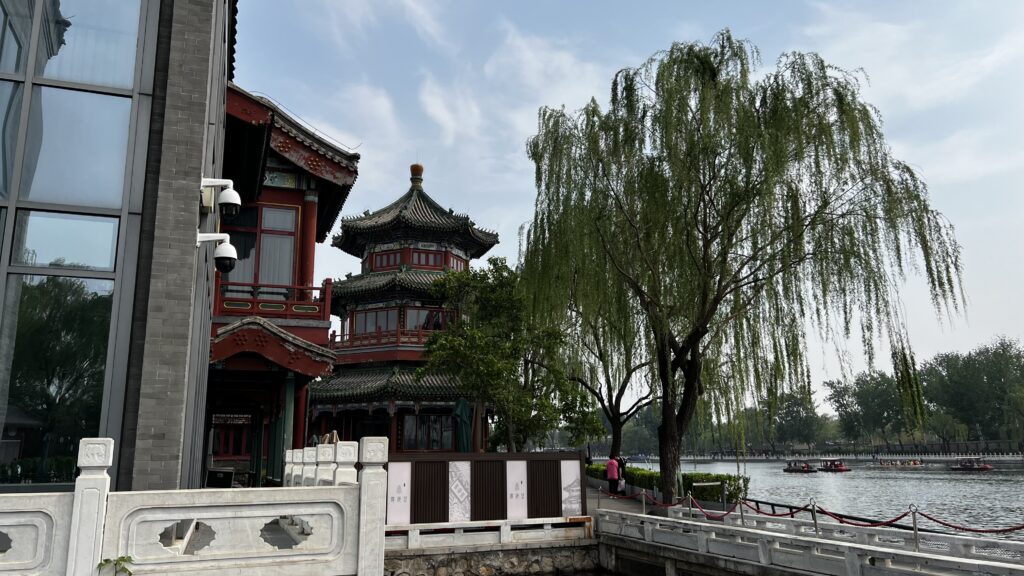
A calmer alternative to busier sights: willow trees, water, slow rhythm
Beihai Park is central, scenic, and often overlooked. You can rent a boat, walk around the lake, sit by the water and just let time move. Locals come here to relax, and that affects the atmosphere — slower, softer, peaceful without effort.
Recommended for an afternoon when you don’t want another palace or museum. Good for children, good for heat, good for weary legs.
One of the best places to just be in Beijing.
Panjiayuan Market
Antiques, curiosities, and the fun of not knowing what you’ll find
This market is sensory overload in the best way: calligraphy, ceramics, beads, books, Mao-era memorabilia, old photographs, hand-carved furniture, things of questionable age, things you want even if you don’t understand them.
Come in the morning for the best energy. Hunt for nothing in particular. You’ll always find something.
Not everything is real, and bargaining is expected but the market itself is half the experience. It’s Beijing’s history and pop culture spread out on tables.
visiting The Hutongs in Beijing
Most travellers walk through a hutong for 20 minutes, take a photo of a grey wall, and leave thinking they’ve “seen” it. You haven’t. Hutongs are now considered attractions, but they’re not. Narrow lanes, shared courtyards, families who have lived there longer than the metro system has existed. Some of them have a more touristy feelings, but the majority doesn’t. They are real, and real can be messy, quiet, surprising, warm.
You see laundry hanging above bicycles.
You hear the clatter of Mahjong tiles through a window.
You smell steamed buns at breakfast and fried scallion pancakes at dusk.
This is Beijing without performance.
What to expect when you walk a hutong
- not every street is pretty
- some alleys are silent, others full of life
- there are no big signs telling you where “the good part” is
- beauty comes from observation, not design
If you move slowly and pay attention, you start noticing details tourists miss: door knockers shaped like lions, red banners from New Year still taped to frames months later, courtyard gates left slightly open… inviting curiosity, not entry.
Why we loved staying in Qianliang Hutong
Living inside a hutong changes everything. In Qianliang, mornings meant jianbing from the vendor who cooked with one hand and chatted with neighbours with the other. Evenings meant wandering without a plan and discovering places we would’ve never found otherwise hidden behind plain doors, cafés with five tables only locals knew, tiny shops selling one dish because that’s the dish they mastered. You cannot see this if you only pass through. Hutongs reward presence, not efficiency.
When to visit the hutongs
If you choose not to be based in the Hutongs, we recommend you visit in the morning or in the evening. Mid-day heat or winter wind can make hutongs feel empty, but that’s normal. You’re not there to perform tourism. You’re there to observe.
| Time | Why to go |
|---|---|
| Morning | Breakfast stalls, quiet streets, local rhythm starting |
| Late Afternoon / Evening | Lanterns, food smells, people outside, everyday life visible |
What to eat in Beijing and why it’s not the Chinese food you know
One of the biggest surprises for first-time travelers is how different food tastes in China compared to “Chinese food” abroad. China is not one cuisine but multiple regional food cultures sharing geography. What you eat in Beijing is not what you eat in Xi’an, Shanghai, or Chengdu.
- Beijing cuisine is salty, rich, wheat-based, warming.
- More noodles than rice, more roasted than stir-fried.
- Flavours lean towards soy, sesame, scallion, vinegar, garlic.
If you arrive expecting the dishes served in Western restaurants, you will eat something completely different — and that’s the beauty of it.
There is no way to list “everything you must try” in Beijing. There’s too much, it changes street by street, and half of the joy is discovering food by accident. What we can do is give you the essential dishes, the types of places to look for, and how to approach eating in Beijing the way locals do.
Beijing roast duck
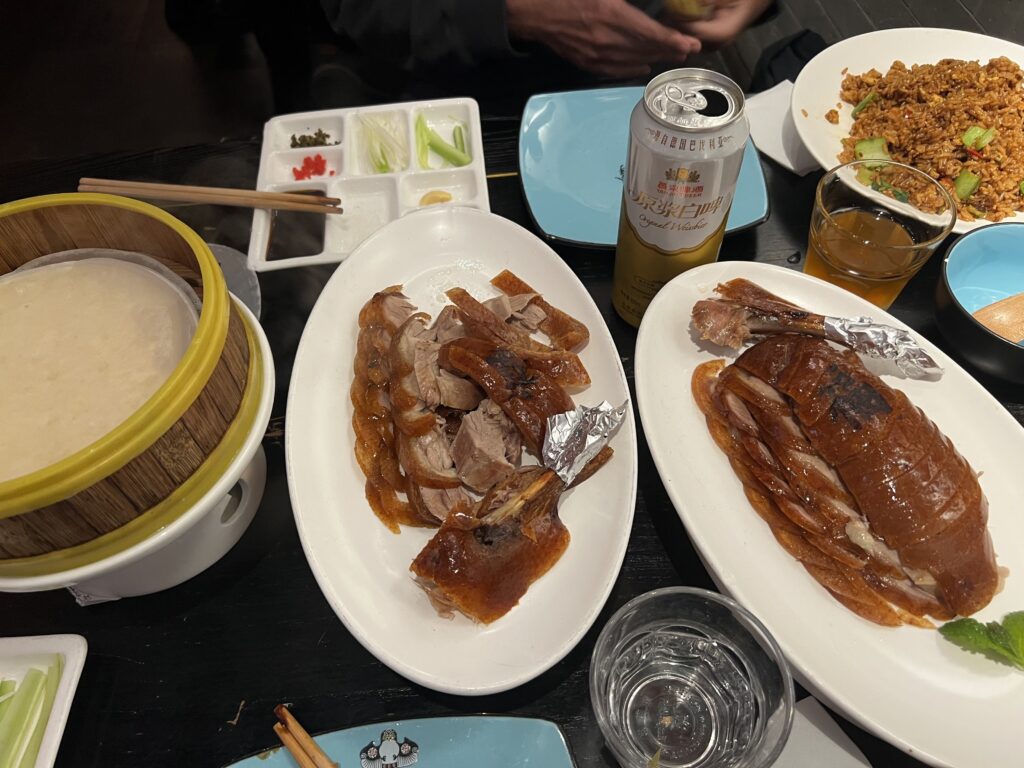
Yes, it’s famous. Yes, you should try it.
But roast duck is only great when:
- the skin is crisp, thin, not oily
- the pancake is warm and fresh
- the duck is carved table-side or visible in the kitchen
- condiments are simple: scallion, cucumber, sugar, hoisin or sweet bean paste
Big chains are consistent. Small restaurants can be exceptional. The experience is as important as the flavour: slow, ceremonial, shared.
A side note: when you order roast duck, you are given the whole duck, not just “a piece”. This means that aside from the duck itself, you’ll also get it’s inner parts that can be served in a soup or in any other way; the waitress or waiter will always ask you how you want your duck so you can expect your meal to be endless. Duck can be extremely heavy so bear in mind when ordering.
Jianbing
If Beijing has a morning language, this is it. A thin crepe folded with egg, scallion, coriander, crisp dough sheet, and sauces that vary by vendor. It’s quick, hot, eaten standing or walking, often for less than the price of a coffee.
No fancy restaurant makes a better one than the street.
Dumplings + Noodles
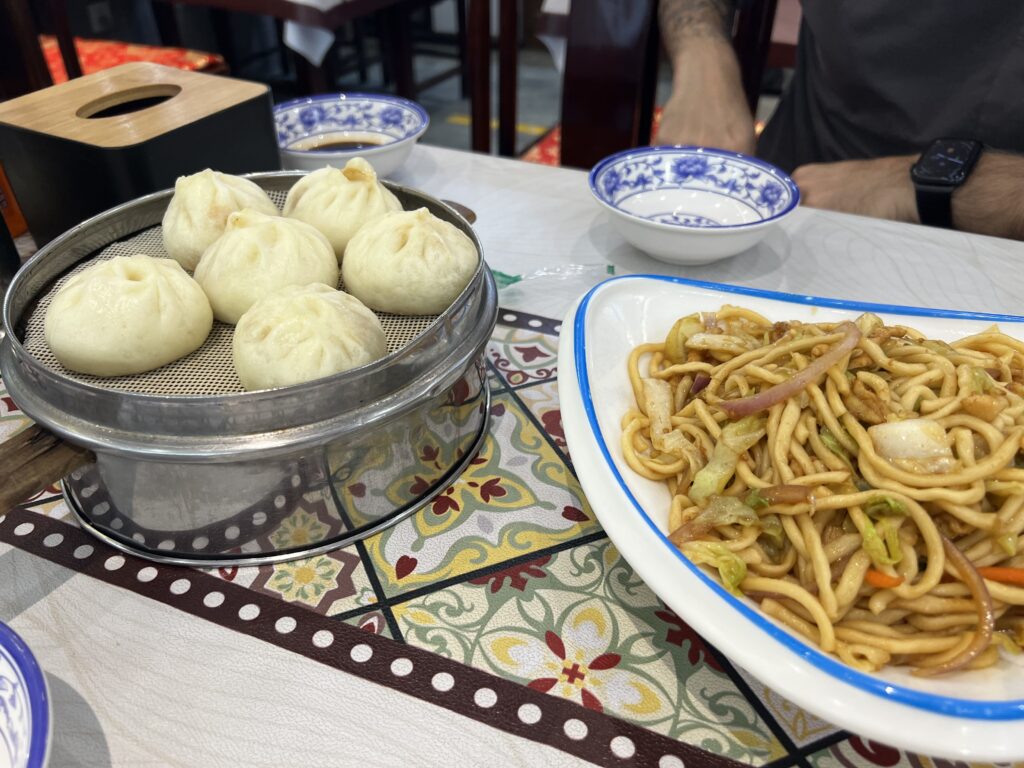
Beijing is wheat country. Dumplings come boiled (shuǐjiǎo), steamed (zhēngjiǎo) or pan-fried (guōtiē). Fillings change, but pork-cabbage or chive-egg are common.
Noodles can be hand-pulled, knife-cut, stretched in front of you.
You taste the technique more than the spices.
Two to look for:
- Zhajiangmian: noodles with fermented bean paste, vegetables, minced meat
- Beef noodle soup: comforting and balanced, not heavy (Beijing’s version is cleaner compared to western China’s deeper broths)
You could eat dumplings or noodles every day and never repeat the same bowl.
Baozi (steamed buns)
Soft dough, warm filling, no garnish needed. Bao in Beijing are bigger than southern versions, slightly doughier, comforting in a way only steam can be. Common fillings: pork and cabbage, chive and egg, mushroom, sometimes sweet red bean.
We ate them on mornings when we wanted something warm and steady before a long day. A good bao breaks open with visible steam and a scent of ginger or scallion rising first — the most quiet but perfect breakfast.
Hotpot
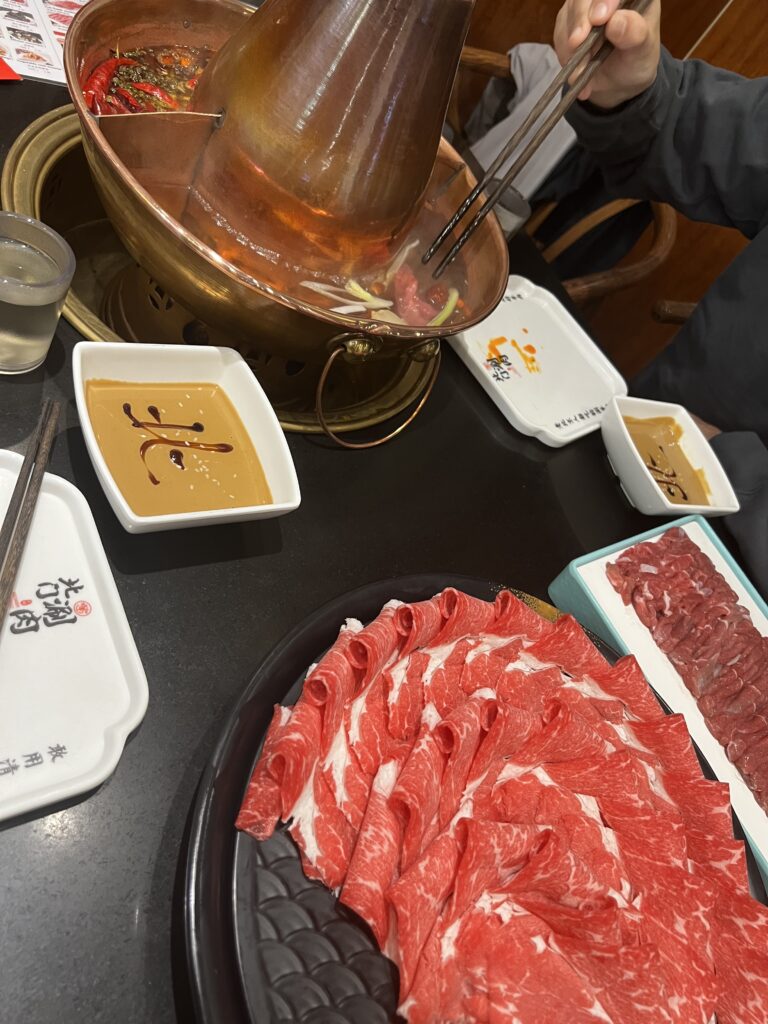
Not Sichuan spicy. Not numbing. Beijing hotpot is clear broth, sliced lamb, cabbage, tofu skin, winter greens, noodles, cooked quickly at the table, dipped into sesame paste mixed with garlic and coriander.
It tastes clean but rich, warming without aggression. A perfect winter meal, especially when eaten with friends or strangers you pick up along the way.
Gongbao Chicken
Forget the sticky orange sauce found abroad. Real Gongbao in Beijing is sharp, savoury, slightly sweet, with peanuts and dried chili used for aroma rather than heat. It’s a lesson in balance: spice, vinegar, crunch, nothing heavy, nothing loud. One forkful explains the difference between authentic Chinese cooking and exported adaptations.
Lu Zhu Huoshao
This is a very special dish that few tourists try and even fewer forget. It’s old-Beijing food: stewed pork intestines, tofu, and wheat bread disks (huoshao) that soak up the broth. Rich, deep, slightly earthy. It’s not a “safe dish,” but it is a cultural one. If you want to taste history rather than observe it, this is where you go.
Tanghulu
Bejing is well known for its fruit stalls and tanghulu stems exactly from this. It’s hawthorn berries dipped in hardened sugar.
Crunch outside, tart fruit inside. Touristy? Probably. Worth trying? Definitely. When you’re tired of savoury meals, tanghulu resets the palate in the best way.
Yangrou Chuan (Lamb Skewers)
A strong Muslim influence runs through Beijing cuisine, and lamb skewers are where you taste it immediately: charcoal smoke, cumin, chili, fat crisping at the edges. You eat them at markets, outside tiny shops with plastic stools, or as a late-night snack with cold beer. They taste like street noise and conversation.
NAI LAO (Beijing Yoghurt)
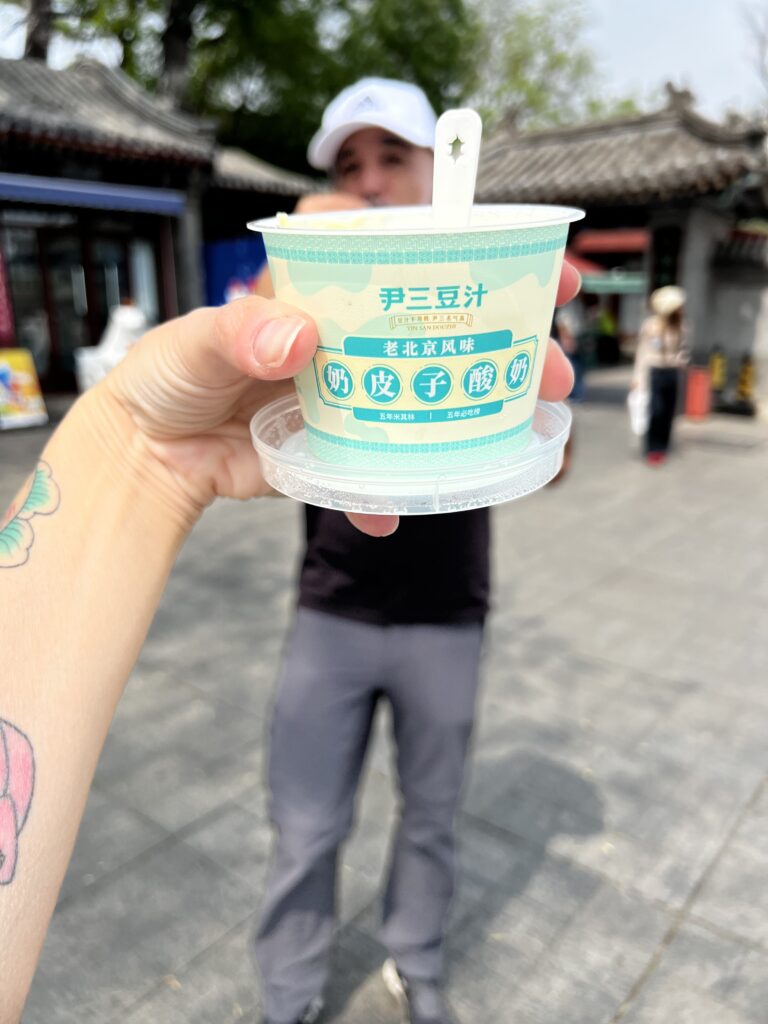
Thick, tangy, lightly sweet. Served cold in small jars that clink together behind refrigerator doors. It’s simple, cheap, refreshing after heavy meals, and one of the most authentic things you can pick up and drink while walking.
Sesame desserts
Black sesame rolls, sticky rice cakes, red bean pastries: desserts in Bejing are subtle rather than sugary. Texture matters more than sweetness. If Western desserts are symphony, Chinese desserts are quiet piano pieces; soft, clean, thoughtful.
Da Lu Mian
Thick noodles topped with a savoury gravy made from mushrooms, pork, and vegetables. It’s slow, comforting, less famous than zhajiangmian but deeply homestyle: the dish locals eat more often than tourists ever realise.
It teaches you something important about Beijing cuisine: flavour comes from texture and depth, not spice.
Wonton Soup Beijing style
Not southern wonton: this one is lighter, clearer, with thin skins and delicate fillings. It’s the kind of bowl you eat when you want warmth, not weight. A good wonton soup tastes like someone taking care of you without saying a word.
Fried Sauce Pork Ribs
Beijing cuisine carries remnants of imperial court cooking: glossy ribs in sweet vinegar glaze, delicate braised meats, dishes that look simple but require time.
You may not plan for this meal, but when you find it, you feel refined technique dressed as comfort food.
Mahua
Crispy, spiral-shaped, slightly sweet, Mahua is a typical Beijing snack. You eat one, then another, then realise you’ve been snacking for 20 minutes. Locals grow up with these. They are not spectacular, but they are memory.
Quick summary: What to eat in Beijing
| Dish | Category | Why it needs to be tasted |
|---|---|---|
| Beijing Roast Duck | Signature | Perfect balance of fat, crisp, sweetness |
| Jianbing | Breakfast street food | The real morning flavour of the city |
| Baozi | Snack/Breakfast | Soft, warm, comforting dough |
| Dumplings/Jiaozi | Everyday staple | Simple flavours, infinite variety |
| Zhajiangmian | Beijing noodles | Fermented bean paste richness |
| Beef noodle soup | Comfort food | Lighter northern broth |
| Hotpot (Beijing style) | Shared meal | Clear broth, lamb, sesame dip |
| Gongbao Chicken | Classic | Real version is balanced, not sticky-sweet |
| Lu Zhu Huoshao | Traditional | Strong old-Beijing flavour, for curious eaters |
| Tanghulu | Sweet street snack | Tart + sugar glaze crunch |
| Lamb skewers | Muslim influence | Charcoal, cumin, city-night energy |
| Beijing yoghurt | Drink/snack | Thick, refreshing, simple perfection |
| Sesame desserts | Dessert | Soft sweetness, texture-led |
| Da Lu Mian | Homestyle noodles | Slow, rich, comforting sauce |
| Wonton soup | Light bowl | Delicate broth, gentle warmth |
| Mahua | Snack | Crunchy, addictive street bite |
4 days in Beijing: a realistic itinerary that works
Four days let you experience Beijing fully: imperial history, local rhythm, food, parks, hutongs, and the modern creative side of the capital. This plan is practical, meaningful and not rushed: perfect for first-timers or anyone starting a longer China trip.
Day 1 — The heart of Beijing: power, scale, symmetry
Morning — Forbidden City
Book ahead. Arrive early. Move consistently, not fast. This isn’t a place to complete, it’s a place to absorb.
Allow: 3–4 hours
Tip: choose a direction and commit to it instead of zig-zagging.
Midday — Walk straight to Jingshan Park
A short climb, a huge payoff. From the top, Beijing turns into a map: symmetry, depth, planning. Suddenly the city makes sense.
Afternoon — First hutong exploration
Not for photos. For texture. Sit for tea, follow a small alley, notice the rhythm of life.
If you stay in Qianliang Hutong, return here often — one walk is never enough.
Evening — Roast duck dinner
A slow shared meal, the best introduction to Beijing cuisine.
Day 2 — Morning rituals, social parks & imperial lakes
Morning — Temple of Heaven + park life
Arrive early, ideally before 9am. This is Beijing without staging: dancers, musicians, tai chi, games, calligraphy with water that disappears as quickly as it appears.
Stay long enough to watch the city wake.
Lunch — Dumplings, baozi, or zhajiangmian
Pick any busy local shop. Order more than one dish. Beijing food rewards curiosity.
Afternoon — Summer Palace
Take it slowly. The magic is past the entrance. Follow the lake, cross bridges, stop when you feel peace.
Ideal time: 3–5 hours
Shade helps; bring water and walk steady.
Evening — Street food or lamb skewers
Wangfujing is chaotic but curious. Side alleys taste better, especially late.
Day 3 — Modern culture + creative Beijing
Morning — 798 Art District
Industrial, young, experimental.
Even if you aren’t a gallery person, walking here is inspiration.
Good for coffee, photography, design, and noticing how Beijing looks forward.
Lunch — Light noodles or wonton soup
Balanced, warm, perfect between long walks.
Afternoon — Beihai Park
Rent a boat, sit under trees, watch people.
A calm antidote to Day 1’s scale.
Evening — Hutong dinner
This is the night to try something memorable —
whether it’s lamb skewers, bao, or a Michelin-level tasting menu hidden behind a plain door in Qianliang.
Day 4 — Choose your rhythm: depth instead of more
The fourth day is about seeing another layer — not cramming more “big sights.”
Option A — The Great Wall (Mutianyu)
If it’s part of the trip, this is the day. Check our Great Wall guide to plan your visit.
Option B — More hutongs, deeper not farther
Walk without a map. Pay attention to sound, smell, shadow, repetition. Hutongs reward time more than direction.
Option C — Markets + everyday Beijing
Panjiayuan antique market or open-air markets for objects, history, curiosity. You never know what you’ll find and that is exactly the point.
Option D — Food day
Try more: bao with new fillings, sesame desserts, lamb skewers, hotpot. A day dedicated to eating Beijing teaches more than another monument.
Evening — Final walk + final bowl
The last night is for returning to the place that stayed with you: a dumpling shop, a hutong, a lake bench, a view. End soft, not rushed.
Bejing Itinerary summary
| Day | Focus | What you feel |
|---|---|---|
| Day 1 | Forbidden City + Jingshan Park + Hutongs | Power, scale, structure |
| Day 2 | Temple of Heaven + Summer Palace | Ritual, rhythm, space |
| Day 3 | 798 Art District + Beihai Park | Modernity, creativity, calm |
| Day 4 | Choice day (Great Wall / markets / food / hutongs) | Depth instead of more |
Practical tips for visiting Beijing
Beijing is easy to travel if you understand how it works. Transportation is efficient, payments are digital, English is limited but communication is still possible. The most important part is knowing how daily logistics function so you can move confidently.
This section covers the essentials clearly: metro, payments, apps, etiquette, time, weather, expectations. But if you want know more about what to expect in China, we covered everything in here.
Getting around: the metro is your best friend
Beijing’s metro system is clean, fast, cheap, air-conditioned and extremely reliable. You can reach almost every major sight with one or two transfers.
What matters:
- avoid rush hour if possible (7–9am, 5–7pm)
- buy a subway card or use mobile payment for tap-in access
- platforms are clear but crowded — queue calmly, don’t rush in
- signs are bilingual (you won’t get lost easily)
Taxis & ride apps
Didi or Meituan work well, but traffic can be slow during peak times.
Use metro first, car second.
Payment systems: cards don’t get you far
China moved past credit cards, most things are WeChat Pay or Alipay. As a foreigner you can link international cards inside the apps (now supported), but setup takes time. Do it before you leave, not on arrival.
Cash is accepted in some small places, but not all. Digital is smoother everywhere: restaurants, metro, street food, supermarkets.
Prepare digital payment = zero stress.
VPN or no VPN?
Most common Western sites are blocked (Google, Instagram, WhatsApp, etc) unless you use a VPN.
But:
- Apple Maps, Apple Mail, iMessage work fine
- Booking apps and metro navigation apps work without VPN
- Download translations and maps offline
A VPN helps but isn’t required if you prepare screens, addresses and tickets ahead.
Language + communication
English is not widely spoken, especially in local restaurants or markets. You don’t need Mandarin to survive but you do need to be clear, visual, patient.
Use:
- Google Translate or Pleco (offline dictionaries help)
- Photo-translate for menus signs
- Pointing is normal and accepted
Most locals will try to help you even if you don’t share a language.
When to visit Beijing
The best seasons are:
- September–October (mild, golden, ideal for walking)
- April–May (clearer skies, comfortable temperatures)
Summer is hot and humid; winter is cold and dry.
Still beautiful, just dress and plan accordingly.
Etiquette that makes travel smoother
- queue politely, not aggressively
- speak softly in temples and parks
- don’t touch or enter courtyard homes in hutongs
- always return shared dishes to the centre of the table
- don’t stick chopsticks upright in rice (symbolically unlucky)
- paying quickly is appreciated: move, don’t linger after finishing
China has rhythm. Once you feel it, you move with it naturally.
Internet, maps & navigation apps
- Baidu Maps works best for routing
- Apple Maps works for basics
- Google Maps lacks routing unless with VPN
- Download offline maps before arrival
- Keep addresses in Chinese text for taxis
Frequently asked questions about Beijing
Yes. Four days gives you a balanced rhythm: imperial history, parks, hutongs, museums and food. You can see the Forbidden City, Jingshan Park, Temple of Heaven, Summer Palace, 798 Art Zone, Beihai Park and still have time for markets or extra food days. More time is better, but four days is the sweet spot for first-timers.
Beijing is more affordable than many expect. Street food and breakfast stalls are cheap, metro tickets cost very little, and most parks are reasonably priced. The biggest expenses tend to be accommodation and evening dining. With planning, Beijing can fit most budgets — it’s more flexible than Shanghai.
You can survive with cash, but digital payment is much smoother. WeChat Pay and Alipay work well with international cards, and even small vendors accept QR codes. Carry some cash for backup, but expect to pay digitally most of the time.
Not everywhere. Tourist areas are easier, but local restaurants, markets and hutongs rarely use English. Translation apps work extremely well, and pointing is an accepted method of communication. You don’t need Mandarin to enjoy Beijing — curiosity and courtesy go far.
Spring (April–May) and Autumn (September–October) offer the best mix of clear air, comfortable temperatures and ideal walking conditions. Summer is hot and humid, winter is cold and dry — still beautiful, but your packing matters more.
Very. Signs are bilingual, stations are modern, and routes cover most attractions. Avoid peak commuting times if you can, especially when carrying luggage. A subway card or digital transit payment makes moving around effortless.
Dumplings, baozi, jianbing, zhajiangmian, lamb skewers, Beijing yoghurt, hotpot and sesame desserts. Beijing is wheat-based, savoury, warm and subtle — nothing like “Chinese food” abroad. Eating here is discovery, not repetition.
You can travel without one if you prepare well (offline maps, translation apps, saved addresses). A VPN helps with Google services and social media, but isn’t mandatory for basic navigation. Many travellers use a hybrid approach — VPN for research, offline for day-to-day.
Yes. Mutianyu is the most convenient option for first-timers, and a day trip is easy by private transport, group tour, or even public bus. Go early in your China trip in case weather forces closure. If conditions are bad, having a backup day can save your experience.