

Xi’an is one of those cities that gets treated as a single-day detour: people come for the Terracotta Army and leave the same afternoon. That’s a mistake.
Three to four days gives you time for one of China’s best street food destinations, a mountain that will genuinely test you, and a 13.7km city wall you can cycle before lunch. Xi’an has enough to justify its own trip, not just a half-day on the way somewhere else.
This guide covers it all: where to eat in the Muslim Quarter (including the street most tourists miss), how to see the Terracotta Army without spending most of your visit in a crowd, and what most Xi’an guides get wrong about Hua Shan. Whether you have three days or five, you’ll leave with a plan you can actually use.
What Makes Xi’an Worth More Than a Day Trip
Xi’an was the capital of thirteen Chinese dynasties and the eastern terminus of the Silk Road. The city sits above more history than almost anywhere in China, and much of it is still being excavated. The Terracotta Army is the headline, but it’s one of dozens of sites within the region.
The food is the other reason to linger. The Hui Muslim community has been in Xi’an since the Tang Dynasty, and their influence runs through every street in the old city. Yangrou paomo, rou jia mo, liangpi, biang biang noodles — Xi’an has a food identity that is entirely its own and entirely worth eating your way through at a proper pace.
Xi’an also moves slower than Beijing or Shanghai. That’s not a criticism. It’s one of the most livable major cities in China, and that pace is part of what makes it worth staying.
At first, we saw Xi’an mainly as a stop for the Terracotta Army and to explore a bit of the surrounding area without feeling rushed. But it ended up being one of the places we were most glad we did not treat as just a quick stop. The city feels alive, the food is great, and the people are so friendly that it is easy to enjoy being there. More than anything, Xi’an has a real energy to it. There is no single reason why it deserves more than a day trip — it is the whole experience of being there that makes you want to stay longer.
The Terracotta Army: How to See It Without the Crowds
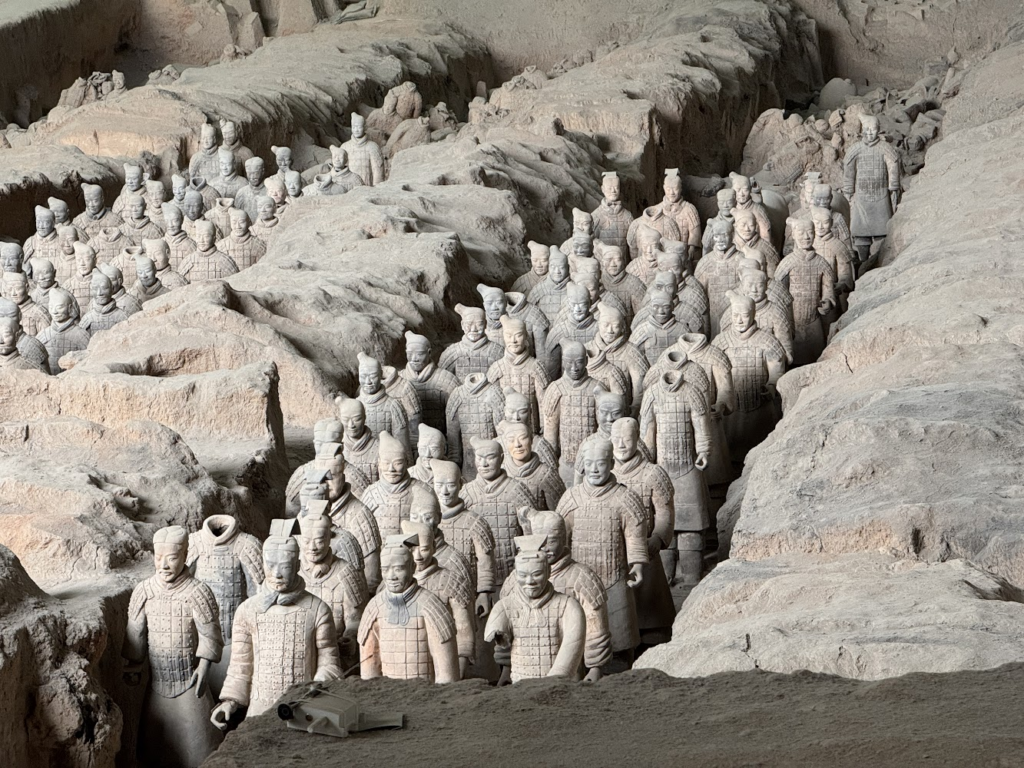
The Terracotta Army is one of the most extraordinary archaeological discoveries ever made. Around 8,000 warriors, horses, and chariots were buried with Qin Shi Huang, the first emperor of unified China, to protect him in the afterlife. They were discovered by farmers in 1974. Nobody knew they were there.
Pit 1 is where the impact hits. The hall is vast — around 230 metres long — and the warriors in formation below you are not replicas. Standing at the elevated gallery, looking down at 6,000 figures lined up in battle order, takes a few seconds to process. It is one of the few things in China that looks better in person than in photographs.
The crowd problem is real, but manageable. Tour groups from Xi’an depart after breakfast and typically arrive at two peak windows: 9am–11am and again at 2pm–3pm. Arriving at 8:30am when the site opens gives you a 60–90 minute window in Pit 1 before the first wave arrives. That’s the specific gap worth protecting.
The Three Pits: What to Prioritise
The site has three excavated pits, each with a distinct character. You have time for all three; allow 90–120 minutes total.
| Pit | What’s inside | Time needed | Crowd level | Worth it? |
| Pit 1 | ~6,000 warriors in battle formation, chariots, horses | 45–60 min | Very high | Essential — the reason you came |
| Pit 2 | Cavalry and archers; more fragmented, ongoing excavation | 20–30 min | Moderate | Yes — better for detail than scale |
| Pit 3 | Command centre, only 68 figures; the smallest pit | 10–15 min | Low | Yes — often skipped, shouldn’t be |
The bronze exhibition hall near the exit — housing two restored bronze chariots — is the most underrated part of the visit. The craftsmanship is extraordinary and the hall is rarely crowded.
Getting There, Tickets, and Prices
How to get there: Tourist Bus No. 5 (Bus 306) departs from in front of Xi’an Railway Station and takes 60–70 minutes (¥7). A DiDi or taxi runs ¥80–120 depending on traffic.
Entry price: ¥150 per person from March through November; ¥120 per person from December through February. Visiting in low season saves ¥30 per person and crowds are significantly lighter — a winter visit to Xi’an is a better option than most guides suggest.
Opening hours: 8:30am–5:30pm in peak season (last entry 5pm); 8:30am–5pm in low season. Arrive at opening.
Booking: Tickets sell out during peak season and on national holidays. Book at the official site (bmy.com.cn) or through Trip.com. Don’t rely on buying at the gate.
Honestly, Pit 1 did not leave us with the kind of quiet, awe-filled moment you might expect. It was extremely crowded, with constant noise and people pushing, so it was hard to pause and really take in what was in front of us. For us, the more astonishing experience was Pit 2, where we were able to appreciate both the warriors and the excavation work more closely.
Xi’an Muslim Quarter:What to Eat and Where to Actually Go
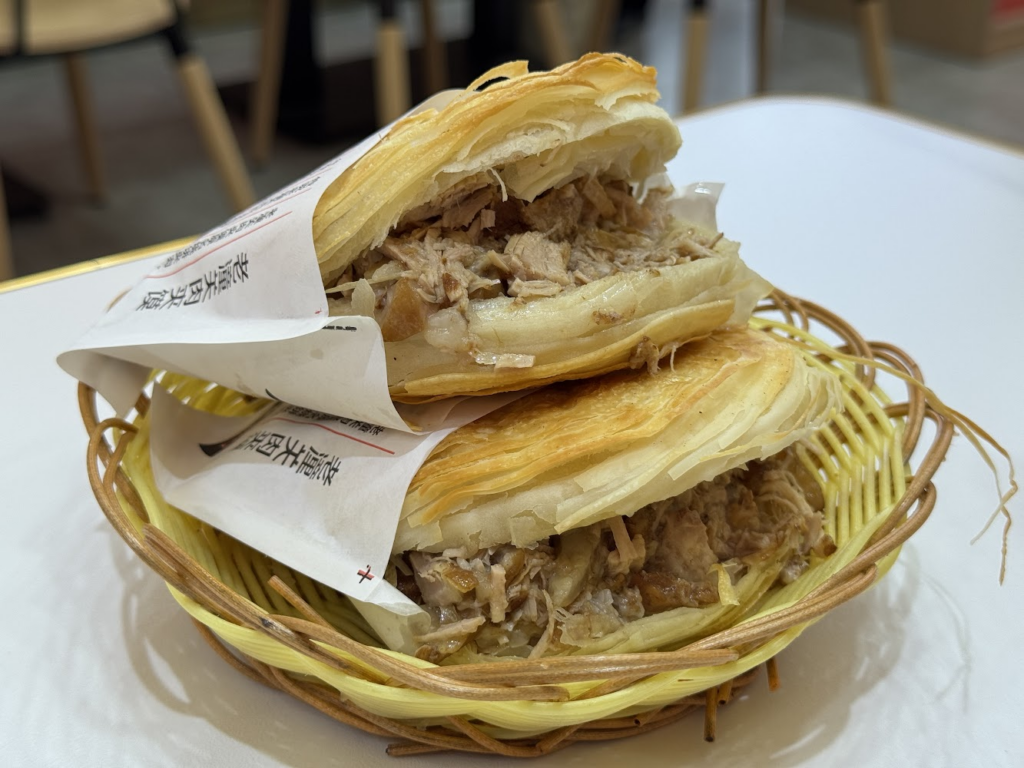
The Muslim Quarter is the food centre of Xi’an. The Hui community has shaped this part of the city for over a thousand years, and their cuisine — lamb-heavy, fragrant with cumin and chilli, built around bread and noodles — is completely unlike the food in the rest of China.
The main pedestrian strip, Hui Min Jie, is where most visitors start and most visitors stay. It’s lively and sells everything you came to eat. But there’s a better option a few minutes’ walk away. Beiguangji Street, the side street running parallel to the main strip, has lower prices (typically 20–30% less), shorter queues, and noticeably better quality — because it feeds locals, not tourists. Use Hui Min Jie to orient yourself, then move to Beiguangji once you know what you want.
The Great Mosque, hidden down a lane off Hua Jue Xiang, is one of the most beautiful buildings in Xi’an and easy to miss. It’s open to non-Muslim visitors for a small entry fee (¥25). Allow 20–30 minutes.
| Dish | What it is | Where to find it | Approx. price |
| Yangrou paomo | Lamb broth with bread you crumble yourself at the table | Beiguangji St or Lao Mi Jia, North Guangji St | ¥25–45 |
| Liangpi | Cold chewy rice noodles with chilli oil and cucumber | Beiguangji Street stalls | ¥10–15 |
| Rou jia mo | Slow-braised pork or beef in a toasted flatbread | Any stall on Hui Min Jie or Beiguangji | ¥12–18 |
| Biang biang noodles | Wide, thick, belt-style wheat noodles with spiced sauce | Restaurants near Bell Tower or inside Muslim Quarter | ¥20–35 |
| Persimmon cake | Sweet fried persimmon pastry; crispy outside, soft inside | Muslim Quarter stalls, seasonal (September–November) | ¥5–8 |
Yangrou paomo is the dish most associated with Xi’an. The ritual is part of the experience: you receive two thick flatbreads and you crumble them into your bowl by hand before the lamb broth is poured over the top. The fineness of the crumble matters — finer pieces absorb more broth.
Hua Shan: The Mountain Most Xi’an Guides Underestimate
Most Xi’an travel guides give Hua Shan a paragraph and move on. That’s a serious underestimate. Hua Shan is one of China’s Five Sacred Mountains, and among the five, it is the one that earns its reputation most honestly. The peaks are genuinely dramatic, the ridge traverses are genuinely exposed, and the Plank Walk — a series of wooden boards bolted to a sheer granite cliff face — is the kind of thing you don’t forget.
Getting there from Xi’an: Take the high-speed train from Xi’an North station to Huashan North station. The journey takes 33–45 minutes and costs ¥34.5–54.5. From Huashan North, a taxi to the cable car base takes 15–20 minutes and costs ¥15–20. There is also a public bus (Bus 11, ¥1.5).
Cable Cars, Routes, and the Plank Walk
There are two separate cable car systems, and understanding the difference changes your day significantly.
The North Peak cable car (¥80 one-way, ¥150 return in peak season) takes you to the North Peak — the lowest of the five peaks and the starting point for the full ridge traverse. The West Peak cable car (¥140 one-way, ¥280 return) gets you up or down from the West Peak, which has the most dramatic scenery.
The best day-trip route: North Peak cable car up (¥80), hike east–south across the ridge between peaks (2–3 hours, outstanding views), West Peak cable car down (¥140). Total one-way cable car cost: ¥220. You see more of the mountain than anyone who rides the same cable car in both directions.
The Plank Walk: The Plank Walk is a horizontal traverse on wooden planks bolted to the cliff face, with a metal cable as a handhold and a 300-metre drop below you. Harness and locker hire is additional (¥150–200 total for gear). It is extraordinary. Important: the Plank Walk is restricted to visitors aged 15–55 only. This restriction is real, enforced, and rarely mentioned clearly in English-language guides. If you’re outside that range or travelling with children, do not plan your day around doing the Plank Walk.
| Route | Difficulty | Cable car | Approx. time | Best for |
| North Peak only (up + down) | Easy | ¥150 return | 2–3 hrs | Short day trip; families |
| Full traverse (N. Peak up, W. Peak down) | Moderate | ¥80 + ¥140 = ¥220 | Full day (6–8 hrs) | Best value; most scenery |
| Overnight (N. Peak up, sunrise, W. Peak down) | Easy–Moderate | ¥150 + ¥140 = ¥290 | 20+ hrs | Sunrise from East Peak |
| Plank Walk addition (any route) | Strenuous | Included in above + ¥150–200 gear | +1–2 hrs | Thrill-seekers, age 15–55 only |
Day Trip or Overnight?
A day trip to Hua Shan is fine. An overnight is better. The sunrise from East Peak is one of those experiences that people consistently describe as worth the inconvenience — cold, dark, and then suddenly and completely the opposite.
Guesthouses on the mountain are basic: think thin mattresses, shared bathrooms, and minimal heating. Prices range from ¥150–300 for a bed. Most people who’ve done both the day trip and the overnight say the overnight was the right call.
If you stay overnight, pack a warm layer regardless of the season. The summit is significantly colder than the valley, and the pre-dawn wait for sunrise is cold.
Xi’an City Wall: Cycle It, Don’t Just Walk It
Xi’an’s Ming Dynasty city wall is 13.7km around and almost completely intact — one of the best-preserved city walls in China. Walking the perimeter takes 3–4 hours. Cycling it takes 60–90 minutes and is comfortably the better option.
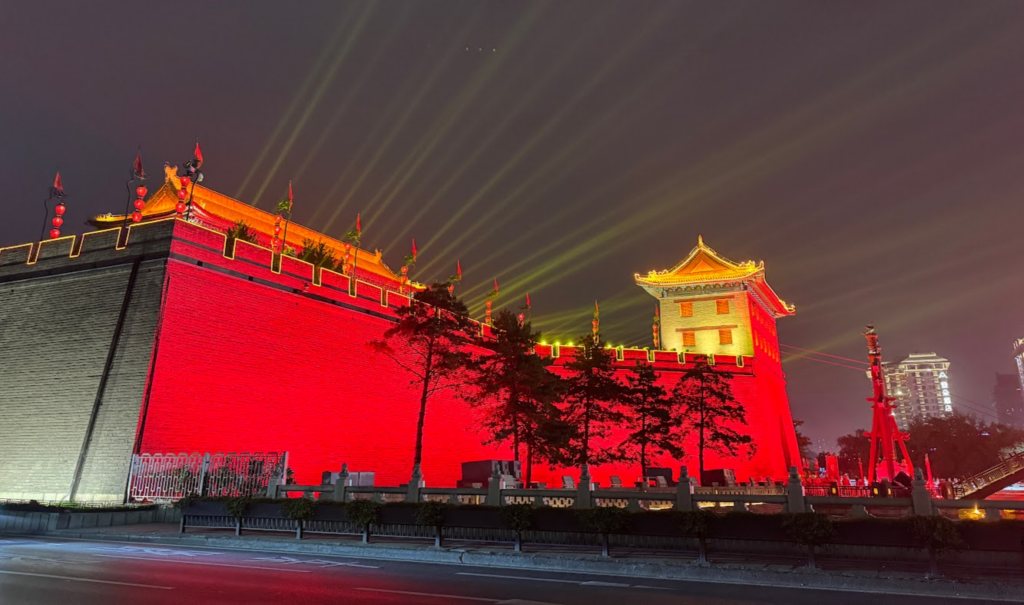
Bike rental: around ¥45 for 100 minutes (tandems ¥90). Rentals are available at all four main gates. Entry to the wall: ¥54 per person. The wall is open until 10pm, and the evening is an excellent time to go — amber lanterns light the ramparts, the old city is spread below you, and the crowds thin after 7pm.
The south gate (Yongning Gate) is the main entry point and has the widest ramp access, making it the easiest starting point. The north and east gates are quieter and worth considering if you want to avoid the tour group entry rush.
The wall itself is wide enough for two bikes to pass comfortably. There are pavilions every few hundred metres and watchtowers at regular intervals. It’s a genuinely pleasant 90 minutes and gives you a perspective on Xi’an’s scale that you don’t get from street level.
More Things to Do in Xi’an
- Shaanxi History Museum is one of the best provincial history museums in China and entry is free — which means the daily visitor quota fills quickly. Book online at shaanximuseum.com.cn the day before or arrive at opening. Allow 2–3 hours. The Tang Dynasty collection is the highlight.
- Drum Tower and Bell Tower face each other across the same central square. A joint ticket costs ¥54. The towers themselves are worth seeing; the square between them is where Xi’an feels like a living city rather than an archaeological site. The evening light music performance at the Drum Tower (¥45 additional) is optional but genuinely atmospheric.
- Huaqing Hot Springs sits 30km east of Xi’an, directly on the road between the city and the Terracotta Army. The bathing pools date to the Tang Dynasty and the site was also the location of the 1936 Xi’an Incident. If you’re making the Terracotta Army trip anyway, a 30–45 minute stop here adds context without significant detour.
- Big Wild Goose Pagoda (Da Yan Ta) is a 7th-century Tang Dynasty Buddhist pagoda south of the old city. The pagoda itself is worth the 30-minute visit; the surrounding plaza is large and often crowded. Less essential than the other sites but pleasant with time to spare.
If Xi’an is part of a wider China trip, it connects naturally with Beijing (→ Beijing travel guide) and works as a stop on a two-week China itinerary.
How Many Days in Xi’an?
Three days covers the essentials without rushing. Four days lets you breathe: a morning at Shaanxi History Museum, time to wander the Muslim Quarter more than once, without feeling like you’re racing a checklist. If Hua Shan is an overnight, add an extra day.
| Day | Morning | Afternoon | Evening |
| Day 1 | Arrive; Bell Tower + Drum Tower area | Muslim Quarter: Hui Min Jie + Beiguangji Street | Dinner in Muslim Quarter; night market |
| Day 2 | Terracotta Army (arrive 8:30am opening) | Huaqing Hot Springs on the way back | Wander the old city; Tang Dynasty show (optional) |
| Day 3 | Hua Shan day trip (early start) | Continue Hua Shan; return by late afternoon | City wall cycling at dusk |
| Day 4 (optional) | Shaanxi History Museum | Big Wild Goose Pagoda area; final shopping | Departure or extra night |
If you only have two days, prioritise the Terracotta Army (half day), one concentrated stretch in the Muslim Quarter, and the city wall at sunset. Hua Shan needs at least a full day and is best saved for a trip when you have three nights or more.
How to Get to Xi’an
By high-speed train (recommended): Xi’an is well connected on the high-speed network. Xi’an North station is the main hub for fast trains.
- From Beijing: G-train from Beijing West, 4.5–5 hours, ¥515–650 second class. Several departures daily.
- From Shanghai: G-train, 6–7 hours, ¥600–800 second class. Change at Zhengzhou on some services.
- From Chengdu: G-train from Chengdu East, 3.5–4 hours, ¥300–400 second class. One of the easiest China–Xi’an connections.
Book at Trip.com or on the 12306 app (China’s government rail platform, functional with a foreign passport). Buy in advance during peak season: seats on popular departures sell out days ahead.
Xi’an has two main stations. Xi’an Railway Station (the older, central station) is where tourist buses to the Terracotta Army depart. Xi’an North Station is the high-speed hub. If you arrive at Xi’an North, take Metro Line 4 to reach the city centre (40 minutes).
By air: Xi’an Xianyang International Airport is 40km northwest of the city. The airport shuttle bus runs every 15–20 minutes and takes 50–80 minutes (¥30). A taxi or DiDi costs ¥100–150 depending on traffic.
More on planning a wider China trip: China travel hub | 2-week China itinerary
Best Time to Visit Xi’an
Spring (April–June) and autumn (September–October) are the best windows. Temperatures sit between 15–28°C, the air is clearer than summer, and crowds — while still significant at the Terracotta Army — are more manageable than the national holiday peaks.
July and August are hot (regularly above 35°C), crowded, and humid. The Terracotta Army is especially uncomfortable in high summer. If that’s when you’re going, commit to arriving at 8:30am opening before the heat compounds the crowd problem.
December through February has a real case to make. Entry to the Terracotta Army drops from ¥150 to ¥120 (December–February), crowds thin substantially, and the Muslim Quarter in cold weather is atmospheric in a way that photographs well — steam rising from soup stalls, fewer tourists, a more local feel. Pack for genuine cold (often below 5°C) and you’re rewarded with a different and quieter version of the city.
Practical Tips Before You Go
- VPN — download it before you land. China blocks Google, Instagram, WhatsApp, Gmail, and most Western platforms. VPNs also cannot be downloaded from within China. Set one up before departure — ExpressVPN and NordVPN both work reliably in Xi’an. Without a VPN, you lose Google Maps, which makes navigation significantly harder.
- SIM or eSIM. China Unicom and China Mobile tourist SIMs are available at major airports and central train stations. Alternatively, an eSIM from Airalo or Holafly activates before you land. A local data plan is worth it — domestic data is cheap and fast.
- Payment. Xi’an runs on WeChat Pay and Alipay. Foreign visitors can now link an international Visa or Mastercard to WeChat Pay — set this up before you leave home. Cash (RMB) is accepted everywhere but increasingly uncommon at smaller stalls. Carry some for the Muslim Quarter, where older vendors may not accept digital payment.
- Transport. DiDi is China’s ride-hailing app and works with a foreign credit card. It’s more reliable than flagging a taxi and the price is fixed before you confirm. Download it before you arrive and set up payment — DiDi is the easiest way to get between the train station, city centre, and Terracotta Army.
- Metro. Xi’an Metro has seven lines and covers the main tourist areas. Line 4 connects Xi’an North station to the city centre. Buy tickets at machines in each station (cash or transit card). The metro is cheap (¥2–5 per journey) and reliable.
Xi’an Is Worth Your Time
Three days in Xi’an, planned well, gives you the Terracotta Army without the worst crowds, the Muslim Quarter at its best, a mountain that earns its dramatic reputation, and a city that doesn’t feel like it was built for tourists. That’s rarer than it sounds.
The China travel hub has more on building a wider China trip around Xi’an, including how it fits with Beijing and the Great Wall.
Frequently Asked Questions about Xi’an
Xi’an is one of China’s safer major cities for tourists. The main risks are standard urban ones: pickpocketing in crowded areas like the Muslim Quarter and the Terracotta Army entrance, and occasional overcharging by unmarked taxis. Use DiDi for transport and eat at stalls with visible prices. The city is generally calm and easy to navigate.
Technically yes — the G-train from Beijing West takes 4.5–5 hours, which makes a very long day possible. In practice, it’s not worth it. The Terracotta Army alone takes half a day, and you’d arrive back in Beijing after midnight. A minimum of two nights lets you actually experience Xi’an rather than just the archaeology.
Yes. Tickets sell out during peak season (May–October) and on national holidays. Book at the official site bmy.com.cn or through Trip.com. Entry is timed, meaning you cannot use a same-day walk-up ticket at any hour. Same-day booking is rarely possible during peak periods.
Most Western nationals require a visa for China. However, China has significantly expanded its visa-free transit policy — in some cities, stays of up to 144 hours are permitted without a visa. Xi’an is not currently on the 144-hour list, but the policy is changing frequently. Check the current rules at the official Chinese Embassy website for your country before booking