

Lisbon has become exceptionally good at selling a version of itself.
It is a version built from yellow trams, tiled façades, custard tarts, fado and sunsets over terracotta roofs. None of it is invented. The problem is that this image has become so dominant that visitors can spend several days in Lisbon without encountering much of the city people actually live in.
A local guide should not send you searching for imaginary hidden gems. Lisbon has very few secrets left, and turning another residential neighbourhood into the next tourist discovery is not particularly helpful.
What us, as locals, can tell you is where the postcard version remains worth your time, where tourism has hollowed it out, and what to do differently so the city feels like more than a sequence of queues, viewpoints and overpriced plates of bacalhau.
Lisbon is not best experienced by completing its attractions. It works through repetition: returning to the same café, sitting in a garden without an agenda, eating lunch rather than chasing dinner reservations and understanding that an ordinary neighbourhood can tell you more about the city than its most photographed street.
This is how to experience Lisbon as a real place rather than simply consume the version it has learned to sell.
Is Lisbon Worth Visiting?
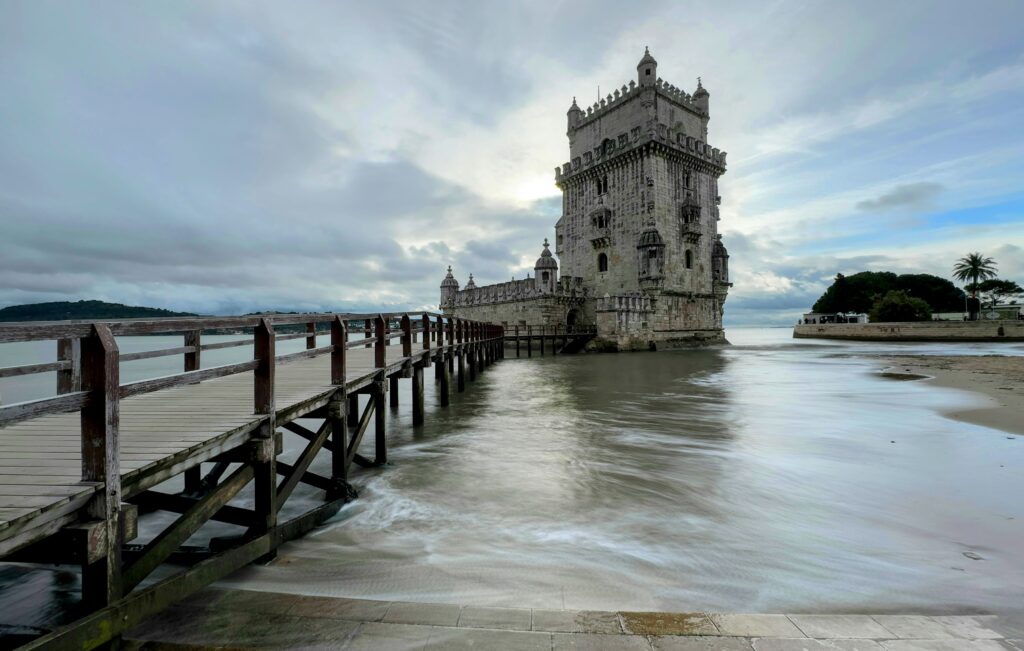
Lisbon is worth visiting because it still combines beauty, informality and everyday life in a way few European capitals manage.
The light is genuinely remarkable. The river changes the atmosphere of the city throughout the day. Neighbourhoods separated by one hill can feel completely different, and Lisbon still allows ordinary life to unfold in public: people talking outside cafés, children playing in gardens, older residents watching the street from windows and entire evenings organised around one table.
But the Lisbon many visitors expect is becoming harder to find in its most famous areas.
Baixa is beautiful but increasingly shaped around transient visitors. Alfama remains visually extraordinary, but its busiest streets can feel like an open-air tourism corridor. Príncipe Real is elegant and pleasant, but no longer affordable or particularly undiscovered. Restaurants that once served neighbourhood residents now compete for short-term visitors or wealthy expats willing to pay international prices.
Lisbon is therefore worth visiting, but not because it is the cheap, untouched European capital still described in older travel guides.
Visit because it is layered, imperfect and constantly negotiating the tension between the city it was, the destination it has become and the place residents are still trying to live in.
The Three Lisbons Visitors Encounter
To understand Lisbon, it helps to recognise that visitors are often moving between three different versions of the city.
The Lisbon tourists are sold
This is the Lisbon of Tram 28, Alfama, Belém, tuk-tuks, fado dinner packages, Time Out Market and sunset viewpoints.
Some of it is genuinely worthwhile. Jerónimos Monastery is magnificent. Alfama deserves to be walked. A pastel de nata eaten warm is genuinely the best.
The mistake is treating this carefully packaged corridor as the entire city.
The Lisbon international residents often inhabit
This is the Lisbon of Príncipe Real, Estrela, Santos, brunch, natural wine, specialty coffee, design shops and polished restaurants.
It is attractive, comfortable and increasingly influential. It is also expensive and often more international than Portuguese.
There is nothing wrong with enjoying it. Just do not confuse cosmopolitan Lisbon with local Lisbon.
The Lisbon where everyday life still happens
This Lisbon is harder to turn into a checklist.
It exists in neighbourhood cafés, municipal markets, residential streets, gardens, family restaurants, shopping centres, school runs and ordinary lunch counters. You will find more of it around Arroios, Anjos, Alvalade, Campo de Ourique and less-photographed parts of Graça and Penha de França.
These areas may not immediately produce the Lisbon image you came to photograph. That is precisely why they matter.
It may be of interesting our guide to getting around Lisbon to avoid classic mistakes we see often: getting a taxi from the airport instead of the metro, hop on a tuk-tuk instead of walking and so on.
What Is Actually Worth Seeing in Lisbon?
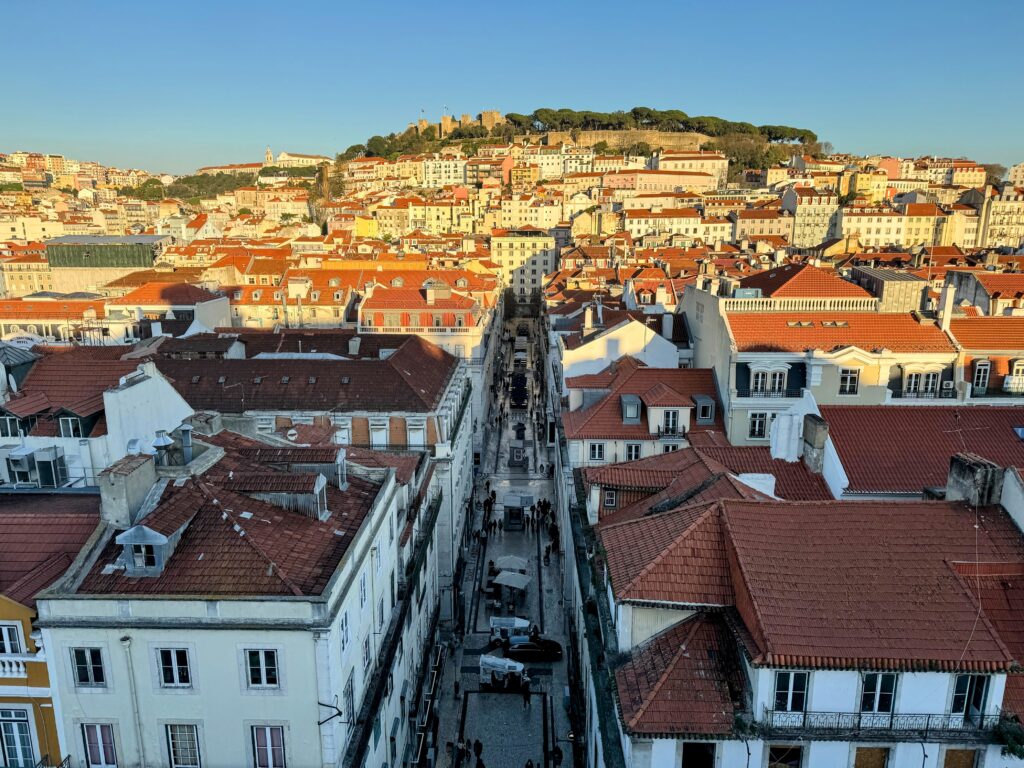
We don’t want to dismiss famous places simply because they are famous. Some of Lisbon’s most visited sights deserve their reputation.
Alfama, early in the morning
Alfama is still one of the most beautiful parts of Lisbon.
Its steep alleys, old houses and views towards the river are not tourism inventions. But the neighbourhood changes completely once tour groups, tuk-tuks and cruise visitors fill its narrow streets.
Go early in the morning, ideally before 9 a.m. Walk without trying to follow a perfect route. Let yourself move between small streets, staircases and viewpoints before the neighbourhood becomes a performance of itself.
Alfama is worth seeing. The middle of a crowded afternoon is simply the worst way to see it.
Jerónimos Monastery
Jerónimos Monastery is one of the rare major Lisbon attractions that fully justifies the effort.
Its scale, stonework and historical importance make it much more than another stop on a sightseeing route. Go early, expect other visitors and give it more attention than a quick photograph from outside.
Belém itself does not require an entire day. See the monastery, walk along the river toward the Belém Tower (especially beautiful at sunset), eat a pastel de nata and move on.
The Gulbenkian Museum and gardens
The Calouste Gulbenkian Museum offers one of the best breaks from Lisbon’s crowded historic centre.
The collection is excellent, but the gardens are even better. They show another side of the city: shaded, modern, calm and not built around a panoramic viewpoint.
It is one of the easiest places to spend several hours without feeling that you are completing an obligation.
The National Tile Museum
Azulejos appear everywhere in Lisbon, but most visitors never learn much about them.
The National Tile Museum gives context to one of the city’s most recognisable visual features and is housed in a former convent worth seeing in its own right.
It is more useful than buying a mass-produced tile from a souvenir shop and more memorable than another hour spent waiting for a tram.
One viewpoint, not six
Lisbon’s viewpoints are beautiful, but you do not need to visit all of them.
Choose one and stay long enough to enjoy it. Miradouro da Graça offers a broad view and usually feels less compressed than Santa Luzia. Jardim do Torel is quieter and more central. Monte Agudo is less dramatic but more connected to its surrounding neighbourhood.
If you want a local experience you need to step into a different mindset: forget about finding the most secret viewpoint. The real experience is sitting down rather than photographing the view and immediately leaving.
What Should You Skip in Lisbon?
Some of Lisbon’s most promoted experiences are not bad in themselves. They have simply become unpleasant, inefficient or detached from the reason they were interesting in the first place.
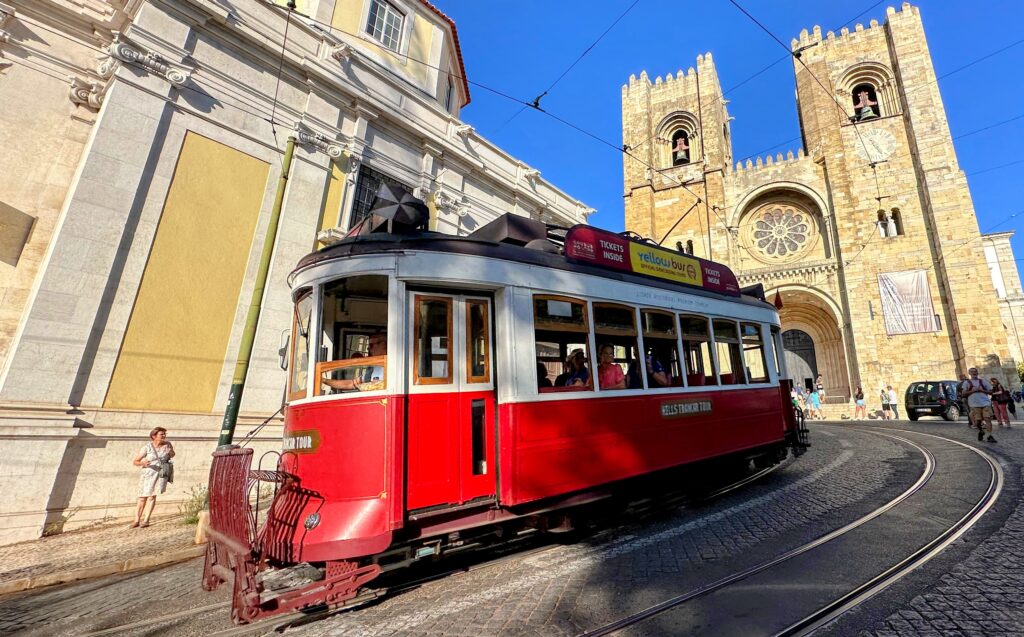
Tram 28 as a sightseeing ride
Tram 28 is public transport, not an amusement ride.
Its route passes through beautiful parts of the city, but spending a long time in a queue to board an overcrowded tram is rarely rewarding. It is uncomfortable for visitors and makes an ordinary transport route harder for residents to use.
Walk part of the route early in the morning instead. Take the tram when you genuinely need to travel somewhere, not because a list told you it was essential.
Santa Justa Lift
The Santa Justa Lift is beautiful to look at and not worth queuing for. The ride is short, and the upper part of the city can be reached on foot. Walk towards Largo do Carmo and experience the change in elevation as part of the city rather than waiting for a lift to manufacture it for you.
Tuk-tuk tours
Tuk-tuks are now part of Lisbon’s tourist landscape, but they are not an especially good way to understand the city. They move quickly through places that reward slow attention, add noise to narrow residential streets and often reduce neighbourhoods to rehearsed anecdotes.
Lisbon is compact. Walk and use public transport. Do not fuel the tuk-tuk business.
Time Out Market as your Lisbon food experience
Time Out Market is convenient, visually polished and easy for groups. It is not where you should form your opinion of Lisbon’s food (and it’s not a place where we bring people who visit us).
The prices reflect its location and audience, portions can be small, and the experience resembles an international food hall more than a local market.
Visit if you are in the area, not for good food. And do not treat it as proof that you have eaten like a Lisbon resident.
Restaurants that recruit you from the street
In Lisbon’s busiest areas, restaurant staff may stand outside with laminated menus and try to persuade passing visitors to enter. Keep walking. Good restaurants may display a menu outside, but they rarely need to intercept people in the street. The more aggressively a place advertises “traditional Portuguese food,” the less confidence you should have in the claim.
Where Does Lisbon Still Feel Local?
“Local Lisbon” is not a secret district untouched by outsiders. It is a way of recognising places built around everyday use rather than constant visitor turnover.
Arroios and Anjos
Arroios is one of the best areas for understanding contemporary Lisbon.
It is multicultural, busy and imperfect. Traditional Portuguese cafés sit beside Indian, Nepalese, Chinese, Brazilian and African businesses. The architecture is less immediately picturesque than Alfama, but the neighbourhood tells you far more about how Lisbon is changing.
Come here to eat, walk and observe rather than hunt for attractions.
Alvalade
Alvalade rarely appears in first-time Lisbon itineraries, partly because it looks like a normal neighbourhood. That is its value. It has broad streets, local shops, cafés, a market and restaurants serving people who live nearby. It is one of the easiest places to experience Lisbon without feeling that every business has been arranged for visitors.
Campo de Ourique
Campo de Ourique is residential, comfortable and self-contained. The neighbourhood has shops, bakeries, schools, restaurants and one of Lisbon’s better-known markets, but it does not revolve around monumental sightseeing.
It is polished and increasingly expensive, yet it still functions as a neighbourhood rather than a tourist stage.
Graça beyond the viewpoints
Most visitors go to Graça for the views and then leave.
Walk away from the main miradouros and into its residential streets. The neighbourhood is changing quickly, but local cafés, small shops and everyday street life remain visible beyond the most photographed corners.
Intendente and Mouraria, with context
Intendente and Mouraria are often presented as Lisbon’s “authentic” alternative to Baixa.
That description is too simple. These areas are historically multicultural and remain among the most socially complex parts of central Lisbon. They have also experienced rapid gentrification, tourism pressure and rising costs.
Visit them because they reveal several versions of Lisbon occupying the same streets not because they offer a preserved performance of authenticity.
Where Should You Stay in Lisbon?
The best area to stay depends on whether you value convenience, atmosphere, nightlife or access to a more residential city.
Príncipe Real: best for comfort and restaurants
Príncipe Real is one of the easiest neighbourhoods for visitors. It is attractive, central and full of good restaurants, shops and cafés. It also feels increasingly international and carries prices to match.
Stay here for comfort and location, not because it is an undiscovered local enclave.
Estrela: best for a slower stay
Estrela is quieter and more residential while remaining close to the centre.
The garden and surrounding streets make it a good base for travellers who want to leave the busiest tourist route at the end of the day.
Alfama: best for atmosphere, with compromises
Staying in Alfama can be beautiful, especially early in the morning and at night.
It can also mean steep climbs, crowds, noise and accommodation inside buildings not designed for modern luggage or accessibility.
Choose it for atmosphere, not convenience.
Arroios: best for contemporary Lisbon
Arroios gives you good transport connections, a wide range of food and a more representative view of modern Lisbon.
It lacks the immediate postcard appeal of the historic centre, but it is a stronger choice for travellers who want the city to feel lived in.
Baixa: best only for maximum convenience
Baixa is central, flat and easy to navigate.
It is also one of the least convincing places to experience everyday Lisbon. Much of the neighbourhood now serves hotels, souvenir shops, chain stores and short-term visitors.
Stay there when location is your overriding priority. Otherwise, sleep somewhere with more life.
How Do Locals Actually Eat in Lisbon?
Visitors often focus on finding the best dinner restaurant. Lisbon makes more sense at lunch.
Lunch remains an important daily meal, and many traditional restaurants offer a short list of dishes rather than a large all-day menu. Look for handwritten specials, a changing “prato do dia” and customers who appear to be taking a break from work rather than documenting the room.
The best local meals are not necessarily elaborate. They might be grilled fish, bacalhau, pork, soup, rice, vegetables and a small coffee afterwards.
A few principles matter more than a list of addresses:
- Eat lunch away from the most photographed streets.
- Prefer a focused menu to one covering every Portuguese dish.
- Do not expect a river view and good value at the same table.
- Look for restaurants with repeat customers.
- Stay away from tascas offering tapas. Tapas are Spanish, not Portuguese.
- Choose Portuguese cafés for breakfast rather than defaulting to brunch.
- Order what the restaurant appears to cook regularly.
Lisbon’s traditional food is not designed to be delicate or theatrical. At its best, it is direct, generous and deeply satisfying.
Is Lisbon Still Cheap?
Lisbon is no longer a cheap European capital in the areas most visitors use. And iterating the narrative that Lisbon is cheap is extremely rude for its inhabitants.
It may remain affordable relative to London, New York, Paris or parts of northern Europe, but those comparisons hide what has happened locally. Housing, restaurants and everyday services have become significantly more expensive, while Portuguese salaries have not increased at the same pace.
This is why international visitors and residents can describe something as inexpensive while local people consider it unaffordable. Hence, iterating the narrative that Lisbon is cheap is extremely rude.
You can still eat reasonably well, use public transport cheaply and enjoy large parts of the city without paying an entrance fee. But the Lisbon of extremely cheap central apartments, almost-free meals and undiscovered neighbourhoods belongs largely to an earlier period.
Treat low prices as a possible benefit, not as the identity of the city.
What Do Tourists Miss in Lisbon?
Tourists do not miss Lisbon because they fail to find enough hidden attractions. They miss it because ordinary life does not look important enough to schedule.
They miss sitting at a kiosk in a garden for an hour.
They miss entering a neighbourhood pastelaria in the morning and ordering whatever everyone else is having.
They miss lunch because they are rushing between Belém and Alfama.
They miss the diversity of Arroios because the streets do not resemble the Lisbon postcards.
They miss the Gulbenkian gardens because there is no famous city view.
They miss the river as part of daily life because they visit it only beside monuments.
And they miss the city’s pace because every hour has already been assigned an attraction.
The most local thing you can do in Lisbon is not locate a secret bar. It is leave part of the day unplanned.
How to Spend Three Days in Lisbon Without Rushing It
Day one: understand the historic city
Start in Alfama early, before the busiest part of the day.
Walk through the neighbourhood, stop at one viewpoint and continue towards Baixa. See the main squares, admire the Santa Justa Lift from outside and finish around Chiado or Príncipe Real.
Do not try to fit Belém into the same day.
Day two: see what exists beyond the postcard
Visit the Gulbenkian Museum or the National Tile Museum.
Have lunch in Arroios, Anjos or Alvalade and spend the afternoon walking without a monument as the destination. End the day in a garden, at a neighbourhood kiosk or over petiscos.
This is the day that prevents Lisbon from becoming only a collection of famous images.
Day three: Belém and the river
Go to Belém early for Jerónimos Monastery.
Eat a warm pastel de nata, walk along the river and choose one additional museum or monument rather than attempting all of them.
Return towards the centre slowly. Spend the final evening somewhere you already liked instead of searching for one more “must-visit” place.
Our Honest Local Verdict
Lisbon is not a hidden city, and pretending otherwise does it no favours.
It is one of Europe’s most visited capitals, and tourism has changed its neighbourhoods, businesses and cost of living. Parts of the historic centre now feel designed more for people temporarily occupying Lisbon than for those who live there.
But the city has not disappeared beneath its image.
You find it when you stop expecting authenticity to look picturesque. It is present in a busy café in Arroios, a garden in Estrela, an ordinary lunch in Alvalade and an evening spent returning to somewhere rather than constantly looking for the next place.
See Alfama. Visit Belém. Eat a pastel de nata. The famous Lisbon is famous for a reason.
Then step outside it.
The most authentic way to experience Lisbon is not to collect local secrets. It is to understand that the city people live in and the city visitors are sold are no longer always the same and to make space for both.