Portugal Travel Guide
This Portugal travel guide is based on living in Lisbon and travelling across the mainland and islands, with practical advice on routes, transport, seasons, costs and regional food.
Living in Lisbon gives us a close view of how tourism represents Portugal and where that representation becomes incomplete. The tiled streets, trams, pastéis de nata and viewpoints are real parts of the capital, but they describe one city rather than an entire country.
Portugal changes considerably between regions. The north is cooler, greener and strongly connected to small-scale agriculture and wine. Central Portugal contains university cities, mountain villages and Atlantic fishing towns. The Alentejo is defined by long distances, intense summer heat, cork forests and food based on bread, pork, olive oil and herbs. The Algarve has heavily developed resort areas alongside fishing communities, quieter eastern landscapes and a wild western coast.
Madeira and the Azores need their own journeys. They are not convenient extensions to a short mainland itinerary. Each archipelago has its own weather, food, transport and landscapes, and both deserve several days.
Portugal also feels larger than it looks when the itinerary moves away from the Lisbon-Porto railway line. Trains make travel between the main cities simple. A car becomes more useful in the Alentejo, inland regions, smaller coastal towns and parts of the Algarve. On the islands, local geography matters more than distance.
For a first trip, seven days are enough for Lisbon and Porto. Ten days allow a stop in central Portugal or the Douro Valley. Two weeks can connect Porto, Coimbra, Lisbon, Évora and part of the Algarve without reducing every destination to one hurried night.
Regions
Portugal’s regions have distinct climates, foods and travel patterns. Choosing two or three creates a stronger itinerary than trying to reach the north, south and islands in one trip.
| Region | Main bases | Best for | Suggested time |
|---|---|---|---|
| Lisbon and the Tagus | Lisbon, Sintra, Cascais, Setúbal | City life, architecture, day trips and food | 4–6 days |
| Central Portugal | Coimbra, Aveiro, Óbidos, Serra da Estrela | History, university culture, coast and mountains | 3–6 days |
| Porto and the north | Porto, Braga, Guimarães, Viana do Castelo | Historic cities, food, wine and northern landscapes | 4–7 days |
| Douro Valley | Peso da Régua, Pinhão, Lamego | Vineyards, river journeys and wine estates | 2–4 days |
| Alentejo | Évora, Elvas, Monsaraz, Marvão | Walled towns, rural food, wine and road trips | 3–6 days |
| Algarve | Lagos, Faro, Tavira, Sagres | Beaches, coastal walks and winter sun | 4–8 days |
| Madeira | Funchal and the wider island | Levadas, mountains, gardens and island food | 5–8 days |
| Azores | São Miguel and the other islands | Volcanic landscapes, hiking, hot springs and whale watching | 7–14 days |
Lisbon and the Tagus
Lisbon needs at least three full days. Four or five allow time for neighbourhoods outside the historical centre and one trip to Sintra, Cascais or Setúbal.
We now live in Lisbon, and the difference between the city most visitors see and the one residents use every day is substantial. Baixa, Chiado, Belém and Alfama contain important sites, but they also carry the greatest pressure from short-term tourism. Alvalade, Campo de Ourique, Arroios, Avenidas Novas, Benfica and other residential areas show how the city functions once sightseeing is no longer the sole purpose of the street.
Our local guide to Lisbon explains which famous experiences remain worthwhile, which have become difficult to justify and what visitors miss when they spend the entire trip moving between landmarks.
Where you stay changes the physical experience of Lisbon. Alfama involves steep streets and limited vehicle access. Baixa is central but heavily visited. Príncipe Real and Estrela place you near restaurants and residential streets, while Avenidas Novas and Saldanha provide flatter terrain and useful Metro connections. Our guide to Lisbon’s neighbourhoods compares them according to transport, atmosphere and the kind of trip they support.
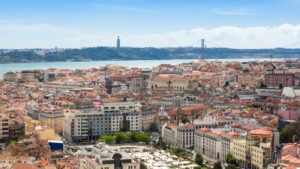
Lisbon is compact in distance and demanding on foot. Cobblestones, hills and summer heat make a short route feel longer. The Metro is useful for crossing the city, while buses and trams fill gaps between neighbourhoods. Ferries provide access to the south bank and one of the best perspectives back toward Lisbon.
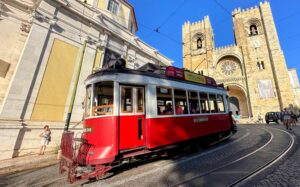
Our detailed article on getting around Lisbon covers the airport, Metro, trams, ferries, taxis, ride-hailing services and the routes where walking makes sense. It also explains why we rarely recommend tuk-tuks and why Tram 28 should never determine the structure of an entire day.
Sintra requires a full day and an early start. The palaces are spread across steep terrain, and traffic around Pena Palace can be severe. Take the train from Rossio and use local transport once there. Trying to visit Pena Palace, the Moorish Castle, Quinta da Regaleira and the town centre in a few hours creates a day dominated by queues and transfers. Choose two principal sites.
Cascais is straightforward by train from Cais do Sodré. Setúbal works better for seafood, the Arrábida coast and a route farther south, particularly with a car.
Central Portugal
Central Portugal is frequently treated as a journey between Lisbon and Porto, but it can fill an entire trip.
Coimbra deserves at least one night. Its university buildings occupy the upper city, while the streets descend toward the Mondego River. Visiting as a short railway stop is possible, but luggage storage, hills and timed university access can make that plan less efficient than it appears.
Aveiro is known for canals and ovos moles, though the nearby coast and the striped houses of Costa Nova add greater variety to an overnight stay. The city lies directly on the main Lisbon-Porto railway line, making it easy to include without a car.
Óbidos is compact and receives substantial day-trip traffic. Arriving early or staying after the buses leave changes the experience. Nearby Caldas da Rainha has a long-running produce market and gives a better sense of daily life in the region.
Farther inland, Serra da Estrela needs a car and several days. Mountain roads, weather and seasonal conditions affect driving. Winter can bring snow at altitude, while summer heat and wildfire risk may close walking routes.
Central Portugal is also one of the strongest regions for traditional food. Bairrada is known for leitão, the Serra da Estrela for cheese, and Aveiro for ovos moles. These foods make greater sense in their place of origin than as items collected from a national checklist.
Porto and northern Portugal
Porto needs three days for the historical centre, riverfront, markets, food and the opposite bank in Vila Nova de Gaia. Its streets are steep, and the distances around the Douro often involve sharp climbs.
The Ribeira is visually striking and extremely busy. It should form one part of the visit. Bolhão, Cedofeita, Bonfim, Foz and neighbourhoods beyond the riverfront provide a fuller view of the city.
Port wine lodges are located primarily in Vila Nova de Gaia. A tasting there explains ageing and blending, while travelling into the Douro shows where the grapes are grown. These are related experiences rather than substitutes for each other.
Braga and Guimarães can each be reached from Porto by train. Guimarães has a compact medieval centre and close connections with the formation of Portugal. Braga is larger and has a more active contemporary centre around its religious architecture.
The Minho extends farther north toward Ponte de Lima and Viana do Castelo. Vinho Verde comes from a broad designated region rather than one grape or a single lightly fizzy style. Travelling through the north is a good opportunity to taste dry whites, reds and more structured versions rarely visible on basic restaurant lists abroad.
Rain is more frequent in the north than in Lisbon or the Algarve. This affects a city break far less than a hiking or vineyard itinerary, but waterproof clothing remains useful even in late spring.
The Douro Valley
The Douro can be visited from Porto by train, boat, car or organised tour. Each produces a different day.
The railway follows the river and works well for Pinhão and Peso da Régua. A boat gives uninterrupted views but commits a large part of the day to one form of transport. Driving reaches estates away from the river, although vineyard roads can be narrow, steep and tiring for anyone participating in tastings.
One night is much better than a day trip. Staying allows time for a winery visit, dinner and the valley in the quieter hours after excursion groups leave.
Harvest usually takes place around September, though dates depend on the year and producer. Summer is hot and exposed. Spring brings milder temperatures and greener vineyard terraces.
Book winery visits directly. Many estates do not operate as walk-in tasting rooms, and the most interesting visits are often limited to small groups at fixed times.
The Alentejo
The Alentejo begins close to Lisbon but quickly changes the pace and scale of the journey. Towns are separated by open agricultural land, cork oaks, vineyards and roads that can become extremely hot in summer.
Évora is the most practical base for a first visit. Its Roman temple, cathedral, university streets and Chapel of Bones fit within a walkable centre. One night is enough for the principal sites, while two allow time for wineries, megalithic monuments or smaller towns.
Monsaraz sits above the Alqueva area and works well in a road trip through eastern Alentejo. Elvas is defined by its fortifications and proximity to the Spanish border. Marvão and Castelo de Vide belong to a more northern route and should not be added to a short Évora trip without accounting for the driving.
July and August can be punishingly hot, particularly in the afternoon. Plan outdoor sightseeing early, use the middle of the day for lunch or rest and avoid hikes during heat warnings.
Food is central to the region. Bread thickens soups, forms the base of açorda and accompanies pork, lamb, coriander, garlic and olive oil. Alentejo wines range from approachable modern styles to traditional talha wines made in clay vessels.
The Algarve
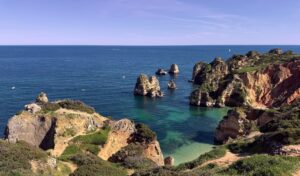
The Algarve contains several different coastlines. Lagos and the central-western area have the cliffs and coves most often used in tourism campaigns. Sagres and the Costa Vicentina are windier and more exposed. Tavira and the eastern Algarve have a flatter landscape, barrier islands and a quieter rhythm outside the summer peak.
Faro should not be treated only as an airport. Its old town, lagoon and access to the Ria Formosa justify at least one day. Tavira is useful for the eastern islands. Lagos works for coastal walking and boat trips, while Sagres is the better base for the far west.
July and August bring high accommodation prices, full beaches and heavy road traffic. Late May, June, September and early October are more manageable for most travellers. The ocean remains cooler than many visitors expect, and currents can be strong. Follow beach flags and local warnings.
A car is useful for moving between towns and less accessible beaches. It becomes a burden in the busiest centres, where parking fills early. Choose accommodation within walking distance of the evening restaurants and use the car for daytime exploration.
The Algarve also has substantial food differences between the coast and interior. Cataplana, grilled fish, octopus, razor-clam rice and shellfish belong to the coast. Inland cooking uses pork, game, almonds, figs and carob.
Madeira
Madeira needs five to seven days. Funchal, mountain viewpoints, coastal villages, levada walks and the north of the island cannot be compressed into a cruise-style day.
The island’s roads are modern in many areas but can become steep, narrow and enclosed by tunnels. A rental car provides flexibility, though travellers uncomfortable with sharp gradients may prefer organised transport for certain routes.
Weather changes by altitude and side of the island. Sunshine in Funchal says little about conditions on a high levada or mountain trail. Check local forecasts and trail closures on the morning of the walk.
Levadas vary from flat paths to exposed mountain routes. Choose according to distance, elevation, tunnel sections and vertigo exposure. Carry water, a waterproof layer and a light even when beginning under clear skies.
Madeira’s food includes espetada, bolo do caco, black scabbardfish, limpets and regional soups. Madeira wine ranges from dry to sweet, so ordering it only as a dessert drink misses much of the category.
The Azores
The Azores consist of nine islands, and visiting all of them in one ordinary holiday is unrealistic. São Miguel is the easiest starting point and needs at least five days.
The island has crater lakes, geothermal areas, hot springs, coastlines and hiking routes. Weather can move across the landscape rapidly, so webcams and local conditions should guide the order of the day. A viewpoint covered in cloud in the morning may clear later.
Travelling between islands requires flights or seasonal ferries, depending on the route. Pick one island group rather than constructing a trip around every famous photograph. São Miguel and Terceira can fill a week. A longer journey can add Pico, Faial and São Jorge as a connected central group.
Azorean food includes cozido cooked using geothermal heat around Furnas, alcatra from Terceira, local beef, tuna, limpets, pineapple and dairy products. Each island has its own products and dishes.
Planning your trip
Portugal is simple to navigate along the Lisbon-Coimbra-Porto corridor. Trains are usually the best choice between these cities because central stations remove the need for airport transfers, motorway tolls and parking.
Flights are useful for Madeira and the Azores. Faro Airport serves the Algarve, while Porto is a good arrival point for the north. An open-jaw itinerary arriving in Porto and leaving from Faro, or the reverse, prevents a long return across the country.
A car becomes useful for:
- The Alentejo beyond Évora
- Serra da Estrela and inland central Portugal
- The Algarve beyond the principal railway towns
- Rural wine regions
- Western Madeira
- São Miguel outside Ponta Delgada
Avoid keeping a rental car during several days in central Lisbon or Porto. Parking is expensive, streets can be narrow and public transport is more efficient.
Portugal has conventional and electronic motorway tolls. Rental companies use different systems for charging them, so ask how payments will be handled before leaving the desk. Photograph the vehicle at collection and return.
Driving times are generally reliable on motorways and less so on coastal, island and mountain roads. In villages and older city centres, roads can become extremely narrow. A compact car is more useful than a large vehicle.
Book accommodation early in Lisbon, Porto, the Algarve and the islands. Prices have risen significantly, and the idea of Portugal as a consistently inexpensive European destination is outdated in its most visited areas.
Restaurant schedules require some planning. Lunch is generally taken between 12:30 and 14:30, and many traditional kitchens close before reopening for dinner. Arriving at 16:00 and expecting the full menu can leave you with pastries, sandwiches or a tourist-oriented restaurant serving continuously.
Best itinerary
A two-week first itinerary can cross mainland Portugal from north to south without returning to the starting point.
| Day | Route |
|---|---|
| 1 | Arrive in Porto and explore the centre |
| 2 | Porto neighbourhoods, markets and Vila Nova de Gaia |
| 3 | Porto, Foz and a port wine lodge |
| 4 | Douro Valley day trip or overnight stay |
| 5 | Travel to Coimbra and stay overnight |
| 6 | Continue to Lisbon |
| 7 | Baixa, Chiado and the riverside |
| 8 | Alfama, Graça and Mouraria |
| 9 | Belém and western Lisbon |
| 10 | Sintra day trip |
| 11 | Travel to Évora |
| 12 | Continue to the Algarve |
| 13 | Lagos, Tavira or another chosen Algarve base |
| 14 | Final Algarve day and departure from Faro |
This itinerary should not be extended to Madeira or the Azores. Adding a flight and several island days would require removing the Algarve or much of northern Portugal.
With ten days, choose Porto, the Douro, Coimbra and Lisbon. With seven, use Lisbon and Porto as the two bases and add one day trip from each.
Travellers primarily interested in food and wine can replace the Algarve with additional time in the Douro and Alentejo. Those focused on walking and landscapes may prefer Madeira as an entirely separate week.
When to visit
April to June and September to October are the strongest periods for a broad mainland journey. Temperatures are generally workable for cities and road trips, services are fully active and the busiest summer pressure is reduced.
| Period | Conditions | Best for |
|---|---|---|
| January to February | Rainier in the north, mild in the south | Lisbon, Porto, the Algarve and quieter city trips |
| March to May | Spring weather and increasing daylight | Multi-region routes, hiking and the Alentejo |
| June | Long days, local festivals and rising temperatures | Lisbon, Porto, coast and wine regions |
| July to August | Heat, crowds and high coastal prices | Beach holidays and island travel |
| September to October | Warm sea and harvest season | Algarve, Douro, Alentejo and road trips |
| November to December | Cooler, wetter and quieter | Cities, food trips and seasonal celebrations |
June is an important month in Lisbon and Porto. Lisbon’s neighbourhood festivals centre on Santo António, while Porto celebrates São João. Streets become crowded, public transport changes and accommodation should be booked well ahead.
July and August require caution in the Alentejo and interior. Temperatures can become extreme, and wildfire risk may affect roads, trails and rural accommodation.
Lisbon and Porto work throughout the year. Winter brings rain and shorter days, but museums, restaurants and daily city life continue. Madeira also functions year-round, while mountain conditions remain variable in every season.
The Azores are visited throughout the year, though rain, wind and cloud are always possible. Summer generally provides the broadest range of activities and inter-island connections.
How many days
Lisbon needs at least three full days. Add one day for Sintra and another for Cascais, Setúbal or a neighbourhood-focused day outside the centre.
Porto needs two or three days. Add one or two for the Douro Valley.
Seven days work for Lisbon and Porto. Ten days allow Coimbra and the Douro. Fourteen days provide time for the Alentejo or Algarve as well.
Madeira deserves five to seven days. The Azores need at least seven, even when the trip is limited to São Miguel and one additional island.
A month would still require choices between the mainland and archipelagos. Portugal’s length, island geography and regional differences make repeated trips more sensible than one attempt to include everything.
Budget
Portugal is no longer uniformly inexpensive. Lisbon, Porto, the central Algarve and parts of Madeira now have accommodation and restaurant prices comparable with other heavily visited destinations in Western Europe.
| Travel style | Daily estimate per person | What it covers |
|---|---|---|
| Budget | €80–120 | Hostel or simple room, cafés, public transport and free activities |
| Mid-range | €150–230 | Comfortable shared room, restaurant meals, trains and paid attractions |
| Comfortable | €280+ | Higher-end hotels, frequent dining out, private transport and tours |
These estimates assume two people share accommodation. Rental cars, fuel and motorway tolls increase the total.
Traditional cafés remain useful for breakfast. Coffee, toast, a pastry or a savoury snack costs much less than an international-style brunch. Our guide to Lisbon brunch explains why a complete brunch commonly costs €15 to €25 and when we think that expense is justified.
Lunch menus and pratos do dia can provide good value, especially outside the most visited streets. Check what is included because drinks, dessert and coffee vary from one restaurant to another.
Rooftop bars, riverfront terraces and restaurants attached to famous views charge a location premium. One carefully chosen experience is usually enough. Our selection of Lisbon rooftop bars separates places worth visiting for food or atmosphere from those relying mainly on elevation.
Food
Portuguese food is regional, seasonal and much broader than bacalhau, grilled sardines and pastéis de nata. Those foods matter, but they become more useful when placed within the region and occasion where people eat them.
Our guide to traditional Portuguese dishes covers the principal foods across the country. Use it as a reference rather than a checklist. Many dishes are heavy, seasonal or associated with one particular place, and ordering several famous specialities in the same day can become more exhausting than informative.
What to eat by region
| Region | Foods and drinks to look for |
|---|---|
| Lisbon and Setúbal | Bacalhau à Brás, bifanas, amêijoas à Bulhão Pato, sardines, choco frito and Moscatel de Setúbal |
| Porto and the north | Francesinha, tripas à moda do Porto, rojões, caldo verde, alheira and vinho verde |
| Central Portugal | Leitão da Bairrada, chanfana, Serra da Estrela cheese and ovos moles |
| Alentejo | Açorda, migas, porco preto, lamb stew, coriander soups and regional wines |
| Algarve | Cataplana, grilled fish, octopus, razor-clam rice, almonds, figs and carob |
| Madeira | Espetada, bolo do caco, limpets, black scabbardfish and Madeira wine |
| Azores | Cozido das Furnas, alcatra, tuna, limpets, beef, cheese and pineapple |
Bacalhau is salt cod rather than fresh cod. It appears in baked dishes, fritters, salads and mixtures with potato, egg and onion. Its importance comes from preservation, trade and domestic cooking, so no single recipe can represent it.
Sardines are strongly seasonal and associated with June festivities. Ordering them during summer makes sense. Their appearance on a permanent tourist menu in the middle of winter says less about Portuguese food traditions.
A couvert placed on the table may include bread, butter, olives, cheese or pâté. It is charged when consumed. Leave unwanted items untouched and ask for them to be removed.
Cafés, pastelarias and everyday eating
A pastelaria is far more useful than a pastry shop designed around one famous product. It may serve breakfast, coffee, sandwiches, savoury snacks, lunch dishes and cakes throughout the day.
Our guide to traditional Lisbon cafés and pastelarias explains what to order and why these places remain important to neighbourhood life.
In Lisbon, a bica is an espresso. A garoto contains a small quantity of milk. A meia de leite has a larger proportion of milk, and a galão is generally served in a tall glass. Torrada is thick buttered toast, while a tosta mista is a toasted ham-and-cheese sandwich.
Service in a busy traditional café is often direct and efficient. Ordering at the counter is quicker and frequently cheaper than sitting on a terrace. A short exchange should not be interpreted automatically as rudeness.
Pastéis de nata and Portuguese sweets
Pastéis de nata are eaten throughout Portugal. Lisbon contains the greatest concentration of famous producers, but the pastry does not become good because a queue has formed outside.
Freshness matters. A warm pastel from an ordinary neighbourhood café can be better than one transported across the city from a celebrated shop. Our comparison of the best pastéis de nata in Lisbon explains the differences in pastry, custard, temperature and style.
Portuguese confectionery extends far beyond the pastel de nata. Travesseiros and queijadas are associated with Sintra, ovos moles with Aveiro, sericaia with the Alentejo and Dom Rodrigo with the Algarve. Madeira has bolo de mel, while the Azores have island-specific queijadas and dairy-based sweets.
Our reference to Portuguese desserts covers convent sweets, regional cakes, custards and pastries found across the country.
The most useful way to explore Portuguese food is to change the type of place as you travel. Eat breakfast in a pastelaria, lunch in a tasca, grilled chicken from a churrasqueira, seafood in a marisqueira and one dinner focused on the region’s ingredients. That sequence says far more about the country than repeating the same famous dishes in restaurants built around visitors.