

Choosing where to stay in Seoul is less about finding the city’s “best neighbourhood” and more about avoiding the wrong one for the trip you are planning. Seoul is enormous.
An area can be excellent in isolation and still be a terrible base if most of what you want to do is on the opposite side of the city. This is why we would never choose accommodation simply because a neighbourhood is famous. Gangnam may be internationally recognisable. Seongsu may be where everybody seems to be going right now. Myeongdong may appear in almost every first-time Seoul guide.
None of that means you should sleep there.
For most first-time visitors who want a mix of historical Seoul, food, neighbourhoods, shopping and contemporary culture, we would choose somewhere around Jongno, Anguk or Insadong. Myeongdong is easier; this part of Seoul gives you a better relationship with the city.
The official Seoul tourism guide itself groups Jongno and neighbouring Jung-gu as the heart of Seoul, where major historical sites sit alongside central commercial districts such as Myeongdong.
But there are good reasons to stay elsewhere.
Here is how we would choose.
Where to stay in Seoul at a glance
| Area | Best for | Why stay there | Main drawback |
|---|---|---|---|
| Jongno / Anguk / Insadong | Most first-time visitors | Historic Seoul, central location, good balance | Quieter than Hongdae at night |
| Myeongdong | Maximum convenience | Central, easy, shopping, visitor services | Commercial and heavily tourist-oriented |
| Hongdae | Nightlife and energy | Young, busy, excellent western Seoul base | Can be loud and exhausting |
| Yeonnam | Hongdae without living in the middle of it | Cafés, restaurants, more neighbourhood feel | Less convenient for historic Seoul |
| Gangnam | Beauty, luxury and southern Seoul | Excellent if your interests are south of the river | Poor base for many classic first-trip sights |
| Seongsu | Trends, fashion and contemporary Seoul | Interesting surroundings, cafés, retail | Better to visit than to use as a first-time base |
There isn’t one right answer. But there are definitely choices that make more sense than others.
Jongno, Anguk and Insadong: our choice for most first-time visitors
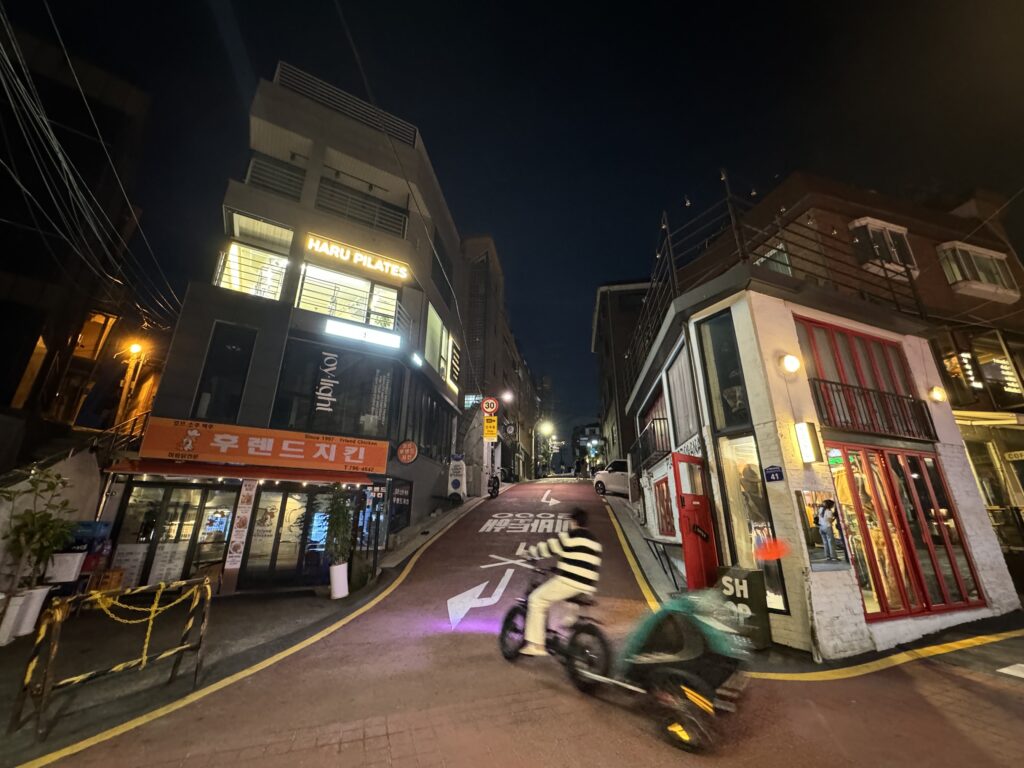
If friends asked us where to stay on their first visit to Seoul, Jongno, Anguk and Insadong is probably where we would send them.
Not because it is Seoul’s coolest neighbourhood. It isn’t.
But this part of the city puts you close to some of the places that actually deserve substantial time on a first trip: Gyeongbokgung, Changdeokgung, Bukchon, Insadong, Gwanghwamun and the wider historic centre.
Bukchon sits between major historic landmarks including Gyeongbokgung, Changdeokgung and Jongmyo, which gives you an idea of how concentrated this part of Seoul is.
It also means you can walk more. Seoul’s subway is excellent, but spending every day entering a station, changing lines and resurfacing beside another attraction is not necessarily the best way to experience the city.
Around Jongno and Anguk, historical sites, older commercial streets, restaurants, cafés and contemporary Seoul overlap naturally.
And in the evening, you are not stranded in a historical theme park. Jongno, Euljiro and Ikseon-dong provide plenty of places to eat and drink nearby.
If the Insadong–Myeongdong–Jongno corridor is an efficient base for first-time visitors, Insadong is quieter than both Myeongdong and Hongdae.
- Best for: a balanced first trip, historical Seoul, couples, people who like walking.
- We would not choose it if: nightlife is the main reason you are coming to Seoul.
Myeongdong: the easiest choice
There is nothing wrong with staying in Myeongdong. In fact, for some travellers it is probably the smartest choice.
Myeongdong is central, easy to navigate and packed with hotels, restaurants, shops, beauty stores, currency exchange businesses and services accustomed to international visitors. Official Seoul tourism material continues to position it as one of the city’s major shopping and visitor districts.
If this is your first trip to Korea and minimising friction matters enormously, that convenience is valuable.
It is also why so many organised itineraries and first-time visitors gravitate towards it. But convenience is not the same thing as character.
We would happily shop in Myeongdong. We would walk around it. We might stay there if we had practical reasons to.
We would not choose Myeongdong because we thought it represented the most interesting version of Seoul.
It is intensely commercial and heavily exposed to international tourism. That doesn’t make it fake. It simply makes it a particular part of Seoul with a particular purpose.
If your choice is between an excellent hotel in Myeongdong and an inconvenient hotel somewhere supposedly more “local,” choose the excellent hotel.
But if accommodation quality and price are comparable, we would generally move slightly north towards Jongno or Anguk.
- Best for: first-time convenience, shopping, short stays, travellers who want everything to feel easy.
- We would not choose it if: neighbourhood atmosphere is more important to you than convenience.
Hongdae: stay here because you want Hongdae, not because everyone recommends it
Hongdae can be an excellent base. It can also be the wrong choice for somebody who discovers on night one that they have absolutely no interest in being surrounded by Hongdae.
The area around Hongik University is strongly associated with youth culture, music and nightlife.
If that is what you want, great. Stay there. Restaurants, bars, shops, cafés and people are everywhere, and western Seoul becomes particularly easy to explore.
Hongdae also works well if you expect to spend a lot of time around Yeonnam, Mangwon and nearby areas rather than constantly crossing back towards Jongno and Gangnam.
But don’t choose Hongdae because a travel guide labelled it “best for young travellers.” Your age is not an accommodation strategy. If you hate noise, crowds and nightlife, being “young” does not suddenly make Hongdae the right neighbourhood.
And if you are older and love going out until 2 a.m., there is no reason you shouldn’t stay there.
Choose Hongdae because its rhythm matches yours, not because you fit somebody’s demographic category.
- Best for: nightlife, younger energy, western Seoul, travellers who want busy evenings.
- We would not choose it if: you want quiet nights or expect most of your sightseeing to happen around the historic centre.
Yeonnam: our alternative if you like Hongdae but don’t want to live inside it
This is where the decision becomes more interesting. If Hongdae appeals to you but staying directly in the busiest part of it does not, look towards Yeonnam.
You remain connected to the energy and food scene of western Seoul without necessarily stepping outside your accommodation into the most intense part of Hongdae every morning.
There are cafés, restaurants and plenty of places to wander, and the atmosphere can feel more residential as you move away from the busiest commercial streets.
We like this compromise. You can walk into Hongdae when you want it and walk away from it when you’ve had enough.
That’s often more useful than choosing between “stay in Hongdae” and “don’t stay in Hongdae” as if the district suddenly stops at one road.
- Best for: cafés, food, couples, repeat visitors, people who want western Seoul without maximum intensity.
- We would not choose it if: your first Seoul itinerary is overwhelmingly focused on palaces and central historical areas.
Gangnam: only stay here if your trip belongs in Gangnam
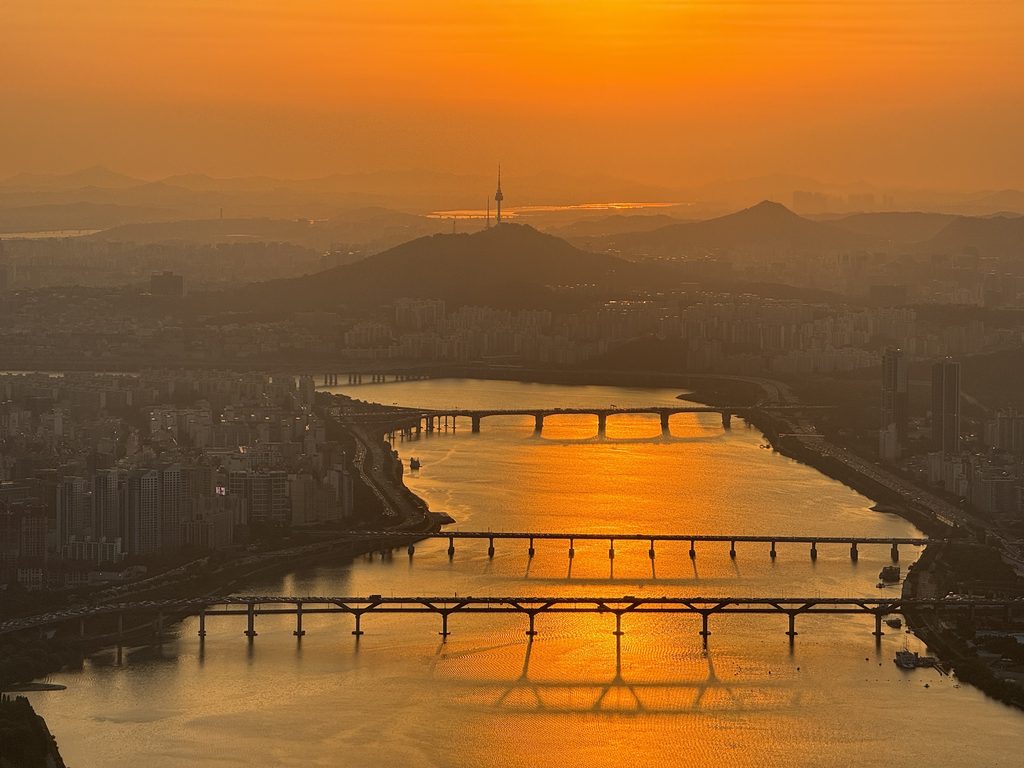
Gangnam is probably one of the easiest neighbourhoods to choose for the wrong reason.
You know the name. That doesn’t mean you should stay there.
Southern Seoul makes sense if much of what interests you is already there: Gangnam, Apgujeong, Cheongdam, beauty and cosmetic treatments, luxury retail, business districts or other destinations south of the Han River. Official tourism material similarly characterises Gangnam around contemporary trends and K-beauty.
In that case, staying nearby can save considerable time. But if your plan is:
Gyeongbokgung,
Bukchon,
Insadong,
Gwangjang,
Hongdae,
Euljiro,
then sleeping in Gangnam creates a commute you do not need.
Gangnam is not a bad base. It is a specialised base that gets recommended much more broadly than it should.
We would also distinguish between wanting to visit Gangnam and needing to sleep there. You can explore the area perfectly well during the day or evening and then return elsewhere.
- Best for: K-beauty, luxury, southern Seoul, business travel, people whose itinerary is genuinely concentrated south of the river.
- We would not choose it if: this is a classic first trip primarily focused on central and northern Seoul.
Seongsu: we love visiting it more than we would love staying there
Seongsu is currently one of the easiest places in Seoul to fall for before you even arrive. The neighbourhood has become synonymous with pop-ups, flagship stores, converted industrial spaces, cafés, fashion and contemporary consumer culture.
We think Seongsu is absolutely worth experiencing. That doesn’t automatically make it a great base. This is an important distinction travel guides often overlook:
a neighbourhood can be fascinating to visit and unnecessary to stay in.
If this is your second or third Seoul trip and you specifically want to spend your time around Seongsu and eastern Seoul, staying there could be fun.
For a first visit, we would usually choose somewhere with easier access to a broader range of areas and come to Seongsu when we actually want to experience it.
Trendy does not automatically mean practical.
- Best for: repeat visitors, fashion, design, cafés, contemporary Seoul.
- We would not choose it if: this is your first trip and you want a broad introduction to the city.
What about Itaewon?
Itaewon can still make sense for some travellers, particularly if international restaurants, nightlife and its location around Yongsan appeal to you. But we wouldn’t put it at the top of our list for a conventional first trip.
There was a time when Itaewon filled a particularly important role for foreigners in Seoul because it provided access to things that were much harder to find elsewhere.
Seoul has changed. International food, English-language services, coffee, nightlife and globally influenced culture are much less geographically concentrated than they once were.
Visit Itaewon if you are interested in Itaewon. We would not automatically stay there merely because we are foreigners.
Should you stay in a hanok in Seoul?
For one or two nights, staying in a hanok this can be a meaningful experience if traditional Korean architecture genuinely interests you.
We wouldn’t necessarily choose a hanok for an entire five-day Seoul trip purely because it seems more “authentic.”
Traditional architecture comes with trade-offs. A beautiful experience and the most functional base for exploring one of the world’s largest cities are not necessarily the same thing.
If you want both, one option is simple: spend a night or two in a hanok and use a conventional hotel for the rest of the trip.
There is no rule requiring your accommodation to perform Korean culture for you every night.
Do you need to stay near a subway station in seoul?
Yes, being close to a subway station is important in Seoul but don’t obsess over being physically attached to one.
We recommend being within easy walking distance of a useful subway station over almost every other micro-location consideration.
The mistake is looking at an accommodation map and thinking 1.5 kilometres seems close. After a full day walking around Seoul, encountering another hill and realising your hotel is still twenty minutes from the station, those 1.5 kilometres acquire new meaning.
Look at the actual walking route, not simply the radius on a booking platform.
Also check which line the station serves and whether that line helps with where you plan to spend time.
“Near the subway” means very little if every journey requires two changes.
Where should you stay on our first trip to Seoul?
For a broad first trip, we would start around Jongno, Anguk or Insadong.
That gives you strong access to historic Seoul while keeping the rest of the city manageable.
If convenience mattered more than atmosphere, we would choose Myeongdong.
If nights out, cafés and western Seoul were major priorities, we would move towards Hongdae or Yeonnam.
We would choose Gangnam only if our itinerary was significantly focused south of the river.
And we would treat Seongsu as somewhere to experience rather than automatically somewhere to sleep.
The choice becomes much easier once you stop asking:
What is the best neighbourhood in Seoul?
There isn’t one.
Ask instead:
Where will staying make the version of Seoul we want to experience easier?
That is the neighbourhood you should choose.