

Seoul has become one of those cities people often feel they know before they arrive. They have seen the palace courtyards in K-dramas. They know Myeongdong from shopping videos, Seongsu from pop-up content and Hongdae from clips of nightlife and street performances. Restaurants are already saved on Instagram. Cafés have been added to maps because an actor, idol or influencer once went there. Entire itineraries can now be assembled without knowing much about how Seoul actually fits together.
That familiarity is partly real. Seoul has become increasingly visible internationally, and current tourism data reflects the scale of the attention: the Seoul Metropolitan Government reported a record 8.23 million international visitors in the first half of 2026 alone.
But the version of Seoul exported through entertainment and social media is only one version of the city.
The mistake on a trip is not visiting famous places. It is allowing famous places to become the only way you understand Seoul.
We have been travelling to South Korea for years, returning repeatedly and watching the country become progressively more visible internationally. Our best experiences in Seoul have rarely come from trying to reproduce someone else’s perfect itinerary.
They have come from understanding how the city works.
Seoul makes much more sense when you stop treating it as one enormous collection of attractions and start thinking of it as a series of very different urban environments connected by a remarkably efficient transport network.
Historic Jongno is not Seongsu. Seongsu is not Gangnam. Gangnam is not Hongdae. Hongdae itself changes once you walk towards Yeonnam. The Han River is not an attraction inserted between two museums.
And a market full of visitors photographing their food is not necessarily where you will understand everyday Korean food culture best.
This guide is about those differences: what we think deserves your time, what we would not prioritise, and what you should understand about Seoul before deciding where to go.
How many days do you need in Seoul?
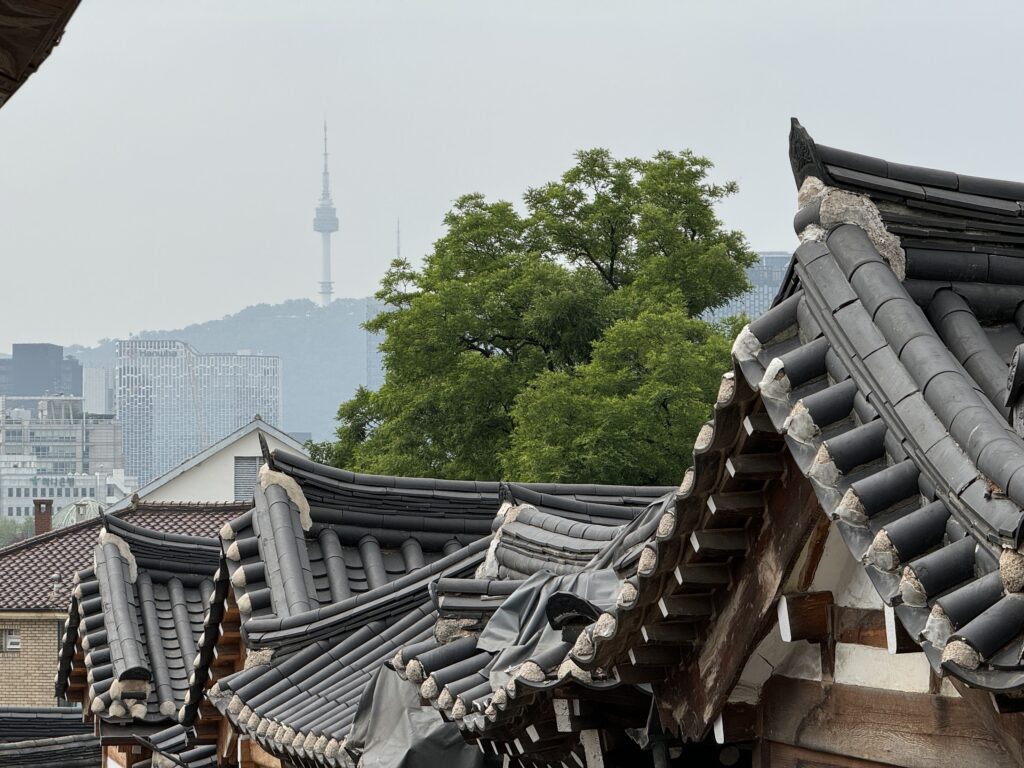
For a first visit, we recommend at least four full days in Seoul, and preferably five. Three days is enough to see several major attractions. It is not enough to understand the city particularly well.
The reason is not simply size, although Seoul is enormous. It is fragmentation.
The places visitors usually want to experience are spread across very different parts of the city, and crossing Seoul repeatedly because you grouped attractions from a generic “20 best things to do” list can consume a surprising amount of time.
More importantly, Seoul changes enormously depending on where you are and what time you are there.
A morning around the palaces has almost nothing in common with an evening in Euljiro. A Saturday afternoon beside the Han River tells you something about Seoul that another museum cannot.
Seongsu makes more sense when you understand why Korean brands use temporary retail and pop-ups so aggressively, rather than simply queueing at whatever shop TikTok has decided is important that week. Seoul itself now actively promotes Seongsu for its pop-up stores, flagship stores, cafés and art spaces.
That is why we would rather spend five days seeing Seoul selectively than three days trying to complete it.
How Seoul’s neighbourhoods fit together
One of the most useful things you can do before travelling to Seoul is stop thinking in terms of individual attractions. Think in areas.
The Han River divides the city broadly between north and south, but the more important distinction for visitors is how different clusters of neighbourhoods work.
For a first trip, we would roughly think about Seoul like this:
- Historic Seoul: Jongno, Gwanghwamun, the royal palaces, Bukchon, Insadong, Seochon.
- Central commercial Seoul: Myeongdong, Euljiro, Namdaemun.
- Young and creative western Seoul: Hongdae, Yeonnam, Mangwon.
- Eastern trend Seoul: Seongsu, Seoul Forest.
- Southern Seoul: Gangnam, Apgujeong, Cheongdam, COEX.
- The river: Yeouido, Banpo and the various Hangang parks.
These aren’t official tourism zones. They are a useful way to stop yourself from planning a morning in Bukchon, lunch in Gangnam, coffee in Yeonnam and dinner back in Seongsu simply because all four places looked close enough on a screen. They aren’t.
Where should you base yourself in Seoul?
Where you stay in Seoul matters less because one neighbourhood is objectively “best” and more because the city is so large that a badly chosen base can add a lot of unnecessary travel to your days.
For a first trip, Myeongdong is the easiest choice if convenience matters most. It is central, well connected and surrounded by shops, restaurants and services aimed at international visitors. We would choose it for practicality, not because it offers the most interesting version of Seoul.
Jongno is a better choice if historic Seoul is a major priority. You are close to the palaces, Gwanghwamun, Insadong, Bukchon and many of the areas we think are worth exploring slowly rather than visiting as isolated attractions.
Hongdae or Yeonnam work particularly well if nightlife, cafés and western Seoul matter more to you. Hongdae is busier and louder; Yeonnam feels a little less intense while keeping you close to the same part of the city.
We would choose Gangnam only if a significant part of what you want to do is south of the Han River. It is a perfectly good place to stay, but choosing it simply because Gangnam is internationally famous can leave you travelling north across Seoul repeatedly to reach the places you actually want to see.
The same principle applies everywhere:
Do not choose where to stay in Seoul because a neighbourhood is famous. Choose it based on where you expect to spend most of your time.
For most first-time visitors interested in a broad mix of historical sights, food, neighbourhoods and contemporary Seoul, we would generally favour a central or northern base over staying far south.
Historic Seoul deserves time, but you don’t need to visit every palace
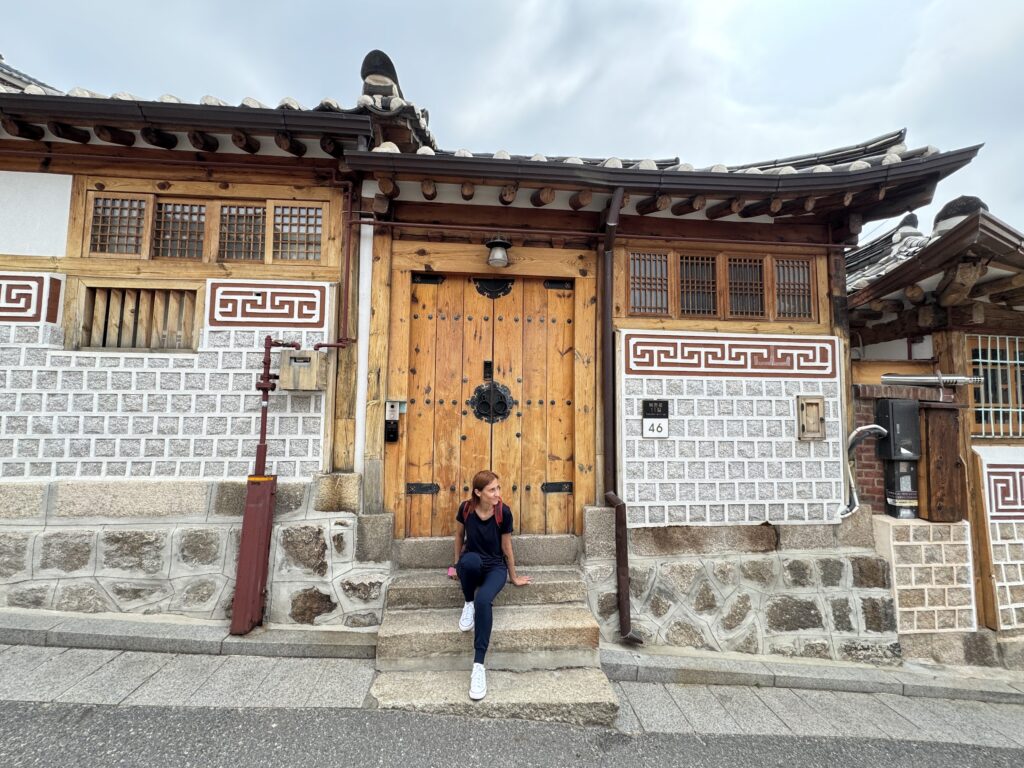
Seoul has five surviving Joseon royal palaces, and travel guides have an unfortunate tendency to present them as a collection that needs completing. It doesn’t.
For most first-time visitors, we think one or two palaces are enough unless Korean history or architecture is a particular interest.
Gyeongbokgung or Changdeokgung: which palace should you choose?
If you are visiting only one palace, Gyeongbokgung is the obvious first choice. It was the principal palace of the Joseon dynasty and remains the most visually monumental of Seoul’s royal sites. It is also the palace most international visitors recognise and therefore the busiest.
Changdeokgung provides a different experience. It was built in the 15th century and is recognised by UNESCO for the way its architecture was integrated with the surrounding landscape rather than imposed symmetrically upon it.
If architecture, gardens and historical atmosphere interest you more than seeing Seoul’s most famous palace façade, we find Changdeokgung more rewarding.
Its Secret Garden also changes the experience considerably, although access is controlled and visitor numbers are limited, so check current availability before assuming you can simply walk in. We visited the Secret Garden years ago in spring, before it became such a major tourist draw, and found it beautiful. We haven’t returned in recent years, partly because of the increase in mass tourism, so we can’t honestly say how much the experience itself has changed.
There is no need to visit Gyeongbokgung, Changdeokgung, Changgyeonggung and Deoksugung simply because they all appear on sightseeing lists. Choose deliberately.
Should you rent a hanbok to visit the palaces?
One of the most repeated Seoul travel tips is to rent a hanbok before visiting a royal palace.
There is a practical reason for this: visitors wearing qualifying hanbok receive free admission to Seoul’s royal palaces. The Korea Heritage Service specifies that eligible dress must include both an upper garment and a lower garment; simply putting on an outer robe does not qualify.
You will therefore see rental shops everywhere around Gyeongbokgung and large numbers of international visitors dressed in brightly coloured versions of Korean traditional clothing.
We don’t personally recommend doing this for the free entrance or the photographs.
Hanbok is traditional Korean dress. Seeing groups of foreign tourists moving through historic sites in rented costumes has always felt strange to us rather than automatically “immersive”, particularly when the activity is presented as another tourist photo opportunity.
That does not mean foreigners should never wear hanbok. Context matters.
If wearing one has genuine cultural meaning to you, you are participating in a ceremony, or you simply understand what you are wearing and want the experience, that is your choice.
But you do not need to dress as somebody else’s idea of historical Korea to appreciate Korean heritage.
The normal palace admission price is modest enough that we would rather pay it and concentrate on the place.
Bukchon is not a film set
Bukchon Hanok Village appears on almost every Seoul itinerary because its narrow streets and hanok architecture provide an immediate visual contrast with modern Seoul. But there is something visitors need to understand before going:
Bukchon is also a residential neighbourhood.
This distinction became important enough that Seoul introduced formal tourism controls. In the designated Bukchon “Red Zone”, tourist visits are prohibited between 5 p.m. and 10 a.m., with fines for violations; enforcement began in March 2025.
That tells you something about what unchecked tourism had become for residents.
Go during permitted hours. Keep your voice down. Do not block doors. Do not photograph people’s homes as if they were museum exhibits. And don’t interpret “traditional neighbourhood” to mean that everybody living there volunteered to become part of your Seoul experience.
Bukchon is beautiful. It is also one of the places where the difference between visiting a city and consuming a city becomes very obvious.
Ikseon-dong is charming, but it is not hidden Seoul
Ikseon-dong is another neighbourhood frequently described with words like “traditional,” “authentic” and, increasingly absurdly, “hidden.” It is none of those things in the way those descriptions imply.
What makes Ikseon-dong interesting today is the collision between old urban fabric and contemporary commercial Seoul.
Hanok buildings have become cafés, restaurants, boutiques and highly designed retail spaces. That does not make it fake. It makes it modern Seoul using historical architecture commercially.
Go because the area is visually distinctive and entertaining. Don’t go expecting to stumble upon an untouched piece of old Korea that nobody else has discovered.
You will probably be standing beside several hundred people who read the same description.
Myeongdong is useful but It is not where to spend most of the time
Myeongdong remains one of the biggest international visitor magnets in Seoul. And there are reasons for that.
It is central. It is easy to reach. It has enormous concentrations of beauty shops, fashion stores, restaurants, currency exchange businesses and hotels.
If you want to walk into Olive Young and emerge an hour later wondering what happened, Myeongdong will happily accommodate you.
We don’t dislike Myeongdong but we simply don’t think it should become your reference point for Seoul.
The neighbourhood is intensely commercial and heavily oriented towards visitors. That can be useful, particularly when you want convenience.
But spending half your Seoul itinerary there because it feels easy means missing neighbourhoods with much more distinctive identities.
Visit. Shop. Eat something if you want to. Then move on.
Hongdae beyond nightlife: what the neighbourhood is really like
Hongdae is normally described as Seoul’s youthful district. That is true and almost useless.
The area around Hongik University became associated with music, nightlife, independent culture and young people long before it became one of Seoul’s major tourism areas.
Today it contains multiple versions of itself.
The main streets around Hongik University can be loud, commercial and extremely busy, particularly at night. Move towards Yeonnam and the atmosphere changes. Go farther towards Mangwon and it changes again.
That is why we don’t think of Hongdae as a single attraction. We think of western Seoul as an area worth wandering.
Hongdae during the day and Hongdae at night are different places
During the day, you get cafés, shops, students, restaurants and relatively manageable streets. At night, especially around the weekend, nightlife becomes central.
Which version is better depends entirely on why you are there.
If you don’t care about clubs or busy nightlife, you do not need to force yourself into Hongdae at midnight simply because somebody described it as essential Seoul.
Spend the afternoon there and move towards Yeonnam instead. If nightlife is exactly what you came for, the opposite applies.
Seongsu is interesting because Seoul manufactures trends there
Seongsu has become one of the most visible neighbourhoods in contemporary Seoul.
Pop-up stores.
Temporary brand experiences.
Flagships.
Beauty launches.
Fashion installations.
Huge cafés occupying former industrial buildings.
But the useful thing about Seongsu is not finding the exact viral pop-up you saw online. It is observing how aggressively Seoul turns retail into entertainment. A shop may exist only temporarily. A product launch becomes an exhibition. Brands create environments people queue to photograph even when they have little intention of buying anything. Industrial buildings become highly polished lifestyle spaces.
This is contemporary Seoul.
Go to Seongsu because that phenomenon interests you. If your entire visit consists of queueing for four shops TikTok told you to visit, you have seen the result without understanding the reason.
And remember that Seongsu changes quickly. Any article claiming to have a permanent list of its “best pop-ups” is obsolete almost as soon as it is published.
Gangnam is more interesting than its tourist attractions
Gangnam has one of the biggest gaps between international recognition and meaningful sightseeing.
Everybody knows the name. Many visitors arrive and then wonder what exactly they are supposed to do there.
If your plan consists entirely of taking a picture beside something associated with “Gangnam Style,” we would not cross Seoul specifically for it.
But Gangnam becomes interesting if you treat it as a way to understand contemporary Seoul. This broader part of southern Seoul gives you access to a world of high-end retail, cosmetic medicine, corporate offices, luxury consumption and highly curated lifestyles.
Apgujeong and Cheongdam tell you something completely different about Seoul from Jongno. COEX is not culturally profound, but its scale tells you a lot about Korean commercial urbanism. The famous Starfield Library looks spectacular in photographs, but it is still a library inside a giant shopping complex.
That contrast is the point.
Gangnam is worth visiting when you are interested in what modern Seoul values, sells and aspires to.
It is less compelling when you treat it as another set of attractions that must be completed.
The Han River matters more than many famous attractions
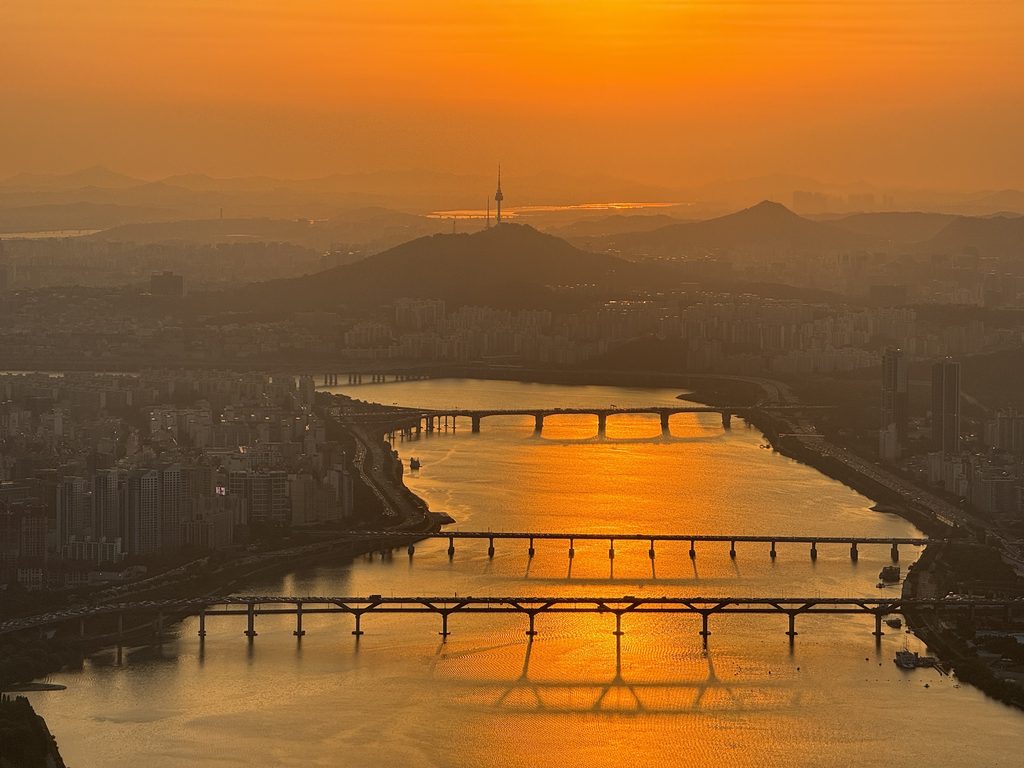
If we had to choose between adding another sightseeing stop and spending a few hours beside the Han River, we would choose the river.
Not because it is a “hidden gem.” Quite the opposite.
The Han River is embedded in how Seoul residents use their city. People run. Cycle. Meet friends. Picnic. Order food. Sit outside. Attend events. Spend entire evenings doing very little. This is one of those places where the ordinary activity is more valuable than another formal attraction.
Go in good weather, particularly towards late afternoon or evening. Buy food. Sit down. Watch Seoul happen around you. You do not need to optimise it further.
Gwangjang Market is worth seeing, but don’t mistake popularity for authenticity
Gwangjang Market has become one of Seoul’s most famous food stops. That should tell you immediately what kind of place you are visiting.
We think Gwangjang is worth experiencing: there is energy, there is history. You can eat bindaetteok, noodles, gimbap, yukhoe and other foods in an environment that remains visually compelling.
But don’t arrive believing you have discovered where Seoul residents secretly eat because somebody online labelled it “authentic street food.”
The most famous sections are firmly part of Seoul’s tourism economy now. That doesn’t invalidate them. It simply means you should adjust your expectations.
And it leads to one of our strongest pieces of food advice for Seoul:
Do not confuse famous food places with the best opportunities to eat Korean food.
In a city this large, some of your best meals will happen in restaurants you never researched.
Seoul’s best food strategy is to research less
This sounds irresponsible in an era where people maintain spreadsheets of restaurant reservations.
We stand by it. Research the dishes you want to understand. Research somewhere truly distinctive if there is a restaurant you genuinely care about.
But you do not need to select every meal before arriving.
Korean restaurants often specialise. A place may primarily serve one soup. One type of barbecue. One noodle dish. One preparation of fish. That specialisation is useful.
If a restaurant has been making essentially the same thing for years and is full of people eating it, you do not necessarily need a viral video to validate your decision.
Walk around at mealtimes. See where people are eating. Translate the menu. Order.
This approach has given us far more memorable Korean meals than obsessively chasing places that became internationally famous online. We have ended up eating in small local cafeterias where people were so curious about who we were and why we were there that lunch turned into an exchange of stories, ours and theirs.
Korean food is not just barbecue and street food
On a first Seoul trip, visitors disproportionately focus on:
Korean barbecue,
fried chicken,
tteokbokki,
gimbap,
and whatever is currently trending.
Eat them.
But also eat soups, stews, noodles, grilled fish, dumplings, cold dishes, jeon, regional dishes and meals you cannot easily categorise from your existing knowledge. Korean food culture becomes far more interesting once you stop treating it as a collection of globally famous dishes.
Café culture is not a side activity in Seoul
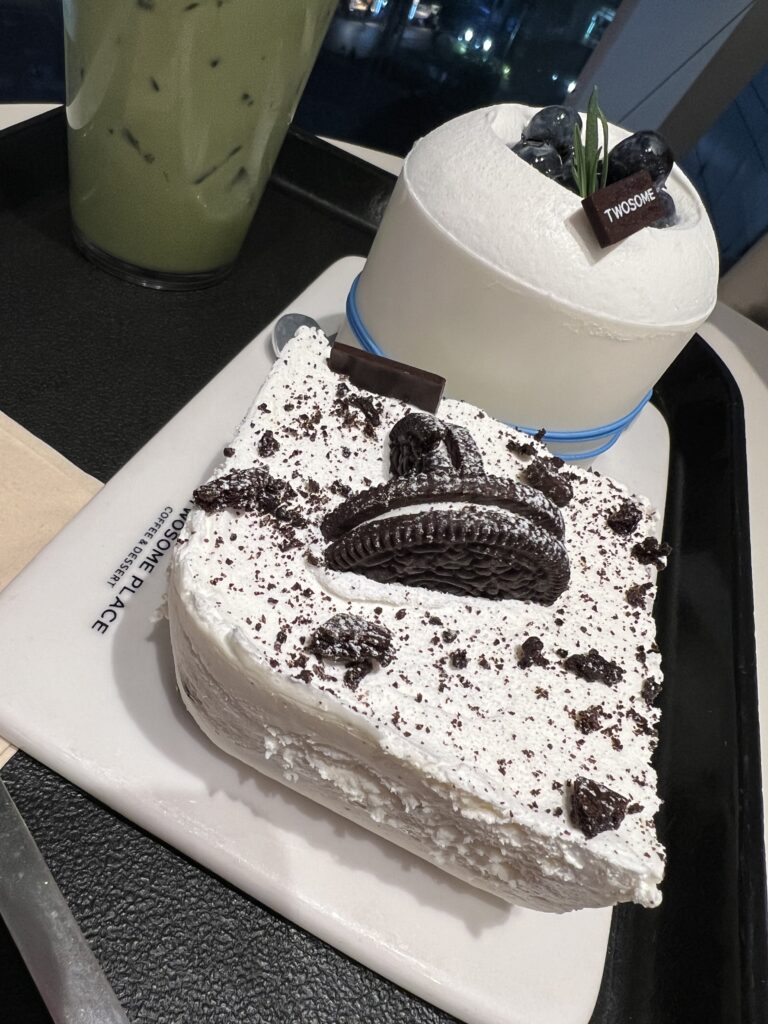
A common mistake is seeing Seoul’s cafés as something to fit between attractions. They are part of the city.
Korean café culture operates at a scale that can seem ridiculous when you first encounter it. Huge spaces. Immaculate interiors. Specialist bakeries. Rooftops. Basements. Minimalist design concepts. Cafés built almost entirely around one visual idea.
Some are excellent. Some are spectacular rooms serving average coffee. Some are essentially photo studios with beverages attached.
All of that tells you something.
Seoul’s café culture intersects with design, socialising, dating, remote work, retail and the constant production of newness.
Spend time in cafés. Just don’t assume that the most photographed café is necessarily the one worth crossing Seoul for.
When the Seoul on your screen starts planning your trip
There is nothing wrong with visiting somewhere because you first saw it in a K-drama, a music video or on social media. If a particular drama means something to you, visit the filming location. If a café genuinely looks interesting, go. If a Seongsu pop-up happens to involve a brand you love, join the queue.
The problem starts when recognition becomes the reason for the itinerary.
People can spend an hour crossing Seoul to stand outside an ordinary building because it appeared for a few seconds in a television series. They visit cafés they have no real interest in because an actor once sat at a particular table. They wander around entertainment-company headquarters hoping to encounter an idol.
You probably won’t. And even if you do, another human being going to work is not an attraction. Social media creates a similar problem.
A bakery goes viral. A convenience-store combination suddenly becomes essential. A photo booth appears in hundreds of videos. A pop-up develops a two-hour queue. Then attention moves somewhere else.
Seoul is particularly good at producing trends, and following some of them can be fun. But before crossing the city for something you saved online, ask yourself one question:
Would we still want to go there if we had never seen it on a screen?
If the answer is no, it probably doesn’t deserve several hours of the trip. K-dramas, K-pop and social media can be excellent ways into Korean culture. They are much less useful as itinerary planners.
Use them to become curious about Seoul, not to turn Seoul into a scavenger hunt.
Why shopping is part of understanding modern Seoul
For us, shopping is not a frivolous activity in Seoul. Consumer culture is too visible and too culturally revealing for that.
Department stores, underground shopping centres, convenience stores, beauty chains, fashion districts, luxury flagships and temporary pop-ups all show different parts of contemporary Korea.
Go into a major department store even if you don’t need anything. Visit the food hall. See how goods are presented. Notice how beauty is marketed. Look at how aggressively seasonal products and limited editions appear.
Then compare that with somewhere like Dongmyo, where second-hand and vintage shopping creates a very different commercial landscape.
Shopping can be one of the easiest ways to observe what a city values.
Why we always hike Bukhansan when we visit Seoul
Seoul is surrounded and penetrated by mountains. Hiking is not something Seoul residents reserve for once-a-year wilderness holidays.
It is a mainstream weekend activity. The city currently promotes urban hiking itself, including mountains such as Bukhansan and Achasan, as part of Seoul’s visitor experience.
You do not necessarily need to undertake a difficult full-day climb. Choose something appropriate for your fitness and the weather.
The important thing is experiencing how abruptly dense urban Seoul can transition into a mountain landscape.
And prepare to be humbled by older Korean hikers moving faster than you while wearing better equipment.
We hike Bukhansan every single time we are in Seoul, and we almost always end the hike at a local restaurant at the foot of the mountain with Korean pancakes and makgeolli. We are usually surrounded by local hikers who never miss the opportunity to tell us what to order, show us how to drink makgeolli properly, or simply watch with amusement as we enjoy every bit of it no matter how many times we have done exactly the same thing before.
Seoul after dark deserves its own time
Another reason we dislike over-scheduled Seoul itineraries is that they tend to exhaust people before the city becomes particularly interesting.
Night is not merely when you go to Hongdae. Restaurants stay busy. People meet after work. Markets change atmosphere. The river becomes another kind of public space.
Neighbourhoods such as Euljiro are much more interesting in the evening than during a checklist-driven afternoon. Leave at least a couple of evenings open. Have dinner somewhere. Walk. See where people go next.
Seoul is a city where the second half of the day often tells you more than the first.
What to skip or seriously reconsider in seoul
Not everything famous deserves equal time.
We would skip any palace we were visiting simply because we felt obliged to complete the set. We would not make Myeongdong the centre of the trip because it is convenient. We would not use Gwangjang Market as our definition of Korean food, or rent a hanbok purely to save the palace entrance fee.
We would also reconsider anything that requires crossing half the city solely because it appeared repeatedly on our feed.
And we would never organise Seoul as a sequence of isolated pins on a map.
Breakfast in Seongsu, lunch in Myeongdong, coffee in Yeonnam and dinner in Gangnam may look perfectly reasonable when saved individually. In reality, it can turn a day into a tour of Seoul’s subway system.
The test we use is simple:
Does this place add something to the way we want to experience Seoul, or are we going because somebody else told us it belongs on the list?
That does not mean avoiding famous places.
It means choosing them deliberately.
How to use public transport in Seoul without overthinking it
Seoul’s subway and bus networks are extensive enough that most visitors do not need taxis regularly. For many travellers, a rechargeable transport card remains the simplest option.
There is also the Climate Card, which offers short-term unlimited travel passes for visitors using eligible Seoul subway and bus services, but some services such as the Sinbundang Line and GTX are excluded.
Whether it saves you money depends on how intensively you use public transport. We would not spend an hour calculating a theoretical saving of a few euros. Choose whichever system makes movement easiest for your trip.
The more important transport advice is geographical:
group your days by area.
That will save far more time than optimising individual subway fares.
Don’t underestimate walking in seoul
Seoul has excellent transport. You should still walk. A lot. Walking is how neighbourhoods connect conceptually even when they don’t appear connected on a tourism map.
It is how you notice tiny restaurants, residential streets, shops, hills, stairs, office districts and all the things that disappear when you move exclusively from station to attraction.
That said, Seoul is not flat. Comfortable shoes are not optional advice. They are survival equipment.
When is the best time to visit Seoul?
| Season | What Seoul is like | Best for | What to know |
|---|---|---|---|
| Spring | Mild, increasingly busy, visually appealing | Walking, palaces, neighbourhoods, hiking | Cherry blossom timing varies and peak periods can be crowded |
| Summer | Hot, humid and often wet | Food, cafés, shopping, indoor culture | Long outdoor days can become tiring; rain and humidity matter |
| Autumn | Comfortable, clear and popular | Hiking, neighbourhood exploration, outdoor sightseeing | Autumn colour varies by year and popular weekends can be very busy |
| Winter | Cold, dry and much quieter outdoors | Food, cafés, museums, shopping, a different side of Seoul | Temperatures can be severe, especially if you plan to spend hours outside |
The useful question isn’t simply which season photographs best.
It is what kind of Seoul you want to experience.
If you want hiking and long neighbourhood walks, weather matters enormously. If your priorities are food, cafés, shopping and cultural sites, Seoul remains very workable across a much broader part of the year.
Seoul doesn’t need to be made “authentic”
By this point, there is one idea worth getting rid of completely: the obsession with finding the “real” Seoul.
Travel writing often treats authenticity as if the city has one pure version hidden somewhere away from tourists, brands, shopping districts and social media. In Seoul, that framing is especially misleading.
A small soup restaurant is Seoul. So is an enormous department store. A hyper-designed café is Seoul. A mountain trail packed with immaculately equipped hikers is Seoul. Olive Young is Seoul. A convenience store at midnight is Seoul. Plastic surgery advertisements are Seoul. Luxury apartments are Seoul.
So are markets, palaces, office workers drinking after work and teenagers queueing for whatever brand opened a pop-up that morning.
The question shouldn’t be:
Where can I find the real Seoul?
The better question is: what does this place tell me about Seoul?
Once you start travelling that way, the city becomes much more interesting.
Why we keep returning to Seoul and why we think it’s worth visiting
Seoul is worth visiting, more than once. But Seoul can also be overwhelming because it presents so many versions of itself at once.
There is the historical capital of palaces and hanok neighbourhoods. The hyper-commercial city of department stores, beauty clinics and flagship shops. The social city of cafés, late dinners and evenings by the Han River. The city shaped by K-pop, K-dramas and international attention. And then there is the everyday Seoul that continues underneath all of it: commuters, hikers, students, families, office workers and neighbourhood restaurants that have no interest in becoming destinations.
None of these versions is more “real” than the others.
That is what makes Seoul interesting.
The mistake is reducing the city to whichever version reached you first. If you arrive because of Korean dramas, enjoy that connection. If you want skincare and shopping, do it properly. Visit the palaces because they matter, not because they complete a sightseeing list. Go to Seongsu because contemporary Seoul fascinates you, not because you feel obliged to queue for whatever is viral that week.
And then pay attention to what happens around those places. That is where Seoul starts becoming more than a destination you recognise from photographs.
After years of returning to the city, that is still what keeps us interested. Seoul changes quickly enough that there is always something new, but the reason we come back is not to chase every new opening or trend.
It is because there is always another layer to understand.
You do not need to see everything in Seoul. You need to leave with a better sense of what kind of city it actually is.