

Seoul is easy to move around and surprisingly easy to plan badly. The subway makes almost everywhere look accessible, so first-time visitors often build itineraries that jump from a palace in Jongno to a café in Seongsu, then to Gangnam, then back across the river for sunset.
Technically, you can do that. But you shouldn’t.
The best Seoul itinerary groups neighbourhoods geographically and gives each part of the city enough time to make sense.
For a first trip, 4 to 5 full days is ideal for most visitors. Three days is enough for the essentials, but you will have to make choices. Five days gives you enough time to experience historic Seoul, contemporary Seoul, the Han River and one deeper interest such as hiking without turning the trip into a race.
If Seoul is the main purpose of your trip, a full week is not too long. Seven days lets you slow down, spend more time in neighbourhoods, hike, visit museums, shop, explore the food scene properly or add a day trip without sacrificing the city itself.
But if Seoul is part of a wider South Korea itinerary, we would usually stop at four or five days and continue to places such as Gyeongju or Busan.
How many days do you need in Seoul?
| Time in Seoul | What it gives you | Our verdict |
|---|---|---|
| 3 days | Historic Seoul, central Seoul and Gangnam | Enough for the essentials |
| 4 days | The above + western Seoul and the Han River | Very good for a first trip |
| 5 days | Enough range to add hiking, Seongsu or another major interest | Ideal for most first-time visitors |
| 7 days | Slower neighbourhood exploration, museums, shopping, hiking and potentially a day trip | Excellent if Seoul is your main destination |
If you are continuing around South Korea, 4–5 days is the balance we would choose. If Seoul itself is the destination, stay a week without worrying that you are spending too long there.
What should a first-time Seoul itinerary include?
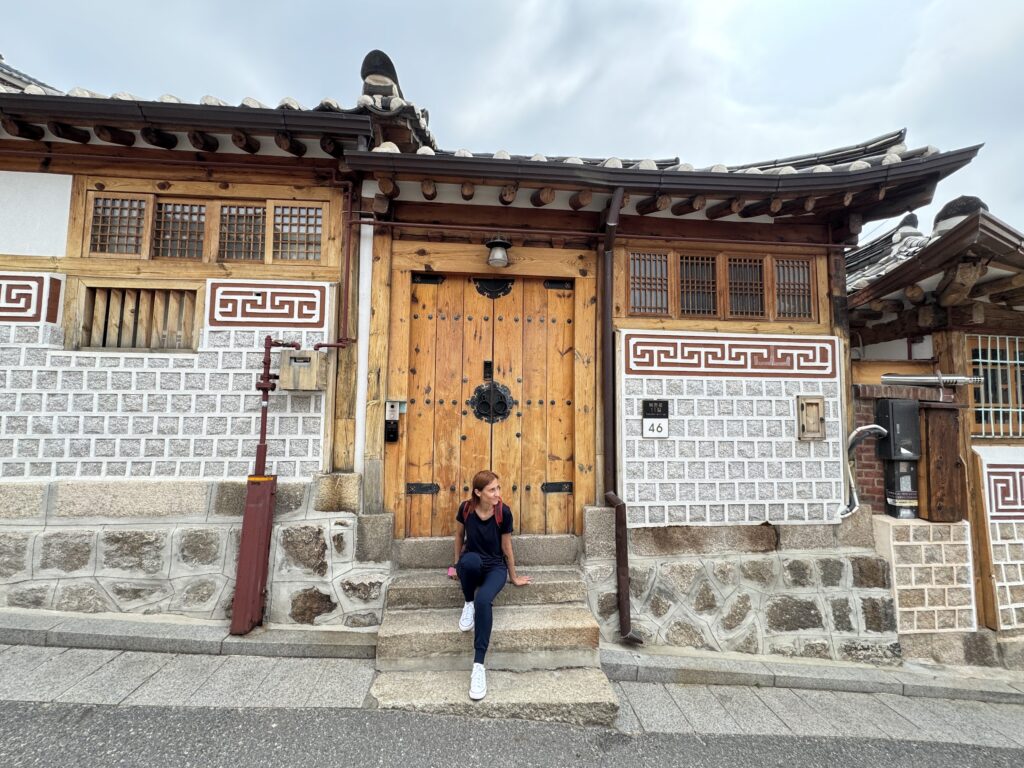
A first Seoul itinerary should include different versions of the city rather than simply collecting famous attractions.
| Experience | Where we would do it |
|---|---|
| Royal history | Gyeongbokgung + Gwanghwamun |
| Hanok streets and older Seoul | Bukchon + Anguk |
| City views | Namsan / N Seoul Tower |
| Central shopping and street life | Myeongdong |
| Contemporary Seoul | Gangnam + COEX or Seongsu |
| Young neighbourhood energy | Hongdae / Yeonnam |
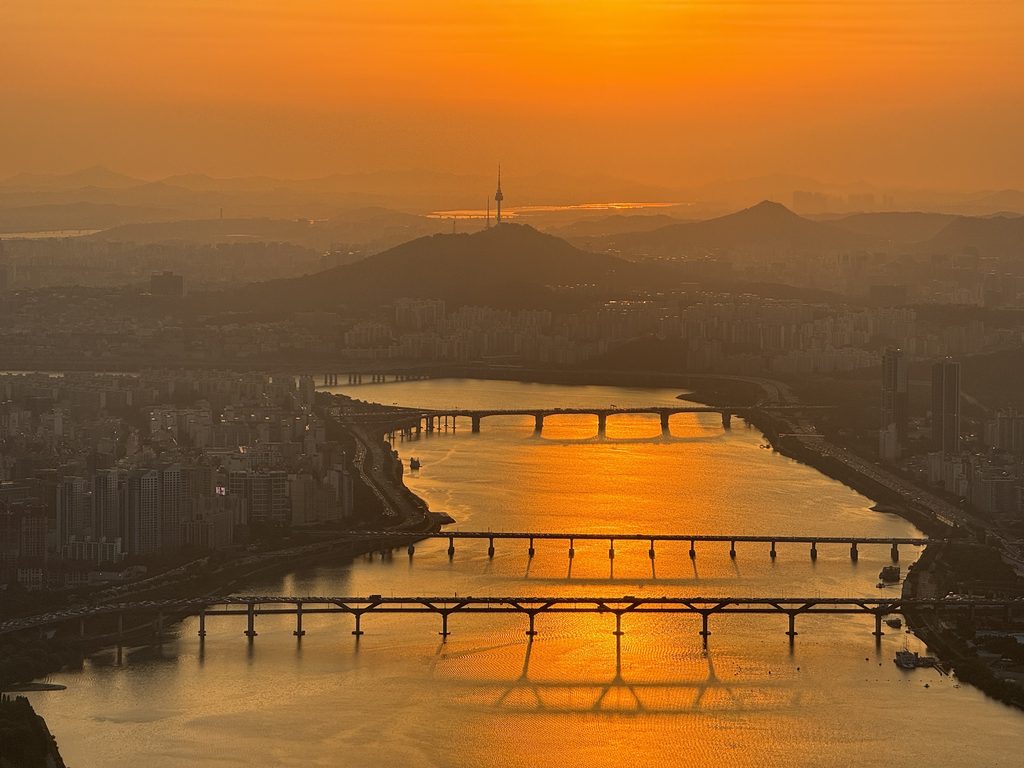
| Han River | Mangwon or Banpo |
| Hiking | Bukhansan |
| Food and evening culture | Jongno / Euljiro |
The goal is not to include every one of these every day. It is to avoid spending five days seeing attractions that all tell you roughly the same thing about Seoul.
How to plan a good Seoul itinerary
Do not plan Seoul as a list of attractions. Plan it as areas.
A useful first-trip structure is:
- Historic Seoul: Gwanghwamun, Gyeongbokgung, Bukchon, Anguk, Insadong, Jongno
- Namsan and central Seoul: Namsan, Baekbeom Square, Myeongdong, Euljiro
- Gangnam: Bongeunsa, COEX, Starfield Library, Apgujeong or Gangnam Station
- Western Seoul: Hongdae, Yeonnam, Mangwon, Han River
- Contemporary east: Seongsu, Seoul Forest
- Outdoors: Bukhansan
The subway is excellent. Seoul is still enormous. Grouping areas properly gives you far more time to actually experience them.
3 days in Seoul itinerary
If you only have three days, we would focus on historic Seoul, central Seoul and Gangnam.
That covers the parts of the city most first-time visitors actively want to see without turning the trip into a sprint.
Day 1: Gyeongbokgung, Bukchon and Jongno
Route:
Gwanghwamun → Gyeongbokgung → Bukchon → Anguk → Insadong / Ikseon-dong → Jongno
Start around Gwanghwamun Square, then visit Gyeongbokgung.
You do not need to visit every royal palace.
For a first trip, one palace visited properly is more useful than rushing through three because somebody put all of them on a checklist.
From Gyeongbokgung, continue towards Bukchon and Anguk.
Bukchon is residential, not a historical theme park, so respect the visitor rules and the people who actually live there.
Then continue through Anguk, Insadong or Ikseon-dong and finish around Jongno.
Do not add N Seoul Tower to the end of the day simply because you technically still have two hours left.
Stay in the area.
Eat there.
Walk after dark.
That is a much better first day in Seoul.
Day 2: Namsan, N Seoul Tower, Myeongdong and Euljiro
Route:
Baekbeom Square → Namsan / N Seoul Tower → Myeongdong → Euljiro → Cheonggyecheon
We prefer approaching N Seoul Tower as part of Namsan, rather than treating the tower itself as the entire attraction.
Walk if you can.
Include Baekbeom Square and part of the Seoul City Wall, then continue towards the tower.
Afterwards, descend towards central Seoul.
Myeongdong is useful for shopping, beauty products and experiencing one of Seoul’s busiest commercial areas.
We would not give it half a day unless shopping is one of your main priorities.
Finish in Euljiro or Jongno, where dinner can easily become an evening.
If you still want to walk afterwards, follow part of Cheonggyecheon after dark.
Day 3: Gangnam, Bongeunsa and COEX
Route:
Bongeunsa → COEX → Starfield Library → Apgujeong / Cheongdam or Gangnam Station
Gangnam belongs in a first Seoul itinerary.
We just do not think most visitors need to give the entire day to it.
Start at Bongeunsa Temple.
Its location directly beside COEX is part of what makes the area interesting: a major Buddhist temple and one of Seoul’s biggest commercial complexes sitting almost side by side.
Then continue to COEX and Starfield Library.
Starfield is worth seeing if you are already here. We would not cross Seoul purely for the library, but as part of a Gangnam day it makes complete sense.
Then choose according to your interests.
Choose Apgujeong or Cheongdam if you care about:
- fashion;
- beauty;
- luxury shopping;
- K-pop and entertainment;
- contemporary Seoul culture.
Choose Gangnam Station if you want:
- dense commercial Seoul;
- shopping;
- restaurants;
- nightlife;
- the version of Gangnam most visitors recognise by name.
For most first-time visitors, half a day to two-thirds of a day is enough for Gangnam unless you have a specific reason to spend longer there.
4 days in Seoul itinerary
With four days, keep the first three days exactly the same.
Then add western Seoul and the Han River.
Day 4: Hongdae, Yeonnam, Mangwon and the Han River
Route:
Yeonnam → Gyeongui Line Forest Park → Hongdae → Mangwon Market → Mangwon-dong → Han River
This day works precisely because it is almost the opposite of Day 1.
There are fewer monumental attractions.
That is the point.
Start around Yeonnam, walk through the Gyeongui Line Forest Park, continue into Hongdae, then move towards Mangwon.
Eat at Mangwon Market or somewhere in the surrounding neighbourhood.
Then finish beside the Han River if the weather is good.
Do not treat the river as something you need to photograph for twenty minutes before moving on.
Walk. Sit. Eat. Watch people cycle, meet friends and spend the evening outside. That is the experience.
5 days in Seoul itinerary
Five days is where Seoul becomes much easier.
You have already covered the core parts of the city, so Day 5 can reflect what you actually care about.
The mistake is assuming an extra day must mean another fifteen attractions.
It doesn’t.
The fifth day should make the itinerary better, not longer.
Keep Days 1–4 and choose one of these.
Day 5 option 1: Bukhansan
Choose this if you enjoy hiking.
Give it the day.
Do not schedule a morning hike and then six attractions afterwards.
A good Bukhansan day looks more like:
hike → come back down → jeon → makgeolli → do very little afterwards
We hike Bukhansan every time we return to Seoul.
If mountains matter to you, we would choose this over several conventional tourist attractions without hesitation.
Day 5 option 2: Seoul Forest and Seongsu
Choose this if you want more contemporary Seoul.
Route:
Seoul Forest → Seongsu
Start in Seoul Forest, then continue into Seongsu’s fashion, design, cafés, pop-ups and commercial spaces.
This is one of the best areas for understanding how quickly Seoul reinvents parts of itself.
We would give Seongsu time rather than arrive with a list of twelve viral cafés.
Day 5 option 3: Museums, Hannam and Itaewon
Choose this if art, design or museums matter more than hiking or shopping.
A good route is: National Museum of Korea or Leeum Museum → Hannam → Itaewon
Continue towards Haebangchon or Noksapyeong in the evening if you still want to explore.
Day 5 option 4: K-drama locations
If K-dramas are part of the reason you came to Seoul, use the extra day for one geographically coherent filming-location route.
Two good options are:
Naksan → Ihwa → Dongdaemun Design Plaza
or:
Itaewon → Noksapyeong → Haebangchon → Baekbeom Square → Namsan
The point is to let filming locations help you explore a part of Seoul rather than spend all day travelling from one place to another.
7 days in Seoul itinerary
A full week in Seoul is not excessive if the city itself is one of the main reasons for your trip.
What changes is not the number of major attractions.
It is the pace.
With seven days, we would keep the five-day structure and use the extra two days for places or experiences that are difficult to justify on a shorter itinerary.
Day 6: slow down or go deeper
Choose something you deliberately skipped earlier.
For example:
More of historic Seoul
Visit Changdeokgung, spend longer around Jongno, walk more of the Seoul City Wall or explore smaller streets around Anguk without needing to reach another major attraction.
More contemporary Seoul
Spend longer in Seongsu, Apgujeong, Hannam or Gangnam.
Museums and culture
Give the National Museum of Korea, Leeum Museum or another museum you genuinely care about proper time instead of squeezing it between attractions.
Shopping
If beauty, fashion, design or Korean brands are part of the reason you are here, a week gives you time to shop without sacrificing half your sightseeing itinerary.
Day 7: neighbourhood day or day trip
This is where a day trip becomes much easier to justify.
If you want one, you could consider the DMZ or another destination outside Seoul.
But you do not have to leave the city.
A seventh day can also simply mean:
- spending longer beside the Han River;
- returning to the neighbourhood you liked most;
- finding food without an itinerary;
- exploring another market;
- going back to Bukhansan;
- spending an afternoon in cafés;
- or doing very little.
A week gives you the freedom to stop treating every Seoul day as a productivity exercise.
what is the best Seoul itinerary?
For most first-time visitors, we recommend five full days in Seoul.
Our preferred structure is:
Day 1: Gwanghwamun, Gyeongbokgung, Bukchon and Jongno
Day 2: Namsan, N Seoul Tower, Myeongdong and Euljiro
Day 3: Gangnam, Bongeunsa and COEX
Day 4: Hongdae, Yeonnam, Mangwon and the Han River
Day 5: Bukhansan, Seongsu, museums or another major personal interest
Four days still works very well.
Three days works if you accept that you are getting an introduction rather than trying to finish the city.
Seven days is excellent if Seoul is the main focus of the trip and you want neighbourhoods, food, hiking, museums, shopping or a day trip without constantly watching the clock.
The biggest mistake is not missing one attraction.
It is spending so much time trying to include everything that every neighbourhood becomes somewhere you passed through on the way to somewhere else.
A good Seoul itinerary includes the places you came to see, but gives you enough time inside them to understand why you wanted to see them in the first place.
Group the city intelligently.
Include the famous places that genuinely interest you.
And leave enough room for Seoul to become more than a sequence of pins on a map.
Three full days is enough for a first introduction to Seoul, but not enough to experience the city broadly.
With three days, you can cover:
historic Seoul;
Namsan and central Seoul;
Gangnam.
What we would not add:
a full day at Lotte World unless theme parks are a major priority;
multiple K-drama locations scattered around the city;
every royal palace;
Bukhansan;
a day trip outside Seoul.
If you only have three full days, stay in Seoul.
Yes, 4 days in Seoul is enough. Four full days is enough for most first-time visitors to experience historic Seoul, central Seoul, Gangnam, western neighbourhoods and the Han River without rushing badly.
If somebody asked us for the minimum amount of time we would genuinely recommend for a first Seoul trip, four days would probably be it.
Yes. Five full days is our preferred amount of time for most first-time visitors to Seoul. It gives you enough time to experience:
historic Seoul;
central Seoul;
Gangnam;
western Seoul and the Han River;
one deeper interest such as hiking, Seongsu, museums or K-drama locations.
Five days is long enough to experience different versions of the city without feeling that every hour needs to contain another attraction.
No. A week is not too long in Seoul if Seoul is the main destination of your trip.
Seven days makes sense if you are particularly interested in:
neighbourhoods;
food;
museums;
hiking;
shopping;
K-beauty;
K-pop;
K-dramas;
nightlife;
cafés;
or simply travelling more slowly.
But for a first trip that also includes other parts of South Korea, we would usually recommend 4–5 days in Seoul and use the remaining time elsewhere.
You do not need seven days to see Seoul. But you can easily use seven days well.