South Korea Travel Guide
South Korea is best planned as a journey from Seoul to Gyeongju and Busan, with Jeju or the eastern mountains added when you have more than ten days.
South Korea is compact enough to cross by high-speed train in a few hours, yet the country changes considerably between its capital, historic inland cities, mountain provinces and southern coast. Seoul can occupy an entire week. Gyeongju requires a slower pace built around tombs, temples and archaeological sites. Busan faces the sea and runs on a different rhythm, while Jeju has its own landscape, food and practical challenges.
The country is remarkably easy to travel around once you understand its systems. Rail connections are fast, urban public transport is dependable and intercity buses reach places the trains miss. The harder part is deciding how much to include. A route that looks short on a map can become tiring when every stop contains several distinct districts, markets and day trips.
Korean popular culture has made many places instantly recognisable, but arriving with a checklist based on films, music videos or social media rarely produces the best trip. South Korea becomes more interesting when you leave room for ordinary routines: breakfast in a neighbourhood restaurant, an evening beside the Han River, a mountain walk followed by a bowl of soup, or a meal where the side dishes tell you as much about the region as the main course.
Regions and Places to Visit in South Korea
South Korea’s most useful travel regions are Seoul and its surroundings, the northeast mountains and coast, the historic southeast, the southwest food cities, Busan and the southern coast, and Jeju Island.
Seoul
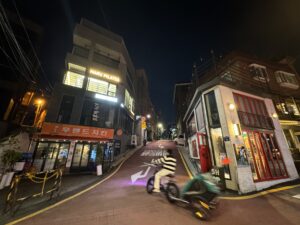
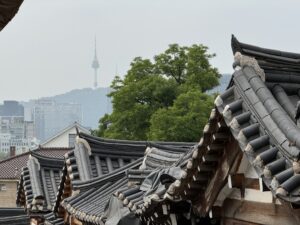
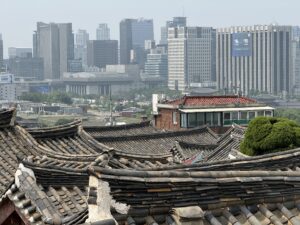
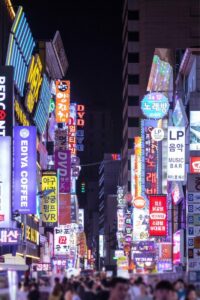
Seoul is usually the arrival point and deserves at least four full days. The city has no single centre in the European sense. Its palaces and older neighbourhoods lie north of the Han River, while areas such as Gangnam developed on the southern side. Hongdae, Jongno, Insadong, Itaewon, Seongsu and Myeongdong each serve a different purpose and should be grouped geographically rather than treated as isolated attractions.
Begin with the Joseon palaces and the streets around Jongno, then spend separate days in western Seoul, the Han River districts and the neighbourhoods south of the river. Markets such as Gwangjang are useful introductions to Korean food, although they should not become your only reference point. Some of the most satisfying meals are found in plain restaurants specialising in one dish.
Seoul is also a practical base for Suwon, the mountain trails around the capital and organised visits towards the Demilitarized Zone. Access rules near the DMZ can change, so tours and identification requirements should be checked shortly before travelling.
Gangwon and the Northeast
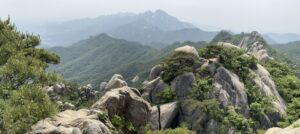
Gangwon is the part of the country to consider when cities begin to dominate the itinerary. Seoraksan National Park, reached through Sokcho, contains some of South Korea’s best-known mountain routes. Gangneung sits farther south on the east coast and works well for beaches, cafés and short coastal journeys.
Autumn brings clear hiking weather and busy foliage weekends. Winter can be severe, especially in the mountains, but it is also the season for snow sports and stark coastal scenery. Public transport reaches the principal towns, while a car becomes useful for smaller valleys, trailheads and stops scattered along the coast.
Jeonju and the Southwest
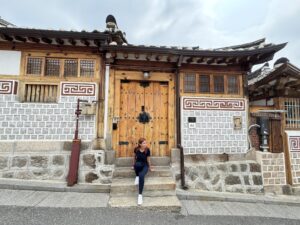
Jeonju is associated with food, hanok architecture and bibimbap, but it should not be reduced to one historic village and one famous dish. Staying overnight gives you time to walk through the hanok area after day visitors leave and to eat in places serving the generous set meals for which the Jeolla region is known.
Farther south, Suncheon, Yeosu and Boseong can form a slower route through wetlands, coast and tea-growing country. Connections require more planning than the Seoul to Busan corridor, which is precisely why this area works better in a two-week trip than in a hurried first visit.
Gyeongju
Gyeongju was the capital of the Silla kingdom and contains royal tombs, palace remains, Buddhist sites and museum collections spread across the modern city and its outskirts. Two nights are enough for the main sites, while three allow time for Bulguksa Temple, Seokguram Grotto and the archaeological areas without compressing everything into one long day.
The central tomb complexes are easy to explore on foot or by bicycle. Sites outside the centre require buses, taxis or a car. Gyeongju is a logical stop between Seoul and Busan, although high-speed trains use Singyeongju station outside the historic centre.
Busan and the Southern Coast
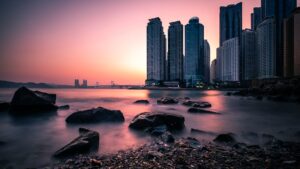
Busan is South Korea’s second-largest city and should be treated as a destination rather than a brief extension of Seoul. Its neighbourhoods stretch along hills, bays and beaches, so crossing the city takes longer than first-time visitors expect.
Jagalchi and the streets around Nampo provide the clearest introduction to the port and its seafood trade. Seomyeon is useful for transport and nightlife. Haeundae and Gwangalli belong to the eastern side of the city and work better as a separate day. Busan also gives access to coastal places such as Tongyeong and Geoje, although these require enough time to justify another change of base.
Jeju Island
Jeju makes sense when you can dedicate at least three full days to it. The island is much larger than its reputation as a simple beach break suggests. Hallasan rises at its centre, lava formations run through the landscape, and coastal roads connect fishing villages, waterfalls and trail sections.
Jeju City and Seogwipo are the main bases. Choosing between them depends on the places you intend to visit, since repeatedly crossing the island wastes time. A rental car makes the itinerary easier, especially for early hikes and rural restaurants. Buses are possible, but each day needs to be planned around their routes and frequency.
Jeju also has a distinct food culture centred on black pork, seafood, abalone, local citrus and dishes made from buckwheat or seaweed.
Planning Your Trip to South Korea
For a first trip, arrange the route before booking accommodation. Seoul, Gyeongju and Busan form the simplest rail itinerary. Jeju requires a flight or ferry and should be added only when the extra journey leaves enough time to explore the island.
Entry requirements depend on nationality. K-ETA rules and temporary exemptions have changed several times, so check the official K-ETA website using the passport you will travel with. Do this before relying on an older article, saved post or previous experience.
Download Naver Map or KakaoMap before arrival. Google Maps can locate businesses, but it is less dependable for detailed walking and driving directions in South Korea. Papago is useful for Korean translation, particularly menus and short conversations. A data connection matters from the first day, so arrange an eSIM, SIM card or portable Wi-Fi before leaving the airport.
A Tmoney or EZL transport card can be used across much of the public transport network. Keep some Korean won available because transport-card top-ups and small market purchases may still require cash. International cards are widely accepted, although foreign cards occasionally fail in ticket machines or smaller businesses.
The practical details, cultural expectations, transport cards, useful applications and dining customs are covered more fully in our South Korea travel tips for first-time visitors.
Book KTX trains when travelling on weekends, public holidays or during major Korean holiday periods. Tickets can be purchased through the official Korail platform. Express and intercity buses fill the gaps between rail routes and frequently provide a more direct connection to smaller cities.
Accommodation location matters more than hotel category in Seoul and Busan. A cheaper room involving several daily transfers can cost hours over the course of a trip. Check the nearest station, the subway line and whether the final walk involves a steep hill. In a hanok, confirm whether the room has floor bedding and a private bathroom before booking.
Best South Korea Itinerary
A ten-day itinerary can cover Seoul, Gyeongju and Busan at a sensible pace. Jeju is better added to a trip of thirteen or fourteen days.
Days 1 to 4: Seoul
Use the first day for the area around your accommodation and avoid reserving anything important immediately after a long flight. Spend the following days grouping the palaces and Jongno, western Seoul and the neighbourhoods south of the river.
Allow one evening for the Han River and another for a market or food district. If a DMZ visit is important to you, reserve a full day and keep the following evening flexible.
Day 5: Seoul to Gyeongju
Take a morning train and use the afternoon for the central tombs, Daereungwon, Cheomseongdae and the Woljeonggyo Bridge area. The historic centre is particularly good after sunset, when the main day-trip groups have left.
Day 6: Gyeongju
Visit Bulguksa and Seokguram early, then return to the city for the museum or the remaining archaeological sites. Avoid attempting every monument. Gyeongju makes more sense when there is time to understand how the individual sites relate to the former Silla capital.
Days 7 to 9: Busan
Divide Busan into geographic sections. Spend one day around Nampo, Jagalchi and the old port, another around Haeundae and the eastern coast, and a third exploring the area that best matches your interests. This could mean markets and local neighbourhoods, museums, a coastal walk or time around Gwangalli.
Day 10: Departure or Return to Seoul
Busan has an international airport, so check open-jaw flights before automatically returning to Seoul. If your international flight leaves from Incheon, travel back the previous day rather than building a tight connection between the KTX and the airport.
Adding Jeju
With three or four extra days, fly from Busan to Jeju and divide the stay between the island’s east, west and southern areas. One day should be kept flexible for Hallasan or an Olle Trail section, since wind and rain can change outdoor plans.
For a second trip, skip the familiar Seoul to Busan route and focus on Jeonju, the southwest, Gangwon or the eastern coast.
Driving in South Korea
You do not need a car for Seoul, Gyeongju and Busan. Trains and buses are usually faster, and parking in the largest cities adds unnecessary expense and frustration.
A car becomes useful on Jeju, in Gangwon and along rural coastal routes. Short-term visitors generally need an International Driving Permit, passport and a payment card in the driver’s name. Carry your original domestic driving licence as well, since rental companies may request it. Confirm that your permit is recognised in South Korea before departure.
Traffic moves on the right. Roads are generally well maintained, but driving in central Seoul can be demanding because of congestion, complex junctions and limited parking. Korean navigation is essential. Make sure the rental-car system is set to a language you understand before leaving the office, or use Naver Map or KakaoMap with a secure phone mount.
Speed cameras are common, toll roads are extensive and parking rules should be taken seriously. For a mixed rail-and-road trip, collect the car only when leaving a large city and return it before entering the next one.
We rented cars both for travelling beyond Seoul and for exploring Jeju. The freedom was valuable in rural areas, while the Seoul portion confirmed that a car is rarely the most efficient way to move around the capital.
When to Visit South Korea
The most comfortable periods for a country-wide trip are April to May and late September to early November.
Spring has mild temperatures and flowering trees, although blossom dates vary each year and popular locations become crowded. Book transport and accommodation early if the trip depends on seeing cherry blossom.
Summer is hot, humid and wet. The monsoon usually affects part of June and July, while typhoons can disrupt coastal and island travel later in the season. Summer can still work for festivals, nightlife and the coast, but itineraries need indoor alternatives.
Autumn brings cooler air, mountain foliage and some of the best conditions for walking. October weekends are busy around national parks, so visit major trails on weekdays where possible.
Winter is cold and dry. Seoul regularly drops below freezing, and mountain regions can be much colder. The advantages are fewer visitors at many cultural sites, winter food, ski areas and clearer views. Jeju remains milder than the mainland but can be windy, with snow and ice affecting Hallasan.
Major holidays require special attention. Seollal, the Lunar New Year, and Chuseok create heavy domestic travel, reduced opening hours and limited transport availability. Travelling during either holiday is possible, but reservations and daily plans need to be settled well in advance.
How Many Days in South Korea
Seven days are enough for Seoul and one additional city. Ten days cover Seoul, Gyeongju and Busan. Thirteen to fourteen days allow Jeju or a slower regional extension.
A three or four-day visit should remain in Seoul. Adding Busan at that point turns much of the trip into station transfers and hotel changes.
With one week, spend four or five nights in Seoul and two or three in Busan or Gyeongju. With ten days, combine all three. With two weeks, add Jeju, Jeonju or the northeast coast. Three weeks allow a more complete journey through the southwest, mountains and smaller coastal towns.
Count usable days rather than hotel nights. The arrival day may disappear into immigration, airport transport and jet lag. Jeju requires additional airport time even though the flight itself is short.
South Korea Travel Budget
A realistic mid-range budget is around 130,000 to 220,000 won per person per day, excluding international flights. Solo travellers usually spend more on accommodation, while two people sharing a room can reduce the daily cost considerably.
Budget travellers using hostels or simple motels, public transport and casual restaurants can manage on approximately 70,000 to 110,000 won per day. A comfortable trip with well-located hotels, KTX journeys, cafés and a mixture of casual and more elaborate meals will cost more.
Accommodation is usually the largest expense. Prices rise in central Seoul, beach areas of Busan, during blossom and foliage periods, and on holiday weekends. KTX is more expensive than conventional trains or buses, although the time saved can justify the difference on a short trip.
Korean food can be good value when you eat dishes intended for everyday life. Soups, noodles, gimbap and set meals are generally affordable. Korean barbecue, raw seafood, tasting menus and imported alcohol can raise the bill quickly. Some barbecue and shared-dish restaurants require a minimum order of two portions, which affects solo travellers.
There is no customary tipping in restaurants or taxis. The price shown is normally the price you pay.
Food in South Korea
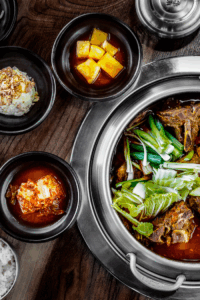
Korean food is built around rice, soup, fermented ingredients, vegetables and dishes shared at the table. The side dishes, or banchan, are part of the meal rather than optional extras, and they vary according to the restaurant, season and region.
Seoul gives you access to food from across the country. Try seolleongtang or gomtang for breakfast, market snacks during the day and barbecue, fried chicken or a jjigae in the evening. Look beyond restaurants with very long menus. A busy room serving one soup, one type of noodle or one cut of meat is often a better choice.
Jeonju is closely associated with bibimbap and elaborate meals accompanied by numerous banchan. Busan is known for seafood, milmyeon wheat noodles, dwaeji gukbap pork soup and eomuk fish cakes. Gyeongju has traditional sweets such as hwangnam-ppang, while Jeju cooking uses black pork, abalone, hairtail fish, seaweed and local citrus.
Street food changes with both location and season. Tteokbokki, hotteok, mandu, eomuk and bungeoppang are easy entry points, but street stalls represent only one part of Korean eating. Traditional markets are also places to sit down for noodles, pancakes, raw fish, soups and set meals.
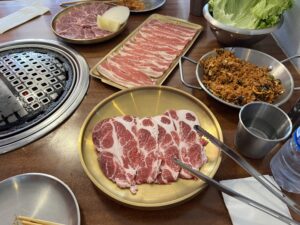
Korean barbecue is a social meal and usually works best with at least two people. Meat is grilled at the table and eaten with leaves, garlic, sauces and banchan. Staff may take over the grill, especially when a particular cut needs careful cooking. Let them do so.
Fermentation is central to Korean flavour. Kimchi differs between households and regions, while doenjang, gochujang and ganjang provide the base for many soups, stews, marinades and sauces. Once you recognise these ingredients, Korean menus become much easier to understand.
Drinking also follows social conventions. Soju is frequently shared with a meal, and makgeolli is particularly good with pajeon. Pour for other people before filling your own glass and use both hands when giving or receiving a drink in a formal or age-conscious setting.
Our guide to South Korean food and the dishes worth trying covers bibimbap, kimchi, banchan, samgyeopsal, tteokbokki, naengmyeon, ganjang gejang, fried chicken, bingsu and the dining rules that are useful once you sit down at the table.