Rome Travel Guide
Rome needs four full days: one for ancient Rome, one for Vatican City, one for the historic centre and one for Trastevere, Testaccio or another lived-in district.
Rome has always been close to home for us. Growing up within reach of the capital meant being there always, returning to the same neighbourhoods at different ages and learning that distance matters more here than a map initially suggests.
The Colosseum, Vatican Museums, Pantheon and Trevi Fountain dominate most first itineraries. They also sit in separate parts of a large city, each surrounded by streets and neighbourhoods that deserve time of their own.
Ancient Rome can occupy a complete day once the Roman Forum and Palatine Hill are included. The Vatican Museums require several hours before you even reach St Peter’s Basilica. The historic centre is walkable, though its density turns a short route into a day of churches, fountains, squares and archaeological remains.
Rome also has a daily life beyond these monuments. Testaccio is closely connected to Roman cooking. Trastevere changes completely between morning and evening. Prati has broad streets and restaurants used by residents as well as Vatican visitors. San Giovanni, Garbatella, Ostiense and Pigneto belong to a modern city that continued developing long after the imperial and papal periods.
Four days provides a realistic introduction. Five or six days creates room for museums, the Appian Way, neighbourhoods outside the centre and meals that are chosen carefully rather than accepted wherever a sightseeing day happens to end.
Areas and Neighbourhoods
Rome has 22 administrative districts called municipi, along with traditional rioni, quarters and modern neighbourhoods. For trip planning, it is more practical to divide the city according to geography and transport.
| Area | Main reasons to visit | Recommended time |
|---|---|---|
| Ancient Rome and Monti | Colosseum, Forum, Palatine Hill and imperial history | 1 day |
| Historic centre | Pantheon, Trevi Fountain, Piazza Navona and Campo de’ Fiori | 1 day |
| Vatican City and Prati | Vatican Museums, St Peter’s Basilica and papal Rome | 1 day |
| Trastevere and Gianicolo | Medieval streets, churches, restaurants and views | Half to one day |
| Testaccio, Aventine and Ostiense | Roman food, markets, archaeology and modern culture | 1 day |
| Villa Borghese and Flaminio | Art museums, parkland and modern architecture | Half to one day |
| San Giovanni and the Appian Way | Basilicas, catacombs and ancient roads | 1 day |
| Esquilino and Termini | Transport, markets, churches and multicultural Rome | Half a day |
Ancient Rome and Monti
The Colosseum, Roman Forum and Palatine Hill form one archaeological area and should be planned together. Visiting all three requires at least four hours, often longer for anyone with a serious interest in Roman history.
The Colosseum has a fixed entry time, while access to the Forum and Palatine follows the conditions of the ticket purchased. Underground, arena and full-experience tickets include different areas. Buy through the official Colosseum ticketing website and read the inclusions before paying.
Begin early, especially from May to September. Shade is limited across the Forum and Palatine, and the uneven surfaces make comfortable shoes essential. Carry water and refill it at Rome’s public drinking fountains.
The Capitoline Hill and Capitoline Museums sit beside the Forum but require several additional hours. Place them on another day unless they are a higher priority than the Colosseum interior.
Monti lies north of the archaeological area. Its steep streets, small squares and restaurants make it a practical place for lunch or dinner after the ancient sites. Accommodation here provides quick access to the Colosseum and Termini, although some streets become noisy in the evening.
The Historic Centre
The historic centre contains the Pantheon, Piazza Navona, Campo de’ Fiori, Trevi Fountain, the Spanish Steps and hundreds of smaller churches, palaces and archaeological fragments.
These landmarks can be connected on foot, but grouping all of them into a hurried half-day leaves no time for interiors or the streets between them. A full day is more realistic.
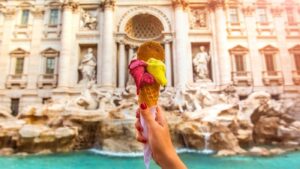
Start early at the Trevi Fountain or Spanish Steps, then move towards the Pantheon and Piazza Navona. Since February 2026, the controlled area closest to the Trevi Fountain basin has required a small ticket for most non-residents during official visiting hours. The monument can still be seen from the surrounding public space. Check the current access arrangements before visiting.
The Pantheon also requires a ticket. It remains an active church, so opening times can change for religious services. Advance booking is useful during weekends and the busiest travel periods.
Campo de’ Fiori functions differently throughout the day. The morning market is now heavily connected to tourism, while evenings centre on bars and restaurants. The surrounding streets towards the Jewish Ghetto are more interesting for food and history than the square alone.
The Jewish Ghetto contains the Portico of Octavia, the Great Synagogue and a distinctive Roman Jewish food tradition. This is the area to understand the difference between carciofi alla giudia, deep-fried whole artichokes, and carciofi alla romana, braised with herbs.
Vatican City and Prati
Vatican City is an independent state within Rome. The Vatican Museums, Sistine Chapel, St Peter’s Basilica and St Peter’s Square are separate parts of the visit.
The Vatican Museums require at least three hours. The route is long, crowded and filled with important works far beyond the Sistine Chapel. Choose a smaller number of collections to follow carefully rather than trying to absorb every room.
Tickets should be purchased only through the official Vatican Museums website. Similar-looking reseller websites frequently charge far more than the official price.
St Peter’s Basilica has no general admission fee, although security queues can be lengthy. The dome, treasury and some additional areas require separate tickets. Shoulders and knees must be covered in the basilica and Vatican Museums.
The passage sometimes used by guided groups between the Sistine Chapel and St Peter’s Basilica is not guaranteed for independent visitors. Plan the two entrances separately unless your authorised tour specifically includes the connection.
Prati surrounds the Vatican on the Italian side. Its broad streets, shops and restaurants make it a practical area for lunch after the museums. Walking a few blocks away from St Peter’s Square usually improves the choice of bars and restaurants.
Trastevere and Gianicolo
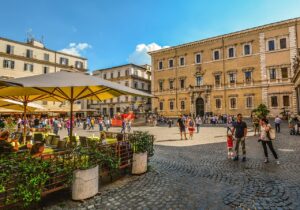
Trastevere lies across the Tiber from the historic centre. Santa Maria in Trastevere, Santa Cecilia and the streets around Piazza San Cosimato provide the main cultural points of reference.
The neighbourhood is calmest in the morning. By evening, the streets closest to Piazza Trilussa and Piazza Santa Maria in Trastevere become heavily crowded.
Trastevere contains excellent restaurants alongside many kitchens dependent on constant tourist traffic. A busy terrace and a handwritten-looking menu do not automatically indicate traditional cooking. Our selection of restaurants in Trastevere focuses on places where the food remains the reason to visit.
From Trastevere, climb or take transport towards the Gianicolo for broad views across Rome. The terrace near Piazzale Garibaldi is particularly useful around sunset, though the walk is steep.
The Gianicolo cannon is fired at noon each day, a tradition that has continued in different forms since the nineteenth century.
Testaccio, Aventine and Ostiense
Testaccio is one of the most important districts for understanding Roman food. Its history is connected to the former slaughterhouse, food markets and the development of dishes using the quinto quarto, the parts of an animal left after the most valuable cuts were sold.
The Testaccio Market combines produce stalls, butchers and prepared food counters. Around the neighbourhood, traditional trattorias serve carbonara, gricia, coda alla vaccinara and trippa.
Monte Testaccio is an artificial hill formed from fragments of ancient Roman olive-oil containers. Several restaurants and clubs are built around its base, where archaeological layers can sometimes be seen inside the premises.
The Aventine Hill lies nearby. The Orange Garden, Santa Sabina and the view through the Knights of Malta keyhole can be combined into a walk before descending towards the Pyramid of Cestius.
Ostiense continues southeast through former industrial areas. Centrale Montemartini displays ancient sculpture inside a converted power station, creating one of Rome’s most coherent museum experiences away from the main archaeological sites.
Villa Borghese and Flaminio
Villa Borghese is Rome’s central park and contains the Galleria Borghese, museums, gardens and paths extending towards Piazza del Popolo.
The Galleria Borghese has strict timed entry and limited capacity. Tickets should be booked well in advance. The collection includes major works by Bernini, Caravaggio, Raphael and Titian within a villa designed as part of the experience.
Do not confuse the museum with the park. Entry to Villa Borghese itself is free, and the grounds can be crossed on foot between the Spanish Steps area, Piazza del Popolo and the northern districts.
Flaminio lies beyond Piazza del Popolo and includes MAXXI, Renzo Piano’s Auditorium Parco della Musica and modern residential architecture. It is a useful extension for visitors interested in contemporary Rome.
San Giovanni and the Appian Way
San Giovanni is centred on the Basilica of St John Lateran, the cathedral of Rome. Nearby are the Holy Stairs and Santa Croce in Gerusalemme.
The Appian Way begins farther south and requires a separate half-day or full day. Parts of the ancient road can be explored on foot or by bicycle, with catacombs and archaeological sites along the route.
Traffic still uses sections of the road, and the distances between sites are substantial. Check opening days carefully because the catacombs do not all close on the same day.
Sunday traditionally brings reduced traffic on parts of the route and is often a more comfortable day for cycling or walking.
Esquilino and Termini
The area around Termini is mainly useful for transport, but it also contains Santa Maria Maggiore, the Baths of Diocletian, Palazzo Massimo and the streets of Esquilino.
Piazza Vittorio and the surrounding neighbourhood reflect several generations of migration to Rome. Food shops and restaurants here extend beyond traditional Roman cooking and include strong Chinese, South Asian, East African and Middle Eastern influences.
Staying near Termini can save time when using trains or airport transport. Check the exact street and walking route before booking. The immediate station area changes quickly from one block to another and is less pleasant late at night than Monti or the historic centre.
Planning Your Trip
Rome has two main airports: Fiumicino and Ciampino.
Fiumicino is the larger airport. The Leonardo Express travels directly to Roma Termini in 32 minutes, while the FL1 regional train stops at stations including Trastevere, Ostiense and Tiburtina. Choose according to the location of your accommodation rather than automatically travelling to Termini. Current rail information is available through the official airport transport page.
Ciampino is served mainly by low-cost airlines. Coaches connect the airport with Termini, while the Ciampino Airlink combines a bus with a train journey.
High-speed trains connect Rome with Florence, Bologna, Milan, Naples and other Italian cities. Roma Termini has the largest number of services. Roma Tiburtina is more convenient for accommodation in the eastern or northern parts of the city.
Book these visits before arrival:
- Colosseum, Roman Forum and Palatine Hill
- Vatican Museums
- Galleria Borghese
- Domus Aurea, if it is a priority
- Special underground or archaeological tours
- Popular restaurants with limited seating
Choose accommodation according to the focus of the trip:
- Pantheon, Piazza Navona and Campo de’ Fiori provide maximum walkability at higher prices.
- Monti works well for ancient Rome and Termini.
- Prati is convenient for the Vatican and generally calmer at night.
- Trastevere has evening atmosphere but can be noisy.
- Testaccio has strong food connections and fewer conventional tourist crowds.
- The Spanish Steps area is central and expensive.
- San Giovanni provides metro access and more residential surroundings.
Restaurant planning matters in Rome. Many traditional kitchens close one day a week, and popular trattorias may be full several days ahead. Our Rome restaurant guide covers trattorias, pizzerias, bakeries, markets, wine bars, coffee shops and fine dining across the city.
Rome’s public drinking fountains are called nasoni. Their water is safe to drink unless a sign states otherwise. Carrying a refillable bottle is particularly useful during summer and at archaeological sites.
Best Itinerary
Four days gives a first-time visitor enough room for the principal historical periods and one part of residential Rome.
Day 1: Ancient Rome
Begin at the Colosseum with a pre-booked morning entry. Continue through the Roman Forum and Palatine Hill.
After leaving the archaeological area, walk towards the Capitoline Hill for the view over the Forum. Visit the Capitoline Museums only if you still have several hours and enough energy for a major collection.
Spend the evening in Monti or move towards Celio and San Giovanni for dinner.
Day 2: Historic Centre
Start at the Trevi Fountain before the busiest part of the day. Continue to the Spanish Steps, Piazza del Popolo and the edge of Villa Borghese.
Move south towards the Pantheon, Piazza Navona and Campo de’ Fiori. Continue into the Jewish Ghetto and finish around Largo di Torre Argentina.
This route covers considerable distance. Use a bus or taxi to remove one section if you plan to enter several churches and monuments.
Day 3: Vatican City and Prati
Book the Vatican Museums for the morning. Allow at least three hours, then take a proper break before continuing to St Peter’s Basilica.
Spend the late afternoon in Prati or walk towards Castel Sant’Angelo and cross the river into the historic centre.
Avoid adding the Colosseum or a long Trastevere evening after a complete Vatican day. Museum fatigue changes the quality of the visit long before people admit it.
Day 4: Trastevere, Testaccio and the Aventine
Begin in Testaccio with the market and a walk around the neighbourhood. Continue towards the Pyramid, the Non-Catholic Cemetery and the Aventine Hill.
Cross the river into Trastevere during the afternoon. Visit Santa Cecilia and Santa Maria in Trastevere before the streets become busiest.
End with dinner in Trastevere or return to Testaccio for a more focused Roman meal.
With a fifth day, choose the Galleria Borghese and Flaminio, or spend the day along the Appian Way. A sixth day can be used for Ostia Antica, Tivoli or another district within Rome.
Getting Around Rome
Rome is best explored through a combination of walking, metro, buses and occasional taxis. The historic centre has limited metro coverage, while major archaeological sites and outer districts can be far apart.
The main metro lines are:
- Line A for the Vatican area, Piazza di Spagna, Piazza del Popolo and Termini
- Line B for the Colosseum, Circo Massimo, Piramide, Ostiense and EUR
- Line C for San Giovanni and eastern Rome
Buses cover the centre more thoroughly than the metro but are affected by traffic. Tram services are useful in selected districts, particularly around Trastevere, though maintenance work can lead to temporary replacement buses.
ATAC tickets can be bought at metro stations, newsagents, tobacconists and through authorised apps. Contactless payment is available across much of the network. Check current ticket and pass options before deciding whether a time-based travel card is worthwhile.
Central Rome is walkable only in sections. The Vatican to Colosseum journey, for example, is long enough to consume energy needed for the sites themselves.
Official taxis are white and display identification. Taxi ranks are found near major squares, stations and attractions. App-based booking is useful, although the ride still takes place in an authorised taxi.
Driving in Rome
A car is unnecessary for a city visit. Central Rome contains restricted traffic zones monitored by cameras, and entering without authorisation can produce a fine long after the rental has been returned.
Parking is limited, traffic is heavy and many streets are difficult to navigate without local knowledge. Accommodation inside a restricted zone may provide instructions for authorised entry, but this must be confirmed before driving in.
Rent a car when leaving Rome if the city is the first stage of a road trip. High-speed trains remain more practical for Florence, Naples, Bologna and Milan.
A car becomes useful for rural Lazio, smaller towns and accommodation without rail access. It is unnecessary for Tivoli, Ostia Antica or the principal Castelli Romani towns, all of which have public transport connections.
When to Visit Rome
April, May, October and early November generally provide the best balance of temperature and daylight. These periods are still busy, particularly around Easter and public holidays.
| Period | Conditions | Main considerations |
|---|---|---|
| March–May | Mild to warm with variable rain | Excellent for walking, with high demand around Easter |
| June–August | Hot, dry and very busy | Limited shade at archaeological sites |
| September–October | Warm days and cooler evenings | Strong period for city exploration and outdoor dining |
| November–February | Cooler with shorter days | Fewer visitors outside Christmas and New Year |
July and August can be extremely hot. Ancient sites, large squares and queues provide little shelter, while public transport can feel uncomfortable during the middle of the day.
August no longer means that Rome empties completely. Some independent restaurants and shops still close around Ferragosto on 15 August, while the main tourism districts remain busy.
Holy Week and Easter bring religious events and large numbers of visitors to the Vatican. Christmas and New Year also increase demand around the historic centre and St Peter’s Square.
Early mornings and evenings should be treated as useful sightseeing periods during warm months. Use the middle of the day for lunch, churches, museums or rest.
How Many Days in Rome?
Four complete days is the minimum we recommend for a first visit covering the major areas without reducing every site to a photograph.
| Length of stay | Realistic itinerary |
|---|---|
| 1 day | One historical area, such as ancient Rome or the historic centre |
| 2 days | Ancient Rome and the historic centre |
| 3 days | Add Vatican City |
| 4 days | Add Trastevere, Testaccio and the Aventine |
| 5 days | Add Villa Borghese, Flaminio or the Appian Way |
| 6–7 days | Explore outer districts and take one day trip |
A weekend can introduce Rome but cannot cover it comprehensively. Vatican City and the Colosseum each occupy a substantial part of a day once queues, security and surrounding sites are included.
Seven days does not feel excessive if art, archaeology or food is a major interest. Rome contains enough museums and neighbourhoods to fill the time without relying on day trips.
Budget
Rome can be expensive in the most central districts, while food and accommodation prices become more varied once you move beyond the streets surrounding the principal monuments.
A realistic daily budget per person, based on two people sharing accommodation, is:
| Travel style | Daily budget per person |
|---|---|
| Budget | €100–€160 |
| Mid-range | €180–€300 |
| Comfortable | €350 and above |
Accommodation is usually the largest expense. Prices rise around Easter, spring weekends, major events and the Christmas period.
A budget day can combine free churches and public spaces with pizza by the slice, a bakery lunch and limited transport. Paid archaeological sites and museums can quickly add €20 to €40 per person before tours.
Central restaurants with aggressive street solicitation often charge more for weaker food. Moving away from major squares can improve the meal, though famous neighbourhoods such as Trastevere also contain inflated prices.
Rome applies a city tax to tourist accommodation. It is normally charged per person, per night and varies according to the property category. Check whether it is included in the rate shown when booking.
Restaurant menus may include coperto or a bread charge. Service and cover charges should be displayed. Tipping is optional, with a small amount or roughly 5 to 10 percent used for particularly good table service.
Food
Roman food is based on strong flavours, careful timing and a relatively small set of ingredients used in highly specific ways. Pecorino Romano, guanciale, black pepper, seasonal vegetables and the less expensive cuts of meat appear throughout the traditional repertoire.
Our guide to what to eat in Rome provides the full overview. The dishes below are the ones that help explain Roman cooking.
The Four Roman Pastas
Carbonara, cacio e pepe, gricia and amatriciana are often treated as interchangeable tourist staples. Each has its own balance and technique.
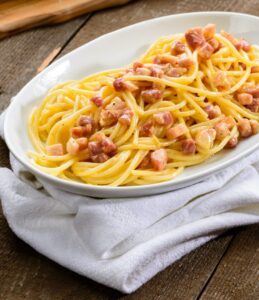
- Carbonara combines eggs, guanciale, Pecorino Romano and black pepper. Cream has no place in the traditional preparation.
- Cacio e pepe uses Pecorino Romano, black pepper and pasta water to create an emulsion.
- Gricia combines guanciale, Pecorino Romano and black pepper without tomato or egg.
- Amatriciana adds tomato to the relationship between guanciale and pecorino.
Poor versions are common in streets with constant visitor traffic. Overcooked pasta, excessive sauce and cream are warning signs. Our selection of carbonara in Rome explains where we eat it and what distinguishes the versions we recommend.
Roman pasta extends beyond these four dishes. Gnocchi are traditionally associated with Thursday, while several trattorias serve seasonal pasta with artichokes, broad beans, oxtail sauce or pajata. Our guide to pasta restaurants in Rome covers both famous institutions and neighbourhood kitchens.
Traditional Main Dishes
Roman cooking developed through home kitchens, trattorias and the slaughterhouse culture of Testaccio.
Look for:
- Coda alla vaccinara, oxtail braised with tomato, celery and aromatics
- Trippa alla romana, tripe with tomato, mint and pecorino
- Saltimbocca alla romana, veal with prosciutto and sage
- Abbacchio, young lamb prepared roasted, grilled or with herbs
- Pollo con i peperoni, particularly associated with summer and Ferragosto
- Pajata, traditionally made from the intestine of a milk-fed calf
- Baccalà, salt cod served fried or cooked in sauce
Several of these dishes are rich and substantial. Ordering pasta, a full main course and dessert for each person can be excessive. Sharing starters or choosing between pasta and a main course is completely reasonable.
Artichokes and Seasonal Vegetables
Artichokes are at their best during their natural winter and spring season.
Carciofi alla romana are trimmed, filled with herbs and braised until tender. Carciofi alla giudia are flattened and deep-fried until the outer leaves become crisp. The second preparation belongs specifically to the Roman Jewish tradition.
Other seasonal dishes include puntarelle with anchovy dressing, broad beans with pecorino, chicory sautéed with garlic and peperoncino, and zucchini flowers filled with mozzarella and anchovy before frying.
Menus displaying artichokes throughout the hottest summer months are often using frozen products or appealing to visitor expectations rather than seasonality.
Roman Pizza and Street Food
Roman round pizza is thin and crisp, particularly at traditional evening pizzerias. Pizza al taglio is baked in rectangular trays, cut with scissors and sold by weight.
The two styles serve different purposes. Round pizza belongs to a seated meal, usually accompanied by fried starters. Pizza al taglio is a quick lunch or snack, with the price determined after the slice is weighed.
Typical fried foods include supplì filled with tomato rice and mozzarella, stuffed zucchini flowers, ascolana olives and salt-cod fillets.
Our guide to pizza in Rome covers traditional pizzerias, pizza al taglio and newer interpretations across several districts.
Breakfast, Coffee and Maritozzi
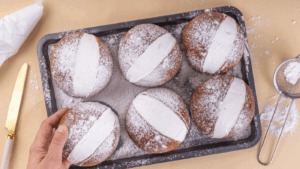
A Roman breakfast is usually short and sweet: coffee with a cornetto, maritozzo or another pastry, often eaten standing at the bar.
A maritozzo is a soft bun cut open and filled generously with whipped cream. It is simple enough that the quality depends on the dough, freshness and cream rather than decoration.
Our selection of breakfast places in Rome includes traditional pastry shops and bars used by residents.
Ordering un caffè gives you an espresso. Cappuccino is normally associated with breakfast, though a bar will still prepare one later in the day. Prices are lower when drinking at the counter than when sitting at a table in major tourist areas.
Gelato
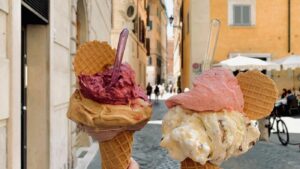
Good gelato should have colours consistent with its ingredients. Pistachio is muted green or beige, banana is pale, and fruit flavours change with the season. Gelato piled high above the container often depends on stabilisers and visual display.
Look for covered metal containers, seasonal flavours and a short ingredient list. Our guide to gelato in Rome contains the places we trust across the city.
Roman summer also brings grattachecca, shaved ice mixed with syrups and fruit. It should not be confused with granita, which has a different preparation and texture.