

Seoul is not particularly difficult to visit.
That is partly why it is so easy to get wrong. The subway works exceptionally well. There are hotels everywhere. Food is abundant. The city is safe to navigate independently, and an enormous amount of information is available before you arrive.
But information is not the same thing as understanding.
First-time visitors often arrive with hundreds of saved places and very little idea of how those places relate to one another. They know which bakery went viral, where a drama was filmed and which neighbourhood everybody says is “must-visit,” but not whether crossing Seoul for any of them is actually worth an hour of their day.
After returning to Seoul repeatedly over many years, we think the biggest Seoul travel mistakes are rarely about missing an attraction. They are about using the city badly: travelling too much, researching the wrong things, following popularity instead of interest, and expecting Seoul to organise itself around the version you saw online.
Here are the mistakes we would avoid.
Mistake 1: Planning Seoul as a collection of attractions instead of a city
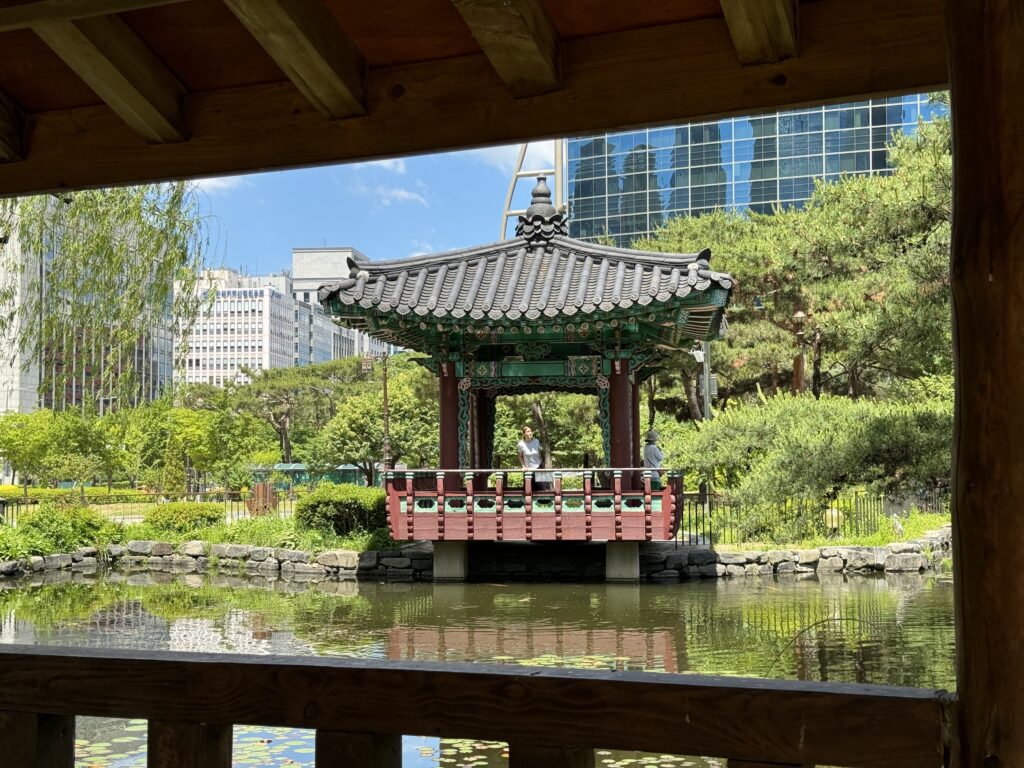
This is probably the mistake that creates all the others.
You save Gyeongbokgung.
Then a café in Seongsu.
Then a restaurant in Hongdae.
Then something in Gangnam.
Then a shop in Myeongdong.
Individually, everything looks reasonable.
Put them into one day and you have created a public-transport endurance test.
Seoul is not a city where we would organise an itinerary by ranking attractions from one to twenty and visiting them in that order.
Plan Seoul geographically.
Spend a day around Jongno, the palaces, Insadong and nearby areas.
Combine Hongdae with Yeonnam and perhaps Mangwon.
Visit Seongsu when you want to experience Seongsu, not between two completely unrelated appointments elsewhere.
If you are heading south of the Han River, give yourself a reason to be there rather than crossing the river repeatedly.
The practical question should always be:
What else makes sense while we are already in this part of Seoul?
That one change can save hours over a five-day trip.
Mistake 2: Choosing where to stay because you recognise the neighbourhood
Myeongdong. Hongdae. Gangnam.
These names appear everywhere, so they feel like obvious places to book a hotel. That doesn’t make all of them good bases for your trip.
If most of what you want to experience is around Jongno, the palaces, Euljiro and central Seoul, staying far south simply because “Gangnam” is the Seoul neighbourhood you recognise creates unnecessary commuting.
Likewise, Hongdae is excellent if you actually want Hongdae’s energy and nightlife. It is less brilliant if you want quiet evenings and plan to spend most mornings in historic Seoul.
And Myeongdong is extremely convenient, but convenience and neighbourhood character are two different things.
The best place to stay in Seoul is not the most famous neighbourhood. It is the neighbourhood that reduces friction for the version of Seoul you want to experience.
We cover that decision in much more detail in our guide to where to stay in Seoul, but the simple rule is to look at your itinerary before your hotel.
Not the other way around.
Mistake 3: Assuming Google Maps will work exactly as it does at home
This is one practical mistake worth knowing before you land. Do not arrive in Korea with Google Maps as your only navigation tool.
We recommend Naver Map and Kakao Map for navigation in Korea; Naver Map is the country’s most widely used online map and provides public-transport, walking and other route information.
Google Maps does not offer the same full navigation functionality in Korea that many international travellers are accustomed to.
Download Naver Map before travelling and start saving places there rather than discovering the problem outside a subway station with 4% battery.
Also remember that searching by an English business name does not always produce the result you expect.
Having the Korean name or address available can save time. This is a tiny piece of preparation that makes the entire trip easier.
Mistake 4: Treating subway time as dead time that doesn’t count
Google or Naver tells you something takes 37 minutes. So you mentally allocate 37 minutes. But you are not teleporting from restaurant table to restaurant table.
You need to walk to the station. Find the correct entrance. Potentially walk what feels like the length of a regional airport underground.
Change lines. Find the correct exit. Walk to the actual place. And repeat.
One 40-minute transfer isn’t a problem. Five of them change the day.
This is why a technically possible Seoul itinerary can still be a bad one.
Travel time should be part of the experience you are designing, not something you pretend happens between experiences.
Mistake 5: Assuming a place is worth crossing Seoul for because it went viral
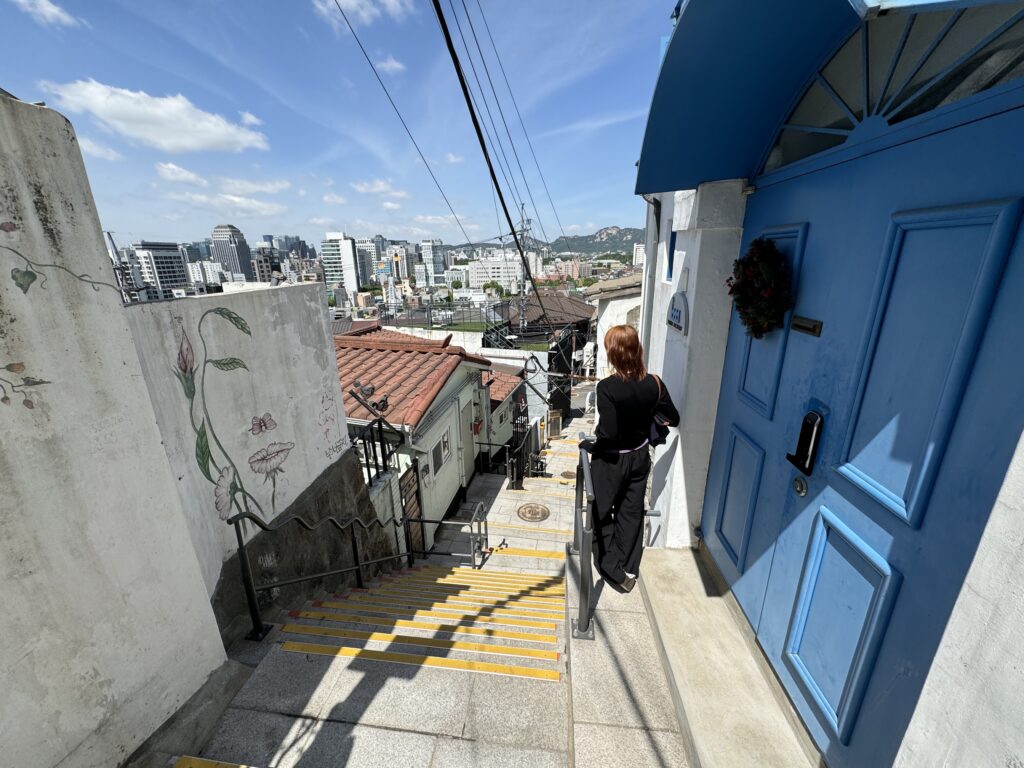
Seoul’s ability to produce trends is almost industrial.
A bakery becomes essential. A café introduces one photogenic dessert. A new flagship opens. A convenience-store combination appears everywhere. A pop-up suddenly has a two-hour queue.
Six weeks later, attention has moved somewhere else.
There is nothing wrong with going. We’ve gone to plenty of fashionable places ourselves. But we use a very simple test now:
Would we still want to go there if we had never seen it online?
If yes, great. If no, crossing Seoul and waiting 90 minutes suddenly starts looking considerably less sensible.
This matters especially in places such as Seongsu, where temporary retail, flagships and pop-up culture are part of the neighbourhood’s identity. The interesting thing is not completing a list of current pop-ups; it is seeing how quickly Seoul turns shopping, branding and entertainment into the same activity.
Trend culture can tell you something about Seoul. Following trends blindly tells you much less.
Mistake 6: Building a K-drama or K-pop scavenger hunt instead of a trip
We understand why people do this. Korean entertainment is the reason many visitors became interested in the country in the first place. If you love a particular drama and want to see somewhere connected to it, go.
If visiting something related to a favourite artist genuinely means something to you, include it. The mistake is assuming that recognition automatically makes a place interesting.
A completely ordinary building does not necessarily become worth a 90-minute round trip because two fictional characters stood outside it. A café does not become extraordinary because an actor once drank coffee there. And hanging around entertainment-company buildings hoping to encounter an idol is not something we would recommend at all.
Even if someone famous walks past, a person going to work is not a tourist attraction.
Let Korean media give you reasons to become curious about Seoul. Don’t let it dictate every place you visit.
Mistake 7: Assuming “local” automatically means better and “touristy” means bad
This one works in both directions. Travellers become obsessed with finding the “authentic” Seoul and begin treating popularity as contamination.
Gwangjang Market is touristy. Myeongdong is touristy. Bukchon receives enormous numbers of visitors.
Does that mean you should avoid all of them? No.
It means you should understand what they are.
A famous market can still be interesting. A heavily commercial district can still be useful. A major historical attraction can still deserve your time.
At the same time, a restaurant being full of locals does not automatically mean it serves the greatest meal of your life.
The goal is not to win at authenticity. It is to understand the context of the place you are visiting.
That approach is much more useful than spending your trip trying to prove you found the Seoul other tourists missed.
Mistake 8: Treating Gwangjang Market as your introduction to all Korean food
Visit Gwangjang if you want to. We do and we eat Kkwabaegi, Korean twisted donuts. It has history, energy and plenty to eat.
But its most famous food section is now firmly embedded in Seoul’s international tourism circuit.
The mistake is not going there. The mistake is eating bindaetteok, gimbap and yukhoe there and assuming you have now experienced how Seoul eats. Some of our best meals in Korea have happened in small restaurants we never researched, where the menu was specialised, English was limited and the people around us were much more interested in why we had wandered in than in whether we had found Seoul’s “best” anything.
Research dishes. Understand what you want to try. Save exceptional restaurants when they genuinely matter. But leave some meals unplanned.
Seoul has too much good food to make every meal dependent on somebody else’s ranking.
Read our guide on the best food to try in South Korea.
Mistake 9: Planning every meal before you arrive
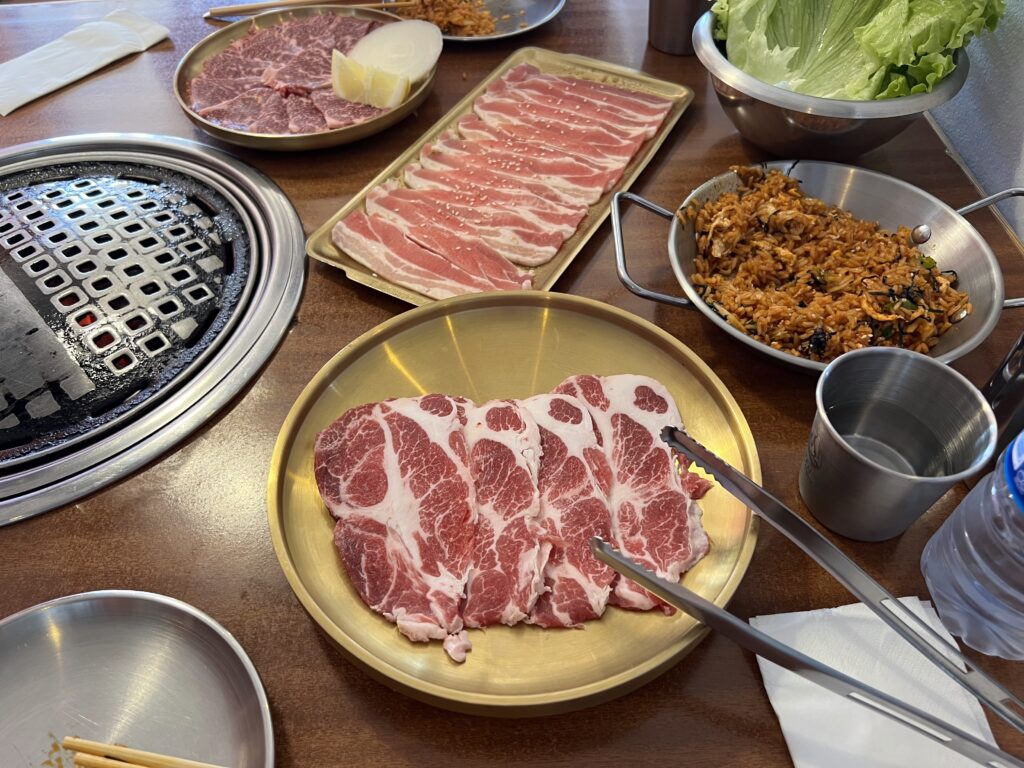
Food-content culture has become slightly absurd and in South Korea this is extremely visible.
People now arrive with breakfast, lunch, dinner, snacks and café stops scheduled days in advance.
That can make sense for a genuinely difficult reservation. It makes much less sense for an ordinary Tuesday lunch.
Korean restaurants often specialise heavily. You may find somewhere serving essentially one soup, one type of noodle, one meat or a small group of closely related dishes.
If it looks good and people are eating, you are allowed to walk in without first checking whether somebody on YouTube approves.
Some restaurants will disappoint you. That also happens at restaurants with three million TikTok views.
Leave room to discover food when you are hungry rather than only when your itinerary says it is time to eat.
Mistake 10: Going to Bukchon as if nobody lives there
Bukchon is one of the clearest examples of tourism forgetting that a neighbourhood existed before it became content.
It is beautiful. It is historically interesting. It is also residential.
Tourism pressure became significant enough for Seoul to designate a special management area. In the Bukchon Red Zone, tourist visits are restricted between 5 p.m. and 10 a.m., with enforcement measures in place.
That is not an eccentric local rule designed to make your holiday inconvenient. It exists because people live there.
Don’t shout. Don’t block entrances. Don’t photograph residents’ homes as if their front doors were part of a heritage attraction.
And don’t arrive outside permitted hours because that happened to be when your itinerary had a gap.
Being allowed to visit somewhere does not remove your responsibility to behave as a visitor.
Mistake 11: Assuming every famous Seoul experience has to be yours
You don’t have to wear hanbok. You don’t have to sing karaoke. You don’t have to go clubbing in Hongdae. You don’t have to visit Gangnam. You don’t have to buy skincare. You don’t have to queue for Korean barbecue. You don’t have to recreate convenience-store meals you saw online.
Travel content often turns cultural experiences into compulsory activities. They aren’t.
For example, visitors wearing qualifying hanbok can currently enter Seoul’s royal palaces for free under Korea Heritage Service rules. You’ll see hanbok rental recommended everywhere partly because of that. We personally don’t rent traditional Korean clothing simply to obtain free admission or take palace photographs. It isn’t an experience that appeals to us. That doesn’t mean you shouldn’t do it if you genuinely want to.
It means you are allowed to decide which parts of the standard Seoul experience actually mean something to you.
That sounds obvious. Travel algorithms have made it surprisingly easy to forget.
Mistake 12: Underestimating how much you will walk
Seoul has fantastic public transport. You will still walk an enormous amount. Stations themselves can involve substantial distances.
Neighbourhoods have hills. Palaces are large. Markets encourage wandering. Hiking is hiking. And the 15-minute walk back to your hotel feels considerably different after twelve hours outside.
Comfortable shoes are not one of those travel-blog tips we add because every packing guide requires them.
Wear comfortable shoes. Your feet do not care whether they match your Seoul outfit.
Mistake 13: Avoiding the bus because the subway feels easier
Many first-time visitors understand the subway almost immediately and then use it for absolutely everything.
We get why: the system is predictable, maps are clear and there is very little anxiety involved.
But buses can be considerably more convenient for some journeys, especially when the alternative involves walking to a station, travelling, changing lines and walking again.
Naver Map is useful here because it compares public-transport routes rather than automatically treating the subway as the answer.
You don’t need to become a Seoul transport expert. Just don’t reject the bus because it feels less familiar.
Mistake 14: Expecting every part of Seoul to be awake when you are
One of the reasons rigid itineraries fail is that neighbourhoods have rhythms.
Historic attractions may make sense early. A shopping neighbourhood may not. A café district behaves differently at 9 a.m. and 4 p.m. Hongdae at lunchtime and Hongdae late on Friday night are almost different destinations.
Euljiro becomes much more interesting once people finish work. The Han River changes towards evening. Instead of asking only where you should go, ask:
When does this part of Seoul make sense?
That is one of the easiest ways to make the same itinerary noticeably better.
Mistake 15: Using all your evenings as recovery time
If you are sightseeing intensively from 8 a.m. and collapsing in your hotel immediately after dinner every night, you are missing an important version of Seoul.
The city is intensely social after work. Restaurants fill. Bars fill. People sit beside the river. Neighbourhoods that felt functional during the day become atmospheric.
Some of our favourite Seoul memories have involved very little more than dinner followed by walking around and seeing where the evening went.
You can always sleep later. Which leads directly to another mistake: scheduling every morning as though you are reporting for military duty.
Mistake 16: Ignoring Seoul’s mountains because you came for a city break
This is one mistake we made less and less as we returned. Seoul’s mountains are not geographically or culturally separate from the city. They are part of it.
Hiking participation is visible enough that Seoul now actively promotes urban hiking to international visitors, and recent city analysis found hiking destinations among the areas experiencing particularly strong growth in foreign visitor traffic.
We hike Bukhansan every time we return to Seoul. And almost every time, the hike ends at a restaurant near the mountain with Korean pancakes and makgeolli, surrounded by hikers who are delighted to tell us what we should order, how we should drink it and occasionally what we did wrong.
At this point we’ve repeated the ritual many times. It is still one of the experiences we most associate with Seoul.
If a mountain hike doesn’t appeal to you, don’t force it. But don’t assume Seoul’s outdoor life is irrelevant because you came to visit a megacity. The proximity of both is part of what makes Seoul unusual.
Mistake 17: Filling every empty hour because you are afraid of wasting the trip
An empty afternoon in Seoul is not failed planning.
Go for a walk. Stay longer over lunch. Sit beside the Han River. Go into a department store. Return somewhere you liked. Follow a street because it looks interesting. Stop because you’re tired.
Travel has become strangely obsessed with proving value through volume. But the memory of a trip rarely works that way.
You probably won’t remember the seventeenth attraction you managed to squeeze in.
You may remember the evening you had nothing planned and ended up somewhere you would never have researched.
The biggest Seoul mistake is trying to experience someone else’s city
The Seoul you meet before travelling is unusually persuasive.
It comes through dramas, music, food videos, beauty content, fashion, influencers, tourism campaigns and algorithms that become remarkably good at showing you more of whatever first made you interested.
By the time you arrive, you can have a detailed idea of what Seoul is supposed to look like. That can be useful.
It can also make you spend the trip checking reality against a version somebody else constructed for you.
After years of returning, our experience of Seoul has become almost the opposite.
We research less than we used to. We understand the geography better. We know which rituals we want to repeat and which famous things don’t interest us. We spend less time worrying about whether we’re missing something. And that has made the city considerably more interesting.
The objective of a first trip to Seoul should not be to reproduce the Seoul you already know. It should be to discover which parts of the city you want to know better.
You will miss things. That’s fine. Seoul will still be there if it gives you a reason to return.