

There is a dangerous moment when planning a trip to South Korea: you open the map, realise how good the transport system is, and start adding places. Seoul. Busan. Gyeongju. Jeju. Maybe Jeonju. Perhaps a day trip here. Another city there.
Technically, a lot of it is possible. That doesn’t make it a good itinerary.
After years of travelling around South Korea and returning repeatedly, we think the best South Korea itinerary is not the one that covers the most ground. It is the one where every destination adds something different to the trip and you have enough time to understand why you went there.
For most first-time visitors, that means starting with Seoul, travelling south through Gyeongju and Busan, and only adding Jeju or other parts of the country when there is enough time to do so properly.
The country’s transport infrastructure makes this relatively easy. The main Gyeongbu rail corridor connects Seoul with Busan and provides access to Gyeongju, while Korea’s extensive intercity bus system reaches many places outside the rail network.
But the fact that you can get from Seoul to Busan in roughly three hours by KTX is not permission to turn South Korea into a race.
Here is how we would plan the trip depending on how much time you have.
The South Korea itinerary we recommend for most first-time visitors
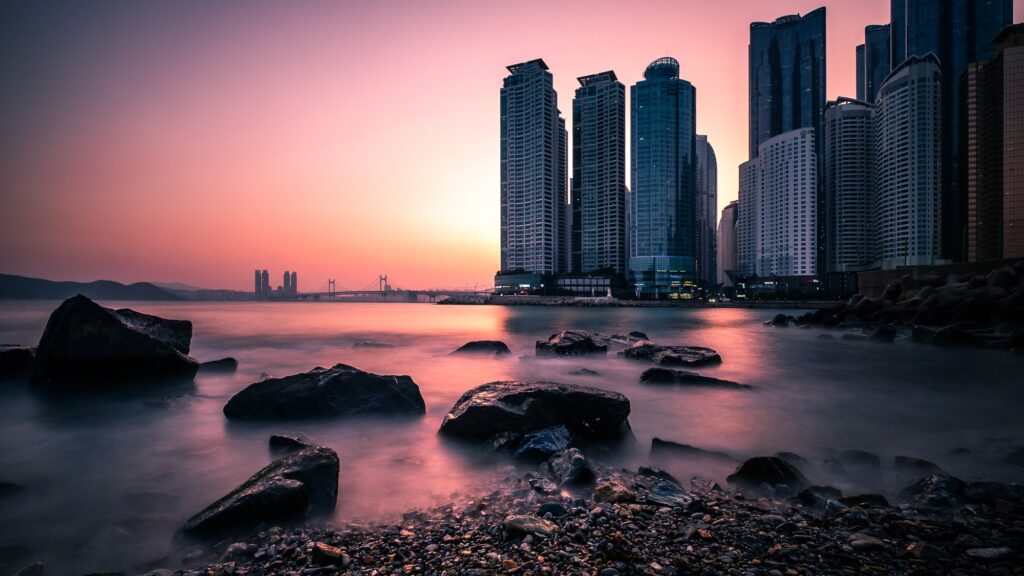
If this is your first trip to South Korea and you have around 10 days, our preferred route is very simple:
Seoul → Gyeongju → Busan
That’s it. It doesn’t look particularly ambitious on a map, and that’s precisely why it works.
You experience the scale and intensity of Seoul, encounter a completely different historical landscape in Gyeongju, and finish in Busan, where the sea, hills, markets and different pace immediately change the feeling of the trip.
More importantly, the route moves naturally south rather than repeatedly sending you back to Seoul.
For a first trip, we would rather spend 10 meaningful days across three places than technically visit five places and remember most of the journey as stations, airports and hotel check-ins.
10 days in South Korea: Seoul, Gyeongju and Busan
Days 1–5: Seoul
Give Seoul five days. We know how tempting it is to look at five days and think it is excessive when there is an entire country waiting outside the capital.
It isn’t. Seoul is enormous, and experiencing it properly is not simply a question of visiting Gyeongbokgung Palace, walking through Bukchon, shopping in Myeongdong and going to Hongdae at night.
The city reveals itself through its neighbourhoods. Spend time in old Seoul. Spend time around the Han River. Go to markets, cafés and restaurants without needing them all to be famous. See contemporary Seoul as well as historical Seoul. Have evenings where the only plan is dinner and whatever happens afterwards. Five days also gives you some protection against the reality of arriving after a long international flight. You don’t need your first morning in Korea to begin with a military schedule because you’ve allocated precisely 72 hours to one of the world’s largest metropolitan areas.
If five days feels generous before you arrive, it probably won’t once you are there.
Days 6–7: Gyeongju
From Seoul, travel south to Gyeongju. Gyeongju deserves its place on a first itinerary because it adds something neither Seoul nor Busan can give you. The city was the capital of the Silla kingdom, and its historical landscape includes royal tombs, Buddhist sites and archaeological remains. Plus three UNESCO World Heritage areas connected with this history. But history isn’t the only reason we recommend staying.
Gyeongju provides a pause. After several days in Seoul, the lower skyline, open archaeological spaces and slower rhythm create a noticeable shift.
Stay overnight.
There is a tendency to treat Gyeongju as something to squeeze between trains because many of its headline attractions can technically be visited quickly.
We think that misses part of its value. A destination does not have to occupy four days to deserve more than a day trip.
Days 8–10: Busan
Finish in Busan.
Three days gives you enough time to experience different parts of the city without spending the entire visit crossing it. And that matters because Busan is very spread out. The mistake here is collecting famous places from completely different parts of the city and assuming they belong together because they appeared on the same list of “best things to do in Busan.” They often don’t.
Choose areas deliberately.
See the coast. Eat seafood. Experience the markets. Explore neighbourhoods built into the hills. Spend time around the beaches without assuming beaches are the only reason to come.
Busan is South Korea’s second city, but it does not feel like a smaller Seoul. That difference is exactly why it works so well at the end of this itinerary.
Is 10 days enough for South Korea?
Ten days is enough for an excellent first trip to South Korea if you accept that you are not trying to see the entire country.
We would not add Jeju to this itinerary. You could.
There are frequent domestic connections, and Jeju is extremely accessible by air; Korea’s official tourism organisation notes that the Gimpo–Jeju route is one of the country’s major domestic connections.
But adding another flight, airport transfers, another hotel and another destination changes the rhythm of the trip.
If Jeju is your main reason for going to Korea, then absolutely restructure the route around it. Otherwise, save it for a longer trip.
Two weeks in South Korea: when you have room to add Jeju
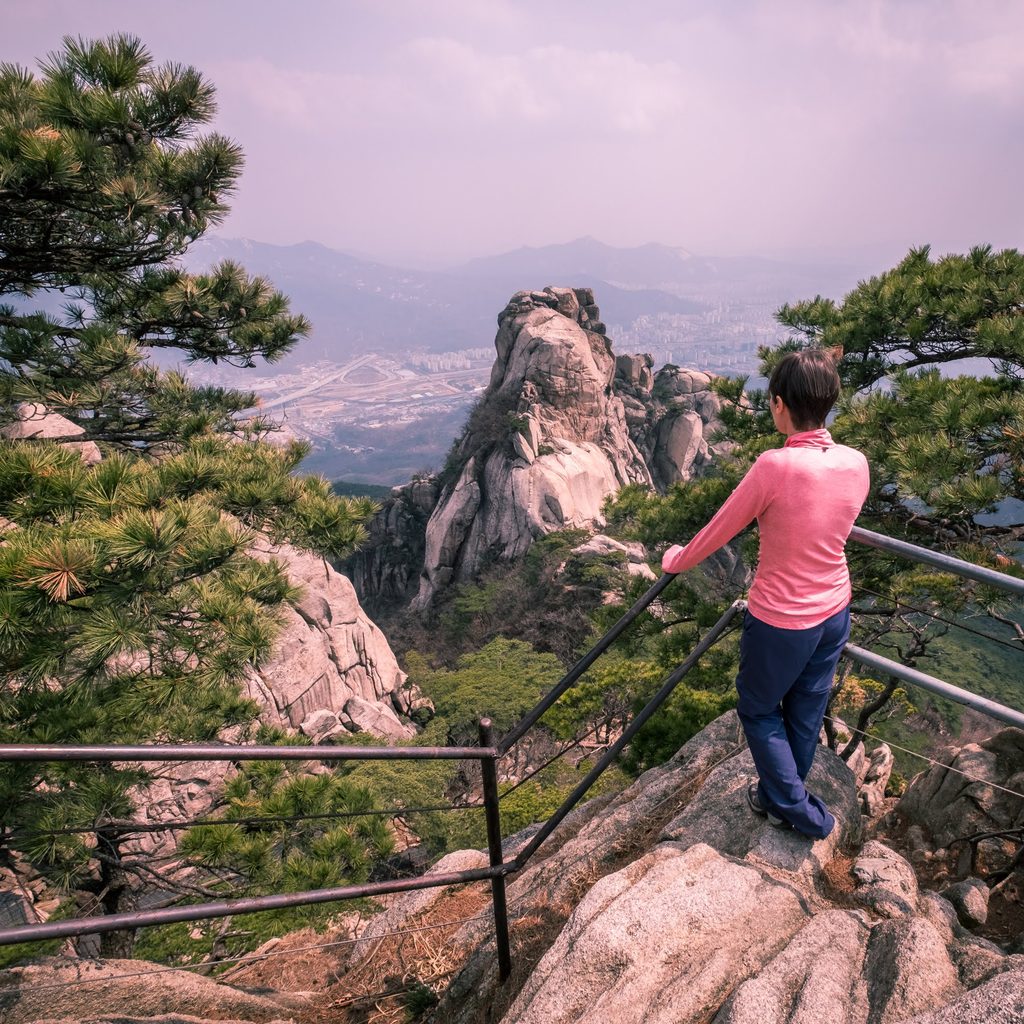
With two weeks in South Korea, the trip changes. You no longer need to choose quite so aggressively, and this is the point where we think Jeju can make sense without cannibalising the rest of the itinerary.
Our route would be:
Seoul → Gyeongju → Busan → Jeju
A rough allocation:
- Seoul: 5 days
- Gyeongju: 2 days
- Busan: 3 days
- Jeju: 4 days
That is already 14 days, so if your arrival and departure days significantly reduce sightseeing time, adjust rather than trying to protect every allocation at all costs.
Days 1–5: Seoul
We would keep the same five days. A common mistake when extending an itinerary is taking days away from places already worth the time so another destination can be added.
Fourteen days in Korea does not suddenly make Seoul a three-day city. Use the extra time to broaden the trip, not compress its strongest parts.
Days 6–7: Gyeongju
Keep two days for Gyeongju as well. You can see a lot in that time without having to rush through the major historical sites or arrive and leave on the same day.
It also continues to function as a natural transition between Seoul and Busan.
Days 8–10: Busan
Three days in Busan remains a good minimum. If cities, food and coastal life interest you more than nature, one very reasonable decision would actually be to give Busan four days and reduce Jeju slightly.
There is no prize for allocating identical amounts of time to destinations simply because an itinerary online did.
Days 11–14: Jeju
Now Jeju makes sense. Four days is still not enough to explore every corner of the island, but it gives you time to experience Jeju rather than simply landing, photographing a few landscapes and leaving again.
Jeju is not just “the beach part” of a South Korea itinerary. The island has volcanic landscapes, hiking, its own food culture and a rhythm that differs markedly from mainland cities.
It also requires different planning. Public transportation exists, but depending on where you want to go and how much you want to cover, renting a car can make exploring considerably easier.
This is another reason we prefer adding Jeju when you have enough time. If you constantly watch the clock because your flight back to Seoul leaves tomorrow, you have introduced an island into the itinerary without really giving yourself time for an island.
Three weeks in South Korea: stop following the standard route
If you have 3 weeks in South Korea, this is where the approach needs to completely.
If you have three weeks, we don’t think the answer is simply:
Take the two-week itinerary and add three more cities.
At three weeks, you finally have enough time to start travelling around South Korea according to your interests.
Keep the core if this is your first visit:
Seoul → Gyeongju → Busan
Add Jeju if you want it.
Then use the remaining time to explore a different side of Korea.
A three-week trip could look roughly like:
- Seoul: 5 days
- Another region or smaller destination: 2–3 days
- Gyeongju: 2 days
- Busan: 3–4 days
- Jeju: 4 days
- Additional slower travel / another destination: 2–3 days
The exact route is less important than what you do with the additional time.
Option 1: Add mountains and nature
South Korea’s mountains are not simply tourist attractions. Hiking is deeply embedded in recreational life, and getting outside the major cities shows you another side of the country entirely.
If this interests you, use part of the extra week around a mountain destination rather than adding another metropolis simply because its name appears in travel guides. We did hike extensively in South Korea and it’s been one of the most rewarding experiences ever.
Option 2: Add another food destination
Food is one of the strongest reasons to travel more slowly around South Korea. Regional specialities matter, and eating a dish where it originated can make much more sense than working through a generic list of “Korean foods to try” entirely in Seoul.
Jeonju (the birthplace of bibimbap) is an obvious candidate if food is particularly important to you, but the wider principle matters more:
let what you want to eat influence where you go.
A food-driven South Korea itinerary can be considerably more interesting than one constructed exclusively around attractions, especially if you plan to taste every possible Korean dish.
Option 3: Explore the east coast
With three weeks, the east coast becomes easier to incorporate without creating a logistical headache. Transport connections have also improved. The Donghae Line KTX-Eum began operating between Gangneung and Busan in December 2025, cutting that journey to around three hours and fifty minutes according to VISITKOREA. That makes an east-coast component more practical than it once was, particularly for travellers interested in the coast, mountains and smaller destinations.
But again: don’t add it because a new train exists. Add it because you want what the region offers.
Option 4: Do absolutely nothing with some of the extra days
This is a legitimate option and it may also be one of the best things you can do with a three-week itinerary.
Stay another night somewhere because you like it. Spend a day in Seoul without visiting an attraction. Change your plans because somebody recommends somewhere you had never heard of.
Go somewhere primarily to eat. Take a long lunch. Return to a neighbourhood. Three weeks gives you something much more valuable than the ability to visit additional destinations:
it gives you permission to stop optimising every day.
Should you start or finish in Seoul?
Most international trips naturally begin in Seoul because of Incheon International Airport, but that does not mean every itinerary has to end there as well.
Look at your flights before building the route. If your international ticket requires you to return to Seoul, leave enough time before departure that you aren’t depending on a tight domestic connection on the final day.
If your routing allows you to enter through Seoul and leave from elsewhere, investigate whether an open-jaw itinerary makes sense. The important thing is to avoid unnecessary backtracking.
The route should flow through the country whenever possible.
Should you travel clockwise, south first or start somewhere other than Seoul?
For most first-time visitors arriving internationally in Seoul, moving south works naturally:
Seoul → Gyeongju → Busan
Korea’s rail network makes this corridor particularly straightforward. The Gyeongbu Line connects Seoul and Busan and also provides access to Gyeongju, making it one of the easiest routes for a first multi-city trip.
Once Jeju enters the itinerary, you have more flexibility. You can fly there from the Seoul area or incorporate it after Busan depending on schedules, prices and where your international journey ends.
Don’t obsess over reproducing somebody else’s route exactly. A good itinerary survives contact with your actual flights.
How many nights should you spend in each place?
For a first trip, this is our general starting point:
| Destination | Recommended time | Why |
|---|---|---|
| Seoul | 4–5 days | The city is enormous and works much better when you explore neighbourhoods rather than race through attractions |
| Gyeongju | 1–2 days | Enough time to experience the historical landscape without reducing it to a rushed stop |
| Busan | 3–4 days | The city is geographically spread out and different areas deserve time |
| Jeju | 3–5 days | The island involves extra logistics and benefits from slower exploration |
| Other regional stops | 2–3 days | Usually enough to justify changing accommodation without making the trip too fragmented |
These aren’t rules.
They are protection against a particular type of itinerary planning: allocating one night to six different places because Google Maps says they are close enough.
What we would not do on a 10-day South Korea itinerary
We wouldn’t do:
Seoul → Sokcho → Jeonju → Gyeongju → Busan → Jeju → Seoul
Could you? Probably.
Should you? We don’t think so.
You would spend a surprising amount of the trip managing the trip.
The same applies to day trips. A day trip is useful when somewhere is genuinely close enough to visit without changing base and when a day is enough for what you want from it.
It should not become a mechanism for increasing your destination count.
What we would not do with three weeks either
Three weeks doesn’t change the principle. We still wouldn’t try to “complete” South Korea. You can’t.
And once you abandon the idea that there is a definitive list of places required for a successful trip, planning becomes considerably easier.
Spend longer in places you care about. Skip places you don’t.
If K-dramas brought you to Korea, visit a filming location you genuinely want to see. If Korean food brought you there, plan a detour around a dish. If hiking matters more than shopping, allocate accordingly. If Seoul fascinates you, spend seven days there.
There is nothing intrinsically superior about travelling farther.
The mistake of planning South Korea entirely from social media
The current fascination with South Korea means many travellers arrive with an itinerary partly constructed by algorithms before they have even bought a flight.
A café appeared in a K-drama.
A street became famous on TikTok.
Somebody found a “secret” photo spot that now has a queue.
A restaurant is supposedly where an idol once ate.
There is nothing wrong with visiting any of those places if they mean something to you.
But they shouldn’t become the skeleton of the trip.
A good South Korea itinerary should be based on how you want to experience the country, not on how frequently a place appeared on your screen before you arrived.
Leave room for Korea to surprise you. That becomes harder when every hour has already been assigned to recreating somebody else’s version of it.
How far in advance should you book your South Korea itinerary?
South Korea is trendy now so flights can be expensive and so accommodation. Book the parts where availability genuinely affects the trip.
International flights come first. Once your route is fixed, reserve accommodation and important long-distance transport, particularly when travelling on busy dates.
KORAIL operates an official English-language reservation service for KTX and other trains, so major rail journeys can be booked directly rather than through third-party tours.
Long-distance buses are equally important when your route moves outside the main rail corridors; Korea operates both express and intercity bus networks, which reach areas trains do not.
What you do not need to do is pre-book every meal, café and hour of every day. Know the framework. Leave space inside it.
The best South Korea itinerary is the one that leaves room for South Korea
The temptation with South Korea is to optimise everything. The trains are fast. The distances are manageable. The cities are well connected. There is always one more place you could add.
But that is exactly why restraint matters.
A good itinerary is not the one that proves how efficiently you crossed the country. It is the one that gives you enough time to notice when Seoul starts feeling familiar, when Gyeongju slows you down, when Busan changes the rhythm completely, and when a place you had not planned for ends up being the one you remember most.
If you have 10 days, choose a route that works and let it breathe. If you have two weeks, add something because it genuinely adds another dimension to the trip, not because you feel you should. If you have three weeks, use the extra time to become less efficient.
Stay longer. Change your mind. Follow a food recommendation. Spend an afternoon somewhere that was never on the itinerary. Go back to a neighbourhood because you liked it the first time.
South Korea rewards that kind of travel. The country is easy to move through, but it becomes much more interesting when you stop treating movement as the goal.
Plan the structure. Leave space inside it. And give South Korea the chance to be more interesting than the itinerary you arrived with.