

South Korea is having a moment, although calling it a moment almost understates what has happened. K-pop and K-dramas opened the door, but the fascination has spread much further: Korean food, beauty, fashion, cinema and even the way everyday life in Seoul is presented on social media have made the country feel strangely familiar to people who have never been there.
This isn’t just a perception. South Korea’s own Ministry of Culture, Sports and Tourism continues to track the global expansion of the Korean Wave, or Hallyu, across music, television, film, food, beauty, fashion and other parts of Korean culture. Its research also shows how strongly platforms such as YouTube, Netflix, Instagram and TikTok now shape the way international audiences encounter Korea.
And that creates an interesting problem when you start planning a first trip to South Korea. You may already feel as though you know the country. You think you know what Seoul looks like at night. You have restaurants saved because somebody ate there on TikTok. You recognise neighbourhood names from K-dramas. You may know which entertainment companies are based where, which café appeared in a series, or which convenience-store combination everybody is currently trying.
Then you arrive, and South Korea is both exactly what you expected and considerably different and more complicated.
Seoul is extraordinary, and it deserves several days of any first trip. But Seoul is also such a dominant part of the Korea presented internationally that it is very easy to confuse visiting Seoul with visiting South Korea.
Travel beyond the capital and the country starts changing.
Busan feels more open and maritime. Gyeongju brings Korean history out of museums and into the landscape. Mountains are part of ordinary weekend life. Regional food becomes much more noticeable. Jeju feels sufficiently different that including it changes the shape of the trip altogether.
South Korea is also remarkably easy to move around. Fast trains, buses and domestic flights mean you can cover a lot of ground relatively quickly.
And that creates the second problem: because you can fit a lot into a South Korea itinerary, it is very easy to fit in too much.
For a first trip, we recommend choosing a few places that show you genuinely different sides of South Korea rather than building an itinerary around everything you have seen online.
The goal isn’t to collect Seoul, Busan, Jeju and every famous K-drama location before flying home. It is to give the country enough time to become something more than the version you already knew from a screen. This guide is designed to help you do exactly that. It comes from years of travelling around South Korea, returning repeatedly and getting to know the country long before the current wave of global attention turned many of its neighbourhoods, cafés and cultural references into social-media destinations.
How many days do you need in South Korea?
You can visit South Korea in a week but we wouldn’t recommend trying to see South Korea in a week.
There is a difference.
If you only have 7 days, base the trip around Seoul and add one other destination rather than spending half the week moving hotels.
For most first-time visitors, 10 to 14 days is the ideal amount of time in South Korea: long enough to experience Seoul properly and travel beyond the capital without turning the trip into a race.
That gives you enough time to experience Seoul properly and still travel beyond the capital without turning the trip into a race.
As a broad rule:
- 7 days: Seoul plus one additional destination
- 10 days: Seoul, Gyeongju and Busan
- 14 days: Seoul, Gyeongju and Busan, with room for another destination or a few slower days
- 3 weeks: enough time to start exploring Korea rather than simply visiting its headline destinations
We wouldn’t automatically add Jeju simply because you have two weeks. More on that later.
The important thing is not how many places you technically have time to reach. It is how many times you want to pack, check out, find another station, travel, check in and start understanding a new place.
South Korea’s transport system makes fast travel possible. That does not mean fast travel makes the best holiday.
Where should you go on your first trip to South Korea?
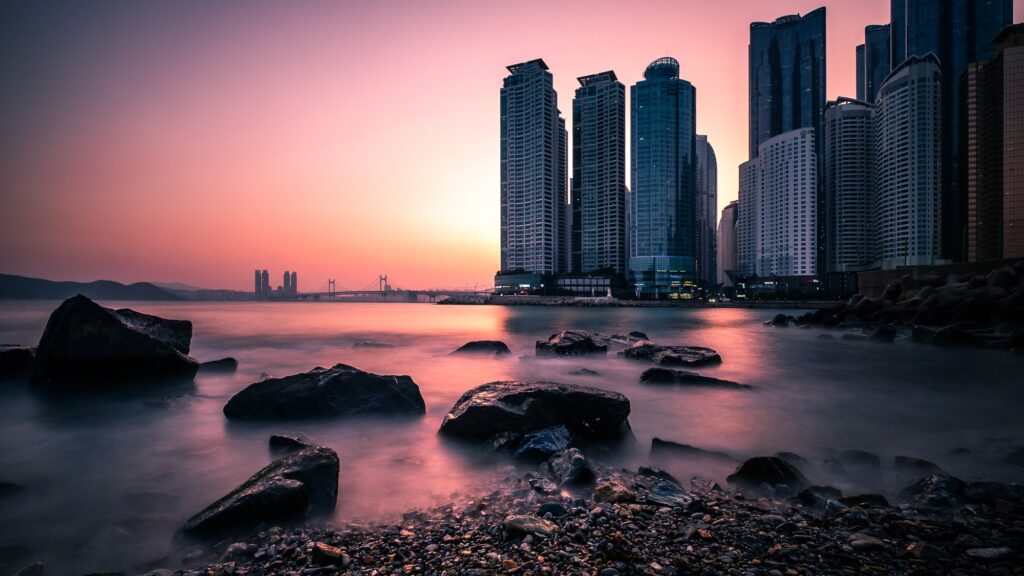
If we were planning a first trip for someone who wanted to understand South Korea rather than just see its most photographed sights, we would start with three places:
Seoul → Gyeongju → Busan
It is a simple route, but more importantly, each stop adds something the previous one doesn’t.
Seoul: where most trips should begin
Seoul deserves time. Not because every major attraction in South Korea is there, but because the city is enormous, layered and difficult to understand if you approach it purely as a sightseeing checklist.
Historic palaces sit beside office towers. Traditional markets and hyper-designed department stores coexist. Entire neighbourhoods can feel like separate cities. Food, nightlife, fashion, design, cafés, hiking and everyday residential life overlap rather than occupying one tourist centre.
Three days is possible. We recommend four or five days on a first trip, especially if you are arriving after a long flight.
And don’t make the mistake of thinking that seeing Gyeongbokgung Palace, Bukchon, Myeongdong and Hongdae means you have “done Seoul.”
The city becomes much more interesting once you stop trying to complete it.
Gyeongju: the historical stop that is actually worth making
If Seoul shows you contemporary South Korea, Gyeongju helps explain where the country came from. Gyeongju was the capital of the ancient Silla kingdom, and its archaeological sites, royal tombs and Buddhist heritage are spread throughout the area.
But what makes Gyeongju interesting isn’t simply that it contains historical attractions. It feels different.
After Seoul, the lower skyline, open spaces and visible traces of ancient Korea completely change the pace of the trip.
Many people visit Gyeongju quickly between Seoul and Busan. If you are genuinely interested in Korean history, I’d stay overnight rather than treating it as another box to tick.
Busan: not Seoul with a beach
Busan is South Korea’s second-largest city, but comparing it constantly with Seoul misses the point. The geography alone changes how the city feels.
Mountains divide neighbourhoods, the sea becomes part of everyday life, enormous beaches sit beside dense urban districts, and seafood is much more central to the experience.
Busan is still very much a large Korean city. But it is a different one.
Give it at least two or three full days.
And don’t spend the entire visit travelling between attractions because somebody else’s “top 10 things to do in Busan” told you to. Busan is geographically spread out. Choose what you actually want to experience.
Should you include Jeju on your first South Korea trip?
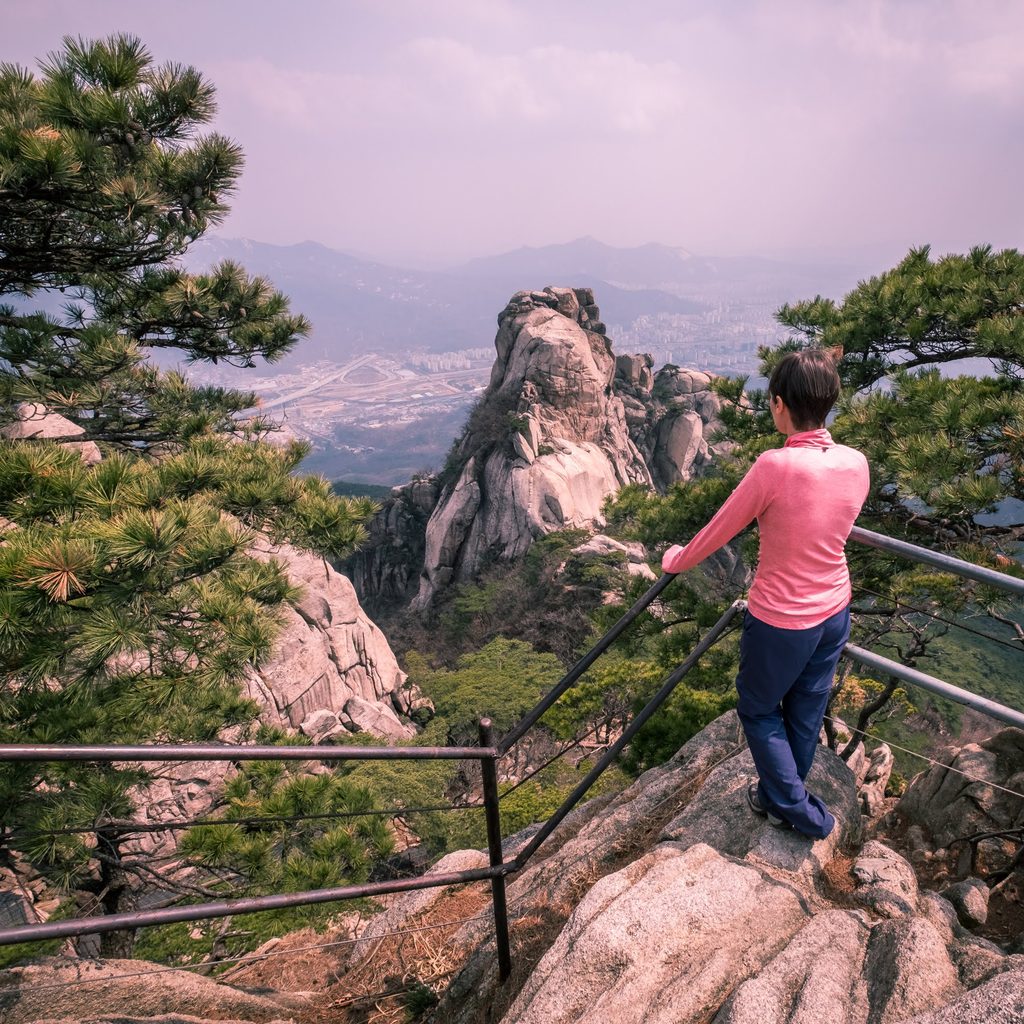
Not necessarily. Jeju is frequently included in South Korea itineraries almost by default, but we don’t think it belongs in every first trip.
The island is worth visiting for its volcanic landscapes, coastline, hiking, local food and completely different atmosphere.
But adding Jeju also means adding another flight and another logistical layer.
If you have ten days, we would generally choose more time on the mainland rather than squeezing Jeju into the itinerary.
With two weeks, it becomes more realistic. With three weeks, it is much easier to include without compromising everything else.
There is also another important consideration: Jeju rewards independence. Depending on what you want to see, exploring the island can be less straightforward than travelling between major mainland cities.
Don’t add Jeju because you believe a South Korea trip is incomplete without it. Add it because what Jeju offers is one of the things you most want from the trip.
South Korea is more than Seoul, Busan and Jeju
Once you move beyond the standard first-trip route, South Korea becomes much more interesting. Depending on your interests, you can start looking at places such as Jeonju for food and traditional architecture, Sokcho and Seoraksan for mountains and hiking, Andong for historical traditions, coastal destinations in Gangwon-do, smaller cities, islands and rural areas.
This is where we think repeat trips to South Korea become particularly rewarding.
On a first visit, you spend a lot of time learning how Korea works.
On subsequent trips, you can stop treating every destination as a famous sight you need to see.
You can travel because a region has a particular food tradition, because you want to hike, because you want to see the coast, or simply because you are curious about what life looks like outside the largest cities.
That is when the country starts becoming much bigger than the version of Korea exported through Seoul.
How to build a South Korea itinerary that works
We use a very simple rule when planning travel around South Korea:
Don’t ask only whether two places can be connected. Ask whether combining them makes sense.
Fast trains make South Korea look tiny on a map. But every destination change consumes more than the journey time. You need to leave your accommodation, reach the station, travel, arrive, reach your next accommodation and settle in again. Three two-hour journeys aren’t just six hours of your holiday.
They are three interruptions.
For that reason, we prefer creating a route rather than using Seoul as a base and repeatedly returning to it.
For example:
Seoul → Gyeongju → Busan
makes geographical sense.
Going:
Seoul → Busan → Seoul → Jeju → Seoul
because flights or accommodation happened to appear convenient creates unnecessary movement. Look at the trip as one continuous journey.
A good 7-day South Korea itinerary
With one week, we’d keep things simple.
- Days 1–5: Seoul
- Days 6–7: one additional destination
Busan is the obvious choice if you want another major city. Gyeongju works if history interests you more.
You could also remain entirely around Seoul and include a carefully chosen day trip.
What I would not do is attempt Seoul, Busan, Gyeongju and Jeju in seven days.
You would technically visit all four. You would experience very little of any of them.
A good 10-day South Korea itinerary
Ten days in South Korea makes a proper multi-city itinerary possible.
A very strong first trip would be:
- Seoul: 4–5 days
- Gyeongju: 1–2 days
- Busan: 3 days
This is probably the route we would recommend to most first-time visitors. It is easy to understand geographically, transport between destinations is straightforward, and each place provides a genuinely different experience.
More importantly, you are not moving every morning.
A good two-week South Korea itinerary
With two weeks you have choices. You could extend the classic route:
Seoul → Gyeongju → Busan → another mainland destination
or:
Seoul → Gyeongju → Busan → Jeju
But there is another option that people rarely consider:
Do fewer places and stay longer.
Fourteen days does not create an obligation to visit five cities.
Spend five days in Seoul instead of three. Give Busan another day. Take spontaneous trips.
Spend an afternoon somewhere without a famous attraction attached to it. Some of our favourite moments in South Korea have come from not trying to maximise the itinerary.
Do you need a car to travel around South Korea?
You don’t need a car in South Korea for a typical first trip covering Seoul, Gyeongju and Busan.
South Korea is very easy to travel around using public transport. KTX high-speed trains connect many major destinations, while conventional trains and extensive intercity and express bus networks fill many of the gaps. KORAIL operates the national rail network, and tickets for KTX and other train services can be booked online.
Within major cities, subways and buses make a car more inconvenience than advantage for most visitors.
There are situations where renting one starts making sense. Jeju is the obvious example.
A car can also become useful if you are exploring rural areas, smaller coastal destinations or places where public transport exists but doesn’t necessarily work around the itinerary you want.
The mistake is assuming that because you can comfortably travel around Seoul without a car, the same applies equally everywhere in the country. It doesn’t.
Trains or buses: which are better in South Korea?
Use both train and buses in South Korea. Travellers sometimes become unnecessarily fixated on KTX because high-speed trains feel like the obvious way to travel. They are excellent where the network fits your route.
But buses are an essential part of travelling around South Korea and often connect places more directly than trains do.
For major city-to-city journeys, check rail first. For smaller cities and regional connections, check buses as well.
The best transport method is the one that takes you where you are going without forcing your itinerary to follow a railway map.
Don’t plan South Korea as if it were Japan
South Korea and Japan are often combined mentally by travellers planning their first trip to East Asia. But they are not interchangeable travel experiences.
Yes, both countries have excellent public transport, huge cities, strong food cultures and plenty of historical sites.
But the rhythm feels different.
South Korea can feel more spontaneous and less ceremonially polished. Cities change character quickly. Nightlife spills into everyday areas. Mountains sit immediately behind dense urban neighbourhoods. Food is often communal. Cafés aren’t just places to grab coffee; entire districts can revolve around them.
Even the way I plan the two countries is different.
In Japan we are often more conscious of individual destinations and specific experiences.
In Korea we leave more room for neighbourhoods, meals and evenings to develop without a strict objective.
If you arrive expecting Korea to feel like a cheaper or less touristy Japan, you misunderstand both countries.
Korean Food should influence your route
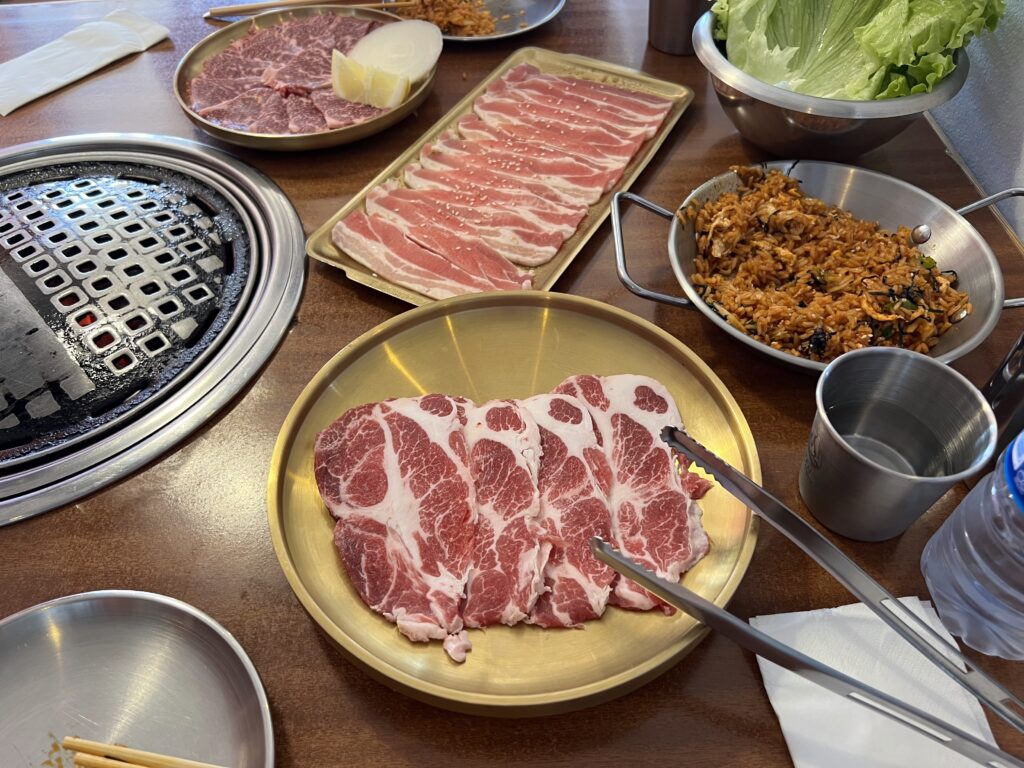
One of the biggest mistakes you can make in South Korea is eating every Korean dish in Seoul and deciding you have explored Korean food.
Many foods are associated with particular cities or regions.
Ingredients change. Preparation changes. Local specialities matter.
Even something you have already eaten elsewhere can make much more sense in the place it comes from.
Food is one of the reasons we recommend travelling beyond Seoul rather than simply taking sightseeing excursions from the capital.
In Busan, seafood becomes unavoidable.
In Jeonju, food is part of the reason to travel there in the first place.
On Jeju, ingredients and dishes reflect the island’s geography.
Travelling for food gives your itinerary another structure besides sightseeing and in South Korea, it is a particularly good one.
If food is one of the reasons you are travelling, start with our guide to 25 South Korean foods to try, but don’t treat it as a checklist. Where you eat something matters almost as much as what you order.
Leave room for ordinary South Korea
You do not need to chase every place that went viral on social media, recreate a scene from a K-drama, or spend time in a neighbourhood because you think you might spot the next rising idol.
Those things can be fun if they genuinely interest you, but they should not become the structure of the trip. South Korea is much more interesting when you stop treating it like a set and start paying attention to how people actually live.
Walk around a residential neighbourhood. Go to a market because people are buying dinner there, not because it appeared on a “hidden gems” list.
Sit beside the Han River. Go hiking on a weekend and watch how many people around you have taken hiking more seriously than you ever will.
Eat somewhere where choosing the restaurant required no research whatsoever.
Go into the enormous department store. Spend too long in a café.
Have dinner late. Walk around afterwards.
The everyday parts of South Korea are not the empty spaces between its attractions.
They are a significant part of why the country is interesting.
When is the best time to visit South Korea?
Spring and autumn are usually the easiest seasons around which to plan a first trip because temperatures are generally comfortable for walking and travelling around.
But don’t build an entire trip around the possibility of seeing cherry blossoms or perfect autumn foliage.
Seasonal timing varies from year to year, and travelling during the most desirable periods can also mean greater demand.
Summer is hot, humid and affected by the rainy season.
Winter is cold — seriously cold — but it also gives cities and landscapes a completely different character.
The best time depends partly on what you want to do. If your trip is heavily focused on cities and food, you have much more flexibility than somebody planning several days of hiking.
What to prioritise during a first trip to south korea
If this is your first time in South Korea, these are the things we recommend to prioritise:
- Enough time in Seoul. You will almost certainly underestimate its size.
- At least one destination that feels completely different from Seoul. Gyeongju and Busan both work extremely well.
- Korean food beyond the famous dishes. Meals should be part of the trip rather than fuel between attractions.
- Neighbourhoods rather than only landmarks.
- At least one experience that wasn’t selected because it is “must-see.”
And above all, time. South Korea rewards curiosity much more than itinerary optimisation.
What should you skip during a first trip to south korea
We would skip anything you are adding solely because every itinerary tells you it belongs there.
That may mean Jeju. It may mean a particular Seoul attraction. It may mean a famous market that doesn’t interest you.
It may even mean one of the cities I’ve recommended in this guide. A good South Korea itinerary is not the itinerary that contains the greatest number of recognised Korean destinations.
It is the one where every stop has a reason for being there.
Is South Korea easy to travel independently?
Yes, South Korea is a very manageable country for independent travel. The transport infrastructure is extensive, major cities are well connected, and you do not need an organised tour to travel between the main destinations.
Where things occasionally become less frictionless is language, navigation, restaurant ordering, regional transport and online services that don’t always behave exactly as international travellers expect.
None of those are reasons to avoid independent travel. They are reasons to arrive prepared.
We have a separate guide with 60+ South Korea travel tips for first-time visitors covering the practical details that become useful once the itinerary itself is decided.
Is Seoul enough for a first trip to South Korea?
You can have an excellent trip by visiting only Seoul. But Seoul is not a substitute for South Korea.
The capital gives you one particularly intense, modern and fascinating version of the country.
If time allows, travel elsewhere. You don’t need to reach somewhere obscure. Even the straightforward Seoul–Gyeongju–Busan route changes your understanding of Korea considerably.
How far in advance should you plan a South Korea trip?
Plan the structure early and leave the details loose.
Know:
- where you are sleeping,
- how you are travelling between cities,
- which experiences genuinely require reservations,
- and which destinations matter most.
You do not need to decide where lunch will happen twelve days from now.
In fact, I’d argue that doing so actively makes the trip worse.
The infrastructure in South Korea makes independent travel relatively easy. Take advantage of that flexibility instead of eliminating it.
The South Korea you should see
If South Korea interests you because of K-pop, K-dramas, Korean food, beauty, fashion or contemporary culture, there is nothing wrong with that. These are legitimate reasons to become curious about a country.
Just don’t stop there. The more you travel around South Korea, the more obvious it becomes that the version exported internationally is only one small part of it.
There are industrial cities and fishing ports, mountains packed with hikers on weekend mornings, temple complexes, beaches surrounded by skyscrapers, tiny restaurants specialising in one dish, hyper-modern shopping districts and places where Korea’s ancient history still shapes the landscape.
And sometimes there is absolutely nothing you could put on a “10 best things to do” list.
That’s part of the point. Go to Seoul. Seoul is worth the journey by itself. But if you have the time, keep going.
South Korea becomes considerably more interesting once you stop treating everything beyond the capital as an excursion.
If you have 10 days or more, we strongly recommend travelling beyond Seoul rather than using the capital as your base for the entire trip.
There are good day trips from Seoul, but they don’t replace travelling through the country. South Korea changes noticeably once you leave the capital, from the historical landscape of Gyeongju to the maritime character of Busan and the mountains, smaller cities and regional food cultures found elsewhere.
Using Seoul as a base also creates unnecessary backtracking if you want to visit places farther south. A route such as Seoul → Gyeongju → Busan is usually more logical than repeatedly returning to Seoul.
If you only have five to seven days, staying mostly in Seoul can make much more sense. Seoul easily fills that amount of time, and adding multiple overnight stops simply because they are reachable can make a short trip feel unnecessarily fragmented.
Frequently asked questions about planning a trip to South Korea
For most first-time visitors, we would recommend Seoul and Busan over Seoul and Jeju, especially if the trip is relatively short.
Busan is easier to incorporate into a mainland itinerary and gives you a very different experience from Seoul without adding flights or much extra logistical complexity. You get the coast, a different urban rhythm, strong seafood culture and a city whose geography feels completely different from the capital.
Jeju makes more sense when the island itself is one of the reasons you want to visit South Korea. Its volcanic landscapes, hiking, coastline and local food are distinctive enough to justify the trip, but getting there means adding a flight and, depending on your plans, potentially renting a car.
With 10 days or less, we would normally prioritise Seoul, Gyeongju and Busan. With two weeks or more, Jeju becomes much easier to include without rushing everything else.
If you have 10 days or more, we strongly recommend travelling beyond Seoul rather than using the capital as your base for the entire trip.
There are good day trips from Seoul, but they don’t replace travelling through the country. South Korea changes noticeably once you leave the capital, from the historical landscape of Gyeongju to the maritime character of Busan and the mountains, smaller cities and regional food cultures found elsewhere.
Using Seoul as a base also creates unnecessary backtracking if you want to visit places farther south. A route such as Seoul → Gyeongju → Busan is usually more logical than repeatedly returning to Seoul.
If you only have five to seven days, staying mostly in Seoul can make much more sense. Seoul easily fills that amount of time, and adding multiple overnight stops simply because they are reachable can make a short trip feel unnecessarily fragmented.
Yes. You can travel independently around South Korea without speaking Korean, particularly when visiting Seoul, Busan, Gyeongju, Jeju and other established destinations.
English is not spoken everywhere, however, and travelling becomes noticeably less frictionless once you move beyond the most internationally oriented areas. Restaurant menus, local buses, ticket machines or conversations in smaller businesses may sometimes require a translation app and a little patience. That is part of independent travel rather than a reason to avoid it. We recommend learning a handful of basic Korean expressions and having Korean navigation and translation apps set up before arriving. It also helps to remember that a lack of shared language does not automatically make a place difficult to visit. We have repeatedly found that pointing, translating and being willing to work things out gets you surprisingly far.
You don’t need to reserve every train weeks in advance, but we recommend booking important KTX journeys ahead of time once your itinerary is fixed, particularly if you want a specific departure time.
KTX and other train tickets can be booked through KORAIL’s official reservation system, and the official VISITKOREA guidance confirms that international travellers can reserve seats and pay for Korean train services in advance.
This becomes more important around weekends, public holidays and major travel periods, when popular departures can fill up.
At the same time, don’t plan your entire South Korea itinerary around KTX. Intercity and express buses are an important part of travelling through the country and can be more convenient for destinations that aren’t directly connected by high-speed rail.
The useful rule is simple: book the journeys that matter; keep flexibility where it doesn’t.
With seven days, we would prioritise Seoul and one other destination rather than trying to cover the country.
Spend four or five days in Seoul and use the remaining time for somewhere that adds something genuinely different. Choose Busan if you want another major city, the coast and a completely different urban atmosphere.
Choose Gyeongju if history and traditional Korea interest you more. Or stay in Seoul for the full week and make one carefully chosen day trip if changing accommodation doesn’t appeal to you.
What we would not recommend is turning seven days into Seoul → Busan → Gyeongju → Jeju simply because the transport connections make it technically possible.
A week in South Korea is enough for a very good trip. It isn’t enough for every version of South Korea in one trip.
Yes, South Korea a good destination for a first trip to East Asia particularly if you want a trip that combines large cities, excellent public transport, food, contemporary culture, history and easy independent travel.
South Korea can also feel relatively approachable to first-time visitors because many people already have some familiarity with the country through Korean food, music, television, beauty or cinema before they arrive.
But that familiarity can be misleading.
Travelling in South Korea still means navigating a different language, different social conventions, unfamiliar food customs and systems that aren’t always designed around international visitors. Outside the most tourist-oriented areas, you may need to work things out rather than expecting everything to be translated or immediately intuitive. We actually think that makes South Korea a particularly rewarding first East Asian destination. It is accessible enough that you can travel independently without needing everything organised for you, while still feeling different enough to remind you constantly that you have gone somewhere new.