

There are hundreds of things you could do in Seoul. That does not mean you should try to do all of them.
The city is full of famous landmarks, enormous shopping districts, mountains, markets, museums, neighbourhoods that reinvent themselves every few years and experiences that barely qualify as sightseeing at all.
On a first trip, some of the obvious places are obvious for a reason. We would not tell you to skip Myeongdong because tourists go there, avoid N Seoul Tower because it is famous or search endlessly for a supposedly more “authentic” alternative to Gyeongbokgung.
At the same time, Seoul becomes much more interesting once you move beyond the standard palace-market-tower checklist.
After travelling to the city repeatedly, these are the places and experiences we think are genuinely worth your time in Seoul, including the major sights you probably came expecting to see and others that do not appear on every first-time itinerary.
Best things to do in Seoul for first-time visitors at a glance
If this is your first trip to Seoul, these are the experiences we would start with. The full guide below includes many more places, activities and less obvious additions depending on your interests and how much time you have.
| Thing to do | Why go | Time to allow | Priority for a first trip |
|---|---|---|---|
| Gyeongbokgung + Gwanghwamun | Royal history and historic Seoul | 2–3 hours | Essential |
| Bukchon + Anguk | Hanok streets and older urban Seoul | 2–3 hours | Essential |
| Namsan + N Seoul Tower | Skyline and city views | 2–3 hours | Essential |
| Myeongdong | K-beauty, shopping and city energy | 1–3 hours | Essential |
| Han River | Everyday Seoul and outdoor culture | 2+ hours | Essential |
| Gangnam | Contemporary commercial Seoul | Half day | High |
| Hongdae + Yeonnam | Nightlife and younger Seoul | Evening | High |
| Bukhansan | Mountains and Korean hiking culture | Half/full day | High if you hike |
| Jongno + Euljiro at night | Food, drinking and evening culture | Evening | High |
| Seongsu | Fashion, design and current Seoul | 2–4 hours | High |
| Traditional market | Food and market culture | 1–2 hours | High |
| National Museum of Korea | Korean history beyond the palaces | 2–4 hours | High if history interests you |
| Seoul City Wall | Walking, history and views | 1–3 hours | Worth adding |
| Korean baseball / noraebang / jjimjilbang | Korean leisure and social culture | Varies | Choose by interest |
| One less-obvious Seoul place | Eunpyeong, Haneul Park or somewhere beyond the standard circuit | 1–4 hours | Add if time allows |
1. Visit Gyeongbokgung Palace
If you visit one royal palace on your first trip to Seoul, Gyeongbokgung is the one we would choose for most people.
Built in 1395, it was the principal palace of the Joseon dynasty. Much of what visitors see today also reflects extensive reconstruction after repeated destruction, which makes the palace more interesting when you understand its history rather than treating it only as an architectural backdrop.
Give yourself enough time to move beyond the first courtyards.
The setting matters too: Bugaksan rises behind the palace while modern Seoul begins almost immediately outside its gates.
We also would not rent a hanbok simply because somebody has told you that visiting a Korean palace requires one. Wear one if the experience genuinely appeals to you.
Otherwise, just visit the palace.
Our verdict: one of the few genuinely essential first-time Seoul attractions.
2. Walk from Gwanghwamun into historic Seoul
Gwanghwamun Square deserves more than being treated as the road you cross before entering Gyeongbokgung.
The square places several versions of Korea in the same sightline: royal Seoul, major figures such as King Sejong and Admiral Yi Sun-sin, enormous government buildings, contemporary offices and Bugaksan behind everything.
Walk through it slowly. Then continue towards the palace or into the streets around Jongno.
The value is not that Gwanghwamun is an attraction requiring hours. It is that it helps you understand where you are.
Our verdict: absolutely include it when exploring central Seoul.
3. Walk Bukchon and Anguk instead of collecting the Bukchon photograph
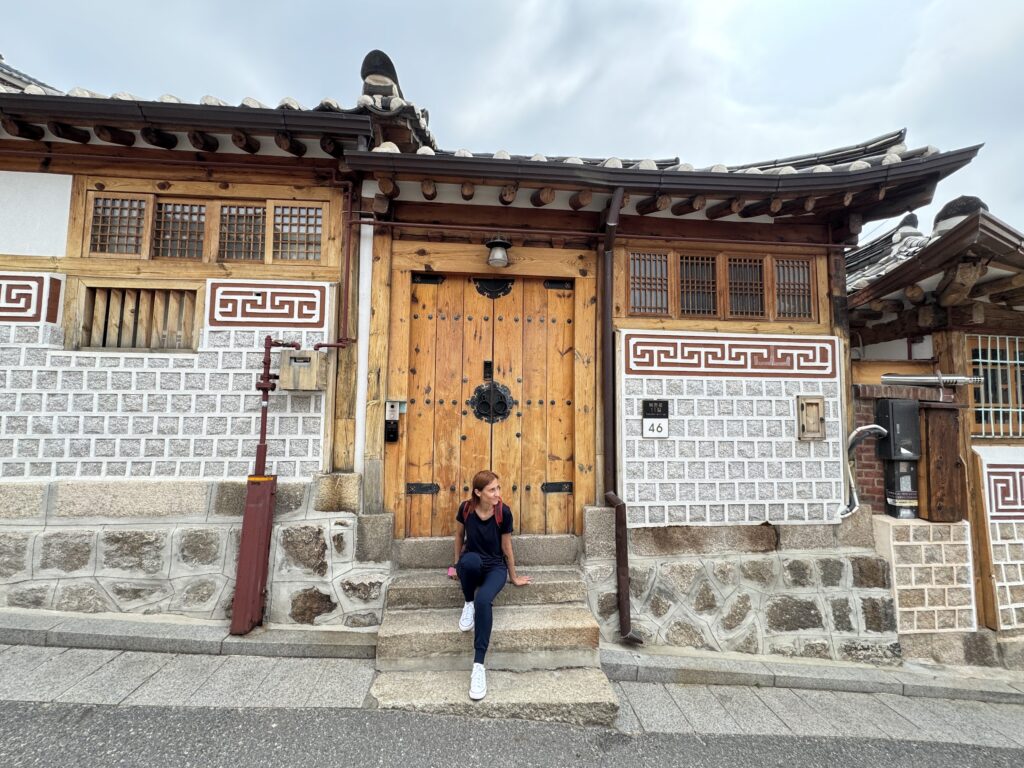
Bukchon Hanok Village is one of Seoul’s most famous places, and yes, the tiled roofs against the city skyline are beautiful. But Bukchon becomes much more interesting when you stop treating it as one photography point.
It remains a residential area, and Seoul has introduced visitor restrictions in its most heavily affected zones to protect residents. Check the current rules before visiting and behave accordingly.
Walk through the wider area instead.
Continue through Anguk, follow walls and lanes, notice the galleries, houses, small businesses and contemporary buildings sitting beside older structures.
Bukchon makes far more sense as part of historic Seoul than as an isolated Instagram location.
Our verdict: a must-see, provided you remember that people live there.
4. Experience Namsan and N Seoul Tower together
N Seoul Tower is touristy. It is also one of Seoul’s defining landmarks, and we think pretending first-time visitors should skip it just because it is famous is unnecessarily contrarian.
Go. But experience Namsan as well as the tower.
Walk at least part of the mountain if you can. Follow sections of the Seoul City Wall, stop at viewpoints and watch the city gradually appear around you.
Then decide whether you want to go up the tower itself.
The observation deck gives you the big panoramic view. The mountain gives the whole experience more context.
Our verdict: N Seoul Tower belongs on a first trip; Namsan makes it better.
5. See Myeongdong when it is busy
Myeongdong is a must-see on a first trip to Seoul. Not because it is the most subtle or culturally profound part of the city. It isn’t.
Go because Myeongdong represents another very real version of Seoul: bright signs, beauty stores, food, crowds, international visitors, enormous flagship stores and relentless commercial energy.
It is particularly useful if you want to shop for K-beauty and skincare, and it makes more sense later in the day when the area is fully alive.
We would not spend an entire day here unless shopping is a major purpose of the trip.
But we definitely would not skip it.
Our verdict: go at least once, preferably in the late afternoon or evening.
6. Walk along Cheonggyecheon
Cheonggyecheon is one of those places that works better as something you encounter than something you need to “complete.”
The stream runs through central Seoul below street level, creating a walking corridor surrounded by some of the busiest parts of the city.
Walk a section after dinner or while moving between central areas. It is particularly pleasant after dark.
The interesting part is the contrast: traffic and office towers immediately above, people walking beside water a few metres below.
Our verdict: easy to include and worth doing, especially in the evening. We love Cheonggyecheon.
7. Spend an evening beside the Han River
Do not go to the Han River simply to look at it. Use it. Walk. Cycle. Sit on the grass. Buy food. Cook ramyeon from a convenience store machine.
Watch people meet friends, exercise, eat and spend hours outdoors. The river is not merely scenery in Seoul. The Hangang parks function as major recreational spaces across the city, which is why spending actual time there tells you more than arriving for one photograph.
Our verdict: one of the best things you can do in Seoul.
8. Hike Bukhansan
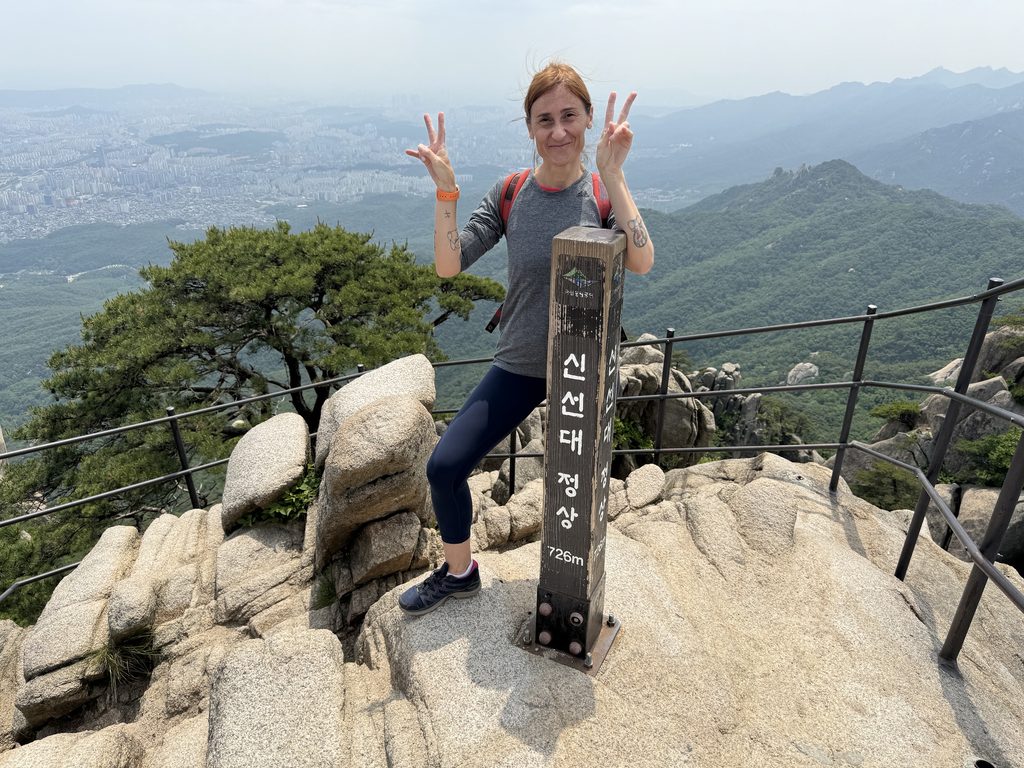
If you enjoy hiking, Bukhansan should be near the top of your Seoul list. We hike it every time we return.
Part of what makes the experience memorable is that the mountain is not disconnected from city life. Hiking is deeply embedded in Korean leisure culture, and on busy days the trails fill with groups of people equipped far more professionally than you may have expected for a day hike.
Then there is what happens afterwards. For us, Bukhansan often ends like this:
hike → come down → jeon → makgeolli
We’ve had local hikers explain what we should order and how we should drink, and those interactions are as memorable as the mountain itself.
Our verdict: one of our favourite Seoul experiences.
9. Walk Bukhansan Dulle-gil if you do not want a serious hike
You do not need to climb a summit to experience Seoul’s mountain landscape. The Bukhansan Dulle-gil follows lower trails around the mountain and works much better for people who enjoy walking but do not want a demanding hike.
This is also a useful reminder that hiking in Seoul does not have to mean turning a holiday into an endurance challenge. Choose a section that suits your time and fitness.
Our verdict: a good alternative to a full Bukhansan hiking day.
10. Spend an evening around Jongno and Euljiro
There is no ticket to buy and no monument you need to stand in front of. That is partly why we like it.
After work, parts of Jongno and Euljiro fill with people eating, drinking and moving between restaurants and bars.
Older specialist businesses, ageing buildings, grills, pocha-style drinking spots and increasingly fashionable businesses coexist in a way that is difficult to summarise neatly.
Go for dinner. Then see what happens.
Our verdict: one of the better ways to experience Seoul at night.
11. Eat Korean barbecue properly
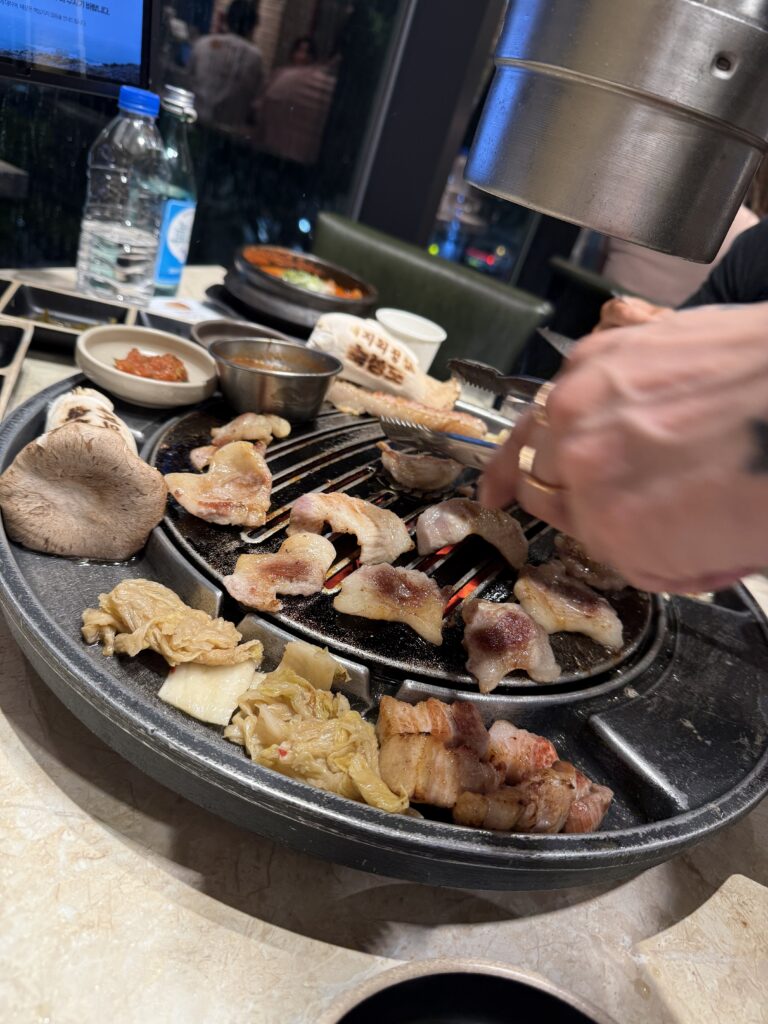
Korean barbecue is obviously not exclusive to Seoul. It still belongs on a list of things to do here because the experience is as important as the food.
Sit around the grill. Order meat and sides. Learn how the restaurant handles cooking: sometimes you do it yourself, sometimes staff take control.
We once found a small barbecue restaurant near Naksan where the owners insisted on cooking every piece of meat for us despite the fact that we knew perfectly well what we were doing.
We stopped arguing. They had clearly decided we were their responsibility. That kind of interaction is part of why eating in Seoul is rarely just about finding whichever restaurant currently ranks first online.
Our verdict: essential if you eat meat.
12. Visit a traditional market but choose the right one
“Visit a market” is bad advice if nobody tells you that Seoul’s markets offer very different experiences. Gwangjang Market is famous, busy and heavily visited. It is worth seeing, but you should know what you are going into.
Mangwon Market feels more integrated into its surrounding neighbourhood. Namdaemun is particularly interesting if you care about established food alleys and dishes such as kalguksu or galchi jorim.
You do not need all three. Choose the experience that interests you.
Our verdict: include at least one Seoul market.
13. Go to a noraebang
At some point in Seoul, go downstairs or upstairs into a building, rent a small room and sing badly with people you like.
You do not need to be a good singer. That has very little to do with it.
Noraebang (karaoke) is part of Korean social life and is particularly easy to combine with dinner and drinks.
Some venues are elaborate. Others are tiny coin-operated rooms where you pay for a few songs. Both work.
Our verdict: one of the easiest genuinely Korean activities to add to a night out.
14. Watch a Korean baseball game
Even if baseball is not normally your sport, consider attending a KBO game. Seoul’s Jamsil Baseball Stadium is home to both the LG Twins and Doosan Bears, and the atmosphere is considerably more participatory than simply sitting silently and watching innings pass.
Songs, organised cheering, food and crowd rituals are a substantial part of the experience. Go because you want to see how Seoul has fun, not because you suddenly need to understand baseball statistics.
Our verdict: excellent if the season and schedule work.
15. Try a jjimjilbang
A Korean bathhouse or jjimjilbang is one of those experiences where knowing the etiquette beforehand makes everything easier.
Bathing areas are generally gender-separated and communal nudity is normal. If that makes you uncomfortable, skip it.
If not, spending several hours bathing, using heated rooms, resting and eating can be a very different way of experiencing Korean leisure culture. Tattoo policies vary between jjimjilbangs, so check the rules of the specific facility before visiting.
Seoul’s jjimjilbang landscape changes and some famous places have closed so we recommend you search for one when you are in the area.
Our verdict: worth doing once if you are comfortable with the format.
16. Experience Hongdae and Yeonnam after dark
Hongdae deserves its reputation for nightlife, but the experience is broader than clubs.
Come later in the day.
Walk through Yeonnam, continue towards Hongdae and watch the density gradually change: cafés, restaurants, shops, people, music, nightlife and queues for things you may not understand until you join them.
We prefer combining the two areas rather than spending the entire evening around Hongdae’s busiest streets.
Our verdict: one of the best areas for experiencing younger Seoul.
17. Experience Seongsu without making a viral-café spreadsheet
Seongsu is constantly described through its cafés. That is too reductive.
Former industrial buildings now contain fashion stores, galleries, cafés, brand activations and temporary pop-ups. The neighbourhood has become one of the clearest places to observe how quickly Seoul manufactures and consumes trends.
Walk around. Go into things that interest you. Ignore things that do not.
If a café has a two-hour queue for something you hadn’t heard of until five minutes ago, you are allowed to continue walking.
Our verdict: excellent for fashion, design, retail and contemporary culture.
18. Visit Gangnam but choose which Gangnam interests you
Gangnam absolutely belongs on a first trip. The mistake is treating the word as if it refers to one attraction. It is enormous. For most visitors, we would choose between several versions:
- Bongeunsa + COEX for one of Seoul’s most striking juxtapositions.
- Apgujeong and Cheongdam for fashion, beauty, luxury and entertainment culture.
- Gangnam Station for dense commercial Seoul, restaurants, shopping and nightlife.
Do not try to cover everything because the district happens to share one famous name.
Our verdict: definitely worth experiencing.
19. See Bongeunsa and COEX together
Bongeunsa Temple and COEX are much more interesting as a pair than either is individually.
A major Buddhist temple sits immediately beside an enormous commercial complex.
Move from one into the other and the atmosphere changes within minutes.
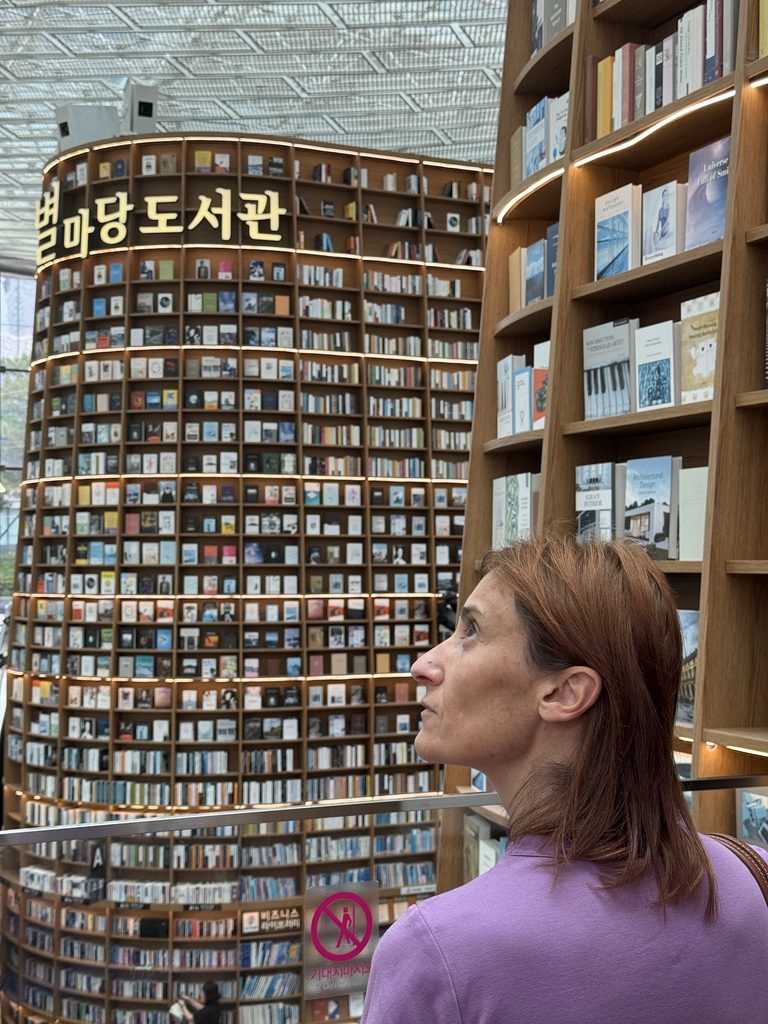
Then see Starfield Library while you are already inside COEX. The library is photogenic and worth seeing.
Would we cross the whole city purely for some tall bookshelves? Probably not.
Our verdict: together, Bongeunsa and COEX tell you something genuinely interesting about Seoul.
20. See Dongdaemun Design Plaza after dark
Dongdaemun Design Plaza looks like somebody placed a piece of speculative architecture in the middle of an already intensely urban district.
Designed by Zaha Hadid Architects, DDP functions as an exhibition, design, fashion and event space, but the building itself is what attracts many first-time visitors.
We prefer seeing it around dusk or after dark, when the curves and lighting work particularly well against surrounding Dongdaemun.
Check what exhibitions or events are happening rather than assuming you only need to photograph the exterior.
Our verdict: one of Seoul’s modern landmarks and worth seeing at least once.
21. Visit the National Museum of Korea
If you genuinely want to understand Korea, not just see Seoul landmarks, make time for the National Museum of Korea.
Palaces naturally push first-time visitors towards Joseon history. Korea’s history is much larger than that.
The museum gives you context for earlier kingdoms, Buddhist art, archaeology, ceramics and the historical periods you will encounter if you travel elsewhere in the country.
It is particularly useful near the beginning of a wider South Korea trip.
Our verdict: one of Seoul’s best cultural attractions.
22. Visit Leeum Museum of Art if art matters to you
Leeum is not something everybody needs to visit. If traditional Korean art, contemporary art, architecture or design interests you, it is excellent.
If you do not enjoy art museums, there is no reason to visit simply because a “best things to do” list told you to.
The museum also gives you a reason to spend more time around Hannam.
Our verdict: excellent for the right traveller.
23. Visit Seodaemun Prison History Hall
Seodaemun is not a cheerful attraction. It is also one of the places we would consider if you want to understand modern Korean history beyond palaces and royal dynasties.
The former prison is closely associated with the Japanese colonial period and Korean independence activists.
Cells, exhibition spaces and preserved parts of the prison deal with imprisonment, resistance and torture.
Give it the seriousness it deserves.
Our verdict: historically important and far more meaningful than adding another photogenic stop.
24. Walk part of the Seoul City Wall
The Seoul City Wall is easy to miss because it is not contained inside one attraction. That is what makes it useful.
Sections run across the hills surrounding the old capital, including Namsan and Naksan.
Walk even a portion and you begin to understand Seoul geographically: where historic Seoul sat, how mountains shaped it and how completely the modern city eventually expanded around those boundaries.
Our verdict: underrated and one of our favourite ways to connect history with the city itself.
25. See Seoul from Naksan after dark
If you enjoy city views, do not assume every one has to come from an observation deck. Naksan gives you a much more intimate night view over rooftops, walls and dense urban Seoul.
Walk up before sunset and stay while the city lights come on. It is particularly good when combined with the Seoul City Wall rather than treated as another isolated viewpoint.
Our verdict: one of the best free night views in Seoul.
26. Visit Eunpyeong Hanok Village and Jingwansa
If Bukchon shows you historic hanok embedded inside central Seoul, Eunpyeong gives you something completely different.
The hanok here are modern rather than preserved Joseon-era houses, and Bukhansan rises dramatically behind the village.
That distinction is exactly why we would not market Eunpyeong as a “secret Bukchon.” It isn’t.
Go because the relationship between contemporary hanok architecture, mountains and the temple creates a different experience.
Our verdict: one of the best less-obvious places to visit if you have enough time.
27. Visit Jingwansa Temple
Continue beyond Eunpyeong Hanok Village rather than stopping after the photographs. Jingwansa sits near Bukhansan and gives the area a natural continuation: architecture becomes mountain landscape, and the city suddenly feels much further away than it actually is.
This is a better choice for travellers who want a quieter temple environment than another densely urban attraction.
Our verdict: combine it with Eunpyeong rather than travelling out only for one quick temple stop.
28. Walk through Haneul Park
Haneul Park is interesting for reasons that go beyond the view. The wider World Cup Park landscape occupies land once associated with the former Nanjido landfill, making it part of one of Seoul’s major environmental regeneration projects.
Today you get open grassland, seasonal vegetation and expansive views towards the Han River and the city.
The contrast between what the site was and what it has become is what makes it particularly Seoul.
Our verdict: very good if you enjoy walking, landscapes or urban transformation.
29. Explore Oil Tank Culture Park
Not every city turns a former petroleum depot into a cultural park. Seoul did.
The Oil Tank Culture Park preserves six former reservoir tanks, now repurposed into exhibition, performance and community spaces as part of an urban-regeneration project. The park itself is open year-round, while the tank spaces currently operate Tuesday to Sunday and are closed on Mondays.
The architecture is more interesting when you know what the site used to be. Combine it with the wider Mapo/World Cup Park area if you are already heading west.
Our verdict: one of the more unusual Seoul places that genuinely deserves more attention.
30. Spend time on Nodeul Island
Nodeul Island sits in the Han River beneath the bridge connecting Yongsan and Noryangjin.
Rather than being developed as another conventional attraction, it has been shaped around music, culture, books, exhibitions and outdoor space.
But you do not necessarily need an event to justify going.
Come for the river, the view and the slower pace.
Our verdict: a good choice when you want the Han River without simply repeating the major riverside parks.
31. Explore Mullae’s industrial streets
Mullae is often sold as an “art village,” which risks making it sound much tidier than it is. Part of its character comes precisely from the fact that metalworking shops and industrial businesses still coexist with studios, small galleries, cafés and bars.
Go because that overlap interests you. Do not go expecting a sanitised creative district built for photographs. And remember that this remains a working area, not an outdoor exhibition designed around visitors.
Our verdict: interesting for people who like cities in transition; unnecessary on a very short first trip.
32. Shop for K-beauty without turning it into homework
If Korean skincare or cosmetics interest you, Seoul is obviously one of the best places in the world to shop for them.
Myeongdong gives you density and convenience.
Gangnam and Seongsu increasingly give you larger flagships and brand experiences.
Department stores give you another version entirely.
Research products you genuinely want, but leave room to browse. The beauty industry moves far too quickly for a permanent internet list of “10 products you absolutely need” to stay useful for long.
Our verdict: a genuine Seoul activity if beauty is part of your interests, not something every traveller needs to perform.
33. Look at Korean fashion and retail as part of the trip
Seoul retail is often an experience in itself. Seongsu pop-ups, Hannam boutiques, Apgujeong flagships and enormous department stores all show different parts of the same thing: brands here frequently treat physical retail as theatre, design and marketing rather than merely shelving products.
You do not need to buy anything.
Sometimes looking at how a space has been designed is half the point.
Our verdict: particularly worthwhile if you work in or care about fashion, branding, design or retail.
34. Follow your K-drama or K-pop interests if they are your interests
Korean popular culture is now one of the main reasons many people travel to Seoul. There is nothing wrong with that.
What we would avoid is spending an entire trip moving from one filming screenshot to another because somebody labelled those places “must-see.”
If there is a drama you genuinely love, follow one geographically sensible filming-location route. If K-pop matters to you, visit places connected with artists or entertainment culture that actually mean something to you.
Then continue experiencing the neighbourhood around them.
Our verdict: completely worthwhile for fans; completely unnecessary for everybody else.
35. Eat fried chicken somewhere you found yourself
One of our favourite Seoul food memories came from a tiny fried-chicken place we noticed while walking. It wasn’t on a list. There was no social-media strategy involved in finding it.
We watched the owner batter and fry the chicken directly in front of us and were completely fascinated by the whole process.
There was nothing designed around foreign visitors. It was simply a place that looked good, so we went inside.
The recommendation is the behaviour.
See somewhere that looks good. Stop. Eat.
36. Learn one small restaurant habit you didn’t know before arriving
On our first trip to Korea, we sat in a soup restaurant and spent several increasingly ridiculous minutes searching for chopsticks and spoons.
Eventually we discovered the cutlery drawer built into the table. Nobody had told us. Everybody else obviously knew. These tiny moments are part of travel too.
Look around before assuming something is missing. Watch what other diners do. Ask when necessary.
You do not need to arrive already knowing every rule.
Our verdict: curiosity will get you further than trying to memorise Korean dining etiquette before landing.
37. Leave one part of Seoul unplanned
This may sound strange in a list of things to do but it is one of our strongest recommendations.
Some of the places we remember most in Seoul were restaurants, streets, stores and small encounters we found because we were already there and something caught our attention.
Not because an algorithm had ranked them first. Plan the places that matter. Know which neighbourhood you want to explore.
Then occasionally stop looking at the next pin. Seoul is particularly good at rewarding that.
More places worth visiting in Seoul
Not every worthwhile place in Seoul needs to become the centrepiece of a day. Some make sense because you are already nearby. Others are worth adding if you have more time, a particular interest or simply want to move beyond the places that dominate every first-time Seoul list.
1. Jeongdok Public Library
Jeongdok Public Library is one of our favourite additions to a walk around Bukchon and Anguk.
The library occupies former school buildings dating from the 1930s, with gardens and a campus-like layout that feels noticeably calmer than the busy Bukchon streets nearby. It is especially beautiful during cherry blossom season and autumn, but the grounds are worth walking through at any time of year. Seoul’s official tourism site lists it as free to enter.
There is also a small Seoul Education Museum within the complex.
This is not somewhere we would cross the whole city specifically to visit. It is somewhere we would deliberately walk through while exploring this part of Seoul.
2. Seoul Forest
Seoul Forest gives you a proper urban park rather than another landscaped square squeezed between buildings.
The park contains open lawns, ecological areas, gardens, walking paths and cycle connections towards the Han River, making it easy to combine with nearby Seongsu.
BTS fans have another reason to look around. The park includes fan-dedicated benches, including the RM Bench near the Ginkgo Tree Forest, created through Seoul Forest’s bench adoption programme and inscribed with references to RM’s music.
Do not visit Seoul Forest purely to find a bench. But if you are already exploring the park and BTS means something to you, it is a nice detail to look for.
3. Seonjeongneung Royal Tombs
One of the most interesting historical sites in Gangnam is also one of the easiest to overlook.
Seonjeongneung contains the royal tombs of King Seongjong, Queen Jeonghyeon and King Jungjong and forms part of the UNESCO-listed Royal Tombs of the Joseon Dynasty.
What makes the site particularly memorable is the setting.
Woodland and enormous grassy burial mounds sit surrounded by modern Gangnam, with office towers appearing beyond the trees.
It is a very different way of encountering Joseon history from visiting another palace.
4. Jongmyo Shrine
If you are genuinely interested in Joseon history, Jongmyo adds something the palaces cannot.
The shrine was used for royal ancestral rites and is closely connected with Confucian ideas of kingship, ancestry and remembrance.
Architecturally, it is far more restrained than Gyeongbokgung.
That restraint is part of its appeal.
Visit because you want another dimension of royal Seoul, not because you feel obligated to collect another UNESCO site.
5. Deoksugung and Jeongdong-gil
Deoksugung is particularly interesting because its grounds contain both traditional palace buildings and Western-influenced architecture from a very different period of Korean history.
But we like the wider setting just as much.
Walk along Deoksugung Stone Wall Road and continue into Jeongdong, where diplomatic buildings, churches, museums and older institutions create a noticeably different central-Seoul streetscape.
It works particularly well as a walk rather than as one isolated attraction.
6. Seochon
Immediately west of Gyeongbokgung, Seochon is an older residential area that rewards wandering.
There are small restaurants, cafés, galleries, shops and narrow streets, but no single attraction you need to rush towards.
That is exactly why we like it.
Walk until something looks interesting.
7. Samcheong-dong
Samcheong-dong sits close to Bukchon but has its own character.
The area is particularly good for small galleries, design shops, cafés and slower walking between some of central Seoul’s better-known historical sights.
It is easy to pass through without realising you have entered another neighbourhood.
Give it a little more attention.
8. Jogyesa Temple
Jogyesa gives you a major Buddhist temple right in central Seoul.
The surrounding streets are busy and commercial, which makes stepping through the temple gates particularly effective: the city does not disappear, but its rhythm changes immediately.
The temple becomes especially colourful around major Buddhist celebrations, but you do not need to time your trip around one to appreciate it.
9. Inwangsan
If you want mountain views without committing most of a day to Bukhansan, consider Inwangsan.
The mountain rises immediately beside central Seoul and gives you views across the old city, surrounding peaks and dense urban neighbourhoods.
It is one of the clearest reminders that Seoul’s mountains are not somewhere outside the city.
They are part of it.
10. Achasan
Achasan is another good choice when you want a shorter hike.
It is especially well known for views over eastern Seoul and the Han River and is popular around sunrise.
You can get the reward of being above the city without turning the outing into a full hiking expedition.
11. Seoul Museum of Craft Art
Near Anguk, the Seoul Museum of Craft Art is a good addition for anyone interested in ceramics, textiles, metalwork, design and the role of craft in Korean culture.
It also fits naturally into an area already dense with palaces, galleries and historic architecture.
Instead of adding another conventional history museum, this one gives you a different way into Korean material culture.
12. MMCA Seoul
If contemporary art is more interesting to you than traditional collections, look at MMCA Seoul, the Seoul branch of the National Museum of Modern and Contemporary Art.
Its location beside Gyeongbokgung makes it particularly easy to add without creating another cross-city journey.
We would choose between MMCA, Leeum and other art museums according to what is actually showing rather than assuming you need all of them.
13. Baek In-je House
Walking through Bukchon tells you what a hanok neighbourhood looks like from the street.
Baek In-je House lets you examine a significant early twentieth-century house much more closely.
It is particularly useful if Korean residential architecture interests you and you want something more substantial than photographing rooflines from outside.
14. Seokchon-dong Ancient Tombs
Seoul’s visible historical attractions are overwhelmingly associated with the Joseon dynasty.
The Seokchon-dong Ancient Tombs take you much further back, connecting the city with the Baekje period.
That alone makes them worth knowing about.
They also create another striking Seoul contrast: ancient burial remains surrounded by the modern residential and commercial landscape of Songpa.
15. Seokchon Lake
Seokchon Lake is most famous internationally during cherry blossom season, when the paths around the water become one of Seoul’s major spring destinations.
But you can walk around it throughout the year.
The lake also gives you an unusually surreal skyline in places, with Lotte World and Lotte World Tower rising immediately beside the water.
If you are already in Jamsil, it is worth walking a section.
16. Olympic Park
Seoul’s 1988 Olympics left a physical imprint on the city that is still very visible.
Olympic Park combines huge green spaces, sports facilities, public art, the World Peace Gate and venues that today host major concerts and events.
You do not need to visit because you feel nostalgic about an Olympics you may not even remember.
Go if you enjoy large parks, public art, modern history or have an event nearby.
17. Seonyudo Park
Seonyudo is one of Seoul’s more interesting examples of reusing old infrastructure.
The island once contained a water-treatment facility and was later transformed into an ecological park.
Elements of the former industrial structures remain incorporated into gardens and walking areas, which gives the park a character quite different from Seoul Forest or the larger Hangang parks.
It is particularly good for people interested in landscape architecture and urban regeneration.
18. Seoul Botanic Park
Seoul Botanic Park combines outdoor gardens with a large indoor conservatory.
That makes it particularly useful when the weather is less cooperative than your sightseeing plans.
The greenhouse itself contains tropical and Mediterranean plant collections and feels much more substantial than an indoor garden added as an afterthought.
It is not an essential first-trip attraction.
It can be a very good one for people who genuinely enjoy botanical gardens.
19. Gyeongui Line Forest Park
A former railway line was transformed into a long linear park running through several western Seoul neighbourhoods.
The best-known section cuts through Yeonnam, where the green corridor has become part of everyday neighbourhood life.
You may encounter it naturally without planning to “visit” it at all.
That is probably the best way to experience it.
20. Dongmyo Flea Market
Dongmyo offers a version of Seoul shopping that has almost nothing in common with Myeongdong, Gangnam or Seongsu.
Expect second-hand clothes, old electronics, records, household objects, piles of things whose purpose may not immediately be obvious and plenty of people browsing for actual bargains rather than performing vintage shopping for social media.
It can be chaotic.
That is part of the point.
21. Donuimun Museum Village
Donuimun looks at a much more recent layer of Seoul’s history.
Rather than royal architecture, the area focuses largely on twentieth-century urban life and how the city changed as it modernised.
It is useful precisely because so much Seoul sightseeing jumps directly from Joseon palaces to twenty-first-century skyscrapers.
There was quite a lot in between.
22. Culture Station Seoul 284
The old Seoul Station building is now used as Culture Station Seoul 284, hosting exhibitions and cultural programmes.
The building itself is worth noticing even if there is nothing happening inside that interests you.
It represents an older layer of modern Seoul that is easy to miss when you arrive at the enormous contemporary Seoul Station complex next door.
Check the current exhibition programme before deciding whether to go inside.
23. Sungnyemun
Sungnyemun, often called Namdaemun, was the southern gate of the old walled city.
You do not need to manufacture an hour-long visit around it.
See it when you are exploring Namdaemun and the surrounding central area and use it as another clue to where historic Seoul once ended.
Sometimes five minutes with the right context is more useful than another scheduled attraction.
24. Heunginjimun
On the opposite side of the old city, Heunginjimun marked the eastern gate.
It is particularly easy to see while exploring Dongdaemun and DDP.
The contrast between the historic gate and the futuristic architecture nearby is almost absurdly Seoul.
25. Seoul Metropolitan Library
The handsome former Seoul City Hall building now houses the Seoul Metropolitan Library, directly in front of the dramatically curved current City Hall.
If you are already around Seoul Plaza, go inside rather than simply treating the old building as background scenery.
Libraries are often surprisingly good places to understand how a city thinks about public space.
26. Seoul Museum of History
The National Museum tells the much larger story of Korea.
The Seoul Museum of History focuses on Seoul itself.
That makes it particularly useful if you are interested in how the capital expanded, changed and became the enormous metropolitan area you are walking through today.
It is a different question from “What happened in Korean history?” and therefore a different museum experience.
27. War Memorial of Korea
The War Memorial of Korea deals with military history across different periods, with the Korean War naturally occupying a major place in its exhibitions.
It is large and can take significant time.
We would not recommend it simply because it appears on attraction lists.
We would recommend it to travellers who want more context around twentieth-century Korea, division and the war that continues to shape the peninsula.
28. Mangwon Hangang Park
Mangwon Hangang Park is one of the easiest river areas to combine with something else that is already worth doing.
Visit Mangwon Market, walk through the surrounding neighbourhood and continue towards the Han River.
It produces a more natural transition into river time than travelling across Seoul purely to tick off a famous Hangang park.
29. Banpo Hangang Park
Banpo is one of the most recognisable Han River areas, particularly after dark.
The bridge, Some Sevit floating structures and riverside paths create a much more visually dramatic river experience than some of the quieter parks.
The Banpo Bridge Moonlight Rainbow Fountain is seasonal, so check current operating dates and times rather than building an evening around it blindly.
30. Ttukseom Hangang Park
Ttukseom works particularly well if you are already spending time around Seongsu or Seoul Forest.
It is active, accessible and offers plenty of space for walking, cycling and seasonal recreational activities.
This is the river for people who want to do something rather than simply sit beside it.
31. Yeouido Hangang Park
Yeouido is perhaps the easiest Hangang park for many first-time visitors to understand immediately.
Wide lawns, river views, picnics and easy access make it particularly popular when the weather is good.
It becomes especially busy during seasonal events and spring blossom periods.
That is not necessarily a reason to avoid it.
Sometimes seeing where half of Seoul wants to be on a beautiful evening is part of the experience.
32. Unhyeongung
Unhyeongung is much smaller and less visually dramatic than Seoul’s major royal palaces.
That is also what makes it easy to add.
The former royal residence is close to Anguk and gives you another glimpse of nineteenth-century elite life without requiring the time commitment of another major palace complex.
Visit if you are already nearby and the history interests you.
33. Changgyeonggung Palace
Changgyeonggung tends to receive less attention from first-time international visitors than Gyeongbokgung or Changdeokgung.
Its grounds feel more relaxed, and it can be particularly attractive seasonally.
If you have already visited one of the major palaces and genuinely want more royal architecture, this is a better reason to continue than simply trying to complete all five.
34. Seoul Plaza
Seoul Plaza sits directly in front of City Hall and changes character depending on the season.
It can host events, installations, public gatherings and seasonal activities, or simply function as open space in one of the busiest parts of central Seoul.
You do not need to plan a visit.
You should look at what is happening when you pass through.
35. Seoripul Park
Seoripul Park is a surprisingly green walking corridor in Seocho, connected by pedestrian bridges and trails despite sitting deep inside southern Seoul.
It is not a conventional tourist attraction, and that is precisely why it may appeal to people staying longer or looking for somewhere to walk away from the main sightseeing areas. Seoul’s tourism authority describes it as an urban forest and walking space, with illuminated bridge sections after dark.
36. Solbat Neighborhood Park
Near Bukhansan, Solbat Neighborhood Park contains a large pine forest protected after residents and local government opposed plans to redevelop the land.
Today almost a thousand pine trees remain, with Bukhansan visible through them.
This is not something we would squeeze into a short first trip.
But if you are exploring northern Seoul or want somewhere genuinely calm before or after time around Bukhansan, it is worth knowing exists.
Things to do in Seoul that are worth it only for certain travellers
Some popular Seoul attractions are good. They simply are not universal requirements.
| Experience | When we think it’s worth it |
|---|---|
| Lotte World | You genuinely enjoy amusement parks or are travelling with someone who does |
| COEX Aquarium | Aquariums interest you or you’re travelling with children |
| Han River cruise | You prefer a structured sightseeing experience to simply spending time beside the river |
| Additional observation decks | Skyline views are a major interest and one view is not enough |
| Dedicated K-pop attractions | Fandom is a significant reason for your trip |
| Multiple royal palaces | Korean architecture and history are major interests |
| DMZ day trip | Modern Korean history is important enough to you to give up a substantial part of a Seoul day |
Lotte World in particular appears on almost every list of things to do in Seoul. It is a major theme park. If you love theme parks, that is an excellent reason to go. If you do not, its popularity does not create an obligation. There are better ways to spend that day in Seoul.
How should you choose what to do in Seoul?
The best things to do in Seoul depend less on how many attractions you can fit into a trip and more on experiencing the different sides of the city.
For a first visit, we would make sure you include:
- one major historical experience, such as Gyeongbokgung and Gwanghwamun;
- one traditional urban area, such as Bukchon and Anguk;
- one major city view, ideally Namsan and N Seoul Tower;
- one intensely contemporary area, such as Gangnam, Seongsu or Myeongdong;
- time beside the Han River;
- one food experience beyond simply choosing a famous restaurant;
- and, if you enjoy the outdoors, Bukhansan or another section of Seoul’s mountain landscape.
After that, choose according to what actually interests you.
If you care about Korean history, spend more time at museums, palaces and places such as Seodaemun Prison History Hall. If design, fashion and brands interest you, prioritise Seongsu, Hannam and Gangnam. If food is a major reason for travelling, spend less time collecting attractions and more time around markets, neighbourhood restaurants and Seoul’s evening food culture. If K-pop or K-dramas brought you here, follow those interests without letting them become the only version of Seoul you see.
And if you have enough time, add somewhere you had never heard of before planning the trip: Eunpyeong, Haneul Park, Nodeul Island, Oil Tank Culture Park or another place outside the standard first-time circuit.
For most first-time visitors, the best Seoul experience is a combination of major landmarks, everyday city life, contemporary culture and one or two interests that are genuinely personal to you.
That is also why we would not divide Seoul into “touristy places” that should be avoided and supposedly “authentic” places that should replace them.
Myeongdong can be worth your time. So can Bukhansan. So can a palace, a baseball stadium, a department store, a market or a restaurant you noticed while walking.
They show you different parts of the same city.
The goal is not to find the secret Seoul that everybody else has missed. It is to see enough different versions of Seoul that the city starts to make sense.