Dublin Travel Guide
Dublin needs three full days: two for the historic centre and neighbourhoods, plus one for the coast or a deeper look at the city beyond Temple Bar.
We lived in Dublin for years, long enough to experience the city as residents rather than as visitors moving between its most famous attractions. We know its morning commutes, unreliable weather, expensive rents, crowded December pubs, long summer evenings and the relief of reaching the sea after a busy week.
Dublin is a compact capital, but it does not fit into a single tourist district. Medieval streets, Georgian squares, working neighbourhoods, former industrial areas and coastal villages all belong to the same city. The River Liffey divides north from south geographically, while the DART railway connects the centre with Dublin Bay.
Many first visits concentrate almost entirely on Trinity College, the Guinness Storehouse and Temple Bar. All three can belong in a good itinerary, but they leave out much of what makes Dublin interesting. The city’s history is found in Kilmainham Gaol and the General Post Office. Its literary identity continues through streets connected to James Joyce, Oscar Wilde and Samuel Beckett. Its everyday character is easier to recognise in Portobello, Stoneybatter, the Liberties and the coastal towns.
Three days gives you enough time to understand the centre and spend part of the trip outside its busiest streets. Four days allows for Howth, Dalkey or a longer walk around Dublin Bay without sacrificing the city itself.
Areas and Neighbourhoods
Dublin postal districts appear in addresses throughout the city. Odd-numbered districts are generally north of the Liffey and even-numbered districts are south, although visitors will find neighbourhood names more useful when choosing where to stay.
| Area | Best for | Useful time |
|---|---|---|
| South city centre | Trinity College, museums, Georgian Dublin and shopping | 1 day |
| Medieval Dublin and the Liberties | Cathedrals, Dublin Castle, Guinness and local history | 1 day |
| North city centre | O’Connell Street, the GPO, markets and theatres | Half a day |
| Smithfield and Stoneybatter | Pubs, cafés and access to Phoenix Park | Half a day |
| Docklands and Grand Canal | Modern architecture, waterside walks and music history | Half a day |
| Portobello, Camden Street and Ranelagh | Restaurants, pubs and residential Dublin | Evening or half a day |
| Dublin coast | Howth, Sandycove, Dún Laoghaire and Dalkey | 1 day |
South City Centre and Georgian Dublin
This is the part of Dublin most visitors encounter first. Trinity College, Grafton Street, St Stephen’s Green, Merrion Square, the National Gallery and the National Museum of Ireland are all within walking distance.
The Georgian streets around Merrion Square and Fitzwilliam Square are most interesting when explored on foot. Look beyond the frequently photographed doors and pay attention to the scale of the townhouses, the former servants’ entrances and the relationship between the squares and their private gardens.
Trinity College’s grounds can be entered freely, while the Book of Kells and Old Library require a ticket. The majority of books have been removed from the Long Room as part of its conservation project, although the Book of Kells remains on display and the room is currently open. Check the official Trinity College information before booking because the visitor experience will change as the redevelopment progresses.
Medieval Dublin and the Liberties
Dublin Castle, Christ Church Cathedral, St Patrick’s Cathedral and the Chester Beatty are close enough to visit during the same part of the day. The Chester Beatty is free and contains manuscripts, books and artworks collected from across Asia, Europe, the Middle East and North Africa.
Continue west into the Liberties for an area with a very different history. The neighbourhood was associated with markets, brewing, distilling, textiles and working-class Dublin long before the Guinness Storehouse became Ireland’s most visited attraction.
The Storehouse is a visitor experience rather than a working brewery tour, and it makes more sense when you understand how closely Guinness has been connected to the Liberties. Our Guinness Storehouse guide explains what happens inside and whether the ticket is worth including in your trip.
Kilmainham Gaol lies farther west and should not be added as an improvised stop. Tickets regularly sell out, and its history requires more attention than a quick visit between attractions. If Kilmainham is a priority, book it first and build the rest of the day around the allocated time.
North City Centre
Crossing the Liffey changes the architecture and atmosphere quickly. O’Connell Street contains the General Post Office, one of the principal sites of the 1916 Easter Rising, while Parnell Square is connected to literature, politics and the city’s Georgian development.
Capel Street has become one of the centre’s strongest streets for casual eating, independent businesses and international food. Nearby Smithfield combines old market spaces with apartments, hotels, restaurants and the Jameson Distillery.
The north side is sometimes dismissed by visitors choosing accommodation, largely because the south side contains more of the conventional tourist centre. That judgement is too broad. A well-connected address near Smithfield, Capel Street or Parnell Square can reduce hotel costs while keeping most attractions within walking distance.
Smithfield, Stoneybatter and Phoenix Park
Smithfield and Stoneybatter work well for visitors who want cafés and pubs close to the centre without staying in Temple Bar. Stoneybatter still feels residential despite its popularity, and its streets lead towards the Grangegorman campus and Phoenix Park.
Phoenix Park is enormous, so walking there from the centre does not mean you have reached everything inside it. Decide whether you want to see the Wellington Testimonial, Dublin Zoo, the Papal Cross or simply spend time in the park. A bicycle can be useful if the weather is reasonable.
The wild deer should be observed from a distance. Feeding them or approaching for photographs disrupts their natural behaviour and can be dangerous.
Docklands and Grand Canal
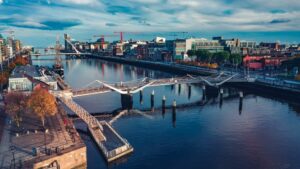
The Docklands show the part of Dublin that changed most dramatically during the city’s economic growth. Offices, apartment blocks and cultural venues now occupy former port and industrial land on both sides of the river.
Grand Canal Dock, the Samuel Beckett Bridge, Hanover Quay and the route towards the Poolbeg Peninsula can be combined into a long walk. This area also carries much of Dublin’s modern music history. Windmill Lane, Hanover Quay and the former Point Depot are included in our route through places connected to U2 in Dublin.
Poolbeg Lighthouse lies much farther out than it appears from the centre. The final walk along the Great South Wall is exposed, with little protection from wind or waves. Avoid it during storms or high winds and do not treat it as a casual extension of a Docklands walk.
Portobello, Camden Street and Ranelagh
These neighbourhoods are useful for evenings because they combine restaurants, pubs and residential streets within easy reach of the centre.
Camden Street becomes busy at night, particularly from Thursday to Saturday. Portobello is quieter once you move towards the Grand Canal, while Ranelagh has its own cluster of restaurants and can be reached by Luas.
Staying here gives you a better separation between sightseeing and evenings. You can walk into the centre during the day and return to an area where restaurants serve residents as well as visitors.
Dublin Bay and the Coast
The sea is one of Dublin’s greatest practical advantages. The DART railway runs around Dublin Bay, making it possible to reach coastal towns without renting a car.
Howth lies on the northern side of the bay and combines a fishing harbour, seafood restaurants and several cliff routes. The short sections near the village can be busy, while the longer trails need proper footwear and enough time. Our local guide to Howth and its cliff walk explains the different routes, how to arrive by DART and where the village fits into the day.
South of the city, Dún Laoghaire has long piers and direct rail connections. Sandycove is known for the Forty Foot swimming place and the James Joyce Tower. Dalkey has a compact historic centre, while Killiney provides elevated views across the bay.
Choose one side of the coast for a day trip. Travelling from Howth to Dalkey looks simple on a map but consumes a large part of the day.
Planning Your Trip
Dublin Airport is around 10 kilometres north of the city centre. There is currently no rail connection from the airport, so arrivals depend on buses, coaches, taxis or rental cars.
Public and private bus services connect the terminals with the centre and other parts of Dublin. Journey times vary considerably with traffic. Taxis use regulated meters, with an official estimated airport-to-centre fare generally falling between €30 and €45. Check the latest options through the Dublin Airport transport pages.
Accommodation is the most difficult part of planning Dublin. Prices remain high throughout much of the year and increase sharply around St Patrick’s Day, major concerts, rugby weekends and summer events.
Book accommodation before paid attractions. A cheaper room far outside the centre can lose its advantage once travel time and late-night taxis are included.
For a first trip, consider:
- The south city centre for immediate access to the main attractions
- Portobello or Camden Street for restaurants and walkability
- Smithfield or Stoneybatter for pubs and better-value accommodation
- Grand Canal Dock or Ballsbridge for a quieter business district
- A location close to the DART if the coast is a priority
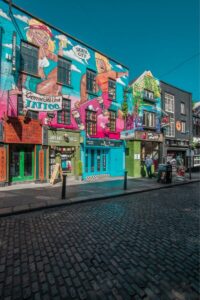
Temple Bar is convenient but noisy and expensive. We would visit its streets in the morning, when the architecture and public spaces are easier to appreciate, then drink and eat elsewhere.
Book the Book of Kells, Kilmainham Gaol and the Guinness Storehouse in advance. Kilmainham is usually the hardest ticket to secure. Restaurant reservations are also advisable from Thursday to Saturday.
Pack a waterproof jacket with a hood in every season. Dublin rain frequently comes with wind, making an umbrella more awkward than useful. Layers are important because the temperature can change several times during the same day.
The currency is the euro. Cards are accepted almost everywhere, though carrying a small amount of cash remains useful. Ireland uses type G electrical plugs, the same three-pin format used in the United Kingdom.
Best Itinerary
Three days is the most useful length for a first visit. Organise the city geographically and keep the coastal day flexible so it can be moved according to the weather.
Day 1: Trinity College and Georgian Dublin
Begin at Trinity College and visit the Book of Kells if it interests you. Continue towards Grafton Street, St Stephen’s Green and the Georgian streets around Merrion Square.
The National Gallery and the archaeology section of the National Museum of Ireland are both nearby and free to enter. Choose one rather than moving quickly through both.
Spend the evening around Camden Street, Portobello or South William Street. This keeps the entire first day within a coherent part of the city.
Day 2: Historic Dublin and the Liberties
Start at the General Post Office on O’Connell Street, cross the Liffey and continue towards Dublin Castle. Visit the Chester Beatty, Christ Church Cathedral and the Liberties.
Book either Kilmainham Gaol or the Guinness Storehouse for the afternoon. Trying to visit both alongside the medieval centre creates a crowded schedule, particularly because Kilmainham lies farther west.
End the day in a traditional pub outside Temple Bar. A pub with live music is best chosen for its session and atmosphere, while another may have stronger food. The same place does not always excel at both.
Day 3: Dublin Bay
Use the DART to travel to Howth for the harbour, cliff walk and lunch. The full excursion requires most of the day if you choose one of the longer routes.
If the weather makes the cliffs unappealing, take the DART south to Dún Laoghaire, Sandycove or Dalkey, where the day can be divided between shorter walks, cafés and indoor stops.
Return to the city for the final evening. Smithfield, Stoneybatter, Capel Street and Ranelagh are all good alternatives to another night in the central tourist district.
Our complete three-day Dublin itinerary contains additional stops and practical alternatives for travellers who want to adapt these days to their interests.
Getting Around Dublin
Central Dublin is best explored on foot. Trinity College, Dublin Castle, the cathedrals, O’Connell Street and the Georgian quarter fall within a relatively small area, although a full sightseeing day still involves considerable walking.
Public transport consists mainly of buses, the Luas tram system, the DART coastal railway and commuter trains.
- Use buses for neighbourhoods without rail or Luas connections.
- Use the Luas for Smithfield, Heuston Station, the Docklands and parts of south Dublin.
- Use the DART for Howth, Dún Laoghaire, Sandycove, Dalkey and other coastal stops.
- Use commuter trains for destinations farther into County Dublin and neighbouring counties.
- Use taxis late at night or when several people are sharing the fare.
The TFI Leap Visitor Card covers Dublin city buses, Luas, DART and commuter rail for a chosen period. A standard Leap Card can be better value if you only expect to take a few journeys, since Dublin’s central area is walkable.
Remember to tap off after DART, commuter rail and Luas journeys. On buses, passengers tap on when boarding.
Dublin Bikes can work well for short journeys, although visitors unfamiliar with left-side traffic may find central roads uncomfortable. Cycle lanes vary considerably in quality and continuity.
A rental car is unnecessary for a city break. Parking is expensive, central traffic is slow and public transport reaches the coast. Collect a car when leaving Dublin if the city is the first stage of a longer Ireland journey.
When to Visit Dublin
May, June and September usually provide the best balance of daylight, events and manageable visitor numbers. Dublin remains unpredictable in every season, so no month guarantees dry weather.
| Period | What to expect | Planning implications |
|---|---|---|
| March–April | Changeable weather and growing visitor numbers | St Patrick’s Day requires very early booking |
| May–June | Long days and generally mild temperatures | Strong period for walking and coastal trips |
| July–August | Busiest summer period | Higher accommodation prices and busy attractions |
| September–October | Cooler days and fewer summer visitors | Good for city walks, restaurants and museums |
| November–February | Short days, wind and frequent rain | Better availability outside Christmas and major events |
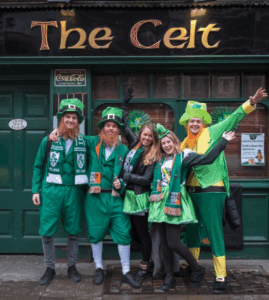
St Patrick’s Day is celebrated on 17 March. The parade and associated festival draw large crowds, room rates rise and central transport is affected. Anyone planning specifically for the celebration should use our local advice for St Patrick’s Day in Dublin and confirm the current parade route before arrival.
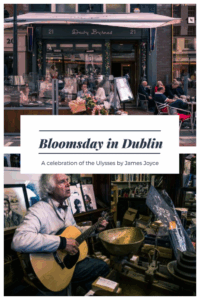
Bloomsday takes place on 16 June and celebrates James Joyce’s Ulysses. Readings, costumes, performances and walks take place across the city. Our James Joyce route through Dublin connects locations from the novel with places that remain part of the modern city.
December brings decorated streets, busy pubs and high demand on weekends. January and February are quieter, but daylight is limited and coastal weather can be severe.
How Many Days in Dublin?
Three full days is the right amount of time for most first visits. Two days covers the centre, while four days gives you enough room for the coast without removing a city day.
| Length of stay | What you can realistically include |
|---|---|
| 1 day | Historic centre and one major paid attraction |
| 2 days | Central sights, Georgian Dublin and the Liberties |
| 3 days | Main city areas plus one coastal trip |
| 4 days | City, coast and additional neighbourhoods or museums |
| 5 days | Dublin plus Glendalough, Wicklow or another longer excursion |
A one-night stop before travelling around Ireland gives a very limited impression of Dublin. If that is all the time available, concentrate on one connected area rather than crossing the city to collect landmarks.
Four nights work particularly well because they provide three complete sightseeing days without forcing you to travel immediately after arriving at the airport.
Budget
Dublin is one of the more expensive European capitals, with accommodation accounting for the largest part of most travel budgets.
A realistic daily estimate per person, based on two people sharing a room, is:
| Travel style | Daily budget per person |
|---|---|
| Budget | €100–€150 |
| Mid-range | €180–€300 |
| Comfortable | €350 and above |
A central hotel can easily cost more than food, transport and attractions combined. Hostels reduce the accommodation bill, but dormitory beds also become expensive during events and summer weekends.
Paid attractions commonly cost between €15 and €30. Kilmainham Gaol is less expensive than many commercial attractions, while the complete Book of Kells and Guinness experiences sit towards the higher end.
Dublin’s national museums, the National Gallery, Chester Beatty, parks and many public spaces remain free. Our collection of free things to do in Dublin includes museums, city walks, the Grand Canal, Bull Island and neighbourhoods that can substantially reduce the cost of a visit.
A pint in a central pub commonly costs more than €7 and can be considerably higher in Temple Bar. Moving a few streets away usually improves both the price and the atmosphere.
Lunch menus, bakeries and early dinners can help manage food costs. Staying somewhere with breakfast included is only valuable if the rate remains competitive, since Dublin has many independent cafés.
Food
Dublin’s food scene changed considerably during the years we lived there. Irish ingredients now appear across traditional pubs, neighbourhood restaurants, bakeries and modern dining rooms, while immigration has made the city particularly strong for international food.
For Irish cooking, look for seafood chowder, smoked salmon, oysters, lamb, beef and Guinness stew, brown soda bread and a well-prepared full Irish breakfast. Dublin coddle, traditionally made with sausages, bacon, potatoes and onions, is closely connected to the city, though it appears less frequently on restaurant menus than visitors might expect.
Irish dairy deserves attention. Butter, cream and farmhouse cheese are central to many apparently simple dishes. A plate of bread, salted butter and local smoked fish can say more about Irish produce than a complicated menu built for tourists.
Howth is the natural choice for seafood during a city break. Chowder, mussels, fish and chips and the day’s catch are widely available around the harbour. Weekend tables fill quickly, particularly when the weather is good.
Within the city:
- Capel Street is useful for affordable international food.
- Camden Street and Portobello have restaurants across several price levels.
- Stoneybatter is strong for cafés, bakeries and casual neighbourhood dining.
- South William Street and the surrounding lanes contain many central restaurants and bars.
- George’s Street Arcade and nearby streets work well for an informal lunch.
- Ranelagh is worth considering for dinner outside the tourist centre.
Dublin also has a significant Italian community and a long list of pizzerias claiming Italian credentials. As Italians who lived in the city, we judged them rather strictly. Our selection of Italian pizza in Dublin explains which kitchens we considered convincing and what we looked for in the dough, ingredients and preparation.
Pub food varies widely. Some pubs have serious kitchens, while others concentrate on drink, conversation and music. Decide what you want from the evening before choosing the venue. A famous pub with a packed traditional music session may be a good place for a pint and a poor place for a relaxed dinner.
Temple Bar has several historic and culturally important spaces, but many restaurants and pubs in the district depend on a constant flow of short-term visitors. Check menus and prices before sitting down. Walking ten minutes towards Camden Street, Capel Street, Smithfield or the Liberties usually widens the choice.
Reserve dinner for Friday and Saturday nights. A service charge may already be included for groups, while a tip of around 10 percent is customary for good table service when no charge has been added. Tipping for every drink at the bar is not expected.