Ireland Travel Guide
This Ireland travel guide is based on years spent living in Dublin and repeatedly travelling around the Republic of Ireland and Northern Ireland by car, train and on foot.
Living in Ireland changes how you advise someone to travel around it. The distances appear short, yet roads along the coast and through rural areas make journeys considerably slower than the map suggests. Summer provides long evenings, yet it brings high accommodation prices and busy roads. Dublin is a useful starting point, though the country begins to make greater sense once you spend time in its smaller cities, peninsulas, mountain areas and coastal communities.
We lived in Dublin for years and used the city as a base for repeated trips across the island. We travelled west to Galway and Connemara, south through Waterford, Cork and Kerry, north to Belfast and County Antrim, and regularly into Wicklow when we needed to leave the city without organising a full weekend away.
That experience taught us to avoid trying to circle the entire island in a week. Ireland needs time because many of its best days involve short distances with frequent stops. A drive through Connemara, the Dingle Peninsula or the Causeway Coast may cover relatively few kilometres while taking most of the day.
The island also contains two jurisdictions. The Republic of Ireland uses the euro and kilometres. Northern Ireland is part of the United Kingdom, uses pounds sterling and displays road distances and speed limits in miles. There is usually no routine border checkpoint on the road, but entry requirements, rental-car conditions and insurance can differ. Check the rules that apply to your nationality and booking.
For a first journey, one week is enough for Dublin and the west. Ten days work for Dublin, Cork, Kerry and Galway. Two weeks provide a strong introduction to the Republic of Ireland. Northern Ireland deserves another three or four days if Belfast and the Causeway Coast are priorities.
Regions
Ireland’s regions have practical differences as well as geographical ones. The east has the strongest transport links, while the Atlantic counties require longer drives. Dublin can be explored without a car. Donegal, the peninsulas of Kerry and large parts of Connemara are much easier with one.
| Region | Main bases | Best for | Suggested time |
|---|---|---|---|
| Dublin and its coast | Dublin, Howth, Dalkey | History, city culture, coastal walks and food | 3–5 days |
| Wicklow and the southeast | Glendalough, Kilkenny, Waterford, Wexford | Monastic sites, hiking, medieval towns and coastal roads | 3–6 days |
| Cork and Kerry | Cork, Kinsale, Killarney, Dingle | Peninsulas, national parks, food and longer road trips | 5–8 days |
| Clare and Galway | Doolin, Galway, Connemara | Atlantic landscapes, islands, music and seafood | 4–7 days |
| Mayo, Sligo and Donegal | Westport, Sligo, Donegal | Quieter roads, mountains, beaches and extended western routes | 5–8 days |
| Northern Ireland | Belfast, Derry, Portrush | Urban history, the Causeway Coast and regional food | 3–6 days |
Our collection of places to visit in Ireland can help narrow the choice, but a practical itinerary should concentrate on one or two neighbouring regions.
Dublin and the coast
Dublin needs three full days on a first visit. The centre is compact, but the city extends well beyond the streets surrounding Trinity College and Temple Bar.
Spend one day on the historical centre, including Trinity College, Dublin Castle, Christchurch and the streets around the Liberties. Use another for Kilmainham Gaol, the General Post Office, the National Museum or Glasnevin Cemetery. The third can explore the coast or neighbourhoods outside the principal visitor circuit. Our three-day Dublin itinerary organises those areas without crossing the city repeatedly.
Many of Dublin’s worthwhile institutions and outdoor spaces are free. The Chester Beatty, National Gallery, National Museum, public parks and coastal routes can fill a considerable part of a visit. We have collected these in our article on free things to do in Dublin.
Temple Bar is heavily geared toward visitors and has some of the city’s highest drink prices. Walk through it, then look for pubs around the Liberties, Smithfield, Camden Street, Stoneybatter or neighbourhoods beyond the immediate centre. A traditional music session is easier to appreciate in a pub where people have come to listen rather than record an entire song on their phones.
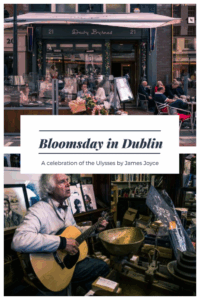
Dublin’s relationship with literature and music is visible across ordinary streets. Readers can follow James Joyce’s route through the city, while music fans can trace the Dublin places connected with U2. Both routes provide a reason to walk into areas missed by standard sightseeing circuits.
The DART suburban railway makes the coast easy to reach. Howth has a working harbour and several cliff routes, and our local guide to Howth explains how to choose the walk and spend time in the village. Dalkey, Dún Laoghaire and the Forty Foot are other straightforward coastal stops.
Wicklow, Kilkenny and the southeast
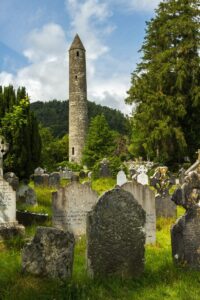
Wicklow is the easiest transition from Dublin into rural Ireland. Glendalough can be visited as a day trip, although staying nearby gives hikers an earlier start and avoids having to return to the city immediately.
The monastic settlement and lakes are accessible without a long hike. The Spinc route climbs above the valley and requires proper footwear, time and reasonable conditions. Our guide to visiting Glendalough covers the trails, monastic site, transport and practical differences between a short visit and a full day in the valley.
Kilkenny is compact enough for a day, but one night is better. The castle, Medieval Mile, St Canice’s Cathedral and old centre can be explored on foot. Staying after day visitors leave creates time for dinner and the city’s pub culture. Our local guide to Kilkenny also covers restaurants, Smithwick’s, nearby food producers and places to stay.
Farther south, Waterford and Dungarvan can anchor a route along the Copper Coast. The Waterford Greenway is useful for cycling, while the Comeragh Mountains introduce a much more demanding landscape.
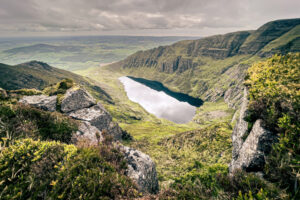
The Coumshingaun Lough loop is a serious mountain hike involving steep ground, scrambling and route-finding. It takes around four to five hours in good conditions. Hikers without the fitness, equipment or navigation experience for the full circuit can walk to the lower lake and return.
Cork and Kerry
Cork is a good base for the south, especially when the itinerary includes Kinsale, Cobh or West Cork. The English Market is central to understanding the region’s food, with butchers, fishmongers, bakers and prepared-food counters gathered in one place.
Kinsale has a strong restaurant reputation and can be visited from Cork. Cobh has a deep maritime history and works as a half-day stop. West Cork needs several days because roads become slower as the route approaches the peninsulas.
Kerry is one of the regions where travellers routinely underestimate time. The Ring of Kerry can be driven in one day, though that leaves limited space for walks and detours. The Dingle Peninsula also deserves a complete day, with two nights in Dingle providing a much better pace.
Killarney is useful for Killarney National Park, the lakes, Muckross Abbey, Torc Waterfall, the Gap of Dunloe and the Ring of Kerry. Our guide to things to do in Killarney explains which experiences require a car and which can be reached on foot, by bicycle or through local transport.
Avoid placing the Ring of Kerry and Dingle on consecutive single-day excursions from the same hotel if you dislike long hours behind the wheel. Staying in both Killarney and Dingle reduces backtracking and gives each peninsula its own day.
Clare, Galway and Connemara
County Clare and Galway form one of the most coherent western itineraries. The Burren, Cliffs of Moher, Doolin, Galway city, Connemara and the Aran Islands can be connected without crossing the country between each stop.
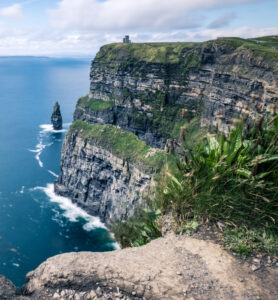
The Cliffs of Moher are busiest around the visitor centre and during the middle of the day. Coastal paths extend beyond the central viewing area, but cliff edges remain exposed to wind and erosion. Stay within safe routes and follow closures.
Galway city needs one or two days. The centre is small, while Salthill, the food scene, markets and evening atmosphere make an overnight stay worthwhile. Our Galway city guide covers the main areas alongside less obvious places and possible day trips.
Galway is also a practical base for Connemara. Clifden, Kylemore, Renvyle, Killary Fjord and the roads through the Gaeltacht require a complete day, with two days preferable. Weather changes the landscape quickly and can affect visibility on Diamond Hill and coastal roads.
The Aran Islands should receive a full day. Inis Mór has the greatest number of sights and longer distances. Inis Oírr is compact enough to explore on foot. Ferry departure points differ according to route and season, so check where the service starts before arranging accommodation.
Our one-week itinerary through western Ireland connects Dublin with the Cliffs of Moher, Galway and Connemara at a pace that leaves room for two nights in the west.
Mayo, Sligo and Donegal
The northwest receives fewer first-time visitors because it sits beyond the usual Dublin, Kerry and Galway circuit. It deserves a separate trip once Westport, Achill Island, Sligo and Donegal are included.
Westport works well for County Mayo and the road toward Achill. Sligo adds Benbulben, coastal walks and a strong connection with the writing of W.B. Yeats. Donegal has some of the country’s longest driving times, despite distances that appear modest.
A route through Donegal needs flexibility. Roads are narrow, settlements are spread out and weather can remove the view that justified a long detour. Choose two bases rather than moving every night.
This area also retains a stronger connection with the Irish language in several communities. Road signs may appear primarily in Irish within Gaeltacht areas, so it helps to recognise both Irish and English place names before driving.
Northern Ireland
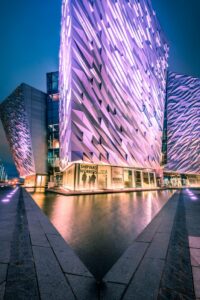
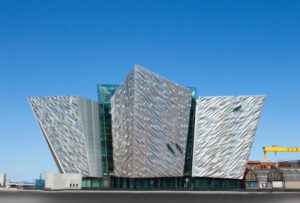
Northern Ireland should be treated as a distinct part of the itinerary. Belfast deserves two days for its political history, industrial heritage, markets and neighbourhoods. Our Belfast city guide explains the main sights and the historical context needed to understand them.
Walking tours of the murals and former interface areas are more useful when led by someone who can explain multiple perspectives. Reducing Belfast’s recent history to a few photographs misses the social and political reality behind the images.
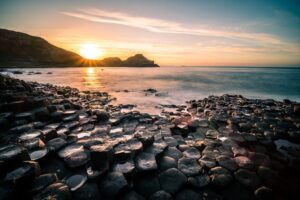
The Causeway Coastal Route needs at least one complete day from Belfast, and an overnight stay around Portrush or Bushmills improves it. The route includes coastal villages, cliffs, castles and the Giant’s Causeway, where the broader cliff trail is as important as the famous basalt columns.
The Dark Hedges can be included in the same region, but it should be treated as a brief stop. Its popularity has affected the road, trees and nearby residents. Park in designated areas and enter on foot.
Derry can be added with another day. Its walls, city centre and political history give it a character distinct from Belfast and make it a useful bridge toward Donegal.
Planning your trip
The first practical decision is the arrival and departure airport. Dublin has the largest selection of international connections. Shannon is convenient for Clare, Galway and the west. Cork works for southern itineraries, while Belfast serves Northern Ireland.
Flying into one airport and leaving from another can remove a full return journey. A route beginning in Dublin and ending in Shannon or Cork is often more efficient than driving back across the country solely for the flight.
Our article on planning a trip to Ireland covers entry documents, currency, clothing, transport and other essential preparations.
Public transport works well between Dublin, Belfast, Galway, Cork, Limerick, Kilkenny and several larger towns. It becomes less useful for peninsulas, trailheads and scattered coastal locations. A trip focused on Dublin, Belfast and Galway can be completed without a car. A Kerry, Connemara or Donegal itinerary becomes considerably easier with one.
Reserve accommodation early, especially in Dublin, Dingle, Galway, Killarney and small coastal communities. The problem is often limited supply rather than luxury pricing. Waiting can leave a choice between an expensive room and accommodation far from the planned route.
Book Kilmainham Gaol, popular ferry crossings and limited-capacity experiences ahead. Skellig Michael landings are particularly dependent on season, sea conditions and availability. Even with a reservation, a sailing can be cancelled.
Use waterproof footwear and a hooded jacket. An umbrella is rarely useful on exposed coasts because rain often arrives with wind. Pack for movement between outdoor conditions, heated interiors and a car rather than for a single forecast.
Best itinerary
Fourteen days provide enough time for Dublin, the southeast, Cork, Kerry and the west without attempting to include every county.
| Day | Route |
|---|---|
| 1 | Arrive in Dublin and explore the city centre |
| 2 | Dublin history, museums and neighbourhoods |
| 3 | Collect the car and travel through Wicklow or directly to Kilkenny |
| 4 | Kilkenny, Rock of Cashel and Waterford or Cork |
| 5 | Cork, Cobh or Kinsale |
| 6 | Continue through West Cork toward Killarney |
| 7 | Killarney National Park and the Gap of Dunloe |
| 8 | Travel to Dingle and explore the peninsula |
| 9 | Dingle to County Clare |
| 10 | Burren, Cliffs of Moher and Galway |
| 11 | Galway or the Aran Islands |
| 12 | Connemara and Clifden |
| 13 | Return east with a stop at Clonmacnoise or Newgrange |
| 14 | Dublin and departure |
Our tested 14-day Ireland road-trip itinerary provides the detailed stops, overnight bases and food ideas for this route.
Travellers interested in another area can replace Cork and Kerry with Belfast, the Causeway Coast and Derry. Trying to include both the far southwest and Northern Ireland in the same two-week trip produces several long relocation days.
For shorter regional routes, our collection of Ireland road-trip itineraries covers the Wild Atlantic Way, Causeway Coast, Ring of Kerry, Dingle Peninsula, Burren, Copper Coast and Killarney.
Driving in Ireland
Ireland drives on the left. The adjustment usually takes place quickly on motorways and larger roads. Narrow rural roads, roundabouts and turns made after stopping require greater concentration.
We lived in Dublin without owning a car and rented one repeatedly for trips around the country. That gave us extensive experience with Irish rental conditions, insurance, deposits and the practical problems hidden behind an attractive base price. Our car-rental guide for Ireland explains the terminology and questions to ask before paying.
Choose the smallest car that can hold the passengers and luggage. A large SUV creates difficulties on single-lane roads, inside villages and in small car parks. An automatic should be reserved early because manual cars are more common and usually cheaper.
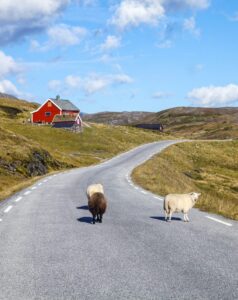
Google Maps driving times become unreliable on peninsulas and local roads. Allow time for oncoming vehicles, tractors, cyclists, sheep, viewpoints and sections where one driver must reverse to a passing place.
When crossing into Northern Ireland, remember:
- The Republic displays distances and speed limits in kilometres.
- Northern Ireland uses miles.
- Fuel and other purchases change from euros to pounds.
- The rental company may require advance notification.
- Insurance and roadside assistance must cover both jurisdictions.
- Different entry requirements may apply even without a routine border stop.
Ask the rental company how tolls are handled, particularly the barrier-free M50 toll around Dublin. Photograph the car at collection and return, including wheels, mirrors and existing scratches.
Avoid collecting a car for days spent entirely in central Dublin. Parking is expensive, traffic adds little value and the city is easy to explore on foot and by public transport.
When to visit
May, June and September are the most useful months for an Ireland road trip. They provide reasonable daylight, active seasonal services and fewer domestic holiday crowds than July and August.
| Period | Conditions | Best for |
|---|---|---|
| March to April | Longer days, cool weather and frequent changes | Cities, spring landscapes and St Patrick’s Day |
| May to June | Very long evenings and active visitor services | Road trips, hiking and island crossings |
| July to August | Highest demand and busiest destinations | Festivals, long itineraries and family travel |
| September to October | Shortening days and fewer visitors | Food, cities and regional road trips |
| November to February | Short daylight and reduced rural services | Dublin, Belfast and slow city breaks |
Summer improves the probability of usable weather but provides no guarantee of dry days. Our advice for visiting Ireland in summer explains what the season changes and what remains unpredictable.
May and June often work better than August because the evenings are long and accommodation demand has not reached its annual peak. September can also be excellent, though ferry and attraction schedules may begin to reduce later in the month.
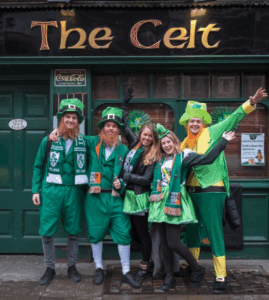
St Patrick’s Day takes place on 17 March. Dublin becomes crowded, accommodation prices rise and the city centre is heavily managed around the parade. Our local advice for St Patrick’s Day in Dublin explains how the day actually works and why reservations matter.
Winter travel is viable in the cities. A rural road trip becomes harder because daylight is short, weather disruption is more likely and seasonal businesses may close.
How many days
Three days are appropriate for Dublin. Add a fourth for Howth, Glendalough or another trip outside the centre.
Seven days work for Dublin and western Ireland. Spend two or three days in Dublin, then continue to Galway, Connemara and County Clare.
Ten days allow Dublin, Cork, Killarney, Dingle and Galway, although the route will include several hotel changes. Two weeks provide a more balanced introduction to the Republic of Ireland.
Northern Ireland needs at least three days: two for Belfast and one for the Causeway Coast. Four or five allow Derry and an overnight stay on the north coast.
A complete tour of the island needs close to three weeks. That still requires choices, particularly if Donegal, the Westfjords of Kerry, the Aran Islands and several hiking days are included.
Budget
Ireland is expensive, with accommodation creating the greatest pressure. Dublin prices are particularly high, but Galway, Killarney and Dingle can also become costly when supply is limited.
| Travel style | Daily estimate per person | What it covers |
|---|---|---|
| Budget | €100–150 | Hostel or simple room, supermarket food, buses and free attractions |
| Mid-range | €180–280 | Comfortable shared room, restaurant meals, car costs and paid sights |
| Comfortable | €320+ | Higher-end accommodation, regular dining out and private activities |
These estimates assume two people share accommodation and car expenses. Solo road trips cost substantially more.
Car-rental quotes should be compared using the final cost, including insurance, excess reduction, additional drivers, automatic transmission and cross-border charges. Fuel and parking also need their own allowance.
Dublin accommodation should be reserved first. Staying far outside the centre may save money on the room while adding transport costs and time every day.
Pubs are no longer a consistently cheap place to eat or drink, especially in central Dublin and heavily visited towns. Lunch menus, bakeries, cafés, markets and supermarket picnic supplies help control costs. Natural sites, coastal walks and national parks keep the sightseeing budget manageable.
Northern Ireland uses pounds, so calculate that part of the trip separately. Prices and payment conditions may differ from those in the Republic.
Food
Irish cooking starts with the quality of its raw ingredients. Dairy, beef, lamb, potatoes, oats, fish and shellfish form the foundation. The most interesting change during our years there was seeing restaurants become increasingly confident about using these ingredients without disguising their origin.
Irish stew is traditionally based on lamb or mutton with potatoes and onions. Coddle belongs to Dublin and uses sausages, bacon, potatoes and onions. Bacon and cabbage remains common in traditional restaurants and homes. Colcannon mixes mashed potato with cabbage or kale, while boxty is a potato pancake associated particularly with the northwest.
Seafood depends on location. Galway is known for oysters, the west coast has mussels and crab, and coastal restaurants frequently serve chowder, hake, cod, salmon and smoked fish. A bowl of seafood chowder with brown bread is often a better lunch than another plate built for visitors around the idea of “traditional Irish food.”
Bread matters. Brown soda bread appears with soup, smoked salmon and breakfast. Waterford has the blaa, a soft white roll dusted with flour. Good Irish butter needs no elaborate explanation once served warm with bread.
A full Irish breakfast usually contains eggs, sausages, bacon, black pudding, white pudding, tomatoes, mushrooms and bread. Regional and individual versions differ. It is substantial enough to affect the rest of the day, especially before a drive or hike.
Markets provide a useful view of contemporary Irish food. Cork’s English Market brings together producers and traders from across the region. Belfast’s St George’s Market is strongest from Friday to Sunday. Farm shops and small producers around Kilkenny, Cork and the west are worth including when the road passes nearby.
Belfast has developed one of the island’s most interesting restaurant scenes, with seafood, local meat, bakeries, coffee and modern cooking concentrated in a walkable centre. Our guide to Belfast restaurants and pubs covers everyday meals, markets, traditional pubs and more ambitious dining.
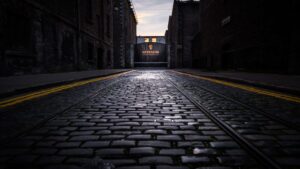
Guinness tastes different according to storage, turnover and how carefully a pub maintains its lines. The Guinness Storehouse explains the production and history of the drink, though the Gravity Bar pint should be treated as part of the attraction rather than a search for Dublin’s best pub.
Irish pubs have several functions. Some are primarily drinking places, some serve food throughout the day, and others host music or act as a local meeting point. Look at what is happening inside before choosing. A quiet afternoon pint, a busy Friday evening and a traditional session are three different experiences.
Restaurant quality cannot be judged by the amount of shamrock decoration outside. Check the day’s fish, ask where the meat comes from, look for seasonal vegetables and notice whether the menu changes with the region. Ireland’s food becomes much clearer once you stop expecting every meal to provide a condensed performance of Irish identity.