

Eating gluten-free in Jordan is easier than it was when I first travelled there, especially in Amman, but it still requires more planning than in many European destinations.
Jordanian food includes plenty of dishes that can be made without gluten, from grilled meats and rice dishes to hummus and vegetables. The complication is that bread is everywhere, recipes vary, and cross-contamination is not always understood in the same way as it is in dedicated gluten-free restaurants.
Amman is the easiest place to find gluten-free bread, bakeries and restaurants that understand dietary requirements. Outside the capital, particularly in Petra, Wadi Rum and the Dead Sea area, it is better to plan ahead and speak directly with hotels, camps or restaurants before your meal.
This guide covers where to find gluten-free food in Amman, which Jordanian dishes may work, what to avoid, where to buy gluten-free bread and how to explain that you need gluten-free food in Arabic.
Is Jordan Good for Gluten-Free Travelers?
Jordan can be manageable for gluten-free travelers, but how easy it feels depends heavily on why you avoid gluten.
If you simply choose not to eat gluten, many traditional dishes can be adapted relatively easily.
If you have celiac disease or need to avoid even small amounts of gluten, you need to be much more careful about preparation, shared fryers, bread on the table and cross-contamination.
The good news is that Amman now has dedicated gluten-free bakeries and some restaurants specifically identified as suitable for people with celiac disease. The Coeliac Youth of Europe Travel Net currently lists several establishments in Amman as certified for celiac safety, including selected branches of Hamada Restaurants, Eat-Talia Napolitana, SQRD Pizza and Luigi’s Pizza, along with several bakeries. Always verify current conditions directly before eating, as certification and kitchen procedures can change.
Gluten-Free Amman: Where to Eat
Amman is by far the easiest place in Jordan to find clearly identified gluten-free food.
You can now find dedicated bakeries, gluten-free bread and restaurants with more awareness of celiac disease and cross-contamination than when I first visited.
Beat tha Wheat
Beat tha Wheat is one of the most established dedicated gluten-free bakeries in Amman.
It was created specifically for people with celiac disease, gluten intolerance and wheat allergies and sells gluten-free breads, pastries, sweets and other baked products.
It is on Abdullah Ghosheh / Mecca Street and it’s still active in 2026.
If you want to stock up on gluten-free bread or snacks before travelling elsewhere in Jordan, this is one of the most useful places to know about.
Farraj Gluten-Free Bakery
Farraj Bakery is another dedicated gluten-free bakery in Amman, on An-Nahdah Street.
It offers gluten-free bread, pastries, cakes and sweets and currently advertises delivery across Jordan.
For travelers who need reliable bread rather than simply restaurant meals, dedicated bakeries like this can make the rest of the trip much easier.
Other Celiac-Focused Options in Amman
The Coeliac Youth of Europe Travel Net currently lists several restaurants and bakeries in Amman as certified for celiac safety.
Restaurant options listed include:
- Hamada Restaurants
- Eat-Talia Napolitana
- SQRD Pizza
- Luigi’s Pizza
Certified bakeries listed include:
- Beat tha Wheat
- Mahfooza Bakehouse
- Farraj Bakery
- Rukn Altabeiaah
- Fornaji Bakery
Certification and kitchen practices can change, so check the current status before your visit rather than relying only on an old list.
Where to Buy Gluten-Free Bread in Amman
Finding gluten-free bread in Amman is much easier than it used to be.
Dedicated bakeries such as Beat tha Wheat and Farraj Bakery sell bread and other gluten-free baked products, while larger supermarkets may also carry imported or specialist products.
If you are travelling onwards to Petra, Wadi Rum or more remote parts of Jordan, buying bread, crackers or snacks in Amman before leaving is a good idea.
When I first visited Jordan, simply finding gluten-free baked goods required far more effort. Today, the situation in the capital is considerably better.
What Jordanian Food Is Gluten-Free?
Several Jordanian and Middle Eastern dishes can be gluten-free depending on the recipe and preparation.
The key word is can.
Do not assume a dish is safe simply because its main ingredients do not contain wheat.
Hummus
Traditional hummus is made from chickpeas, tahini, lemon and garlic and does not normally require gluten-containing ingredients.
The main issue is how it is served.
Bread is often placed directly beside or into shared dishes, so anyone with celiac disease should ask about preparation and contamination.
Grilled Meat and Kebabs
Plain grilled lamb, chicken and kebabs can be good options if no gluten-containing marinade, seasoning mix or sauce has been added.
Ask how the meat is prepared rather than assuming it is safe.
Rice Dishes
Rice with meat or vegetables can work well for gluten-free travelers, but stock cubes, sauces and seasoning blends can sometimes contain gluten.
Again, ask.
Zarb
Zarb, the Bedouin style of cooking meat and vegetables underground, may be naturally gluten-free depending on what is served alongside it and how it is seasoned.
The meat itself may be straightforward; the accompaniments are where questions become important.
Falafel
Falafel is often made primarily from chickpeas or fava beans, but it is not automatically gluten-free.
Recipes may include flour, and shared fryers can introduce cross-contamination.
If you have celiac disease, ask specifically about both the ingredients and fryer.
Gluten-Free Breakfast in Jordan
Hotels are often the easiest places to manage breakfast because you usually have several basic foods to choose from.
Eggs, fruit, yogurt, cheese and some meat dishes may be suitable depending on preparation.
Larger hotels may also offer gluten-free bread or other baked products, but do not assume they will.
Ask in advance if breakfast is important to you, particularly outside Amman.
Buffets require extra care for anyone with celiac disease because utensils, bread crumbs and shared serving areas can create cross-contamination even when an individual food is naturally gluten-free.
Gluten-Free Food in Petra
Petra and Wadi Musa now have hotels and restaurants that explicitly advertise gluten-free options.
For example, Petra Boutique Hotel currently lists gluten-free dietary options in its restaurants, while other Wadi Musa hotels also advertise gluten-free meals.
That is encouraging, but a menu label does not automatically mean a kitchen is celiac-safe.
If you need strict gluten avoidance, contact the hotel or restaurant directly and ask about separate preparation and cross-contamination before relying on the menu description.
For a long day inside Petra, carrying your own gluten-free snacks is still sensible.
Gluten-Free Food in Wadi Rum
Wadi Rum requires more planning because meals are often prepared in camps rather than in restaurants with extensive menus.
Tell your camp about your dietary requirement when you book, not when dinner is being served.
Traditional meals based on grilled meat, rice and vegetables may be adaptable, but bread, sauces, seasoning and shared preparation areas can still be an issue.
If you have celiac disease, explain that avoiding wheat alone is not enough and ask how food will be prepared separately.
Gluten-Free Food at the Dead Sea
Larger Dead Sea resorts are generally better positioned to handle dietary requests because they serve international guests and often have extensive buffet and restaurant operations.
Some hotels currently advertise gluten-free dining options.
As with any buffet, however, people with celiac disease should ask staff about preparation and cross-contamination rather than relying only on labels.
When I stayed at the Dead Sea, I found breakfast easier to manage than I expected because there were many basic foods available.
Gluten-Free Desserts in Jordan
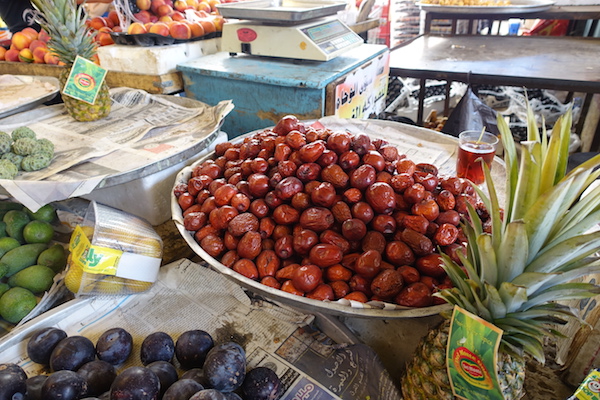
Dessert requires more caution than savoury food. Many traditional pastries contain wheat or semolina, even when the filling itself is based on nuts, cheese or dates.
Do not assume a dessert made with coconut, almonds or other naturally gluten-free ingredients is gluten-free unless you know what else is in the recipe.
Dates, fresh fruit and plain nuts are usually the simplest options when you are unsure. Dedicated gluten-free bakeries in Amman are a much better choice if you want cakes, pastries or biscuits without having to guess.
How to Say “Gluten-Free” in Arabic
The Arabic phrase for gluten-free is:
خالي من الغلوتين
Khalī min al-glūtīn.
Having the phrase written down on your phone can be very useful when ordering.
If you have celiac disease, simply saying “gluten-free” may not fully communicate the importance of avoiding contamination.
A written allergy or celiac card explaining that you cannot eat wheat, barley or rye and that your food must not come into contact with them is much safer than relying on a single phrase.
If you already have a professionally translated Arabic gluten-free card, save it offline or print a copy before your trip.
Gluten-Free Supermarkets and Shops in Jordan
Amman has the strongest range of specialist products. Supermarkets including Carrefour and Safeway in Amman are places where travelers may find gluten-free products, alongside specialist bakeries.
Outside the capital, the range becomes less predictable. If you rely on specific products such as bread, crackers or breakfast foods, buy them before travelling to more remote destinations.
Tips for Traveling Gluten-Free in Jordan
Planning matters more than trying to find a special menu everywhere you go.
A few things can make the trip much easier:
- Stock up on gluten-free bread and snacks in Amman before travelling elsewhere.
- Carry an Arabic gluten-free or celiac card.
- Ask about ingredients and preparation.
- Do not assume falafel is gluten-free.
- Remember that traditional tabbouleh contains bulgur wheat.
- Be cautious with buffets and shared fryers if cross-contamination matters to you.
- Contact camps and hotels in advance, especially in Wadi Rum.
- Stick to simple grilled foods, rice, vegetables and other identifiable ingredients when communication is difficult.
- Reconfirm restaurant and bakery information shortly before your trip because businesses and certification can change.
Is It Difficult to Eat Gluten-Free in Jordan?
It can be, but the situation is much better than it was when I first travelled there.
Amman now has dedicated gluten-free bakeries, specialist products and restaurants with much greater awareness of celiac disease. Outside the capital, the challenge is less about Jordanian food itself and more about knowing exactly what is in a dish and how it was prepared.
That distinction matters.
Jordanian cuisine relies heavily on ingredients such as chickpeas, rice, meat, vegetables, tahini and herbs, which means there are many potentially suitable meals. But bread is central to the food culture, and cross-contamination is possible even when the main dish contains no gluten.
For travelers who need strict gluten avoidance, Jordan is therefore a destination to plan rather than fear.
Arrive with a few useful phrases, know which foods require extra questions, stock up when you are in Amman and communicate clearly with hotels and restaurants.
You can still experience Jordanian food — you simply need to do it with more awareness.