Jordan Travel Guides
This Jordan travel hub connects our firsthand Petra and food guides with a practical route through Amman, Jerash, the Dead Sea, Wadi Musa, Wadi Rum and Aqaba.
Jordan looks compact on a map, but a good journey still needs careful sequencing. Petra is around three hours from Amman by the fastest road, Wadi Rum is another 90 minutes south, and the most scenic routes include stops that can turn a transfer into a full day.
Seven days are enough for a first journey through the country. Ten days give you time to explore Petra properly, sleep in Wadi Rum, spend more than a few hours in Amman and include places such as Jerash, Madaba, Dana or Aqaba.
We found Jordan easy to travel around independently, particularly with a rental car. Roads between the main destinations were straightforward, major signs appeared in Arabic and English, and the distances were manageable once we stopped treating every transfer as a quick drive.
Petra is the centre of most first itineraries, but it should not consume the entire trip. Amman provides the food and city life. Jerash introduces Jordan’s Roman history. The Dead Sea and Wadi Mujib change the landscape completely. Wadi Rum is more meaningful when there is time to stay after sunset and wake up in the desert.
Regions of Jordan
Jordan can be divided into three practical travel areas: the north, the central corridor and the south. Most visitors enter through Queen Alia International Airport near Amman and travel south towards Petra, Wadi Rum and Aqaba.
| Area | Main destinations | What to include it for | Suggested time |
|---|---|---|---|
| Northern Jordan | Amman, Jerash, Ajloun and Umm Qais | City life, food, Roman ruins and hill landscapes | 2–3 days |
| Central Jordan | Madaba, Mount Nebo, Dead Sea and Wadi Mujib | Mosaics, religious history, floating and canyon walks | 1–3 days |
| Southern Jordan | Petra, Dana, Wadi Rum and Aqaba | Archaeology, hiking, desert landscapes and the Red Sea | 4–6 days |
Northern Jordan
Amman needs at least one full day, particularly if food is an important part of the trip. The Citadel and Roman Theatre provide the historical framework, while downtown Amman, local bakeries, falafel shops and sweet shops show how the city lives now.
The steep streets are part of the experience. Places that appear close on a map may involve long climbs, awkward road crossings or a taxi journey around the hills. It is better to concentrate on one area at a time than spend the day moving between unrelated points.
Jerash is around an hour north of Amman and contains one of the most substantial Roman archaeological sites in the region. Allow at least half a day. The site is large, exposed and more tiring in strong heat than it appears from the entrance.
Jerash can be combined with Ajloun Castle, although adding Umm Qais on the same day makes the route much longer. Umm Qais deserves time for its basalt ruins and views towards the Sea of Galilee and the Golan Heights. Include it when you have at least eight or nine days in Jordan.
Central Jordan
Madaba is known for its mosaics and works well as the first stop after collecting a rental car at Queen Alia Airport. From there, Mount Nebo and the Dead Sea can be joined into the same day.
The Dead Sea is primarily a resort experience on the Jordanian side. Public access is limited in places, and hotel beaches make entering the water, rinsing off and changing far easier. One night is useful if you want to rest, but a day visit is enough on a shorter journey.
Do not shave immediately before entering the water, and keep the water away from your eyes and any cuts. The salt stings quickly. Floating for a short period is enough, followed by a thorough shower.
Wadi Mujib is nearby, but its water trails operate seasonally and can close because of weather or water conditions. The Siq Trail involves walking and climbing through water, so it should be treated as an outdoor activity rather than an extra stop between the Dead Sea and Petra.
Southern Jordan
Southern Jordan contains Petra, Wadi Rum and Aqaba, three places that need very different amounts of time.
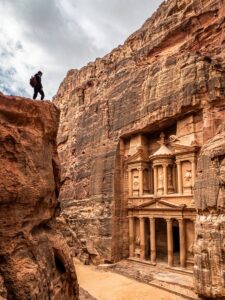
Petra requires at least one complete day. We walked approximately 26 kilometres over seven to eight hours, moving beyond the Treasury to the Monastery, Royal Tombs, High Place of Sacrifice and quieter sections of the site. Even travellers following the main route should expect a long day on uneven ground.
Wadi Rum works best as an overnight stop. Sunset jeep tours are popular, but the desert becomes more interesting after the engines stop and most daytime visitors leave. Camp quality varies enormously. Some are simple Bedouin camps, while others resemble resorts with private bathrooms, air conditioning and panoramic domes. Check the location, included meals and activities before booking.
Aqaba is useful when you want to finish with the Red Sea or fly out of southern Jordan. Two nights allow time for snorkelling, diving or resting after Petra and Wadi Rum. On a seven-day cultural itinerary, it is the easiest stop to remove.
Dana Biosphere Reserve can be added between the Dead Sea and Petra. It deserves a night when hiking is part of the journey. A brief roadside stop provides views, but very little sense of the reserve itself.
Planning a Trip to Jordan
The route is the most important part of planning Jordan. Decide how many days Petra needs, where you want to sleep in Wadi Rum and which road you will take south before booking accommodation.
Check Entry Rules and the Jordan Pass
Visa rules depend on nationality, entry point and length of stay. Check the requirements for your passport and the border you intend to use, particularly if arriving overland.
The Jordan Pass includes entry to Petra and more than 40 other attractions. It may also waive the single-entry tourist visa fee for eligible visitors who buy it before arrival and remain in Jordan for at least two whole nights.
The three versions currently cost 70, 75 and 80 Jordanian dinars and include one, two or three consecutive days at Petra. Prices and conditions can change, so verify them on the official Jordan Pass website before buying.
The pass usually makes financial sense for a first trip centred on Petra, even if only a few other included sites are visited. It does not include every activity, tour or special event.
Decide How You Will Travel
A rental car gives you the greatest control over a Jordan itinerary. It allows you to use the scenic King’s Highway, stop at Madaba, Karak or Dana and arrive at Petra without depending on a fixed bus schedule.
The three main north-to-south roads serve different purposes:
| Route | Best for | What to expect |
| Desert Highway | Reaching Petra quickly | The fastest route from Amman, with fewer worthwhile stops |
| King’s Highway | A scenic road-trip day | Madaba, viewpoints, Karak and a slower drive south |
| Dead Sea Highway | Connecting the Dead Sea with southern Jordan | Low landscapes, Wadi Mujib and a longer journey |
The King’s Highway should be treated as a day of the itinerary. Driving it without stopping removes the reason for choosing it. Start early and select two or three places rather than trying to visit every castle, viewpoint and village.
Driving in central Amman is more demanding than travelling between cities. Traffic is busy, lanes can feel flexible and parking is not always obvious. Collecting a car when leaving Amman can be easier than keeping one throughout your city stay.
Travellers who do not want to drive can use JETT buses between some major destinations, book private transfers or join a multi-day tour. Public transport becomes more restrictive when trying to connect the Dead Sea, Dana, Petra and Wadi Rum in one route.
Avoid relying on a same-day bus connection for an important activity. Schedules can change during weekends, holidays and Ramadan, and Wadi Rum camps often require a prearranged transfer from the visitor centre.
Give Petra a Full Day
Stay in Wadi Musa the night before visiting Petra. This allows you to enter near opening time, before day tours from Amman and Aqaba reach the site.
Our collection of things to know before visiting Petra covers tickets, clothing, weather, trails, accommodation and the parts of the city worth continuing towards after the Treasury.
The Siq is 1.2 kilometres long, so reaching the Treasury already requires a substantial walk from the visitor centre. The Monastery involves roughly 800 steps, and every viewpoint adds another climb. Wear proper walking shoes, carry water and protect yourself from the sun.
Petra is located at around 1,100 metres above sea level. Winter mornings can be cold, while summer days become extremely hot. Rain matters because the site sits within narrow canyons and some paths become slippery or unsafe.
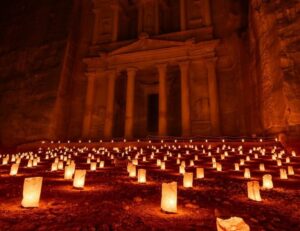
Petra by Night is a separate ticketed event with its own operating schedule. We decided against attending after researching how the evening was organised and how crowded it could become. Our assessment of Petra by Night explains what happens and why it may or may not be worth adding. Check the current official schedule and ticket price because these have changed.
Prepare for the Climate and Culture
Pack for heat, sun and large temperature changes. Petra and Wadi Rum can become cold after sunset, even when daytime temperatures are comfortable.
Clothing should be practical and relatively modest. Lightweight trousers, loose shirts, a scarf, a hat and sturdy shoes work across archaeological sites, cities and the desert. Bring a warmer layer for winter and desert nights.
Jordan is accustomed to international visitors, and English is widely used in hotels and major tourism businesses. A local SIM or eSIM remains useful for maps, contacting accommodation and coordinating Wadi Rum transfers.
Jordan’s location means regional events can affect flights, airspace and land borders with little notice. Check your government’s travel advice, airline updates and border information close to departure instead of relying on conditions reported months earlier.
Best Jordan Itinerary
Eight days provide the best balance for a first journey. This route moves steadily south and avoids returning to Amman between each destination.
| Day | Destination | Plan |
| 1 | Amman | Arrive, walk downtown and have a Jordanian dinner |
| 2 | Amman and Jerash | Visit Jerash, then return to Amman |
| 3 | Madaba and the Dead Sea | Collect the car, visit Madaba and Mount Nebo, sleep near the Dead Sea |
| 4 | King’s Highway | Drive south through Karak or Dana and sleep in Wadi Musa |
| 5 | Petra | Spend the complete day inside the archaeological site |
| 6 | Wadi Rum | Travel south, take a desert tour and stay overnight |
| 7 | Aqaba | Continue to the Red Sea or spend more time in Wadi Rum |
| 8 | Departure | Fly from Aqaba or return to Queen Alia Airport |
If your international flight leaves from Amman, keep the final night near the airport. Driving from Aqaba or Wadi Rum on the morning of a flight leaves too little room for delays.
On a seven-day journey, remove Aqaba and travel from Wadi Rum towards the airport. With 10 days, add a second day in Petra, a night in Dana or more time in northern Jordan.
Petra should not be visited as a day trip from Amman unless time is extremely limited. Six hours of driving followed by a long day of walking creates a very different experience from arriving rested and entering early.
When to Visit Jordan
March to May and late September to November are the most comfortable periods for travelling across Jordan. Temperatures are generally suitable for Petra, Wadi Rum and city sightseeing, although these are also the busiest seasons.
| Period | Conditions | Best for | What to consider |
| March–May | Mild to warm days | Petra, hiking and Wadi Rum | Popular hotels and camps book early |
| June–August | Very hot and dry | Aqaba and shorter sightseeing days | Petra and Wadi Rum can be exhausting |
| September–November | Warm days and cooler evenings | Road trips and outdoor sites | Temperatures fall quickly after sunset |
| December–February | Cool, with possible rain or snow | Fewer visitors and quieter sites | Weather can close Petra trails or roads |
We visited Petra in January and had a clear, sunny day with very few visitors. The following day brought snow and the site closed. Winter can be excellent, but the itinerary needs enough flexibility to absorb bad weather.
Spring and autumn are easier for a first visit. Start Petra early even during cooler months because the walking distances create their own heat.
Ramadan changes restaurant hours, alcohol availability and the rhythm of working days. Tourism continues, but services may operate differently and roads can become busy shortly before sunset.
How Many Days Do You Need in Jordan?
Seven days are enough to see Amman, Petra, Wadi Rum and the Dead Sea. Ten days create a more complete journey and allow the route to include Jerash, Dana or Aqaba.
| Available time | Realistic route |
| 3–4 days | Amman, Petra and Wadi Rum with private transport |
| 5 days | Amman, Petra, Wadi Rum and one central stop |
| 7–8 days | Amman, Jerash, Dead Sea, Petra and Wadi Rum |
| 10 days | Full route plus Dana, Aqaba or northern Jordan |
| 2 weeks | Slower route with hiking, two Petra days and the Red Sea |
Three or four days work only when Jordan is an extension to a longer regional trip. The pace will be fast, and several destinations will become short stops.
For Petra alone, stay at least two nights in Wadi Musa. One complete day is sufficient for the main route and one longer climb. Two days allow quieter trails, Little Petra and more time away from the Treasury.
Wadi Rum needs one night. A second night is worthwhile for hiking, climbing or a longer exploration of the protected area.
Jordan Travel Budget
Jordan is more expensive than many travellers expect. Petra admission, rental cars, Dead Sea resorts and Wadi Rum camps increase the cost quickly, while local food and smaller archaeological sites remain relatively affordable.
A practical daily estimate per person, excluding international flights, is:
| Travel style | Approximate daily budget |
| Budget | 45–70 JOD |
| Mid-range | 80–130 JOD |
| Comfortable | 150 JOD and above |
These figures depend heavily on two people sharing a rental car and hotel room. Solo travellers pay more for private transfers, car hire and desert accommodation.
The Jordan Pass is one of the most useful ways to control sightseeing costs because Petra’s standard entrance ticket already accounts for much of its price. A two-day Petra version can be good value when you genuinely plan to enter on consecutive days.
Local falafel, hummus, shawarma and bakery meals can be inexpensive. Tourist restaurants in Petra, Dead Sea resorts and Wadi Rum packages cost considerably more. Check which meals, tours and transfers are included in a desert-camp rate before comparing prices.
Accommodation in Wadi Musa varies in quality. Staying close to Petra’s visitor entrance can cost more, but it removes the need to drive, park or arrange transport before an early start.
Alcohol is available in some hotels, restaurants and licensed shops, although it is expensive. Budget separately if it matters to you.
Food in Jordan
Jordanian food is built around sharing. Mezze arrives across the table, bread becomes the utensil, and dishes are often placed in the centre for everyone to eat together. Meals can last much longer than expected, especially when you are invited to eat with a family or in a Bedouin camp.
Mansaf is Jordan’s national dish. Lamb is served with rice and jameed, a fermented dried-yoghurt sauce with a strong, salty flavour. It is closely tied to hospitality and important gatherings.
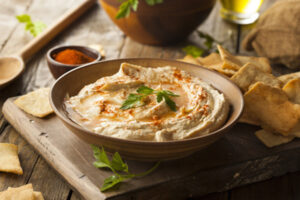
Maqluba combines rice, meat and vegetables in a pot that is turned upside down before serving. Zarb is associated with the desert and cooks meat and vegetables underground. Falafel, hummus, mutabbal, labneh and warm flatbread appear more frequently in everyday meals.
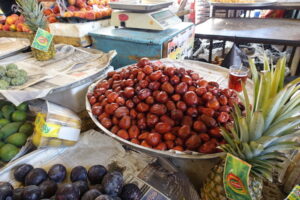
Knafeh is the sweet to look for in Amman. The combination of cheese, pastry and syrup is rich, so one portion is often enough to share. Fresh lemon and mint juice is another constant, especially after a hot day.
Our introduction to what to eat in Jordan covers the dishes, ingredients and Bedouin cooking traditions that appear throughout the country.
Travelling gluten-free requires more caution. Rice, grilled meat, hummus and some mezze may be naturally free from gluten, but flatbread is present on most tables and cross-contamination is difficult to assess. Traditional tabbouleh contains bulgur, while falafel recipes and shared fryers vary.
Carry a translated dietary card and explain the restriction rather than relying only on the English phrase “gluten-free.” Our experience of eating gluten-free in Jordan covers breakfasts, restaurant meals, supermarkets and the communication problems we encountered.
Food is one of the strongest reasons to spend time in Amman rather than treating the capital as an airport stop. Petra and Wadi Rum have memorable settings, but Amman gives you the widest access to everyday Jordanian cooking.