

The best places to see the Northern Lights are Tromsø in Norway, Abisko in Swedish Lapland, Finnish Lapland, Iceland, Fairbanks in Alaska, and Yellowknife in Canada. All six sit under the auroral oval, where a Kp index of 0 to 3 is usually enough for a display. The best time to see the Northern Lights is September to March, between 10 pm and 2 am, on a clear, moonless night away from city lights. Plan at least three nights in one place, because cloud cover, not solar activity, is the main reason Aurora trips fail.
We have chased the Aurora every winter for years. We saw it in Norway and Finland as early as 5 pm, and we spent a full week in Iceland in mid-December without seeing it once. Our first rule for any Northern Lights trip is to choose a destination you would love even under clouds. Below, you’ll find all 10 places we recommend, the Kp each one needs, the best month to go, and what to eat while you wait.
What are the Northern Lights?
The Northern Lights, or Aurora Borealis, are natural light displays created when charged particles from the sun hit gases in Earth’s upper atmosphere, roughly 100 to 400 km above the ground. The southern equivalent is called the Aurora Australis.
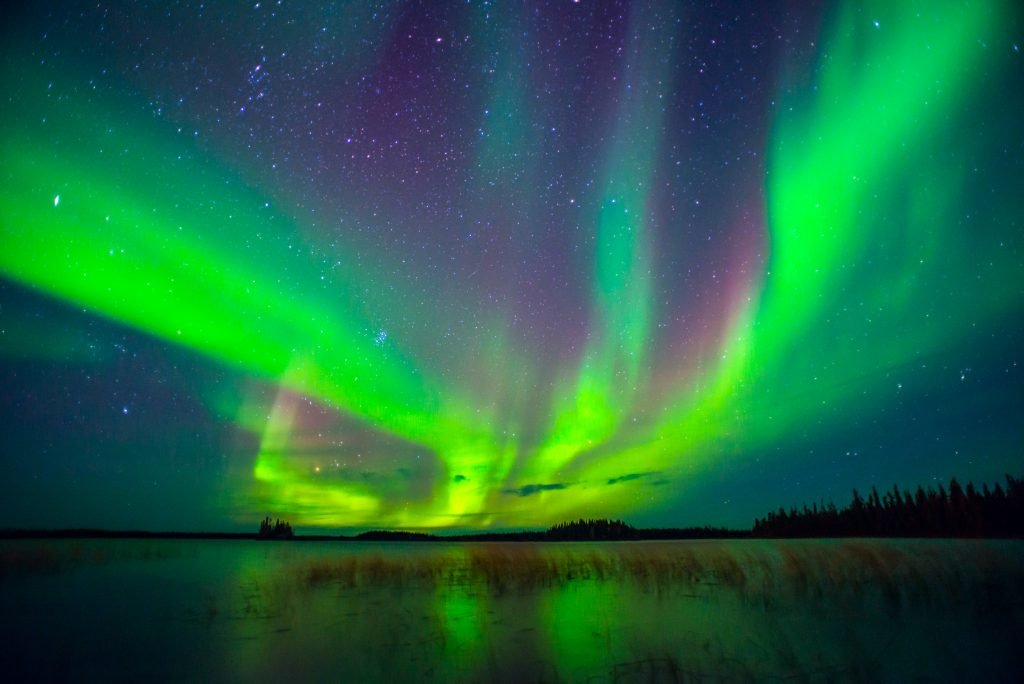
Northern Lights colours depend on the gas and the altitude. Green, the most common colour, comes from oxygen between about 100 and 250 km. Red comes from oxygen higher up. Pink and violet come from nitrogen at the lower edge of a curtain. We have seen violet and deep red only a handful of times, always during strong displays.
The Northern Lights form a ring around the magnetic pole called the auroral oval, not a glow directly over the pole itself. The auroral oval passes over northern Scandinavia, Iceland, southern Greenland, Alaska, and northern Canada. Under the oval, very little solar activity is enough for a display.
What month is best to see the Northern Lights?
The best months to see the Northern Lights are September to March. From mid-April to mid-August, the Arctic sky is too bright for the human eye to see the Aurora.
The weeks around the September and March equinoxes are statistically the strongest for the Northern Lights, because geomagnetic activity peaks on average near the equinoxes. Equinox weeks also bring milder temperatures than deep winter. December and January have the longest nights, but often more cloud and harsher cold.
Cloud is the bigger risk, and we learned that the hard way. Our mid-December week in Iceland had a decent aurora forecast, and the sky stayed grey every single night.
| Month | Darkness | Aurora odds | What to expect |
| September | Growing fast | Good (equinox boost) | Mild nights, unfrozen lakes for reflections. |
| October–November | Long | Good | Unsettled weather in Iceland and coastal Norway. |
| December–January | Longest | Good, but cloudier | Polar night in the far north, deepest cold. |
| February–March | Long | Very good (equinox boost) | Snowy landscapes and more clear nights. |
| April–August | Too bright | None to the eye | Midnight sun season. |
Is 2026–27 still a good season for the Northern Lights?
Yes, 2026–27 is still a very good season for the Northern Lights. Solar Cycle 25 peaked around October 2024, and the sun is now in its declining phase. Fewer sunspots mean fewer storms overall. However, some of the strongest storms in past cycles arrived during the declining phase, years after the peak.
Under the auroral oval, low activity is enough, so the 2026–27 and 2027–28 winters remain excellent. The change shows further south, where displays over Scotland and central Europe will slowly become rarer.
What is the best time of the day to see the Northern Lights?
The best time of night to see the Northern Lights is between 10 pm and 2 am, around magnetic midnight, when the auroral oval usually sits overhead in the Arctic. Any hour with a dark, clear sky can still deliver a display.
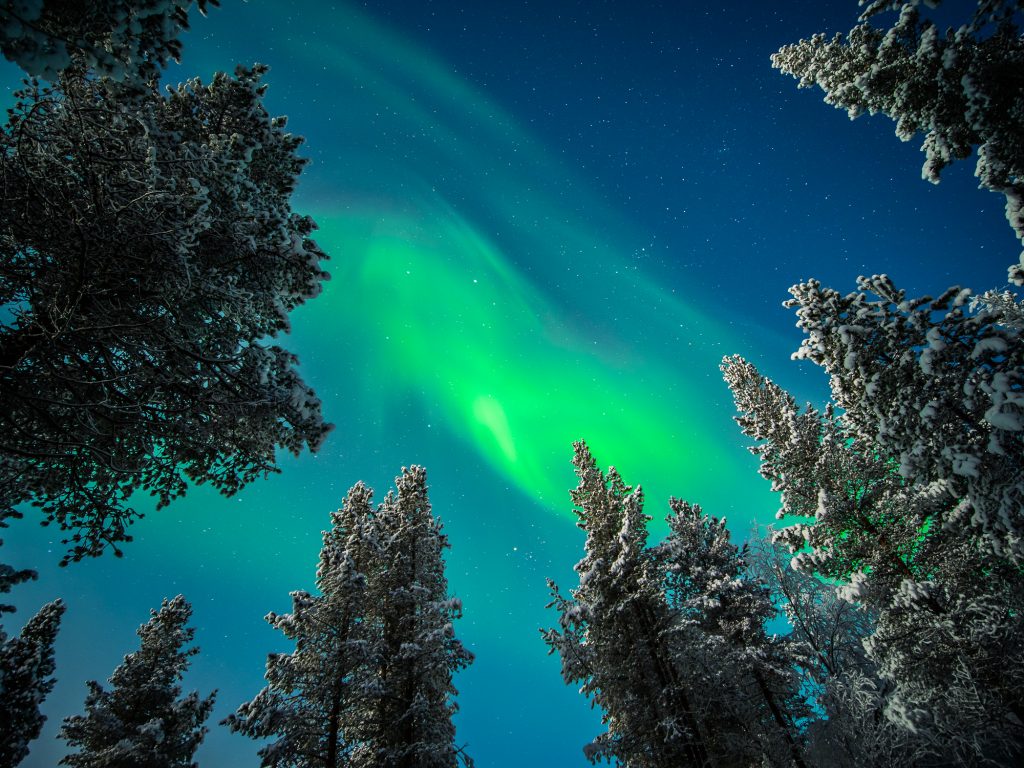
We have seen the Northern Lights at 5 pm, at 11 pm, and once in the middle of the afternoon in Iceland and Finland. In the Arctic winter, the sun sets so early that mid-afternoon can already be fully dark.
Darkness matters as much as the clock. To see the Northern Lights, drive at least 20 to 30 minutes away from any town, and avoid nights around the full moon, which washes out faint displays.
Important: faint Northern Lights often look grey-white to the naked eye, because human eyes see colour poorly in the dark. Phone cameras see colour better. If a pale “cloud” refuses to move, take a photo. If it turns green, it is the Aurora.
How long do the Northern Lights last?
The Northern Lights can last from 10 minutes to the whole night. A single burst usually lasts 10 to 30 minutes, and on active nights bursts repeat every hour or two. A strong geomagnetic storm can keep the sky moving until dawn.
So, do not head back to the hotel after the first show. The most intense moment, when curtains break apart and start to pulse, often follows a quiet spell. Give it at least another hour.
Northern Lights forecast: how to read it
A Northern Lights forecast has two parts: solar activity and cloud cover. You need both. A Kp 5 storm behind thick cloud shows you nothing. The Kp index measures geomagnetic activity on a scale from 0 to 9. The higher the Kp, the further south the Northern Lights reach. Kp 5 and above counts as a geomagnetic storm, and a Kp 9 storm pushed the Aurora as far south as Spain in May 2024
| Kp needed | Where the Northern Lights are usually visible |
| Kp 0–2 | Tromsø, Abisko, Fairbanks, Yellowknife. |
| Kp 1–3 | Iceland, Kiruna, Rovaniemi, Inari, Whitehorse. |
| Kp 3–4 | Faroe Islands, Anchorage, southern Finland. |
| Kp 5 | Northern Scotland, Orkney, Shetland. |
| Kp 8–9 | Northern Spain and central Europe (rare). |
How to check the Northern Lights forecast before heading out:
- Solar activity: the 30-minute aurora forecast from NOAA’s Space Weather Prediction Center, plus an aurora app with push alerts.
- Cloud cover: the local weather service. Iceland’s Met Office publishes a dedicated aurora and cloud map. In Norway, yr.no is the local standard.
- Darkness: sunset time and moon phase for the night.
In the declining phase of the solar cycle, strong aurora nights often repeat about 27 days apart. The sun rotates roughly every 27 days, and the coronal holes behind many 2026 storms can survive several rotations.
Our rule is simple. If the cloud forecast is clear and Kp is 2 or more, go outside. If it is cloudy, drive: one hour inland often beats a Kp 5 under cloud.
10 Incredible Places Where to See Northern Lights
The 10 best places to see the Northern Lights are Iceland, northern Norway, Svalbard, Finnish Lapland, northern Canada, Alaska, Swedish Lapland, Greenland, the Faroe Islands, and Scotland. The table compares their season, best bases, and the local dish that makes the wait easier.
| Place | Season | Best bases | Eat while you wait |
| Iceland | Sep–Mar | Thingvellir, Snæfellsnes, Jökulsárlón | Kjötsúpa (lamb soup). |
| Northern Norway | Late Sep–Mar | Tromsø, Senja, Lofoten | Lofoten stockfish. |
| Svalbard | Nov–Feb | Longyearbyen | Svalbard reindeer. |
| Finnish Lapland | Sep–Mar | Inari, Saariselkä, Levi | Sautéed reindeer with lingonberries. |
| Northern Canada | Late Aug–Apr | Yellowknife, Whitehorse, Churchill | Fresh Great Slave Lake fish. |
| Alaska | Mid-Sep–Apr | Fairbanks, Coldfoot | Reindeer sausage. |
| Swedish Lapland | Sep–Mar | Abisko, Kiruna, Jukkasjärvi | Suovas (smoked reindeer). |
| Greenland | Sep–early Apr | Kangerlussuaq, Ilulissat | Musk ox. |
| Faroe Islands | Sep–Mar | Eysturoy, Vágar | Skerpikjøt (wind-dried mutton). |
| Scotland | Sep–Mar | Caithness, Shetland, Skye | Cullen skink. |
1. Iceland
Iceland is one of the easiest countries to see the Northern Lights, because the whole island sits under the auroral oval and a moderate Kp is enough. The real challenge is the weather. Atlantic storms roll in fast, which is exactly what ruined our December trip.
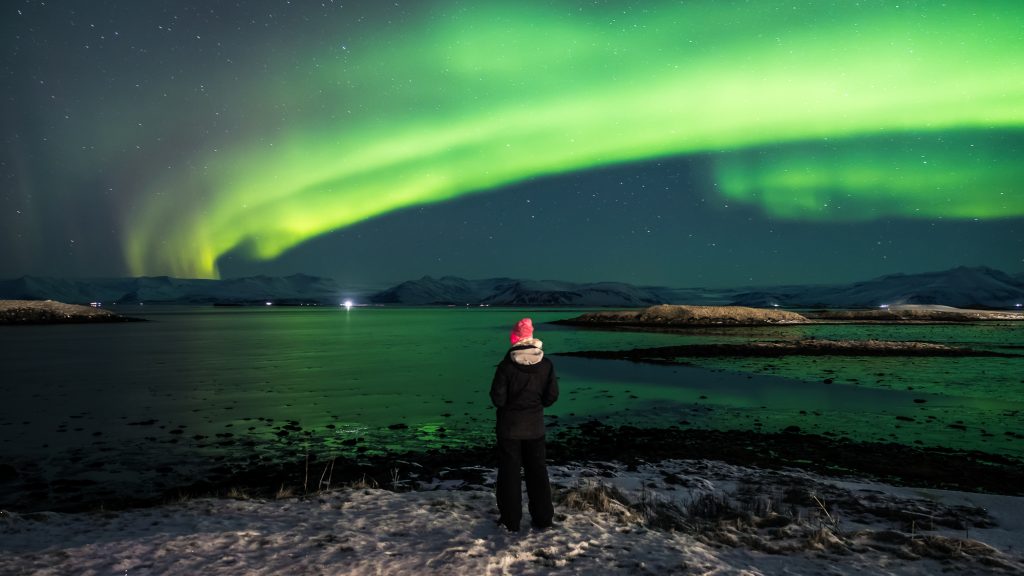
Base yourself somewhere you can drive in two directions. Thingvellir National Park is 45 minutes from Reykjavík. Snæfellsnes and Jökulsárlón Glacier Lagoon add mountains and icebergs to your photos. Many countryside hotels offer a wake-up call when the Northern Lights appear. Check the Icelandic Met Office cloud forecast every afternoon before you choose where to drive.
2. Norway
Tromsø is the most accessible Northern Lights destination in Europe, with direct winter flights from several European cities. Tromsø sits at about 69°N, where Kp 1 or 2 is often enough. The catch is coastal cloud.
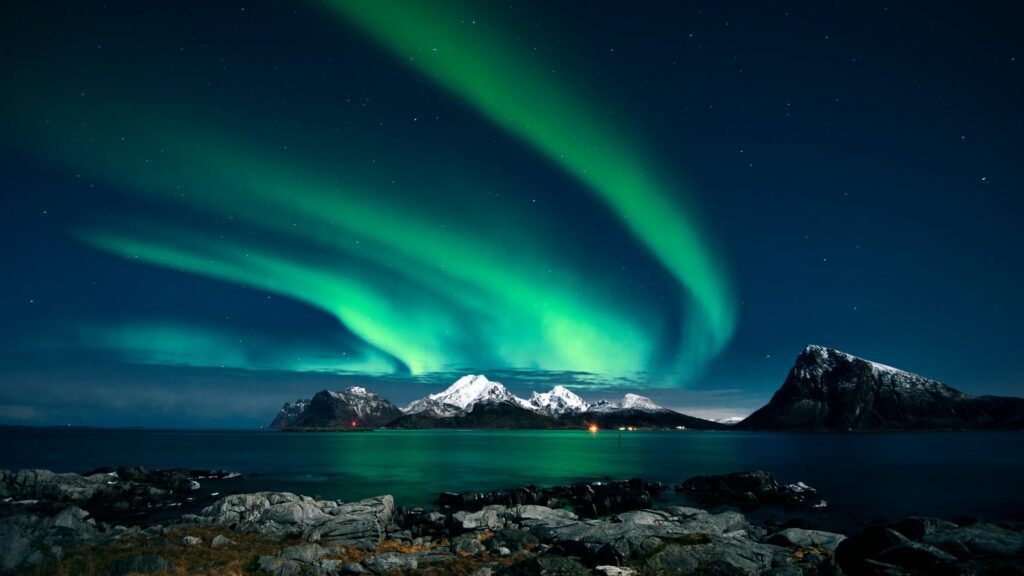
On cloudy nights, local guides drive inland, sometimes all the way to the Finnish border, where the air is drier. Senja and the Lofoten Islands are wilder options, with mountains dropping straight into the sea. Skip the classic fjords around Bergen and Geiranger for this trip. They lie far south of the Arctic Circle, and Northern Lights sightings there need a strong storm.
3. Svalbard
Svalbard is one of the only places on Earth where you can see the Northern Lights at midday. The Norwegian archipelago sits at 78°N, and from mid-November to late January the sun never rises. Daytime Aurora is usually fainter and redder than the green curtains of the night.
Plan around the holidays, because many businesses in Longyearbyen close over Christmas.
4. Northern Finland
Finnish Lapland has the most developed Northern Lights tourism in Europe, from heated glass igloos in Saariselkä and Levi to reindeer sleigh rides near Inari.
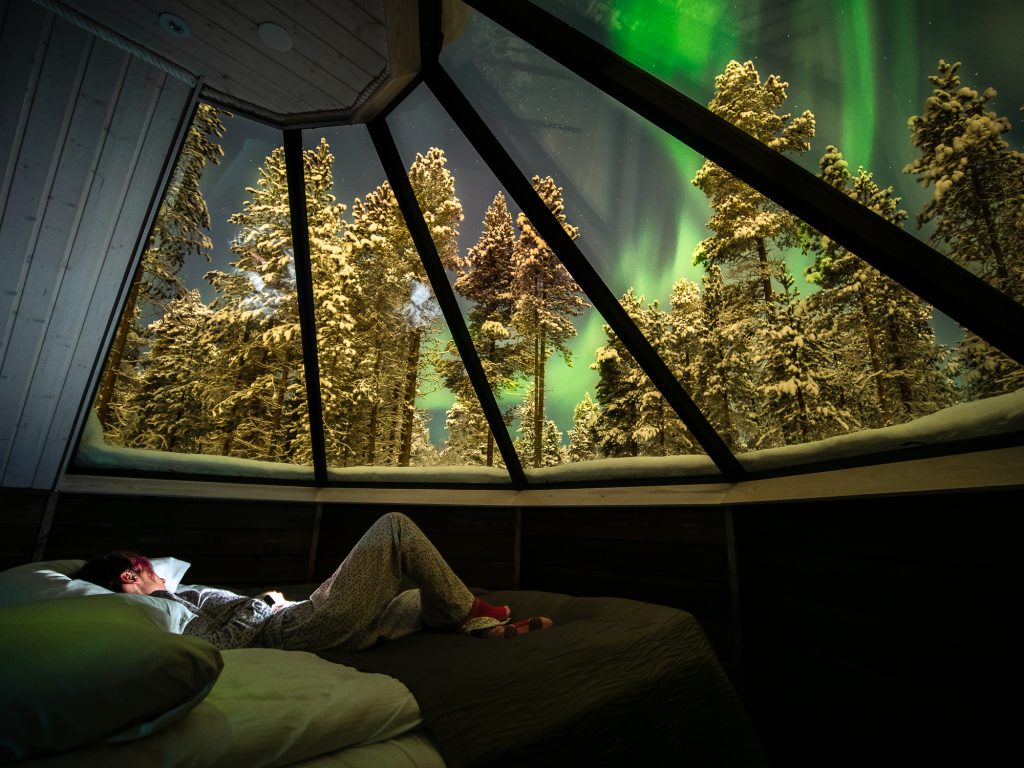
In Finnish Lapland, the Northern Lights appear on roughly three in four clear nights. Inland Lapland also has a drier, more continental climate than the Norwegian coast. In southern Finland, sightings drop to about 10 to 20 nights a year.
5. Northern Canada
Yellowknife, in Canada’s Northwest Territories, is one of the most reliable places in the world to see the Northern Lights. It sits almost directly under the auroral oval and gets displays on a large share of clear nights from late August to April. Whitehorse is the easier, cheaper base in the Yukon.
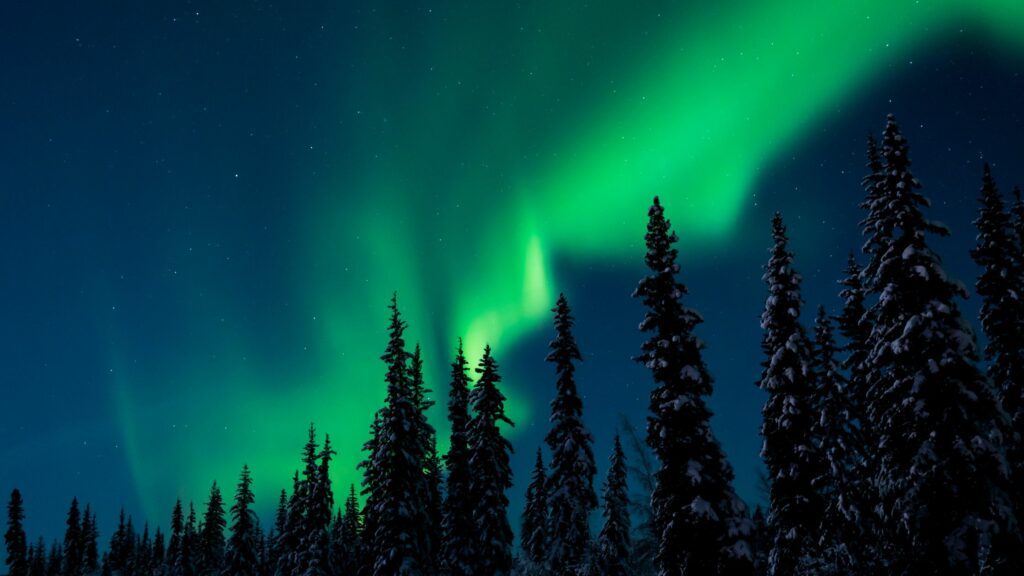
Churchill, in Manitoba, is better known for polar bears, but local operators promise aurora on hundreds of nights a year. Jasper National Park is a Dark Sky Preserve further south, so it needs a stronger Kp.
6. Alaska
Fairbanks is the best place to see the Northern Lights in the United States. It lies below the Arctic Circle but under the auroral oval, and its dry interior climate gives it more clear nights than coastal Anchorage.
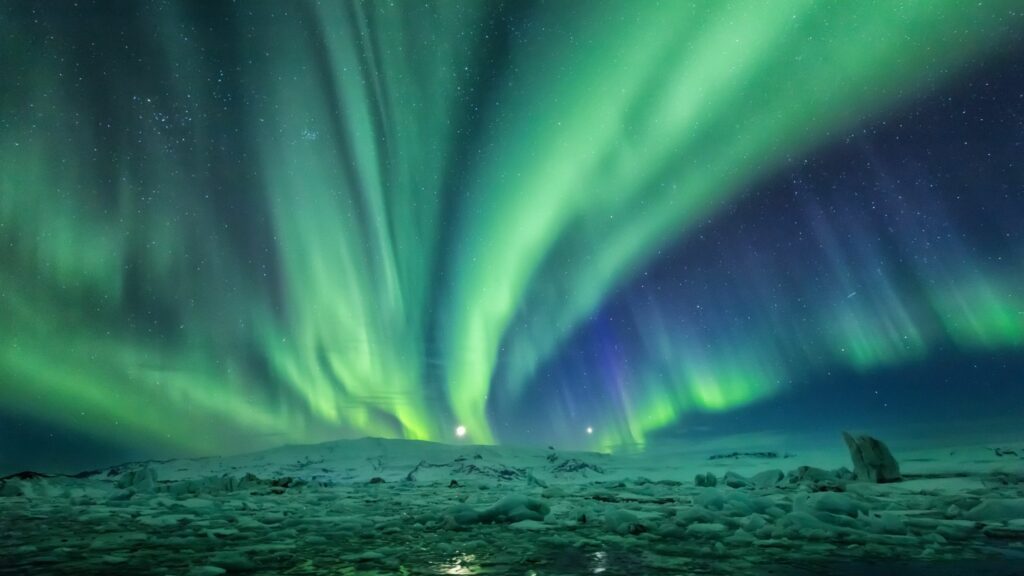
The Alaska aurora season runs from mid-September to late April, and March is often the sweet spot for clear, cold nights. Drive north to Coldfoot for darker skies, or soak in Chena Hot Springs while you wait.
7. Northern Sweden
Abisko is the best place in Sweden to see the Northern Lights, thanks to a microclimate known as the “Blue Hole.” The village sits in the rain shadow of the Scandinavian mountains. Westerly winds drop their moisture over Norway first, which leaves clearer skies over Lake Torneträsk. That makes Abisko the smartest bet if you only have a few nights.
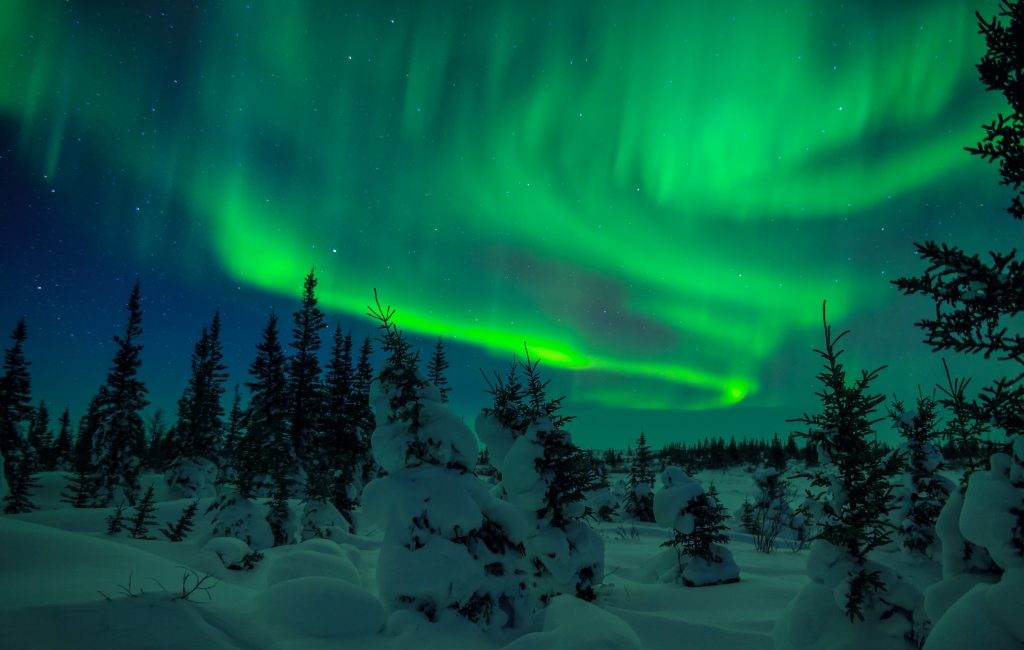
The Aurora Sky Station, reached by chairlift, lifts you above the valley floor. Kiruna and Jukkasjärvi, home of the world’s first ICEHOTEL, are about an hour away. An overnight train runs from Stockholm straight to Abisko.
8. Greenland
Kangerlussuaq is one of the best places in Greenland to see the Northern Lights, thanks to its stable, dry inland climate and many clear winter nights. Ilulissat, by the Icefjord that became a UNESCO World Heritage Site in 2004, adds icebergs glowing under green skies.
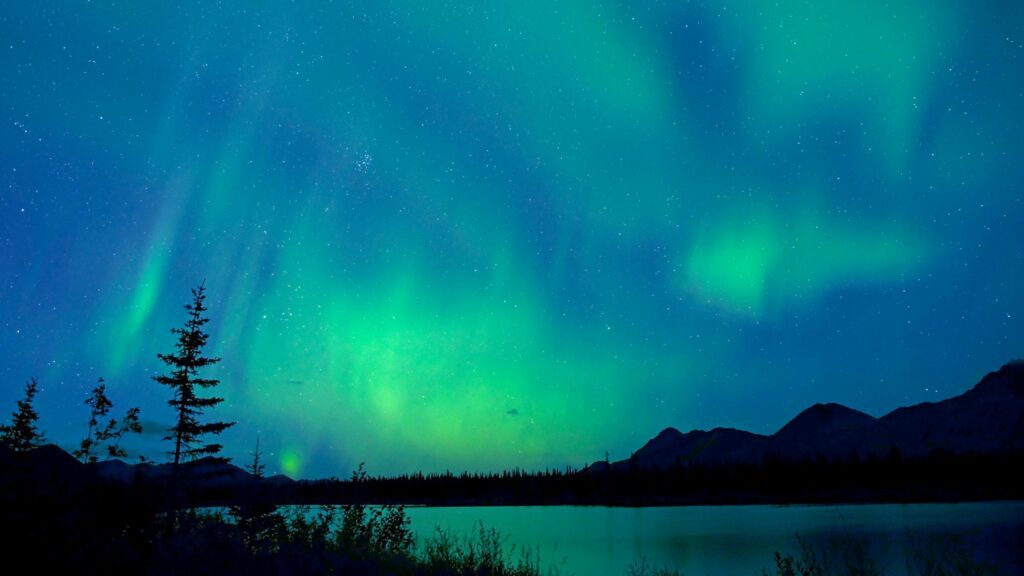
On the east coast, Kulusuk and Tasiilaq are remote and hard to reach. The reward is total darkness and almost no other visitors.
9. Faroe Islands
The Faroe Islands offer the Northern Lights with almost no crowds, but with some of the least predictable weather on this list. The islands sit at about 62°N, between Iceland and Norway, and the Aurora can appear from around Kp 3.
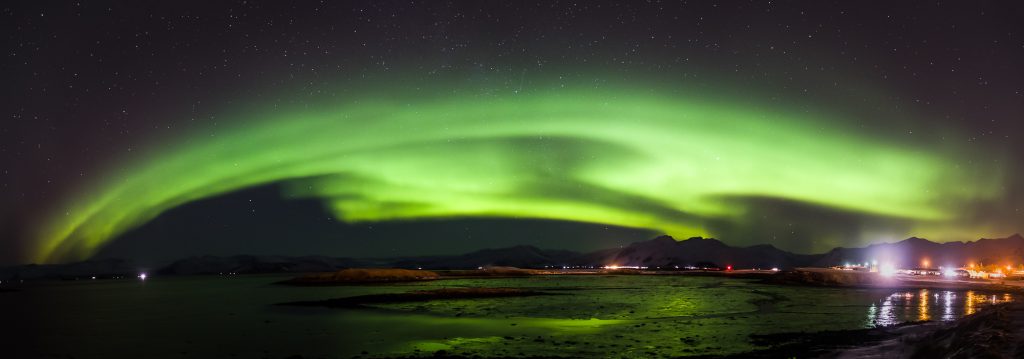
Clear nights are rare, because the weather changes by the hour. When one arrives, avoid the lights of Tórshavn and head to northern Eysturoy or the west coast of Vágar.
10. Scotland
Scotland is the closest Northern Lights destination for most of the UK and Western Europe, but it needs a strong storm, usually Kp 5 or more. On those nights, Caithness, Orkney, Shetland, and the Isle of Skye face north over dark sea horizons.
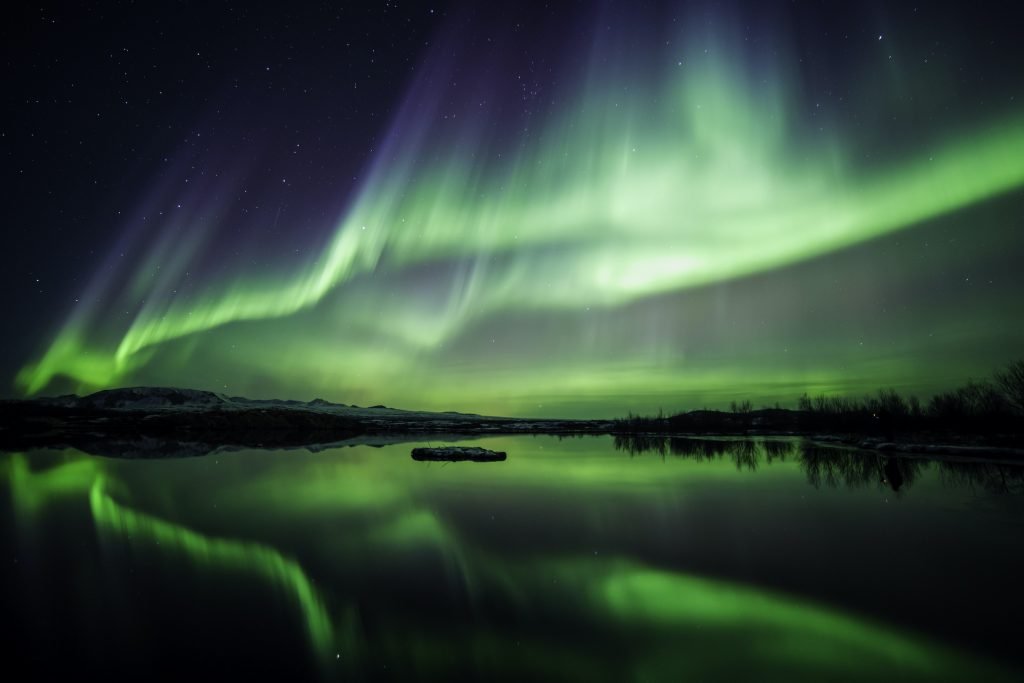
In Shetland, the Northern Lights have their own name: the Mirrie Dancers. Scotland is the least reliable place on this list, and the only one where an aurora night can start in a pub.
Is it worthwhile to plan a trip to view the Northern Lights?
Yes, a Northern Lights trip is worth planning, as long as the Aurora is the bonus and not the only reason you go. The trips we remember best gave us plenty on cloudy nights too: long dinners, quiet snowy walks, and landscapes that need no lights at all. Iceland in December showed us nothing in the sky, and we still do not regret a single day.
So, choose the place first. Book at least three nights, ideally four or five, between September and March. Then let the sky decide. When it finally says yes, you will understand why we go back every winter.