Iceland Travel Guide
This comprehensive Iceland travel guide helps you choose the right route for the season, understand the distances involved and plan a road trip around weather rather than a rigid list of stops.
The season determines almost every part of a trip to Iceland. It changes which roads are open, how many hours of daylight are available, which activities are possible and how far you can realistically drive in one day.
A summer journey can follow the full Ring Road, continue into remote northern areas and use the long daylight to absorb delays. A winter trip works better when limited to Reykjavík, the Golden Circle and part of the South Coast. Snow, ice, wind and road closures can turn an apparently short drive into the main event of the day.
Iceland also looks smaller on a map than it feels from behind the wheel. Distances between famous sights may appear manageable, but every waterfall, beach and walking trail adds time. A route that covers 250 kilometres can easily fill an entire day once stops and weather are included.
Our own 12-day journey took place in April, when winter conditions were still present. We encountered snow, ice and strong wind, and several roads away from the main routes were difficult. That trip covered the Golden Circle, South Coast, Reykjavík and western Iceland. It was deliberately planned without forcing a complete circuit of the country.
For a first visit, seven days are enough for Reykjavík, the Golden Circle and the South Coast. Ten to twelve days allow the west and more time around Vatnajökull. A full Ring Road journey deserves at least ten days in summer, with twelve to fourteen creating a much safer pace.
Regions
Iceland is usually divided into regions according to geography, but for travellers the more useful distinction is how accessible each area is in a particular season.
| Region | Principal places | Best for | Suggested time |
|---|---|---|---|
| Reykjavík and Reykjanes | Reykjavík, Keflavík, geothermal areas | City culture, pools, food and arrival days | 1–3 days |
| Golden Circle | Þingvellir, Geysir, Gullfoss | A first introduction to Icelandic geology | 1–2 days |
| South Coast | Seljalandsfoss, Skógafoss, Vík, Reynisfjara | Waterfalls, black beaches and accessible landscapes | 2–4 days |
| Southeast | Skaftafell, Jökulsárlón, Vatnajökull, Höfn | Glaciers, hiking, ice caves and the glacial lagoon | 2–4 days |
| West Iceland | Borgarfjörður, Húsafell, Snæfellsnes | Lava fields, waterfalls, coastline and quieter roads | 3–5 days |
| North Iceland | Akureyri, Mývatn, Húsavík | Geothermal landscapes, whale watching and longer summer routes | 3–5 days |
| Eastfjords | Seyðisfjörður, Egilsstaðir, coastal villages | Remote roads, mountains and small settlements | 2–4 days |
| Westfjords | Ísafjörður, Látrabjarg, Dynjandi | Isolation, cliffs, wildlife and demanding drives | 4–7 days |
| Highlands | Landmannalaugar, Þórsmörk, Askja | Hiking, mountain roads and remote landscapes | 3–7 days |
Reykjavík and the Reykjanes Peninsula
Reykjavík needs one complete day for a first visit. Hallgrímskirkja, Harpa, the harbour and the central streets are close enough to explore on foot. A second day creates time for museums, public swimming pools and the city’s restaurant scene.
The capital should not take up half of a short Iceland trip unless city time is important to you. Most journeys are built around the landscape, and the transition from Reykjavík to open countryside happens quickly.
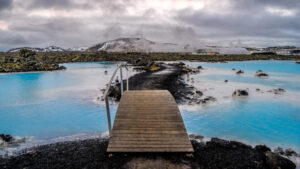
Keflavík International Airport sits on the Reykjanes Peninsula, around 50 kilometres from Reykjavík. An early flight may justify staying near the airport on the final night. Travellers using geothermal spas or exploring Reykjanes should also check current access conditions, as volcanic activity can affect roads and individual sites.
The Golden Circle
The Golden Circle connects Þingvellir National Park, the Geysir geothermal area and Gullfoss. It is the easiest major route from Reykjavík and can be completed in one day, although staying overnight allows a slower start toward the South Coast.
Þingvellir needs time on foot. The area is historically important as the site of the Alþingi and geologically significant because it lies along the boundary between tectonic plates. Geysir and Gullfoss require less walking but can become busy when tour buses arrive.
The value of the Golden Circle comes from seeing three distinct parts of Icelandic geology within a compact area. Adding every nearby geothermal pool, crater and greenhouse to the same day quickly turns it into a rushed circuit.
The South Coast and Vatnajökull
The South Coast is the most practical region for a first road trip. Seljalandsfoss, Skógafoss, Dyrhólaey, Reynisfjara and Vík lie along or close to Route 1. Farther east, the landscape moves toward Skaftafell, Jökulsárlón and Vatnajökull.
The stretch between Reykjavík and Vík can be driven in a day, but that leaves little room for weather, walking or an unplanned stop. Spend one night near Vík and at least one near Skaftafell or Jökulsárlón if travelling as far as the glacial lagoon.
Reynisfjara requires particular care. Powerful waves can reach much farther up the beach than expected. Keep away from the water, follow local warnings and never turn your back on the sea for a photograph.
Jökulsárlón and Diamond Beach sit across the road from each other, but conditions change throughout the day. Returning at a different tide or in different light is often worthwhile. Höfn lies farther east and is known for langoustine, making it a useful overnight stop on longer journeys.
West Iceland and Snæfellsnes
West Iceland receives less traffic than the Golden Circle and central South Coast while remaining accessible from Reykjavík. Borgarfjörður contains Hraunfossar, Barnafoss, farms and geothermal landscapes. Húsafell works as a base for glacier excursions and exploring inland areas.
The Snæfellsnes Peninsula needs a complete day, with two nights creating a better rhythm. Kirkjufell is its most photographed landmark, though the peninsula’s character comes from the full coastline: Arnarstapi, Hellnar, Lóndrangar, Djúpalónssandur, lava fields, fishing villages and the Snæfellsjökull volcano.
During our trip, we spent two days around Snæfellsnes. That allowed us to walk sections of the coast instead of treating each stop as a few minutes beside the car.
North Iceland, the Eastfjords and the Westfjords
The north, east and Westfjords belong in longer itineraries. They become easier during summer, when daylight is abundant and roads are less likely to be affected by snow.
Akureyri is the main urban base in northern Iceland. Lake Mývatn has geothermal areas, volcanic formations and baths, while Húsavík is closely associated with whale watching. Travelling through this region as part of the Ring Road requires several nights.
The Eastfjords are driven slowly because the road follows the coastline, crossing passes and curving around long fjords. This section should be treated as part of the trip rather than a distance to complete between the south and north.
The Westfjords require a separate commitment. Roads are long, services are sparse and reaching the region adds substantial driving. Four days are a realistic minimum once the journey in and out is included.
The Highlands
The Icelandic Highlands are a summer destination reached by mountain roads known as F-roads. Opening dates depend on snowmelt and conditions, so there is no fixed annual start to the season.
A suitable four-wheel-drive vehicle is legally required on F-roads. River crossings, rough surfaces and limited services make experience and preparation essential. Travellers who do not want to drive can join buses or guided tours to places such as Landmannalaugar and Þórsmörk.
The Highlands should be added to a summer trip with spare time. They are a poor choice for an inflexible day wedged between prepaid accommodation at opposite ends of the country.
Planning your trip
Start by choosing the season and the region. The route follows from those two decisions.
Our detailed article on planning a trip to Iceland covers clothing, transport, accommodation, connectivity and the practical questions that arise before departure. Several details become especially important once the itinerary leaves Reykjavík.
Reserve rural accommodation early. Towns are small, and the next available room may be a long drive away. This matters around Vík, Skaftafell, Jökulsárlón, the Eastfjords and the Westfjords.
Keep at least one flexible period in the itinerary. Weather can close a road, cancel an excursion or make an outdoor stop unsafe. A good Iceland plan can lose half a day without causing the rest of the trip to collapse.
Download maps for offline use and check the weather and road conditions every morning. Conditions can differ sharply between regions. A clear morning in Reykjavík gives no reliable indication of what is happening near Vík or across a mountain pass.
Pack waterproof outer layers in every season. A warm coat without rain and wind protection is insufficient around waterfalls and exposed coastlines. Waterproof boots, spare socks, gloves and a hat remain useful even in summer. Carry a swimsuit because public pools and geothermal baths are part of everyday life throughout the country.
Cards are accepted almost everywhere, including many unattended fuel pumps. A card with a PIN is useful when buying fuel outside staffed hours. Mobile coverage is good along principal routes, though isolated areas can still have gaps.
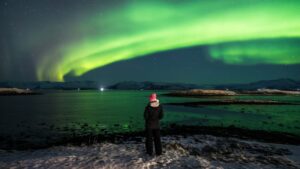
The Northern Lights are visible only when the sky is dark and clear enough. The main viewing period runs from autumn into early spring. Solar activity alone does not guarantee a display because cloud cover can hide it completely. Stay several nights away from strong artificial light if the aurora is an important part of the trip.
Best itinerary
Our best Iceland itinerary uses twelve days to connect the Golden Circle, South Coast, Vatnajökull, Reykjavík and the west. It covers substantial ground without pretending to complete the full Ring Road.
| Day | Route |
|---|---|
| 1 | Þingvellir, Geysir and Gullfoss |
| 2 | Geothermal bathing and the western South Coast |
| 3 | Seljalandsfoss, Skógafoss, Dyrhólaey, Reynisfjara and Vík |
| 4 | Skaftafell, Svartifoss, Jökulsárlón and Diamond Beach |
| 5 | Glacier or seasonal ice-cave activity near Vatnajökull |
| 6 | Return west through the South Coast with selected stops |
| 7 | Reykjavík, then continue into Borgarfjörður |
| 8 | Húsafell, Hraunfossar and the surrounding landscape |
| 9 | Travel to Snæfellsnes and explore its northern side |
| 10 | Snæfellsnes coastline and national park |
| 11 | Reykjanes, Reykjavík or a geothermal spa |
| 12 | Departure |
The complete 12-day Iceland road-trip itinerary includes the individual stops, walks and experiences from our journey. It took place in April, so our route and daily decisions reflect snow, ice and unpredictable spring conditions.
In summer, twelve days can be used for the full Ring Road. That version should continue east from Höfn through the Eastfjords, then north toward Mývatn and Akureyri before returning west. Adding Snæfellsnes or the Westfjords requires extra time.
Driving in Iceland
Driving gives the greatest freedom in Iceland, but estimated journey times should be treated as a starting point. Weather, road surfaces, animals, single-lane bridges and sightseeing stops all change the pace.
A standard two-wheel-drive car can handle the Golden Circle, paved South Coast and principal Ring Road sections during favourable conditions. A four-wheel-drive vehicle becomes relevant for rougher roads, winter journeys and routes legally restricted to suitable vehicles. Vehicle type never cancels the need to respond to weather warnings or closures.
Check road conditions before departure and again when travelling between regions. In winter and the transitional months, conditions can change within hours. If authorities close a road, alter the itinerary.
Several practical habits make road trips easier:
- Refuel before the tank becomes low, particularly in remote regions.
- Carry water and food because cafés and shops can be far apart or closed.
- Keep spare socks and dry clothing in the car.
- Download maps before leaving areas with reliable reception.
- Never stop on the carriageway for photographs.
- Hold the car door firmly in strong wind, which can damage hinges.
- Stay on marked roads. Off-road driving damages fragile ground and is illegal.
- Allow extra braking distance on gravel, snow and ice.
Campervans must use designated campsites or land where the owner has explicitly granted permission. Iceland’s landscapes do not make unrestricted overnight parking legal.
Car insurance needs careful reading. Gravel, sand and ash damage may require specific cover. Check the excess, exclusions and roadside-assistance conditions instead of choosing solely by the headline price.
When to visit
The best time to visit Iceland depends on the route and activity. Summer is the most practical period for a complete road trip. Winter is appropriate for shorter routes, ice caves and Northern Lights.
| Period | Conditions | Best for |
|---|---|---|
| November to March | Short daylight, snow, ice and frequent disruption | Northern Lights, winter landscapes and seasonal ice caves |
| April to May | Rapidly changing weather and increasing daylight | Quieter South Coast and west Iceland trips |
| June to August | Long daylight and widest road access | Ring Road, Highlands, hiking and remote regions |
| September to October | Darker nights and transitional weather | Northern Lights and shorter road trips |
June, July and August provide the easiest access to the north, Eastfjords, Westfjords and Highlands. They also bring the largest visitor numbers and highest demand for cars and accommodation.
April and October can be particularly unpredictable. They should not be treated as inexpensive versions of summer. Snow and ice may still affect the roads, while many seasonal businesses and mountain routes remain closed.
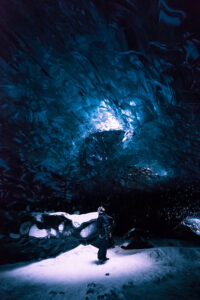
Natural ice caves generally form and become accessible during winter. Their locations and stability change every year, and access can be cancelled after conditions deteriorate. They must be entered with an experienced glacier guide and the proper equipment.
Our account of exploring the ice caves in Iceland explains how they form, where tours operate and what our own long glacier excursion involved. Tour difficulty varies, so check the required fitness level rather than assuming every ice-cave visit follows the same route.
How many days
Four days are enough for Reykjavík, the Golden Circle and a short section of the South Coast. This works for a stopover but leaves little room for poor weather.
Seven days allow Reykjavík, the Golden Circle, Vík, Skaftafell and Jökulsárlón. Avoid adding Snæfellsnes unless you reduce the time spent in the southeast.
Ten days can cover the south and west properly. Twelve days worked well for our Golden Circle, South Coast, Vatnajökull, Reykjavík, Húsafell and Snæfellsnes itinerary.
A summer Ring Road trip needs at least ten days. Twelve to fourteen are better because they leave room for walking, weather and the long Eastfjords section. The Westfjords require additional days and should not be squeezed into the same circuit.
In winter, cover less ground. Five carefully planned days along the Golden Circle and South Coast can provide a better trip than attempting a ten-day summer route in restricted daylight.
Budget
Iceland is expensive, and a road trip concentrates several major costs: the rental car, insurance, fuel, accommodation and organised outdoor activities.
| Travel style | Daily estimate per person | What it covers |
|---|---|---|
| Budget | €120–180 | Shared accommodation, self-catering, shared car and mostly free natural sites |
| Mid-range | €220–350 | Comfortable room, rental car, restaurant meals and selected activities |
| Comfortable | €400+ | Higher-end accommodation, frequent dining out and multiple guided excursions |
These estimates assume two people share a room and vehicle. Solo travel costs considerably more because car rental and accommodation cannot be divided.
Rural hotels often cost more because there is limited supply. Restaurants outside Reykjavík may also be expensive, particularly where the nearest alternative is many kilometres away. Check whether breakfast is included and whether the accommodation has a kitchen.
Glacier walks, ice caves, snowmobile tours, whale watching and geothermal spas can substantially increase the budget. Choose the activities that require specialist access or equipment, then use the rest of the trip for waterfalls, beaches, hiking and public swimming pools.
Supermarkets make the largest difference to daily spending. Buy breakfast, snacks and some evening meals when the accommodation permits cooking. Shopping before entering a remote region also prevents having to build the day around the next open restaurant.
Food
Icelandic food reflects fishing, sheep farming, dairy production and the need to preserve ingredients through long winters. Fish, lamb, rye bread and dairy products are more representative of everyday cooking than the fermented foods usually presented as a traveller’s challenge.
Plokkfiskur is a comforting mixture of fish, potatoes and onions. Kjötsúpa is a lamb soup with root vegetables. Fresh cod, haddock, Arctic char and salmon appear frequently, while Höfn is closely associated with langoustine. Fish soup varies from one coastal restaurant to another and is one of the most useful meals after a cold day outside.
Icelandic lamb is raised outdoors for much of the year and appears grilled, roasted, smoked and in soups. During our road trip, some of the strongest meals came from rural hotels and farms using ingredients from the immediate area.
Skyr is eaten for breakfast or as a snack. Its thick texture resembles strained yogurt, though it is technically a fresh cheese. Rúgbrauð is a dense, slightly sweet rye bread traditionally cooked slowly, including in geothermal ground in some areas. Bakeries sell cinnamon pastries, kleinur and bread that work well for road-trip breakfasts.
Reykjavík has the broadest restaurant selection, from modern Icelandic cooking to bakeries, casual fish restaurants and international food. Rural menus are shorter and often depend on the ingredients available locally.
Hákarl, the fermented shark frequently promoted to visitors, is a specialised traditional food rather than a summary of Icelandic cuisine. Try it if you are curious, but it should not replace the fish, lamb, bread, dairy and soups that tell a clearer story about how people eat.
Tap water is safe and excellent, so refill a bottle instead of buying water. Alcohol is expensive and sold through regulated shops rather than ordinary supermarkets. Travellers planning self-catering should account for limited opening hours outside Reykjavík.
A sensible Iceland food budget mixes supermarket breakfasts, packed road lunches and carefully chosen dinners. This leaves enough room to eat well in Höfn, Vík, Reykjavík or a remote farm without turning every meal into the largest expense of the day.