Scotland Travel Guide
A first trip to Scotland needs at least 10 days if you want to combine Edinburgh with the Highlands or an island without spending most of the holiday in transit.
Scotland is one of the four countries of the United Kingdom, with its own history, cultural identity and legal system. Its geography has a direct effect on how you travel. Edinburgh and Glasgow are less than an hour apart by train, while journeys through the Highlands and islands can take much longer than their distance suggests.
A week can work well if you concentrate on one city and one rural area. Trying to fit Edinburgh, Skye, the North Coast 500 and several islands into the same short trip usually produces long driving days and very little time outside the car.
The most useful decision is therefore geographical. Choose a part of Scotland, understand how the roads or ferries work there, and leave enough flexibility for weather. This guide will help you decide where to go, how long to stay and which of our more detailed Scotland articles to use when planning each stage.
Regions
Scotland is divided into 32 council areas, but these administrative boundaries are rarely the most practical way to organise a journey. For travel planning, it makes more sense to think in terms of cities, mainland regions and island groups.
| Area | Useful bases | Main reasons to visit | Recommended time |
|---|---|---|---|
| Edinburgh and the Lothians | Edinburgh | Historic centre, museums, festivals and coastal day trips | 3–4 days |
| Glasgow and the Clyde | Glasgow | Architecture, music, restaurants and access to Loch Lomond | 2–3 days |
| Central Scotland and Fife | Stirling, St Andrews, Pitlochry | Castles, university history, coast and southern Highlands | 3–5 days |
| Highlands | Inverness, Fort William, Aviemore | Mountains, lochs, hiking and long scenic routes | 5–10 days |
| West Coast and Inner Hebrides | Oban, Fort William, Portree | Seafood, ferries, islands and rugged coastline | 5–10 days |
| Aberdeenshire and the northeast | Aberdeen, Banchory, Ballater | Castles, Royal Deeside, coast and Cairngorms | 3–5 days |
| Southern Scotland | Peebles, Melrose, Dumfries | Abbeys, walking, quiet roads and border history | 3–6 days |
| Outer Hebrides | Stornoway, Tarbert | Beaches, Gaelic culture, archaeology and island landscapes | 5–8 days |
| Orkney and Shetland | Kirkwall, Lerwick | Prehistoric sites, wildlife and strong island identities | 4–7 days each |
Edinburgh and the Lothians
Edinburgh is the most convenient starting point for a first trip. The Old Town, New Town, major museums and Arthur’s Seat can fill three days without needing a car. A fourth day leaves time for Leith, the coast or a trip into East Lothian.
August requires especially careful planning. The Edinburgh festivals bring a completely different atmosphere to the city, along with high accommodation prices and very limited availability. Travellers who are more interested in museums, neighbourhoods and restaurants may prefer May, June, September or early October.
Glasgow and the Clyde
Glasgow is less compact than Edinburgh, although its neighbourhoods are straightforward to explore by public transport. The city is particularly strong for live music, Victorian and Art Nouveau architecture, contemporary art and an increasingly varied restaurant scene.
It is also a practical western gateway. Loch Lomond can be reached as a day trip, while trains continue towards Oban, Fort William and Mallaig. Travellers who do not want to drive can build a convincing city-and-Highlands itinerary around Glasgow’s rail connections.
Central Scotland, Fife and Perthshire
Stirling, St Andrews, Fife and Perthshire occupy useful positions between the two major cities and the Highlands. They are sometimes treated as places to pass through, yet each can support several days.
Stirling is important for understanding Scotland’s political and military history. St Andrews combines its university, cathedral ruins, coastal setting and golf traditions within a walkable town. Perthshire has forests, river valleys and towns such as Pitlochry, making it a manageable introduction to rural Scotland.
The Highlands
The Highlands cover an enormous area. Inverness, Glencoe, Fort William, the Cairngorms and the far north cannot realistically be treated as one compact destination.
Fort William and Glencoe work well for west-coast scenery and mountain walking. Aviemore is a practical base for the Cairngorms. Inverness provides transport connections and access to Loch Ness, the Black Isle and the northern Highlands.
Choose either an eastern, western or northern route unless you have at least two weeks. A line on a map may look short, but narrow roads, photo stops, weather and slower traffic can turn it into most of a day.
The West Coast and Inner Hebrides
Oban is a useful ferry port for Mull and several smaller islands. Further north, Mallaig connects the mainland with Skye and the Small Isles. Islay, Jura, Mull and Skye all have distinct landscapes and local cultures, so an island should be treated as a destination rather than a quick excursion.
Skye needs at least three nights. The roads are slow, the main natural sites are spread across the island and weather can change what is visible from one hour to the next. We needed three attempts before the Old Man of Storr emerged from the cloud, which is why we recommend keeping major hikes movable within the itinerary. Our practical Isle of Skye guide covers routes, accommodation, restaurants, weather and the equipment worth carrying.
Aberdeenshire and the northeast
Aberdeenshire combines a long coastline, Royal Deeside, castles and the eastern side of the Cairngorms. It receives fewer international visitors than the west, despite being easier to explore at a steady pace.
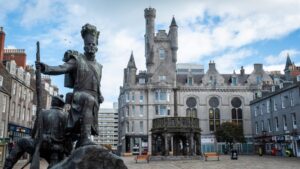
Four days allowed us to combine a walk on Bennachie, Royal Deeside, Glen Tanar, Stonehaven, Dunnottar Castle and time in Aberdeen. The region also has a distinctive food identity built around seafood, Aberdeen Angus beef and local bakery traditions. Our Aberdeenshire itinerary explains how to organise these places without turning every day into a long drive.
Southern Scotland
The Scottish Borders and Dumfries and Galloway are useful for travellers arriving from northern England, as well as anyone looking for quieter walking routes and small historic towns.
The Borders are known for ruined abbeys, country houses and cycling. Dumfries and Galloway has forests, a long coastline and some of Scotland’s darkest night skies. Both areas work particularly well for a slow road trip, with shorter distances than the Highlands and fewer seasonal pressures.
The Outer Hebrides, Orkney and Shetland
The Outer Hebrides require a dedicated itinerary. Lewis and Harris are part of the same island despite their different names, while the southern islands are connected by causeways and ferries. Beaches, prehistoric sites, Gaelic culture and local crofting traditions make the journey worthwhile, but ferry timetables must shape the route.
Orkney and Shetland also deserve separate trips. Orkney has an extraordinary concentration of prehistoric sites, while Shetland lies much farther north and has its own Norse influence, wildlife and maritime culture. Adding either archipelago to a mainland holiday requires enough time to absorb possible weather disruption.
Planning Your Trip
Edinburgh and Glasgow have Scotland’s principal international airports. Aberdeen and Inverness have smaller airports that can save considerable time when visiting the northeast or northern Highlands.
Direct trains connect London with Edinburgh and Glasgow, generally taking around four to five and a half hours depending on the service. Rail is often the easiest option for Edinburgh, Glasgow and the Central Belt. It can also reach Inverness, Aberdeen, Fort William, Oban and Mallaig, although services become less frequent outside the main routes.
Visitors who do not need a UK visa may still require an Electronic Travel Authorisation. Check the current rules for your nationality on the official UK ETA website before departure.
A few practical decisions make a substantial difference:
- Reserve accommodation early for Edinburgh in August, Skye in summer and small island communities throughout the main season.
- Book vehicle spaces on island ferries as soon as the route is confirmed. Passenger capacity may remain available after car spaces have sold out.
- Avoid scheduling an international flight immediately after a weather-dependent ferry journey.
- Keep at least one flexible day when hiking or travelling through the islands.
- Download offline maps before entering remote areas, where mobile coverage can disappear.
- Fill the fuel tank before long rural drives. Petrol stations may close earlier than expected.
- Check restaurant opening days outside cities. In small communities, kitchens may close early or open only on selected evenings.
- Pack a waterproof outer layer in every season. An umbrella is often less useful in exposed, windy areas.
Summer brings long daylight hours, especially in the north. Winter produces the opposite effect, with very short sightseeing days. Sunrise and sunset times should be checked when planning walks and long drives between November and February.
Best Itinerary
For a first visit, a 10-day route combining Edinburgh, Glencoe, Skye and Inverness provides a good introduction to urban Scotland, the western Highlands and an island.
Days 1–3: Edinburgh
Spend three nights in Edinburgh. Use the first two days for the Old Town, New Town, museums and the city’s main viewpoints. Keep the third day for Leith, Dean Village, Stockbridge or the coast, depending on your interests.
There is no need to collect a rental car on arrival. Parking is inconvenient and expensive, while the centre is easy to explore on foot and by public transport.
Days 4–5: Glencoe and Fort William
Collect the car when leaving Edinburgh and travel west towards Glencoe. Allow most of the day because the route passes Stirling, Loch Lomond and several worthwhile stopping points.
Use the following day for Glencoe or Fort William. Choose a walk that matches the conditions and your experience rather than committing to a summit before seeing the forecast.
Days 6–8: Isle of Skye
Drive to Skye and stay for three nights. This gives you two complete days on the island, plus parts of the arrival and departure days.
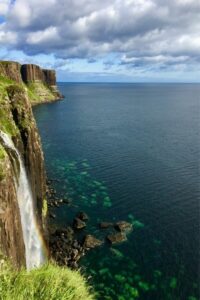
Group sights geographically. The Trotternish Peninsula, including the Old Man of Storr, Quiraing and Kilt Rock, works as one area. Neist Point, Dunvegan and Coral Beach belong to a separate western route. The Fairy Pools and Cuillin landscapes require another direction entirely.
Trying to cover all three in a single day leads to rushed stops and too much time on narrow roads.
Day 9: Skye to Inverness
Travel towards Inverness via the Skye Bridge. Eilean Donan Castle and Loch Ness can be included, but both add time. Choose stops according to daylight and weather rather than treating every landmark as compulsory.
Day 10: Inverness and departure
Spend the final morning in Inverness or around the Black Isle before returning the car. From Inverness, you can fly onward or take the train south.
With 14 days, add Glasgow at the beginning or spend three to four days in Aberdeenshire and the Cairngorms after Inverness. With only seven days, combine Edinburgh with Glencoe or the Cairngorms and leave Skye for a future trip.
Driving in Scotland
A car is useful in the Highlands, Aberdeenshire, southern Scotland and most island destinations. It is usually unnecessary in central Edinburgh or Glasgow.
Traffic drives on the left. Many rural roads are narrow, and single-track roads use passing places so vehicles travelling in both directions can proceed. Pull into a passing place on your left, or stop opposite one on your right and allow the approaching vehicle to use it. Never park in a passing place.
Road numbers can be misleading. An A-road in the Highlands may still include narrow sections, sharp bends and livestock. Navigation apps calculate movement more accurately than they calculate a relaxed travel day, since they cannot account for viewpoints, queues, walkers or sudden changes in visibility.
Allow faster local traffic to pass when safe. On single-track roads, a queue behind your car usually means you should use the next passing place. This is especially important on Skye and along heavily travelled northern routes.
Other points to remember:
- Distances given in miles can feel longer than expected.
- Sheep, deer and cattle may enter the road.
- Winter driving can involve snow, ice and very limited daylight.
- Ferry reservations for vehicles should be treated as fixed appointments.
- Parking at popular trailheads fills early in summer.
- Some rural petrol stations have limited opening hours.
- Drinking and driving limits in Scotland are stricter than in England and Wales.
Before a long winter journey, check weather warnings and road information through Transport Scotland.
When to Visit Scotland
May, June and September are the most balanced months for a general trip. Days are long, most seasonal businesses are open and demand is usually lower than during the peak school-holiday period.
| Period | Conditions | Main considerations |
|---|---|---|
| March–April | Cool and highly variable | Quieter roads, but some seasonal services remain closed |
| May–June | Long days and generally moderate crowds | Strong period for walking and road trips |
| July–August | Mild temperatures and longest opening hours | High prices, midges, busy roads and limited accommodation |
| September–October | Cooler weather and autumn colour | Shorter days and reduced ferry or attraction schedules later in the season |
| November–February | Short days, cold weather and possible snow | Better for cities, winter scenery and properly equipped travellers |
Scotland does not have a dependable dry season. Several days of rain are possible in summer, while a calm, clear spell can occur in early spring or autumn.
Midges are most active in the western Highlands and islands during the warmer months, particularly in still and damp conditions. Repellent and a head net are useful for camping and evening walks. Windy or bright conditions usually reduce their activity.
August is an excellent month for Edinburgh’s festivals, but a poor month for spontaneous accommodation. Winter is atmospheric in the cities, though remote travel requires more preparation and some attractions, hotels and restaurants close for the season.
How Many Days in Scotland?
Seven days is the minimum for combining one major city with one rural region. Ten to fourteen days gives a first-time visitor enough room to include the Highlands or one island at a more realistic pace.
| Length of trip | What you can reasonably include |
|---|---|
| 3–4 days | Edinburgh, Glasgow or one compact region |
| 7 days | One city plus Glencoe, Cairngorms or Aberdeenshire |
| 10 days | Edinburgh, western Highlands and Skye |
| 14 days | Two cities plus one substantial Highland or island route |
| 21 days | A broader mainland journey with one or two island groups |
Allow at least three nights for Skye, three to four days for Aberdeenshire and five to seven days for the Outer Hebrides. Orkney needs at least three complete days after arrival, while Shetland merits four or more.
Island travel consumes time before sightseeing begins. A five-day island trip does not necessarily provide five complete days on the island once ferry or flight connections are included.
Budget
Scotland can be expensive, particularly in Edinburgh, Skye and the islands. Accommodation is the largest variable, followed by car hire and restaurant meals.
A reasonable daily estimate per person, based on two people sharing accommodation, is:
| Travel style | Daily budget per person |
|---|---|
| Budget | £100–£160 |
| Mid-range | £180–£300 |
| Comfortable | £350 and above |
Budget travellers can reduce costs by staying in hostels, guesthouses or self-catering accommodation and using trains or buses between the main cities. Rural public transport is less frequent, so the cheapest accommodation is not always economical if it leaves you dependent on taxis.
Car hire rates rise during summer. Add fuel, parking, ferry charges and possible one-way fees before comparing it with organised tours. On islands, self-catering can help control costs, but larger supermarkets may be far from the accommodation.
Edinburgh in August and Skye from June to September require early reservations. Waiting rarely produces a better rate because the remaining choices are often either remote or considerably more expensive.
Museums in Edinburgh and Glasgow are frequently free, while castles, distillery visits, boat trips and guided outdoor activities can add significantly to the daily total.
Food in Scotland
Scottish food changes noticeably between the cities, farming regions, fishing ports and islands. Seafood is central to the west coast and the northern archipelagos, while the northeast is closely associated with beef, smoked fish and rich bakery traditions.
Haggis is the best-known dish, traditionally made with sheep offal, oats, onion and spices. It is commonly served with neeps and tatties, meaning mashed turnip and potatoes. Vegetarian versions are widely available and often appear at breakfast as well as dinner.
Look beyond haggis for dishes and products with a clear regional connection:
- Cullen skink, a thick soup made with smoked haddock, potatoes and onions
- Arbroath smokies, haddock smoked in the traditional style associated with Arbroath
- Langoustines, scallops, mussels and oysters from the west coast and islands
- Aberdeen Angus beef and Scottish venison
- Scottish salmon, including hot-smoked and cold-smoked preparations
- Black pudding, tattie scones and Lorne sausage at breakfast
- Oatcakes served with cheese, smoked fish or pâté
- Butteries, the savoury, flaky rolls closely associated with Aberdeen and the northeast
- Cranachan made with cream, oats, raspberries, honey and whisky
- Tablet, a very sweet confection with a crumbly texture
Glasgow has a broad casual dining scene influenced by its South Asian communities, alongside traditional pubs, bakeries and contemporary Scottish restaurants. Edinburgh covers a wide range of budgets but becomes heavily booked during festival periods.
On the west coast and islands, seafood can travel only a short distance from the boat to the kitchen. Availability still depends on weather, the catch and the restaurant’s opening schedule. In remote areas, reserve dinner rather than assuming that another restaurant will be open nearby.
Whisky is produced across Scotland, with recognised regions including Speyside, Islay, the Highlands, the Lowlands and Campbeltown. These names are useful geographically, although they do not guarantee that every whisky from a region will taste the same. Distillery visits should be booked in advance, especially on Islay and along popular Speyside routes.
In Scotland, whisky is normally written without an “e.” If you are driving, nominate someone who will not drink, arrange a taxi or join a tour with transport. Rural distilleries are rarely within walking distance of one another.
Restaurant service charges are sometimes included. When they are not, a tip of around 10 percent is customary for good table service. Pubs generally do not require a tip for drinks ordered at the bar.