Romania Travel Guide
Romania is best explored over 10 to 14 days, combining Bucharest with a focused route through Transylvania or another historical region.
Romania takes longer to travel through than its position on a map suggests. Bucharest, Brașov, Sibiu and Cluj-Napoca can be connected by rail, but the villages, monasteries, mountain roads and rural landscapes that define much of the country require a car and a flexible schedule.
The country becomes easier to understand through its historical regions. Transylvania has Saxon towns, fortified churches and the Carpathian Mountains. Maramureș is known for wooden architecture and village traditions. Bucovina has painted monasteries, while Dobruja contains the Black Sea coast and the Danube Delta.
Bucharest belongs to a different Romania again. Its wide boulevards, fragmented architecture and cultural life reflect the upheavals of the 20th century as much as the country’s current direction.
This page provides the structure for planning a trip across Romania, including which regions to combine, how long journeys take, when a car is useful and what to eat along the way.
Regions
Romania is divided administratively into counties, though its historical regions provide a more useful framework for travellers.
| Historical area | Main destinations | Best for | Suggested time |
|---|---|---|---|
| Bucharest and Wallachia | Bucharest, Sinaia, Curtea de Argeș | Capital, royal history and access to the Carpathians | 3 to 5 days |
| Transylvania | Brașov, Sibiu, Sighișoara, Cluj-Napoca | Medieval towns, fortified churches and mountains | 7 to 10 days |
| Maramureș | Sighetu Marmației, Breb, Vișeu de Sus | Wooden churches, villages and rural culture | 3 to 5 days |
| Bucovina and Moldavia | Suceava, Iași, painted monasteries | Religious heritage, monasteries and regional food | 4 to 6 days |
| Banat and Crișana | Timișoara, Oradea, Arad | Architecture, multicultural history and western Romania | 4 to 6 days |
| Oltenia | Craiova, Târgu Jiu, Horezu | Monasteries, sculpture and mountain landscapes | 3 to 5 days |
| Dobruja | Constanța, Tulcea, Danube Delta | Wetlands, wildlife, beaches and fish | 4 to 7 days |
Bucharest and Wallachia
Bucharest needs two or three full days. Its scale, traffic and fragmented neighbourhoods make rushed visits difficult, while much of its character lies outside the small Old Town.
The Palace of Parliament and the monumental boulevards show the physical impact of Nicolae Ceaușescu’s regime. Calea Victoriei, Cișmigiu Gardens and surviving Belle Époque buildings belong to other periods of the city’s development.
The Old Town is useful for nightlife and a concentration of restaurants, though it should not define the entire stay. Residential areas, markets, parks and the streets beyond the historic centre provide a more complete picture.
Our Bucharest city guide covers the city’s history, architecture, food, nightlife and practical planning in greater detail.
North of Bucharest, Sinaia and Peleș Castle sit along the main route into Transylvania. Sinaia can be reached by train, but it also functions as a natural first stop on a road trip towards Brașov.
Transylvania
Transylvania is Romania’s most visited region, yet reducing it to Bran Castle and the story of Dracula misses most of what makes it interesting.
Brașov is the most convenient first base. The historic centre is compact, the Carpathians surround the city and several well-known castles are within reach. Bran Castle receives large visitor numbers and has only a loose connection with Vlad the Impaler, the historical figure later associated with Dracula.
Sibiu has one of the country’s best-preserved historic centres and a strong connection to Transylvanian Saxon history. It also makes a useful base for nearby villages and, during the open season, the Transfăgărășan road.
Sighișoara can be visited between Brașov and Sibiu, though it benefits from an overnight stay. Its fortified centre becomes considerably quieter after day tours leave.
Cluj-Napoca is a university city with a younger cultural life and a very different atmosphere from the smaller Saxon towns. It is useful as a gateway to northern Transylvania, Maramureș and parts of the Apuseni Mountains.
Outside the cities, Transylvania contains fortified churches, Saxon villages, Hungarian communities and mountain areas. These places are easier to reach by car, and many require more time than their distance from the nearest city suggests.
Maramureș
Maramureș lies in northern Romania, close to the borders with Ukraine and Hungary. Travellers come for its wooden churches, carved gates, villages and mountain scenery.
The region requires time because attractions are dispersed. Breb is one of the most frequently used rural bases, while Sighetu Marmației provides access to museums, services and the Ukrainian border area.
The wooden churches of Maramureș include several UNESCO-listed sites, but their value is clearer when they are seen as part of the wider village landscape. Some churches are locked outside service times, and access may depend on locating the person who holds the key.
The narrow-gauge forestry railway from Vișeu de Sus is another well-known experience. Services and demand are seasonal, so tickets should be checked before travelling.
Maramureș is difficult to add to a short Transylvania itinerary. It deserves at least three days beyond the travel time required to reach it.
Bucovina and Moldavia
Romanian Moldavia should not be confused with the neighbouring Republic of Moldova. The historical region extends across eastern Romania, while Bucovina lies in the north.
Bucovina is known for its painted monasteries, including Voroneț, Humor, Moldovița and Sucevița. Their external frescoes and rural locations make the area distinct from the castles and fortified towns of Transylvania.
Suceava is a practical gateway, though the monasteries are spread across the countryside and are easier to visit by car or with a driver.
Iași is the main cultural and university city of eastern Romania. Its architecture, churches and literary history justify a separate city stay rather than a short stop between regions.
Combining Bucovina with Maramureș creates a strong northern itinerary, but road journeys can be slow. Allow at least one week for both regions.
Banat and Crișana
Timișoara is the principal city in Banat and one of Romania’s strongest destinations for architecture, public squares and modern history. The city played a central role in the 1989 Romanian Revolution.
Oradea, farther north, is known for its Art Nouveau architecture and restored centre. It can be combined with the Apuseni Mountains or continued towards Cluj-Napoca.
Western Romania is relatively easy to reach from Hungary and Serbia. It can support an independent itinerary or act as the beginning of a west-to-east journey across the country.
Oltenia
Oltenia occupies southwestern Romania between the Danube and the Carpathians. It receives fewer international visitors than Transylvania despite containing important monasteries, mountain roads and cultural sites.
Târgu Jiu is associated with Constantin Brâncuși, whose monumental ensemble includes the Endless Column, the Gate of the Kiss and the Table of Silence.
Horezu is known for its monastery and pottery tradition. Northern Oltenia also connects with the Transalpina, Romania’s highest mountain road, when weather conditions allow it to open.
Dobruja and the Danube Delta
Dobruja lies between the Danube and the Black Sea. Constanța is the main coastal city, while Tulcea is the usual departure point for the Danube Delta.
The delta requires a boat and local knowledge. Channels, lakes, reed beds and fishing communities cannot be approached like a conventional road trip. Choose accommodation or an operator according to the part of the delta you want to explore.
Two nights is the minimum for the delta. Three or four provide more flexibility for wildlife, weather and travel between villages.
Romania’s Black Sea resorts become busy during July and August. The coast is a seasonal destination and feels very different from the mountain and cultural routes inland.
Planning your trip
Romania can be explored by train between the major cities, while a car is more practical for villages, monasteries and mountain areas.
For a first trip, choose Bucharest and one major region. Combining Transylvania, Maramureș, Bucovina and the Danube Delta in ten days results in too much driving.
Entry requirements
Romania is a member of the European Union and became a full member of the Schengen Area on 1 January 2025. Travel from other Schengen countries normally takes place without routine border controls, although temporary checks remain possible.
Visa and passport requirements depend on nationality. Travellers entering through an external Schengen border should check the latest conditions with the Romanian Border Police or the appropriate official European authority.
Getting around by train
Trains connect Bucharest with Brașov, Sibiu, Cluj-Napoca, Timișoara, Iași and other large cities. Services range from slower regional trains to intercity connections.
Journey times can be longer than expected. Compare the train with driving time before deciding, while remembering that driving also involves traffic, parking and road conditions.
Train travel works particularly well between Bucharest, Sinaia and Brașov because it avoids congestion on one of the country’s busiest road corridors.
For a city-based itinerary, trains and occasional local tours may remove the need for a car. For fortified churches, Maramureș villages or the painted monasteries, independent transport provides far more flexibility.
Choosing accommodation
Romania has international hotels, independent guesthouses, rural pensions and homestays. Accommodation can become part of the experience in villages and mountain regions because hosts may also provide meals and local advice.
Check the precise location before booking. A property described as near Brașov, Sibiu or a national park may be many kilometres from the centre or nearest transport.
In rural areas, confirm whether dinner is available and how payment is accepted. Cards are widespread in cities, but cash remains useful for small guesthouses, markets, roadside vendors and remote attractions.
Currency and payments
Romania uses the Romanian leu, abbreviated as RON and commonly referred to in the plural as lei. The euro is not the everyday currency.
Cards and contactless payments are widely accepted in Bucharest and other large cities. Use bank-operated ATMs and decline dynamic currency conversion when your own bank provides a better exchange rate.
Keep some lei for villages, local markets, parking and small establishments.
Best itinerary
A ten-day first itinerary can combine Bucharest with Sinaia, Brașov, Sighișoara and Sibiu at a realistic pace.
| Days | Base | Plan |
|---|---|---|
| 1–2 | Bucharest | Explore the city’s architecture, modern history, neighbourhoods and food |
| 3 | Sinaia | Travel north, visit Peleș Castle and stay in Sinaia or continue to Brașov |
| 4–5 | Brașov | Explore the city and choose one carefully planned excursion |
| 6 | Sighișoara | Travel through Transylvania and stay inside or close to the historic centre |
| 7–9 | Sibiu | Explore Sibiu, nearby villages and a mountain route if conditions permit |
| 10 | Bucharest | Return to the capital for the final night or departure |
This route can be completed by train, car or a mixture of both. A car becomes more valuable once you leave Brașov for smaller Transylvanian towns and villages.
Use two full days in Bucharest before travelling north. On day three, stop in Sinaia for Peleș Castle rather than attempting to include it as a hurried excursion later.
Brașov needs at least one complete day. Use the second for a castle, mountain area or nearby town according to your interests.
Sighișoara is geographically convenient between Brașov and Sibiu. Sleeping there allows you to see the fortified centre after the main tour groups leave.
Sibiu deserves two full days. If the Transfăgărășan is open and conditions are suitable, it can be included from this part of the route. During the closure season, focus on villages, museums or the surrounding countryside.
A seven-day Romania itinerary
With one week, spend two days in Bucharest, two in Brașov and two or three in Sibiu. Visit Sinaia while travelling between Bucharest and Brașov.
Remove Sighișoara or visit it briefly en route. Avoid adding Cluj-Napoca, Maramureș or the Danube Delta unless they replace part of the Transylvania route.
A two-week Romania itinerary
With fourteen days, extend the Transylvania route to Cluj-Napoca and add either Maramureș or the painted monasteries of Bucovina.
The Danube Delta also works as a separate extension from Bucharest. It requires travel east through Tulcea and at least two nights in the delta.
Driving in Romania
Driving is the most flexible way to explore rural Romania, though realistic journey times are more important than the number of kilometres shown on a map.
Our detailed Romania road trip guide covers car rental, route planning, road conditions and the experience of driving through the country.
Main roads between large cities have improved, but traffic, construction, villages and slower vehicles can still affect journey times. Secondary roads vary considerably.
Romania drives on the right. Speed limits are displayed in kilometres per hour, and a road vignette is required for vehicles using the national road network. Rental vehicles should normally include it, but confirm this at collection.
Motorways cover only part of the country. Many national routes pass directly through towns and villages, where speed limits drop frequently.
Allow extra time for animals, agricultural vehicles and pedestrians on rural roads. Avoid driving unfamiliar mountain or village roads after dark.
Transfăgărășan and Transalpina
The Transfăgărășan and Transalpina are seasonal mountain roads. Their opening dates depend on snow, weather and road inspections.
Never build an essential transfer around either road without checking its current status. Even during summer, weather can change quickly at altitude.
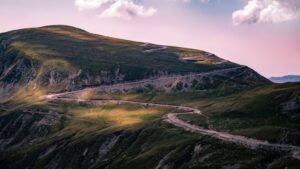
The Transfăgărășan connects Wallachia and Transylvania across the Făgăraș Mountains. It can be extremely busy during summer weekends.
The Transalpina crosses the Parâng Mountains farther west. It reaches a higher altitude and can also close because of poor conditions.
Both should be treated as scenic journeys rather than shortcuts. Allow time for viewpoints, traffic and sudden weather changes.
When to visit
May to June and September to early October are the most flexible periods for visiting Romanian cities, villages and lower mountain areas.
| Period | Best for | What to consider |
|---|---|---|
| March to April | Cities and early spring travel | Mountain snow and unpredictable weather |
| May to June | Road trips, countryside, cities and walking | Rain and occasional mountain closures |
| July to August | Mountains, festivals, coast and Danube Delta | Heat in cities and crowds on famous routes |
| September to October | Food, wine, road trips and autumn landscapes | Shorter days and mountain weather |
| November to February | Christmas markets, snow and winter sports | Road closures, ice and limited rural access |
Summer is the main season for high mountain routes. Bucharest and lower parts of the country can become extremely hot in July and August.
The Black Sea coast and Danube Delta are busiest in summer. Spring is strong for birdlife in the delta, while autumn brings migration and fewer visitors.
May, June and September work well for a general road trip. Temperatures are usually easier for walking and city visits, and accommodation outside major events is more manageable.
Winter is suitable for Brașov, Sibiu and mountain resorts if snow is part of the plan. A wide road-trip itinerary becomes harder because daylight is limited and high routes close.
How many days
Ten days is enough for Bucharest and a focused Transylvania route, while two weeks allows one additional region.
| Trip length | What works |
|---|---|
| 2–3 days | Bucharest city break |
| 5–7 days | Bucharest, Sinaia and two Transylvanian cities |
| 10 days | Bucharest and a complete Brașov to Sibiu route |
| 14 days | Transylvania plus Maramureș, Bucovina or the Danube Delta |
| 21 days | Several historical regions at a comfortable pace |
Bucharest needs two full days. Brașov, Sibiu and Cluj-Napoca each deserve at least two nights.
Maramureș and Bucovina require additional travel days. The Danube Delta needs at least two nights once you reach Tulcea.
A complete circuit of Romania requires three weeks or longer. Ten days should concentrate on one coherent section of the country.
Budget
Romania remains good value compared with much of Western Europe, though Bucharest, Cluj-Napoca and the busiest parts of Transylvania are considerably more expensive than rural areas.
| Travel style | Approximate daily budget per person | What it generally covers |
|---|---|---|
| Budget | €55–€90 | Hostel or simple shared room, public transport and casual food |
| Mid-range | €100–€170 | Shared hotel or guesthouse, car costs and restaurant meals |
| Comfortable | €220+ | Higher-end accommodation, private transport and organised experiences |
These figures assume two people sharing accommodation and are intended for planning. Actual payments are made in Romanian lei.
A rental car can be reasonably priced, but insurance, fuel, parking and one-way charges increase the total. Compare the final rental terms rather than the initial daily rate.
Rural guesthouses may include breakfast or dinner, making them good value. Tourist centres around Bran, Brașov and central Bucharest generally charge more.
Restaurant portions are often substantial. Bakeries, markets and daily lunch menus can reduce costs without relying entirely on supermarket food.
Food
Romanian food is built around soups, preserved vegetables, pork, freshwater fish, cheese, maize, bread and dishes designed for sharing.
The cuisine changes between the Carpathians, the Danube, Transylvania and the Black Sea. Hungarian, Saxon, Ottoman, Balkan, Slavic, Turkish and Greek connections appear in different parts of the country.
| Region | Foods and traditions |
|---|---|
| Wallachia and Bucharest | Mici, ciorbă, stews, grilled meat and pastries |
| Transylvania | Smoked pork, tarragon soups, dumplings, cabbage and Hungarian or Saxon influences |
| Moldavia and Bucovina | Sarmale, sour soups, poale-n brâu pastries and monastery cooking |
| Maramureș | Pork, cheese, mămăligă and fruit brandies |
| Banat | Central European cakes, soups, noodles and meat dishes |
| Dobruja and Danube Delta | Fish soup, carp, roe, Turkish and Tatar specialities |
Essential Romanian dishes
Ciorbă refers to a broad family of sour soups. The acidity may come from fermented wheat bran, vinegar, lemon or other regional ingredients. Versions include meatball soup, bean soup, tripe soup and vegetable soup.
Sarmale are cabbage rolls filled with meat and rice, commonly served with mămăligă and sour cream. Recipes vary by household and region.
Mămăligă is a maize porridge that can accompany stews, cheese, sour cream, fish or grilled meat. Its role in Romanian cooking is far broader than a simple side dish.
Mici are small skinless grilled sausages, usually eaten with mustard and bread. They appear at restaurants, markets, festivals and informal gatherings.
Zacuscă is a spread made from roasted vegetables, commonly aubergine and peppers. Salată de vinete, an aubergine salad, is another important part of the vegetable side of Romanian cooking.
Papanași are fried or boiled cheese doughnuts, generally served with sour cream and fruit preserve. Portions are often large enough to share.
Eating in Bucharest
Bucharest is the easiest place to sample dishes from several Romanian regions. Traditional restaurants, bakeries and modern kitchens exist alongside a growing international food scene.
Bakeries are useful for covrigi, cheese pastries and quick breakfasts. For a full traditional meal, begin with soup and wait before ordering several additional courses because portions can be heavy.
The Old Town has both historic restaurants and establishments aimed primarily at short-term visitors. Explore residential neighbourhoods and markets as well, particularly if food is an important part of the trip.
Eating in rural Romania
Guesthouses can provide some of the most informative meals in Romania. Food may be prepared from household vegetables, preserved produce, local cheese and meat raised nearby.
Ask in advance whether dinner is available. Rural kitchens frequently cook for a known number of guests rather than operating as restaurants with an all-day menu.
Local fruit brandies include țuică, pălincă and horincă, with names and production traditions varying by region. They can be considerably stronger than expected and are often served as part of hospitality.
Romanian food makes the most sense when eaten regionally: fish in the Danube Delta, Saxon and Hungarian-influenced dishes in Transylvania, monastery cooking in Bucovina and village meals in Maramureș.