Malta Travel Guide
Malta works best as a five-to-seven-day trip combining Valletta and the historic towns with Gozo, the coast and time in the Mediterranean.
Malta looks tiny on a map, which can make planning appear straightforward. In practice, traffic, indirect bus routes, ferry schedules and summer heat turn short distances into longer journeys. Choosing the right base matters more than trying to fit every town, beach and archaeological site into the same itinerary.
The country is an archipelago, with most visits divided between the main island of Malta, quieter Gozo and a day around Comino. Valletta and the Grand Harbour hold much of the architectural and military history. Mdina and Rabat take you further back. Gozo has a slower pace, a stronger rural character and enough to justify several nights.
Malta also works on different levels. It can be a short cultural break, a summer trip centred on the sea or a longer stay combining diving, archaeology, walking and food. This page explains how the islands fit together, where to stay, how to move around and how much time you actually need.
Regions
The Maltese archipelago is best divided into Valletta and the harbour area, central Malta, the northern and southern coasts, Gozo and Comino.
Malta has five official regions, but those administrative boundaries are not particularly useful when planning a trip. For travellers, it makes more sense to think in terms of bases, transport connections and the type of experience found in each part of the islands.
| Area | Best for | Main consideration |
|---|---|---|
| Valletta and the Grand Harbour | History, architecture, museums, restaurants | Accommodation can be expensive and the city becomes quiet later at night |
| Sliema and St Julian’s | Transport, nightlife, seafront accommodation | Busy, heavily developed and less atmospheric than Valletta |
| Mdina, Rabat and central Malta | Historic towns, archaeology, traditional streets | Better for visiting than using as a first-time base |
| Northern Malta | Sandy beaches, ferries and family stays | Longer journey into Valletta and the south |
| Southern Malta | Fishing villages, temples, cliffs and quieter towns | Public transport requires more planning |
| Gozo | Countryside, swimming, walking and local food | A day trip only gives a limited impression |
| Comino | Blue Lagoon and boat trips | Very crowded during peak hours |
Valletta and the Grand Harbour
Valletta is the strongest base for travellers interested in Malta’s history, architecture and food. The city is small enough to cross on foot, although its steep streets and steps become tiring in hot weather.
St John’s Co-Cathedral, the Grand Master’s Palace, the Upper Barrakka Gardens and the city’s fortifications can fill a full day. A second day gives you time for the museums, side streets and waterfront without moving continuously between attractions.
Across the Grand Harbour, Vittoriosa, Senglea and Cospicua are collectively known as the Three Cities. Their waterfronts, narrow residential streets and fortifications deserve at least half a day. The short harbour crossing from Valletta is often more practical and enjoyable than travelling around by road.
Valletta also has one of the country’s largest concentrations of restaurants. Our selection of restaurants and food experiences in Valletta includes places for Maltese cooking, seafood, wine and casual stops within the historic centre.
Sliema and St Julian’s
Sliema has extensive accommodation, frequent transport and a long seafront. Ferries connect it with Valletta, while buses run towards St Julian’s and other parts of the island. It is a practical base for travellers who want modern hotels, restaurants and easy evening options.
St Julian’s is busier and more focused on nightlife. Paceville contains clubs, bars and language schools, while quieter streets and waterfront areas sit nearby. Check the exact position of an accommodation before booking because the atmosphere can change within a few blocks.
Neither Sliema nor St Julian’s provides the same historic setting as Valletta. Their advantage is convenience, particularly for longer stays or trips where restaurants, nightlife and transport matter more than sleeping inside a historic city.
Mdina and Rabat
Mdina is Malta’s former capital, a fortified city of limestone streets, churches, palaces and enclosed courtyards. Its small size means it can become crowded when tour groups arrive, so early morning and late afternoon are better times to visit.
Rabat begins immediately outside Mdina’s walls. It feels more lived-in and contains important sites including St Paul’s Catacombs and the Domvs Romana. Mdina and Rabat should be visited together rather than treated as separate day trips.
The area works well with the Dingli Cliffs or one of the prehistoric sites, depending on your transport. Buses connect Mdina with Valletta and other main towns, although continuing between several rural attractions can take much longer.
Northern Malta
The north contains some of Malta’s better-known sandy beaches, including Mellieħa Bay, Golden Bay and Għajn Tuffieħa. Much of Malta’s coast is rocky, so travellers expecting long stretches of sand should choose their location carefully.
Mellieħa is a useful base for a beach-centred trip and for reaching the ferries to Gozo and Comino. It is less convenient for repeated visits to Valletta and the southern part of the island.
Popeye Village and the Red Tower are also in this part of Malta, while the coastline provides swimming, sunset views and walking outside the hottest months. Beach access can involve steep paths or steps, particularly around Għajn Tuffieħa.
Southern Malta
Southern Malta contains fishing towns, prehistoric temples, rocky coastline and several places that receive fewer visitors than Valletta or the northern beaches.
Marsaxlokk is known for its harbour and colourful fishing boats. Sunday brings the largest market and the largest crowds. Visiting on another day provides a calmer view of the town, though the market is smaller.
The Ħal Saflieni Hypogeum, Tarxien Temples and the temples of Ħaġar Qim and Mnajdra belong to Malta’s prehistoric history. Entrance to the Hypogeum is restricted to small groups for conservation, so tickets should be booked well in advance through Heritage Malta.
The Blue Grotto is also in the south. Boat trips depend on sea conditions and can be cancelled when the water is rough, even on an otherwise sunny day.
Gozo
Gozo deserves at least one full day and ideally two or three nights. A day trip covers Victoria, the Citadel and one or two coastal stops, but it leaves little time to understand the island beyond its principal sights.
Victoria is Gozo’s transport centre. The Citadel rises above the town, while the surrounding streets contain cafés, small shops and a daily rhythm that is different from Malta’s busiest coastal areas.
Beyond Victoria, Gozo is a mixture of villages, terraced fields, salt pans, cliffs and swimming places. Xlendi and Marsalforn are popular coastal bases. Inland villages provide quieter accommodation, though a car becomes more useful.
Food is a major reason to stay longer. Gozitan ftira, local cheese, fish and seasonal produce are easier to appreciate when lunch is part of the day rather than a quick stop between attractions. Our article on where to eat in Gozo covers restaurants, bakeries and the places associated with traditional ftira.
Comino
Comino is visited primarily for the Blue Lagoon. The water is striking, especially early in the morning, but the small landing area becomes extremely busy during the main summer hours.
The Blue Lagoon now uses a free timed access system for anyone stepping ashore. A QR-coded landing pass must be reserved separately from boat transport through the official Blue Lagoon booking system.
Choose the first available boat if swimming is your priority. An evening slot can also be calmer, depending on ferry schedules and sea conditions. Another option is to join a smaller boat trip that visits coves around Comino without spending the entire day at the main landing area.
Comino is not essential to every Malta itinerary. Travellers who prefer archaeological sites, towns or quieter coastal walks may value an additional day on Gozo more.
Planning your trip
Choose accommodation according to the part of Malta you intend to visit most, then group each day geographically.
Staying in Valletta and travelling to Gozo, Mellieħa and the northern beaches repeatedly will consume a surprising amount of time. The same applies if you stay in the north and plan daily visits to Valletta and southern Malta.
For a first trip, Valletta works well for culture and history. Sliema provides broader accommodation choices and useful ferry connections. Mellieħa makes sense for beaches and northern boat departures. Gozo should be treated as a second base when the trip lasts a week or longer.
Getting around Malta
Malta has no passenger railway. Travel is by bus, ferry, taxi, hired vehicle or organised excursion.
Buses reach most towns and major attractions, making a car unnecessary for a short visit based in Valletta or Sliema. Journey planners can underestimate the effect of traffic, especially in summer and during the morning and evening commute. Build flexibility into days involving connections.
Ferries are particularly useful around the harbour. The Valletta to Sliema and Valletta to Three Cities services can save time and provide a much better view of the fortifications.
Gozo can be reached by the channel ferry from Ċirkewwa in northern Malta. A fast passenger ferry also operates between Valletta and Gozo, subject to the current schedule and sea conditions. The best service depends on where you are staying and whether you are taking a car.
Ride-hailing services are widely available and useful after dinner, for airport journeys or when several people can share the fare.
What to book in advance
Book the Ħal Saflieni Hypogeum as soon as your dates are fixed. Visitor numbers are strictly limited, and last-minute availability is unreliable.
St John’s Co-Cathedral and other popular Valletta attractions may have long queues during cruise ship hours. Visiting early gives you a quieter experience and leaves the afternoon for less structured exploration.
Reserve the Blue Lagoon landing pass if you intend to step ashore on Comino. Boat transport is booked and paid for separately.
Popular restaurants in Valletta and Gozo should also be reserved for Friday and Saturday evenings, particularly during summer.
Practical details
Malta uses the euro and Type G electrical plugs, the same three-pin format used in the United Kingdom. Maltese and English are both official languages, and English is widely spoken.
The sun is strong even outside July and August. Many historic sites have little shade, while Valletta, Mdina and Victoria involve exposed walking on pale stone that reflects heat. Carry water and plan indoor sites during the hottest part of the day.
Distances are short enough that travellers sometimes schedule opposite ends of Malta on the same day. A more sensible plan groups Valletta with the Three Cities, Mdina with Rabat, and Marsaxlokk with southern sites.
Best itinerary
Five days is enough to see Valletta, the Three Cities, Mdina, Gozo and one coastal or archaeological area without changing accommodation constantly.
Day 1: Valletta
Start with St John’s Co-Cathedral before the busiest part of the day. Continue through the centre towards the Grand Master’s Palace and Upper Barrakka Gardens, then descend towards the waterfront or explore the quieter streets around the lower end of the peninsula.
Stay in Valletta for dinner so the first day does not become another transport exercise.
Day 2: The Three Cities
Cross the Grand Harbour to Vittoriosa, Senglea and Cospicua. Vittoriosa deserves the most time, particularly the streets around the waterfront and Fort St Angelo.
Return to Valletta by boat. The crossing places the geography of the harbour into context far better than viewing it only from the gardens.
Day 3: Mdina and Rabat
Visit Mdina early, then walk into Rabat for the catacombs, local streets and lunch. Add the Dingli Cliffs if transport and daylight allow.
Travellers with a booked Hypogeum ticket may need to reorganise this day around the assigned entrance time.
Day 4: Gozo
Take an early ferry and begin in Victoria. Continue to one coastal area and one village rather than attempting a complete circuit.
With seven days, stay overnight on Gozo and give the island a second full day. This allows time for swimming, walking and meals without constantly checking the return ferry.
Day 5: Choose Malta’s coast or archaeology
For a history-focused trip, visit the Hypogeum or the temples of Ħaġar Qim and Mnajdra. For the coast, choose a northern beach, the Blue Grotto area or a boat trip around Comino.
Marsaxlokk can be added to a southern day, although Sunday traffic and market crowds may slow the itinerary.
Extending the itinerary to seven days
Spend two nights on Gozo and use the additional day for a slower coastal route. Comino can be visited while travelling between Malta and Gozo, depending on the boat operator and your luggage arrangements.
A seven-day trip also gives you room for weather changes. This is useful because swimming, diving, ferries and small-boat excursions can all be affected by wind and sea conditions.
Driving in Malta
Malta drives on the left, and a rental car is most useful for Gozo, rural areas and itineraries involving several remote coastal or archaeological sites.
A car is rarely necessary for a stay focused on Valletta, Sliema and the Three Cities. Parking can be difficult, roads are busy and local driving requires confidence at junctions and roundabouts.
Road distances are short, but congestion can make arrival times unpredictable. Village streets can narrow suddenly, while parking spaces may be limited around beaches and historic centres.
Gozo is easier to explore by car. It allows you to connect villages, salt pans, beaches and rural areas without returning to Victoria between stops. Cars can be taken across on the Gozo Channel ferry.
Check parking signs carefully. Coloured road markings and time restrictions matter, and spaces reserved for residents should be avoided. Do not drive into pedestrian streets or restricted historic areas simply because a navigation app proposes the route.
Travellers accustomed to driving on the right may prefer taxis, buses or a private driver for the first part of the trip. Malta’s compact size makes a mixed approach practical: public transport around the harbour, then a short rental period for Gozo or the more remote parts of the main island.
When to visit
April to June and September to October provide the best balance of warm weather, swimming, sightseeing and manageable crowds.
| Period | Best for | Main consideration |
|---|---|---|
| March to April | Walking, history and spring landscapes | Sea temperatures remain cool and weather can change quickly |
| May to June | Swimming, sightseeing and longer days | Visitor numbers and accommodation prices rise |
| July to August | Beach holidays, diving and village festas | Intense heat, crowded beaches and heavy traffic |
| September to October | Warm sea, food and mixed itineraries | Storms and windy days become more possible later in autumn |
| November to February | Cultural breaks and lower-season travel | Shorter days, wind, rain and reduced boat activity |
July and August are suitable for travellers planning to spend most of the day by the water. Valletta, Mdina and the archaeological sites can be very hot, particularly around midday. Start early, pause in the afternoon and return outside the strongest heat.
Late spring and early autumn are more comfortable for an itinerary that includes towns and outdoor sites. The sea generally stays warmer in September and into October than it is in April or May.
Winter in Malta is mild by northern European standards, though it can feel damp and windy. It is a good period for museums, architecture and walking when the weather is settled. Boat trips and exposed coastal plans need flexibility.
Summer is also festa season, when towns and villages celebrate their patron saints with decorations, processions, music and fireworks. These events are part of local life and can also bring road closures, late-night noise and crowded public transport.
How many days
Five days is the practical minimum for a balanced first trip to Malta; seven days allows time for Gozo and the coast without rushing.
| Trip length | What it allows |
|---|---|
| 2–3 days | Valletta, the Three Cities and Mdina |
| 4–5 days | Main historic areas, Gozo and one coastal day |
| 7 days | Malta, two nights on Gozo, swimming and archaeological sites |
| 10 days | A slower two-island trip with diving, walking or several beach days |
A weekend works for Valletta and the Grand Harbour, especially outside summer. It does not provide enough time for a meaningful visit to both Malta and Gozo.
Five days gives a useful introduction, although each weather disruption or transport delay has a greater effect. Seven days is better if swimming, boat trips or Gozo are important.
Ten days will feel long for travellers interested only in the principal monuments. It works well for diving, repeated beach days, coastal walking or a trip divided between Malta and Gozo.
Budget
Malta is no longer an automatically inexpensive Mediterranean destination, particularly in Valletta, St Julian’s and the main summer resorts.
A realistic daily budget depends on the season, accommodation and how frequently you use taxis or boat trips.
| Travel style | Approximate daily budget per person | What it generally covers |
|---|---|---|
| Budget | €90–€140 | Hostel or simple shared room, buses, bakery food and selected attractions |
| Mid-range | €160–€250 | Shared hotel room, restaurants, ferries, attractions and occasional taxis |
| Comfortable | €300+ | Central accommodation, private transport, boat trips and higher-end meals |
These ranges assume two people sharing accommodation. Solo travellers will usually spend more per person on hotels.
Public buses and harbour ferries keep transport costs manageable. Repeated taxis, private airport transfers and boat excursions can increase the total quickly. A rental car also adds fuel, parking and insurance, although the short distances limit fuel consumption.
Valletta accommodation tends to command higher rates because of its historic setting and limited supply. Sliema has more choice across different budgets. Gozo can provide better value outside peak summer periods, particularly for longer stays.
Pastizzi, qassatat, ftira and bakery food make an inexpensive lunch possible. Restaurant costs vary considerably between village establishments, waterfront dining and more ambitious Valletta restaurants.
Food
Maltese food draws from Sicilian, Mediterranean, Arabic and British connections while retaining dishes and ingredients specific to the islands.
Food in Malta is substantial. Pastry, bread, rabbit, tomatoes, capers, olives, cheese and seasonal fish appear frequently, with recipes built around the islands’ climate and history.
Our introduction to traditional Maltese food covers the main dishes, breads, sweets and drinks worth recognising before you arrive.
What to eat in Malta
Pastizzi are flaky pastries filled traditionally with ricotta or curried peas. They are eaten throughout the day and sold from dedicated pastizzerias, bakeries and small snack bars. The quality is usually highest when they are hot and have not been sitting in a display case.
Qassatat are small savoury pies with fillings such as ricotta, peas, spinach or anchovies. The pastry is less flaky than pastizzi, making them a more substantial snack.
Ħobż biż-żejt uses Maltese bread with tomatoes, olive oil, capers, olives, tuna or other ingredients. The exact preparation varies, but the bread itself matters: a firm crust and open crumb allow it to absorb the oil and tomato without collapsing.
Rabbit is one of Malta’s best-known foods. Stuffat tal-fenek is a slow-cooked rabbit stew, while a fenkata refers to a rabbit meal that can include several preparations and is often shared by a group.
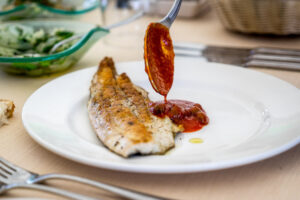
Lampuki, known elsewhere as mahi-mahi or dorado, is associated with the fishing season that usually begins in late summer. It can be fried, baked, served with a tomato and caper sauce or used in torta tal-lampuki, a savoury fish pie.
Gozitan ġbejna is a small cheese made from sheep’s or goat’s milk. It may be served fresh, dried or peppered and appears in pasta, salads, pastries and starters.
Food in Gozo
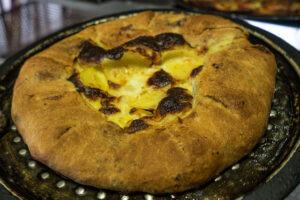
Gozo has its own version of ftira, baked in wood-fired ovens with toppings that can include potatoes, onions, tomatoes, capers, anchovies, tuna or local cheese. It is worth visiting a traditional bakery rather than treating it as an interchangeable version of pizza.
The island also has a close connection to small-scale agriculture, cheese, tomatoes, olive oil, honey and wine. Restaurants around Victoria and the coastal towns range from informal cafés to more ambitious kitchens using local ingredients.
Sweets and drinks
Imqaret are fried pastries filled with dates and spices. Qagħaq tal-għasel are ring-shaped pastries traditionally associated with honey, citrus and warm spices, despite the name often referring to a treacle-like filling.
Kinnie is Malta’s bitter orange soft drink, while Cisk is the most recognisable local beer. Maltese and Gozitan wines are worth trying because production is small and many bottles are easier to find on the islands than abroad.
How to eat well in Malta
Use bakeries for breakfast, snacks and casual lunches. Traditional Maltese food can be heavy, particularly in warm weather, so there is little reason to order several large courses.
Ask about the day’s fish and confirm the price if it is sold by weight. Waterfront locations vary widely, and a sea view is never a guarantee that the seafood was caught locally.
Maltese, Italian and broader Mediterranean dishes often share the same menu. Look for places that prepare a manageable number of dishes and can explain what is seasonal. In Gozo, traditional bakeries and family-run restaurants provide a clearer sense of the island’s cooking than a rushed meal during a coach tour.
Malta’s food becomes easier to understand once you stop seeing it as a copy of nearby cuisines. Its ingredients carry the geography of the central Mediterranean, while its breads, pastries, cheeses and shared meals belong firmly to the islands.