Greece Food and Travel Guides
This comprehensive Greece travel guide covers the mainland and islands, with practical advice on choosing regions, building an itinerary, using ferries, driving, budgeting and eating well.
A trip to Greece starts with a geographical decision. The mainland holds Athens, Delphi, Meteora, the Peloponnese and the northern cities. The islands are divided into groups with different landscapes, ferry connections and local identities.
Treating every Greek island as interchangeable leads to poor itineraries. The Cyclades are dry, exposed to strong summer winds and known for whitewashed settlements. The Ionian Islands are greener and influenced by centuries of Venetian rule. Crete is large enough to fill an entire holiday. Rhodes and the Dodecanese carry traces of Byzantine, Ottoman and Italian history alongside their beaches.
For a first visit, Athens plus one mainland region or one island group is enough for a week. Ten to fourteen days allow Athens, Meteora and several days on one island. Moving between three or four unrelated island groups wastes time because ferry routes are designed around regional networks, not the itinerary a traveller may have imagined from looking at a map.
Greece also changes dramatically through the year. July and August bring heat, crowds and high prices. May, June, September and early October are easier for archaeological sites, walking and eating outside. Many islands become extremely quiet from late autumn to early spring, with reduced ferry services and seasonal businesses closed.
Regions
The right Greek region depends on the balance you want between archaeological sites, beaches, hiking, towns and food.
| Region | Main destinations | Best for | Suggested time |
|---|---|---|---|
| Athens and Attica | Athens, Cape Sounion | Ancient history, museums, city food and short trips | 3–4 days |
| Central Greece and Thessaly | Delphi, Meteora, Pelion | Archaeology, monasteries, mountains and hiking | 3–5 days |
| Peloponnese | Nafplio, Mycenae, Epidaurus, Monemvasia, Mani | Road trips, ancient sites, villages and beaches | 5–8 days |
| Northern Greece | Thessaloniki, Halkidiki, Zagori, Mount Olympus | Food, mountains, hiking and quieter coastlines | 5–8 days |
| Cyclades | Santorini, Naxos, Paros, Syros, Milos | Island villages, volcanic landscapes and ferry travel | 5–10 days |
| Crete | Chania, Rethymno, Heraklion, Lasithi | Food, archaeology, beaches and long road trips | 7–14 days |
| Ionian Islands | Corfu, Kefalonia, Zakynthos, Lefkada | Green landscapes, beaches and Venetian heritage | 5–10 days |
| Dodecanese | Rhodes, Kos, Patmos, Karpathos | Medieval towns, archaeology and island routes | 5–10 days |
Athens and Attica
Athens needs at least three full days. The Acropolis and its museum occupy only part of that time. Ancient Agora, Plaka, Monastiraki and the central markets can be explored together, while neighbourhoods such as Pangrati, Exarchia and Koukaki show how the modern city functions beyond its archaeological sites.
Summer sightseeing requires an early start. Exposed archaeological areas become exhausting in the middle of the day, and temporary closures can occur during extreme heat. Use the hottest hours for museums, lunch and rest, then return outside in the evening.
Athens is also the main transport point for much of the country, but its ferry ports serve different routes. Piraeus handles many Cycladic and longer-distance services. Rafina is useful for several eastern Cyclades connections, while Lavrio serves a smaller network. Check the departure port carefully before booking accommodation or arranging an airport transfer.
Cape Sounion makes an easy trip from Athens if there is no time for a longer mainland route. Travellers continuing to Delphi or Meteora should allow several days rather than attempting to fit both into rushed excursions.
Meteora and central Greece
Meteora is one of the strongest reasons to leave the Athens-islands circuit. Six active monasteries remain on the rock formations above Kalambaka and Kastraki, each with its own opening days and hours.
The area needs two nights at minimum. Three give enough time to visit the monasteries, hike and see the landscape in different light. Our experience of visiting the Meteora monasteries from Kalambaka includes the routes, dress requirements, individual monasteries and practical details for exploring on foot.
The monasteries close on different days, so planning around a single favourite can cause problems. Check current opening times shortly before travelling. Shoulders and knees must be covered, and additional coverings are usually available at entrances. Carry some cash for small admission fees.
We divided our time between driving and hiking. A car makes it easier to reach several monasteries and viewpoints in one day, while walking exposes the scale of the landscape and avoids depending on tour-bus schedules. Trails are not consistently marked, so download offline maps and carry water.
Kalambaka has the main railway and commercial services. Kastraki sits closer to the rocks and trailheads. Either can work as a base, depending on transport and accommodation.
The Peloponnese
The Peloponnese is one of Greece’s best road-trip regions. Ancient sites, mountain villages, fortified towns and beaches are spread across a large peninsula, and public transport is less convenient once the route moves away from the principal towns.
Nafplio is a practical first base. Mycenae and Epidaurus can be included from there, while Olympia lies farther west. Monemvasia, the Mani Peninsula and the archaeological sites of Messinia need a longer route.
Five days cover Nafplio and a small part of the peninsula. Seven or eight allow a circular journey with fewer one-night stops. Driving times can look short on a map, but mountain roads and slow approaches into villages increase them.
Spring and autumn are particularly good for this region. Archaeological sites are easier to explore, and inland temperatures are more comfortable than in July or August.
Northern Greece
Thessaloniki is Greece’s second-largest city and one of its strongest food destinations. Its cooking reflects Greek, Ottoman, Jewish and Balkan influences, with a particularly rich tradition of pastries, grilled food and meze.
The city can anchor a northern itinerary including the Halkidiki peninsula, Mount Olympus, the wine regions of Macedonia or the stone villages of Zagori. These places do not form one compact circuit, so choose a direction based on the season.
Halkidiki is busiest in summer. Zagori and the Pindus Mountains are better for hiking in late spring and autumn. Thessaloniki works throughout the year and provides an alternative entry point for travellers who have already visited Athens.
The Cyclades
The Cyclades include some of Greece’s most famous islands, though each serves a different trip. Santorini is centred on its caldera, volcanic geology, archaeological sites and wine. Naxos has a larger agricultural interior and longer beaches. Paros is compact and well connected. Syros has a substantial town and a different architectural identity from the whitewashed villages associated with the Cyclades. Milos is known for its coastline and rock formations.
Choose islands connected by direct ferry routes. Santorini, Naxos and Paros form a logical sequence. Adding an Ionian or Dodecanese island to the same short trip usually introduces flights or an unnecessary return through Athens.
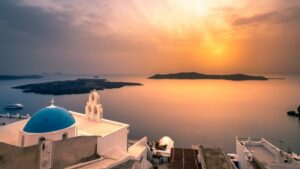
Santorini needs around four days. Its beaches are volcanic and often exposed to wind, so the island is a stronger choice for landscapes, hiking, archaeology and wine than for a conventional beach holiday. The Fira to Oia caldera trail, Akrotiri, the southern villages and local vineyards deserve time. Our detailed Santorini travel guide covers these areas alongside transport, accommodation, food and the effect of overtourism on the island.
Oia becomes intensely crowded around sunset. Arrive earlier in the day, walk through the village and spend the evening elsewhere if standing in a packed viewpoint has little appeal. Firostefani, Imerovigli and Akrotiri provide other views of the caldera.
Crete
Crete should be planned as a destination in its own right. Travelling between Chania and eastern Crete takes time, and many beaches, archaeological sites and mountain villages require a car.
A week is enough for one side of the island. Ten to fourteen days allow a broader route. Chania and Rethymno work well together in the west, with access to mountain villages, hiking and beaches. Heraklion is useful for Knossos and central Crete, while the eastern side has its own towns and coastal areas.
Cretan food is another reason to stay longer. Dakos, local cheeses, wild greens, snails, lamb and dishes cooked with abundant olive oil appear across the island. Raki is commonly served at the end of a meal.
Planning your trip
Choose the mainland regions and island group before booking international transport. Flying into Athens and out of Thessaloniki, Crete or another island can remove an unnecessary return journey.
Ferry travel needs breathing room. Delays can happen, and strong winds sometimes disrupt services. Avoid scheduling a ferry arrival and an international flight on the same day. Spending the final night near the departure airport is the safer arrangement.
High-speed ferries save time but can feel rough in windy conditions. Conventional ferries are slower and often have more outdoor space. Journey length, port location and arrival time matter as much as the ticket price.
Island-hopping works best with at least three nights in each place. Two-night stops become one arrival day, one complete day and another departure. Santorini and larger islands need longer.
Accommodation close to a ferry port is convenient for an early departure but may be far from the part of the island you want to experience. In Santorini, the ferry arrives at Athinios below the caldera, where traffic can become heavily congested when several boats arrive close together. Arrange transport ahead during the busiest months.
Greek Orthodox Easter is one of the country’s most important celebrations. It can be a fascinating time to visit, but transport fills, opening hours change and accommodation is booked by domestic travellers. Greek Easter does not always fall on the same date as Easter in Western churches.
Best itinerary
A ten-day first trip can connect Athens, Meteora and Santorini. It includes ancient history, a mainland landscape and a Cycladic island without attempting to cover the whole country.
| Day | Plan |
|---|---|
| 1 | Arrive in Athens and explore the neighbourhood around your accommodation |
| 2 | Acropolis, Acropolis Museum and the historical centre |
| 3 | Ancient Agora, markets and modern Athens |
| 4 | Travel toward Meteora, stopping at Delphi only if driving and prepared for a long day |
| 5 | Visit several Meteora monasteries and viewpoints |
| 6 | Hike around Meteora, then return toward Athens |
| 7 | Fly or take a ferry to Santorini |
| 8 | Fira, Firostefani, Imerovigli and the caldera trail |
| 9 | Akrotiri, southern Santorini and a local winery |
| 10 | Final island day or departure |
Adding Delphi to the drive between Athens and Meteora creates a long travel day. We did this by car, and the journey took around eight hours once the stop was included. Staying overnight near Delphi produces a much better pace if the itinerary has an extra day.
Travellers with seven days should choose Athens and one island or Athens and Meteora. With two weeks, add another Cycladic island connected directly to Santorini, or spend longer on the mainland before flying home from Thessaloniki.
Driving in Greece
A rental car is most useful in the Peloponnese, Meteora, Crete and on larger islands. Athens has heavy traffic, limited parking and good public transport, so collecting a car when leaving the city is usually simpler.
Greece drives on the right. Main motorways are generally straightforward and use tolls. Secondary roads can be narrow, steep and poorly lit. Distances on islands may be short, but driving times increase because of winding roads, villages, animals and seasonal traffic.
Santorini has congested roads and difficult parking around Fira and Oia. A car gives access to Akrotiri, inland villages, beaches and wineries, though it is better used for exploring the wider island than for repeatedly driving into the busiest centres.
Scooters and quad bikes are common on the islands. Traffic, wind, uneven roads and limited protection make them riskier than they initially appear. Use a vehicle covered by your licence and insurance, and do not assume a standard car licence automatically covers every scooter category.
Rental companies may restrict taking vehicles onto ferries. Obtain written permission before moving a car between islands. In many cases, returning one vehicle and renting another after the crossing is easier.
When to visit
May, June, September and early October provide the best balance for most Greece itineraries. The sea is warmer in September than in spring, while May and early June are better for hiking and archaeological sites.
| Period | Conditions | Best for |
|---|---|---|
| March to April | Mild but changeable, with cooler islands | Athens, the Peloponnese, hiking and Easter travel |
| May to June | Warm days and increasing ferry services | Mixed mainland and island trips |
| July to August | Hot, crowded and expensive | Beach holidays and full island services |
| September to early October | Warm sea and fewer peak-season crowds | Islands, food and multi-region trips |
| Late October to February | Cooler, wetter and quieter | Athens, Thessaloniki and mainland cultural trips |
August is the hardest month for Santorini and the famous Cycladic islands. Accommodation prices rise, ferry ports become congested and Oia receives heavy daily crowds. A smaller or less famous island can still work, especially when booked well in advance.
Winter is suitable for Athens and Thessaloniki, but many island hotels, restaurants and transport services close. Santorini remains inhabited throughout the year, though the winter experience is quiet and weather can interfere with outdoor plans.
How many days
Seven days are enough for Athens and one additional destination. Spend three days in Athens and four on an island, or combine Athens with Delphi and Meteora.
Ten days allow three bases. Athens, Meteora and Santorini form a varied first itinerary, while Athens, Nafplio and the southern Peloponnese create a better road trip.
Two weeks work well for Athens plus two islands in the same ferry group. Crete alone deserves at least seven days and can easily fill two weeks.
Allow four days for Santorini, especially if you want to hike, visit Akrotiri, explore the quieter south and spend time around the vineyards. Meteora needs two nights, with three preferable for hiking and visiting all six monasteries.
Budget
Greece can still be good value away from the most famous islands. Santorini and Mykonos operate at a different price level, particularly for accommodation with caldera or sea views.
| Travel style | Daily estimate | What it covers |
|---|---|---|
| Budget | €70–110 | Simple room or hostel, street food, buses and limited paid attractions |
| Mid-range | €130–220 | Comfortable accommodation, tavern meals, local transport and sightseeing |
| Comfortable | €250+ | Higher-end hotels, frequent taxis, organised excursions and restaurant dining |
These estimates exclude international flights and vary sharply by destination. A mid-range budget in mainland Greece may cover accommodation that would cost several times more in Oia during August.
Ferries are not automatically the cheapest way to reach an island. Compare the full journey, including port transfers, reserved seats and travel time, with a domestic flight.
Eating in bakeries, markets, souvlaki shops and local tavernas helps control costs. Restaurants with a famous sunset view often charge for the location. In Santorini, we found better value and more careful cooking after leaving the caldera’s busiest villages.
Food
Greek food is based on sharing. Salads, dips, vegetables, pies, grilled meat and fish usually arrive in the centre of the table, often without the rigid sequence of courses used elsewhere.
Tzatziki, melitzanosalata and taramasalata are common starting dishes. Horiatiki, the Greek village salad, contains tomatoes, cucumber, onion, olives and feta, without lettuce. Its quality depends heavily on the season.
Moussaka and pastitsio are baked dishes associated with home cooking and traditional restaurants. Souvlaki and gyros are quicker and cheaper. Spanakopita and other savoury pies work for breakfast, lunch or a snack. Vegetable dishes deserve equal attention: stuffed tomatoes and peppers, beans, wild greens, aubergines and vegetables cooked slowly in olive oil are central to Greek cooking.
Our guide to traditional Greek foods and drinks explains the principal dishes, products, wines, spirits and different types of places to eat.
Fish is often sold by weight, particularly in island tavernas. Ask what is local, confirm the price per kilogram and check the approximate weight before ordering. Sardines, anchovies and smaller local fish can be more interesting and affordable than prestigious imported species.
Santorini has its own ingredients. Fava is a purée made from local yellow split peas. Domatokeftedes are tomato fritters, while the island’s white aubergines behave differently from common purple varieties. The volcanic soil and strong winds also influence its vineyards. Assyrtiko is the defining white grape, supported by Athiri and Aidani, with Mavrotragano and Mandilaria among the reds.
Elsewhere, regional products change quickly. Crete has dakos, graviera, mizithra and raki. The Peloponnese is important for olive oil and wines from Nemea and Mantineia. Northern Greece has strong pastry, meze and tsipouro traditions. Chios is associated with mastic, while Samos and Limnos are known for sweet Muscat wines.
Learn the type of establishment as well as the dish. A taverna focuses on informal shared cooking. An ouzerie pairs small plates with ouzo. A tsipouradiko follows a similar idea around tsipouro. A mageirio serves prepared everyday dishes and can be one of the best places for an inexpensive lunch.
In busy destinations, long menus translated into many languages can indicate a restaurant built around passing visitors. Look at what is seasonal, ask about the day’s cooked dishes and pay attention to where people are ordering several plates for the table. That is usually where Greek food starts making sense.